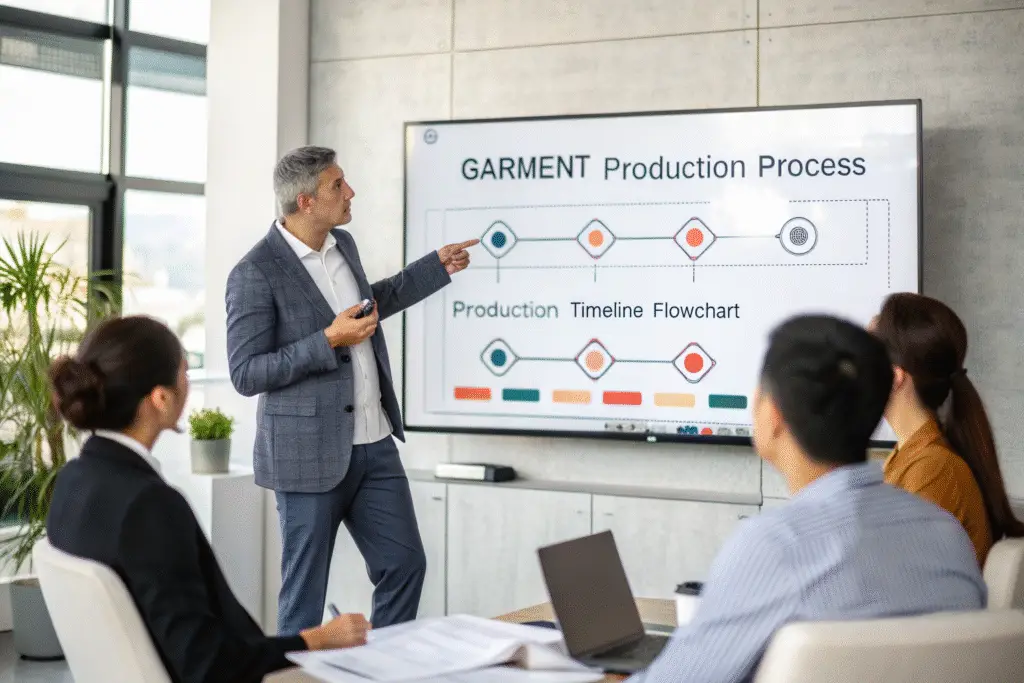
A common question I get from American brand owners is: “Can we cut costs without cutting corners?” Many think the only way is to find a cheaper factory. But as a factory owner, I see a different, often overlooked path. The secret isn't just in who you hire, but in how well you understand what they do. When you grasp the garment production process, you stop being just an order-placer. You become a strategic partner who can make decisions that directly protect your profit margin.
A deep understanding of the apparel manufacturing workflow, from design to delivery, empowers brands to make informed decisions that eliminate costly errors, streamline communication, and ensure on-time delivery, ultimately protecting your bottom line. Many cost overruns are not from material prices but from preventable mistakes and delays in the production cycle. By knowing the key stages and potential pitfalls, you can collaborate effectively with your manufacturer to avoid them.
Let me share a simple truth from my 15 years running Shanghai Fumao: the most cost-effective clients are not those who negotiate the hardest on price per piece. They are the ones who understand our process. They ask the right questions at the right time. This knowledge turns them from spectators into co-pilots, steering their orders away from expensive detours and towards smooth, on-budget landings. Let's explore how this knowledge translates into real savings.
How Does the Pre-Production Stage Impact Your Overall Cost?
Many buyers rush through pre-production to get to the "real" work of sewing. This is a costly mistake. The decisions made before a single stitch is sewn lock in up to 80% of your total cost. This phase is where you set the blueprint for quality, timeline, and budget. Ignoring it is like building a house without a foundation plan—expensive problems are guaranteed to emerge later.
Effective pre-production planning is the most powerful tool for cost control. It involves finalizing designs, sourcing materials, and perfecting patterns to prevent expensive changes during mass production. A well-executed pre-production phase establishes clear standards and expectations, aligning both brand and manufacturer from the start.
Why is a Detailed Tech Pack Your First Line of Defense?
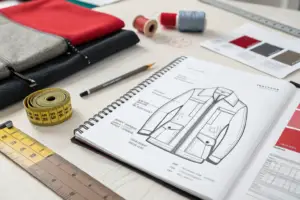
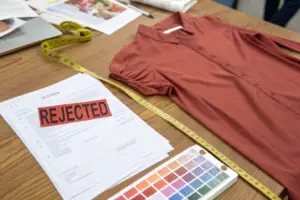
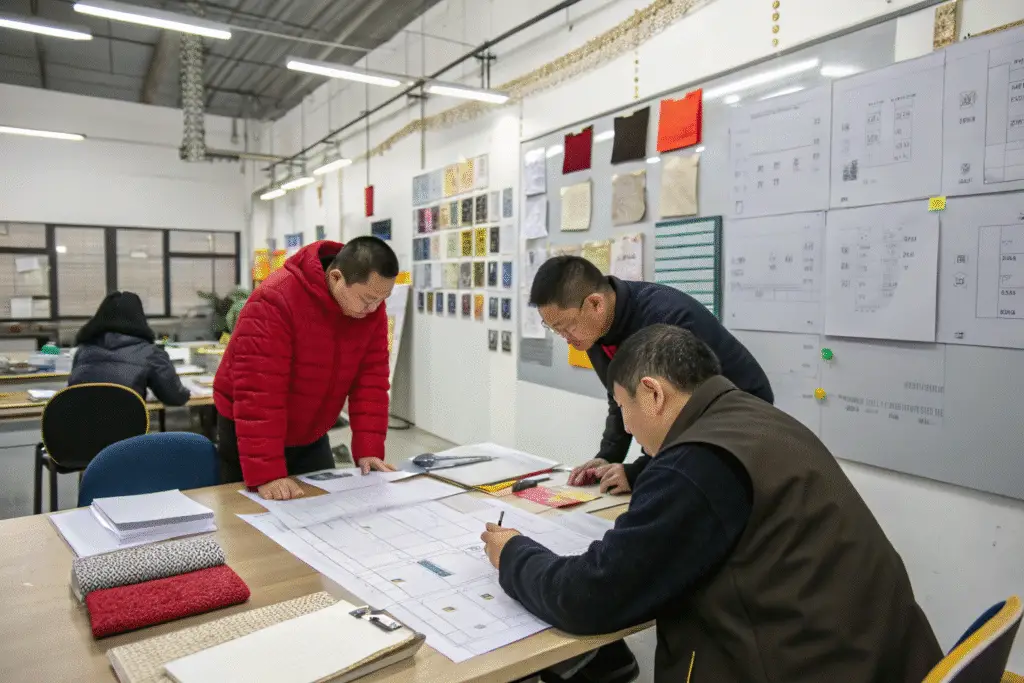
A comprehensive tech pack is more than a sketch; it's the legal and technical blueprint of your garment. An unclear tech pack leads to misunderstandings, multiple sample rounds, and ultimately, cost overruns. For instance, a client once sent us a design with just a front-view photo and fabric swatch. The lack of specified seam types, stitch density, and precise measurements led to three incorrect sample rounds, delaying production by a month and adding unexpected sampling fees. A detailed tech pack eliminates this guesswork. It should include flat sketches from all angles, detailed garment specifications for every component, precise color codes (like Pantone), fabric and trim details, and clear packaging instructions. Investing time here saves enormous costs in corrections later. Partnering with a manufacturer like Shanghai Fumao that offers technical design support can help you build bulletproof tech packs from the start.
How Can Fabric and Trims Sourcing Strategy Make or Break Your Budget?
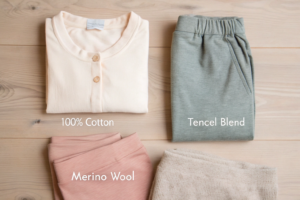
Your material choices dictate not just quality and cost, but also production feasibility and timeline. Sourcing is where knowledge directly saves money. There are two main paths: buyer-supplied materials or full-package manufacturing. While supplying your own fabric might seem to offer control, it often introduces massive risk. We had a client who sourced a fabric directly from a mill. When the material arrived at our facility, it had severe weaving defects and shrinkage issues we couldn't control, halting production and causing a 6-week delay. With our full-package service, we leverage established relationships with certified mills and conduct strict fabric testing (for shrinkage, colorfastness, etc.) before bulk ordering, transferring that risk from you to us. Furthermore, understanding fabric minimum order quantities (MOQs) and lead times allows for realistic planning, avoiding last-minute premium air freight charges for materials.
What Are the Hidden Costs in the Production & Quality Control Phase?
This is where your physical product takes shape. Hidden costs here don't come from the agreed price per piece, but from failures in process control. These failures lead to rejected goods, delayed shipments, and missed selling seasons—the primary pain points for buyers like Ron. Proactive quality management, not just final inspection, is the key to unlocking savings.
The real expense in production isn't labor; it's inconsistency. Hidden costs arise from poor production planning, inadequate in-process checks, and last-minute changes. Implementing a staged quality control system throughout manufacturing catches defects early when they are cheaper to fix, safeguarding your investment and delivery date.
How Does In-Process Inspection Prevent Financial Disaster?
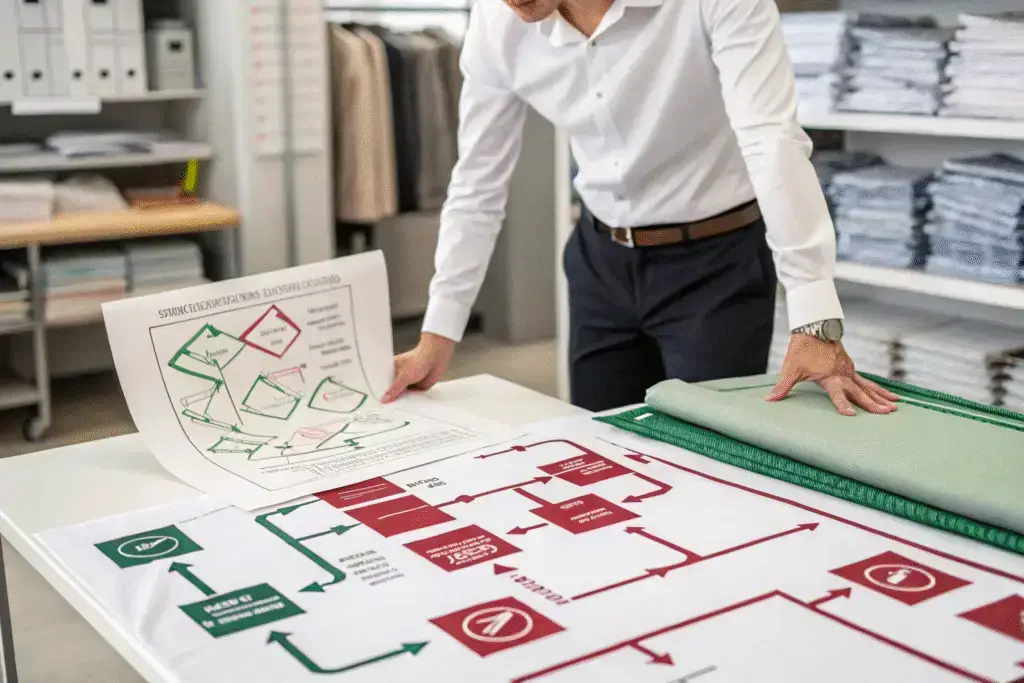
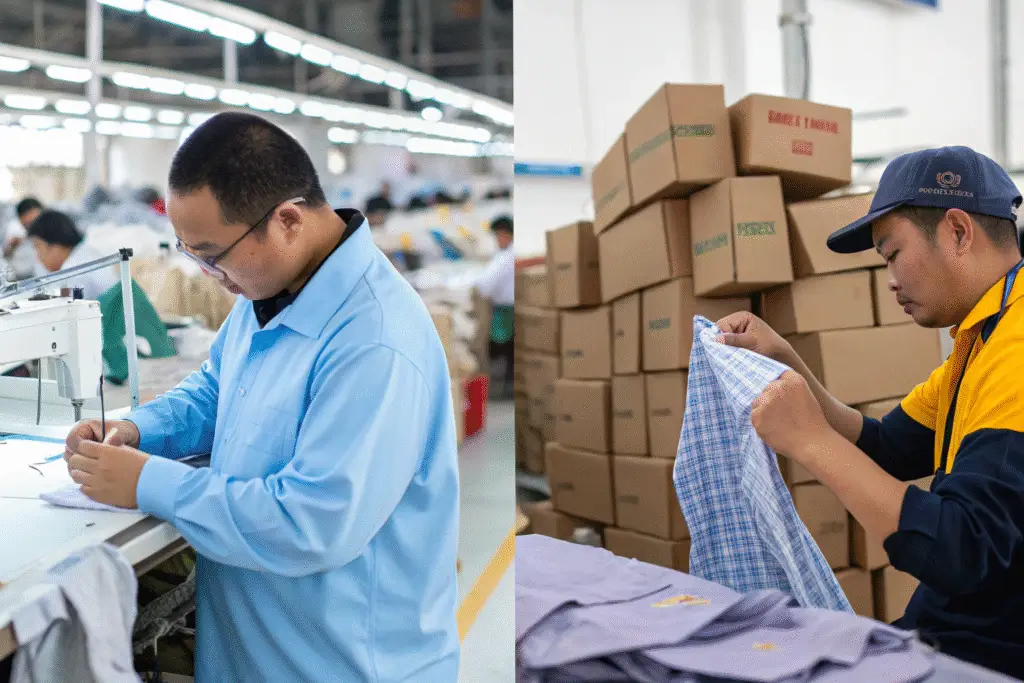
Relying solely on a final Pre-Shipment Inspection (PSI) is like checking the health of a building only after it's fully constructed. By then, fixing a foundational flaw is catastrophic. In-process inspections (IPI) are interim checks at critical stages, such as after cutting, during sewing assembly, and before finishing. Last year, during an IPI for a batch of 5,000 woven shirts, our QC team spotted a recurring misalignment in the placket attachment. Because we caught it when only 200 pieces were sewn, the correction cost was minimal—around $200 in rework. Had it been found at the PSI stage, correcting 5,000 shirts would have cost over $5,000 and delayed shipment by two weeks. This staged approach is a core part of our quality assurance promise at Shanghai Fumao, giving our partners financial and logistical peace of mind.
Why is Understanding Production Capacity and Lead Time Critical?
Pushing a factory beyond its realistic capacity is a direct route to hidden costs. When a factory is overbooked, it may outsource to sub-par units, split attention, or rush processes, all compromising quality. Understanding production lead times isn't just about asking "how long?"; it's about understanding the factory's scheduling constraints. A realistic timeline allows for efficient fabric procurement, trims arrival, and line allocation. For example, we once helped a client avoid a major mistake: they wanted to produce 50,000 heavy knit sweaters in 30 days during peak season. Based on our factory capacity of 5 lines, we showed them the math was impossible without sacrificing quality. We collaborated to phase the order or adjust the delivery date, saving them from a potential disaster of rushed, defective goods. Transparent communication about capacity builds trust and prevents costly rush fees or quality failures.
How Can Logistics and Shipping Knowledge Avoid Last-Mile Surprises?
Your perfect garments are boxed and ready. But the journey to your warehouse is fraught with financial pitfalls. Unexpected logistics costs can erase your hard-earned production savings. Terms like FOB, CIF, and DDP shipping are not just jargon; they define who bears the cost, risk, and responsibility at each transit point. Lack of clarity here leads to surprise fees, customs delays, and strained partnerships.
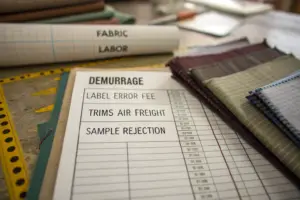
Mastering the logistics chain is the final step in cost-saving. Choosing the right Incoterms and understanding customs clearance procedures prevent demurrage charges, import duty surprises, and delivery delays. A reliable manufacturing partner should guide you through this complex landscape, ensuring a seamless door-to-door experience.
What's the Real Cost Difference Between FOB and DDP?
The choice between FOB (Free On Board) and DDP (Delivered Duty Paid) is a choice between complexity control and cost predictability. With FOB, you own the shipping process once goods leave the factory port. You must arrange and pay for international freight, insurance, and destination clearance. This can be cheaper if you have a strong logistics team, but it exposes you to volatile freight rates and complex customs paperwork. DDP, the service we highly recommend for U.S. clients like Ron, offers total cost predictability. We, as the supplier, handle everything from our door to your designated warehouse in the USA. You receive one all-inclusive price upfront. For a client in Texas last quarter, our DDP quote included all charges. Their competitor, using FOB with another factory, got hit with unexpected port congestion fees and a customs classification dispute, adding 28% to their landed cost. DDP mode provides budget certainty and simplifies your operations.
How Do Certification and Compliance Prevent Costly Customs Holds?
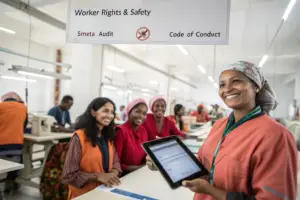
Certifications are not optional paperwork; they are your product's passport. Shipments lacking proper compliance documentation can be held, rejected, or destroyed by customs, resulting in total loss. The key is working with a factory that understands the specific requirements of your market. For the U.S., this may include compliance with CPSIA for children's wear or Federal Trade Commission (FTC) care label rules. We once audited a potential client's previous supplier and found their general Certificate of Conformity was vaguely worded and from an unaccredited lab, a red flag for customs. We provide documentation from recognized institutions and are transparent about our sourcing, ensuring your goods flow smoothly. Verifying your supplier's certification legitimacy is a non-negotiable step in protecting your investment.
What Communication Strategies Ensure a Smooth and Cost-Effective Partnership?
Inefficient communication is the silent killer of budgets. It leads to errors, reworks, and delays—the exact pain points Ron highlighted. The goal is to move from fragmented, reactive chats to structured, proactive dialogue. This doesn't mean more meetings; it means smarter communication that builds a shared understanding and catches issues before they become expensive.
Proactive, structured communication is the glue that binds all cost-saving strategies together. Establishing clear protocols for updates, approvals, and issue escalation prevents misunderstandings and keeps your project on track and on budget. It turns your supplier from a remote executor into a true partner.
How Can a Single Point of Contact Save You Time and Money?
Dealing with multiple sales reps who don't coordinate is a recipe for disaster. Information gets lost, requests are duplicated, and accountability vanishes. The solution is a dedicated project manager or key account manager on the supplier side. At Shanghai Fumao, clients like Ron are assigned a single point of contact who oversees the entire order from tech pack to shipment. This person consolidates all communication, provides weekly structured reports with photos/videos, and is empowered to solve problems. Contrast this with a scenario where you email a salesperson for a quality issue, who then must contact the factory floor, then the shipping department... The lag creates delays. A dedicated manager has direct lines to all departments, speeding up resolution exponentially and saving you from the frustration of playing telephone.
Why are Digital Tools and Visual Updates Non-Negotiable?
Words alone are insufficient for technical manufacturing. Relying only on email descriptions of a "color issue" or a "fit problem" leaves room for costly misinterpretation. Modern collaboration requires digital tools. We use shared online dashboards where clients can see real-time production progress. For quality checks, we send high-resolution photos and short video clips pointing directly to the area in question. For a recent activewear order, we sent a video comparing the lab dip under different lights against the Pantone standard, allowing for a quick, confident approval. This visual proof eliminates "he said, she said" scenarios and provides an audit trail. Embracing these digital tools for supply chain collaboration reduces approval cycles and ensures everyone is literally looking at the same thing.
Conclusion
Understanding the garment production process is not about learning to sew or becoming a logistics expert. It's about gaining the strategic insight to ask the right questions, make informed decisions, and collaborate effectively with your manufacturing partner. This knowledge transforms you from a passive buyer into an active project manager, capable of identifying and eliminating the true sources of cost overrun—miscommunication, preventable errors, and poor planning. The savings come not from squeezing the factory's profit margin, but from streamlining the entire journey of your product from idea to delivery.
True cost-efficiency is built on a foundation of transparency, expertise, and partnership. When you invest time in understanding the stages we've discussed—pre-production, production control, logistics, and communication—you empower yourself to build a more profitable and resilient brand.
If you are ready to partner with a manufacturer that values this transparent, knowledge-driven approach, let's discuss your next project. We at Shanghai Fumao are committed to being your reliable, high-value manufacturing extension. To explore how we can bring your apparel visions to market successfully and cost-effectively, please reach out to our Business Director Elaine. She can provide tailored insights for your specific brand needs. Contact Elaine at: elaine@fumaoclothing.com.