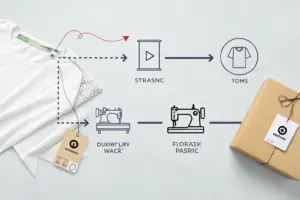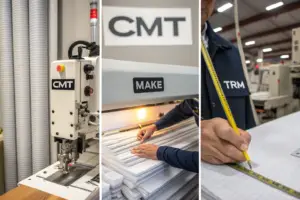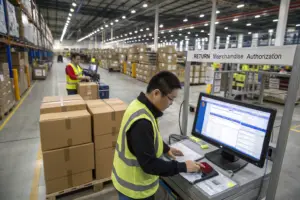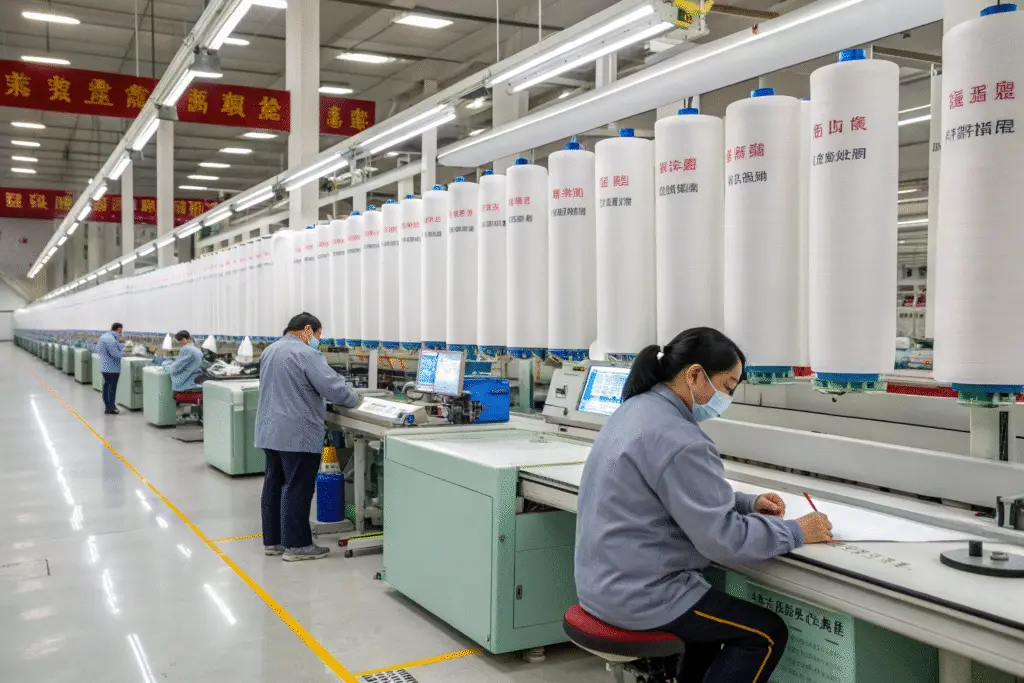
You've designed a great collection. Now you need to find a fabric supplier, a trim vendor, a print house, a factory for sewing, and a freight forwarder. You're managing six different relationships, five separate contracts, and four different timelines—all for one product. This fragmented approach is how many brands start, but it's also why so many stumble. The complexity isn't just stressful; it's a direct threat to your quality, timeline, and budget. What if one partner could handle it all, from concept to delivery at your doorstep? This is the power of end-to-end manufacturing, and it's not just a convenience—it's a strategic accelerator for your brand.
Partnering with an end-to-end garment manufacturer consolidates responsibility, streamlines communication, and aligns incentives, transforming a fragmented, high-risk supply chain into a single, accountable partnership. This holistic approach provides greater control over quality and timeline, reduces hidden costs, and allows brands to focus on design and marketing rather than logistics and crisis management. In essence, it turns production from your biggest operational headache into your most reliable competitive asset.
At Shanghai Fumao, a growing brand came to us after a nightmare season. They had sourced fabric from Turkey, shipped it to a factory in Vietnam for sewing, then to a printer in Bangladesh, and finally tried to manage shipping to the US themselves. The fabric was delayed, the factory blamed the print house for color issues, and the shipment got stuck in customs due to incorrect documentation. They lost the entire season. We took over their next collection on an end-to-end basis. We sourced the fabric, managed the printing in-house, produced the garments, and handled all DDP shipping logistics. The result? A flawless delivery, 20% under their previous total landed cost, and a CEO who told us, "I finally have time to run my business again." Let's explore the concrete advantages of this unified approach.
How Does End-To-End Control Simplify Communication and Accountability?
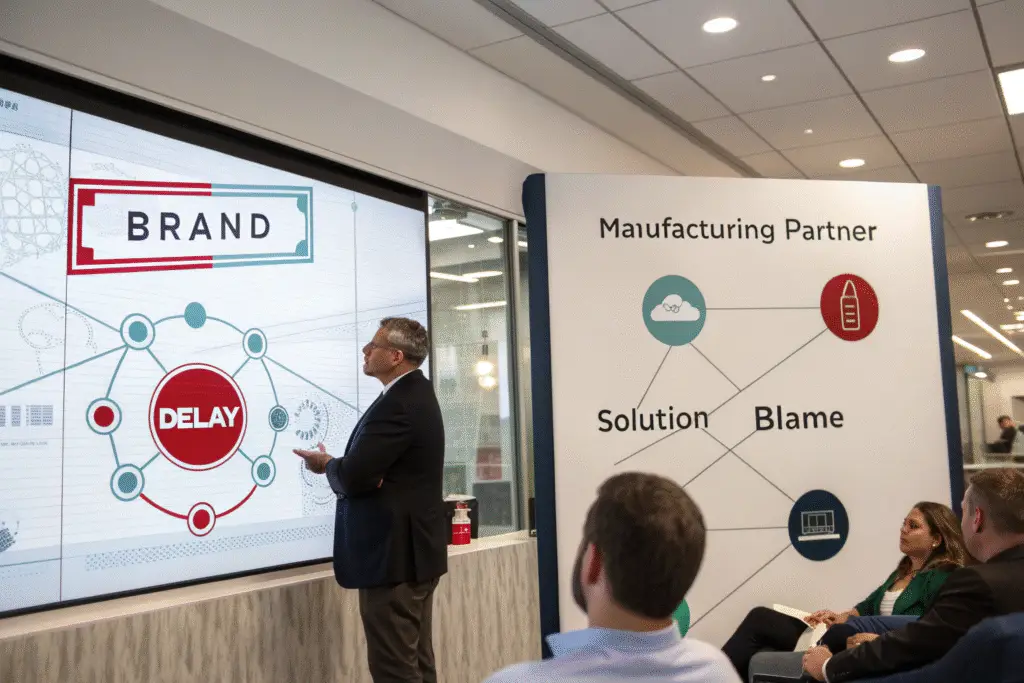
The most immediate benefit is the collapse of a complex communication web into a single, direct line. Every question, approval, and update flows through one channel. When something goes wrong—and something always does—there is no "blame game." There is only one party responsible for finding the solution: your manufacturer.
This single point of accountability eliminates the finger-pointing and delays that plague multi-vendor projects.
What Is The "Finger-Pointing" Problem in Fragmented Sourcing?
In a traditional model:
- A quality defect is found. The sewing factory blames the fabric. The fabric mill blames the yarn supplier. The brand is stuck in the middle, paying for the delay.
- A shipment is late. The factory says the trim supplier was late. The freight forwarder says customs paperwork from the factory was incomplete.
- You spend more time managing relationships and resolving conflicts than developing your product.
How Does An End-To-End Partner Resolve This?
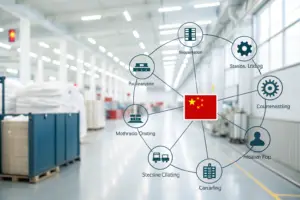
With an end-to-end partner like Shanghai Fumao, the entire process is internal. Our fabric department talks directly to our cutting room. Our production manager oversees the sewing and finishing. Our logistics team handles shipping from our door. If there's a color mismatch between the dye lot and the print, it's our problem to solve internally, on our time, not yours. We provide you with a single project manager who gives you one update, with one cohesive story.
This was proven when a client's order of jersey dresses had a potential shrinkage issue flagged in our in-house lab. Because we controlled the fabric sourcing and the production, we were able to adjust the washing parameters during production, not after, ensuring the final garments met spec without any delay. The client was never in the crisis loop.
What Are The Tangible Cost Savings Beyond The Unit Price?
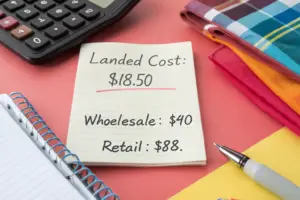
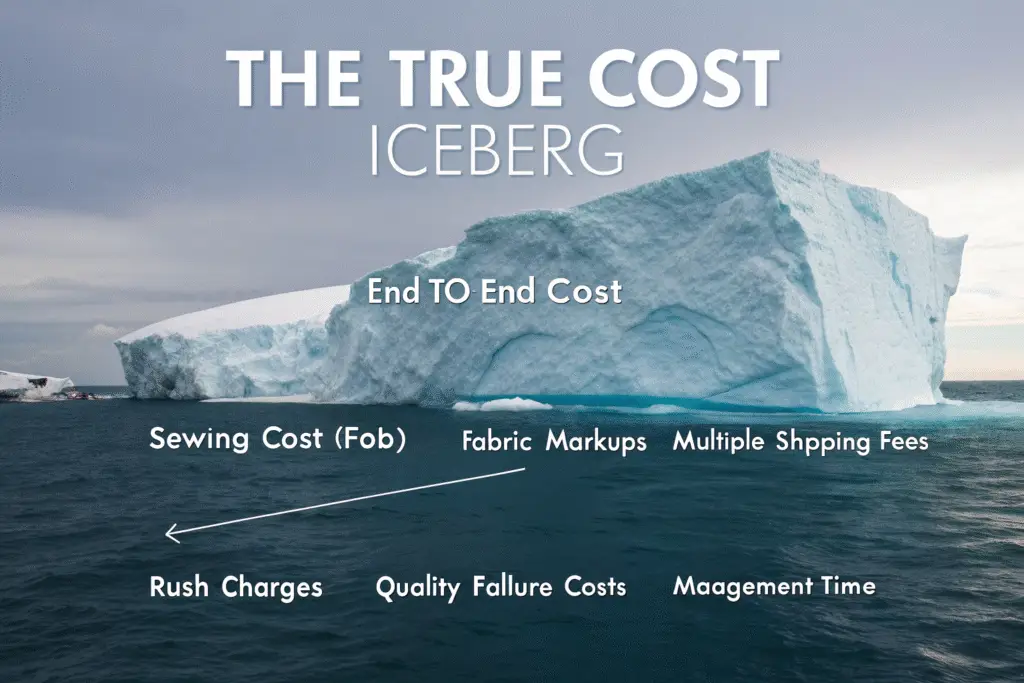
Many brands focus solely on the FOB (cost per garment) when comparing factories. This is a critical mistake. The true cost is the total landed cost—the final amount it takes to get a sellable product to your warehouse. End-to-end manufacturing optimizes for this total cost, often leading to significant savings that a low FOB price from a sewing-only factory can't match.
Savings are realized through efficiency, scale, and the elimination of transactional markups at every handoff.
Where Do The Hidden Costs Hide in a Fragmented Model?
- Multiple Supplier Markups: Each vendor in the chain (fabric agent, trim supplier, subcontractor) adds their profit margin. You pay these margins cumulatively.
- Inefficient Logistics & Handling: Shipping semi-finished goods between multiple facilities incurs freight costs, insurance, and handling fees. Each move also increases the risk of damage or loss.
- Cost of Delay & Rush Fees: When the chain breaks, you pay expedited shipping or overtime to catch up.
- Quality Failure Costs: Defects caught late (e.g., at the final factory) mean you've already paid for the fabric and all previous processing. The cost of rework or scrap is astronomical.
How Does End-To-End Manufacturing Unlock Savings?
- Vertical Integration Benefits: As a full-package manufacturer, we buy fabric directly from mills at better prices due to our volume, and we avoid middleman margins. This saving is passed on.
- Optimized Material Utilization: With fabric sourcing, cutting, and production under one roof, we can optimize fabric yield and recycle scraps efficiently, reducing waste cost.
- Bulk Logistics Leverage: We consolidate all our clients' shipments, negotiating far better rates with shipping lines than a small brand ever could. This economies of scale benefit is directly applied to your DDP shipping cost.
- Proactive Cost Engineering: Our technicians can suggest design modifications early in the process that simplify construction or allow for more efficient fabric use, reducing cost without compromising design intent.
For one of our clients, switching to our end-to-end model reduced their total landed cost by 18%, even though our initial garment cost was 5% higher than their previous sewing factory. The savings came from fabric, logistics, and the elimination of surprise charges.
How Does It Enhance Quality Control and Product Consistency?
Quality cannot be inspected into a product at the end; it must be built in at every stage. When each stage is managed by a different company with different standards, consistency is the first casualty. An end-to-end partner enforces a single, unified quality standard from fiber to finished garment.
This creates a closed-loop system where feedback is instantaneous and corrections are made at the source.
What Is The "Closed-Loop" Quality System?
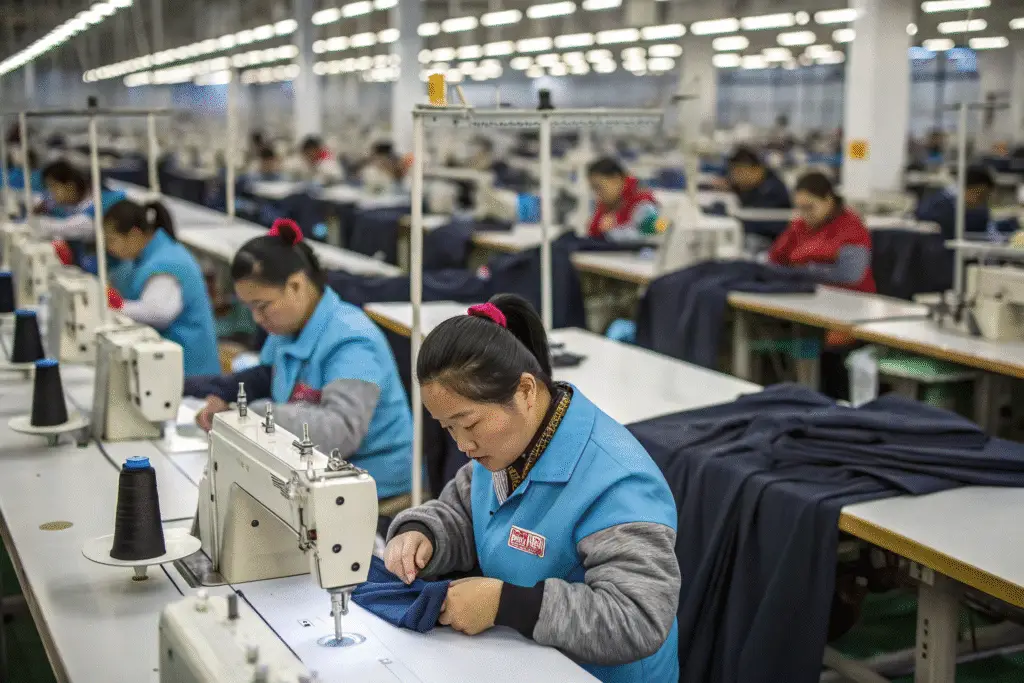
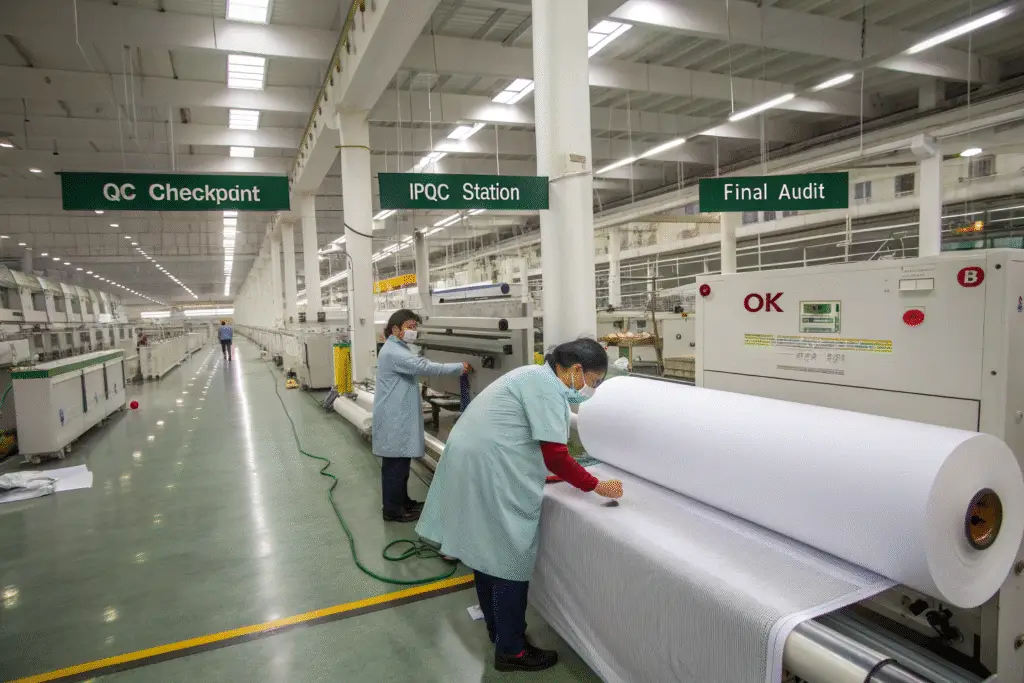
In our operation at Shanghai Fumao, quality control is not a department; it's a process integrated into every step:
- Incoming Material Inspection: Our lab tests all bulk fabric for shrinkage, colorfastness, and composition before it's approved for cutting.
- In-Process Quality Control (IPQC): During sewing, our QC staff check seams, stitch quality, and trim attachment against the approved sample.
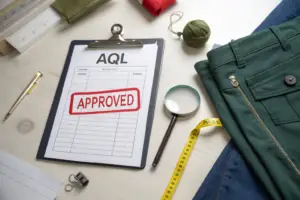
- Final Pre-Shipment Inspection (PSI): A final AQL audit is performed.
Because we control the fabric and trim sourcing, we can reject a substandard material batch at the door. We don't have to "make it work" because a client already bought and shipped it to us. This prevents bulk defects before they happen.
Can You Ensure Color and Spec Consistency?
Absolutely. This is a major advantage. Consider color matching:
- Fragmented Model: You approve a lab dip from Mill A. They dye the bulk fabric. You ship it to Factory B. Factory B sends it to Printer C for a logo. The water, chemicals, and process at each facility are different, leading to color variation.
- End-to-End Model: The lab dip, bulk dyeing, and any printing/embroidery are done in our controlled facilities or with tightly managed partner units under our specification. The color standard is consistent throughout.
We recently produced a 10,000-piece order of polo shirts where color matching between the collar rib, the body fabric, and the embroidered logo was critical. Our in-house control made this seamless. The client received a perfectly consistent shipment.
How Does It Provide Unmatched Timeline Predictability and Speed?
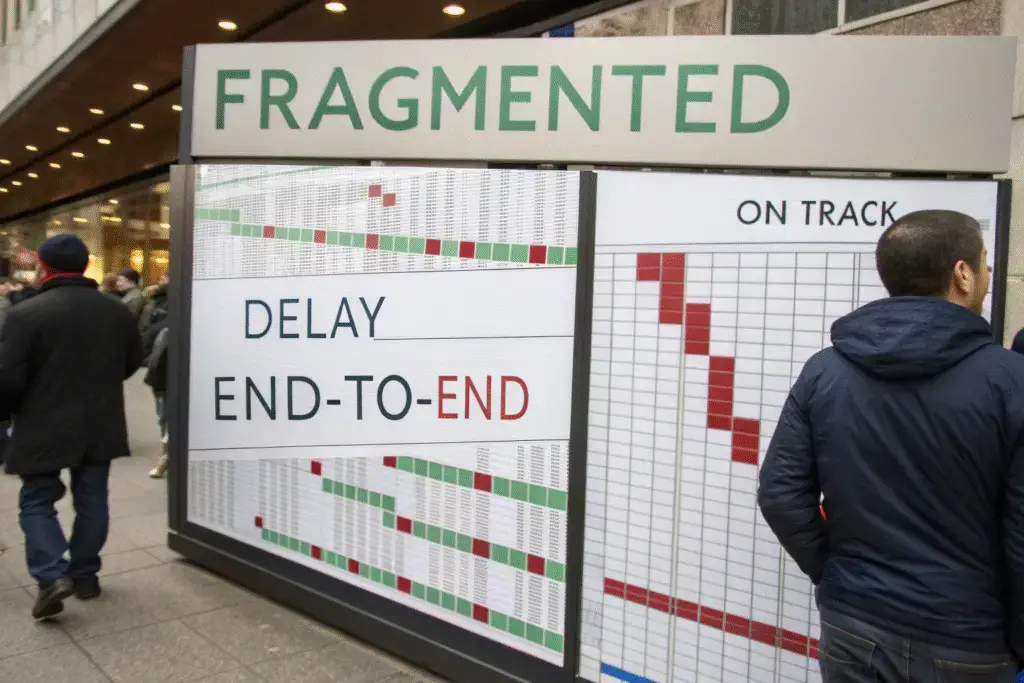
In fashion, a predictable timeline is often more valuable than a fast one. But end-to-end manufacturing delivers both. By internalizing the critical path, the manufacturer eliminates the external dependencies that are the primary cause of delays. This allows for accurate scheduling and faster reaction times when adjustments are needed.
You gain visibility and certainty, which is priceless for planning marketing launches and sales cycles.
How Are External Dependencies Eliminated?
The biggest timeline risks are:
- Fabric Lead Time Variability
- Trim Sourcing Delays
- Subcontractor Bottlenecks (e.g., for printing, washing)
- Logistics Coordination Gaps
An end-to-end partner manages these as internal workflows. Our production planning team schedules the loom time at our weaving unit based on our sewing schedule. Our trim department orders components based on the same master production schedule. There is no waiting for a third-party's confirmation; it's all on one calendar.
What Does "Fast Reaction" Capability Look Like?
When you control the chain, you can accelerate it. A client needed a small top-up order of a best-selling style mid-season. Because we had the fabric in our warehouse and open capacity on our lines, we turned around 2,000 units in 3 weeks from order to shipment—a task impossible in a model where fabric would need to be re-ordered from a mill.
This agility is a direct result of vertical integration and consolidated management. It allows for Just-in-Time (JIT) production strategies and makes your brand more responsive to market demand.
Is Your Brand Ready for an End-To-End Partnership?
While the benefits are compelling, an end-to-end partnership is a significant step that requires trust and alignment. It works best for brands that view production not as a necessary evil, but as a core component of their business strategy. The ideal partner acts as an extension of your team, invested in your long-term success.
This model is particularly powerful for brands at an inflection point of growth, where operational complexity begins to hinder scaling.
Which Brands Benefit The Most?
- Growing DTC Brands: Moving beyond small batch production, needing reliability and scalability.
- Established Brands Seeking Efficiency: Tired of managing multiple vendors and hidden costs.
- Brands with Technical or Complex Products: Where fabric development, construction, and consistency are paramount (e.g., activewear, outerwear).
- Brands Valuing Ethical & Sustainable Transparency: A single partner makes it feasible to audit and ensure compliance across the entire supply chain.
What Should You Vet in a Potential Partner?
- True Scope of Services: Do they manage or do they own the key processes? There's a difference between having a network of subcontractors and having in-house capabilities.
- Technology & Communication: Do they have a PLM/ERP system? Can they provide real-time visibility into your order's status at each stage?
- Cultural Fit & Communication Style: You will work closely with them. Are they proactive, transparent, and aligned with your brand's values?
- Financial Stability: An end-to-end partner carries more inventory and cost on your behalf. They need to be financially robust.
At Shanghai Fumao, we've built our business model around being this kind of partner. We invite potential clients to audit our process, because our confidence is in our systems and our team.
Conclusion
Partnering with an end-to-end garment manufacturer is a strategic decision that moves your brand from juggling a precarious network of suppliers to commanding a streamlined, accountable production ecosystem. The benefits—simplified accountability, lower total landed cost, superior quality control, and predictable timelines—directly translate to reduced stress, protected margins, and accelerated growth. In a competitive market, this operational excellence becomes a core component of your brand's value proposition.
It represents a shift from being a supply chain manager to being a brand builder, freeing your energy and resources to focus on what you do best: creating products that connect with your customers.
If you are ready to consolidate your efforts and partner with a manufacturer that can truly shoulder the full burden of production, we are built for this role. At Shanghai Fumao, our end-to-end capabilities are designed to be your reliable, high-performance manufacturing department. Let us handle the complexity, so you can focus on your vision. Contact our Business Director Elaine to start a conversation about a truly integrated partnership: elaine@fumaoclothing.com.