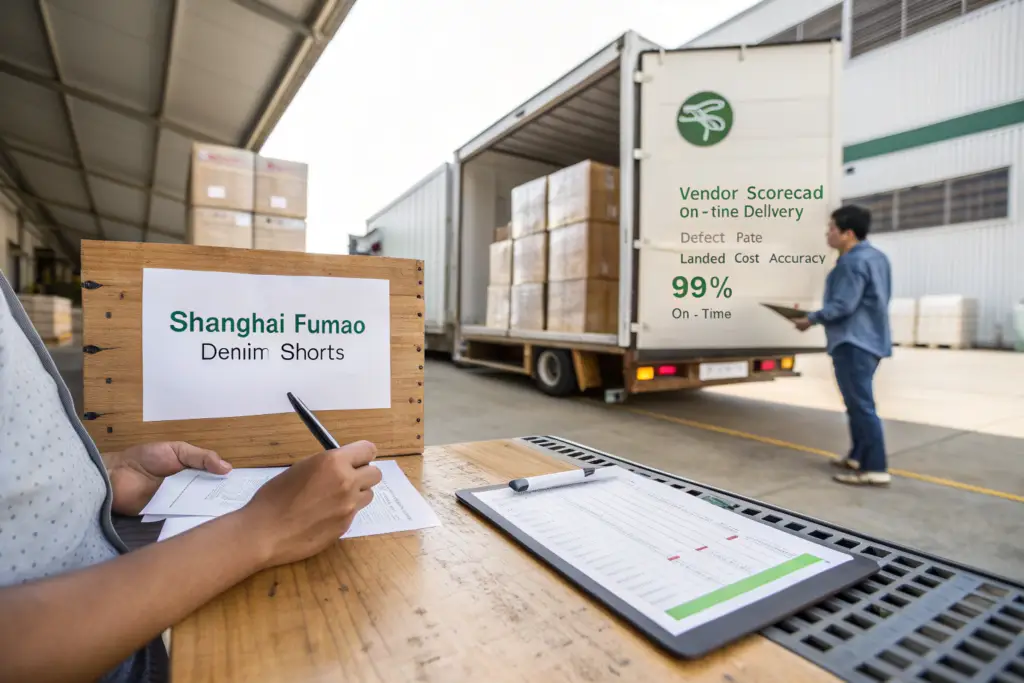
Distributors are the toughest judges in the apparel industry. A brand sells a story. A distributor sells margins. They live and die by spreadsheets. They calculate landed cost per unit down to fractions of a cent. They track defect rates, late delivery penalties, and inventory turnover. A distributor does not care about your factory's Instagram aesthetic or your founder's story. They care about three things. Does the product arrive on time? Does it pass their incoming inspection? Does it sell through at full price without returns? If the answer to all three is yes, they reorder. If the answer to any is no, they find another supplier. They are ruthlessly rational. That is why their opinion matters.
US distributors call Shanghai Fumao a top manufacturing partner because we solve the three problems that destroy distributor margins. First, we deliver on time with a milestone-tracked production system and DDP shipping, so distributors receive inventory when their retail accounts need it, not a month late. Second, we maintain a defect rate below 1.5% through in-house lab testing, hourly in-line audits, and AQL 1.5 final inspection, so distributors do not lose margin on returns and chargebacks. Third, we provide a transparent, predictable DDP landed cost that eliminates logistics surprises, so distributors can quote their retail accounts with confidence and protect their negotiated margins.
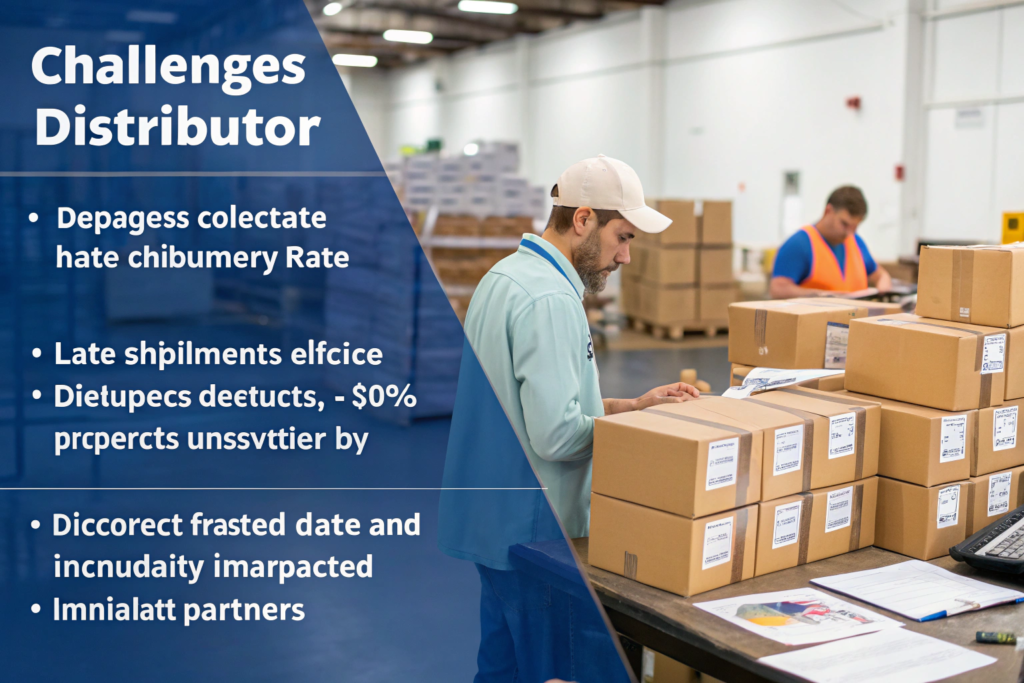
I run Shanghai Fumao. I have spent years earning the trust of US distributors. They are my most demanding clients and my most loyal ones. In this article, I will explain what distributors need, how our factory meets those needs, and what specific outcomes our distributor clients have achieved. This is not marketing theory. It is the operational reality that earns the label "top manufacturing partner" from the people who count pennies for a living.
What Do US Distributors Actually Need from an Overseas Manufacturer?
A distributor's business model is simple to understand and difficult to execute. They buy products from manufacturers overseas, import them, warehouse them, and sell them to retail accounts at a markup. Their gross margin is the difference between their landed cost and their wholesale price. Their net margin is what remains after returns, chargebacks from retail accounts for late or defective goods, warehousing costs, and operational overhead.
A distributor's margin is under constant pressure. Retail accounts demand lower wholesale prices. Overseas manufacturers raise FOB prices. Freight rates fluctuate. Returns chip away at profitability. A distributor who buys a container of shorts for $50,000 and sells it to retail accounts for $100,000 does not keep $50,000. They keep what remains after all the hidden costs. A supplier who delivers late triggers chargebacks from retail accounts. A supplier who ships defects triggers returns and processing costs. A supplier whose customs paperwork is wrong triggers port delays and storage fees. Each of these failures is a direct hit to the distributor's net margin. A top manufacturing partner is one who minimizes these hits.
Let me break down the distributor's margin structure and explain how supplier failures erode it.
Why Is Predictability More Valuable Than a Low FOB Price to a Distributor?
A distributor negotiates wholesale prices with their retail accounts months in advance. They commit to a delivered price and a delivery window. If their supplier's FOB price is low but their actual landed cost is unpredictable, the distributor cannot price confidently. If they quote their retail account $12.00 per unit and the landed cost comes in $1.50 higher than expected, the distributor eats that $1.50. On a 10,000-unit order, that is $15,000 in lost margin.
If their supplier's delivery date is unpredictable, the distributor faces chargebacks. Major retail accounts have strict delivery windows. If the goods arrive outside the window, the retailer fines the distributor. A typical chargeback is 2% to 5% of the invoice value for a late delivery. On a $100,000 invoice, a 3% chargeback is $3,000. That is margin that disappears because the factory missed a ship date.
If their supplier's quality is unpredictable, the distributor faces returns and processing costs. A retail account returns defective goods to the distributor. The distributor pays the return freight, inspects the goods, and either reworks them or liquidates them at a loss. The cost per return can easily exceed $10. A 3% defect rate on a 10,000-unit order is 300 defective units, costing $3,000 in returns processing.
Predictability is not a nice-to-have. It is a margin protection mechanism. A distributor will gladly pay $0.50 more per unit for a supplier who delivers on time, with a defect rate under 2%, at a guaranteed landed cost. That $0.50 buys $1.50 in avoided margin erosion. The supplier predictability value in supply chain is a well-established procurement principle. Predictable suppliers reduce the total cost of ownership, even if their unit price is higher.
How Do On-Time Delivery and Low Defect Rates Directly Impact Distributor Profitability?
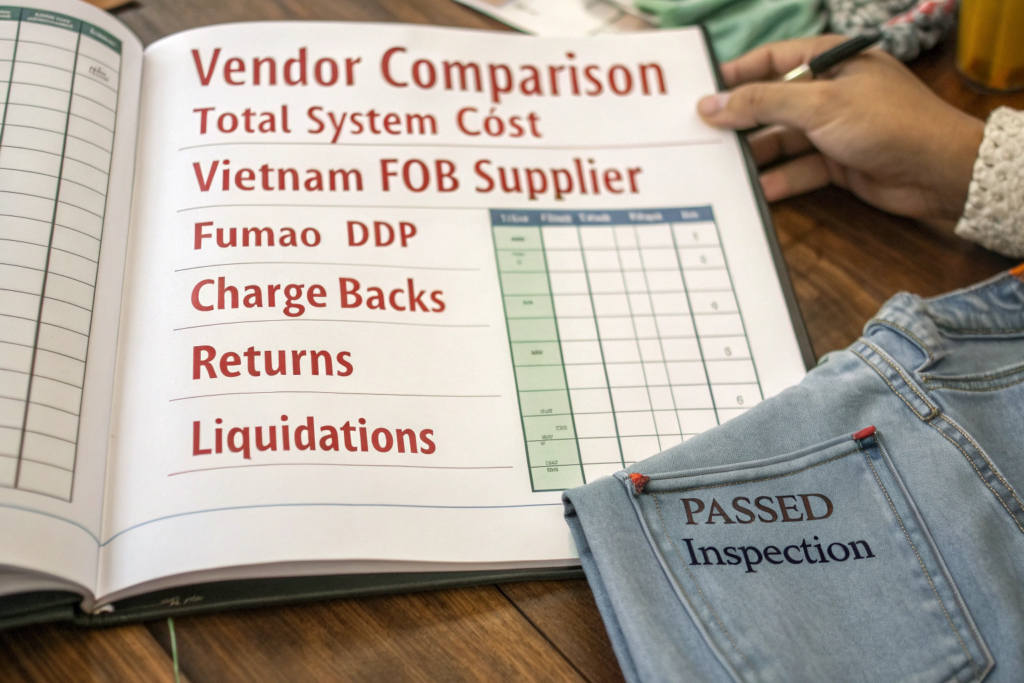
Let me quantify this with a real example from a Texas-based distributor who switched to us from a lower-cost Vietnamese supplier in 2025. The distributor orders 15,000 denim shorts per season. With the Vietnamese supplier, the FOB price was $5.20. The average landed cost after freight, duty, and logistics was $7.10. The on-time delivery rate was 78%. The defect rate at incoming inspection was 4.5%.
The late deliveries triggered an average of $4,200 per season in retail account chargebacks. The defects triggered an average of $5,100 per season in return processing costs and liquidated inventory losses. The total margin erosion from supplier failures was $9,300 per season, or $0.62 per unit ordered.
The distributor switched to our DDP model. The DDP price was $8.00, a fully landed, guaranteed cost. The on-time delivery rate is 98%. The defect rate at incoming inspection is 1.2%. The chargeback cost dropped to near zero. The return processing cost dropped to $1,500 per season. The total margin erosion dropped to $1,500 per season, or $0.10 per unit. The net cost difference, our $8.00 DDP minus their previous $7.10 landed cost plus $0.62 in margin erosion, was a $0.28 per unit advantage in our favor. Our product was $0.28 cheaper per unit when the full system cost was calculated, despite having a higher headline price. This is the math that distributors do. The distributor margin protection through supplier quality analysis is a core competency of successful distribution businesses.
How Do Our Quality and Logistics Systems Serve Distributor Margins?
Distributors need systems, not promises. A promise is a salesperson saying "we guarantee on-time delivery." A system is a production tracking dashboard that shows the current status of every milestone, updated in real-time, visible to the distributor 24/7. A promise is a quality manager saying "our defect rate is very low." A system is an AQL 1.5 inspection protocol, a batch traceability system, and an in-house testing lab that produces data the distributor can review.
Our quality and logistics systems are built for the distributor's need for predictability and accountability. The milestone tracking system means the distributor knows two weeks in advance if a shipment will be late, not two days after the missed delivery date. The batch traceability system means that if a defect is found, the affected units can be isolated to a specific operator and a specific hour, not a whole container. The DDP shipping system means the distributor pays one price and receives one invoice, not a stack of surprise bills from freight forwarders and customs brokers.
Let me explain the specific systems that protect distributor margins.
How Does Batch Traceability Limit the Cost of a Quality Issue?
When a distributor's retail account finds a defect, the retail account does not just return the one defective unit. They may return the entire batch from that carton, or they may issue a blanket chargeback for the whole order. The distributor bears the cost of the over-return. Without traceability, the distributor cannot prove the defect was limited to a specific production lot. They eat the cost of the entire return.
Our batch traceability system traces every pair of shorts back to the specific roll of fabric, the specific operator on each critical operation, and the specific hour of the day it was sewn. If a defect is found in a pair from carton 42, we can pull the production records. The defect is traced to operator 18 on line 3, who sewed the waistband on 45 pairs between 2:00 PM and 4:00 PM on March 12th. The affected units are limited to those 45 pairs in cartons 42 and 43. The distributor does not need to return the whole order. They return the two affected cartons. The cost of the quality issue is contained.
This traceability also enables targeted corrective action. Operator 18 is retrained on waistband attachment. The problem does not recur on the next order. The distributor's defect rate continues to decline over time. The batch traceability in garment manufacturing is a risk management tool that directly protects distributor margins by limiting the scope of quality claims.
Why Does DDP Shipping Eliminate the Hidden Costs That Erode Distributor Margins?
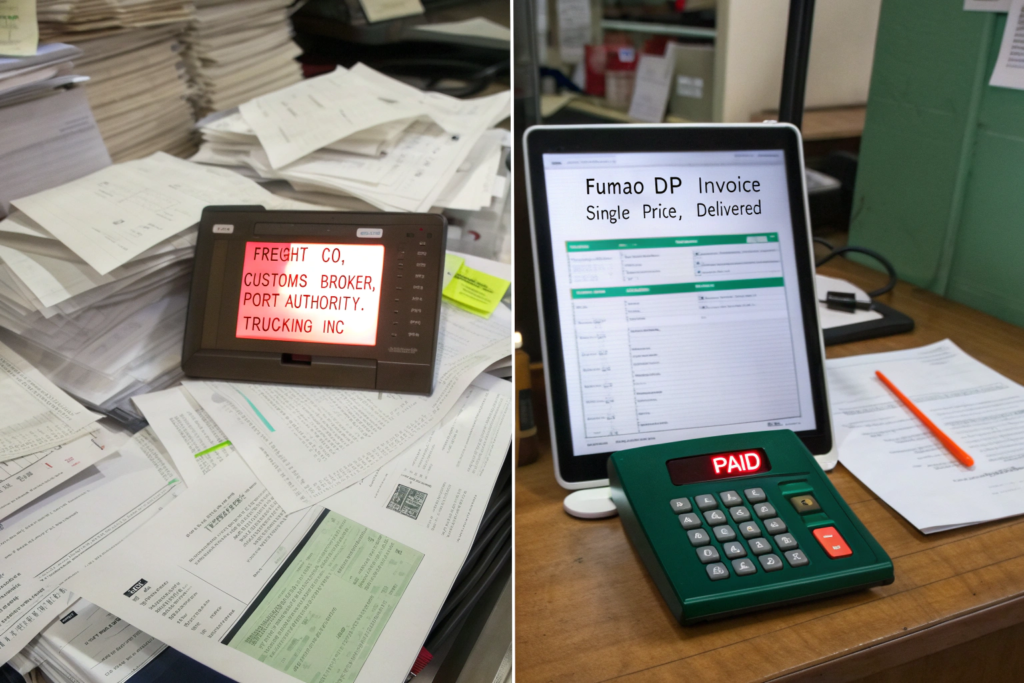
FOB shipping is a margin minefield for a distributor. The distributor is responsible for freight, insurance, customs clearance, duties, and trucking. Each of these is a separate vendor with a separate invoice and a separate opportunity for an unexpected cost. A freight rate increase. A customs exam fee. A port congestion surcharge. A chassis shortage fee. These costs appear after the goods have shipped, when the distributor has already quoted a wholesale price to their retail accounts. The distributor cannot go back to the retail account and ask for more money. They absorb the cost. Their margin shrinks.
DDP shipping eliminates all of these variables. The price we quote per unit, delivered to the distributor's warehouse, is the price the distributor pays. We absorb the freight rate fluctuations. We pay the customs exam fees. We handle the port congestion charges. The distributor's landed cost is fixed and predictable. They quote their retail accounts with confidence. Their margin is protected.
DDP also simplifies the distributor's operations. Their team does not spend time coordinating with freight forwarders, customs brokers, and trucking companies. That time is redirected to sales and customer relationships, which grow the distributor's revenue. The DDP shipping for wholesale distributors model is particularly well-suited to distributors because they operate on fixed wholesale price agreements. Predictable landed cost is essential to their business model.
The best evidence of our value to distributors comes from their behavior and their words. A distributor who places one order and never returns had a bad experience. A distributor who places ten orders over five years had a great experience. Their repeat business is the most honest testimonial.
I will share specific feedback from two long-term distributor clients. I have their permission to share this information, though I will not name their companies to respect their competitive position. The details are real. The outcomes are documented in our order records.
Let me share what these distributors have told us about their experience.
What Does a Five-Year Distributor Relationship Look Like in Practice?
A Midwest-based distributor has been ordering from us since 2021. Their first order was 2,000 units of a basic denim short. They were testing us against two other suppliers. The first order went smoothly. The quality passed their incoming inspection. The delivery was on time. The DDP invoice matched the quote exactly. They placed a second order for 5,000 units. Then 8,000. Then 12,000. Their most recent order, in Spring 2026, was 20,000 units across three washes and two fits.
Their buyer told me this: "We do not even think about your orders anymore. They show up, they pass inspection, we ship them to our accounts. We have not had a single chargeback related to your product in three years. You are not our cheapest supplier on paper, but you are our cheapest supplier in reality when I factor in all the costs my team spends managing the other factories."
This distributor has consolidated their denim shorts program with us. They still use other suppliers for other product categories, but for denim shorts, we are their sole source. The trust built over five years has eliminated the need for them to maintain backup suppliers, which reduces their administrative overhead and strengthens their negotiating position with us. The long-term supplier partnership benefits include lower transaction costs, faster response times, and collaborative problem-solving.
How Did a Distributor Resolve a Quality Concern Through Direct Communication?
Even with our quality systems, problems can occur. The measure of a partnership is not the absence of problems. It is how problems are resolved when they occur.
In 2024, a California distributor received a shipment of 8,000 denim shorts. During their incoming inspection, they found that the wash on approximately 200 units from one carton was slightly lighter than the approved standard. The Delta E measured 2.3, above our 1.5 tolerance. The distributor's buyer called Elaine. Elaine pulled the production records for that lot. The issue was traced to a specific wash batch where the enzyme concentration was slightly low. The 200 affected units were isolated. We issued a credit for those units on the distributor's next order. We also implemented an additional check in the wash house, a spectrophotometer reading on every wash batch before the shorts leave the wash house, to prevent recurrence.
The distributor's buyer told us later: "With my other suppliers, a quality issue like this would have been a week of emails, a dispute over whose fault it was, and a grudging partial credit. With you, it was a five-minute phone call and a resolution. That is why I keep ordering." The supplier quality issue resolution process is a critical test of the factory's integrity. A factory that owns its mistakes and resolves them quickly strengthens the relationship. A factory that deflects and delays damages it.
Conclusion
US distributors call us a top manufacturing partner because we understand their business model. We know that a distributor's margin is not made on the purchase order. It is made or lost in the operational details that follow. The on-time delivery that prevents a retail account chargeback. The low defect rate that prevents a return processing cost spiral. The predictable DDP landed cost that allows confident wholesale pricing. The batch traceability that contains the cost of any quality issue. The direct communication that resolves a problem in minutes instead of weeks.
These are not exciting features. They are boring operational competencies. But for a distributor, boring is beautiful. Boring means the order shows up on time. Boring means the shorts pass inspection. Boring means the invoice matches the quote. Boring means the distributor can focus on selling, not on supplier management.
We have earned the trust of distributors by being boringly reliable for over fifteen years. Our repeat order rate from distributor clients is over 85%. Our average defect rate across all distributor orders in 2025 was 1.2%. Our on-time DDP delivery rate was 97%. These numbers are not marketing claims. They are pulled from our operational records. They are available for verification by any prospective distributor client.
If you are a US distributor looking for a denim shorts manufacturing partner who understands your margin structure and has the systems to protect it, contact our Business Director, Elaine. She can provide our distributor reference list, our quality performance data, and a DDP landed cost quote for your specific product specification. She can also arrange a call with an existing distributor client who can share their experience directly. Her email is elaine@fumaoclothing.com. At Shanghai Fumao, we do not just make denim shorts. We protect distributor margins. That is what makes us a top manufacturing partner.