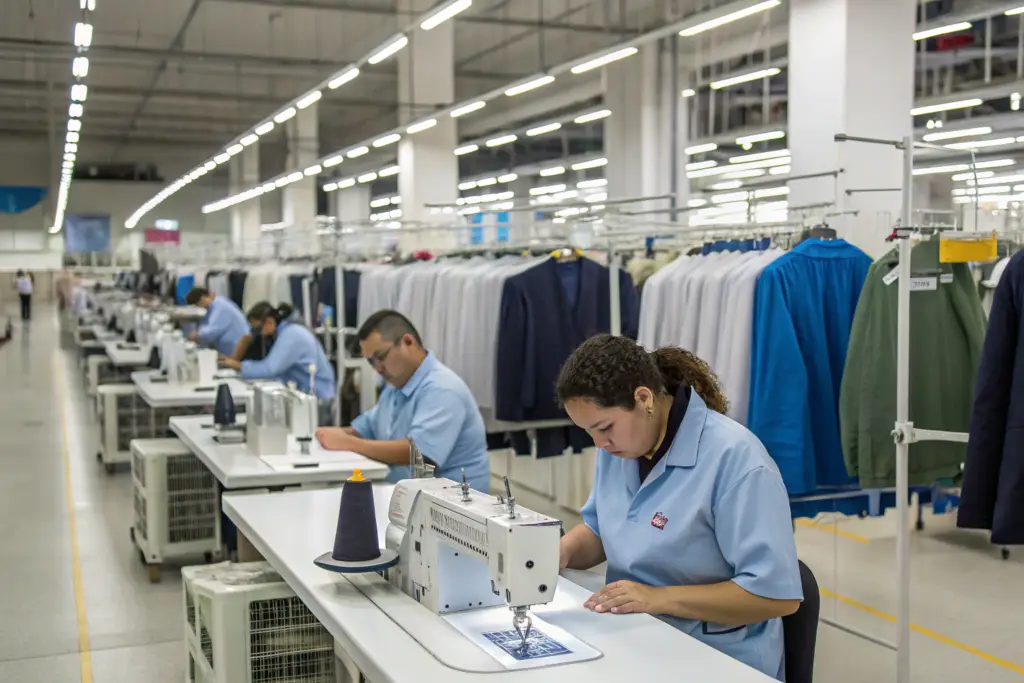
"Top manufacturer" is a bold claim. I have been in this industry long enough to know that the factory that shouts the loudest about being number one is usually the factory with the most to hide. Real quality does not need to shout. It shows up in the repeat orders. It shows up in the client referrals. It shows up in the audit reports. It shows up in the return rate data. So when you ask if Shanghai Fumao is the top clothing manufacturer for North American brands in 2026, I will not give you a simple yes. I will give you the criteria by which a brand should judge a manufacturer, and I will show you how we measure against those criteria. You can decide for yourself.
Shanghai Fumao is a leading contender for top clothing manufacturer for North American brands in 2026 because we meet the five criteria that define manufacturing excellence for the current market. First, vertical integration and factory ownership, which gives us control over production schedules, quality, and costs without relying on subcontractors. Second, verifiable quality systems, including our in-house testing laboratory, AQL 1.5 inspection standard, and OEKO-TEX and BSCI certifications. Third, supply chain transparency, with real-time production tracking, shared test data, and unannounced audit access. Fourth, logistics simplicity through our DDP shipping model, which delivers a single, predictable landed cost. Fifth, product range depth, spanning denim shorts, woven tops, trousers, skirts, and outerwear, all manufactured under the same quality and logistics systems.
I run Shanghai Fumao. I compete for your business against thousands of factories in China, Vietnam, Bangladesh, and beyond. I do not expect you to take my word for anything. In this article, I will define what "top manufacturer" means in measurable terms, compare our capabilities against the alternatives, and give you the framework to make your own assessment. This is not a victory lap. It is an honest appraisal of where we stand and where we are going.
What Criteria Define a "Top" Clothing Manufacturer in 2026?
The definition of a top manufacturer has changed. Ten years ago, the top manufacturer was the one with the lowest price and the fastest sample turnaround. Price and speed are still important, but they are no longer sufficient. The world has changed. Supply chains have been disrupted. Consumers demand sustainability. Retailers demand compliance. Social media amplifies product failures. A brand cannot afford a factory that cuts corners on quality, hides its supply chain, or misses delivery dates.
In 2026, a top manufacturer is defined by five criteria. Reliability, meaning they deliver what they promise, when they promise it, with consistent quality. Transparency, meaning they share their processes, their data, and their problems openly. Compliance, meaning they meet social and environmental standards verified by independent auditors. Capability, meaning they have the technical expertise, the equipment, and the supply chain depth to handle complex products. And partnership, meaning they operate as an extension of the brand's team, not as an adversary in a transaction. These five criteria are not marketing language. They are measurable. You can audit them. You can verify them.
Let me define each criterion in measurable terms and explain why it matters for North American brands in the current market.
Why Do Reliability and Transparency Now Outrank Price in Importance?
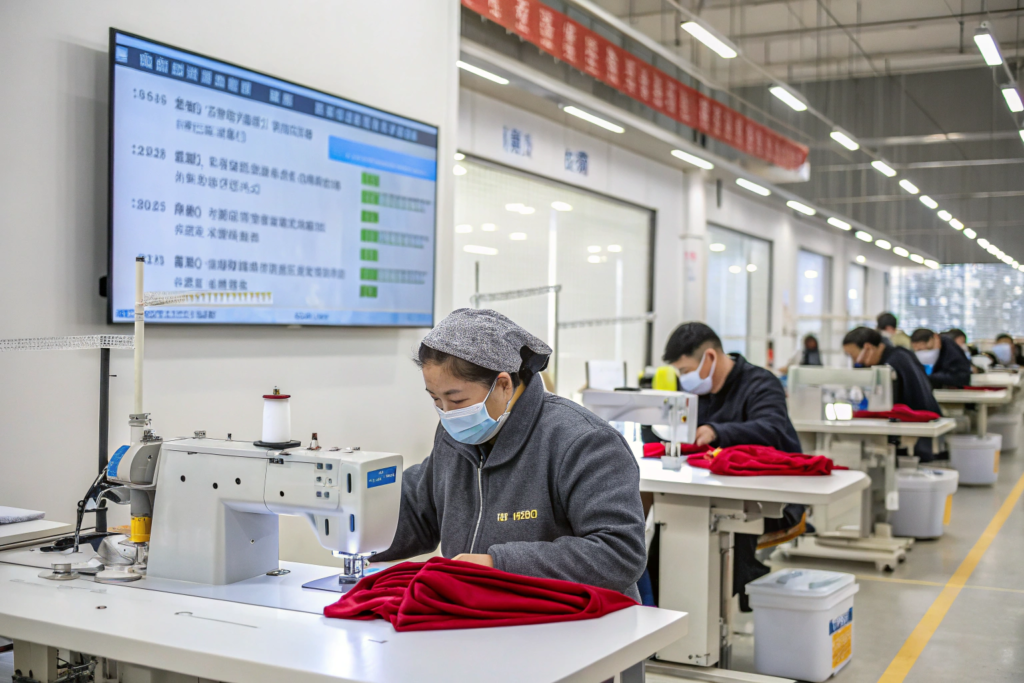
The cost of an unreliable supplier has skyrocketed. A late shipment does not just mean a missed delivery date. It means a missed selling season. It means markdowns. It means lost wholesale accounts. It means a damaged brand reputation. A quality failure does not just mean a return. It means a one-star review that lives on the internet forever. It means a customer lost to a competitor. The hidden costs of unreliability far exceed the visible savings of a lower unit price.
Transparency has become equally critical. The UFLPA, the Uyghur Forced Labor Prevention Act, in the U.S. requires brands to prove their supply chain is free from forced labor. The EU's Digital Product Passport will require brands to disclose detailed supply chain data. Brands can no longer afford to work with factories that hide their processes, their subcontractors, or their sourcing. A factory that refuses to share its audit reports, its fabric mill sources, or its chemical testing data is a liability. A factory that provides this data proactively is an asset.
North American brands, particularly those selling to large retailers like Nordstrom, REI, or Target, face stringent vendor compliance requirements. The factory must pass social compliance audits. The product must pass chemical safety tests. The shipment must have complete documentation. A factory that cannot meet these requirements is not eligible for a significant portion of the North American market. The supplier reliability metrics that leading procurement organizations use now weight on-time delivery and quality consistency above unit price. The market has shifted. The definition of "top" has shifted with it.
How Do Verifiable Certifications Separate Leaders from Laggards?
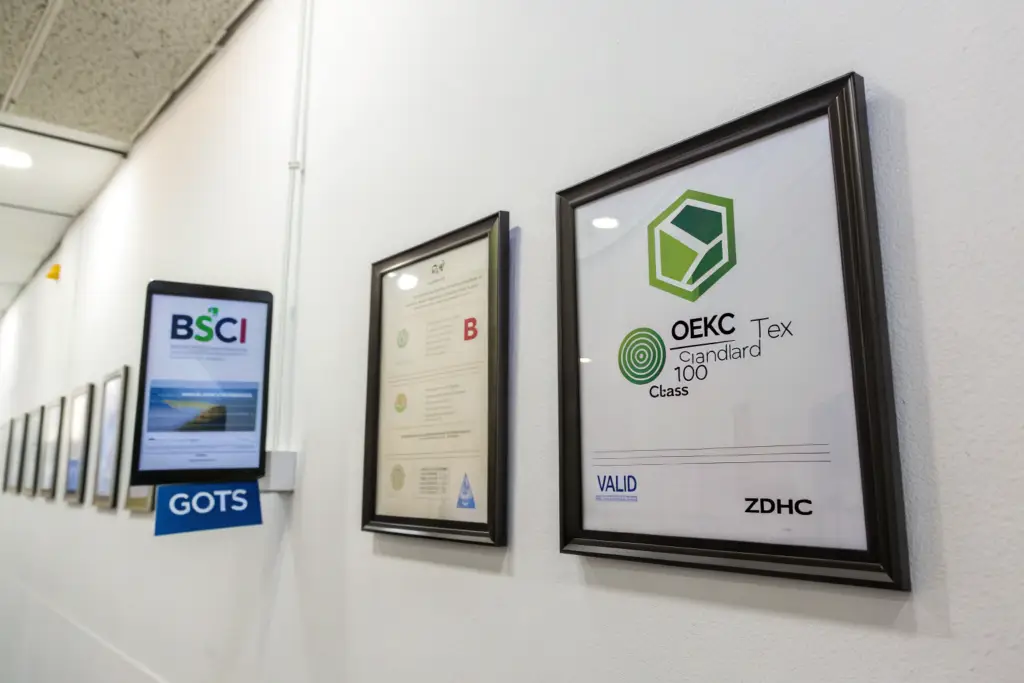
Certifications are not wallpaper. They are independent, third-party verifications that a factory meets specific standards. A factory that has valid, recent certifications from reputable bodies has submitted to external scrutiny. A factory that has no certifications, or expired certifications, has not.
The certifications that matter most for North American brands sourcing apparel are BSCI or SMETA for social compliance, OEKO-TEX Standard 100 for product chemical safety, GOTS for organic content, and ZDHC for chemical management in wet processing. We hold all four. Our BSCI audit is valid and rated B. Our OEKO-TEX is Class I, the strictest level. Our GOTS certification covers our sewing and finishing operations. Our ZDHC Gateway account has current, passing wastewater test results. These certifications are not secrets. We provide the certificate numbers. You can verify them on the issuing organization's public database. That is the point.
A factory that claims to be a top manufacturer but cannot produce a valid BSCI audit report is not a top manufacturer. A factory that claims its products are safe but cannot produce an OEKO-TEX certificate number that verifies on the public database is not a top manufacturer. The certifications are the baseline. The apparel industry certifications guide explains the landscape. Leaders have them. Laggards do not.
How Do Our Capabilities Compare to Other Chinese Manufacturers?
China is not a monolith. There are tens of thousands of garment factories in China, ranging from village workshops with ten sewing machines to publicly traded mega-factories with 50,000 workers. Comparing Shanghai Fumao to all Chinese manufacturers is meaningless. You need to compare us to factories in our tier. Mid-sized, export-oriented, specializing in woven garments and denim, serving small to medium brands in North America and Europe.
Within this tier, three capabilities differentiate us from the typical competitor. First, our investment in an in-house testing laboratory. Most factories our size outsource all testing to third-party labs. We brought it in-house because waiting a week for a fabric strength test result was too slow. Second, our DDP logistics model. Most Chinese factories sell FOB and consider their job done when the container leaves the port. We sell DDP and consider our job done when the shorts are at your warehouse. This is a fundamentally different service model. Third, our transparency practices. We share real-time production data, internal test results, and full audit reports. Most factories share a price list and a delivery date.
Let me provide a structured comparison of our factory against the typical competitor in our tier.
What Does a Capability Comparison with a Typical Competitor Look Like?
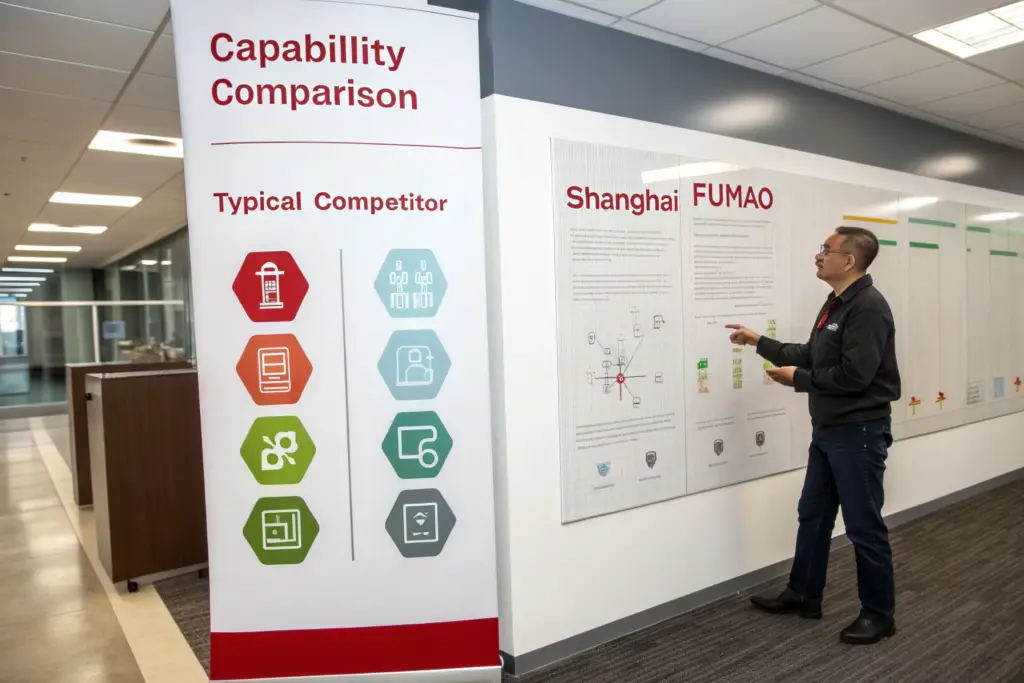
The table below compares Shanghai Fumao against a typical mid-sized Chinese garment factory serving the export market. This is a composite competitor based on my knowledge of the industry. It is not a specific named factory, but it is representative of what most buyers encounter.
| Capability | Typical Competitor | Shanghai Fumao |
|---|---|---|
| Production Lines | 2-3 lines, often rented | 5 lines, factory-owned |
| Quality Lab | No in-house lab, outsourced testing | Full in-house lab: tensile tester, Crockmeter, spectrophotometer, Martindale, zipper reciprocator |
| Inspection Standard | AQL 2.5 | AQL 1.5 internally, 1.0 for critical defects |
| Shipping Terms | FOB primarily | DDP primarily, FOB available on request |
| Production Tracking | Email updates on request | Real-time digital dashboard, 6 milestone dates in contract |
| Social Audit | May have BSCI, often expired or low-rated | BSCI B rating, valid, SMETA unannounced audit option |
| Product Safety | May claim OEKO-TEX, often unverifiable | OEKO-TEX Class I, certificate number verifiable online |
| Chemical Management | No ZDHC account | ZDHC Gateway, wastewater tests uploaded |
| Custom Wash R&D | Basic rinse and enzyme washes, outsourced | In-house wash lab with ozone, laser, enzyme, hand-spray, Pantone matching |
| Client Communication | Sales representative, email, response in 1-2 days | Dedicated merchandiser on production floor, response in hours, video calls with R&D team |
This comparison is not exhaustive, but it highlights the structural differences. The competitor is a production-only factory. They sew garments. They outsource everything else. Testing, complex washing, logistics management, compliance documentation, these are not their core competencies. We have invested in making them ours. The garment factory capability assessment criteria used by professional sourcing firms align with these categories. A buyer evaluating a factory should map its capabilities against a similar framework.
Why Do We Invest in Capabilities Most Factories Consider Optional?
Every capability in the right-hand column of that table costs money. The lab equipment cost over $30,000. The merchandiser salaries are above industry average. The DDP logistics model requires working capital and customs expertise. The ZDHC testing costs several hundred dollars per test. A factory that is focused purely on minimizing cost would not make these investments. They would cut corners.
We make these investments because we are focused on maximizing client lifetime value, not minimizing unit cost. A client who stays with us for five years, orders season after season, and refers other clients is worth far more than the cost savings from cutting a corner. The lab pays for itself in reduced returns and reduced client disputes over quality. The DDP model pays for itself in client retention. Clients who experience the simplicity of a single landed cost do not want to go back to managing freight forwarders and customs brokers. The transparency practices pay for themselves in trust. A client who can see their production data does not send anxious emails. The merchandiser's time is freed for productive work instead of status updates.
These investments are also a competitive moat. A new competitor cannot replicate our lab, our DDP infrastructure, or our transparency systems overnight. These are capabilities built over years. They create a barrier to entry that protects our position. The sustainable competitive advantage in manufacturing principles apply. Invest in capabilities that are valuable to clients, rare among competitors, and difficult to imitate. That is our strategy.
Where Do We Stand Among Global Sourcing Destinations in 2026?
China is one of many options for North American brands. Vietnam, Bangladesh, India, Turkey, Mexico, and nearshoring to Central America are all part of the sourcing conversation. Each destination has strengths and weaknesses. The top manufacturer is not necessarily in the cheapest country. It is in the country whose strengths best match the brand's product requirements and business model.
For brands that need complex denim washes, custom hardware, sustainable certifications, and reliable DDP delivery to North America, China remains the strongest option. The supply chain depth, the wash expertise, the hardware ecosystem, and the logistics infrastructure that China offers are not matched by any other single country. Vietnam and Bangladesh can beat China on labor cost for basic products. Turkey can beat China on speed to the European market. But for a North American brand that needs a premium denim short with a complex vintage wash, custom engraved buttons, and GOTS organic certification, delivered DDP to a U.S. warehouse with a guaranteed date, China, and specifically a factory like ours that has invested in these capabilities, is the top choice.
Let me position China and our factory within the global sourcing landscape.
How Does Chinese Manufacturing Compare to Vietnam and Bangladesh for Woven Garments?
Vietnam and Bangladesh have cost advantages in direct labor. A sewing operator in Bangladesh earns a fraction of what a sewing operator in Shanghai earns. For a basic garment with simple construction and no complex finishing, like a basic solid-color cotton shirt or a simple pair of chino shorts, these countries can offer a lower FOB price.
However, the cost advantage narrows when you consider the total landed cost and the product complexity. For a complex garment, a denim short with a multi-step wash, custom hardware, and branded packaging, the labor cost is a smaller portion of the total cost. The fabric, the wash, and the hardware are larger portions. These inputs are often more expensive or harder to source in Vietnam and Bangladesh. The fabric may need to be imported from China, adding cost and lead time. The wash house may not have the ozone and laser technology that our wash house has. The hardware may need to be sourced from China with longer lead times and communication challenges.
The logistics infrastructure is also different. Container shipping from Shanghai to Los Angeles is more frequent, more reliable, and often cheaper per container than from Chittagong or Ho Chi Minh City. The transit time from Shanghai is 12 to 15 days. From Bangladesh, it can be 25 to 30 days with transshipment. The longer transit time means higher inventory carrying cost and less agility.
For brands that value speed, quality, complexity, and logistics reliability, China's higher labor cost is offset by these advantages. For brands that value the absolute lowest FOB price for a simple product, and have the logistics capability to manage longer, more complex supply chains, Vietnam and Bangladesh are viable alternatives. The global apparel sourcing cost comparison data shows that China remains competitive on total landed cost for mid-to-premium products.
Why Do North American Brands Increasingly Value Our Combination of Quality and Logistics?
The pandemic-era supply chain disruptions taught North American brands a painful lesson. The lowest-cost supplier on the other side of the world is not a bargain if their shipments are delayed by port closures, container shortages, and factory shutdowns. Reliability became more valuable than a low price.
Brands also learned that managing a fragmented supply chain, a fabric mill in one country, a sewing factory in another, a wash house in a third, a freight forwarder in a fourth, is a significant operational burden. The time and money spent coordinating these vendors erode the savings from the lower FOB prices. A factory that can consolidate fabric, sewing, washing, and logistics under one roof, with one point of contact and one DDP invoice, eliminates that burden.
Our value proposition to North American brands is this combination. Quality that is verified by in-house testing and independent certifications. Complexity that is enabled by our wash lab and our supply chain depth. Logistics that is simplified by our DDP model and our milestone-tracked production. And a partnership model that provides direct access to our R&D team and real-time production data. This combination is not easily found in Vietnam, Bangladesh, or any other single sourcing destination. It is the result of years of investment and a deliberate business strategy. The nearshoring vs offshoring quality considerations debate increasingly favors suppliers who can deliver both quality and reliability, regardless of location. North American brands are voting with their purchase orders. They are choosing reliability.
Conclusion
Is Shanghai Fumao the top clothing manufacturer for North American brands in 2026? The answer depends on how you define "top." If you define it as the factory with the lowest FOB price on a basic product, no, we are not. There are factories in Bangladesh that will beat our price by a dollar or more. If you define it as the factory with the largest production capacity, no, we are not. There are mega-factories in China that can produce a million units a month.
But if you define "top" as the factory that best serves the needs of a mid-to-premium North American brand in 2026, a brand that needs verifiable quality, complex washes, custom branding, sustainable certifications, DDP logistics, transparent communication, and a true partnership, then we are a leading contender. Our five owned production lines, our in-house testing laboratory, our wash R&D center, our BSCI and OEKO-TEX certifications, our DDP shipping model, and our client retention rate of over 80% are the evidence.
I encourage you to verify that evidence. Do not take my word for it. Ask for our audit reports. Verify our OEKO-TEX certificate number online. Request a sample and test it yourself. Speak to our existing clients. Tour our factory by video call and ask to see the lab, the wash house, the production tracking board. A top manufacturer welcomes scrutiny. We do.
If you want to begin that verification process, contact our Business Director, Elaine. She can provide our capability comparison document, our certification package, and a sample of the product category you are interested in. She can also schedule a video tour and connect you with a client reference in your market. Her email is elaine@fumaoclothing.com. At Shanghai Fumao, we are not the top manufacturer because we say so. We are a top manufacturer because our clients and our data say so. That is the only claim that matters.