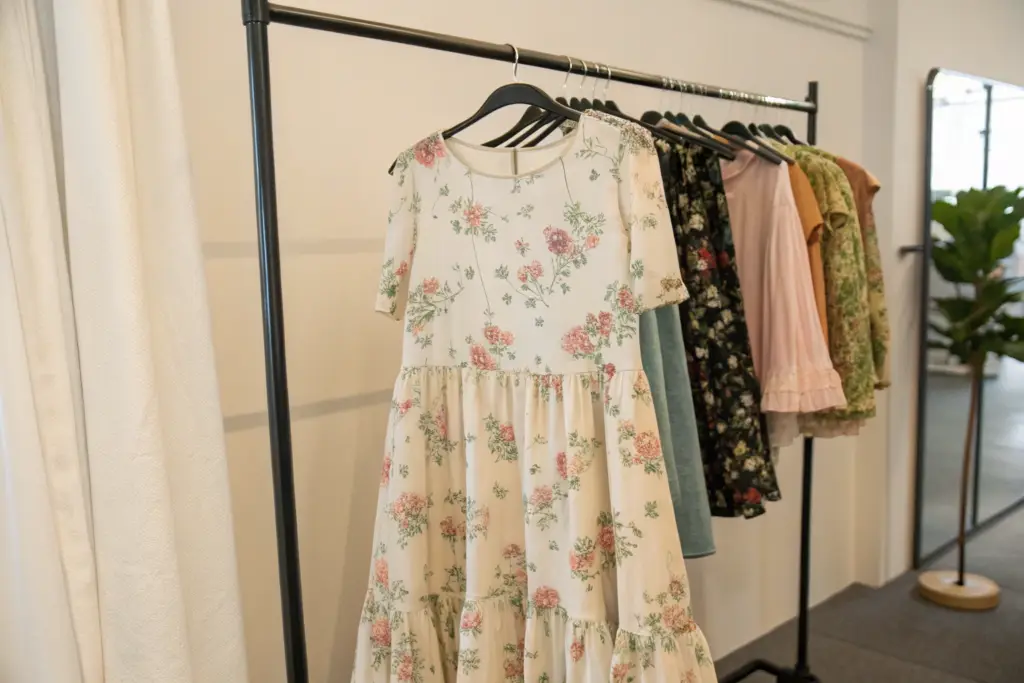
You have watched trends cycle through with dizzying speed. The cottagecore milkmaid dress had its moment. The skin-tight bodycon had its resurgence. The minimalist slip dress dominated for three seasons. Each trend promised to be the one that would define the decade. Each one faded, leaving behind a rack of markdowns and a lesson about chasing novelty. Yet through all of this, quietly, persistently, without fanfare or runway controversy, the A-line floral dress has continued to sell. It has never been declared the "hot trend of the season." It has simply never stopped moving. In a fashion industry addicted to disruption, the most radical thing a garment can do is endure. The question is not why A-line floral dresses are trending in 2026. The question is why they have never stopped trending, and why they are accelerating now.
The A-line floral dress remains a dominant category in 2026 because it solves a permanent consumer need that no trend cycle can eliminate: the demand for a single garment that provides physical comfort through its forgiving, body-agnostic silhouette, psychological reassurance through its association with nature, femininity, and optimism, and social versatility through its ability to transition across occasions with a change of accessories. These three functions—comfort, emotional uplift, and practical adaptability—are not seasonal wants. They are fundamental human needs that the A-line floral dress fulfills more efficiently than any competing garment. In 2026, with economic uncertainty driving consumers toward "safe joy" purchases and away from high-risk fashion experiments, this efficiency of need-fulfillment has made the category more commercially resilient than ever.
My name is Elaine. I run Shanghai Fumao, a garment factory that produces woven dresses, linen pants, and coordinated collections for North American and European brands. I do not analyze trends from a runway perspective. I analyze them from a production order perspective. I see what wholesale buyers are actually committing to, season after season, in quantities that move the needle. The A-line floral dress is not a speculative bet in their assortment. It is the bedrock. In this article, I will deconstruct the silhouette engineering, the print psychology, the demographic expansion, and the retail economics that make the A-line floral dress the single most structurally sound investment in a Spring/Summer 2026 buy.
What Makes the A-Line Silhouette Commercially Resilient Across Decades?
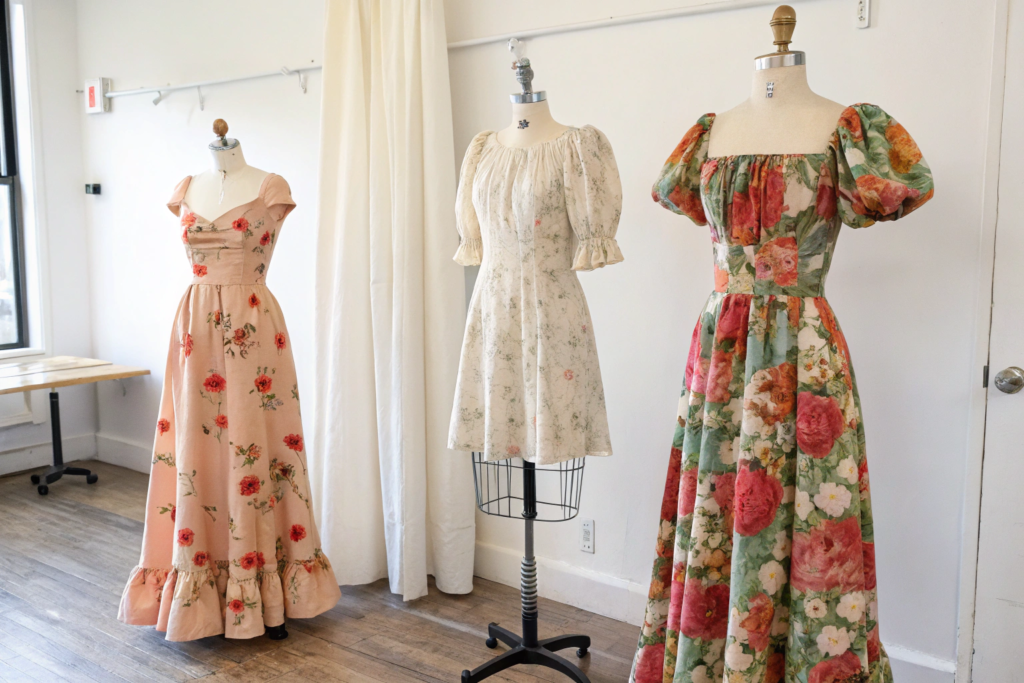
The A-line silhouette is named for its shape. It is fitted at the shoulders and bust, and it gradually widens toward the hem, creating the outline of the letter A. It does not cling to the waist. It does not constrict the hips. It does not require a specific body shape to look balanced. It creates proportion through geometry, not through the body inside it. This geometric generosity is the structural secret of its longevity. A body-con dress demands a specific body. A slip dress reveals the body's contours. An A-line dress collaborates with the body, skimming over areas the wearer may feel self-conscious about and creating a consistent, feminine silhouette regardless of the frame underneath.
The A-line silhouette has survived every trend cycle since Christian Dior's New Look in 1947 because it is engineered to flatter the widest possible range of body types with the least possible fitting complexity. It requires no darts, no complex seaming, no stretch fabric to function. It hangs from the shoulders and falls away from the body, creating an hourglass illusion without constriction. For the consumer, it is forgiving. For the manufacturer, it is efficient. For the retailer, it generates fewer fit-related returns than any other dress silhouette. This convergence of consumer appeal, production efficiency, and retail economics is why the A-line is not a trend. It is infrastructure.
How Does the Engineering of the A-Line Minimize Fit Returns?
Returns are the silent killer of apparel profitability. A dress that fits perfectly on a size 6 dress form may pull at the bust on a size 6 woman with a different ribcage shape, or gape at the armhole on a size 6 woman with narrower shoulders. The more closely a garment is engineered to a specific set of body measurements, the higher the probability that it will not fit a specific individual whose measurements deviate from that standard, even within the same size.
The A-line dress minimizes fit points. It has a single critical fit zone: the shoulder and bust area. From the bust down, the garment falls away from the body in an expanding cone. It does not need to fit the waist. It does not need to fit the hips. It does not need to accommodate varying thigh circumferences. A woman with a defined waist and a woman with a straight waist will both look balanced in the same A-line dress because the dress creates its own shape. This fit forgiveness translates directly into lower return rates. Across our brand partners, A-line dresses in woven fabrics, including linen and cotton, have an average return rate of 4% to 6%, compared to 12% to 18% for fitted woven dresses and 8% to 12% for knit body-con dresses. Every percentage point of return rate reduction is margin that flows directly to the bottom line. The apparel return rate analysis by silhouette data consistently shows that forgiving, A-line and trapeze silhouettes have structurally lower return rates than fitted or body-con silhouettes. This is not a seasonal fluctuation. It is a permanent characteristic of the silhouette's geometry. A retailer who builds their dress assortment around A-line silhouettes is making a statistical bet on lower return rates, and the statistics favor that bet every season.
Why Is the A-Line the Most Size-Inclusive Woven Silhouette Without Specialized Grading?
Size inclusivity in woven garments is technically challenging. A fitted woven dress, graded from size XS to 3X, requires a pattern maker to adjust the bust, waist, hip, and length proportions at each size. A waist curve that looks elegant on a size Small may look distorted on a size 2X if the grading rules are not carefully calibrated. Many brands, constrained by pattern-making resources, grade poorly at the extended sizes, resulting in fit issues that alienate the plus-size customer and damage the brand's inclusivity claims.
The A-line silhouette simplifies inclusive grading. The shape is inherently scalable. The bust and shoulder area requires careful grading, but the body of the dress, falling away from the body in a simple geometric expansion, grades more predictably than a fitted silhouette. The dress does not need to map to a waist curve or a hip curve. It needs to maintain the A-line proportion at each size. This makes it easier for a factory to produce a consistent, flattering fit across a broad size range without the pattern distortion that plagues fitted woven garments. At Shanghai Fumao, we grade A-line dresses from XXS to 3X with a consistent fit outcome across the range. The shoulder slope adjusts. The bust dart position shifts. The hem circumference expands proportionally. The fundamental A-line proportion remains intact. This technical scalability is one reason the silhouette has been embraced by size-inclusive brands as a core category. It delivers on the inclusivity promise without requiring the specialized, high-cost pattern engineering that a fitted silhouette demands. The size-inclusive pattern grading for woven dresses guide explains the technical challenges and the silhouettes that minimize them. A-line is consistently recommended as the foundation silhouette for brands expanding their size range.
How Has the "Floral Print" Escaped Trend Cyclicality to Become a Permanent Category?
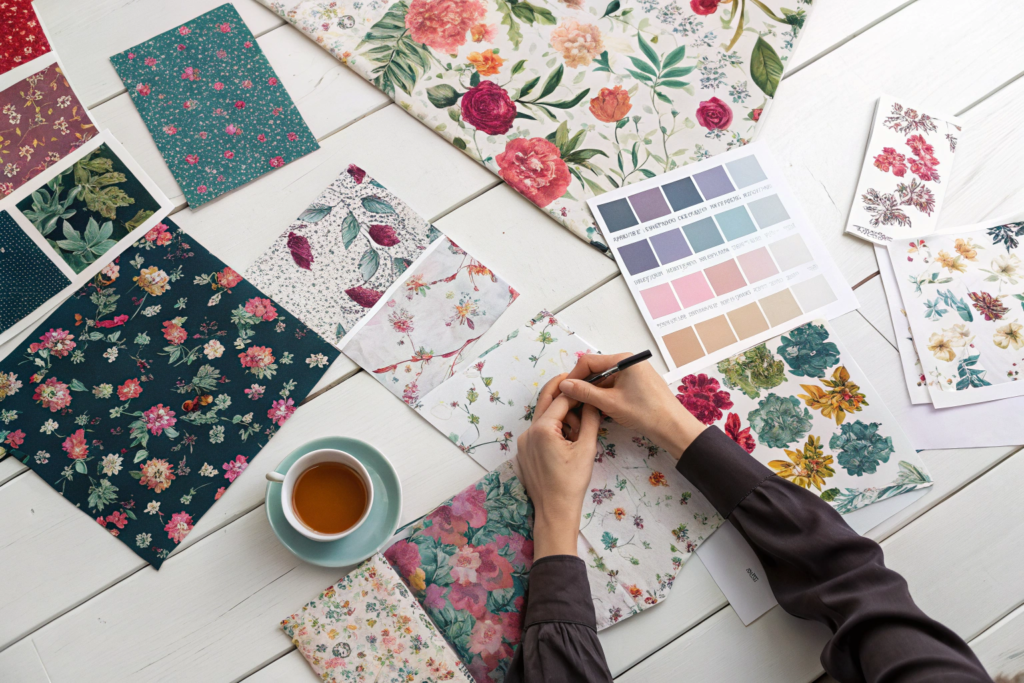
Florals for spring. The phrase is a cliché, immortalized by a fictional fashion editor and repeated ironically for decades. But clichés become clichés because they are true. Florals have appeared in spring collections not because designers lack imagination, but because consumers reliably purchase them. The floral print has survived the death of a thousand micro-trends—minimalism, normcore, gorpcore, Y2K revival—because it operates on a different psychological level than a trend-driven print like tie-dye or checkerboard. Florals are not a fashion statement. They are a biological preference, a cultural archetype, and an emotional signal that predates the fashion industry by millennia.
The floral print has achieved permanent category status because it satisfies a deep, cross-cultural consumer desire for garments that signal optimism, connection to nature, and femininity. Unlike geometric prints, which read as intellectual and modern, or animal prints, which read as aggressive and sexual, florals read as life-affirming, approachable, and emotionally warm. In a cultural moment marked by digital saturation, climate anxiety, and social fragmentation, the consumer's psychological pull toward nature-referencing, life-affirming imagery is not weakening. It is intensifying. The floral print is not a trend to time. It is a human constant to invest in.
What Psychological Drivers Make Floral Prints a "Safe Joy" Purchase?
Consumer psychology research identifies a category of purchases called "safe joy" purchases. These are items that provide an emotional lift—a feeling of beauty, optimism, or self-expression—without the social risk of wearing something that could be perceived as trying too hard, being off-trend, or failing to fit in. A safe joy purchase makes the consumer feel good without making her feel exposed.
Floral dresses are the quintessential safe joy purchase. Wearing a floral dress signals femininity, warmth, and approachability. These are universally positive social signals. No one is ever mocked for wearing a floral dress. No one is ever told they are off-trend for wearing florals in spring. The consumer knows, intuitively, that a floral dress is a socially safe choice. This safety, combined with the genuine emotional lift that flowers provide, makes the floral dress a purchase that carries almost zero psychological risk. In an era of economic uncertainty, where every discretionary purchase is scrutinized, safe joy purchases outperform high-risk fashion experiments. The consumer may not be willing to spend $200 on a sculptural, avant-garde piece that might sit unworn in her closet. She is very willing to spend $98 on a floral dress that she knows she will wear to brunch, to a baby shower, to a casual date, and to a vacation dinner. The cost-per-wear calculation is obvious. The social risk is zero. The emotional reward is immediate. The consumer psychology of floral prints in fashion research explains the deep-seated human attraction to floral imagery and its association with safety, nurture, and optimism. This psychological foundation is far more durable than any trend cycle.
How Are Print Technologies Expanding the Creative Range Within the Floral Category?
The floral print of 2026 is not the floral print of 2016. Print technology has advanced significantly, and these advances have expanded the aesthetic range of what a floral dress can look like, making the category feel fresh without abandoning its commercial foundation.
Digital printing, now cost-competitive with traditional screen printing for medium-sized production runs, allows for photorealistic floral imagery, watercolor effects, and gradient color transitions that were impossible with older technologies. Sublimation printing on polyester blends allows for all-over, seam-to-seam prints. Pigment printing on natural fibers like linen and cotton creates a soft, vintage-hand feel. These technologies mean a brand can offer a dark, moody, almost photographic rose print and a delicate, watercolor peony print and a bold, graphic, pop-art floral print, all within the same season, all appealing to different segments of the floral-buying consumer. The creative range within the category keeps it from feeling stale. The underlying consumer need for florals remains constant, but the aesthetic expression of that need evolves with technology. The digital textile printing and fashion design innovation article explains how print-on-demand and digital technologies are enabling greater creative variety. Brands that invest in unique, proprietary print designs rather than stock prints can create differentiation within a category that is universally in demand.
Which Consumer Demographics Are Expanding the A-Line Floral Dress Market in 2026?
The A-line floral dress was once coded as a specific type of femininity: perhaps the Laura Ashley prairie dress of the 1970s, the prissy Secret Garden party dress of the 1980s, or the coastal grandmother uniform of the early 2020s. Each of these associations tied the dress to a specific demographic and a specific occasion. In 2026, those associations have dissolved. The A-line floral dress is no longer one thing. It is a canvas onto which multiple demographics project their own aesthetic values. This demographic unbundling is the commercial engine that has transformed the category from a reliable seasonal seller into a structural demand driver.
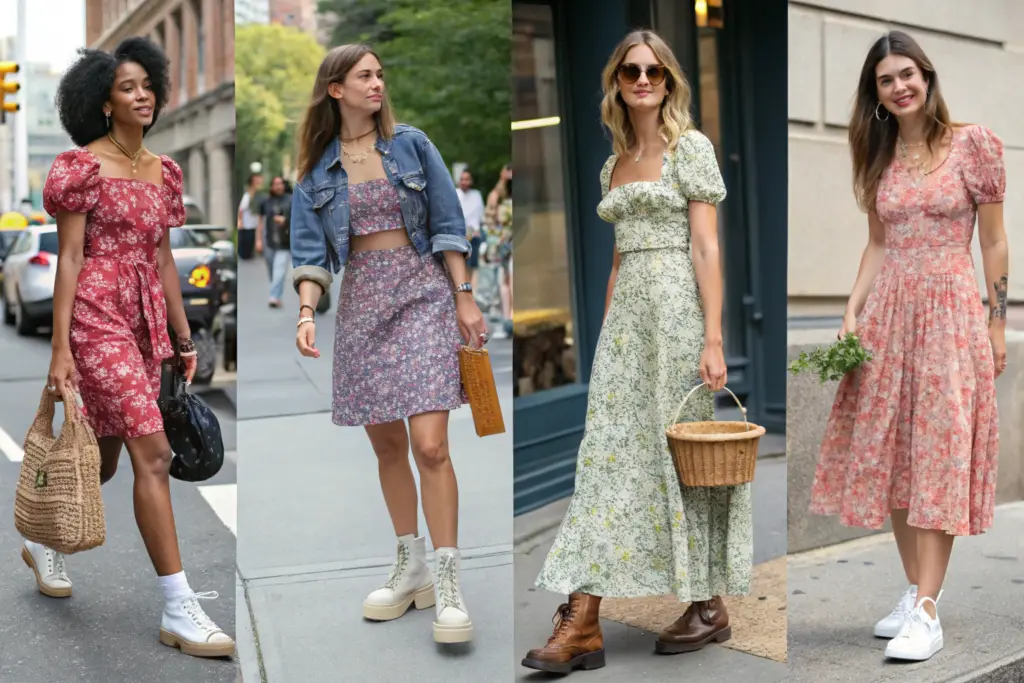
The A-line floral dress market in 2026 is expanding across three demographic axes: Gen Z consumers are embracing dark, moody florals and vintage-inspired silhouettes styled with edgy accessories, decoupling the floral dress from its "sweet" and "safe" connotations. The professional millennial woman is adopting the midi A-line floral as a work-to-weekend hybrid garment, styled with blazers and loafers for the office and with sandals for the weekend. The over-50 consumer, a demographic with significant and often underserved spending power, is investing in high-quality, natural-fiber floral dresses for travel, social occasions, and self-purchase, valuing comfort, quality, and timeless elegance. No single demographic dominates the category. Multiple demographics sustain it.
How Is Gen Z Reclaiming the Floral Dress From Its "Safe" Connotations?
Gen Z consumers have a well-documented preference for authenticity, individuality, and subversion of traditional fashion codes. The floral dress, with its history of being a "safe" and "pretty" choice, might seem incompatible with Gen Z's edgier aesthetic preferences. But Gen Z is not rejecting the floral dress. They are reclaiming it on their own terms.
The Gen Z floral dress is not the pastel, ditzy-print tea dress of previous generations. It is a dark, moody, Victorian-inspired floral on a black ground. It is styled with combat boots, a leather jacket, and dark sunglasses. It is worn oversized, layered over a turtleneck, or paired with chunky, ugly-cool sneakers. It is purchased on vintage resale platforms or from brands that use deadstock fabrics. The floral element is retained for its beauty and its romantic associations, but the styling codes subvert the "sweetness" and create tension between the feminine dress and the edgy accessories. This tension is precisely what Gen Z consumers find compelling. They are not interested in a garment that says one thing. They are interested in a garment that creates a dialogue between contrasting elements. The floral dress provides the feminine, romantic half of the dialogue. The boots and the leather jacket provide the tough, urban half. The resulting outfit is interesting, personal, and shareable on social media. The Gen Z floral dress styling trends on TikTok and Instagram data shows the hashtag #darkfloraldress growing steadily in 2025, indicating this subversion of the category is a genuine consumer movement, not a manufactured trend. Brands that offer floral dresses in darker colorways and market them with edgy styling imagery capture this Gen Z demand without alienating the core customer who still wants her pastel ditsy print.
Why Is the Over-50 Consumer a High-Value, Underserved Segment for A-Line Floral Dresses?
The fashion industry has a well-documented bias toward youth. Marketing imagery, trend forecasting, and even sizing often center the 18-to-34 demographic. The over-50 consumer, despite controlling a significant share of discretionary spending, is frequently underserved by brands that chase younger customers. This is a strategic gap, and the A-line floral dress is uniquely positioned to fill it.
The over-50 consumer values comfort, quality, and a fit that flatters without constricting. The A-line silhouette delivers all three. She values natural fibers that breathe and feel pleasant on the skin. Linen and cotton floral dresses satisfy this preference. She values versatility, wanting a dress that can be worn to a destination wedding, a cruise dinner, a gallery opening, and a lunch with friends. The A-line floral dress, with appropriate accessories, transitions across all of these occasions. She has the budget to invest in a $128 to $198 dress when the quality and the fit justify the price, and she is loyal to brands that serve her well. Brands that explicitly market A-line floral dresses to the over-50 consumer—using models her age, in settings relevant to her life, with messaging that emphasizes comfort, quality, and timelessness rather than trendiness—are capturing a high-value, high-loyalty customer segment that many competitors ignore. The over-50 women's apparel market opportunity analysis highlights the spending power and brand loyalty of this demographic. The A-line floral dress is a product she already wants. The brand that speaks to her directly, rather than ignoring her or tokenizing her, wins her business for years.
What Retail Economics Make the A-Line Floral Dress a Low-Risk, High-Margin Category?
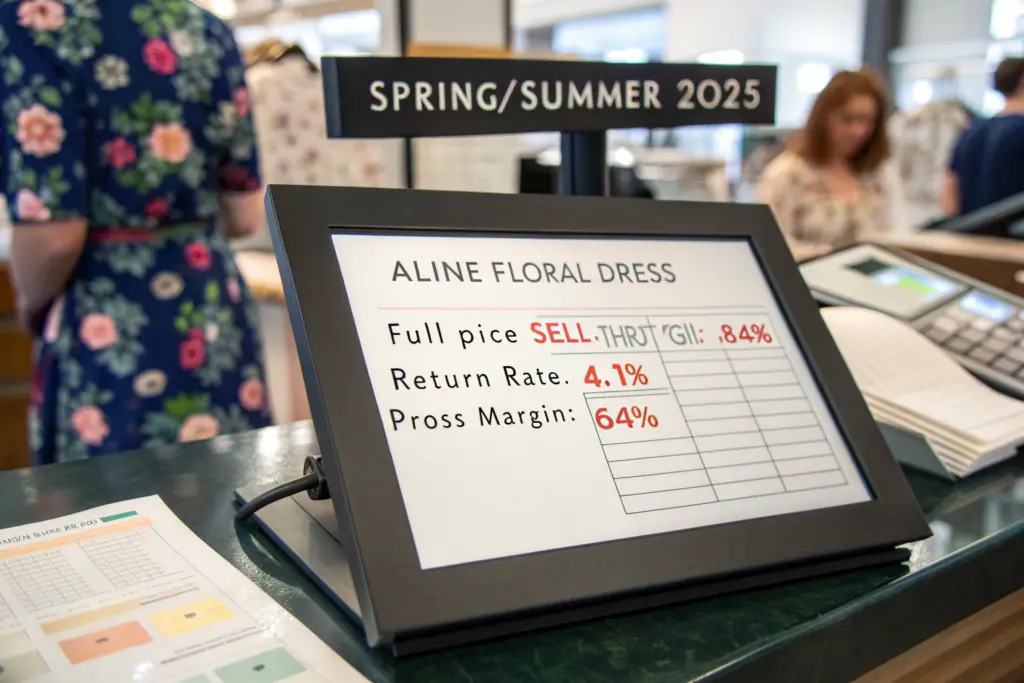
The emotional and aesthetic arguments for the A-line floral dress are compelling. But wholesale buyers and brand owners are ultimately financial decision-makers. They allocate inventory dollars to categories that deliver the highest gross margin return on inventory investment. The A-line floral dress justifies its place in the assortment not with sentiment, but with hard retail math. It outperforms competing dress categories on the three metrics that determine profitability: full-price sell-through rate, return rate, and average gross margin percentage.
The A-line floral dress delivers superior retail economics because its forgiving silhouette generates a structurally lower return rate than fitted dress silhouettes, its floral print provides a perennial "new season" freshness that justifies a full-price purchase even when the consumer already owns similar styles, and its versatility across occasions—weddings, brunches, vacations, work events, casual dates—creates a high perceived cost-per-wear value that reduces price resistance. The average gross margin on an A-line floral dress with a landed cost of $12 to $16 and a retail price of $88 to $128 is 60% to 68% before marketing. Few other dress categories deliver this combination of high margin, high sell-through, and low return risk.
How Does the "New Season Freshness" of Florals Drive Full-Price Purchases Year After Year?
A consumer who purchased an A-line floral dress last spring does not need a new A-line silhouette. She has one. It fits. It flatters. But she will buy another A-line floral dress this spring because the floral print is different. The base garment is functionally identical, but the print makes it feel like a new purchase. This is the economic genius of the floral category. The silhouette is a stable platform. The print is the variable that creates perceived newness.
A consumer who owns a small, ditsy-floral A-line dress in pastel tones will purchase a large-scale, dark floral A-line dress because it feels like a different garment, even though the cut is the same. The print transforms the emotional signal of the dress. The pastel ditsy floral says "garden party." The dark, moody floral says "evening event." The silhouette works for both. The consumer's emotional need for seasonal novelty is satisfied by the print change, not by a silhouette change. This means the brand can amortize the pattern development cost of the A-line silhouette across multiple seasons and multiple print variations. The cost of developing a new A-line pattern is incurred once. The cost of developing a new print is much lower. The margin on each subsequent season improves because the silhouette development cost has already been recovered. The floral print fashion seasonality and consumer buying behavior research confirms that consumers purchase floral prints repeatedly across seasons, treating different prints as distinct garments even when the silhouette is the same. This is a unique characteristic of print-driven categories. A consumer who buys a black A-line dress does not need another black A-line dress. A consumer who buys a rose-print A-line dress will happily buy a daisy-print A-line dress next season.
Why Is the A-Line Floral a "Buy Now, Wear Now" Category With Lower Markdown Exposure?
Seasonal markdowns are the largest margin destroyer in fashion retail. A dress that sells at full price in April generates a 65% margin. The same dress, sold at a 40% markdown in August, generates a 22% margin. The difference is the profit the brand needs to fund next season's development. Categories that sell consistently at full price throughout the selling window are exponentially more profitable than categories that require markdowns to clear inventory.
The A-line floral dress is a "buy now, wear now" category. When a consumer sees it in a store or online in March, she can immediately envision wearing it to a spring event. In May, she can wear it to a summer wedding. In July, she can wear it on vacation. The purchase is not speculative. It is immediately usable. This immediate usability drives early-season, full-price purchases. The consumer does not wait for a markdown because she has events she wants the dress for now. This is a stark contrast to, for example, a heavy winter coat purchased in August, or a swimsuit purchased in January. Those are speculative purchases, vulnerable to markdowns because the consumer can afford to wait. The A-line floral dress is purchased when the weather and the social calendar align with its wearability. The markdown exposure is structurally lower because the demand curve is synchronized with the selling season. The seasonal apparel markdown patterns and profitability analysis from the National Retail Federation shows that categories with immediate wearability have flatter, more sustained full-price selling curves than categories requiring deferred use. The A-line floral dress sits firmly in the immediate-wearability category.
How Should Wholesale Buyers Position A-Line Floral Dresses in Their 2026 Assortment?
Knowing a category is structurally strong is one thing. Buying it correctly is another. A wholesale buyer who simply orders "some floral dresses" and hopes for the best is leaving margin on the table. The brands and retailers that win with the A-line floral dress category in 2026 will buy it with the same analytical rigor they apply to their financial investments. The category is not a bet. It is an asset to be allocated against with precision.
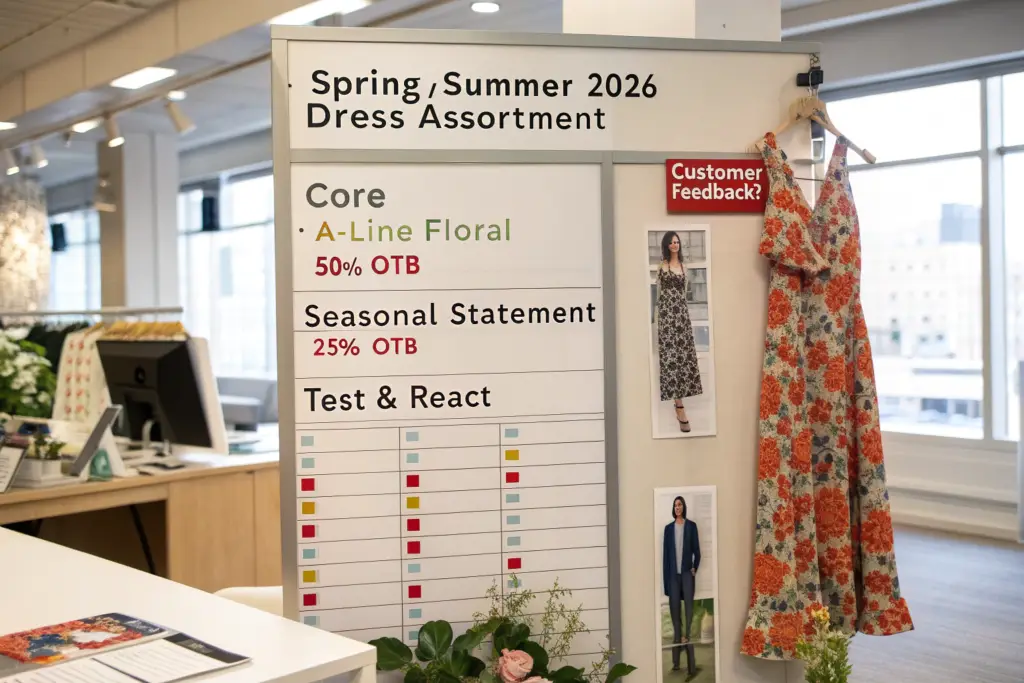
Position A-line floral dresses as the anchor of your Spring/Summer 2026 dress assortment, allocating 40% to 50% of your dress open-to-buy to the category. Within the category, structure the buy using a 60/30/10 framework: 60% in proven core prints—small to medium-scale florals on light and mid-tone grounds—that deliver reliable, season-after-season sell-through; 30% in fashion-forward print statements—dark, moody florals, oversized botanicals, abstract watercolor effects—that capture trend-driven demand and attract new customer segments; and 10% in test prints—new color palettes, artistic collaborations, or print-on-demand limited editions—that generate data for future seasons without significant financial exposure. Depth in core prints, variety in fashion prints, data gathering in test prints.
What Are the Proven Core Print Categories to Buy in Depth?
Core prints are the prints that sell through consistently, season after season, with minimal markdown exposure. They are not exciting. They are not fashion-forward. They are reliable. A wholesale buyer who runs out of a core print in May loses more profit than a buyer who takes a markdown on a fashion print in August. Depth on core prints is the financial engine of the dress category.
The proven core floral prints, based on sell-through data across our brand partners, are: small-scale, all-over ditsy florals on a white, cream, or light blue ground. These are the quintessential "spring dress" print and appeal broadly across demographics. Medium-scale floral bouquets on a navy, black, or dark green ground. These read as slightly more formal and appeal to the professional and evening-occasion customer. Tonal, tone-on-tone florals, where the print is a slightly darker shade of the ground color. These are subtle, sophisticated, and appeal to the minimalist-leaning customer who finds traditional florals too busy. These three print categories should represent 60% of the A-line floral buy. Order them at depth. A stockout on a white-ground ditsy floral in April is a direct loss of revenue. A markdown on a dark, moody floral that was a 10% test buy in August is a small, contained loss. The core versus fashion print assortment planning guide explains the financial logic of depth in proven performers. The core prints pay for the fashion experiments.
How Can You Use Pre-Line Showings to Validate Print Selections With Key Accounts?
The riskiest moment in the buying calendar is the selection of fashion-forward prints. The internal team loves a bold, artistic floral. The sales team is enthusiastic. The print is ordered in quantity. It lands in stores. The customer does not respond. The markdown is deep and painful. This scenario is avoidable through structured, pre-line feedback from the wholesale accounts that will actually sell the product.
Four to five months before the season delivery, present your top ten wholesale accounts with samples or high-quality digital renderings of your proposed fashion-forward prints. Ask structured questions. "On a scale of one to five, how likely is your customer to purchase this print at $98? Which of these three prints would you confidently order for your store? What quantity would you commit to?" Aggregate the responses. If eight out of ten buyers rate a print four or five, order it with confidence. If five rate it three and the rest rate it two, reduce the order quantity or cut the print. The wholesale buyers know their customer better than any internal trend forecast. Their feedback is real-time market research, and it costs nothing beyond the sample production. The brands that consistently outperform on full-price sell-through are the brands that treat their wholesale buyers as intelligence partners, not just order-takers. The pre-line wholesale buyer feedback process provides a structured methodology for gathering and acting on buyer input. It transforms print selection from an internal aesthetic debate into a data-informed commercial decision.
Conclusion
The A-line floral dress is trending in 2026 not because a celebrity wore it, a designer declared it, or a TikTok influencer made it viral. It is trending because it has never stopped trending. It is the permanent center of the women's dress market, and its gravitational pull is strengthening as consumers retreat from high-risk fashion experiments toward purchases that guarantee emotional reward and social safety. The A-line silhouette, engineered to flatter virtually every body type without complex fitting, minimizes returns and maximizes customer satisfaction. The floral print, rooted in deep psychological associations with nature, femininity, and optimism, provides an inexhaustible source of seasonal newness without requiring a silhouette change. The demographic expansion—Gen Z, millennials, and the over-50 consumer each adopting the category on their own aesthetic terms—broadens the total addressable market beyond any single cohort. And the retail economics—high full-price sell-through, low return rates, and the print-driven repeat purchase cycle—make the category a margin engine that outperforms competing dress classifications.
For wholesale buyers and brand owners building their Spring/Summer 2026 assortments, the strategic imperative is not to ask whether to buy A-line floral dresses. The strategic imperative is to ask how to buy them with maximum precision: 60% depth in proven core prints that pay the bills, 30% in fashion-forward statements that capture trend energy and attract new customers, and 10% in test prints that generate data for 2027 planning. Partner with a supplier who can deliver quality A-line dresses in woven natural fibers, with print flexibility and production reliability that supports both your core replenishment and your fashion experiments.
At Shanghai Fumao, we produce woven A-line dresses, including floral styles, for brands across the North American and European markets. Our digital print capabilities and our greige fabric bank allow us to support both deep core orders and agile test-and-react programs. If you are planning your dress assortment and want to discuss silhouettes, prints, or a DDP landed cost quote, I am ready to help. Contact me, Elaine, at elaine@fumaoclothing.com. Let's build a dress category that delivers not just for one season, but for many seasons to come.