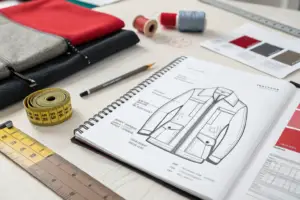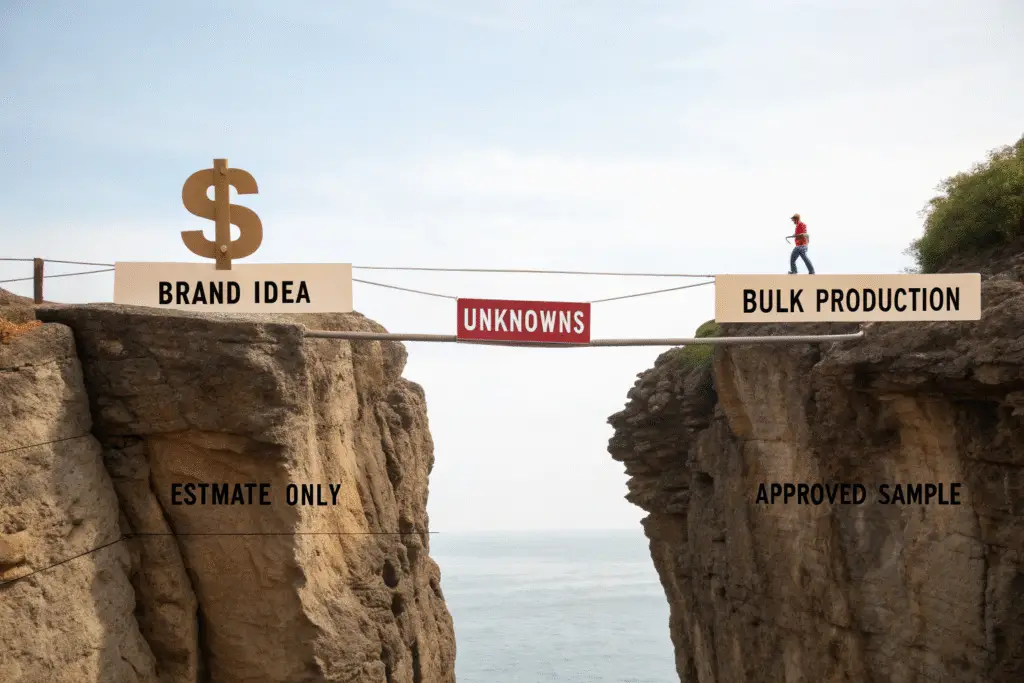
You have a new design. You send sketches and a brief description to a few factories. One comes back with a surprisingly low quote and promises a fast turnaround. Tempting, right? This is the moment where many brands make a critical error: they treat this initial estimate as a final price and commit to production before seeing and approving a physical sample. An estimate without a sample isn't a bargain; it's a high-risk gamble with your budget, timeline, and brand reputation. It's a price tag attached to an assumption, not a product.
An estimate without a sample is a significant risk because it is based on incomplete information and unverified assumptions about materials, construction complexity, and factory capability. It cannot account for real-world variables like fabric behavior, precise labor time, or hidden construction challenges, leading to inevitable cost overruns, quality mismatches, and production delays. In short, you are buying a promise, not a product, and the final bill will always be higher than the estimate.
At Shanghai Fumao, a client approached us for a second opinion after receiving a shockingly low estimate from another factory for a structured blazer. The estimate was 40% below our projected range. We urged them not to commit until they saw a sample. They ignored the advice and placed the order. The factory produced a sample that was flimsy, used fused interlining instead of canvas, and had puckered seams. The client rejected it. The factory then said the original estimate was for "basic construction" and that to achieve the desired quality, the price would triple. The client lost two months, paid a cancellation fee, and came to us to start over properly. This painful lesson is all too common. Let's examine why the sample is the non-negotiable bridge between an estimate and a reliable price.
What Critical Information Is Missing From A Sample-Less Estimate?
An estimate generated from a tech pack or sketch is an exercise in extrapolation. The factory must guess to fill in the blanks you haven't provided, and they will guess conservatively (in their favor) or optimistically (to win your business). Neither is good for you.
A sample-less estimate is built on a house of cards made of assumptions.
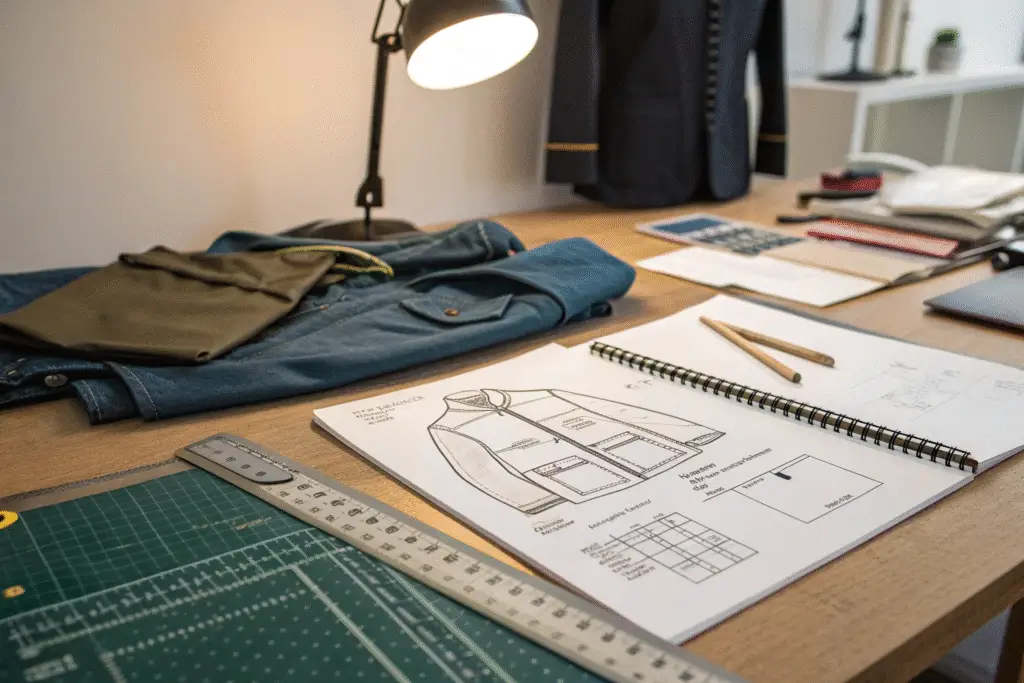
The Three Pillars of Guesswork in a Sample-Less Quote:
-
Fabric Consumption & Cost:
- Assumption: The estimator uses a standard fabric width and average waste percentage for a "similar" style.
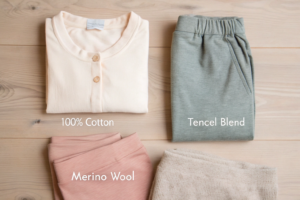
- Reality (Revealed by Sample): Your design might require bias cutting (increasing waste by 25%), pattern matching (increasing waste by 15%), or have large, irregular pieces. Until a pattern is made and a marker is laid out, no one knows the true fabric consumption. A digital marker simulation from a pattern file gets close, but a physical sample confirms it.
-
Labor Time (SAM - Standard Allowed Minute):
- Assumption: The factory assigns a standard SAM value from a database for a "dress" or "jacket."
- Reality (Revealed by Sample): Your specific construction details—a concealed placket, a specific type of seam finish, a complex collar—dramatically alter labor time. A sample made by a skilled sample maker reveals the true, detailed sequence of operations and the time each takes. An estimate might assume a 20-minute SAM, but the sample process might reveal it's a 35-minute garment.
-
Makeability and Hidden Complexity:
- Assumption: The design is as straightforward as it looks in the flat sketch.
- Reality (Revealed by Sample): The sample is the first test of "makeability." Does the fabric drape as expected? Do the layers of fabric and interlining bunch when sewn? Does the zipper lie flat? These issues only become apparent in three dimensions. A factory might lowball an estimate only to discover during sampling that the design requires a specialized machine or artisan skill they don't have, leading to a price revision or subcontracting fees.
Table: Assumption vs. Sample Reality
| Cost Component | Estimate Assumption | What a Sample Reveals |
|---|---|---|
| Fabric | 1.5 yards of cotton twill @ $3/yd = $4.50 | Design requires 2.1 yards due to bias cut & matching. Real cost: $6.30. |
| Labor | SAM of 25 minutes for a "shirt." | Complex cuff and placket construction requires 38 minutes. |
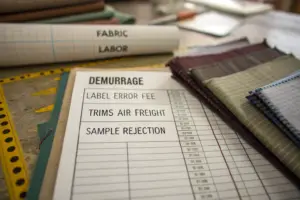
| Trims | "Standard buttons" - $0.50. | Design requires custom 4-hole, 18L buttons with specific finish. Cost: $2.50 + $800 mold fee. |
| Overall Feasibility | "We can make this." | "This seam construction is unstable with this fabric. We need to redesign." |
How Does Skipping The Sample Phase Inflate Your Total Landed Cost?
The initial low estimate is a mirage. The true cost emerges later through change orders, quality failures, and delays—all of which are exponentially more expensive to fix after production has begun. The sample phase is the cheapest place to fail and learn.
Paying for a sample is the most cost-effective insurance policy you can buy.

The "Cost Creep" Timeline Without a Sample:
- Post-Order Price Revision: After you commit based on the estimate, the factory makes a sample. They then inform you: "To achieve your desired quality, we need a better fabric/this special trim/more labor time. The new price is X." You are now emotionally and contractually invested, with less negotiating power.
- Quality Failure Costs: If you proceed with the low-quality sample as the standard, you risk bulk production that doesn't meet your market's expectations. This leads to:
- Customer Returns & Refunds: Eroding revenue and brand trust.
- Discounting & Liquidations: Selling flawed goods at a loss.
- Brand Reputation Damage: The long-term cost of negative reviews is incalculable.
- The Delay Domino Effect: Sampling uncovers construction problems that must be solved. Without this phase, these problems emerge during bulk production, causing line stoppages, rework, and missed shipping deadlines. Missing a selling season is often the single largest financial loss a brand can suffer.
A Real Case from Our Files:
A brand received an estimate for a pleated skirt. No sample was made. In bulk, the polyester fabric chosen (based on the low estimate) would not hold the heat-set pleats. The entire shipment of 3,000 skirts arrived with drooping, inconsistent pleats. The total loss—including goods, shipping, and lost sales—exceeded $60,000. The cost of a proper sampling process with fabric testing would have been less than $1,000.
The Sample as a Negotiation and Planning Tool
A physical sample transforms a subjective conversation about "quality" into an objective one. It allows you to:
- Negotiate from a position of knowledge: "The sample uses this fabric, which costs $X. Can we achieve a similar hand with this $Y fabric?"
- Accurately forecast your final landed cost and set appropriate retail pricing.
- Secure financing or launch pre-orders with confidence, using the sample as proof of the final product.
How Does An Approved Sample Protect You From Quality and Compliance Disasters?
An estimate is just a number. An approved sample is a physical contract. It legally and practically defines the standard to which the bulk order must be produced. Without it, you have no objective basis to reject substandard goods.
The sample is your first and most important quality control checkpoint.

The Sample as the "Golden Standard"
In professional manufacturing, the approved Pre-Production Sample (PPS) is sealed and stored. During bulk Pre-Shipment Inspection (PSI), inspectors randomly pull garments and compare them directly to this sealed sample. Any deviation is a defect. Without this sample:
- The factory can claim, "This is what we agreed to make," even if it's poor quality.
- Third-party inspection companies have no benchmark to inspect against.
- You cannot prove the goods are not as specified.
Ensuring Regulatory Compliance
For many markets, compliance is non-negotiable. The sample is used for mandatory third-party testing.
- Children's Wear (CPSIA in USA): The sample is sent to a lab for lead, phthalate, and flammability testing. An estimate can't predict if a button will fail a lead test.
- Flammability Standards: Sleepwear, adult apparel. The fabric must pass specific tests. A sample-less estimate has no way of accounting for the cost of a failing fabric and the need for a replacement.
- Labeling & Care Instructions: The sample has the care label sewn in. This is your chance to verify its accuracy. Incorrect labels can lead to customs holds or consumer lawsuits.
At Shanghai Fumao, we insist on creating and approving a PPS for every order. We also use it for in-house compliance pre-checks before sending it to an official lab. This step alone has saved clients from multiple compliance-related recalls.
What Is The Professional Process From Estimate To Approved Sample?
A trustworthy factory will not give you a firm production price after an estimate. They will guide you through a phased process where each step refines the cost and reduces risk. This process is a mark of professionalism, not a delay tactic.
Embrace this process—it is your roadmap to a successful order.

The Four-Phase Path to a Firm Price:
-
Initial Estimate (Ballpark Quote):
- Input: Tech pack/sketch.
- Output: A wide price range (e.g., $18-$28/unit). This sets initial expectations.
- Factory Asks: "Are we in the right ballpark?"
-
Development & Proto Sample:
- Input: Detailed tech pack, often with a development fee.
- Output: A physical prototype. A revised, narrower estimate based on actual pattern and initial material choices.
- Purpose: Lock in design, proportions, and basic construction.
-
Fit Sample & Cost Refinement:
- Input: Feedback on proto sample.
- Output: A sample in correct fabric (or close), focusing on fit. A much firmer cost, as fabric and labor are now better understood.
- Purpose: Finalize fit and pattern grading.
-
Pre-Production Sample (PPS) & Final Quotation:
- Input: Approval of fit sample and all material selections.
- Output: A sample made with all exact bulk materials, sewn in the production factory. This comes with the final, firm Production Order (PO) price.
- Purpose: This sample is the benchmark. The price attached to it is the price you pay for bulk.
Only after Phase 4 do you have a reliable price and a guaranteed standard. Any factory that asks for a bulk commitment after Phase 1 is asking you to assume all the risk.
Conclusion
An estimate without a sample is a fantasy price for a phantom product. It is the starting point of a conversation, not the conclusion. Committing to production based on it is one of the highest-risk decisions a brand can make, inevitably leading to financial overruns, quality disasters, and scheduling nightmares. The physical sample is the essential tool that converts assumptions into facts, guesses into data, and risks into managed processes.
Investing in a thorough, collaborative sampling process is not a cost; it is the foundation of all predictable, profitable, and brand-safe production. It is the non-negotiable step that separates professional apparel businesses from hopeful gamblers.
If you are seeking a manufacturing partner who values transparency and uses the sampling process to build certainty—not hide risk—we operate this way by principle. At Shanghai Fumao, we provide clear estimates to start the conversation, but we build our partnerships and firm prices on the solid ground of approved samples. Contact our Business Director Elaine to begin your next project with clarity, not guesswork: elaine@fumaoclothing.com.