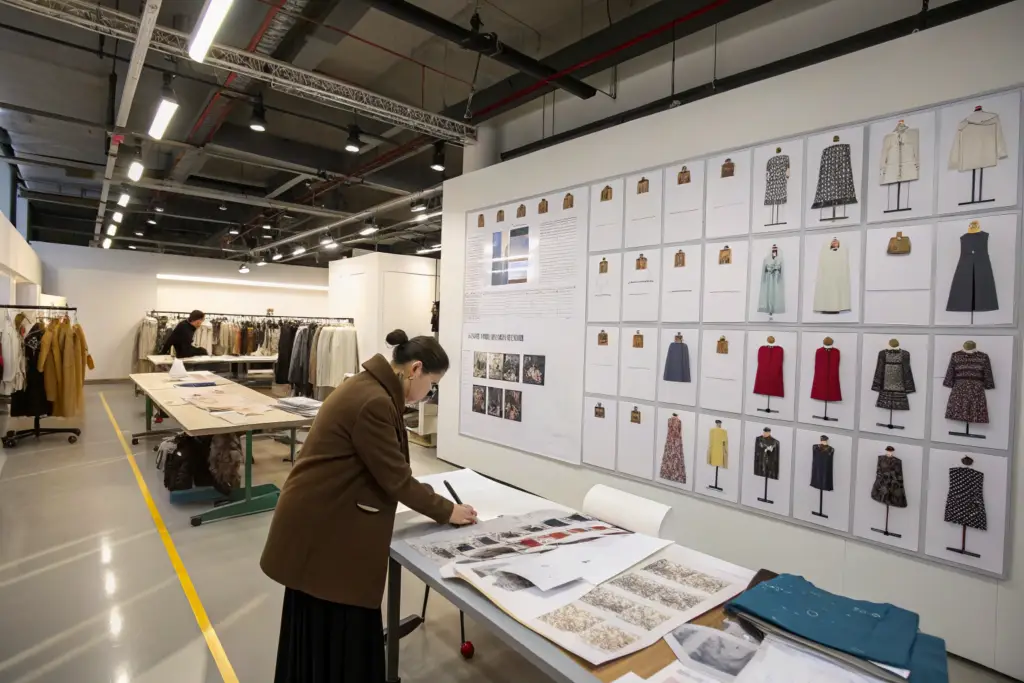
You have studied the European runway reports. You have identified the silhouettes that will define the coming season. You have designed your collection inspired by these trends. Now you send your tech packs to your factory. The response stops you cold. "We cannot produce this exaggerated sleeve. Our standard pattern blocks don't support this volume." "This bias-cut slip dress requires specialized cutting and construction we don't offer." "The structured shoulders on this blazer need interlining and pressing equipment we haven't invested in." Your runway-inspired collection collides with factory capability constraints. The designs that would have differentiated your brand are reduced to what the factory can comfortably produce.
The dominant women's wear silhouettes on European runways for 2026 that are commercially viable and sourcable through a top manufacturing partner include the exaggerated sculptural shoulder in blazers, coats, and dresses; the fluid bias-cut slip dress and skirt in silk, satin, and lightweight blends; the reimagined waistcoat as a standalone statement piece or layered element; the voluminous balloon and bubble hem skirt in both mini and midi lengths; and the deconstructed trench coat with architectural drape and unconventional proportions. Each silhouette requires specific pattern-making expertise, construction techniques, and material selection that only a factory with advanced development capabilities can execute authentically.
At Shanghai Fumao, our pattern-making and production teams have been developing the capabilities to execute these European runway-inspired silhouettes at commercial scale. We understand that a silhouette is not just a shape. It is a complex interaction of pattern engineering, fabric selection, interlining construction, and finishing technique. Let me walk you through each silhouette trend, what makes it technically demanding, and how we translate it from runway concept to production-ready garment.
Why Is the Exaggerated Sculptural Shoulder the Defining Silhouette of 2026?
The exaggerated shoulder has returned to European runways, but the 2026 interpretation is different from the 1980s power shoulder. The current silhouette is more sculptural, more architectural, and more varied in its expression. It appears on sharp-tailored blazers at Saint Laurent and Givenchy, on fluid silk dresses at Loewe and Bottega Veneta, and on oversized coats at Balenciaga and The Row. The shoulder is the focal point of the silhouette, and the rest of the garment is designed around it. This is not a pad inserted into a standard shoulder line. It is a complete re-engineering of the shoulder structure.
The exaggerated sculptural shoulder requires advanced tailoring construction including custom-shaped shoulder pads built up in graduated layers, structured sleeve heads with wadding and canvas, reinforced shoulder seams that support the weight and tension of the extended silhouette, and careful balance of the hem proportion so the garment hangs correctly from the built-up shoulder. A factory without dedicated tailoring expertise and specialized pressing equipment cannot execute this silhouette authentically. The shape will collapse. The garment will look costumey rather than luxurious.
What Internal Construction Creates the Sculptural Shoulder Without Collapsing?
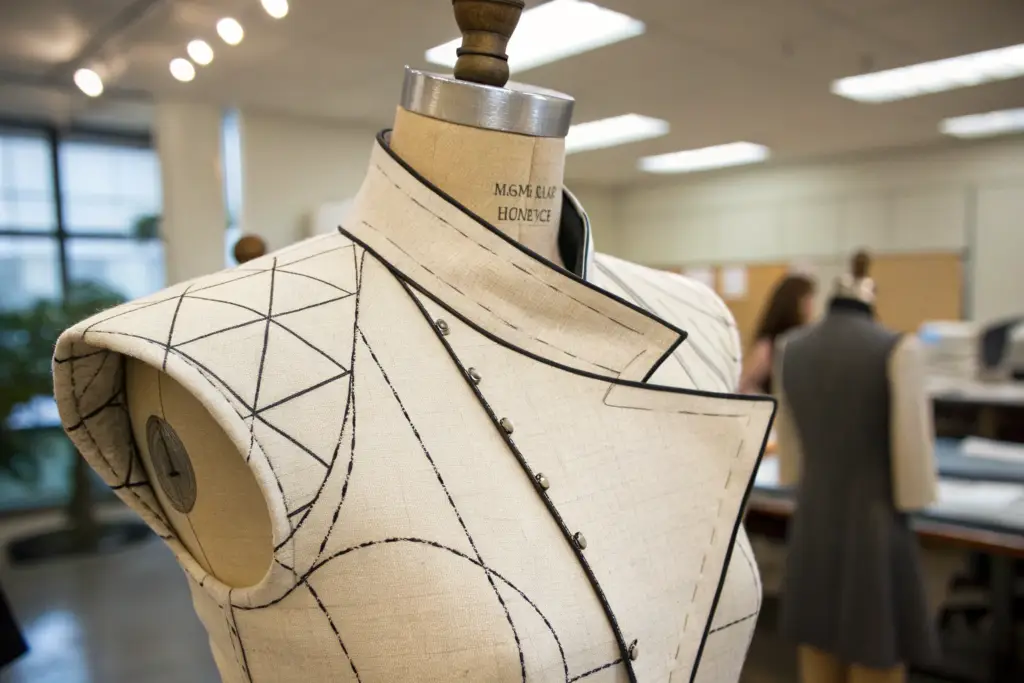
A standard shoulder pad slipped into a standard shoulder seam produces a rounded, soft shoulder. The 2026 sculptural shoulder requires a built-up internal structure that extends beyond the natural shoulder line and holds a precise geometric shape. This structure must be lightweight enough to wear comfortably, strong enough to maintain its shape through wearing and cleaning, and integrated into the garment construction so it does not shift or collapse.
Our tailoring team builds sculptural shoulders using a multi-layer construction. A base layer of cotton canvas is cut to the extended shoulder shape and pad-stitched to the garment front. A shaped shoulder pad, custom-made from cotton wadding and covered in cotton muslin, is built up in graduated layers to achieve the exact pitch and angle the design requires. A sleeve head of wool wadding or cotton fleece is inserted into the sleeve cap to support the extended shoulder line and prevent the sleeve from collapsing at the crown. The layers are basted together, fitted on a dress form, and adjusted until the silhouette matches the design specification. Only then are the layers permanently secured. This tailored shoulder construction techniques process requires skilled hands and cannot be automated. It is the difference between a garment that holds its architectural shape and one that wilts on the hanger.
How Does Fabric Selection Impact the Success of the Sculptural Shoulder?
The sculptural shoulder requires fabric with enough body to hold the shape and enough drape to fall gracefully from the shoulder into the body of the garment. A fabric that is too stiff will create a costume-like appearance. A fabric that is too soft will collapse under the weight of the structure. The fabric weight, weave, and fiber content must be carefully matched to the silhouette.
For structured blazers, we recommend wool suiting in the range of 250-320 GSM, with a tight weave and good recovery. Wool-mohair blends add luster and crispness. For softer interpretations on dresses and blouses, a heavier silk crepe de chine, a sandwashed charmeuse, or a viscose-wool blend can carry a lighter shoulder structure while maintaining fluidity. We advise our brand partners on fabric selection during the development phase, providing sample yardage for drape testing on the actual silhouette. This fabric selection for structured garments consultation prevents the disappointment of a silhouette that looked perfect in the sketch but failed in the chosen material.
How Is the Bias-Cut Slip Dress Engineered for Fluid Movement?
The bias-cut slip dress appears on European runways season after season because its appeal is timeless. The 2026 interpretations at Prada, Fendi, and Saint Laurent feature liquid satins, lightweight silks, and innovative viscose blends that skim the body without clinging aggressively. The silhouette appears effortless—as if the fabric simply fell onto the body and found its shape. This appearance of effortlessness is achieved through precise engineering. Bias-cut garments are among the most technically demanding to produce correctly.
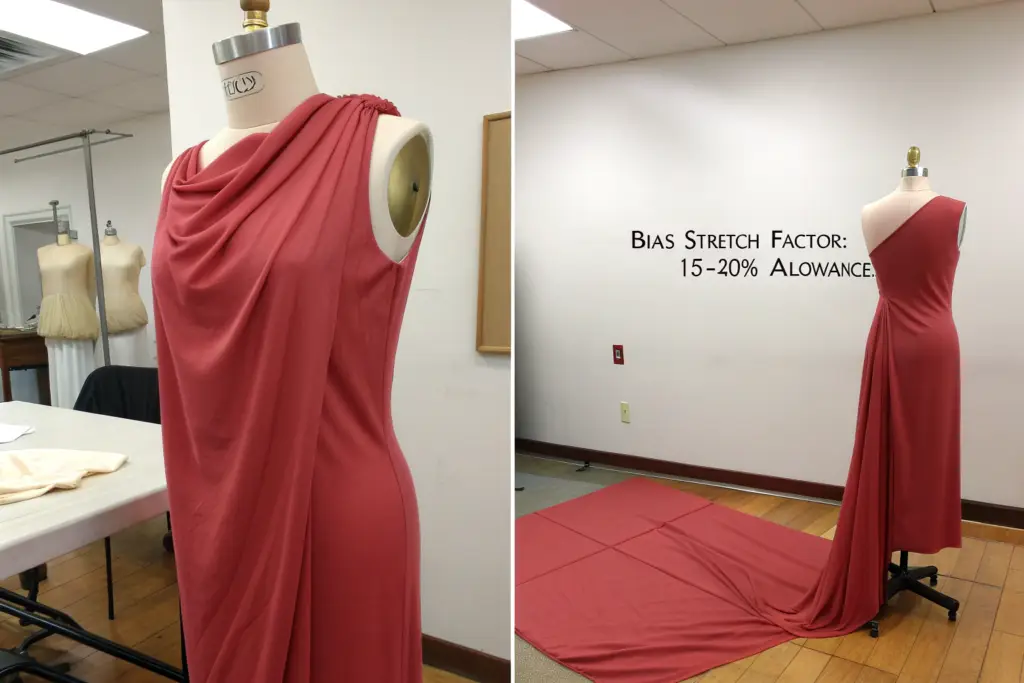
Bias-cut garment production requires fabric cutting at a 45-degree angle to the grain line, which creates the characteristic fluid drape and body-skimming fit. The technique demands specialized pattern-making knowledge because bias fabric stretches during cutting, sewing, and wearing, requiring pattern adjustments that anticipate this stretch. Seam construction must accommodate bias stretch without puckering or popping. Hem finishing must allow the bias to drape without distortion. A factory without dedicated bias-cut expertise will produce garments that twist, droop, or fit unpredictably.
What Pattern Adjustments Are Required for Bias-Cut Construction?
A pattern cut on the straight grain behaves predictably. The fabric is stable. Seams align cleanly. A pattern cut on the bias behaves differently. The fabric stretches along the diagonal. The garment grows in length and contracts in width when worn. A pattern that is not adjusted for bias behavior will produce a garment that fits the dress form but distorts on the body.
Our pattern makers apply specific bias adjustments based on the fabric's stretch characteristics. The pattern is shortened along the length to compensate for bias growth. The side seams are adjusted to account for the fabric's tendency to twist on the bias. The neckline and armhole are stabilized with a stay tape or bias binding to prevent distortion. The hem is cut to allow for uneven bias drop and is leveled on the dress form after the garment has hung for 24 hours to allow the bias to settle. A bias-cut slip dress in silk charmeuse will have different pattern adjustments than the same design in viscose crepe, because each fabric stretches differently on the bias. This bias-cut garment pattern techniques expertise is developed through experience with specific fabric types.
How Does Bias Construction Affect Seam Finishing and Quality Control?
A straight-grain seam is stable. It can be pressed open, finished with an overlock stitch, and it will maintain its structure. A bias seam is unstable. It stretches. Pressing must be done carefully to avoid distorting the seam line. The seam finish must accommodate the stretch without breaking threads or creating puckers.
Our bias-cut garments use French seams or narrow rolled hems on seam allowances to create a clean, flexible finish that moves with the fabric. Seams are pressed using a combination of steam and vacuum on a pressing table, never pulled or stretched during pressing. Quality inspection for bias garments includes a hanging period where the garment is suspended for a minimum of 24 hours before final hem leveling and inspection. This allows the bias to settle into its final shape. A garment that passes inspection immediately after sewing may be twisted or uneven after hanging. The hanging period is a quality gate specific to bias-cut production. This bias garment quality control protocol ensures that the garment the customer receives drapes as intended.
What Construction Details Define the Reimagined Waistcoat Silhouette?
The waistcoat has broken free from its three-piece suit origins. On the 2026 European runways, it appears as a standalone statement piece at Valentino and Dior, as an elongated layering garment at The Row and Khaite, and as a structured corset-waistcoat hybrid at Dolce & Gabbana and Versace. It is worn over bare skin, over dresses, over oversized shirts, and as a top in its own right. This versatility has made it one of the most commercially promising silhouettes for brands that can execute it with the right balance of structure and wearability.
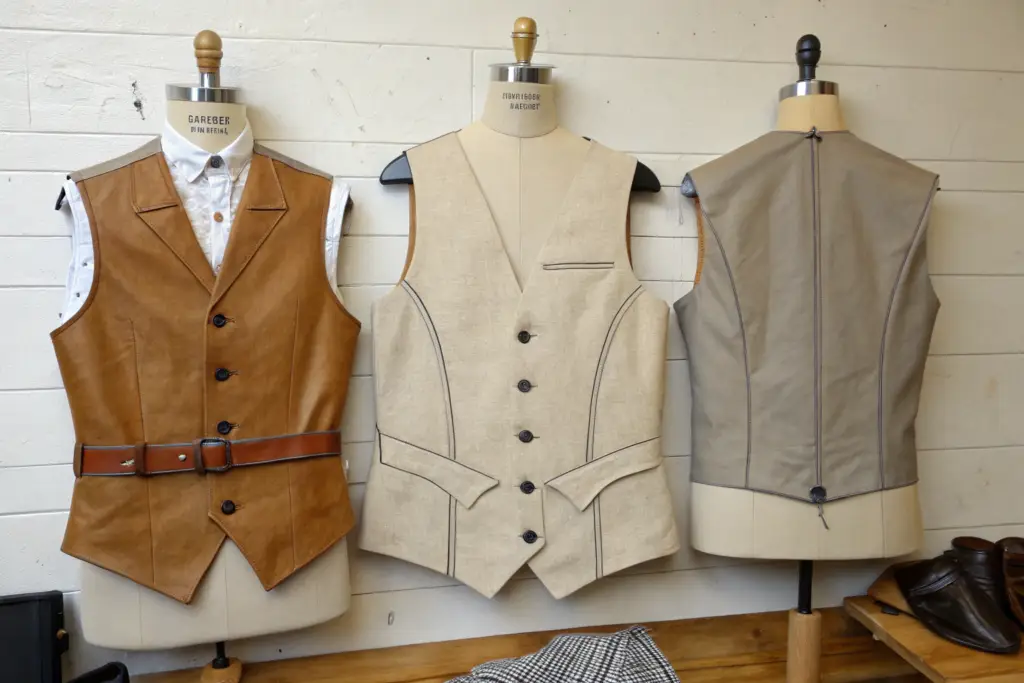
The reimagined waistcoat requires precise tailoring techniques adapted for modern styling: a close-fitting armhole that allows the garment to be worn over bare skin without gaping, a shaped waist that creates feminine proportion whether the garment is worn fitted or loose, a variety of closure options from traditional buttons to wrap-tie closures to open-front drape, and back construction that is finished as beautifully as the front because the garment is often seen from behind when worn as a standalone piece. The waistcoat is a small garment that demands a high concentration of tailoring skill.
How Does Armhole and Shoulder Construction Differ for Standalone Waistcoats?
A waistcoat designed to be worn under a suit jacket has a specific armhole shape and shoulder width that is hidden by the jacket. A waistcoat designed to be worn as a standalone piece has an exposed armhole and shoulder that must be finished to a higher standard and designed to flatter the body without the concealment of a jacket.
Our standalone waistcoat construction uses a slightly narrower shoulder than a traditional suit waistcoat, creating a more feminine, delicate line. The armhole is cut higher and finished with a facing or binding in a contrast or self-fabric, creating a clean edge that looks intentional when exposed. The armhole fit is critical: too tight and it cuts into the underarm, too loose and it gapes and exposes the side of the body. We fit the armhole on a live model during sample development, adjusting the curve until it lies smoothly against the body in multiple arm positions. This waistcoat armhole and shoulder construction attention to detail transforms the waistcoat from a suit component into a standalone fashion garment.
What Back Construction Details Elevate the Waistcoat as a Visible Garment?
A traditional waistcoat back is made from lining fabric because it is never seen. The reimagined waistcoat is worn as a top layer, as a standalone piece, or as a layering garment over dresses. The back is as visible as the front. It must be constructed and finished to the same standard.
Our waistcoat backs are cut from the same fabric as the front unless a design contrast is intended. The back seams are finished with the same precision as the front seams. A back cinch buckle or tie, adjustable to customize the waist fit, is both a functional and decorative element. The back neckline and armhole are finished with a clean facing. The back hem is shaped to complement the front hem. The overall effect is a garment that looks complete and intentional from every angle. This back construction for visible waistcoat garments is a quality signal that separates fashion-forward waistcoats from repurposed suit components.
How Is the Voluminous Balloon Hem Skirt Constructed to Hold Its Shape?
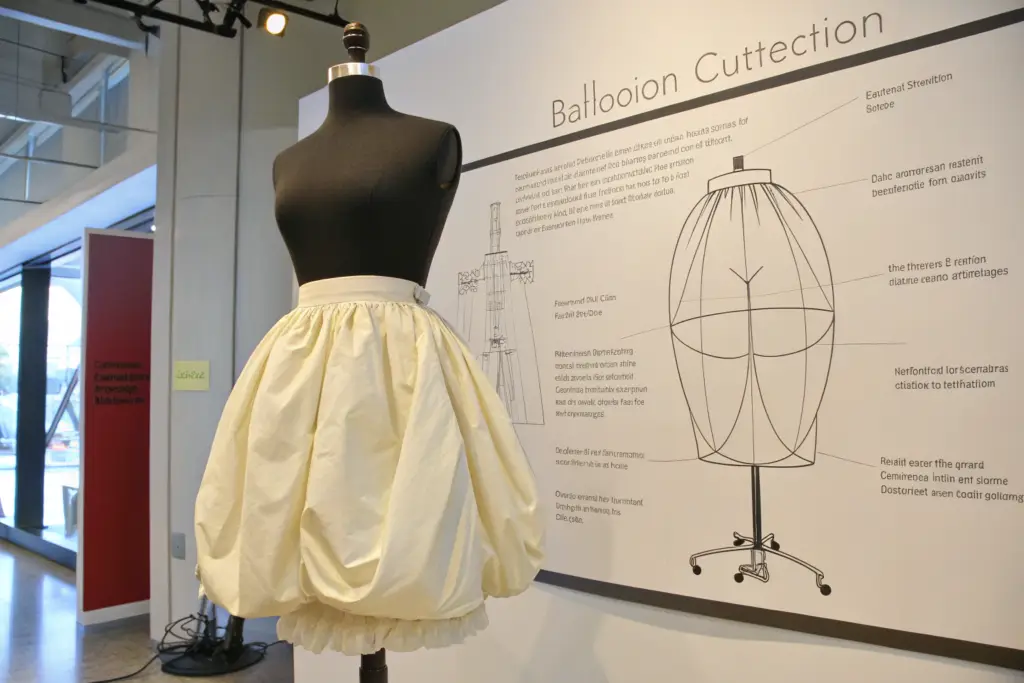
The balloon or bubble hem skirt has cycled back into prominence on European runways, appearing at Simone Rocha, Loewe, and JW Anderson in proportions ranging from exaggerated mini to elegant midi. The silhouette is characterized by volume through the body of the skirt that curves inward at the hem, creating a rounded, inflated shape. It is sculptural, playful, and technically demanding. A poorly constructed balloon skirt collapses into an amorphous sack. A well-constructed balloon skirt holds its architectural shape through movement.
The balloon hem skirt is constructed using a double-layer technique: an outer shell cut with significantly more volume than a standard skirt, and an inner lining that is shorter than the shell and attached to the shell at the hem. The shorter lining pulls the shell hem inward, creating the characteristic bubble shape. The waist is fitted, often with a contoured waistband, to anchor the volume. The fabric must have enough body to hold the shape—crisp taffetas, bonded fabrics, heavy silks, and structured technical fabrics perform well. Soft, drapey fabrics collapse.
What Is the Precise Relationship Between Shell Length and Lining Length?
The balloon shape is created by the differential between the shell hem circumference and the lining hem circumference. The lining is shorter and/or narrower than the shell. When the two are joined at the hem, the lining pulls the shell inward, creating the curved bubble shape. The precise ratio determines the fullness of the balloon effect.
For a moderate balloon shape, the lining hem circumference might be 70-80% of the shell hem circumference. For an exaggerated balloon, the ratio might be 60-70%. The length differential is also critical. The lining is typically 2-4 inches shorter than the shell, depending on the skirt length and the desired fullness. These ratios are calculated during pattern development and tested in sample form. A balloon skirt that is too full will billow awkwardly. A balloon skirt that is too restrained will not read as the intended silhouette. Our pattern makers calculate the ratios based on the designer's reference image and adjust through sampling. This balloon hem skirt pattern engineering is a specialized skill within our development team.
How Does Fabric Selection Determine the Success of the Balloon Silhouette?
The balloon skirt demands fabric with structural integrity. The fabric must be stiff enough to hold the curved shape without collapsing, light enough to avoid overwhelming the wearer with weight, and capable of taking the curved hem without puckering or distorting. Fabric choice is the single most important decision for this silhouette.
We guide our brand partners toward fabrics that have proven successful for balloon silhouettes. Bonded fabrics, where two layers are laminated together for stiffness, are excellent for dramatic shapes. Crisp taffeta and organza work well for evening and occasion wear. Heavyweight wool crepe and structured cotton blends work for daywear interpretations. Technical nylons and polyesters with body are suitable for outerwear and streetwear versions. Fabrics that are too soft—jersey, lightweight crepe de chine, challis—will not hold the shape regardless of construction technique. This fabric selection for sculptural garment silhouettes guidance during development prevents brands from committing to a silhouette in a fabric that cannot execute it.
How Is the Deconstructed Trench Coat Engineered for Architectural Drape?
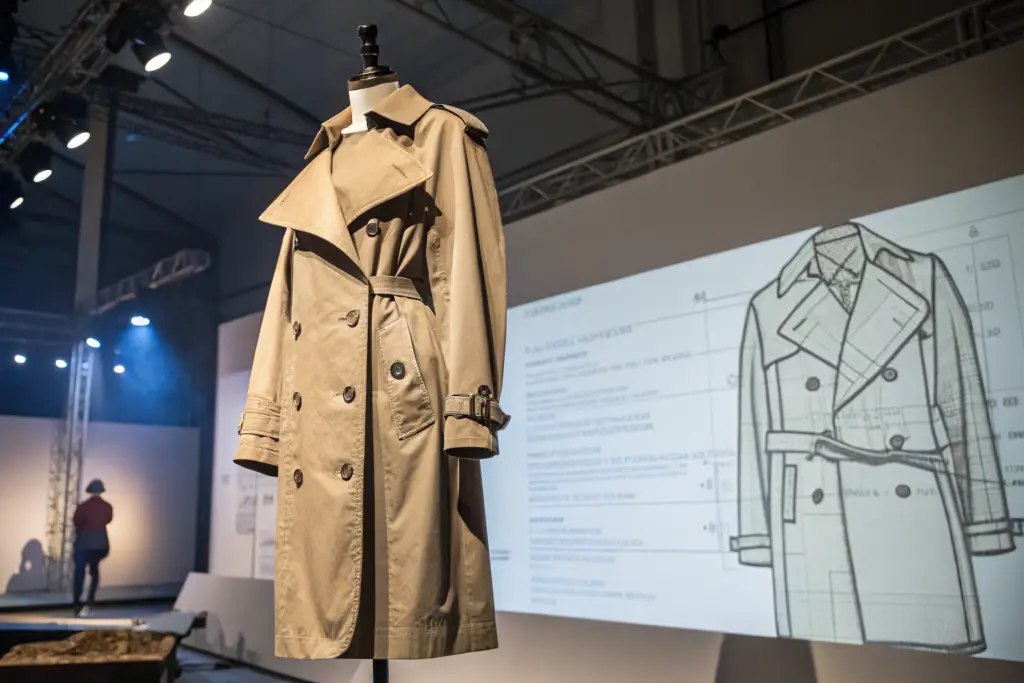
The trench coat is a permanent garment category, but the 2026 European runway interpretations at Burberry, Bottega Veneta, and Balenciaga have radically reimagined its construction. Lapels are exaggerated, removed, or made asymmetrical. The traditional double-breasted closure is replaced with a single hidden button, a wrap tie, or no closure at all. Epaulettes and storm flaps are abstracted into sculptural design elements. The silhouette is oversized, often falling from the shoulders in an A-line or cocoon shape with minimal internal structure. The garment drapes like a lightweight coat but has the design vocabulary of a trench.
The deconstructed trench coat requires a balance of structure and softness that is technically demanding. Traditional tailoring elements—lapel canvas, shoulder pads, chest pieces—are removed or minimized. The coat relies on the fabric's own body and the precision of the cut to create shape. Seam lines are reconfigured to achieve the architectural drape. The garment must look effortless, but achieving that effortlessness requires advanced pattern-making to ensure the coat hangs correctly without the internal structure that usually supports it.
How Is Pattern Engineering Different for Deconstructed Versus Structured Coats?
A structured coat pattern includes ease allowances for the internal construction layers. The pattern is sized up to accommodate the canvas, the shoulder pad, and the interlining. A deconstructed coat pattern removes these allowances. The pattern is cut closer to the body because there is no internal structure filling the space. But it must still achieve the oversized, architectural silhouette.
Our pattern makers approach deconstructed coats by engineering the shape through the seam lines and the grain direction rather than through internal padding. Curved seams create shape without darts. Bias-cut sections allow the fabric to drape in specific directions. The shoulder line is extended through the pattern shape itself, not through a pad. The pattern is fitted on a dress form and adjusted until the drape achieves the designer's vision. This deconstructed garment pattern engineering is a specialized skill that combines traditional tailoring knowledge with modern minimalist construction techniques.
What Fabric Qualities Support the Deconstructed Aesthetic?
A deconstructed coat cannot hide poor fabric behind structure. The fabric is the structure. It must have sufficient body to hold the architectural shape without internal support, sufficient drape to fall gracefully, and sufficient surface interest to carry the design without the visual detail of traditional trench features.
We recommend fabrics in the range of 300-450 GSM for deconstructed trenches. Double-faced wool and wool-cashmere blends provide body and luxury hand feel. Heavyweight cotton gabardine offers the traditional trench reference with modern weight. Technical bonded fabrics provide structure with a contemporary aesthetic. Fabrics with texture—a brushed finish, a subtle melange, a visible weave—add visual depth that compensates for the removed traditional details. For each brand partner developing a deconstructed trench, we provide fabric recommendations based on our experience with what drapes successfully in this construction. This fabric selection for deconstructed outerwear ensures the final garment achieves the intended architectural effect.
Conclusion
The dominant women's wear silhouettes on the 2026 European runways share a common thread: they demand more from manufacturing than standard garment production. The exaggerated sculptural shoulder requires tailoring expertise that most factories do not possess. The bias-cut slip dress requires pattern-making knowledge that only comes from experience with bias construction. The reimagined waistcoat requires finishing standards that treat every surface as a visible surface. The balloon hem skirt requires precise engineering of the shell-to-lining relationship. The deconstructed trench requires a fundamental rethinking of how a coat achieves its shape. These are not silhouettes for factories that only sew standard blocks. They are silhouettes for manufacturing partners who engage with design at the level of engineering.
At Shanghai Fumao, we have invested in the specialized pattern-making expertise, the advanced construction techniques, and the material knowledge required to execute these European runway-inspired silhouettes at commercial scale. Our development team works with brand partners during the design phase to ensure that the silhouette vision is achievable in the chosen fabric, at the target price point, and at the required production volume. We do not simply say yes to a tech pack. We engage with the design intent and bring our technical expertise to the challenge of realizing it.
If your brand is developing a collection inspired by the silhouettes dominating European runways, and you need a manufacturing partner who can execute these technically demanding garments without compromising the design vision, let us discuss your collection. Contact our Business Director, Elaine, at elaine@fumaoclothing.com. Share your design concepts and silhouette references. We will provide a technical feasibility assessment and a development plan to bring your runway-inspired collection to commercial production.