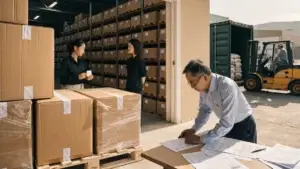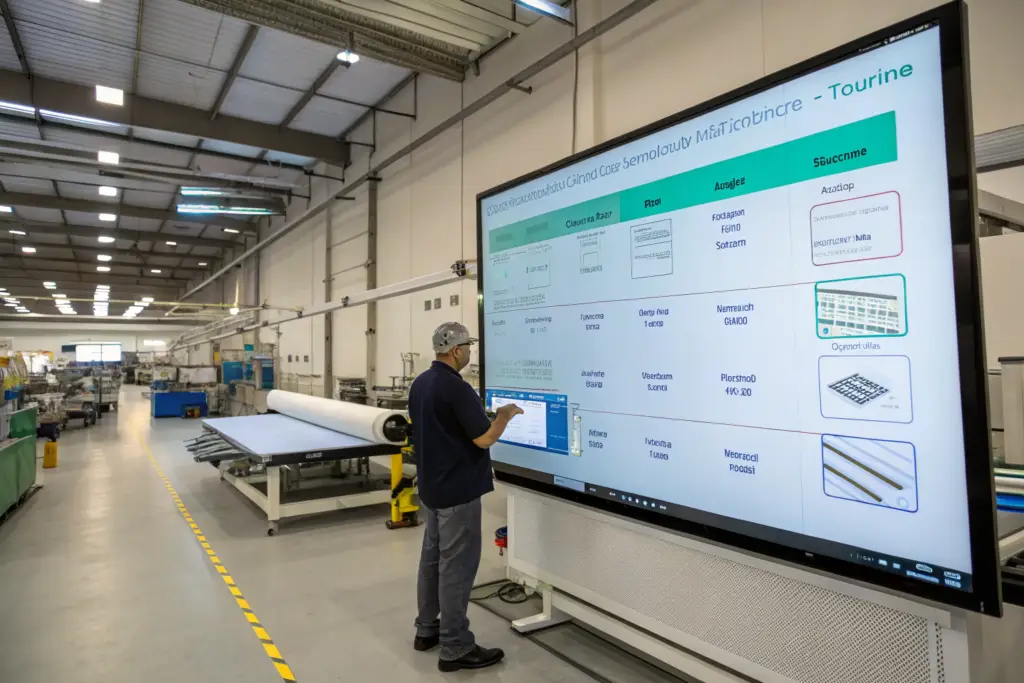
Your fall collection is scheduled for an August retail launch. It is April. Your factory tells you the production lead time is 12 weeks, pushing delivery to July. Ocean freight adds three weeks. Customs clearance adds one week. Your goods arrive in mid-August, just as the season is ending. You have missed the prime selling window. The designs you spent months developing will sit in a warehouse until next year, or sell at a discount that erases your margin. The lead time calculation, not the design quality, has determined your season's outcome.
Brand buyers can shorten lead times without sacrificing quality control by implementing five parallel-processing strategies: fabric prepositioning where greige goods for recurring programs are stocked before order confirmation, pre-approved trim libraries that eliminate the sampling delay for labels, buttons, and packaging, digital sample approval that reduces the physical shipping back-and-forth of development samples, reserved production capacity that eliminates the queue time before production begins, and integrated inline quality control that catches defects during production rather than at final inspection where rework causes delays. Each strategy removes waiting time from the process without removing quality checkpoints.
At Shanghai Fumao, we have worked with our brand partners to compress lead times by 30-50% on established programs, and by 20-30% on new development programs, while maintaining or improving quality metrics. The key is understanding that lead time consists of both active processing time and passive waiting time. The waiting time can be collapsed without touching the processing time that ensures quality. Let me explain the specific strategies that achieve this.
How Does Fabric Prepositioning Eliminate the Longest Lead Time Component?
Fabric sourcing and production is typically the longest single component of the garment manufacturing lead time. The mill must produce the fabric, dye it to the specified color, finish it, inspect it, and ship it to the factory. This process can take four to eight weeks, depending on the fabric type, the mill's production schedule, and the complexity of the dye and finish requirements. During those weeks, nothing else happens. The production line waits. The brand waits. The selling season does not wait.
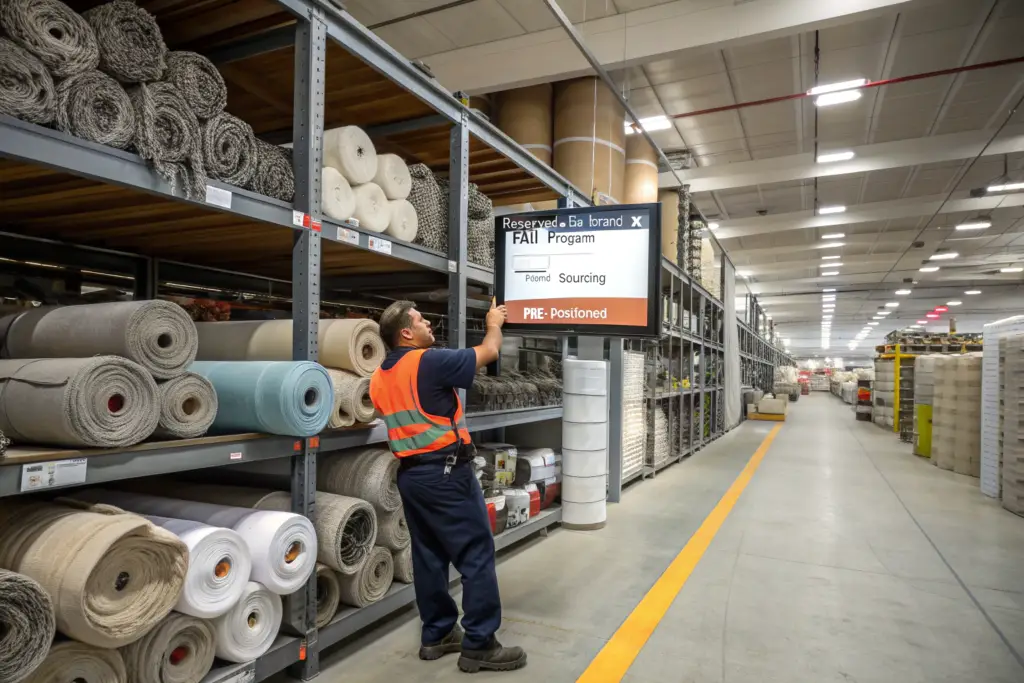
Fabric prepositioning eliminates this waiting period by stocking greige goods—undyed, unfinished fabric—for recurring programs before the formal purchase order is issued. When the brand confirms the order with color specifications, the greige fabric is pulled from inventory and sent directly to dyeing and finishing, a process that takes one to two weeks instead of four to eight. The fabric lead time is collapsed from the longest phase to one of the shortest. This strategy works for programs with predictable base fabric requirements across seasons, such as core cotton jersey programs, staple woven shirting programs, and basic fleece programs.
What Is the Difference Between Greige Stock and Finished Fabric Stock?
Greige fabric is fabric in its raw, undyed, unfinished state after weaving or knitting. It has not been bleached, dyed, printed, or finished. It is a blank canvas. Finished fabric has been fully processed to its final color, hand feel, and performance characteristics. Stocking greige fabric rather than finished fabric provides flexibility because the same greige base can be finished in different colors and with different finishes depending on the season's requirements.
Finished fabric stock is more restrictive. If a brand stocks finished fabric in Navy for their core program, and the season's color palette shifts to Midnight Blue, the Navy inventory is wasted. Greige stock in the same base fabric can be dyed to Midnight Blue with no waste. We maintain greige inventory in our most frequently used base fabrics: cotton jersey in multiple weights, cotton twill for woven bottoms, cotton poplin for woven shirts, and polyester-cotton fleece for knit outerwear. When a brand partner confirms their seasonal order with color specifications, we pull the greige from stock, send it for dyeing and finishing, and have production-ready fabric in two weeks. This greige fabric inventory management is a strategic capability that requires working capital investment from the factory and forecast sharing from the brand.
How Does Fabric Prepositioning Work for New Development Programs?
A brand developing a new product for the first time cannot benefit from greige inventory of a fabric they have never used. But they can benefit from a curated fabric library. Instead of beginning the development process with an open-ended "find me a fabric that feels like this" request—which triggers weeks of mill sourcing, sample requests, and back-and-forth shipping—the brand selects from the factory's pre-qualified fabric library.
Our fabric library contains over 500 pre-qualified fabrics across all major categories. Each fabric in the library has been tested for shrinkage, colorfastness, pilling resistance, and other key performance parameters. The test data is available immediately. The fabric is available for immediate sampling. There is no sourcing delay, no mill minimum for sampling, and no uncertainty about how the fabric will perform in production. A brand developing a new woven shirt program can select a fabric from our library, receive a sample within days, and move directly to pattern development. The fabric sourcing phase is eliminated entirely for the development cycle. Once the style is proven and moves to bulk production, the fabric can be prepositioned as greige stock for future orders. This pre-qualified fabric library for apparel development compresses the new product development timeline significantly.
How Do Pre-Approved Trim Libraries Eliminate Component Sourcing Delays?
Custom trim development—labels, hang tags, buttons, zippers, and packaging—follows a predictable but time-consuming process. The brand provides specifications. The factory sources options from trim suppliers. Samples are produced, shipped, and reviewed. Revisions are made. New samples are produced. Approval is granted. The approved trims are ordered and manufactured. The entire process can consume three to five weeks. For a brand on a compressed timeline, this is three to five weeks of waiting that adds no value to the garment beyond the trim itself.
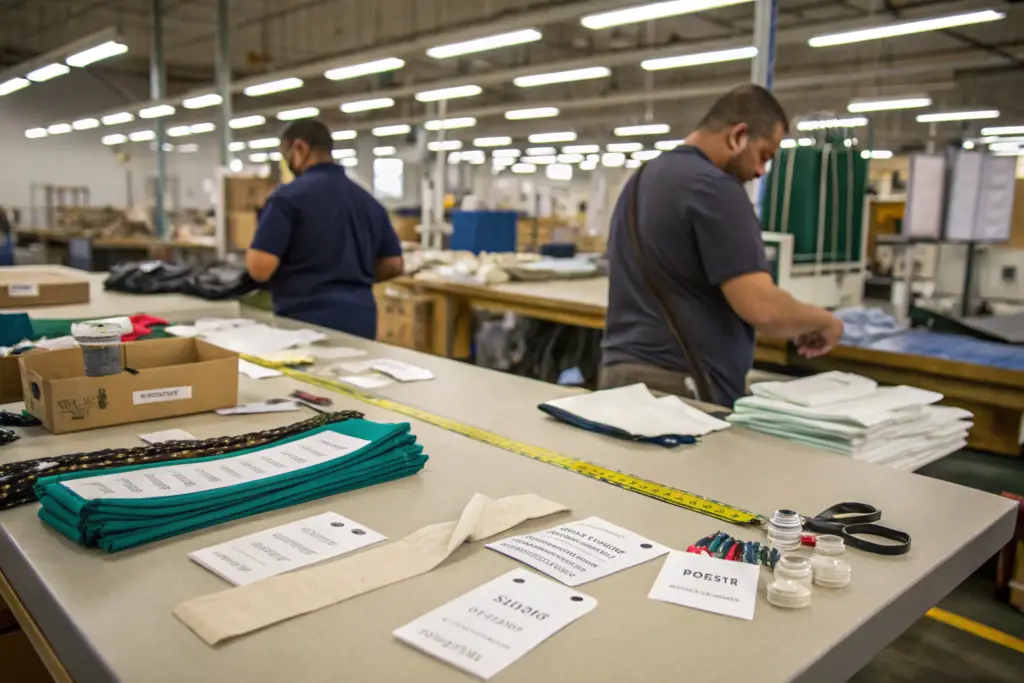
A pre-approved trim library replaces custom trim development with standardized, pre-qualified options that the brand has already evaluated and approved for use across their programs. The brand reviews the trim library during onboarding, selects their preferred options for labels, hang tags, zippers, buttons, and packaging, and signs a trim specification sheet. For all future orders, the approved trims are pulled from inventory and applied without any sourcing, sampling, or approval delay. The trim lead time collapses from weeks to zero.
What Trim Categories Benefit Most from Pre-Approval?
Not all trims are candidates for a pre-approved library. Highly custom elements—a uniquely shaped button cast in a custom metal finish, a jacquard-woven label with a complex brand pattern—will always require custom development and the associated lead time. But many trim components can be standardized without compromising brand identity.
The trim categories that benefit most from pre-approval include care and content labels, which are legally required and functionally identical across programs; hang tag strings and attachments, where the choice is between standard options like cotton string, leather cord, or plastic loop; polybag specifications, where the thickness, clarity, and suffocation warning are standardized; basic zipper types and finishes, where YKK or equivalent quality zippers in standard metal finishes cover the majority of applications; and packaging tissue and stickers, where standard options can be selected once and applied consistently. A brand that pre-approves these trim categories during supplier onboarding eliminates a recurring source of delay for every subsequent order. This trim library standardization for apparel is a simple but powerful lead time reduction strategy.
How Does the Trim Library Work Alongside Custom Trim Development?
Pre-approved trims do not prevent a brand from developing custom trims for specific programs. They provide a baseline that keeps the production timeline moving while custom elements are developed in parallel. The care label, the hang tag string, and the polybag are selected from the pre-approved library and prepared immediately. The custom woven label and the custom button are developed through the full custom process. The two streams run concurrently.
This parallel processing means the production timeline is not held hostage by the longest-lead-time trim. The basic trims are ready when production begins. The custom trims are integrated as they become available. If the custom trim development encounters a delay, the production timeline is protected because the basic trims are already in place. This parallel trim development process is an example of how thinking about lead time as a set of parallel streams rather than a sequential chain reveals opportunities for compression.
How Does Digital Sample Approval Reduce the Development Timeline?
The traditional sampling process is a physical back-and-forth that consumes weeks. The factory produces a physical sample and ships it to the brand. The brand reviews the sample, marks up changes, and ships it back or sends comments. The factory produces a revised sample and ships it again. Each iteration consumes one to two weeks, primarily in shipping and handling time. A product that requires three sampling iterations—common for a new development style—consumes four to six weeks in sampling alone.
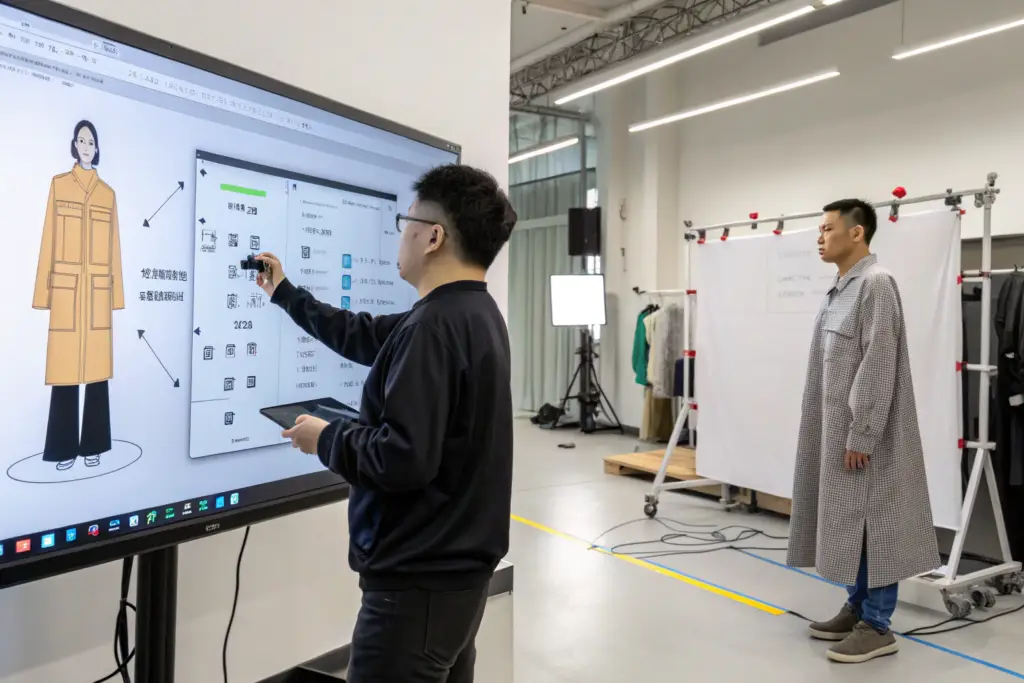
Digital sample approval replaces the early sampling iterations with digital evaluations using 3D garment simulation software. The factory creates a digital sample—a photorealistic 3D model of the garment with accurate fabric drape, color, and construction details. The brand reviews the digital sample, provides feedback, and requests revisions. Multiple iterations can occur in days rather than weeks because there is no physical shipping. Only when the digital sample is approved does the factory produce a single physical confirmation sample. A process that required three physical iterations is compressed to multiple digital iterations plus one physical sample.
What Can Be Evaluated Digitally Versus What Requires a Physical Sample?
Digital garment simulation has advanced significantly, but it is not a complete replacement for physical evaluation. Understanding what can be reliably assessed digitally and what requires a physical sample prevents both over-reliance on digital tools and unnecessary physical sampling.
Digital evaluation is highly reliable for silhouette and proportion assessment, color and print placement review, construction detail visualization, and trim and branding placement. The 3D simulation accurately represents how the garment will look on a body, how the fabric will drape, and where design elements will be positioned. Physical evaluation remains necessary for fabric hand feel assessment, which cannot be digitized; fit on a physical body, particularly for tailored or close-fitting garments; and construction quality and stitch integrity, which must be inspected on a physical garment. Our sampling process uses digital samples for silhouette, proportion, color, and design detail approval. A single physical sample is produced for final fit confirmation and construction quality verification. This digital sample approval in apparel development hybrid process delivers the time savings of digital iteration while preserving the quality assurance of physical evaluation.
How Does the Digital Sample Process Integrate with the Physical Quality Gate?
The concern that brand buyers have about digital sampling is legitimate: if we skip physical samples, how do we know the quality is right? The answer is that digital sampling does not skip the physical quality gate. It repositions it. Instead of multiple physical samples throughout the development process, there is a single, focused physical confirmation sample at the end, when the design is already approved digitally.
The physical confirmation sample serves as the quality gate. It is inspected for construction quality, stitch integrity, fabric hand feel, and fit on a physical body. It is compared against the approved digital sample for design accuracy. If it passes, it becomes the sealing sample for bulk production. If issues are identified, a single physical revision is made. The process still includes physical quality verification. It just eliminates the multiple rounds of physical shipping that added weeks of non-value-added time to the traditional process. This digital-plus-physical sampling quality assurance approach has been validated across multiple brand programs with no increase in quality issues.
How Does Reserved Production Capacity Eliminate Queue Time?
In a traditional factory engagement, the brand places an order and the factory schedules production based on current capacity. If the factory is busy, the order goes into a queue. The queue time—the period between order placement and production start—can be two weeks, four weeks, or longer depending on the factory's order book. The brand has no control over queue time and limited visibility into it. The production lead time the factory quotes includes an assumed queue time, but the actual queue time may be longer if the factory takes on more orders than expected.
Reserved production capacity eliminates queue time by allocating specific production slots to the brand in advance, based on forecast rather than confirmed orders. The brand provides a rolling capacity forecast. The factory reserves the required production line time in its master schedule. When the brand confirms the order, production begins at the reserved time, not after an undefined queue. The waiting time between order confirmation and production start is eliminated.
How Does a Rolling Capacity Reservation Agreement Work?
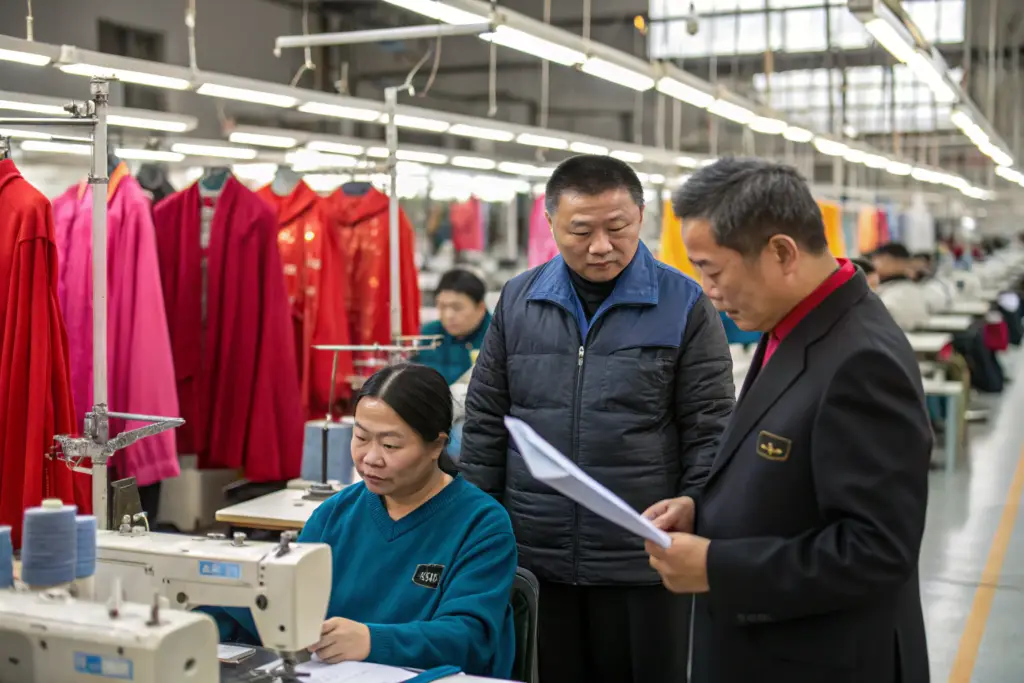
A rolling capacity reservation agreement is a mutual commitment between the brand and the factory. The brand provides a quarterly forecast of their production volume requirements by product category. The factory reserves the corresponding production line capacity. The reservation is updated on a rolling basis as forecasts are refined.
The agreement typically covers a 6-12 month horizon. The brand commits to a minimum volume within a defined range. The factory commits to the reserved capacity. If the brand's actual orders fall within the agreed range, production proceeds on schedule. If orders significantly exceed the forecast, the factory uses its flexible capacity to accommodate the increase, with an agreed lead time extension. If orders significantly undershoot the forecast, the brand may incur a capacity reservation fee. This mutual commitment aligns incentives. The brand gets guaranteed capacity and zero queue time. The factory gets predictable volume and the ability to plan its production schedule efficiently. This production capacity reservation for apparel brands is a partnership model rather than a transactional model.
How Does Reserved Capacity Interact with the Inline Quality Control Process?
A concern about reserved capacity is that it might pressure the factory to rush production to meet the reserved slot, potentially compromising quality. This concern is valid if the factory's quality system is dependent on production pace. If quality is managed through inline inspection and real-time monitoring, production pace and quality are independent variables.
Our inline quality control system operates regardless of production volume or pace. Inspectors are stationed at defined checkpoints on every production line. They inspect a specified percentage of units at each checkpoint. The inspection frequency and criteria are determined by the quality control plan, not by the production schedule. A reserved capacity slot that fills the line does not change the inspection protocol. The same number of inspectors, the same sampling rate, and the same defect criteria apply whether the line is producing for a reserved slot or a standard order. This inline quality control and production scheduling independence ensures that lead time compression through reserved capacity does not compromise quality. The quality system is a constant. The production timeline is the variable being optimized.
How Does Integrated Inline Quality Control Prevent End-of-Line Rework Delays?
Traditional quality control in many factories operates as a final inspection gate. The entire production order is completed. A sample is pulled and inspected. If the defect rate exceeds the acceptable threshold, the entire order fails inspection. The order must be reworked—a process that can add days or weeks to the delivery timeline. The quality failure is discovered at the worst possible moment: after production is complete, when the shipping deadline is imminent, and rework time is not available.
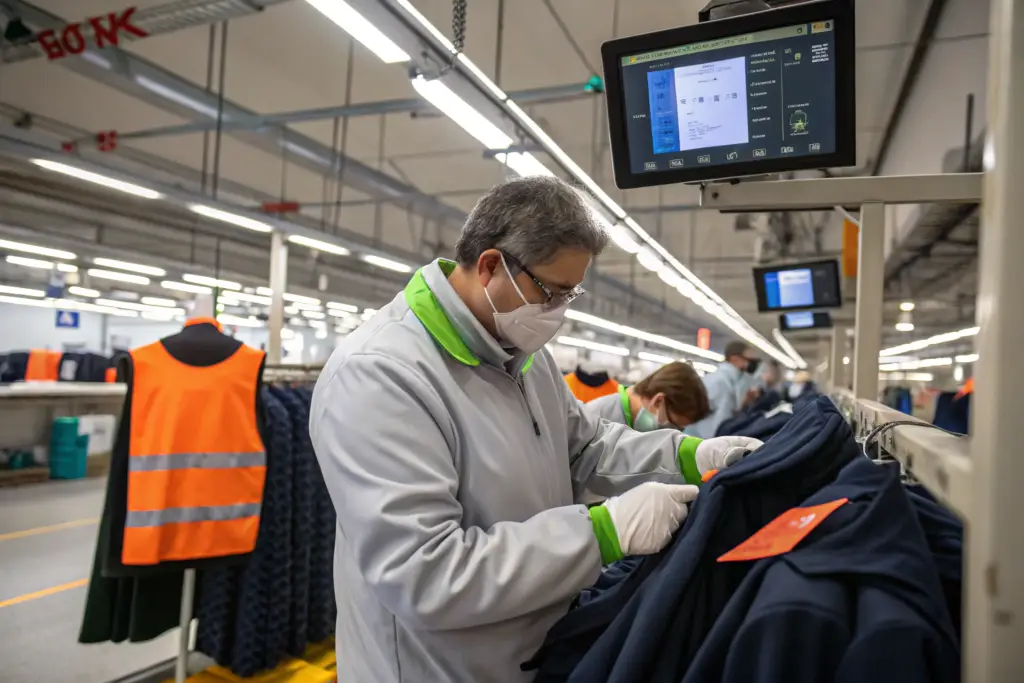
Integrated inline quality control prevents end-of-line rework delays by moving quality inspection into the production process rather than positioning it at the end. Inspectors are stationed at multiple points along the production line. They inspect garments as they are produced, not after the entire batch is complete. Defects are identified immediately. The defective garment is reworked immediately. The root cause of the defect is investigated immediately. The production line does not continue producing defective units for an entire batch before the problem is discovered.
How Does Inline Inspection Differ from Final Inspection in Practice?
Final inspection is a batch process. The factory produces 1,000 units over five days. On day six, an inspector pulls a sample of 80 units and inspects them. If the defect rate is too high, 1,000 units may need rework. The rework takes additional days. The shipment is delayed.
Inline inspection is a continuous process. An inspector is stationed after the collar setting operation. Every hour, they inspect a sample of collars produced in that hour. If the collar point symmetry is drifting out of tolerance, the inspector identifies it within that hour. The line supervisor adjusts the machine or retrains the operator immediately. The 40 units produced with the defect are reworked immediately. The remaining 960 units are produced correctly. The shipment is not delayed. The total inspection time is the same or slightly higher than final inspection. But the time is distributed throughout production rather than concentrated at the end. The result is that quality is maintained continuously and rework is incremental rather than catastrophic. This inline quality inspection vs final inspection approach is a fundamental shift in quality philosophy that enables lead time compression without quality compromise.
How Does Real-Time Defect Data Prevent Recurring Quality Issues?
Inline inspection generates real-time defect data that is visible to production supervisors and quality managers. If a specific operator is producing a specific defect at an elevated rate, the data reveals it within hours. The operator is retrained immediately. If a specific machine is producing inconsistent stitch tension, the data reveals it. The machine is recalibrated immediately.
This real-time feedback loop prevents the recurrence of quality issues within the same production batch. In a final inspection model, the defect data arrives after production is complete. The operator who was producing defects may have moved to a different operation. The machine that was out of calibration may have been used for the entire batch. The root cause is harder to identify and impossible to correct for the current batch. Inline data enables immediate corrective action that improves quality for the remainder of the batch. This real-time quality data for defect prevention is a capability that simultaneously improves quality and reduces lead time by eliminating the rework that causes delays.
Conclusion
Shortening lead times without sacrificing quality control is not about working faster. It is about working smarter. The longest components of the traditional lead time are not the active processing steps—cutting, sewing, finishing. They are the waiting periods: waiting for fabric to be sourced, waiting for trim samples to be approved, waiting for physical samples to ship back and forth, waiting in a production queue, waiting for final inspection and rework. Each of these waiting periods can be collapsed without removing any quality checkpoints.
Fabric prepositioning eliminates the fabric sourcing wait. Pre-approved trim libraries eliminate the trim development wait. Digital sample approval eliminates the physical shipping wait. Reserved production capacity eliminates the queue wait. Integrated inline quality control eliminates the end-of-line rework wait. Each strategy removes dead time from the process while preserving or strengthening the quality assurance activities that protect the brand's standards.
At Shanghai Fumao, we have implemented all five strategies and offer them to our brand partners as an integrated lead time optimization program. The specific combination of strategies that applies to any given program depends on the product category, the order volume, the level of customization, and the maturity of the brand partnership. A new development program benefits from the digital sampling and fabric library strategies. A mature replenishment program benefits from all five.
If your brand is constrained by long lead times that are causing you to miss seasonal selling windows, let us analyze your current production timeline and identify the specific waiting periods that can be collapsed. Contact our Business Director, Elaine, at elaine@fumaoclothing.com. Share your product categories, your typical order volumes, and your target lead times. We will provide a lead time optimization plan that shows exactly how much time can be removed without removing a single quality checkpoint.