For the past five years, the prevailing wisdom in US apparel sourcing has been to shift production from China to Vietnam. Tariff avoidance, rising Chinese labor costs, and supply chain diversification drove a significant migration of orders. You may have participated in this shift, moving your men's woven shirts or women's knit tops to Vietnamese factories. The initial cost savings were real. But recently, you have noticed cracks in the Vietnam model. Lead times are stretching. Fabric options are limited. Your factory struggles with complex styles. The cost advantage is eroding as Vietnamese labor rates rise and logistics costs eat into the tariff savings. You are beginning to wonder whether the conventional wisdom is still wise.
US distributors should rethink the Vietnam vs China decision in 2026 because the sourcing landscape has shifted in China's favor across several key dimensions. China's supply chain depth—the concentration of fabric mills, trim suppliers, and specialty manufacturers within a tight geographic radius—enables faster lead times, more complex product capability, and greater material innovation than Vietnam can currently offer. China's DDP logistics infrastructure provides landed cost certainty that Vietnam's less developed freight networks cannot match. And the tariff differential, while still real, has narrowed in its impact when total landed cost, speed-to-market, and product complexity are factored into the equation. The question is no longer simply "Which country is cheaper?" but "Which country enables my business to compete more effectively?"
At Shanghai Fumao, we serve US distributors who source from both China and Vietnam. We understand the strengths and limitations of each sourcing destination because we compete with Vietnam daily and we hear from distributors who have tried both. Let me provide an honest, data-informed comparison of the two sourcing options as they stand in 2026.
Why Does Supply Chain Depth Still Give China the Edge for Complex Garments?
Garment manufacturing is not a standalone activity. It depends on a surrounding ecosystem of fabric mills, yarn spinners, dye houses, trim manufacturers, testing laboratories, and logistics providers. The depth, quality, and proximity of this ecosystem determines what a factory can produce, how fast it can produce it, and at what cost. This is where the structural difference between China and Vietnam remains significant.
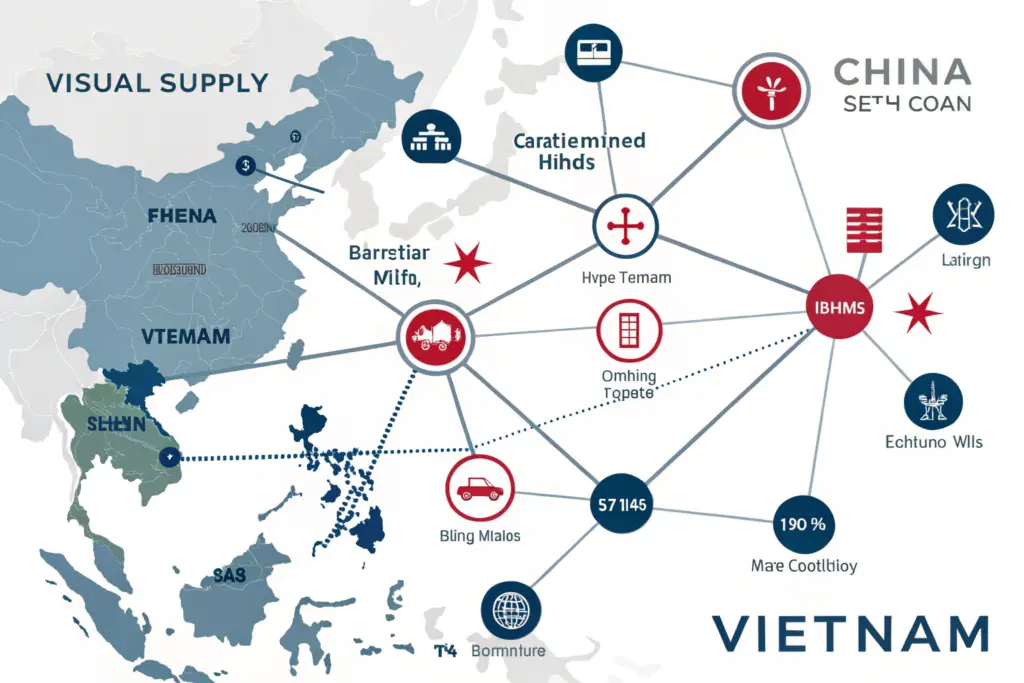
China's apparel supply chain is the deepest and most integrated in the world. For any fabric type, trim component, or specialty finish, multiple qualified suppliers exist within a few hundred kilometers of Shanghai. This proximity enables rapid sampling, fast problem-solving, and production flexibility. Vietnam's supply chain is growing but remains dependent on imported materials, particularly from China, for higher-value fabrics, specialty trims, and technical textiles. This dependency adds transit time, logistics cost, and supply uncertainty to every production order.
How Does Material Sourcing Speed Differ Between China and Vietnam?
When a US distributor asks a Chinese factory to source a specific fabric for a new development style, the factory can request sample yardage from multiple mills, receive the samples within days, and present options to the distributor within a week. The mills are local. The relationships are established. The logistics are trivial.
When the same request goes to a Vietnamese factory, the process is different. If the fabric is a basic cotton jersey or twill, local mills may be able to supply it. If the fabric is a specialized synthetic blend, a performance fabric, a premium wool, or a complex jacquard, the Vietnamese factory will likely source it from China. The sample request goes to a Chinese mill. The sample fabric ships internationally to Vietnam. Customs clearance adds time. The process that takes days in China takes weeks in Vietnam. This material sourcing speed differential is not a minor inconvenience. It directly impacts the distributor's ability to develop new products quickly, respond to market trends, and meet seasonal deadlines. A distributor developing a women's performance activewear line with specialized moisture-wicking fabrics will find a broader selection and faster turnaround from a Chinese factory than a Vietnamese one. This apparel supply chain depth China vs Vietnam comparison is a critical factor for distributors whose competitive advantage depends on product development speed and fabric innovation.
What Product Categories Remain Challenging for Vietnam's Current Capability?
Vietnam has developed strong capability in basic knit garments—T-shirts, polos, simple sweatshirts—and in basic woven bottoms like chinos and casual shorts. These are volume categories where construction is straightforward and fabric requirements are standard. Vietnam competes effectively on these products, particularly for large, stable programs with predictable demand.
Vietnam's capability gaps remain in categories that require specialized equipment, complex construction techniques, or non-standard materials. Structured outerwear—tailored jackets, wool coats, technical shells—requires specialized machinery, skilled tailoring labor, and cold-weather testing infrastructure that is concentrated in China. Complex women's wear—bias-cut dresses, sculptural silhouettes, garments with extensive hand-finishing—requires pattern-making expertise and artisanal skills that China's more mature fashion manufacturing workforce provides. Products requiring extensive custom trim development or innovative fabric applications benefit from China's supplier proximity. A US distributor whose product mix includes both basic knits and structured outerwear may find that Vietnam works for the knits but China is necessary for the outerwear. Splitting production across two countries adds management complexity. A Chinese factory like Shanghai Fumao that can handle both categories provides a single-source solution. This Vietnam garment manufacturing capability limitations is an honest assessment that distributors should consider when evaluating their sourcing strategy.
How Do Tariff and Total Landed Cost Realities Compare in 2026?
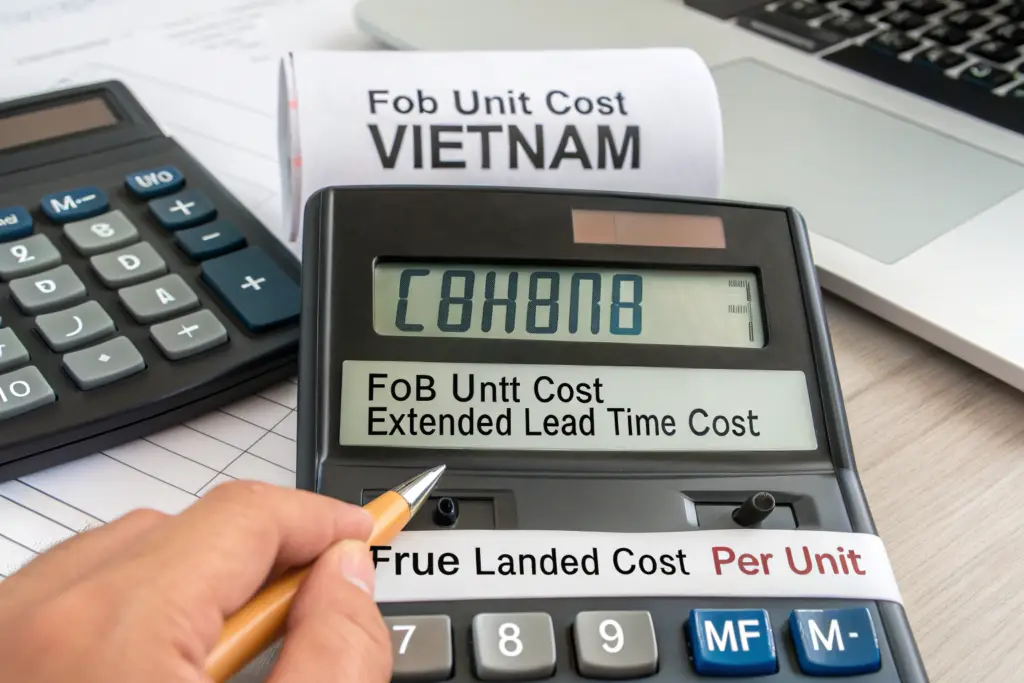
The Vietnam sourcing decision was heavily driven by tariff differentials. US Section 301 tariffs on Chinese apparel, combined with Vietnam's access to the US market at Most Favored Nation rates, created a clear cost advantage for Vietnam on paper. In 2026, that cost advantage still exists but has been eroded by several factors. Tariff rates have fluctuated. Vietnamese labor costs have risen significantly. Ocean freight and logistics costs from Vietnam, which often involve transshipment or less direct routing than from China, have narrowed the gap. And critically, the comparison that matters is not FOB cost but total landed cost, including the cost of longer lead times, higher inventory carrying costs, and the lost opportunity of missing market trends.
The total landed cost comparison between China and Vietnam in 2026 is far closer than the FOB cost comparison suggests. While Vietnam's FOB unit cost may be 10-15% lower than China's for comparable garments, the total landed cost advantage shrinks to 3-8% when freight, customs, and logistics are included. When the financial impact of longer lead times—inventory carrying costs, markdown risk, lost sales from late deliveries—is factored in, the advantage can disappear entirely or reverse in China's favor for time-sensitive, complex, or higher-value products.
What Are the Hidden Costs of Longer Lead Times from Vietnam?
A distributor who sources a men's woven shirt from Vietnam at a 12-week lead time versus the same shirt from China at an 8-week lead time is carrying an additional four weeks of inventory at all times. For a distributor turning inventory four times per year, that additional pipeline inventory ties up working capital that could be deployed elsewhere. The cost of that capital—whether it is interest on a line of credit or the opportunity cost of cash—is a real cost of the longer lead time.
Beyond the carrying cost, longer lead times increase markdown risk. A distributor who must commit to a seasonal order 12 weeks in advance has less visibility into market demand than a distributor who can commit 8 weeks in advance. The longer the lead time, the greater the probability that the market will shift between order placement and delivery. The distributor compensates by ordering more conservatively, potentially missing upside sales, or by ordering more aggressively, increasing markdown exposure. Either way, the lead time differential has a financial cost that is not visible on the FOB invoice but is real. This lead time impact on inventory carrying costs is a factor that sophisticated distributors include in their total landed cost analysis when comparing sourcing countries.
How Does DDP Availability Affect the Real Cost Comparison?
DDP shipping from China is a mature, competitive service. Major Chinese ports have established relationships with US customs brokers, frequent sailings to all major US ports, and logistics providers who specialize in apparel DDP. The service is reliable, the costs are predictable, and the documentation is standardized. Chinese factories offering DDP can provide a locked landed cost that includes all duties, tariffs, freight, and delivery.
DDP shipping from Vietnam is less developed. Fewer logistics providers offer comprehensive DDP service from Vietnamese ports. Ocean freight schedules are less frequent and less direct, often involving transshipment through Singapore or Hong Kong that adds transit time. The DDP infrastructure is not as mature, making cost predictability more difficult. A US distributor who values the cost certainty and operational simplicity of DDP will find China's DDP ecosystem significantly more developed. For a distributor comparing FOB Vietnam to DDP China, the true comparison is between an uncertain total cost from Vietnam and a locked total cost from China. The locked cost has a value that should be included in the comparison. This DDP shipping availability China vs Vietnam is a logistics infrastructure advantage that favors China.
How Does Production Flexibility and Scalability Compare Between the Two Countries?
The modern US apparel distribution model increasingly demands flexibility. Distributors want to test new styles with small initial orders before committing to volume. They want to reorder winning styles quickly when sell-through data confirms demand. They want to adjust color and size allocations mid-season based on actual sales rather than preseason forecasts. The rigid, high-volume, long-lead-time production model that characterized the previous era of apparel sourcing is poorly suited to this need for flexibility.
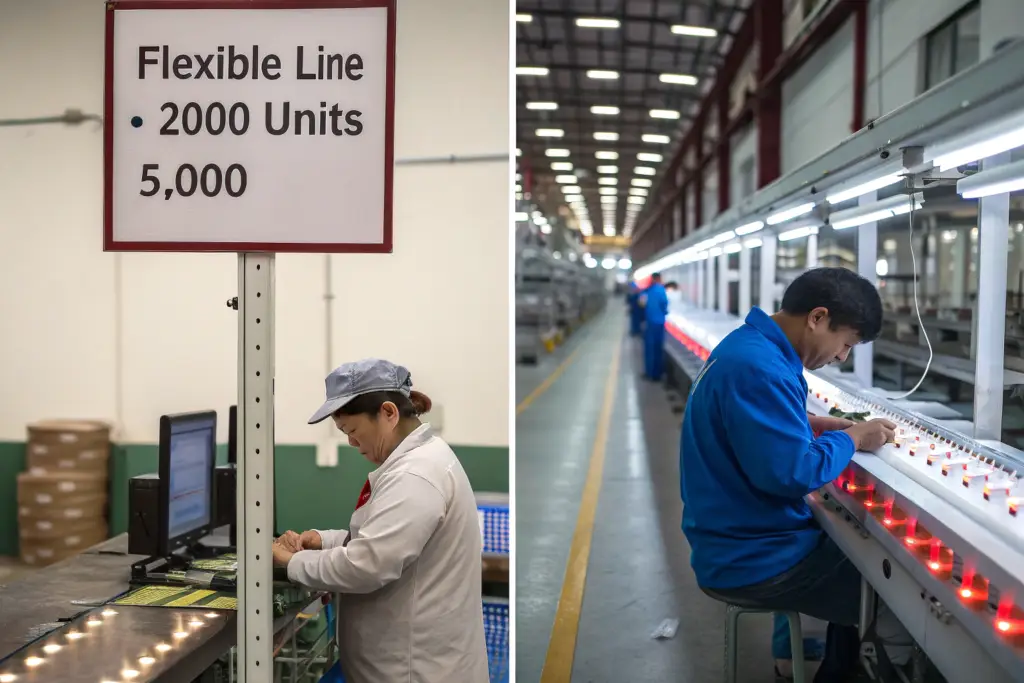
China's apparel manufacturing infrastructure offers greater production flexibility than Vietnam's for three reasons: the presence of factories with dedicated flexible production lines designed for small-batch and rapid-turnaround orders, a deeper labor pool with skills across a wider range of garment categories, and a supplier ecosystem that can support quick changes in materials and trims. Vietnam's industry is optimized for large, stable, long-running programs. It is less adapted to the test-and-scale, rapid-reorder model that US distributors increasingly need.
How Do Minimum Order Quantities and Reorder Capabilities Compare?
Vietnamese factories, particularly the larger, more established ones serving US markets, typically require higher minimum order quantities than comparable Chinese factories. MOQs of 1,000-3,000 units per style per color are common. This reflects a production model optimized for efficiency through long, uninterrupted runs of identical garments. For a distributor who wants to test a new style with 300 units before committing to volume, these MOQs are a barrier.
Chinese factories, including Shanghai Fumao, have adapted to the demand for flexibility. Our flexible production line can handle small-batch test orders of 100-200 units per style. When a style proves successful, we can scale to 2,000-5,000 units within a compressed reorder timeline because we have prepositioned greige fabric and reserved production capacity for our partner distributors. This test-and-scale model is difficult to replicate in Vietnam's current manufacturing structure. A distributor who values the ability to test new products with minimal inventory risk will find more flexibility from a Chinese partner. This MOQ flexibility China vs Vietnam is a significant operational advantage for distributors adapting to a faster, more responsive market.
How Does Workforce Skill Range Affect Product Diversification Capability?
A distributor who currently sells men's woven shirts may want to expand into men's knit polos, women's dresses, or children's wear. Each category requires different production skills, different equipment, and different quality control protocols. A factory whose workforce is trained across multiple categories can support this diversification. A factory whose workforce is specialized in a narrow range of products cannot.
China's garment manufacturing workforce, developed over four decades of serving diverse global markets, has a breadth of skills across categories that Vietnam's younger industry is still building. A single Chinese factory can often produce woven shirts, knit tops, outerwear, and dresses under one roof because its workforce has experience across these categories. Vietnamese factories tend to be more specialized—the woven shirt factory, the knit polo factory, the jacket factory. A distributor who wants to diversify their product range may find themselves managing multiple Vietnamese factories, each for a narrow product category, versus a single Chinese factory that can handle the full range. This workforce skill diversification in garment manufacturing is an operational advantage for distributors on a growth trajectory.
How Do Logistics Infrastructure and Shipping Reliability Compare?
A factory that makes beautiful garments but cannot deliver them reliably is not a viable sourcing partner. Logistics infrastructure—port capacity, ocean freight frequency, customs processing efficiency, and final-mile connectivity—determines whether the product arrives on time and at the expected cost. The logistics comparison between China and Vietnam favors China, not because Vietnam's logistics are poor, but because China's are among the best in the world.
China's logistics infrastructure advantage over Vietnam includes more frequent direct ocean freight sailings to US ports, reducing both transit time and the risk of delays at transshipment hubs; more mature port infrastructure capable of handling peak season volumes without significant congestion; a more developed DDP service ecosystem that provides cost certainty and operational simplicity; and better connectivity to US West Coast ports, which are the primary entry point for apparel imports. These advantages translate into shorter, more reliable transit times and more predictable landed costs for US distributors.
How Do Ocean Freight Frequency and Transit Times Differ?
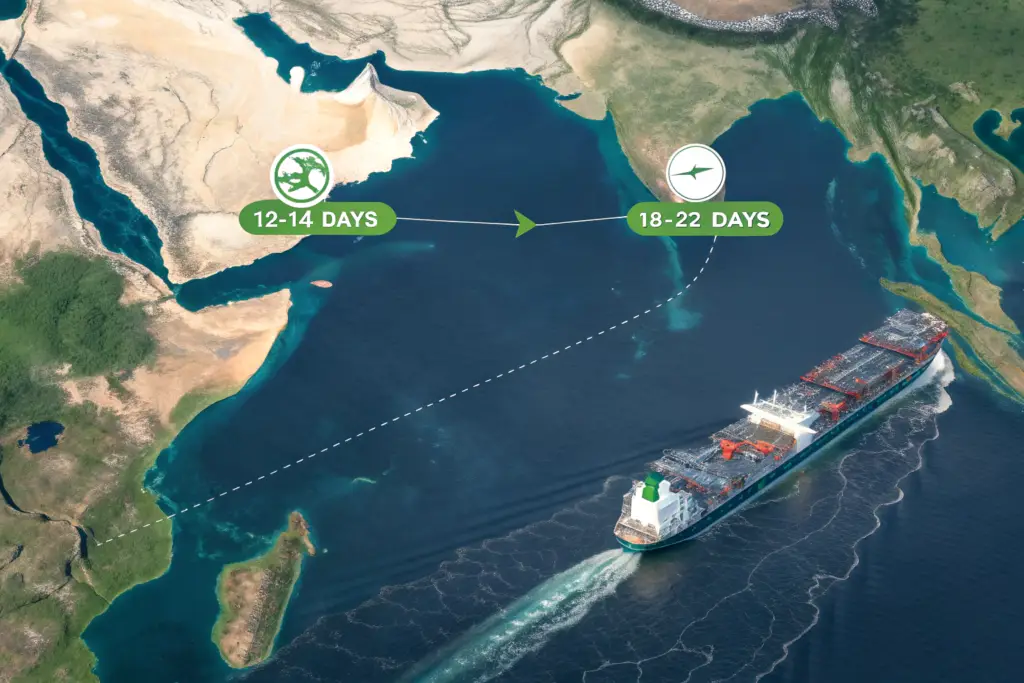
Shanghai to Los Angeles is one of the world's busiest container shipping routes. Multiple carriers offer daily sailings. The transit time is 12-14 days. If a distributor's shipment misses one vessel due to a production delay, the next vessel departs within a day or two. The cost of missing a sailing is minimal.
Ho Chi Minh City to Los Angeles has fewer direct sailings. Many services transship through Singapore, Hong Kong, or Busan, adding 3-7 days to the transit time. The total transit time is typically 18-22 days, and can be longer if transshipment connections are missed. If a shipment misses a direct sailing, the next available vessel may be a week later. The cost of missing a sailing is significant. For a distributor operating on a tight seasonal calendar, the 6-10 day difference in ocean transit time, plus the higher risk of delay from transshipment, is a material consideration. This ocean freight transit times Asia to US comparison favors China for distributors who prioritize speed and reliability.
What Happens During Peak Season and Disruption Events?
During the annual peak shipping season from August to October, and during disruption events like port congestion, labor actions, or weather-related closures, the logistics differences between China and Vietnam become more pronounced. China's greater sailing frequency means that even during peak season, space is more available and rates, while elevated, are less volatile. The direct sailings avoid the risk of delays at transshipment hubs, which are often the first points of failure during disruptions.
Vietnam's lower sailing frequency means that during peak season, space is tighter and rates are more volatile. Transshipment-dependent routes are more vulnerable to disruption because a delay at the transshipment hub cascades through the entire journey. A distributor whose Vietnam shipment misses a transshipment connection during peak season may face a week or more of additional delay with limited recourse. This logistics reliability during disruption is a hidden advantage of sourcing from China. It is invisible when everything runs smoothly and becomes painfully visible when it does not. This supply chain reliability China vs Vietnam is a risk factor that experienced distributors weigh in their sourcing decisions.
Conclusion
The decision between China and Vietnam for garment production in 2026 is not a simple choice between a higher-cost and a lower-cost country. It is a complex strategic decision that involves supply chain depth, product complexity capability, total landed cost, production flexibility, logistics reliability, and speed-to-market. Vietnam has earned its place as a significant apparel manufacturing destination, particularly for high-volume, basic garments with stable demand and long lead times. But for US distributors whose competitive advantage depends on product innovation, speed-to-market, production flexibility, and complex garment capability, China's structural advantages remain compelling.
At Shanghai Fumao, we serve distributors who have tried sourcing from multiple countries and have returned to China because the total value proposition—not just the FOB price—is stronger. We offer the supply chain depth that enables rapid product development. We offer the production flexibility that enables test-and-scale models. We offer the DDP logistics infrastructure that provides cost certainty. And we offer the multi-category manufacturing capability that enables distributors to consolidate their sourcing with a single partner.
If you are reevaluating your sourcing strategy for 2026 and beyond, and you want an honest, data-informed comparison of how China-based production compares to your current Vietnam or multi-country sourcing model, let us provide a specific analysis for your product categories. Contact our Business Director, Elaine, at elaine@fumaoclothing.com. Share your product mix, your volume estimates, and your current lead time and landed cost benchmarks. We will provide a comparative analysis that shows how a partnership with Shanghai Fumao would perform on the metrics that matter most to your business.