Rental fashion isn’t just a trend—it’s a structural shift. And manufacturers who want to grow with it must adapt.
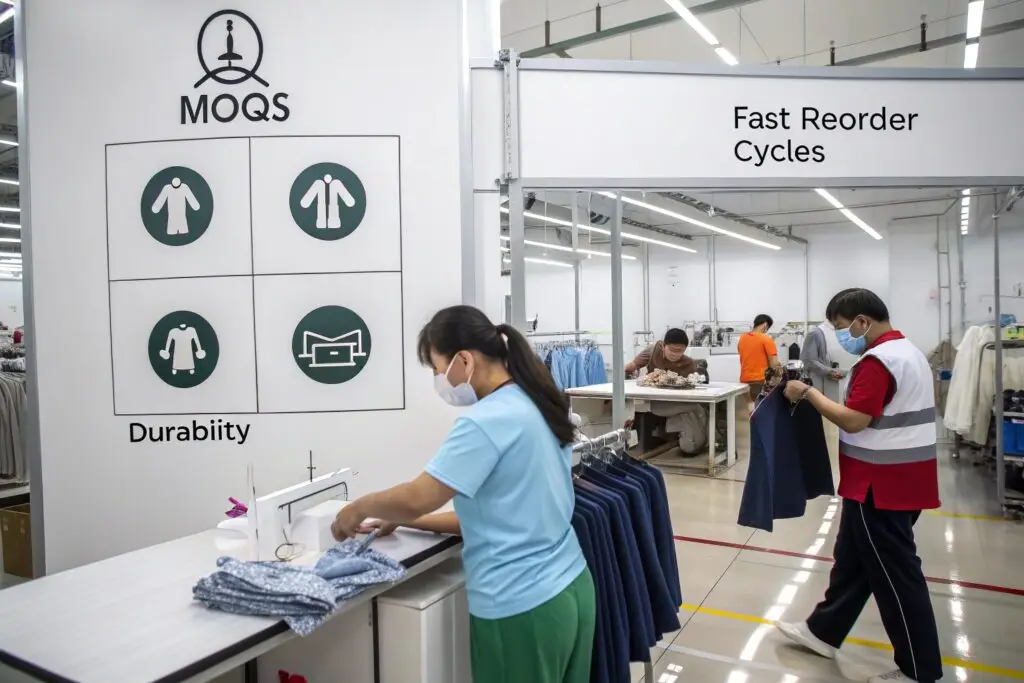
To serve rental brands, manufacturers must rethink durability, lower MOQs, flexible production cycles, aftercare logistics, and elevated compliance standards.
As a clothing manufacturer working with startups and established rental platforms, I’ve seen what works—and what breaks. Rental clients need more than garments. They need solutions.
Designing Garments for High-Wear and Easy Maintenance?
Rental garments get worn hard. They’re returned, cleaned, repaired, and re-worn many times.
Manufacturers must design rental-ready garments for durability, washability, and repairability—ensuring each item survives at least 10–30 wear cycles.
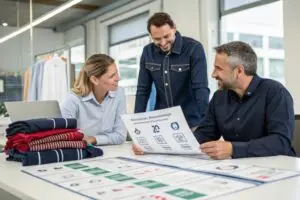
What garment construction methods work best in rental?
We use reinforced techniques across styles:
- Double-stitched side seams
- Bar-tack stress points (shoulders, waist, crotch)
- Fold-over elastic cuffs
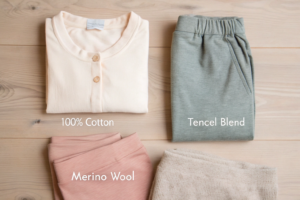
- Interlock or compact jersey for long wear
We also recommend:
- Avoiding decorative trims (beads, embroidery)
- Pre-testing shrink rate after 10 washes
- Using solid colors that mask stains and fade less
| Design Feature | Retail Focus | Rental Requirement |
|---|---|---|
| Stitching | Cost-efficient | Reinforced and sealed |
| Fabric | Trend-driven | Midweight, shrink-resistant |
| Fasteners | Optional durability | Industrial grade (snap > zipper) |
| Trim | Aesthetic-driven | Functional, washable |
What finishes help with maintenance and cleaning?
Durability isn’t just stitching—it’s finish. We use:
- Anti-pilling treatments
- Fade-resistant reactive dyes
- Anti-microbial coating (babywear)
- Machine-washable labels
Your garments aren’t just worn—they’re processed. And they need to come back looking clean and fresh, every time.
How Rental Demands Change MOQ and Production Cycles?
Forget seasonal collections. Rental brands work on rotation.
Manufacturers must support flexible batch sizes, lower MOQs, and more frequent reorders—driven by usage data, not fashion calendars.
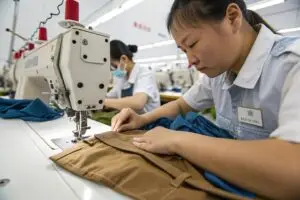
How does MOQ flexibility affect garment production?
Rental clients:
- Launch with 100–300 pcs per SKU
- Reorder based on real wear data
- Need custom splits by size, not just color
One client orders 100 hoodies:
- 40 in 3T
- 30 in 4T
- 30 in 5T
Next reorder? Only 3T and 5T. We adjust with modular markers and smart cutting systems.
| Factor | Traditional Retail | Rental Production |
|---|---|---|
| MOQ per SKU | 1000–3000 pcs | 100–300 pcs |
| Order Frequency | Seasonal (2–4/year) | Rolling (monthly/quarterly) |
| Size Curve | Pre-set | Demand-based |
| Fabric Planning | Fixed seasonal | Shared or pre-stocked |
How can manufacturers stay efficient with small runs?
We:
- Hold shared fabric stock
- Use standard trims across styles
- Group smaller orders into batch cutting sessions
- Offer repeating blanks (base bodies with new prints)
This helps us deliver small orders with minimal cost increase—while keeping speed high.
Collaborating on Repairs, Refurbishment, and Reverse Logistics?
Rental doesn’t end at delivery—it loops back.
Manufacturers can increase value by supporting garment refurbishment, repairs, and reverse logistics—keeping products alive and profitable.
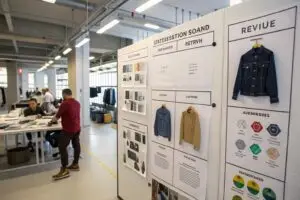
What post-production services matter for rental clients?
Top rental clients request:
- Repair kits (buttons, patches, spare labels)
- Refurbishment support (cleaning, restitching, relabeling)
- Garment evaluation (decide resale vs retirement)
We offer:
- Quarterly repair days (send back, we fix and resend)
- Garment cleaning + re-ironing service
- Resupply of lost labels or elastic replacements
| Post-Sale Support | Description | Benefit |
|---|---|---|
| Repair Kit Inclusion | Spare buttons/snaps + thread | Reduces return losses |
| Return Refurbish Flow | Scan, fix, press, rebag | Faster rental recirculation |
| Garment Evaluation | Feedback loop from wear data | Design improvement + durability |
How do we integrate with client return systems?
We create repair routing forms, grading templates, and offer drop-ship repair hubs. When items come back with minor wear, we restore them in 2–4 days, not 2 weeks.
Our goal: zero garments wasted. Every stitch matters.
Compliance and Quality Standards for Rental-Ready Apparel?
One-time use quality isn’t enough. Rental demands consistency and documentation.
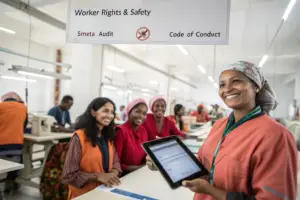
To support rental brands, manufacturers must follow strict compliance processes, long-cycle quality testing, and traceability tools to ensure safe and long-lasting garments.
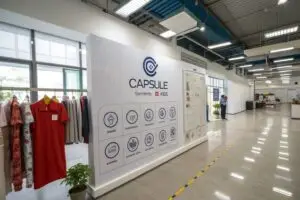
What quality standards do rental garments require?
Rental brands often ask for:
- 100% QC coverage (not just batch testing)
- Post-wash inspection data (shrink, fade)
- Label life testing (machine-safe, won’t peel)
- Durability reports (12–15 use simulations)
We use:
- ISO 6330 wash tests (home laundry cycles)
- ASTM D4966 (Martindale abrasion test)
- In-house repair/return data to spot weak points
| Compliance Area | Traditional Retail | Rental Standards |
|---|---|---|
| Garment QC Scope | 10–30% batch check | 100% unit-level check |
| Wash Simulation Cycles | 1–3 | 10–20+ |
| Label Adhesion | Optional | Must survive full rental life |
| Chemical Compliance | Basic | Baby-safe, Oeko-Tex, GOTS |
How can manufacturers build a compliance-ready workflow?
We:
- Label every batch with internal tracking ID
- Share wash-and-wear test data monthly
- Create production-to-performance reports with return rate stats
- Use pre-launch sampling cycles (make 100 pcs, test 60 days, scale later)
Rental brands don’t just buy products—they trust us to deliver long-term value.
Conclusion
Manufacturers supporting rental brands must do more than produce—they must engineer for performance, plan for flexibility, and commit to every garment’s life beyond delivery. Rental fashion is built on trust, longevity, and partnership. And for manufacturers ready to adapt, it’s a growing opportunity.