You're designing a new line of technical outerwear for golf: jackets that must shield players from harsh sun and sudden wind. You’ve sourced fabrics with high UPF ratings and durable water-repellent (DWR) finishes. The performance specs look perfect on paper. But have you considered what’s in those high-tech fabrics? The very chemical treatments that provide sun protection and wind resistance can introduce hidden risks if not rigorously controlled. This is where OEKO-TEX Standard 100, particularly Class 1, shifts from a general safety guideline to an essential, non-negotiable specification for functional outerwear.
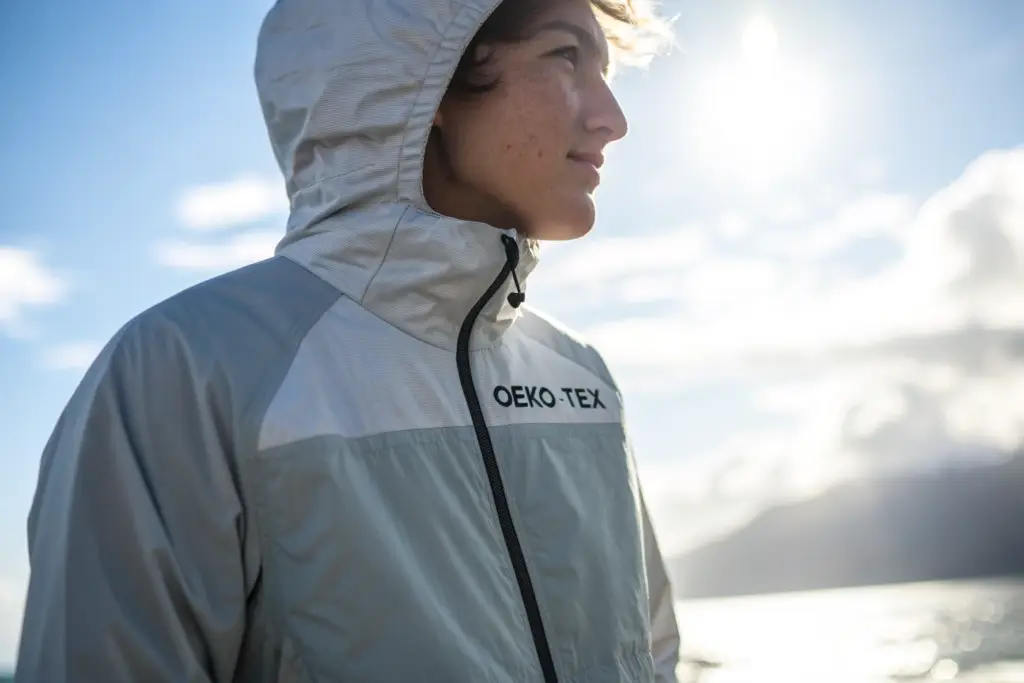
OEKO-TEX is essential for sun protection and windproof jackets because it certifies that the advanced chemical finishes and composite materials used to achieve these functionalities are safe for prolonged skin contact. It verifies the absence of harmful substances like residual catalysts from coatings, allergenic dyes in liners, and restricted PFAS compounds in DWR treatments, ensuring the jacket protects the wearer from the elements without exposing them to chemical risks. In short, it guarantees that the shield itself is not a source of harm.
A case from last season highlights this. A brand launched a lightweight windbreaker with excellent breathability ratings. However, after a few months of wear and exposure to sunlight and sweat, a small number of users reported a faint, persistent odor and skin itchiness. The issue was traced to the breakdown of an unregulated plasticizer in the jacket’s proprietary membrane lining—a substance that an OEKO-TEX Class 1 test would have identified and restricted. The costly recall and reformulation process could have been avoided. At Shanghai Fumao, this experience reinforced our policy: any functional fabric, especially for outerwear, enters our product development pipeline only with valid OEKO-TEX certification. It’s our first and most critical filter.
1. Deconstructing the Jacket: Where Hidden Risks Reside
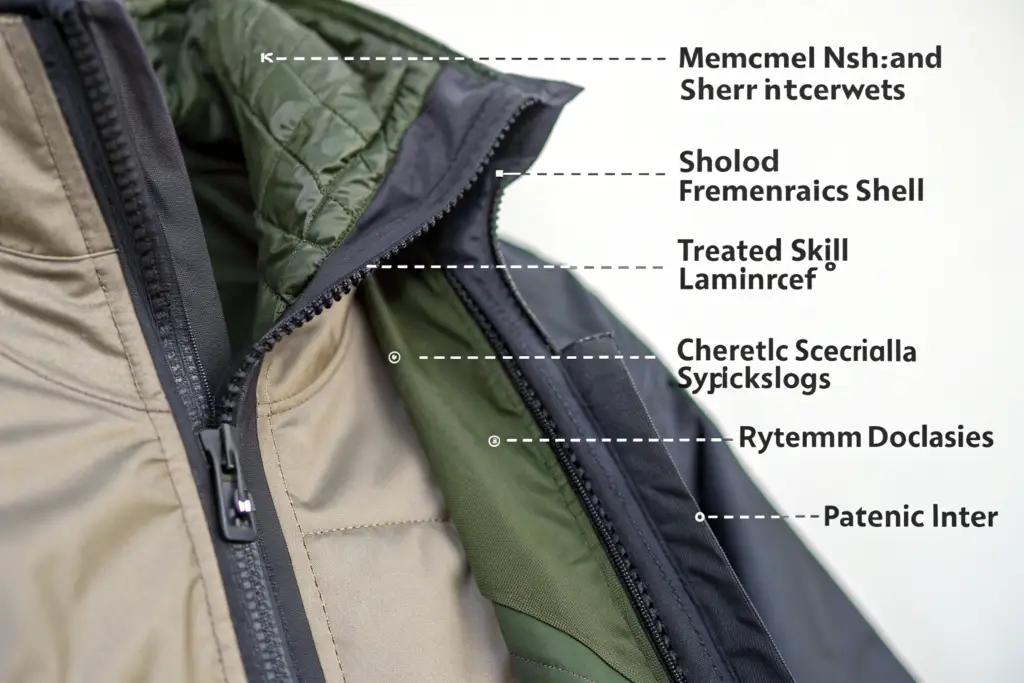
A modern sun protection or windproof jacket is a feat of textile engineering. It’s rarely a single layer of fabric. It’s a system, and each component in that system is a potential point of chemical concern. OEKO-TEX’s value lies in its holistic approach, testing the entire article in its finished state.
The essential nature of OEKO-TEX arises from its ability to audit the complete chemical profile of a complex garment system—from the outer shell’s treatments to the inner lining’s dyes and the laminate’s adhesives. Let’s break down where risks can hide in a typical technical jacket:
- Outer Shell Fabric: This is often a tightly woven nylon or polyester treated with a DWR finish for water and wind resistance. Many traditional DWRs are based on PFAS (per- and polyfluoroalkyl substances), now widely recognized as persistent environmental pollutants and potential health risks. OEKO-TEX strictly regulates and limits specific PFAS compounds.
- Laminates & Membranes: The windproof and breathable layer (e.g., a PU or ePTFE membrane) is bonded to the shell with adhesives. These chemical films and glues can contain plasticizers (like phthalates) and residual solvents.
- Inner Lining: The fabric touching the skin directly may be treated for moisture-wicking or antimicrobial properties. It is also dyed. This is a critical zone for allergens and skin irritants.
- Threads, Zippers, and Trims: Even the sewing thread is coated with lubricants, and zippers may have chemical coatings. All must be accounted for.
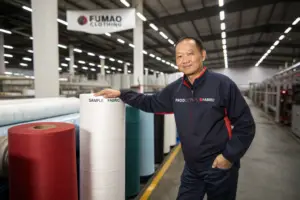
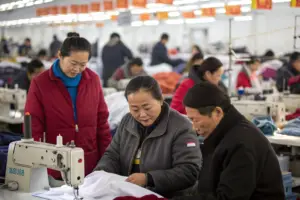
Without a comprehensive standard like OEKO-TEX, a brand might only test the main fabric, missing the cumulative chemical load from all other components. Our full-package manufacturing process at Shanghai Fumao is designed to manage this complexity. We source certified components and assemble them under a quality assurance protocol that treats the finished jacket as the certifiable unit, not just a collection of parts.
The Science of Safe Functionality: How OEKO-TEX Tests Matter
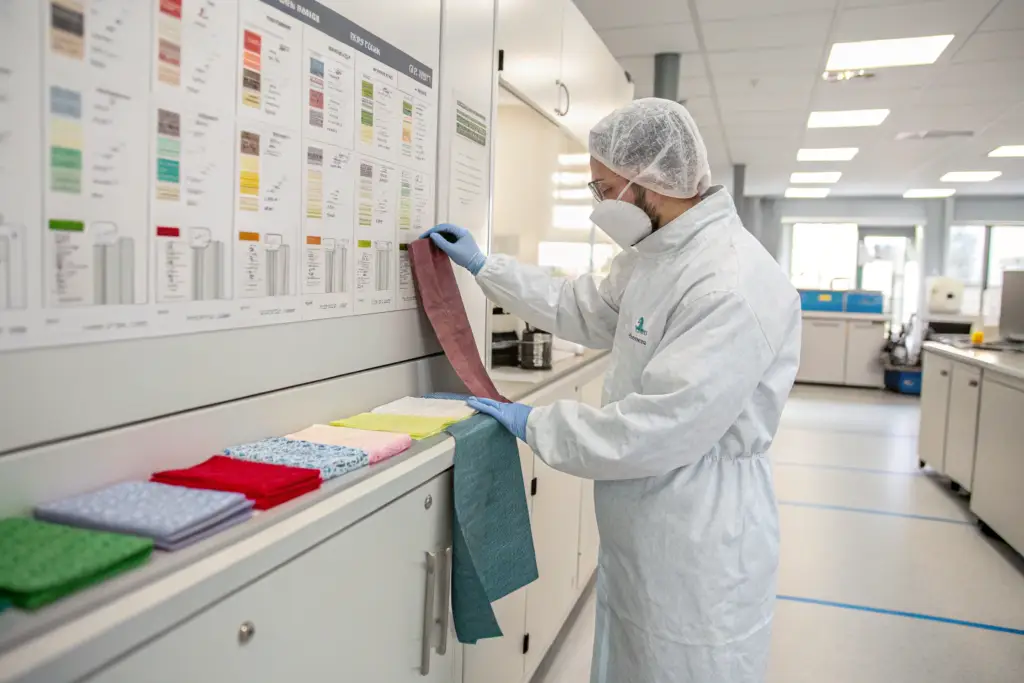
OEKO-TEX testing simulates real-world use. For a jacket, this is crucial. Consider:
- Perspiration: As a golfer wears a jacket, sweat can interact with the inner lining. OEKO-TEX tests for colorfastness to perspiration and extraction of harmful substances in both acidic and alkaline sweat simulants.
- Saliva and Skin Contact (for Class 1): The stringent Class 1 standard includes tests simulating a baby chewing on fabric—an extreme test that guarantees safety for all skin contact, including the neck and wrist areas of a jacket.
- UV & Environmental Exposure: While OEKO-TEX doesn’t test UPF, it does test for the stability of dyes and chemicals. This ensures that the sun-protective jacket doesn’t degrade and release substances when exposed to sunlight over time.
This scientific validation is why leading brands insist on it. It transforms a performance claim into a verified, safe reality.
2. Sun Protection (UPF) Fabrics: Beyond the UPF 50+ Rating
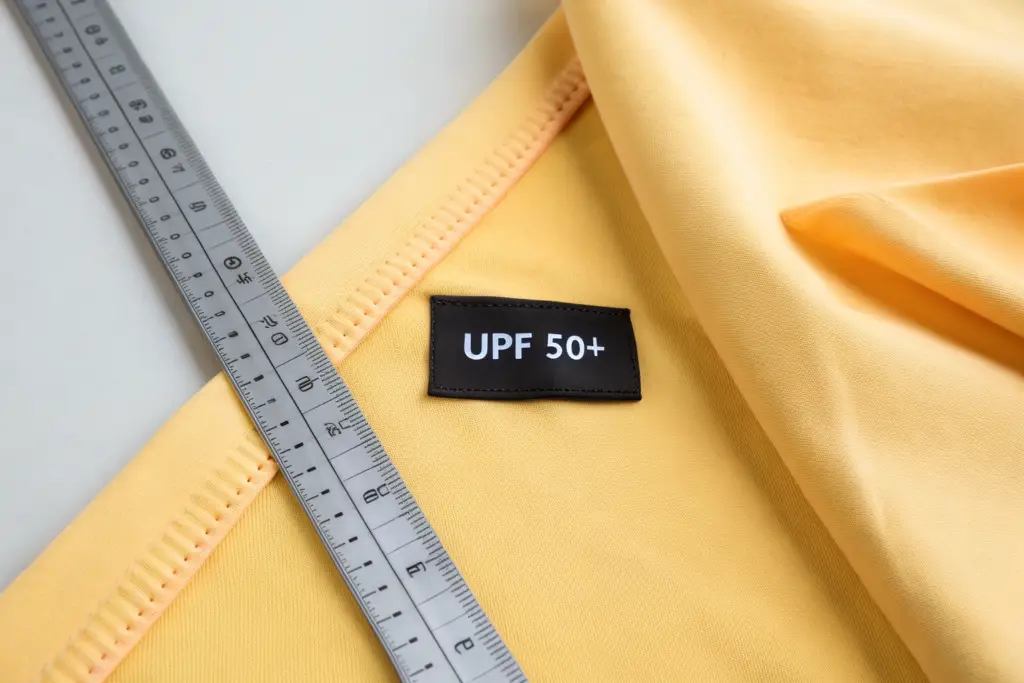
A fabric’s Ultraviolet Protection Factor (UPF) rating tells you how effectively it blocks UV radiation. A UPF 50+ fabric blocks over 98% of UVA and UVB rays. However, the method used to achieve this high rating matters for safety.
High UPF is achieved through: 1) tight fabric construction (weave/knit), 2) use of certain fibers like polyester that naturally absorb UV, and 3) chemical UV-absorbing finishes. It is the third method that introduces potential chemical risks. These finishes can be based on compounds that, if not properly fixed or if they break down, could be harmful.
Why OEKO-TEX is the Critical Companion to UPF
An OEKO-TEX certification for a high-UPF fabric provides vital assurances that the UPF rating is achieved safely:
- It verifies the safety of the UV-absorbing agents. The certification tests for the presence and extractability of restricted chemical categories that might be used in such treatments.
- It ensures colorfastness. Many dark or bright colors contribute to UPF. OEKO-TEX tests ensure these dyes are fixed and will not migrate onto skin, especially when wet with sweat.
- It guarantees skin-friendliness. The fabric’s pH is tested to be skin-neutral, and it is screened for allergenic dyes and formaldehyde—common irritants that could cause a reaction under a warm jacket.
We worked with an Australian brand that needed golf jackets for extreme sun. They sourced a fabric with a brilliant silver coating for maximum UV reflection. Initially, the fabric failed our incoming OEKO-TEX screen due to high levels of a heavy metal used in the coating process. We worked with the mill to develop an alternative, mineral-based coating that passed both UPF 50+ testing and OEKO-TEX Class 1. The result was a jacket that was a market leader in both safety and performance. This is the product development partnership that OEKO-TEX enables.
3. Windproof & Water-Resistant Technologies: Scrutinizing the Chemistry
Windproofness often comes from a combination of a tightly woven outer shell and a microscopic porous membrane (like PU or ePTFE). Water resistance is typically imparted by a DWR finish on the outer fabric. The chemistry behind these technologies is sophisticated and must be scrutinized.
OEKO-TEX serves as an essential chemical audit for these advanced treatments, ensuring that performance does not come at the cost of introducing harmful substances like PFCs, phthalates, or organotin compounds into the garment and, ultimately, the environment.
The PFAS Dilemma and OEKO-TEX Guidance
PFAS chemicals, valued for their long-lasting water and stain resistance, have become a major concern. Responsible brands are moving to PFC-free or PFAS-free DWR treatments. OEKO-TEX provides a clear, updated framework for this transition. Its test criteria specifically restrict many PFAS substances, guiding mills and manufacturers toward safer chemistry.
For a brand, specifying OEKO-TEX Class 1 is the most straightforward way to ensure your windproof jacket uses a regulated, safer DWR technology. It future-proofs your product against increasing regional bans on PFAS (e.g., in California and the EU). At our factory, our sourcing team uses the OEKO-TEX restricted substances list (RSL) as a mandatory checklist when evaluating new membrane and coating suppliers for our clients’ outerwear projects.
Ensuring Breathability Without Toxicity
A windproof jacket must also be breathable to allow sweat vapor to escape. This is often achieved with micro-porous membranes. The production of these membranes can involve solvents and other processing chemicals. OEKO-TEX testing includes screening for volatile organic compounds (VOCs) and other residual substances that could off-gas from the membrane inside the jacket, creating odor or potential inhalation risks.
By demanding OEKO-TEX certification for the finished laminated fabric, you ensure that the complex chemistry behind breathability has been vetted for safety. This is a key part of our quality assurance for technical outerwear, providing peace of mind that the jacket’s climate control system is clean.
Conclusion
In the world of high-performance golf apparel, a jacket’s purpose is to create a protective microclimate for the player. This protection must be holistic: guarding against wind, sun, and rain, while also ensuring that the materials composing this shield are inherently safe. OEKO-TEX Standard 100, especially at the Class 1 level, is the only comprehensive, independent verification that delivers this complete assurance.
It moves the conversation from “does it work?” to “is it safely made?”. For a brand, this is not just about risk mitigation; it’s about building a reputation for integrity and foresight. In an era where consumers scrutinize labels and regulations tighten, OEKO-TEX certification on your sun protection and windproof jackets is a powerful statement of your brand’s commitment to true performance—where safety is engineered in, not added on.
Partner with a manufacturer who understands that essential performance requires essential safety standards. At Shanghai Fumao, we integrate OEKO-TEX certification into the DNA of our technical outerwear development. Let us help you build jackets that protect your golfers in every sense of the word. Contact our Business Director, Elaine, to begin developing your next-generation outerwear line: elaine@fumaoclothing.com.