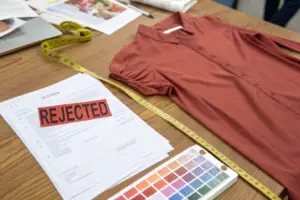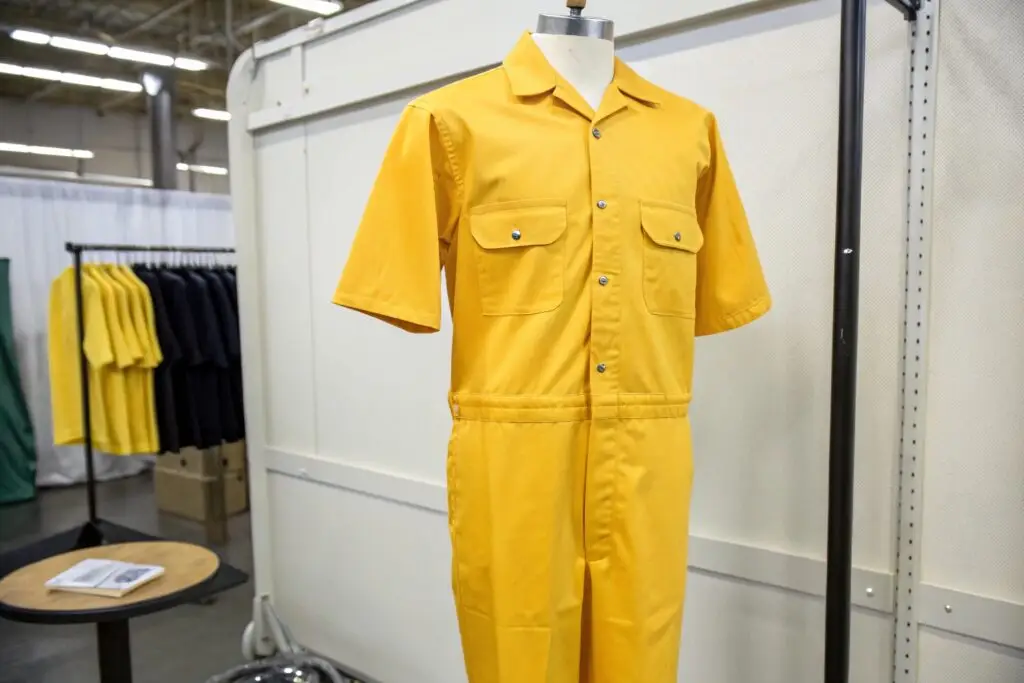
A garment isn’t rental-ready just because it looks good on day one—it has to survive real wear, repeat cleaning, and still hold its shape.
A fabric is rental-ready if it resists shrinkage, fading, pilling, and seam breakdown after 10+ industrial washes, while still presenting well to end-users.
At Fumao, we’ve tested thousands of samples for uniform rental clients. The ones that make the cut don’t just perform in the lab—they hold up in the field.
What counts as wear and tear when renting in the UK?
In the UK rental sector, wear and tear refers to the natural degradation of garments over time—but what’s considered normal versus neglect is key for business success.
Wear and tear means visible aging from normal use—like minor fading, small abrasions, or surface pilling—not rips, heavy staining, or distorted shape.
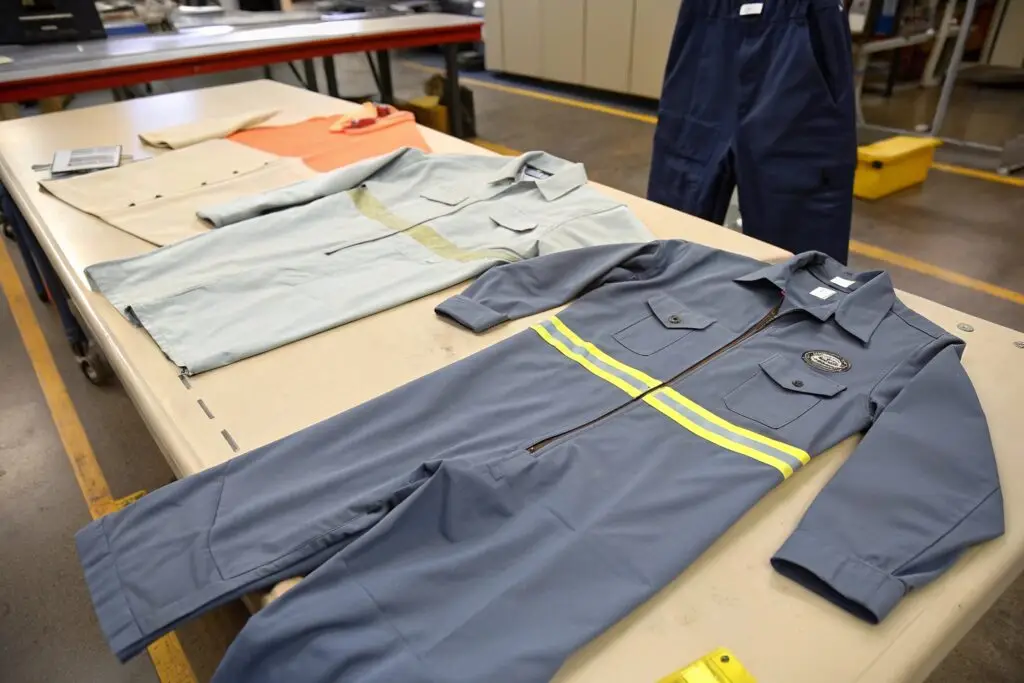
Why is defining “acceptable wear1” essential for UK rental contracts and end-client expectations?
One of our UK buyers faced repeated customer complaints. The issue? Clients returned uniforms demanding refunds after six months of moderate use. The company didn’t define acceptable wear levels.
We helped them create visual grading charts, showing what counts as normal:
| Condition Type | Acceptable Wear Example | Not Acceptable |
|---|---|---|
| Fading | Slight lightening near seams | Patchy or uneven tone |
| Pilling | Light surface fuzz | Clumping or fiber shedding |
| Seams | Mild softening | Open or loose threads |
| Fit | Relaxed shape | Shrunk or warped proportions |
By setting these standards, the rental company reduced disputes and increased customer retention.
How can fabric selection2 reduce arguments over wear and tear?
Choose fabrics that naturally resist aging:
- Polyester and poly-cotton blends fade slower than pure cotton
- High-denier yarns pill less
- Solution-dyed fabrics maintain consistent tone
We now advise all UK clients to include “wear prediction3” in contracts—based on lab-tested benchmarks after 10–30 wash cycles.
What does "make ready" mean in apartments?
In property rentals, “make ready” means the unit is fully cleaned, repaired, and ready for move-in. For garments, the principle is similar.
To make a rental garment ready, it must be cleaned, repaired, inspected, and prepped for next use—like an apartment between tenants.
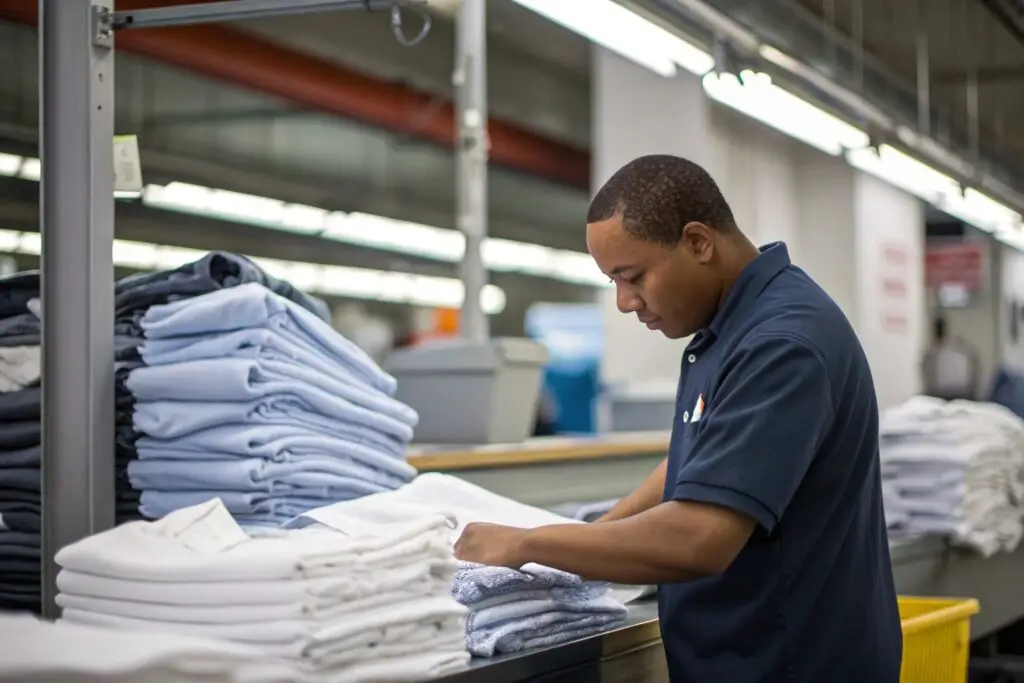
How does the “make ready” concept apply to rental clothing between cycles?
After each use, rental garments must go through a full “reset”:
- Cleaning: Stains removed, disinfection confirmed
- Inspection: Check for holes, broken fasteners, shrinkage
- Repairs: Minor fixes—buttons, hems, bar tacks
- Finishing: Iron or tunnel press
- Folding & Packing: Tag and bag per delivery protocol
This process keeps the garment presentable, hygienic, and wearable—just like a freshly painted, carpeted flat.
What operational tools4 help clothing rental companies speed up the make-ready5 process?
We’ve helped clients implement:
- Barcoded tracking for garment history
- Automated repair notes from washhouse scanners
- Color-coded tags to indicate readiness stage
- QR code instructions for folding/packing standards
Just like landlords streamline apartment turnovers, rental garment businesses need “turnover kits” to reduce downtime between cycles.
What does it mean to be tenant-ready?
In rentals—whether property or apparel—being tenant-ready means meeting all basic performance, comfort, and appearance needs without excuses.
A tenant-ready garment is sized accurately, free of defects, compliant with laundering standards, and passes visual inspection for frontline presentation.
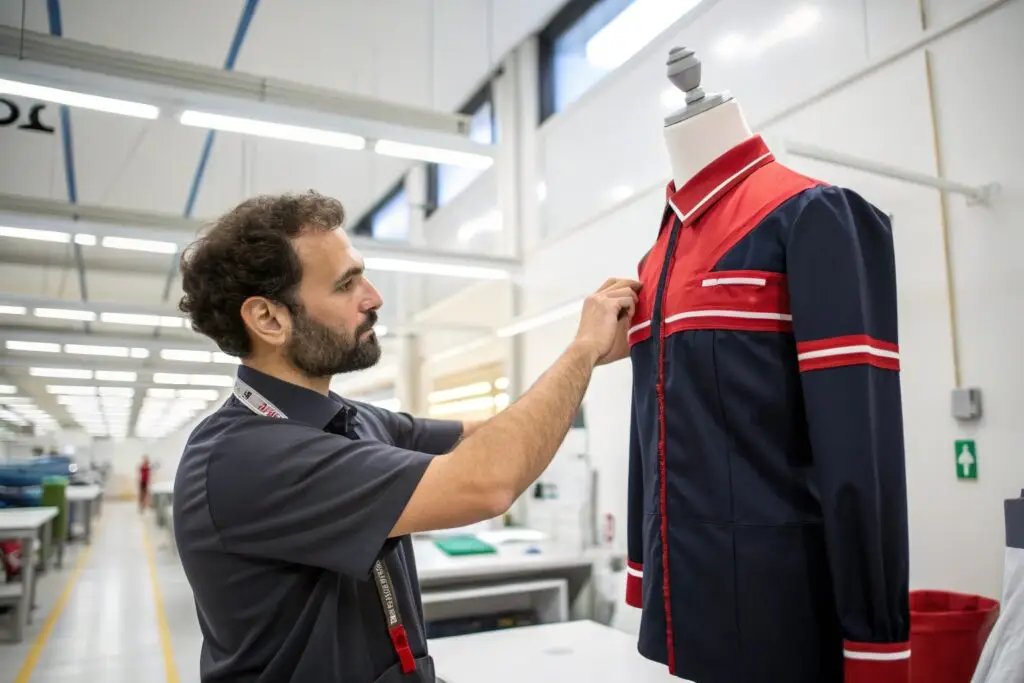
Why is visual inspection6 just as important as wash durability for tenant-ready apparel7?
In rental operations, end-users don’t care how many lab tests you passed. They care if the shirt looks and fits right.
We had a European client who passed ISO wash tests8 but still had high rejection rates. Why? Shirts wrinkled easily and looked old despite structural integrity.
So we re-engineered their shirts with:
- Brushed twill that hides creasing
- Colorfast dyes that withstand 50+ washes
- Interlining in plackets and collars to hold shape
The result? Lower returns, higher user satisfaction, and better contract renewal rates.
What checklist should rental buyers use before labeling a garment tenant-ready?
Here’s our suggested checklist used by several of our clients:
| Checkpoint | Criteria |
|---|---|
| Cleanliness | No visible stains or odor |
| Size Accuracy | Within 1-inch spec tolerance |
| Structural Integrity | Seams, buttons, elastic intact |
| Shape Retention | No puckering or shrinkage |
| Presentation | Ironed or pressed, folded cleanly |
If a garment fails any one of these, it goes to rework before reissue. No exceptions.
What does Nsfs mean?
You may see “NSFS” on rental tags or industry documentation—it’s a behind-the-scenes code with serious implications.
NSFS stands for "Not Suitable for Service," meaning a garment has failed inspection and cannot be reissued to clients until repaired or replaced.
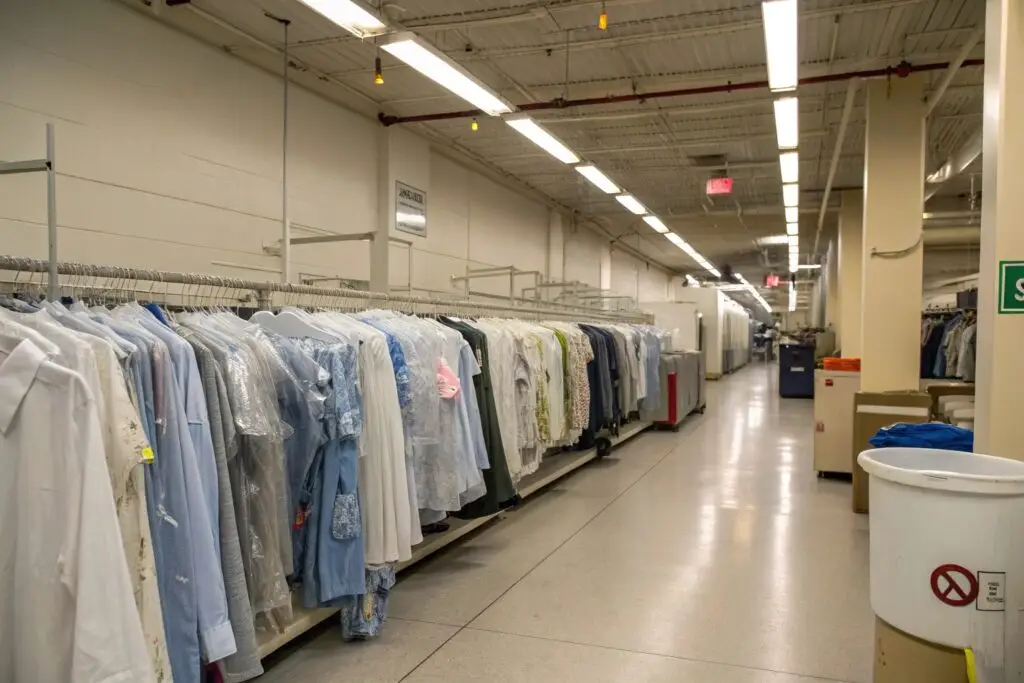
How should rental operations handle NSFS garments9 to control costs and inventory?
Marking a garment as NSFS triggers an internal workflow:
- Pull from active inventory
- Log reason: shrinkage10, tear, staining
- Attempt repair if cost-effective
- Send to salvage if beyond repair
- Order replacement if below stock threshold
We helped a logistics client automate this. They reduced labor time by 30% through barcode scanning linked to a cloud dashboard. Each NSFS tag triggered a visual cue for warehouse staff to pull the item.
What are common reasons garments get marked NSFS after only 10–20 wash cycles?
It usually comes down to:
- Unstable fabric
- Poor stitching
- Color migration
- Misuse in wash protocol
Here’s a breakdown of one client’s NSFS analysis after 10 weeks:
| Reason | % of Total NSFS Cases |
|---|---|
| Shrinkage | 35% |
| Fading or Discoloration | 28% |
| Seam Failure | 20% |
| Torn or Holed Fabric | 12% |
| Incorrect Fit Post-Wash | 5% |
Once we upgraded their blend from 100% cotton to 65/35 poly-cotton, their NSFS rate fell by half. Garments lasting longer means fewer reorders—and a smoother rental loop.
Conclusion
A rental-ready fabric doesn’t just survive 10 washes—it performs like new, looks sharp, and keeps your customer satisfied. At Fumao, we engineer every garment to stay ready, cycle after cycle.
-
Understanding acceptable wear is crucial for both rental companies and clients to set clear expectations and reduce disputes. ↩
-
Choosing the right fabrics can significantly minimize wear and tear, ensuring longer-lasting uniforms and happier clients. ↩
-
Incorporating wear prediction helps in setting realistic expectations and reduces conflicts over uniform condition after use. ↩
-
Exploring operational tools can reveal innovative solutions to enhance efficiency and reduce turnaround time in clothing rentals. ↩
-
Understanding the make-ready process is crucial for maintaining garment quality and customer satisfaction in rental services. ↩
-
Understanding the significance of visual inspection can enhance garment quality and reduce rejection rates in rental operations. ↩
-
Discover the key factors that define tenant-ready apparel to improve customer satisfaction and reduce returns. ↩
-
Learn about ISO wash tests to ensure your apparel meets durability standards and maintains quality over time. ↩
-
Understanding NSFS garments is crucial for rental operations to manage costs and inventory effectively. Explore this link for detailed insights. ↩
-
Shrinkage is a major reason for garments being marked NSFS. Learn about prevention techniques to enhance garment longevity. ↩