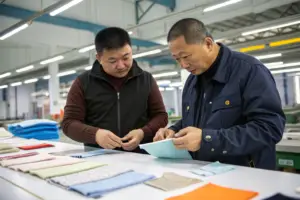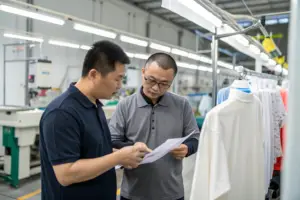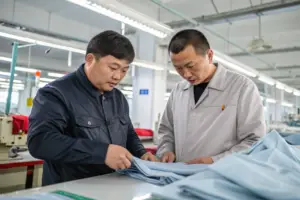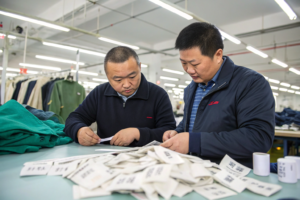
You have the design ready. The silhouette is an A-line midi with a defined waist and a gentle flare. The print is a watercolor floral you developed with a textile designer. You have identified three potential manufacturers in China. You email them your design brief and ask for a quote. The first reply says "MOQ 1,000 units per style." The second says "MOQ 500 units, but 300 units carries a 20% surcharge." The third says "We can do 100 units, no problem." You pause. The first two sound restrictive but realistic. The third sounds too good to be true, and you have been in this industry long enough to know that what sounds too good to be true usually is. You need to understand not just what the MOQ number is, but why it exists, what drives it, and whether a low MOQ is a legitimate offer or a warning sign.
The minimum order quantity for custom A-line floral dresses from a specialized Chinese manufacturer ranges from 100 to 300 units per style, depending on three factors: the level of customization, the fabric and print choices, and the manufacturer's operational structure. A fully bespoke dress with a new pattern, custom-sourced fabric, and a custom-developed print typically requires an MOQ of 300 units. A dress that uses the manufacturer's existing pattern library, greige fabric bank, and pre-approved print palette can be produced at MOQs of 100 to 200 units. Any manufacturer offering custom dresses at an MOQ below 100 units is either not actually custom-manufacturing the dresses, is losing money on every order, or is cutting corners on fabric, labor, or quality control in ways that will damage your brand. Understanding the economic drivers behind MOQs empowers you to negotiate intelligently and recognize offers that are unrealistic rather than generous.
My name is Elaine. I am the co-owner of Shanghai Fumao, a specialized manufacturer of woven dresses and linen apparel. I set our MOQs. I know exactly what costs they reflect and what trade-offs they represent. In this article, I will explain the three economic drivers that determine MOQs for custom dresses, show you the tiered MOQ structure we offer and why each tier exists, and give you a framework for evaluating any manufacturer's MOQ against the quality and customization they are actually delivering.
What Economic Factors Determine the Minimum Order Quantity for Custom Dresses?
A minimum order quantity is not an arbitrary number a factory invents to exclude small brands. It is the mathematical point at which the fixed costs of setting up a production run are spread across enough units to make the per-unit price viable for the buyer and the total order profitable for the factory. If the fixed costs total $1,200 and the factory needs a minimum margin of $800 to justify taking the order, the order must generate at least $2,000 in gross profit. If the per-unit profit at the target price is $8, the MOQ is 250 units. This is not greed. It is the basic arithmetic of running a factory with skilled labor, quality materials, and proper equipment.
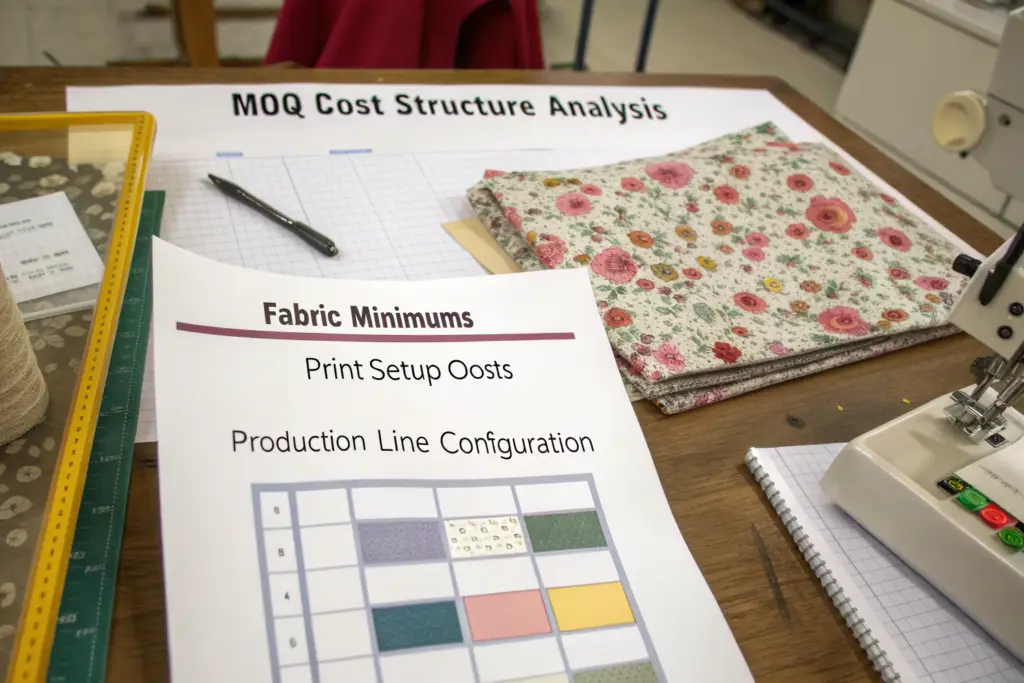
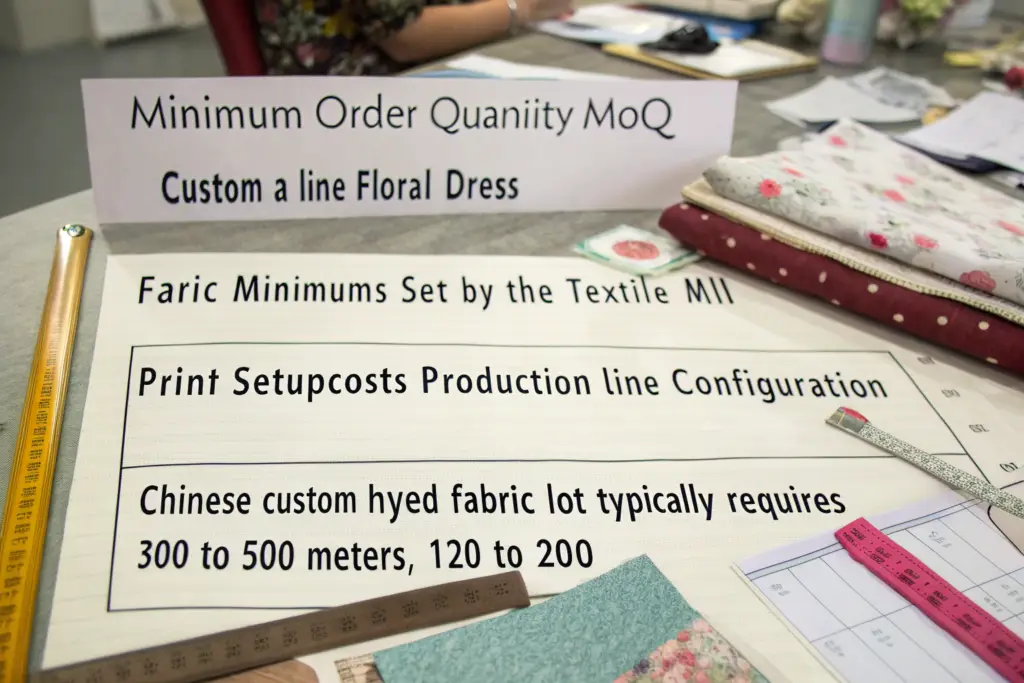
Three fixed costs determine the MOQ for a custom A-line floral dress. Fabric minimums are set by the textile mill. A custom-dyed fabric lot typically requires a minimum of 300 to 500 meters. At 2.5 meters of fabric per dress, that is 120 to 200 dresses just to consume the minimum fabric order. Print setup costs include the digital file preparation, the strike-off production, the screen engraving for screen printing, or the digital print machine setup. These costs are the same whether you print 50 meters or 500 meters. Production line configuration involves the time required to set up the sewing line for a new style: training the workers on the specific construction sequence, calibrating the machines, and running the first few units at a slower pace. This setup time is fixed regardless of order size. A factory that does not understand these cost drivers, or that ignores them to offer an unsustainably low MOQ, will either go out of business or cut corners to survive.
Why Do Fabric Mills Impose Minimum Order Quantities?
Fabric mills are the gatekeepers of the textile supply chain. They do not produce a few meters of custom-dyed fabric the way a print shop produces a few custom t-shirts. Their production processes—dyeing, finishing, quality testing—are designed for efficiency at scale. Running a small batch disrupts their workflow and costs them almost as much in setup time as running a large batch.
A custom dye lot requires the dye house to clean their dyeing vessels, mix a new color formulation, run a sample for lab approval, and then dye the full batch. The setup cost is largely the same for 100 meters or 1,000 meters. The dye house imposes a minimum to ensure the order covers their setup cost and generates a profit. For premium fabrics like European flax linen, the minimum is typically 300 to 500 meters per color. At 2.5 meters per dress, that minimum fabric order alone requires 120 to 200 dresses to consume. If a manufacturer offers an MOQ of 50 units on a custom-dyed fabric, they are not ordering a custom dye lot from the mill. They are either using deadstock fabric of uncertain origin, dyeing the fabric in an unregulated small-batch operation with no quality control, or lying about the fabric's origin. The textile mill minimum order quantity economics article explains the operational reasons behind fabric minimums. A legitimate manufacturer's MOQ is shaped by these upstream constraints. An illegitimate manufacturer ignores them at your brand's peril.
How Do Print Setup Costs Drive MOQs?
Custom print development has its own set of fixed costs. The design file must be prepared for the specific printing method, the fabric type, and the repeat dimensions. For digital printing, the file must be color-separated and optimized. For screen printing, physical screens must be engraved, one per color. A strike-off must be produced and approved before bulk printing can begin. Each of these steps involves skilled labor, specialized equipment, and material costs that do not vary with the final print quantity.
The print setup cost for a custom digital floral print on linen typically ranges from $200 to $500, depending on the color count, the repeat complexity, and the number of strike-off rounds required. This cost is fixed. If you order 100 meters of printed fabric, the setup cost adds $2.00 to $5.00 per meter. If you order 500 meters, it adds $0.40 to $1.00 per meter. The per-unit cost of the print setup is inversely proportional to the order quantity. A manufacturer offering a 50-unit custom-print dress at a price that fits a standard margin structure is either absorbing the setup cost at a loss, which is unsustainable, or not actually developing a custom print. They are likely using a stock print from their catalog and calling it "custom," or downloading a print file from the internet without proper color calibration. The digital textile print setup costs for fashion brands article explains the cost structure. A legitimate custom print carries real setup costs that must be absorbed by the order quantity.
What Production Line Configuration Costs Are Often Overlooked?
The sewing line is not a printer that produces identical output regardless of what you feed it. It is a team of human workers whose productivity depends on their familiarity with the specific garment they are sewing. The first time a sewing line produces a new style, the workers are slow. They study the operations sheet. They practice the construction sequence. They make mistakes that the QC inspector catches and corrects. The line's output on day one of a new style may be 40% to 60% of its output on day three, after the learning curve has flattened.
This learning curve represents a real cost to the factory. The labor hours invested in the slow early units must be absorbed across the total order. If the order is 100 units, the learning curve cost per unit is high. If the order is 500 units, the learning curve cost per unit is much lower because the efficient later units subsidize the slow early units. A factory offering very low MOQs on custom dresses is either paying its workers so little that the learning curve cost is negligible, which raises ethical concerns, or they are running your small order on a line that is also producing other styles, which means your dresses are not receiving dedicated attention and quality may suffer. The production line setup and learning curve costs in garment manufacturing article explains the operational reality. A legitimate MOQ reflects the point at which the learning curve cost per unit becomes economically reasonable.
What Is Shanghai Fumao's Tiered MOQ Structure for Custom A-Line Floral Dresses?
Different brands have different needs, different budgets, and different levels of design development investment. A single, rigid MOQ does not serve this diversity. A tiered MOQ structure matches the minimum quantity to the level of customization, so a brand that needs a fully bespoke dress pays for and commits to the volume that bespoke development requires, while a brand that is willing to work within our existing design and material infrastructure can access custom manufacturing at a lower minimum.
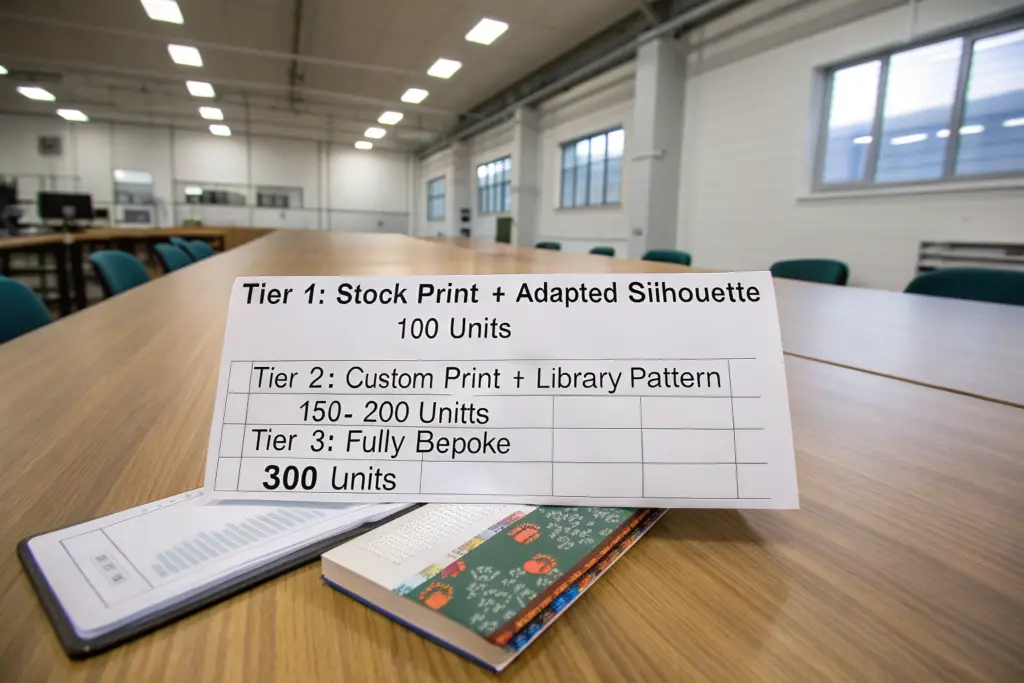
Shanghai Fumao offers three MOQ tiers for custom A-line floral dresses. Tier One, 100 units per style, is available for dresses that use our in-stock pre-dyed fabrics from the greige bank, our existing pattern library silhouettes with minor adaptations, and our in-house print catalog or a simple custom print with a limited color palette. Tier Two, 150 to 200 units per style, is for dresses that use our greige bank fabric dyed in a pre-approved color, our pattern library silhouettes with significant modifications, and a fully custom-developed floral print. Tier Three, 300 units per style, is for fully bespoke dresses with a new pattern developed from the brand's design sketch, a custom-sourced or custom-developed fabric, and a complex custom print with an extended color gamut. These tiers reflect the real fixed costs involved at each level of customization.
What Is Included in the 100-Unit Tier, and Who Is It For?
The 100-unit tier is designed for brands that want custom manufacturing—dresses made to their specifications with their label—but are willing to work within our existing material and design infrastructure to reduce the fixed cost burden. This is not stock wholesale with your label sewn in. It is a collaborative development process with a defined set of options.
At the 100-unit tier, you select a silhouette from our A-line dress pattern library. Our library includes a classic midi, a tiered maxi, a mini with puff sleeves, and several other proven styles. You can request minor modifications: a sleeve length change, a neckline shape adjustment, a hem length modification. You select a fabric from our in-stock, pre-dyed greige bank inventory. These are our premium linen and cotton fabrics, already dyed in our approved color palette, available immediately without dyeing lead time or dye lot minimums. You select a print from our in-house print catalog, or you can provide a simple custom print design with a limited number of colors, which we will produce using our digital printing partner. The development process is streamlined. One combined fit-and-print sample. One revision round. The total development timeline is four to six weeks. This tier is ideal for emerging brands that are testing custom manufacturing, established brands that need a small replenishment run, and brands that find our existing fabric and print options aligned with their aesthetic. The small batch custom apparel manufacturing options guide explains the trade-offs of this approach.
What Does the 300-Unit Fully Bespoke Tier Unlock?
The 300-unit tier is the full expression of custom manufacturing. Every element of the dress is developed specifically for your brand. There is no reliance on our existing library. The creative control is complete. The development investment, both in cost and in time, is proportionally higher.
At the 300-unit tier, our pattern engineer develops a new A-line pattern from your design sketch, with a muslin fitting, up to two rounds of fit revisions, and full grading across your size range. Your fabric is custom-sourced from our mill partner network. If you have a specific linen weight, weave, or finish requirement, we source it. If you want an exclusive fabric developed for your brand, we collaborate with the mill on a custom weave. Your print is a fully custom design, with unlimited colors, developed through our color-managed digital workflow with strike-off rounds until the colors match your vision exactly. The development timeline is longer, typically six to eight weeks from design brief to approved pre-production sample. The per-unit FOB price is lower than the lower tiers because the fixed costs are spread across more units. This tier is for established brands that have validated their demand, know their customer, and are ready to invest in a fully differentiated product.
How Can You Evaluate Whether a Low MOQ Offer Is Legitimate or a Red Flag?
A low MOQ is appealing. It means less inventory risk, less working capital tied up, and the ability to test more styles. A low MOQ can also be a trap. A manufacturer offering 50-unit custom dresses at a price that seems competitive is almost certainly compromising something. The compromise may be in fabric quality, labor conditions, print technology, or truthfulness about what "custom" actually means. You need a framework to evaluate whether a low MOQ offer represents a legitimate business model or a risk to your brand.
To evaluate a low MOQ offer, investigate three things. First, ask the manufacturer to explain, in specific terms, how they achieve the low MOQ. A legitimate answer references greige fabric banks, pattern libraries, and digital print technology. A vague or evasive answer is a red flag. Second, order a sample and inspect it against the five-point quality method: fabric, seams, zipper, hem, and bodice. A low MOQ at a low price that produces a high-quality sample is suspicious. The sample may have been made in a different facility than the bulk order. Third, request the manufacturer's fabric sourcing documentation. Where does the fabric come from? Can they provide a mill certificate, a fiber composition test report, and a dye lot traceability record? A manufacturer who cannot document their fabric supply chain is likely using deadstock, overstock, or uncertified materials. A legitimate low-MOQ manufacturer has a legitimate structural explanation for how they achieve it. An illegitimate one has excuses and evasions.
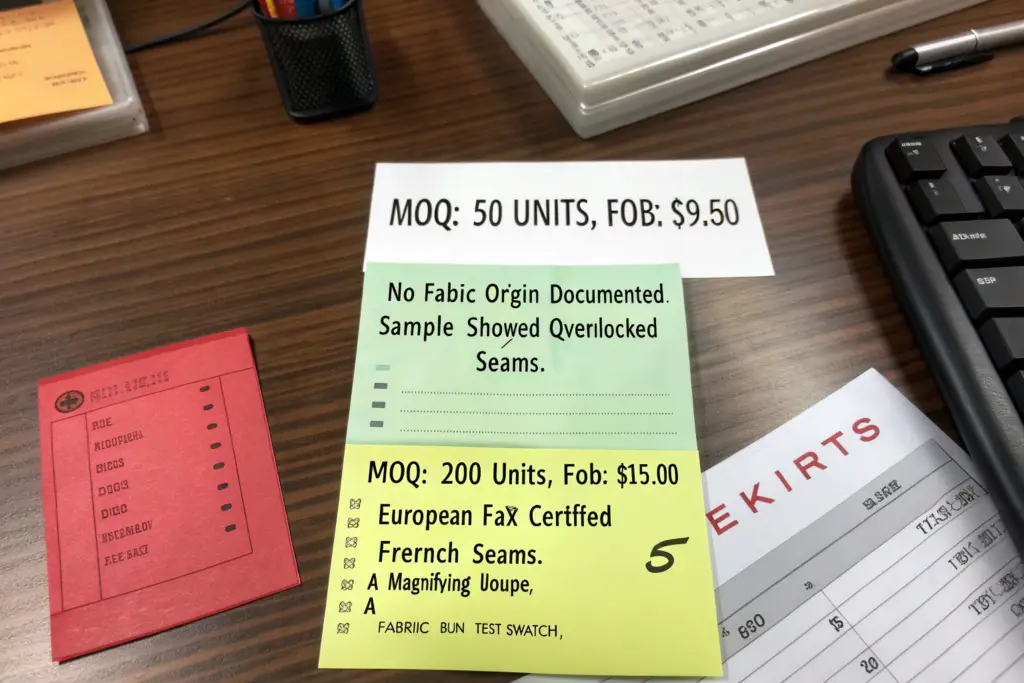
What Questions Should You Ask a Manufacturer Offering a Very Low MOQ?
A manufacturer offering a low MOQ should be able to explain their business model with the same specificity that a higher-MOQ manufacturer explains theirs. Their answers reveal whether the low MOQ is a function of smart operational design or corner-cutting.
Ask these specific questions. "Can you explain how you handle the fabric minimum for my custom color? Does your mill accept orders below 300 meters, or do you use a different approach?" A legitimate answer references a greige bank, a stock fabric program, or a relationship with a small-batch mill. An illegitimate answer is vague. "Can you show me a photo of the actual fabric inventory you would use for my order, with my order number on the tags?" A legitimate manufacturer can produce this photo because they have the fabric in stock. An illegitimate one cannot. "Can I speak with one of your current clients who orders at a similar MOQ to mine?" A legitimate manufacturer has satisfied small-batch clients and is happy to provide a reference. An illegitimate one demurs or provides a reference that seems scripted. "Can you provide a fabric composition test report from an accredited laboratory for the specific fabric lot you will use for my order?" A legitimate manufacturer can provide this documentation. An illegitimate one cannot or will not. The questions to ask low MOQ apparel manufacturers guide provides a comprehensive interview framework. A manufacturer's willingness and ability to answer these questions transparently is the best indicator of their legitimacy.
What Is the Difference Between a Legitimate Small-Batch Model and a Subcontracting Risk?
A legitimate small-batch manufacturer has invested in the infrastructure that makes small batches economically viable. They hold a greige fabric bank. They maintain a pattern library. They use digital printing, which has lower setup costs than screen printing for small runs. They operate a dedicated small-batch production line with cross-trained workers who can switch between styles efficiently. Their low MOQ is a reflection of this deliberate operational design.
A subcontracting risk is a different entity. This is typically a trading company or a factory that does not have small-batch infrastructure. When they receive a small order, they subcontract it to a smaller, often lower-quality workshop. The factory that made your beautiful sample is not the workshop that produces your bulk order. The quality, the fabric, and the construction standards are different. The trading company's margin is squeezed, so they pressure the workshop to cut costs. You receive dresses that look approximately like the sample but feel, fit, and wear completely differently. The identifying legitimate small-batch manufacturers versus subcontracting operations article explains the operational and legal differences. Protect yourself by verifying the manufacturer's production facility directly, through a live video tour that shows their fabric inventory, their production lines, and their QC station. A manufacturer who produces your dresses in their own facility is accountable for the quality. A manufacturer who subcontracts your order to an unknown workshop is not.
How Can You Reduce Your Effective MOQ Without Sacrificing Quality?
If your brand's ideal order quantity falls below a manufacturer's published MOQ, you are not necessarily locked out of custom manufacturing. There are legitimate strategies to reduce your effective MOQ by reducing the fixed costs that drive the minimum. These strategies require flexibility on your part and collaboration with a manufacturer who is willing to think creatively about your order.
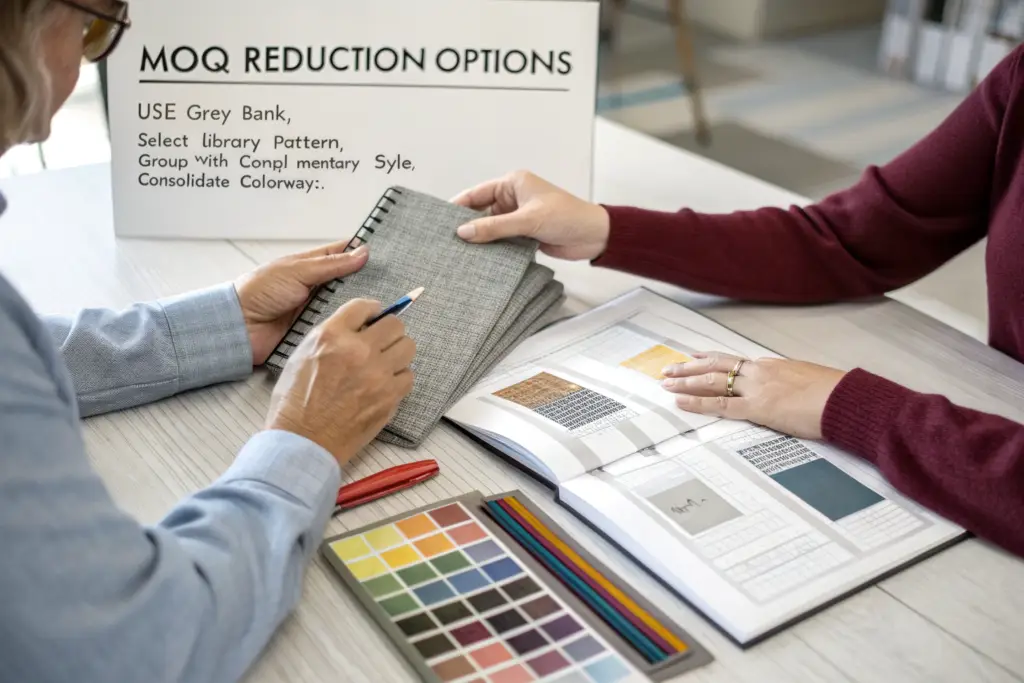
Reduce your effective MOQ without sacrificing quality by using these strategies. First, select fabric from the manufacturer's greige bank or stock inventory instead of ordering a custom dye lot. This eliminates the mill minimum. Second, select a silhouette from the manufacturer's pattern library instead of developing a new pattern. This eliminates the pattern development cost and the learning curve on the production line. Third, consolidate your colorways. Instead of offering four colorways at 100 units each, offer two colorways at 200 units each. The higher volume per colorway reduces the per-unit print and dyeing costs. Fourth, group complementary styles. If you want 80 units of a midi dress and 80 units of a maxi dress, ask whether both styles can share the same fabric and print. The combined 160 units may meet the fabric minimum, and the manufacturer can run both styles on the same production line. Fifth, inquire about the manufacturer's "stock fabric, custom silhouette" or "stock silhouette, custom print" hybrid programs. Many manufacturers, including Shanghai Fumao, offer these hybrid options at lower MOQs than fully bespoke development.
How Does a Greige Bank Enable Lower MOQs Without Quality Compromise?
I have referenced the greige bank concept several times in this article because it is the single most impactful infrastructure investment a manufacturer can make to serve smaller brands. A greige bank is an inventory of undyed, unfinished fabric that the manufacturer holds in stock. Because the fabric is greige, not dyed, it is flexible. It can become any color the client needs within the manufacturer's approved palette.
The greige bank eliminates the mill's custom dye lot minimum. The fabric is already here. The manufacturer can pull the exact meterage needed for a 100-unit order and send it to the dye house with a small-batch dyeing request, or use it as the base for digital printing. The fabric quality is the same premium European linen or long-staple cotton that the manufacturer uses for volume orders. There is no quality compromise. The per-unit fabric cost is slightly higher than a volume dye lot because the small-batch dyeing cost is higher, but it is not prohibitively higher. The greige fabric bank as a small-batch manufacturing enabler article explains the operational and financial model. At Shanghai Fumao, our greige bank is the foundation of our 100-unit MOQ tier. We invested in this inventory specifically to serve emerging and mid-sized brands that are not yet at the volume threshold for custom dye lots.
Can You Combine Multiple Styles to Meet a Higher MOQ Threshold?
A common question from brands is whether they can order 60 units of Style A, 60 units of Style B, and 60 units of Style C to meet a 180-unit MOQ. The answer depends on whether the styles share the same fabric and the same print. If all three styles use the same linen, dyed in the same color, and printed with the same custom floral, then the combined meterage likely meets the fabric minimum, and the combined units likely meet the production line minimum. The manufacturer can cut and sew the three styles as one consolidated production run.
If the three styles use different fabrics, different colors, or different prints, they are essentially three separate orders from the factory's perspective. Each carries its own fixed costs. Combining them does not reduce the MOQ because the fixed costs are incurred separately for each fabric-print combination. The key variable is the fabric and print commonality, not the style count. When you are planning a collection, think about how multiple silhouettes can share a single fabric and print story. A midi dress, a maxi dress, and a matching blouse, all in the same linen with the same floral print, can be produced as a single consolidated order with shared fabric, shared print, and shared production line configuration. The multi-style order consolidation for small batch apparel article explains how to structure a collection to optimize for production efficiency without sacrificing creative variety.
Conclusion
The minimum order quantity for custom A-line floral dresses is not a barrier designed to exclude small brands. It is the mathematical reflection of the real fixed costs involved in fabric sourcing, print development, and production line setup. Those costs exist whether you order 50 dresses or 500 dresses. The only question is how many units they are spread across. A specialized manufacturer like Shanghai Fumao offers a tiered MOQ structure that reflects this reality: 100 units when the brand works within our existing material and pattern infrastructure, 150 to 200 units with custom prints and pattern adaptations, and 300 units for fully bespoke development. A manufacturer offering significantly lower MOQs without a credible structural explanation is almost certainly cutting corners in ways that will damage your brand. A manufacturer offering high MOQs without a tiered structure may simply not be set up to serve emerging and mid-sized brands.
If you are planning a custom A-line floral dress program and want to understand which MOQ tier your specific design concept falls into, I am ready to provide an honest assessment. Send me your design brief, your target quantity, and your quality expectations. I will tell you which tier your project fits, what the estimated cost would be, and whether there are adjustments you could make to reach a lower tier without compromising your brand's quality standards. My name is Elaine. My email is elaine@fumaoclothing.com. Your MOQ should be based on math, not mystery. Let's do the math together.