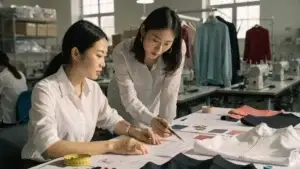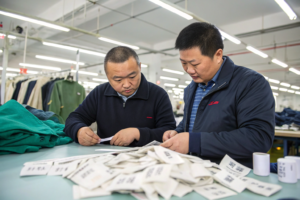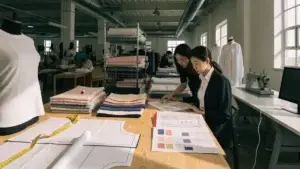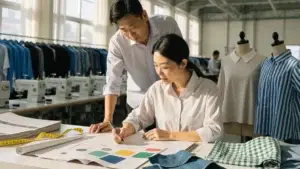
You have the designs. You have the fabric swatches, the print concepts, and the target retail price. You are ready to move from idea to inventory. Now you face the most consequential decision in your sourcing journey: choosing the factory that will turn your vision into physical dresses. Type "A-line dress manufacturer China" into Google, and you will find hundreds of options. Every website features similar photos, similar claims, and similar promises. "Premium quality." "Competitive prices." "On-time delivery." The words are identical. The factories behind them are not. One will deliver dresses that build your brand. Another will deliver dresses that generate returns, complaints, and chargebacks. The challenge is that they look the same from the outside.
Choosing a reliable A-line dress manufacturer in China requires a five-step verification process that goes far beyond evaluating a website or a catalog. First, confirm that the supplier is a factory with in-house production, not a trading company. Second, verify their specific expertise in woven dresses through sample evaluation and technical questioning. Third, audit their quality control system by requesting documentation of their QC checkpoints and inspection protocols. Fourth, validate their communication and project management capability through a trial development project. Fifth, verify their business legitimacy through compliance audits, client references, and a live video tour of their facility. Each step is designed to answer a specific, critical question about the supplier's capability and reliability. None of these steps can be completed by looking at a website. All of them are standard requests that a legitimate, quality-focused manufacturer will accommodate willingly. A manufacturer who resists any of these verification steps is revealing information you need to know before you place an order.
My name is Elaine. I am the co-owner of Shanghai Fumao, a specialized woven dress and linen apparel manufacturer. For over fifteen years, I have sat on the supplier side of the evaluation process. I have been audited, sampled, referenced, and toured. I know exactly what legitimate verification looks like because I have passed it many times. I also know what the industry's less reputable operators do to avoid it. In this article, I will give you the complete, actionable verification framework. By the end, you will know exactly how to separate the manufacturer who will protect your brand from the one who will damage it.
How Can You Tell if a Supplier Is a Real Factory or a Trading Company?
The most important question in Chinese apparel sourcing is also the one most commonly lied about. "Are you a factory?" Many suppliers who answer "yes" are trading companies. They do not own a single sewing machine. They do not employ a single sewer. They operate an office with salespeople who speak good English, a showroom with samples, and a network of subcontracting factories they use to fulfill orders. The trading company model is not inherently fraudulent. Some trading companies provide valuable services: sourcing, quality control, logistics coordination. But the model creates an information gap. The person you communicate with is not in the same building as the person cutting your fabric. When a problem arises, the trading company cannot walk onto the production floor and fix it. They can only call the factory owner and hope.
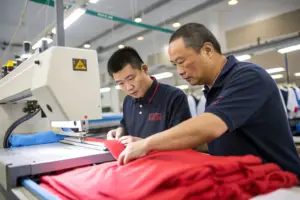
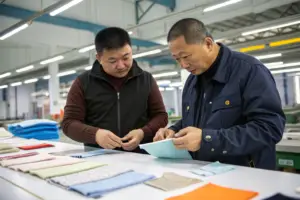
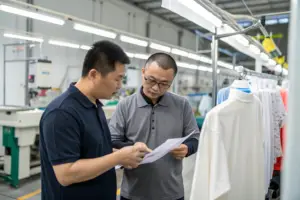
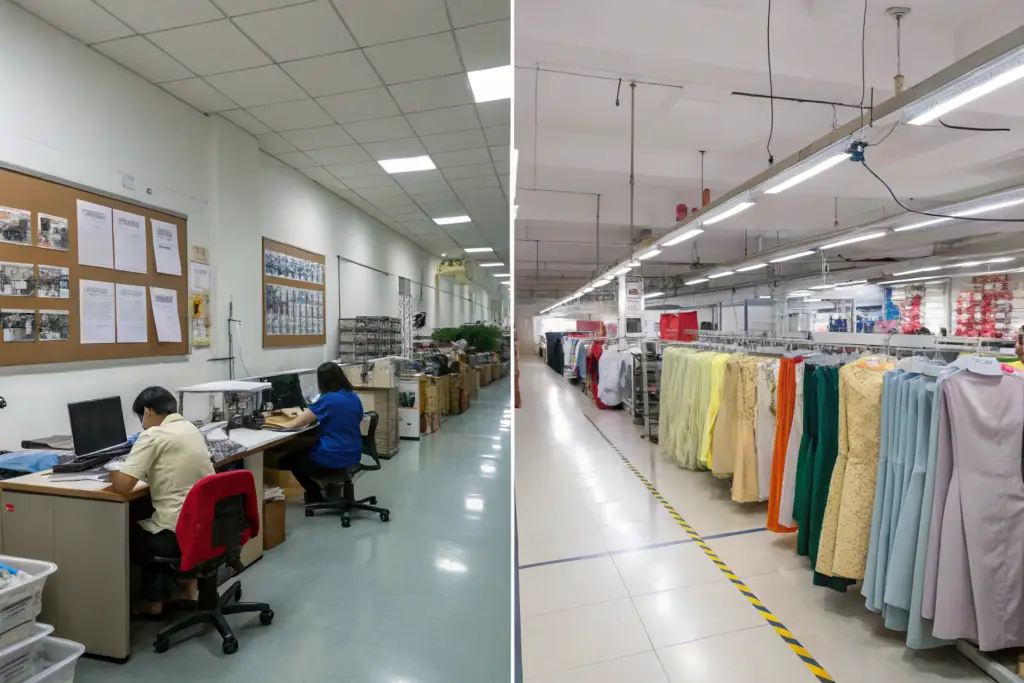
To verify that a supplier is a real factory, request a live video tour of the production floor, not a pre-recorded video. During the tour, direct the camera. Ask to see the cutting tables, the sewing lines, the finishing area, and the QC inspection station. Ask to see fabric inventory and finished goods inventory. Ask the person guiding the tour to walk outside and show you the factory's exterior sign with the company name. Request the factory's business license, which in China lists the company's registered business scope. A real factory's license will include "manufacturing" in its scope. A trading company's license will list "trading" or "import/export." Cross-reference the company name on the license with the name on the website and the purchase order. Any resistance to these requests is a red flag.
What Specific Questions Reveal a Trading Company During a Factory Tour?
A trading company that is pretending to be a factory can stage a tour. They may take you to a partner factory and present it as their own. The workers have been briefed. The tour guide knows the script. To see past the staging, you need to ask questions that a real factory owner or manager can answer instantly and a trading company representative will stumble over.
Ask to speak to the pattern maker or the production manager, not just the salesperson guiding the tour. A real factory has these people on-site, and they can answer a technical question about seam construction, fabric behavior, or production scheduling. Ask to see the production schedule board. A real factory has a physical or digital board showing current orders, their status, and their delivery dates. Ask specific questions about the orders on the board. "What fabric is this order using? What is the ex-factory date for this one?" A real production manager knows the answers immediately. Ask to see the fabric inventory for a current order. Walk to the fabric storage area and ask to see the specific rolls tagged for a specific client order. A real factory has this inventory on-site. A trading company does not. The how to verify a Chinese factory versus trading company guide provides additional verification techniques. The key principle is to request access to people, places, and information that only a real factory would have direct, immediate access to.
Why Does the Factory-Owned Model Matter for Dress Production Specifically?
A-line dresses, particularly in woven fabrics like linen and cotton, are technically demanding garments. They require specific pattern-making expertise to engineer the A-line flare correctly. They require specific sewing skills for invisible zipper insertion, French seam construction, and clean bodice facing. They require specific QC procedures like hanging inspections to check drape and print alignment. These are not generic garment-making skills. They are dress-specific competencies that develop over time within a stable, specialized workforce.
A trading company that subcontracts your dress order to the lowest bidder for that particular season has no control over which workers sew your dresses, no ability to enforce specific seam finishes, and no long-term relationship with the sewing line supervisor. The factory that produced beautiful samples for you may not be the factory that gets the bulk order. The trading company may shop your order to a different factory that offered a lower price. You will never know. At Shanghai Fumao, we own our production lines. Our sewers have been with us for an average of over seven years. They specialize in woven dresses and linen garments. The pattern engineer who develops your sample is in the same building as the production manager who oversees your bulk order. This structural integration is not a marketing point. It is the operational foundation of quality consistency. The direct factory versus trading company sourcing for apparel brands article explains the quality and communication advantages of the factory-owned model.
How Do You Verify a Manufacturer's Specific Expertise in Woven Dresses?
A factory can produce a beautiful sample of anything. Give a skilled sample maker a pattern, a piece of fabric, and enough time, and she will produce a garment that looks flawless. The sample proves the factory can make one dress. It does not prove the factory can make five hundred dresses, each as well-made as the sample, on a production timeline, with consistent fit across sizes. The gap between sample capability and production capability is where many sourcing relationships fail. Bridging that gap requires evidence of specific, repeatable expertise in the product category you are sourcing.
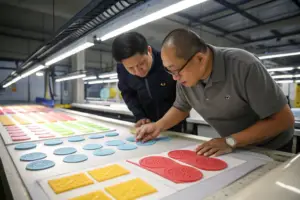
To verify a manufacturer's expertise in woven A-line dresses, evaluate their sample against the five-point quality inspection method: fabric quality and print, seam construction and interior finishing, invisible zipper insertion, hem finish and skirt hang, and bodice structure and armhole fit. Then, ask for evidence of production repeatability: a photo of a recent bulk order of a similar dress style on their production line, with the quantity visible. Ask how many A-line dresses they produced in the last twelve months. Ask to speak with the QC supervisor specifically about the common defects in A-line dress production and how they are prevented. A specialist manufacturer answers these questions with specific, confident detail. A generalist manufacturer gives vague, generic answers.
What Should You Look for in the Sample Evaluation?
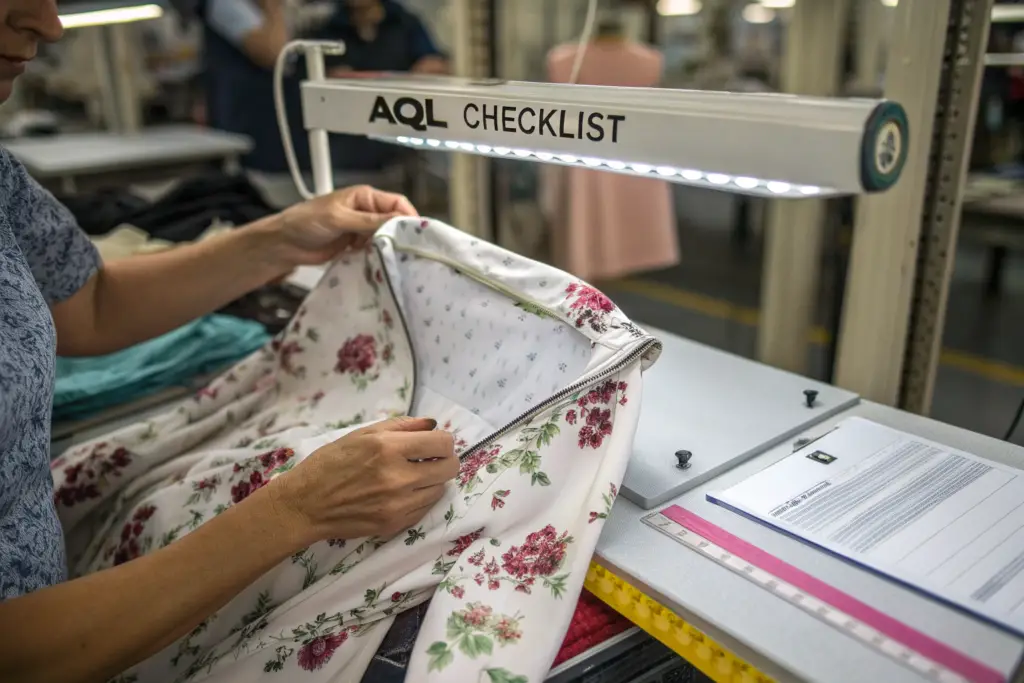
I have written a detailed article on how to spot a high-quality A-line floral dress, which covers the five-point inspection method comprehensively. For the purpose of verifying manufacturer expertise, focus on the quality indicators that are most difficult to fake and most revealing of the factory's production standards.
Turn the dress inside out. The seam finishes are the most honest part of the garment. A factory that uses French seams or clean-bound seams on the major structural seams of a sample is a factory whose quality standards extend beyond surface appearance. A factory that sends a sample with overlocked, raw-edged seams is showing you their actual quality ceiling. Inspect the invisible zipper. A perfectly inserted invisible zipper, with a color-matched tape, no puckering, and smooth operation, requires skilled labor and careful QC. It is the single best proxy for overall production care. Check the print alignment at the side seams and the waist seam. A factory that matches prints carefully on a sample has the cutting-room discipline to do so in bulk production. A factory that ignores print alignment on a sample will ignore it on the bulk order. Finally, put the dress on a form or a live model. Observe the drape of the skirt. It should flare symmetrically without twisting. A twisted skirt indicates a grain line error in cutting, which is an irreversible defect that signals fundamental quality problems in the cutting room. The A-line dress quality inspection checklist provides a systematic evaluation framework. Use it to score every sample you receive.
What Technical Questions Separate a Dress Specialist From a Generalist?
A generalist factory, one that produces t-shirts, denim, activewear, and the occasional dress, cannot answer specific technical questions about A-line dress construction with the precision of a specialist. Their answers will be vague. "We use good quality sewing." "We check everything carefully." A specialist answers with specifics.
Ask these questions. "What seam finish do you recommend for a 180 GSM linen A-line dress, and why?" A specialist will answer "French seams on the side seams and the bodice-to-skirt seam, because linen frays and a French seam encloses the raw edge completely." A generalist will say "We can do whatever the client wants." Ask "How do you prevent the A-line skirt from twisting during production?" A specialist will talk about grain line checking during fabric spreading, fabric relaxation time before cutting, and the hanging inspection that catches twist before packing. A generalist will look confused, because they do not know that A-line skirts twist. Ask "What is your standard hem depth for a midi A-line dress, and why?" A specialist will say "2.5 to 3 centimeters, double-turn, because a deeper hem adds weight to the hemline and helps the skirt hang correctly." A generalist will say "We usually do 1 centimeter, but we can change it." The technical interview questions for garment manufacturers guide provides a comprehensive list. A manufacturer's answers to these questions reveal their level of specialized expertise more accurately than any catalog or website.
What Quality Control Systems Should a Reliable Manufacturer Have in Place?
Quality control is not an event that happens at the end of production. It is a system that operates at every stage, from incoming fabric inspection through in-line production checks to final random sampling. A factory that only inspects at the end, or that treats QC as a visual glance by the packing supervisor, is a factory that will ship you defective dresses. A factory with a structured, documented QC system is a factory that catches defects early, when they are inexpensive to correct, rather than late, when the only option is to ship defective goods or miss the delivery deadline.
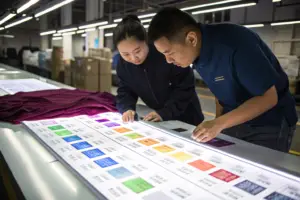
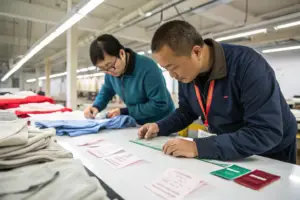
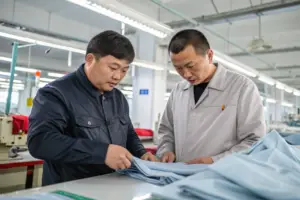
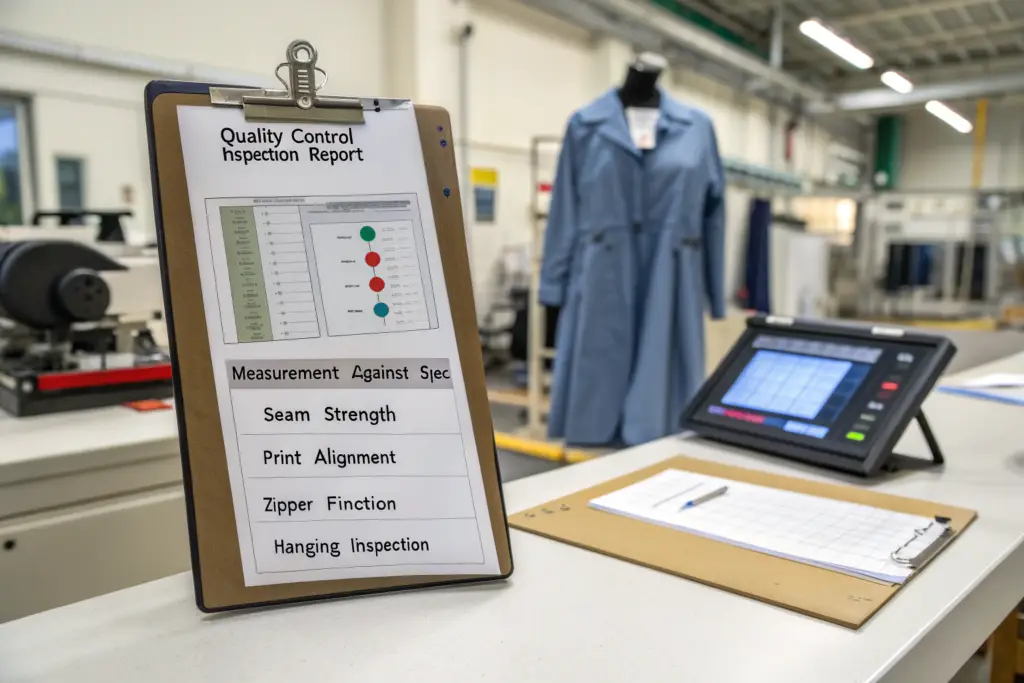
A reliable A-line dress manufacturer should have a documented QC system that includes, at minimum: incoming fabric inspection with lab testing for fiber composition, shrinkage, and colorfastness; an in-line inspection checkpoint during sewing, typically when 20% to 30% of the order is complete; a final random inspection per AQL 2.5 standards, conducted by a QC staff independent of the production team; a hanging inspection for drape, print alignment, and overall appearance; and a sealed pre-production sample protocol that serves as the quality reference standard for the bulk order. Ask the manufacturer to walk you through each of these QC checkpoints during the video tour. Ask to see a sample QC report from a recent order. A manufacturer with a real QC system has these documents readily available.
What Is the Difference Between a Factory That "Does QC" and a Factory With a QC System?
Every factory claims to "do QC." The question is what that means operationally. In a factory that "does QC," the production manager walks through the packing area at the end of the day, looks at a few garments, and says "good enough." There is no sampling methodology. There is no documented defect classification. There is no independent QC authority. The person responsible for meeting the production deadline is the same person responsible for judging quality. This is a structural conflict of interest.
In a factory with a QC system, QC is a separate department with its own manager, its own staff, and its own reporting line. The QC manager does not report to the production manager. She reports to a quality director or directly to the factory owner. This structural independence means the QC inspector can reject a batch without the production manager overruling her to meet a shipping deadline. The system uses AQL statistical sampling, not visual impression. The defects are classified as critical, major, or minor per a documented standard. The inspection results are recorded on a standardized form with the inspector's signature and the date. This creates an auditable quality record. When a problem occurs, the system can trace it back to its source and implement corrective action. The garment factory quality control system best practices guide explains the structural elements of a professional QC operation. During the video tour, ask to meet the QC manager. Ask to see the QC organizational chart. A factory with a real QC system can produce these immediately.
Why Is Third-Party Inspection Compatibility a Sign of a Confident Manufacturer?
A manufacturer who is confident in their quality welcomes third-party inspection. A manufacturer who is insecure about their quality resists it, makes excuses, or suddenly increases the price when a third-party inspection is requested. Third-party inspection agencies like SGS, Intertek, QIMA, and AsiaInspection send an independent inspector to the factory to evaluate the goods against the agreed AQL standard. The inspector works for the buyer, not the factory. Their report is objective.
At Shanghai Fumao, we actively encourage our clients to commission third-party inspections for their first orders. We do not charge for the inspector's time in our facility. We provide them with a workspace, access to the packed cartons for random sampling, and any documentation they require. A factory that welcomes third-party inspection is communicating that their internal QC standards will be validated, not contradicted, by an external audit. The third-party garment inspection guide for importers explains the process and the benefits. Ask your potential manufacturer directly: "Do you accept third-party inspections? Can you provide a reference from a client who has used one with you?" Their answer and their tone will tell you a great deal.
How Do You Test a Manufacturer's Communication and Project Management Before Committing?
The best quality control system in the world is useless if the manufacturer cannot communicate clearly, respond promptly, and manage a project timeline. A factory that takes three days to reply to a simple question, answers only half of what you asked, and misses its own sample deadlines is a factory that will be a constant source of stress and uncertainty. The communication culture of a factory is established long before you place an order. You can test it during the inquiry and sampling phase.
Test a manufacturer's communication and project management capability by observing their behavior during the pre-order phase before you have committed any money. Send a detailed inquiry with specific technical questions. Measure the response time. A reliable manufacturer responds within one business day, often within hours. Evaluate the response quality. Do they answer every question you asked, or do they answer only the easy ones and ignore the technical ones? Request a sample with a specified timeline. Observe whether the sample arrives on or before the promised date, with the promised specifications. If the communication is slow, vague, or incomplete when they are trying to win your business, it will not improve after they have your deposit.
What Does a Well-Managed Sampling Process Look Like?
The sampling process is a microcosm of the entire manufacturing relationship. It involves design interpretation, pattern development, fabric sourcing, trim procurement, sewing, and QC. A manufacturer who manages this process well is likely to manage bulk production well. A manufacturer whose sampling process is chaotic, delayed, and poorly communicated will replicate those problems at a larger scale with higher stakes.
A well-managed sampling process includes these elements. Within two to three business days of receiving your design brief, the manufacturer acknowledges receipt and provides either a development timeline with specific milestone dates, or a list of clarifying questions if the brief is incomplete. They do not guess. They ask. The sample is produced within the agreed timeline. If a delay occurs, the manufacturer communicates it proactively with a reason and a revised date, not after the original deadline has already passed. The sample arrives with a measurement sheet showing the actual measurements against your spec, a fabric content and care label, and the name of the account manager who will be your ongoing point of contact. The sample development process evaluation for apparel manufacturers guide provides a framework for assessing a manufacturer's development capability. A smooth, transparent sampling process is a strong positive signal. A chaotic one is a warning.
How Do You Evaluate the Effectiveness of the Account Manager?
The account manager is your human interface with the factory. Their competence, their technical knowledge, and their communication skills determine your daily experience of the manufacturing relationship. A technically knowledgeable account manager who responds quickly and accurately is a valuable asset. A sales-only account manager who cannot answer technical questions and must constantly "check with the factory" is a bottleneck.
During the inquiry and sampling phase, ask the account manager at least one specific technical question. "What is the recommended seam finish for this linen fabric?" "How will you handle the print alignment at the waist seam?" A technically competent account manager answers immediately with specifics. A sales-only account manager deflects or gives a vague answer. Observe the account manager's communication style. Do they initiate updates, or do you always have to chase them? Do they send photos of the sample in progress, or do they go silent until the sample ships? Do they remember the details of your previous conversation, or do you have to repeat yourself with every email? The account manager is the person you will deal with for months or years. Evaluate them as carefully as you evaluate the sample. The account manager evaluation for fashion brand supplier relationships article explains the key competencies to assess.
What Business Verification Steps Protect You Before You Wire a Deposit?
You have evaluated the sample. You are satisfied with the communication. You are ready to place an order. Before you wire a deposit, there are final verification steps that protect your company's money and your legal position. These steps are not about trust. They are about professional due diligence. A supplier who has been honest with you throughout the evaluation process will not object to any of them. A supplier who objects is revealing a risk you need to know about.
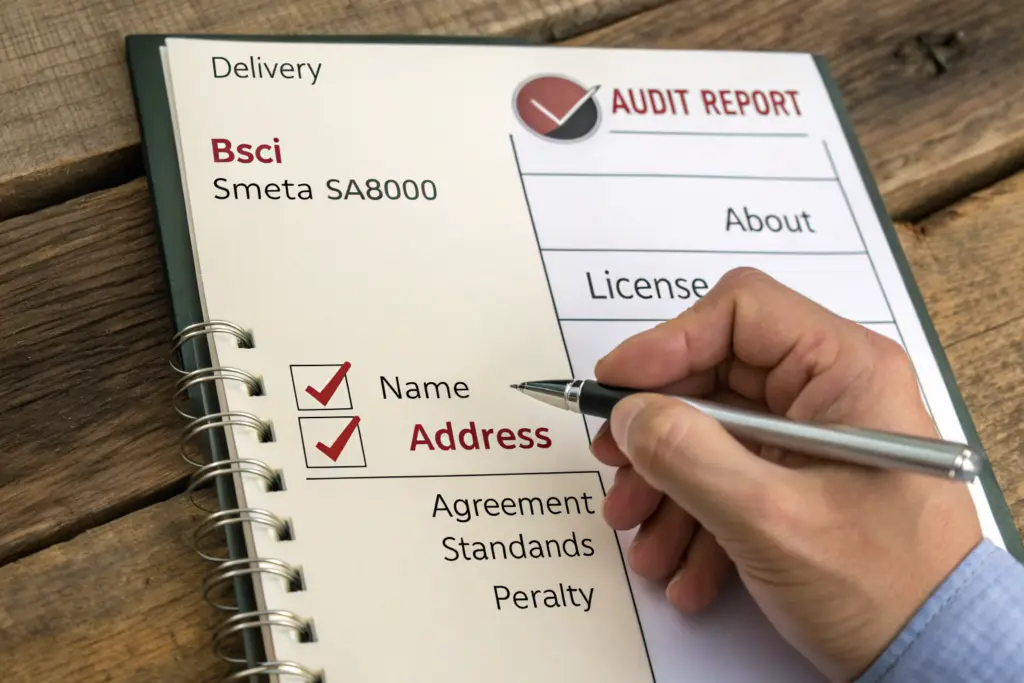
Before placing an order, complete these four business verification steps. First, verify the company's business license. Request a copy and cross-reference the company name, registered address, and business scope with the information on their website and your purchase order. Second, request a current social compliance audit report, such as BSCI, SMETA, or SA8000. A factory that invests in independent audits demonstrates a commitment to legal and ethical operations. Third, contact at least one client reference, preferably a brand similar to yours in market segment and order volume. Ask the reference specific questions about quality, communication, delivery reliability, and problem resolution. Fourth, ensure your purchase order or manufacturing agreement includes defined quality standards, delivery dates with penalty clauses, payment terms tied to milestones, and the sealed pre-production sample protocol. A manufacturer who accepts these terms without resistance is a manufacturer who is confident in their ability to meet them.
What Should You Ask a Client Reference?
A generic reference check generates generic answers. "Yes, they are good. We are happy with them." This tells you nothing. You need to ask specific, open-ended questions that invite the reference to share their genuine experience, including the challenges.
Ask these specific questions. "Can you describe a problem that occurred during your order, and how the manufacturer handled it?" Every manufacturing relationship encounters problems. The measure of a manufacturer is how they respond, not whether problems ever occur. "How many sampling rounds did your first order require to get the fit right?" This reveals the accuracy of their pattern-making and their design interpretation capability. "Have the bulk orders matched the quality of the approved samples?" This reveals whether the factory maintains quality from sample to bulk. "Have the deliveries met the agreed dates?" This reveals production planning and logistics reliability. "Would you place your next order with them, and why or why not?" Listen for hesitation. A reference who pauses before answering is telling you something. The supplier reference check questions for apparel brands provides a structured interview guide. A positive, detailed, honest reference from a brand similar to yours is the strongest possible validation.
Conclusion
Choosing a reliable A-line dress manufacturer in China is a structured process of verification, not a gamble on a well-designed website. The process has five stages. Verify that the supplier is a real factory with in-house production by requesting a live, directed video tour and the business license. Verify their specific expertise in woven A-line dresses by evaluating their sample against the five-point quality inspection and asking technical questions that only a specialist can answer. Verify their QC system by requesting documentation of their inspection checkpoints, meeting their QC manager, and confirming their willingness to accept third-party inspection. Verify their communication and project management by observing their behavior during the inquiry and sampling phase, before you commit any money. And verify their business legitimacy by checking their business license, reviewing their compliance audits, and contacting client references.
A manufacturer who passes all five stages of verification is not guaranteed to be perfect. No manufacturer is. But a manufacturer who passes all five stages is overwhelmingly likely to be competent, honest, and committed to quality. That is the foundation on which a successful, long-term sourcing partnership is built.
At Shanghai Fumao, we welcome every stage of this verification process. We offer live video tours of our factory floor, not pre-recorded promotional videos. We provide our business license, our BSCI audit report, and client references from brands in your market segment. Our sample room will produce a sample that you can inspect against the five-point quality method. Our account managers will answer your technical questions with specificity. We accept third-party inspections without surcharges or resistance. If you are evaluating A-line dress manufacturers and want to apply this verification framework to us, I invite you to do so. Contact me, Elaine, at elaine@fumaoclothing.com. Request a video tour. Request a sample. Ask the hard questions. A good partnership begins with thorough due diligence. We are ready for yours.