As the owner of Shanghai Fumao, I have seen too many American brands get burned. They wire a deposit to a factory that promises the moon. The samples look great. But when the container lands in Los Angeles, the nightmare begins. A U.S. customs officer pulls the shipment for random testing. The fabric fails flammability standards. The entire shipment gets detained. The selling season is missed. I do not want you to face that. I want to show you the exact paperwork shield that protects your business in 2026.
The essential certifications a Chinese garment exporter must hold for the U.S. market in 2026 go far beyond basic factory audits. You need a combination of mandatory safety documents, like Children’s Product Certificates (CPC) and General Certificates of Conformity (GCC) for wearing apparel, backed by CPSC-accepted lab testing. You also need a robust Quality Management System (QMS) such as ISO 9001, and increasingly, proof of sustainable and ethical practices, like WRAP or BSCI.
But certification is not just about a badge on the wall. It is about the integrity of the testing process. I am going to walk you through the specific documents that keep your supply chain safe. We will look at the hard costs of skipping these steps. And I will show you how our team at Shanghai Fumao handles this daily for our partners.
How Do US Federal Mandatory Safety Certificates Protect Your Brand from Lawsuits?
No brand owner wants to see a recall notice with their company name on it. But it happens. Especially when importers treat a 3-year-old’s pajama set the same as a basic cotton t-shirt for adults. The U.S. Consumer Product Safety Commission (CPSC) does not forgive mistakes. If you are importing children’s clothing, the rules are strict. The consequences are severe. Civil penalties can hit over $100,000 per violation. And that does not even count the cost of a destroyed brand reputation.
For U.S. market access in 2026, a Chinese garment exporter must hold Children’s Product Certificates (CPC) for kids’ wear and General Certificates of Conformity (GCC) for certain adult apparel. These are not optional. They are legal documents, supported by testing at a CPSC-accepted third-party laboratory, that certify your products meet federal safety rules like flammability, lead content, and phthalate levels.
I want you to think of these certificates as an insurance policy. Without them, your shipment is dead in the water at the port. And if you falsify a lab report, you are not just losing a shipment. You are facing criminal charges. This is serious.
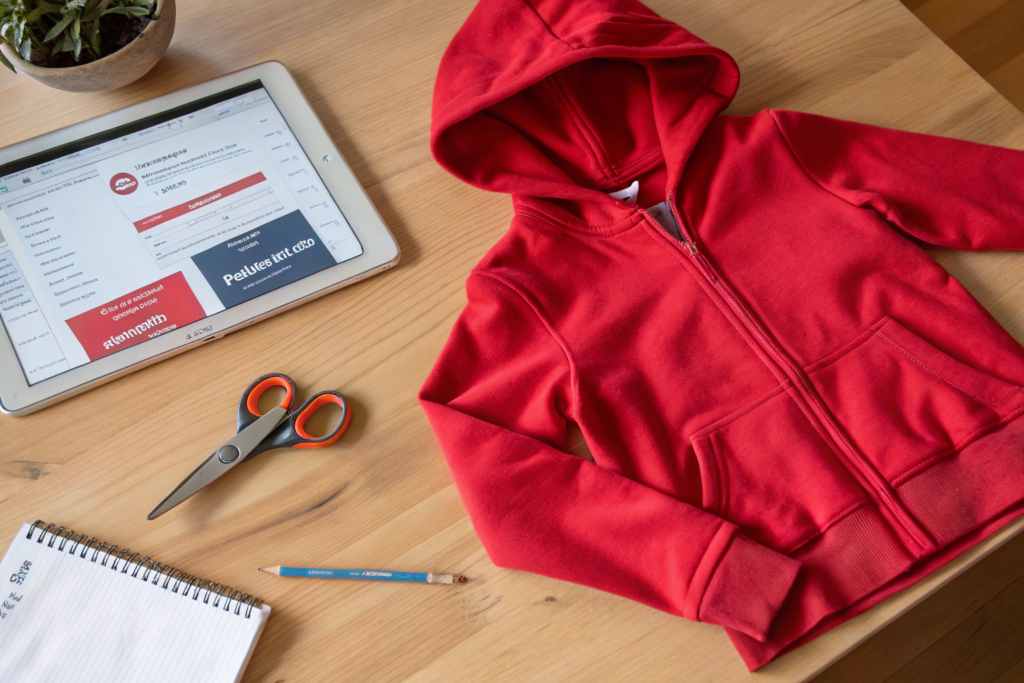
Why Does a Simple Kids’ T-Shirt Require a CPC Certificate?
Let me tell you about a problem we solved early this year. An American client came to us, frustrated. They had previously sourced organic cotton baby rompers from a small workshop in Southeast Asia. The price was low. But when U.S. customs did a random check, they found the snap buttons contained lead slightly above the federal limit. The entire shipment of 2,000 units was seized. They lost not only the goods but also the Christmas sales window.
When we at Shanghai Fumao took over the project, we started with the supply chain. We moved the snap button sourcing to a supplier that uses a certified lead-free alloy. Before production, we sent the material to Bureau Veritas for composite testing. A Children’s Product Certificate is not just a piece of paper. It is a chain of evidence. It requires four solid links. First, the product description. Second, the specific safety rules it meets. Third, the name of the third-party lab that did the test. And fourth, the contact information of the responsible party in the U.S.
For a kids’ t-shirt, you are testing for CPSIA total lead content and phthalates. For the fabric, you need a flammability test. You need to track every component. This tracking label must be permanently fixed on the product. It links back to the batch, the factory, and the date of production. If you skip this, the CPSC treats the product as a banned hazardous substance. It is that simple.
Can a GCC Certificate Save You from Flammability Claims on Outerwear?
Flammability is a silent killer for outerwear brands. Most people worry about chemicals. They forget that fabrics can burn. The U.S. Flammable Fabrics Act requires that wearing apparel meet specific flammability standards. For general adult clothing, the standard is 16 CFR Part 1610. For vinyl plastic film, it changes. For sleepwear, it is completely different and far stricter.
I remember a case from a client in Chicago. He designed a line of fashion jackets with a high-loft fleece lining. He did not ask for a specific flammability test because he thought only kids’ clothes needed it. When his Chinese supplier shipped the jackets, the fabric brushed surface caught fire too quickly during a spot check. The whole lot failed. He had to rebrand and sell them in a less regulated market, losing a 30% margin.
A General Certificate of Conformity (GCC) is your shield here. If you are making leather jackets, windbreakers, or woven shirts, you still need to test if the fabric raises the surface fibers. The test is simple but mandatory. A small flame is applied to the fabric. We measure the burn rate. If it burns too fast, the garment is illegal in the U.S. We always ensure our fabric mills understand the class requirements. We test the materials before cutting. This proactive step stops a disaster at the port. It is a fixed cost of $200 to $500 per style. But it saves you from losing a $50,000 container.
How Can ISO 9001 and Other Quality Audits Prevent Expensive Rework Delays?
I hate rework. I think any factory owner who says they love rework is lying. Rework kills margins. It makes delivery dates useless. And for an American buyer sitting thousands of miles away, rework is invisible. You only feel it when the shipping delay notice hits your inbox. That feeling of helplessness is what breaks a business relationship. To stop this, you need a system that catches mistakes when the fabric is still flat on the cutting table, not when the garment is packed in a poly bag.
ISO 9001 certification is the global standard for a quality management system. For a Chinese garment exporter in 2026, it proves that the factory operates with documented processes, strong management reviews, and a dedication to continuous improvement. It is the backbone that ensures your clothes are made right the first time, every time, reducing the risk of expensive and time-consuming rework.
When you walk into a factory that has a fake ISO certificate, you can tell. The floor is messy. The cutting room has no lighting. The workers do not know the measurement tolerance for a sleeve. A real ISO 9001 system is alive. It is not a framed paper hidden in the manager’s office. It is the reason our production lines at Shanghai Fumao run smoothly.
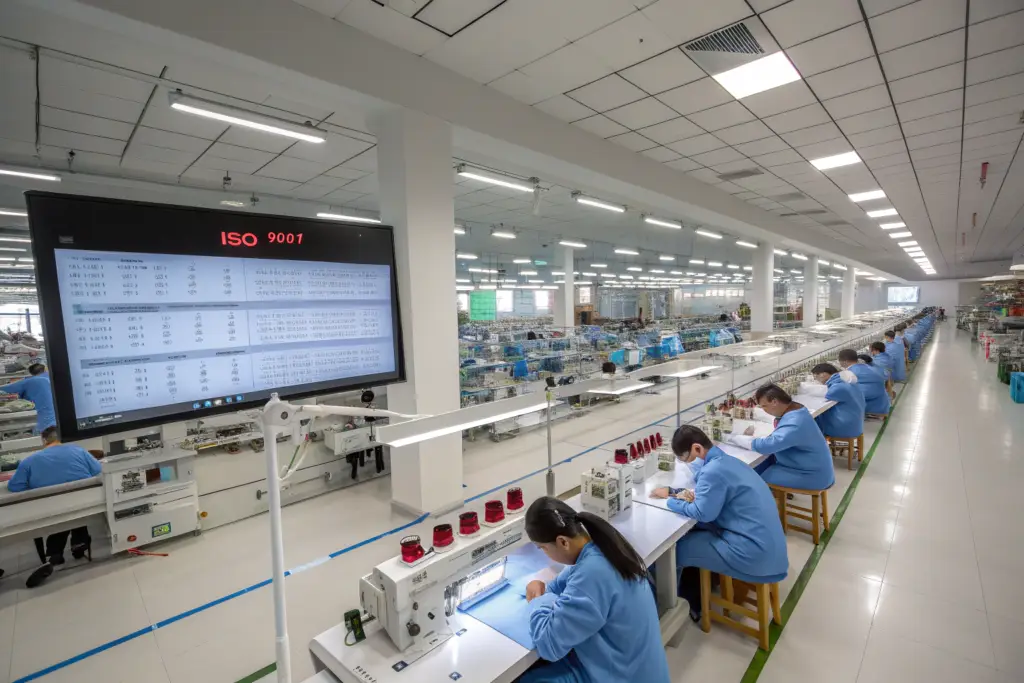
What Are the Specific Quality Control Points in a Factory Audit?
Let’s break down what a "factory audit" really means. It is not just walking around and nodding. A professional audit looks at the entire factory setup. I break this down into four pillars. First, the incoming material inspection. Second, the inline production check. Third, the end-of-line random inspection. Fourth, the pre-shipment final audit.
| Audit Stage | Key Checkpoints | Reason for Failure (Top Reason) |
|---|---|---|
| Incoming Fabric | Weight, color shading, shrinkage test, fiber content | Mill sends wrong composition (Polyester/Cotton mix wrong) |
| Cutting Room | Pattern alignment, ply height, notches | Cutting too many layers causes top/bottom size difference |
| Sewing Line | Stitch per inch (SPI), seam strength, measurement spec | Operator skips a stitch to speed up (seam grin) |
| Finishing | Broken needles check, loose threads, oil stains | Metal detector not calibrated (broken needle tip in collar) |
I remember a specific case from 2024. We were making a heavy-weight flannel shirt for a brand in Oregon. In the inline inspection, our QC team noticed the armhole seam was puckering slightly. It was a 3-millimeter deviation from the spec. A factory without a strong QMS would have let that slide. They would say, "Ah, the buyer won’t notice under a jacket." We stopped the line. We adjusted the feed dog on the sewing machine. It took 15 minutes. The alternative was shipping 5,000 shirts that looked cheap. That brand now runs four collections a year with us because they have zero returns on craftsmanship.
How Does a Certified Lab Testing Report Differ from Factory Self-Checking?
This is where I see the most fraud in our industry. A supplier sends you a PDF of a "lab test" that looks official. But you cannot trace the test report number on the actual lab’s website. That is a red flag. Factory self-checking is useful for internal control. But it holds zero legal weight with U.S. Customs.
A certified lab testing report from a third party like SGS or Intertek is different. The testing facility has ISO/IEC 17025 accreditation. This means the lab’s equipment is calibrated. The technicians follow strict procedures. The report is legally defensible.
We are in constant touch with these labs. We send sealed samples directly to them, not letting a middle-man courier tamper with the box. We test for fiber content labeling. If you label a sweater as 100% cashmere, but it has 10% sheep wool, you are mislabeling under the Wool Products Labeling Act. The FTC can fine you for that. We test for colorfastness to ensure a red dress does not bleed onto a white couch. We test for button pull strength so a baby cannot choke on a button. A factory self-check might just give a button a quick tug. A certified test machine applies exactly 90 Newtons of force. If the button pops off, it fails. No exceptions.
Can Ethical Audit Certifications Reduce Supply Chain Disruptions?
The modern American consumer cares about who made the clothes. You might think this only matters for luxury brands. It does not. It matters for everyone. University bookstores, corporate uniform buyers, Amazon private labels. They all demand proof that the supply chain is clean. If a factory uses underage labor or safety exits are blocked, the protest does not just happen there. It happens on Instagram, tagging your U.S. brand. The supply chain disruption is instant and brutal. Major retailers drop you.
Ethical audit certifications like WRAP, BSCI, or SMETA are essential for Chinese garment exporters in 2026. These audits inspect working conditions, safety protocols, and environmental responsibility. Having them shows U.S. partners that their supply chain is secure, stable, and unlikely to be disrupted by social compliance failures.
I often tell my American partners that these certificates are not a cost. They are an asset. A BSCI audit looks at fair remuneration, working hours, and the prohibition of forced labor. A WRAP certificate is specifically focused on apparel manufacturing. It contains 12 principles covering compliance with laws, prohibition of forced labor, child labor, harassment and abuse, compensation, hours of work, discrimination, health and safety, freedom of association, environment, customs compliance, and security.
What Is the Difference Between WRAP and BSCI for a U.S. Importer?
You should know that WRAP and BSCI are not the same. They are different paths to the same goal. WRAP is very popular in the U.S. market. It is a certification specific to the sewn products industry. The WRAP Gold certificate is a powerful marketing tool. It tells your customer that the factory is fully compliant.
BSCI (Business Social Compliance Initiative), now part of Amfori, is a European-origin standard. But it is huge in the global supply chain. BSCI uses a grading system: A, B, C, D, and E. Most U.S. large retailers accept a BSCI Grade C or above. However, it requires a continuous improvement plan if you have zero-tolerance issues.
The key difference is the auditor. BSCI audits are conducted by a limited number of approved auditing companies. WRAP audits are conducted by WRAP-trained auditors. For you, the importer, you just need to know if the certificate is valid. Fake certificates are very common. Check the database online. For WRAP, go to the WRAP public search page. For BSCI, check the Amfori Sustainability Platform. This takes 30 seconds. It can save you years of legal trouble.
How Can a Clean Environmental Audit Impact Your Brand Image?
Sustainability is now a hygiene factor. It is not a "nice to have." Legislation is tightening. The U.S. Federal Trade Commission (FTC) is updating its "Green Guides." You cannot just say "eco-friendly" without hard evidence.
An environmental audit checks the physical waste, water usage, and chemical management. If you are dying denim, the discharge water must be treated. If you are using a lot of coal power, your carbon footprint is too high.
I recall working with a brand client from Colorado. They are a small outdoor brand. Their entire marketing is about "protecting the wilderness." They came to me worried about water pollution from synthetic dyes. We sourced a fabric mill that uses a closed-loop water system and bluesign®-approved chemicals. We did not just print a hangtag saying "green." We took the actual audit report from bluesign and put the summary on their product page. It became their best-selling jacket. Why? Because their customers could verify the claim. The transparency was the unique selling point. A clean environmental audit lets you charge a higher price. It turns your ethics into a competitive advantage.
How Do UFLPA and Forced Labor Laws Affect Chinese Textile Imports?
This topic keeps brand owners awake at night. The Uyghur Forced Labor Prevention Act (UFLPA) is not a trade policy suggestion. It is a U.S. law with a rebuttable presumption. This means that if the U.S. Customs and Border Protection (CBP) suspects any part of your garment came from the Xinjiang Uyghur Autonomous Region, the onus is on you to prove it did not. The goods are immediately detained. You pay storage fees while your container sits there. The supply chain stops.
Compliance with the UFLPA is a critical certification and documentation requirement for Chinese garment exporters heading to the U.S. in 2026. It demands a complete supply chain traceability map, from the cotton field or chemical plant to the finished garment. You need clean supply chain attestations and detailed transaction records to satisfy CBP.
The challenge is that clothing is complex. A pair of jeans has cotton from one place, copper rivets from another, and a zipper from a third. If the supply chain mapping is not in place, you cannot prove the innocence of the product. At Shanghai Fumao, we treat supply chain mapping like a financial audit. We do not guess where the fabric comes from. We get the mill’s purchase receipts.
Why Is Cotton Supply Chain Tracing So Important Right Now?
Cotton is the main ingredient in most of our clothes. It is also the main risk under UFLPA enforcement. In 2024 and 2025, we saw large retailers scramble to trace the origin of their cotton. They realized that generic "China cotton" was not a safe answer anymore.
The complexity of the cotton supply chain is huge. A yarn spinner might mix cotton from different countries. It is called "blending." To comply, you need a segregated supply chain. This is often called "identity preserved" cotton. It means the cotton from a specific farm is packaged separately, spun separately, and woven separately.
We helped a sportswear brand solve this a few months ago. They needed a lightweight polo shirt. But their legal team required a guarantee of non-Xinjiang origin. We chose a mill in Guangdong that uses organic cotton imported from India, with a valid transaction certificate from the spinning mill. We traced the yarn batch number to the knitting machine. We traced the knitting date to the cutting order. We provided a full chain of custody document to the U.S. client. This allows them to clear CBP checks because the package matches the paperwork exactly. The data is not a template. It is specific batch data that can be verified. This is the new standard. If your factory says "trust me," you are in danger.
Do Metal Parts and Packaging Require Compliance Checks Too?
Yes, and this catches people by surprise. They focus entirely on the fabric. They forget about the snaps, the zippers, and even the packaging. The UFLPA applies to goods mined, produced, or manufactured wholly or in part in the Xinjiang region. This includes metals and polysilicon.
Think about a denim jacket. It has buttons made of a zinc alloy. If that zinc was smelted in a region under forced labor, the jacket is detainable. Packaging is another tricky area. The hangtag string might come from a cotton blend. The cardboard box might be fine. But the U.S. is very strict.
I always advise our American partners to look at the Bill of Materials (BOM) carefully. A BOM is the recipe for the garment. It lists everything. The fabric, the thread, the interlining, the rivets, the care label, the hangtag. We need to know the country of origin for every single line item. Our sourcing team only works with trim suppliers who can provide a raw material origin statement. This statement is a signed legal document. If they lie, they face termination and possibly legal action from us. We keep a master file for every product, updating the certificate of origin for the zipper tape or the slider. This attention to detail saves our clients from the nightmare of CBP detention orders. It turns a complex import process into a predictable one.
Conclusion
The certification landscape for a Chinese garment exporter going into the U.S. market in 2026 is not a simple checklist. It is a living system. A CPC certificate for that baby romper connects to a testing lab. A GCC certificate for that fleece jacket connects to a burn test. An ISO 9001 system connects the worker’s needle to the final measurement spec. Ethical audits like WRAP connect the factory floor to the brand story. And UFLPA compliance maps the long journey of a cotton fiber to the shirt on your back. These five pillars are what separate professional suppliers from risky ones.
I have been in this business long enough to know that price matters. You want a competitive cost to make your margin. But a low price with a fake or missing certificate is the most expensive thing you can buy. The delay costs, the legal fees, and the brand damage are not worth the risk. We have seen too many American brands struggle with inefficient communication and missed deadlines from suppliers who do not understand these rules.
If you are looking for a partner who treats U.S. regulatory compliance as the baseline, not an upgrade, I invite you to contact us at Shanghai Fumao. We understand that you need top quality without the headache of shipment delays and false paperwork. We offer a complete DDP mode solution, taking the complexity off your desk. Let us help you bring your next collection, whether it is men’s outerwear, women’s knitwear, or children’s apparel, to the market safely and on time.
To start that conversation, please reach out to our Business Director, Elaine. She can answer your questions about our quality control points, provide examples of our third-party test reports, and walk you through our supply chain mapping process. Send an email directly to elaine@fumaoclothing.com. Let’s build a supply chain that you can trust completely.