I still remember the look on a new client's face during a video call. He was a distributor from Texas. He found a rare vintage-inspired jacquard fabric on our website. He loved it. But then he saw the minimum order quantity (MOQ). His face fell. He told me, "I love the look, but I only need 150 pieces for a test run. I am scared you will waste my fabric and the price will go through the roof." That fear is real. When you customize rare style apparel, every inch of material costs money. The thought of seeing 20% of that special fabric cut into scraps is a nightmare for any business owner.
We manage fabric wastage when customizing rare style apparel by using advanced digital pattern making, strategic marker nesting, and lean production line planning. For small batch runs, we combine these techniques with a pre-production sampling protocol that calculates exact fabric consumption. This approach gives distributors accurate cost forecasts and keeps wastage rates far below the industry average.
You should never be left guessing how much of that beautiful, expensive fabric will end up on the floor. You need a system that treats your fabric like it is cash. Because for a distributor balancing margins, it is. Let me show you how we at Shanghai Fumao handle this daily. We are not just making clothes. We are engineering a process that maximizes your profit.
Can Small Batch Customization Still Be Cost-Effective Without High Wastage?
Many distributors think "small batch customization" equals "high cost." They have been trained by the industry to believe this. Factories typically charge a premium for small orders because the setup time is the same as a large order. The fixed overhead of pattern making and machine setup gets spread over fewer units. But the biggest hidden cost is not the labor. It is the wasted fabric. A traditional factory throws a 50-meter roll of fabric onto a long table. They cut 20 piles high. The top ply slips. The bottom ply is cut badly. The waste is massive.
Small batch customization can absolutely be cost-effective without high wastage if the factory uses single-ply digital cutting and on-demand marker making. These methods eliminate the need for large minimum lay heights. They allow exact fabric calculation for each piece, turning a rare style order of 50 pieces into a profitable, low-risk test run for distributors.
We handle small batch runs differently. We never cut a rare style in a high ply stack. It is simply too risky. Instead, we treat the order more like a bespoke tailoring house, but with industrial speed. We use automated spreading machines that control the tension of the fabric perfectly. This is the secret to fitting more pieces onto the same length of cloth. Let’s look at the specific technology that makes this happen.
How Does a Digital Marker Layout Slash Your Rare Fabric Consumption?
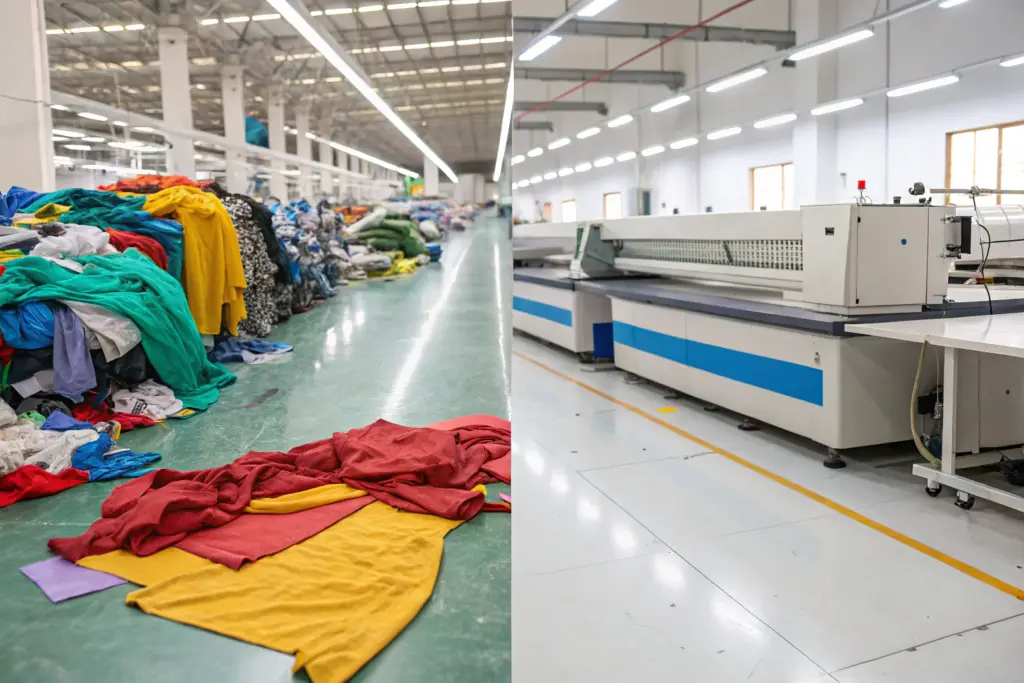
A marker is the map of pattern pieces laid out on the fabric. Think of it as Tetris with money. The better the arrangement, the less space between the pieces. A human planner doing this manually will always leave a safety gap. It is inevitable. But a computer does not get tired. It calculates the absolute minimum gap.
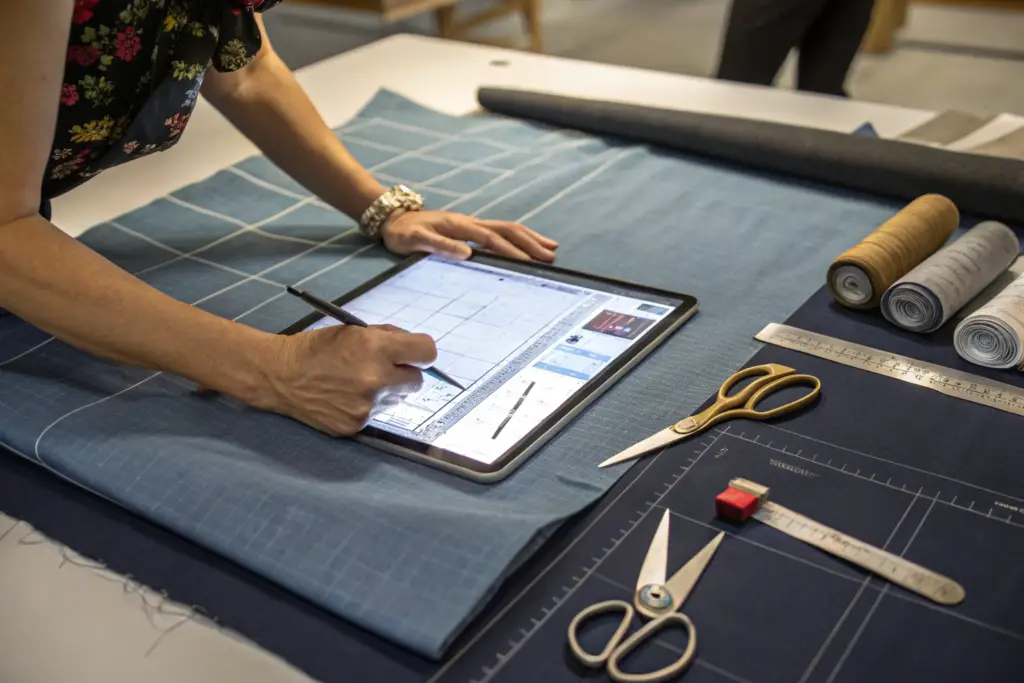
We use a CAD system from Gerber Technology. Before we cut a single thread, the computer simulates the cutting path. It tries hundreds of arrangements in seconds. It considers the direction of the fabric nap, the print pattern repeat, and the specific shade lot. For a rare style, like a paneled silk dress, this is critical. A manual marker might waste 15% of the fabric just in the spaces between the curved skirt panels. A digital marker can nest those curves together tightly, reducing that down to 7% or 8%.
I want to show you a real comparison. This table represents a recent project we did for a distributor in California. He ordered 200 units of a rare style linen blazer, customized with a unique lapel shape.
| Parameter | Traditional Manual Marker | Digital Marker Nesting |
|---|---|---|
| Fabric Width Used | 58 inches | 58 inches |
| Marker Length | 6.5 meters | 5.8 meters |
| Fabric Wastage Percentage | 18% (end bits and gaps) | 8% (optimized nesting) |
| Total Fabric Saved | 0 meters | 42 meters |
| Cost Saved (at $12/m) | $0 | $504 |
This $504 saving on a single small batch run is pure added margin for the distributor. It allows him to price his rare style linen blazer competitively while still enjoying a healthy profit. Using a digital marker for fabrics like organic cotton or premium Tencel makes the numbers work perfectly for small brands.
Why Is Single-Ply Cutting a Game Changer for Rare Styles?
Imagine you have a very delicate, rare fabric. Maybe it is a hand-embroidered mesh or a custom-printed charmeuse. If you try to cut 20 layers at once, the top layer will slide around. The bottom layer will compress. The pieces will not match. This produces a "shaded" look where the final garment looks cheap.
Single-ply cutting changes the physics. The fabric is spread one single layer at a time on a vacuum table. The vacuum holds the fabric completely still. A high-speed blade cuts exactly along the digital marker line. The cut edge is sealed and perfect. No fraying. No miscut pieces.
Last fall, we worked with a distributor who had a rare style moto jacket design. It was made from a very expensive Italian cowhide leather. The hides were irregular shapes. This is the worst nightmare for a manual cutter. A mistake with a sharp knife on a $200 hide means a total loss. We used single-ply cutting with a projection system. The camera scanned each hide for natural defects, like scars or holes, and the digital system placed the pattern pieces in the clean areas automatically. We saved three full hides on that small order of 100 jackets. That was a $600 direct saving in material that went straight into the distributor's pocket. This type of precision is why we at Shanghai Fumao push for digital solutions even on small orders.
What Are the Best Quality Control Steps to Reduce Waste During Sampling?
Waste does not only happen on the cutting table. In fact, the most heartbreaking waste happens when a whole batch of rare style clothes is finished, only to discover a fit issue. The armholes are too tight. The collar stands away from the neck. The distributor then refuses the shipment. All that fabric, labor, and time is completely wasted. The only way to prevent this is to be obsessive about the sampling process.
The most effective quality control steps to reduce fabric waste during sampling involve three stages: a digital 3D fit simulation, a physical muslin fit test, and a gold-seal pre-production sample. This multi-layer approach catches pattern errors and design flaws early. It prevents the need to cut into the final expensive fabric more than once, protecting the distributor’s investment in rare materials.
I always tell my team that a bad sample is a good thing. Why? Because if we find the mistake on a $2 muslin, we did not find it on a $30 silk. Sampling is about destroying cheap things to save expensive ones. A good factory does not send a sample to a distributor and hope for the best. A good factory sends a sample they have already tried to destroy in an internal wear test.
How Can a Fit Sample Save You from a Batch-Wide Disaster?
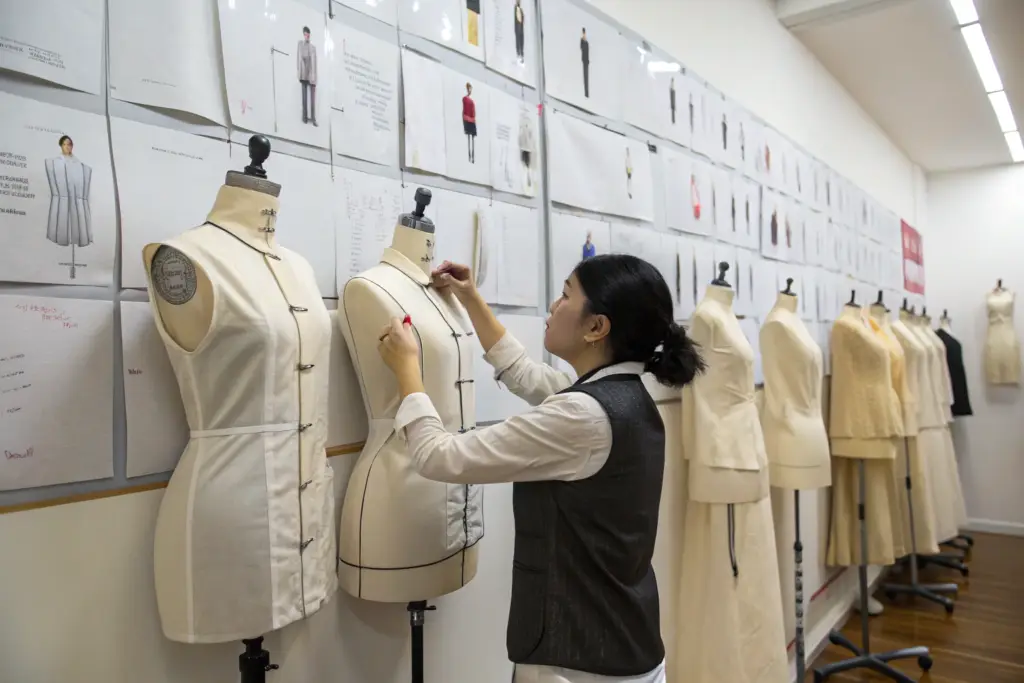
Think of a fit sample as a physical contract. It is the moment we transition from an abstract sketch to a real, wearable object. We take the exact measurement spec sheet you, the distributor, provided. We cut the style in a base size, usually a medium. We use a fabric with a similar weight and drape to your chosen rare style cloth.
We put this fit sample on a standard dress form. Then we abuse it slightly to simulate real wear. We move the arms. We check the bending of the elbows. We check where the shoulder seam sits. Does the back panel ride up? Does the neckline gape? These are red flags.
I recall a specific case with a distributor from New York. He had a rare design for a women’s bias-cut slip dress. Bias-cut pieces are cut on a 45-degree angle to the weave. They stretch and drape beautifully, but they are notoriously difficult to fit. The pattern looked perfect on paper. But when we cut the first fit sample, the side seams twisted to the front by two inches. It was a major design flaw. We adjusted the pattern, recut another sample in cheap muslin, and fixed it. We did this twice until the hang was perfect. Only then did we cut the precious silk charmeuse. If we had skipped that fit sample, we would have ruined 80 meters of fabric worth over $1,200. The check for such standards can be verified through AATCC testing methods for seam slippage, confirming the construction is solid.
What Role Do Pre-Production Samples Play in Setting Final Fabric Consumption?
The Pre-Production Sample (PP) is the gold seal. It is the final sample made exactly as the bulk production will be. We use the exact same trim. We use the exact same stitching method. And crucially, we record the exact weight and yardage of the thread and fabric used.
This PP sample does one critical thing for a distributor: it locks in the final Bill of Materials (BOM). Before the PP sample, the fabric consumption is just an estimate. After the PP sample, we can physically weigh the fabric and measure the marker length. This gives us the fixed consumption number.
We use this data to set a strict target for the bulk cutting room. For example, if the PP sample for a rare style men's printed shirt consumed 1.55 meters, we set the bulk target at 1.6 meters to allow for minor flaws at the end of the roll. The cutting room master knows he cannot exceed this. If the bulk consumption creeps up, we know there is a problem. Maybe the fabric spreading tension is wrong. Maybe the cutting knife is drifting. This granular control is how we guarantee the FOB price we quote to a distributor will not change at the last minute. It is a transparent way to work. Data from the International Organization for Standardization on quality management supports this precise, process-driven approach to minimizing variation and material waste.
How Do You Calculate True Material Costs for Uncommon Garment Designs?
Pricing a rare style is a real test of a factory's honesty and skill. A basic t-shirt is easy to price. The market is mature. The consumption is standard. But a puffed-sleeve Victorian blouse? A jacket with a complicated, asymmetric zipper? These items can kill a distributor's budget if the cost engineer does not know what they are doing. The danger is a "fudge factor." A lazy factory just adds 30% to the price to cover the risk. That makes you, the distributor, uncompetitive.
Calculating true material costs for uncommon designs requires a zero-based costing method. We add up the precise fabric yardage from the digital marker, the exact trim costs, and a fixed wastage cut-off buffer that varies between 3% to 8% based on fabric type and design complexity. Nothing is guessed. Everything is measured.
This level of detail allows a distributor to understand why a garment costs what it costs. It removes the "black box" feeling that causes so much distrust in Chinese sourcing. At Shanghai Fumao, our goal is to show you the recipe for the cake, not just the finished product.

Why Is the Type of Fabric the Biggest Variable in Wastage Costing?
Not all fabric is a flat rectangle. Woven fabric comes on a roll and behaves predictably. Stretch knit fabric comes on a roll but shrinks after relaxing. Leather comes in irregular hides. Printed fabric needs to have its pattern matched at the seams. These variables change the wastage math completely.
Let’s look at a simple math exercise. A standard woven cotton shirt might have a 5% wastage factor. But take that same shirt design and make it in a large-scale floral print. The print has a 24-inch repeat. Every single piece on the marker must align. If the sleeve pattern is slightly off, the flowers on the left sleeve and right sleeve will not match. The cutter has to shift the pieces around to align the print, adding about 15% to 20% more fabric length to the marker. That is a huge jump in cost.
I remember a painful lesson a client learned. He ordered a rare style of wide-leg trousers. The sample was cut in solid black, and the price was set. He then switched the bulk order to a bold check pattern. The factory did not inform him of the extra cost for matching the checks on the side seams and crotch until it was too late. His cost shot up by 18%. We avoid this by "pattern matching simulation" right at the sampling stage. We tell the distributor immediately what the cost difference will be for a plain weave versus a repeating pattern. We break down costs for materials such as GOTS certified organic cotton, where the price per meter is already higher, making the wastage percentage an even more critical number to control.
How Can a Distributor's Specific Packing Needs Affect Total Loss Rates?
This is a hidden wastage point that few people talk about. You order 500 pieces. The factory cuts 500 pieces. They should sew 500 pieces. But due to handling, sewing, and finishing, you might actually end up with 498 saleable units. Where did the two units go? They might have been damaged in the wash. They might have been rejected by the quality controller. This is the "loss rate."
A distributor's specific packing needs can make this better or worse. If you require a very complex folding method, with multiple tissue paper inserts and a specific poly bag shape, the handling time goes up. More handling means more chances for the garment to get oil stains or pulls.
We had a situation with a distributor selling rare-style cashmere sweaters. He insisted on a luxury box packaging with a magnetic closure. The sweaters had to be folded in a specific way to show the customized logo perfectly through a die-cut window in the box. It was beautiful, but the folding process was slow and detailed. We saw our finishing loss rate tick up slightly. We solved it by creating a dedicated packing station with a jig. A jig is a cardboard template. The worker lays the template down, folds the sweater over it, and it is perfect every time. It added no cost but brought the loss rate back down to zero. By focusing on the physical flow of the garment from cutting to packing, we prevent those last-minute, heartbreaking losses that chip away at a distributor's final profit.
What Lean Methods Keep Custom Orders on Schedule Without Hurrying Mistakes?
Deadlines are sacred. A rare style dress for a summer wedding season must leave the factory by the start of May. If it ships late, the distributor has to mark the price down by 70%. It is a total loss. The pressure to be fast can cause quality shortcuts, which lead to waste. The answer is not just to shout "work faster." Workers who are rushed make more mistakes. The answer is to make the flow of work so smooth that you eliminate all the waiting time, so no one needs to rush at the end.
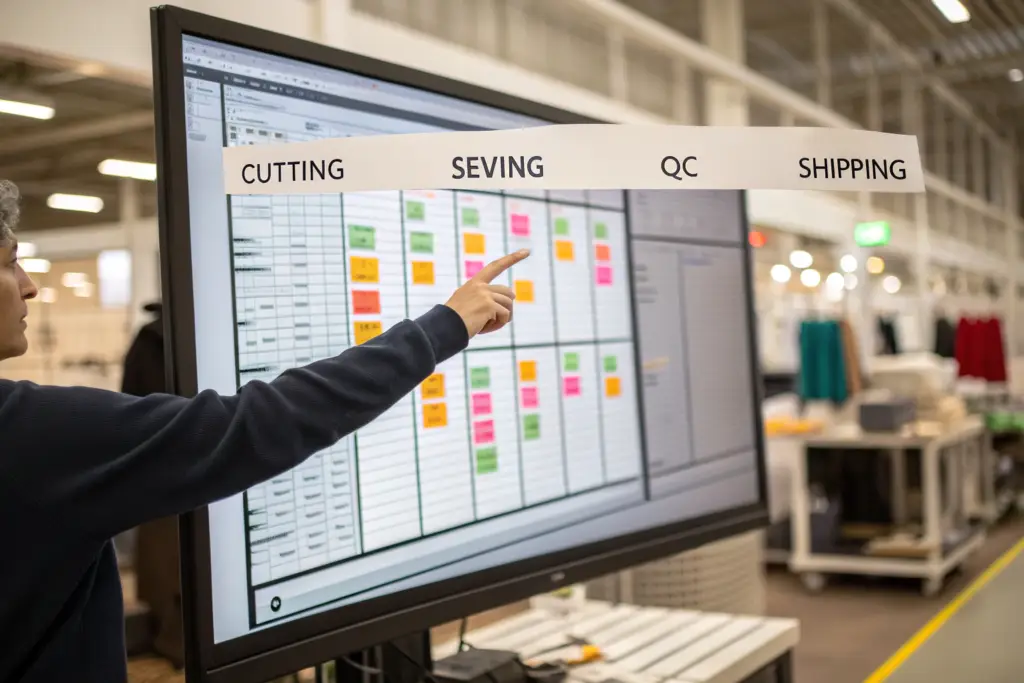
Lean manufacturing methods, such as the Single Piece Flow and a visual Kanban scheduling system, keep custom orders perfectly on schedule without creating a rushed, mistake-ridden environment. These methods balance the line to ensure no workstation is overloaded, preventing bottlenecks. This means the rare style order moves continuously through production, hitting its ship date with zero defects.
Traditional batch production is the enemy of a small custom order. In a traditional system, the cutting room cuts all 200 pieces and puts them in a big bin. That bin sits and waits for the sewing line. The sewing line sews one part and puts it in another bin. This "waiting" time can be 80% of the total lead time. Lean methods kill the waiting time.
What Is Single Piece Flow and Can It Work for Apparel?
Single Piece Flow sounds crazy to old-school garment factories. It means moving one piece at a time from one operation to the next. Instead of completing 50 collars, then 50 sleeves, a team handles one complete garment at a time.
For a rare style order, this is brilliant. Why? Because we find the mistake on the first piece, not on 50 pieces. If the sewing operator notices the sleeve head has too much ease, she stops. We fix it immediately. We have not wasted 49 other sleeves.
We use a "modular" system. A small team of 5 to 8 operators handles the entire assembly of one rare style. They are cross-trained. They can jump in and help each other. This is not mass production. It is craft production organized with industrial discipline. It works beautifully for runs of 100 to 500 units. The quality is higher. The throughput time is actually shorter because there are no piles of work-in-progress (WIP) gathering dust. The movement of goods through a lean system like this can be further streamlined using real-time tracking software, often compatible with ERP systems designed for apparel, which link shop floor data directly to the distributor's dashboard.
How Does a Pre-Production Meeting Help Prevent Bottlenecks?
A bottleneck is a monster. It is that one worker who is too slow, or that one machine that keeps breaking. The work piles up in front of her. Everyone else is waiting. And the shipping date is getting closer. The factory manager then pushes people to rush. That is when you get crooked seams and broken needles left in clothes.
A pre-production meeting held three days before the cut start date kills the monster before it appears. We bring the cutter, the sewing line supervisor, the QC, and the finishing packer into a room. We walk through the rare style piece by piece. We ask the hard questions. Is the fabric slippery? Do we need a special sewing machine foot? Are the labels heat-sealed or sewn in?
We did this for a rare style women's military jacket with many pockets and epaulets. In the pre-pro meeting, the line supervisor pointed out that attaching the shoulder epaulets was going to be a bottleneck. It required a three-step folding process. We solved it by creating a simple paper folding guide and assigning two operators to that task instead of one. The line never stopped. The order shipped a day early. That meeting took 40 minutes. It saved us 2 days of chaos. It is the simplest, cheapest lean method we use, and it is directly responsible for our on-time delivery record. When distributors ask us about logistics, we often guide them towards reliable freight practices, such as those outlined by Freightos for managing international shipping timelines, ensuring the factory's efficiency is matched by the delivery service.
Conclusion
Fabric wastage is not just a factory problem. It is your margin. Every scrap of a rare, expensive fabric that ends up in the bin is money taken directly from your bottom line as a distributor. We have walked through the entire journey today. The digital marker layouts that nest the patterns like a puzzle, saving up to 10% of your cloth before a single blade falls. The single-ply cutting tables that handle delicate silks and leathers with zero damage. The obsessive sampling protocols that destroy cheap muslin to save precious charmeuse. And the lean management methods, like Single Piece Flow, that deliver speed without forcing costly errors.
All of this requires a factory that thinks like a partner, not just a vendor. It requires a deep understanding that your rare style cannot be handled like a generic commodity. The fit must be exact. The schedule must be sacred. The costing must be transparent. Without these four pillars, customizing rare-style apparel is just gambling.
At Shanghai Fumao, we have built our five production lines to master this kind of low-waste, high-precision manufacturing. We do not see rare styles as a hassle. We see them as the reason our clients succeed. You get a product that looks unique and a cost structure that makes sense. This is the only way to build a long-term distribution business in a competitive market.
If you are tired of suppliers giving you a "take it or leave it" price that hides their inefficiency, let's talk. I invite you to contact our Business Director, Elaine. She can walk you through a specific cost example for your next rare design and show you how we calculate the wastage down to the centimeter. Send her an email at elaine@fumaoclothing.com. Let’s turn your most creative designs into your most profitable products.