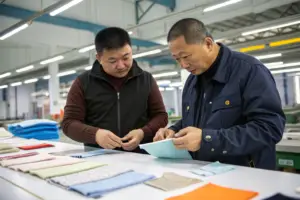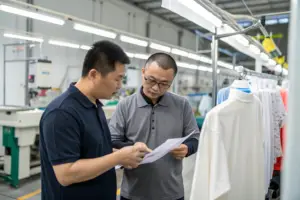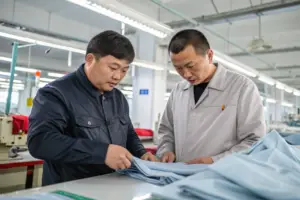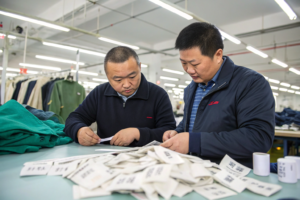
You have narrowed your supplier list to three candidates. Their samples look good. Their prices are competitive. Their communication has been prompt and professional. Then you ask the question that separates the legitimate manufacturers from the risky ones. "Can you send me your certifications?" Supplier A sends a PDF with five certificates, all current, all from recognized bodies. Supplier B sends a single certificate that expired two years ago. Supplier C stops responding to your emails. The certification package is not a bureaucratic formality. It is the most concentrated source of objective, third-party-verified information about a supplier's quality standards, ethical practices, and legal compliance. A factory that cannot produce current, verifiable certifications is a factory that has something to hide.
A quality floral dress supplier needs certifications in three categories. First, product safety certifications that prove the dresses are free from harmful substances and safe for consumer use. The essential certifications are OEKO-TEX Standard 100 and, for brands selling children's clothing, CPSIA compliance. Second, ethical and social compliance certifications that prove the factory treats its workers fairly and operates legally. The essential certifications are BSCI, SMETA, or SA8000. Third, quality management certifications that prove the factory has documented, audited processes for consistent production quality. The essential certification is ISO 9001. A supplier who holds current, verifiable certificates in all three categories is a supplier who has been independently audited by external organizations and found to meet international standards. This does not guarantee perfection, but it provides a foundation of verified legitimacy that no website or sales pitch can replace.
My name is Elaine. I am the co-owner of Shanghai Fumao, a specialized woven dress and linen apparel manufacturer. Our factory holds OEKO-TEX Standard 100 certification, a current BSCI social compliance audit with a B rating, and ISO 9001 quality management certification. I have been through the audit process for each of these certifications multiple times. I know what they require, what they verify, and what they do not cover. In this article, I will explain each certification category, what each specific certification actually means, how to verify that a certificate is genuine and current, and why a supplier who lacks certifications is a risk you should not take.
Why Are Product Safety Certifications the First and Non-Negotiable Requirement?
A floral dress is a product that sits directly against the consumer's skin for hours at a time. The fabric, the dye, the print, the buttons, the zipper, and even the sewing thread are in prolonged contact with the body. If any of these materials contain restricted chemicals—azo dyes that release carcinogenic amines, formaldehyde used as a fabric finish, heavy metals in the print pigments, phthalates in plastic buttons—the consumer's health is at risk. Beyond the health risk, the legal and financial risk to your brand is severe. Customs authorities in the United States and the European Union actively test imported textiles for restricted substances. A shipment that fails a customs test is detained, tested, and if confirmed non-compliant, destroyed at the importer's expense. The financial loss includes the product cost, the freight cost, the customs penalties, and the lost season. The reputational damage to your brand is incalculable.
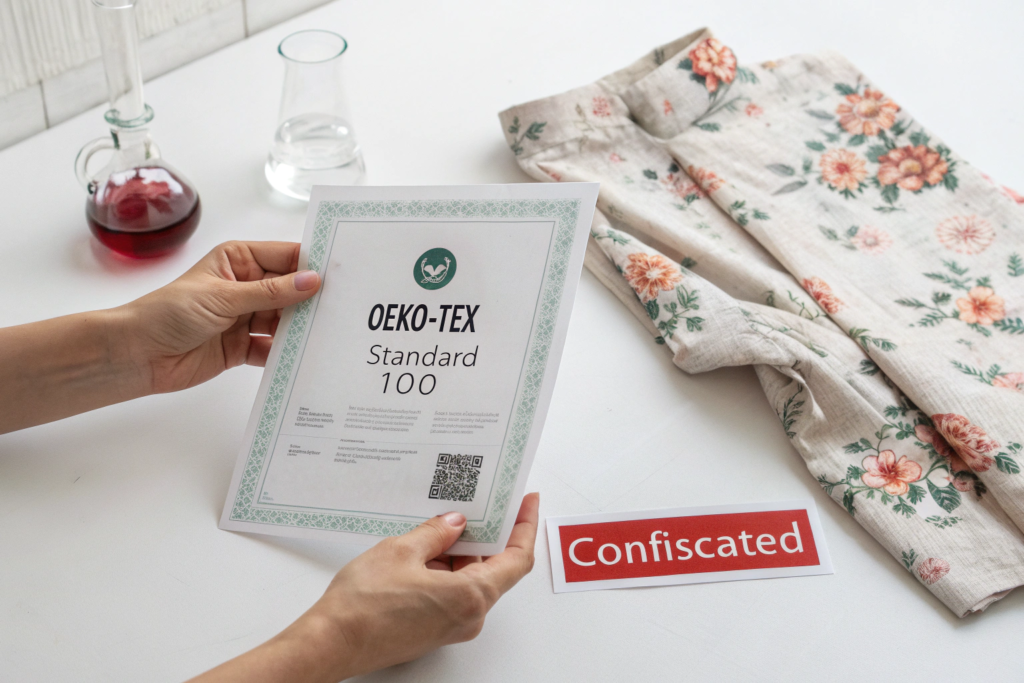
OEKO-TEX Standard 100 is the globally recognized certification that verifies a textile product has been tested for over 100 harmful substances and found safe for human use. The certificate is specific to the product class—dresses fall under Product Class II, "articles with direct and prolonged skin contact." A supplier who holds a current OEKO-TEX certificate for Product Class II has submitted their fabrics, dyes, and trims to an independent laboratory and received a passing report. For brands selling in the United States, CPSIA compliance is also required if any dresses are intended for children under 12. These certifications are not marketing advantages. They are the minimum legal and ethical threshold for placing textile products on the market.
What Is OEKO-TEX Standard 100, and What Does It Actually Test?
OEKO-TEX Standard 100 is a product certification, not a factory certification. It certifies that a specific product—in this case, the fabric, trim, and components of a dress—has been laboratory tested and found free from concentrations of harmful substances that are known or suspected to be dangerous to human health. The testing is conducted by an independent, OEKO-TEX approved laboratory, not by the factory itself.
The testing covers a comprehensive list of regulated and non-regulated substances, including: formaldehyde, which is used in fabric finishing and is a known irritant and carcinogen; heavy metals such as lead, cadmium, and mercury, which can be present in dyes and pigments; chlorinated phenols, used as pesticides during cotton cultivation or as preservatives during textile storage; restricted azo dyes that can break down to release carcinogenic aromatic amines; phthalates, used as plasticizers in buttons, zipper coatings, and print pastes; and organotin compounds, used as biocides and stabilizers. The test limits are updated annually based on evolving scientific knowledge and regulatory changes. A certificate is valid for one year. A certificate from 2023 that has not been renewed is expired and provides no assurance. The OEKO-TEX Standard 100 certification requirements page provides the full technical specification and the current limits.
How Can You Verify That an OEKO-TEX Certificate Is Genuine and Current?
Certificate fraud is common in the textile industry. A supplier may present a certificate that belongs to a different factory, a certificate that has expired, or a certificate that was never issued and was created with photo editing software. Verifying a certificate takes two minutes and protects you from a potentially catastrophic compliance failure.
Every OEKO-TEX certificate has a unique certificate number printed on it. Go to the OEKO-TEX website and navigate to the Label Check tool. Enter the certificate number. The system will tell you whether the certificate is currently valid, the name of the certificate holder, the product classes covered, and the issuing laboratory. If the certificate number returns "not found," the certificate is fake. If the certificate holder name does not match the supplier you are dealing with, the certificate belongs to someone else. If the product classes listed do not include Product Class II, the certificate does not cover dresses. This verification takes two minutes and requires no special tools. Do it for every supplier you consider. The OEKO-TEX label check online verification tool is the direct link. A supplier who provides a certificate number that cannot be verified is a supplier you should not do business with.
What Ethical and Social Compliance Certifications Protect Your Brand's Reputation?
In 2025, a brand's ethical record is as visible as its product quality. A viral social media post exposing exploitative labor conditions in a brand's supply chain can destroy years of carefully built customer trust in hours. Consumers, particularly the fiber-literate, sustainability-conscious consumers who buy natural-fiber floral dresses, increasingly demand transparency about who made their clothes and under what conditions. Retailers and wholesale platforms are requiring suppliers to provide social compliance audits as a condition of carrying their products. Ethical sourcing is no longer a marketing differentiator. It is a market access requirement.
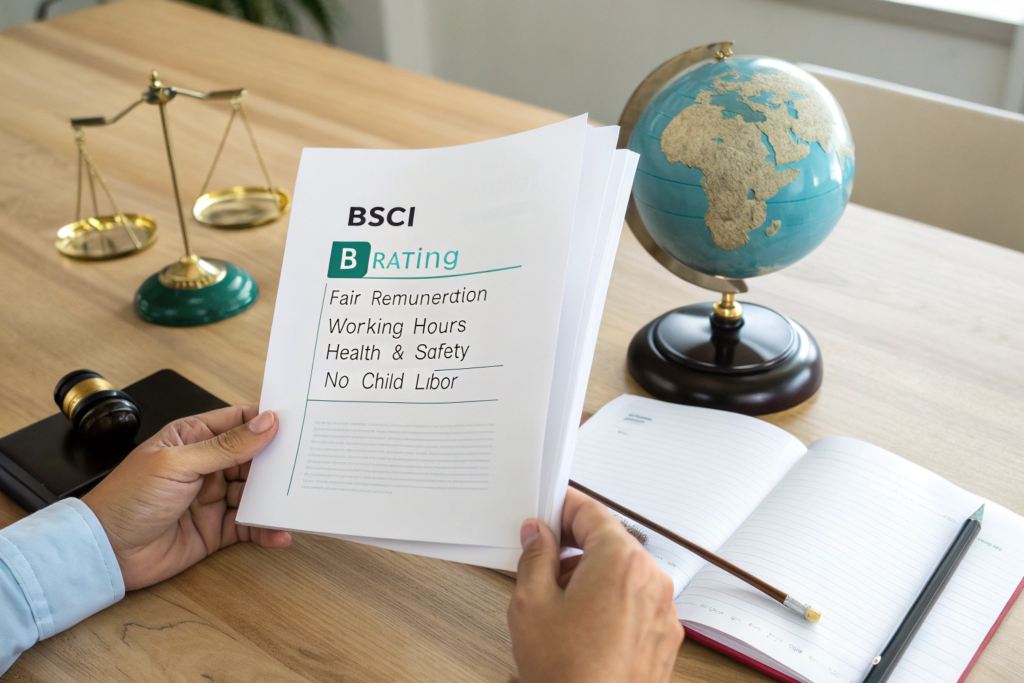
Social compliance certifications verify that a factory meets international standards for worker treatment, including fair wages, reasonable working hours, workplace health and safety, freedom of association, and the prohibition of child labor and forced labor. The three most recognized certifications in the apparel industry are BSCI (Business Social Compliance Initiative), SMETA (Sedex Members Ethical Trade Audit), and SA8000 (Social Accountability 8000). BSCI and SMETA are audit-based certifications where an independent auditor inspects the factory and issues a report with findings and a rating. SA8000 is a more rigorous, management-system-based certification that requires the factory to implement ongoing policies and procedures, not just pass a single audit. A supplier who holds a current audit report with a satisfactory rating from any of these bodies has been independently verified to meet baseline ethical standards.
What Is the Difference Between BSCI, SMETA, and SA8000?
These three certifications are often mentioned interchangeably, but they differ in scope, rigor, and recognition. Understanding the differences helps you evaluate the weight of a supplier's ethical credentials.
BSCI is an initiative of the Foreign Trade Association, now Amfori, that provides a common code of conduct and audit methodology. A BSCI audit evaluates the factory against eleven performance areas, including fair remuneration, decent working hours, occupational health and safety, no child labor, no forced labor, freedom of association, and ethical business behavior. The audit results in a rating from A to E, with A and B being satisfactory, C being acceptable with areas for improvement, and D and E indicating significant non-compliance. Factories are expected to implement corrective actions and undergo periodic re-audits. SMETA is the audit methodology developed by Sedex, a global membership organization for ethical supply chain data. A SMETA audit covers labor standards, health and safety, environmental assessment, and business ethics. It is widely recognized by European and North American retailers. Unlike BSCI, SMETA does not issue a rating. It provides a detailed report of findings, and it is up to the buyer to evaluate whether the findings are acceptable. SA8000 is the most rigorous of the three. It is a certification standard based on International Labour Organization conventions and the UN Declaration of Human Rights. A factory must implement a management system for social accountability, not just pass a point-in-time audit. SA8000 certification is less common in the Chinese apparel industry due to its stringency, particularly regarding freedom of association and collective bargaining. The social compliance audit comparison for apparel supply chains article provides a detailed side-by-side evaluation.
Why Is a Current Audit Report More Important Than a Policy Statement?
Many suppliers will provide a "Code of Conduct" or a "Supplier Ethics Policy" that reads beautifully on paper. The document states that the factory prohibits child labor, pays fair wages, and provides a safe working environment. This is a self-declaration. It has not been independently verified. It is worth the paper it is printed on, and often less.
A current, independent audit report is a different category of evidence. An auditor from an accredited third-party firm physically visited the factory. They walked the production floor, inspecting fire exits, machine guards, lighting, ventilation, and chemical storage. They reviewed payroll records, time cards, and employment contracts, interviewing a random sample of workers privately, without management present. They compared the documented wages to the legal minimum wage. They checked the ages of workers against identification documents. The report they issued contains specific findings, not general assurances. An audit report that is more than two years old is functionally expired. A supplier who cannot produce a current report, or who only provides a self-declaration, is a supplier whose ethical practices are unverified. The verifying social compliance in garment supply chains guide explains the audit process and how to interpret audit findings.
What Quality Management Certifications Indicate Consistent Production Standards?
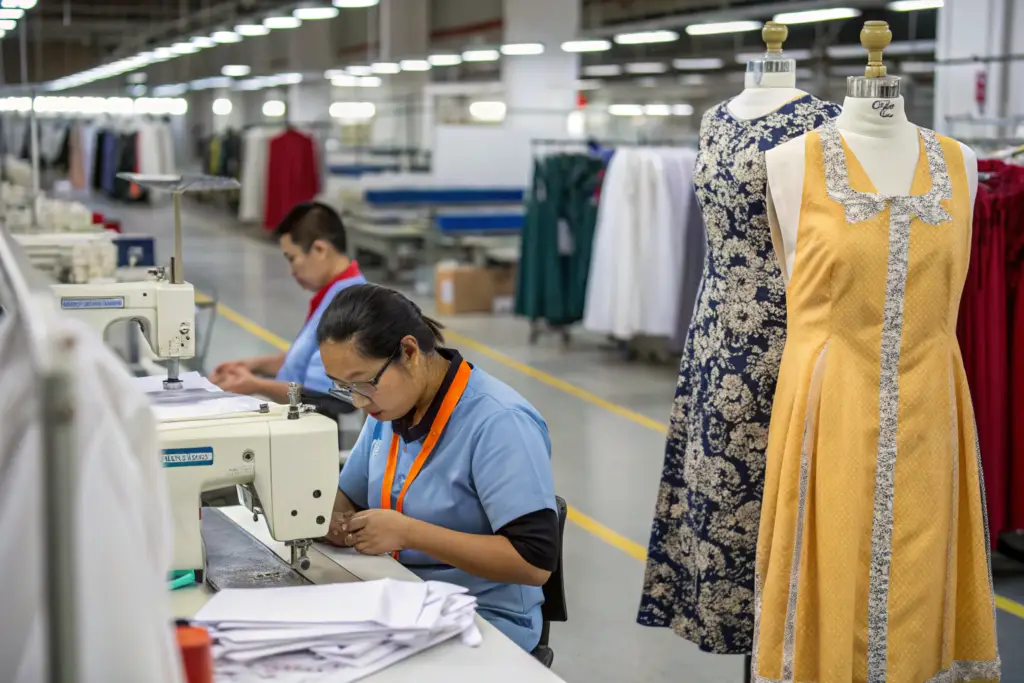
Product safety and ethical compliance are about what the factory produces and how it treats its workers. Quality management is about how the factory operates. A factory can use safe materials and treat its workers fairly and still produce dresses with inconsistent sizing, misaligned prints, and seams that split after three wears. Quality management certifications verify that the factory has a systematic, documented approach to ensuring consistent quality, not a reliance on the owner's personal inspection at the end of the production line.
ISO 9001:2015 is the internationally recognized standard for quality management systems. A factory that holds ISO 9001 certification has been audited by an independent certification body and found to have documented processes for design and development, purchasing, production, monitoring and measurement, and corrective action. The certification requires the factory to conduct internal audits, track quality objectives with measurable data, and implement a continuous improvement cycle. It is not a product quality guarantee, but it is evidence that the factory has invested in the systems, training, and documentation that enable consistent quality. A factory without any quality management certification may produce excellent quality one day and poor quality the next, depending on who is supervising the line.
What Does ISO 9001 Certification Mean for Your Floral Dress Order?
ISO 9001 certification has practical, tangible implications for the consistency and traceability of your orders. A factory that operates under ISO 9001 maintains documented procedures for every stage of production. When a problem occurs, the system can trace it to its source.
For your floral dress order, ISO 9001 means that when we receive your design brief, it enters a documented design and development process with defined review, verification, and validation stages. Your sample is not made by whoever is available. It is made according to a controlled procedure. When we purchase fabric for your order, we evaluate and select suppliers based on documented criteria, and we verify the purchased product through incoming inspection and lab testing. The fabric lot is traceable to your order. When your dresses are in production, we monitor the process through defined checkpoints. In-process measurements are recorded. Defects are classified and counted. The data is reviewed to identify trends and implement corrective actions before the defect rate becomes a problem. When your order is complete, we conduct final inspection according to a documented procedure with defined acceptance criteria. The inspection records are retained and can be audited. This is the difference between a factory where quality happens when the owner is watching, and a factory where quality is designed into the system. The ISO 9001 quality management in garment manufacturing page provides an overview of the standard and its application.
How Do You Verify That an ISO 9001 Certificate Is Legitimate?
ISO 9001 certificates, like all certifications, can be forged. Verifying a certificate requires checking the issuing certification body and the certificate's status.
Every ISO 9001 certificate is issued by an accredited certification body. The certificate should display the certification body's name and logo, and an accreditation mark from a national accreditation body such as UKAS, ANAB, or CNAS. The certificate should list the certificate number, the certified organization's name and address, the scope of certification, and the validity dates. To verify the certificate, go to the certification body's website and use their certificate verification tool, or contact them directly with the certificate number. Verify that the certified organization's name matches the supplier you are dealing with. Verify that the scope of certification includes "manufacture of woven garments" or equivalent language relevant to dress production. Verify that the certificate is within its validity period. A supplier whose ISO certificate cannot be verified is a supplier whose entire quality system claim is suspect. The ISO certificate verification and accreditation page explains the structure of accredited certification and how to validate certificates.
How Does Shanghai Fumao's Certification Package Protect Your Brand?
The certification package a supplier presents is a window into how they operate. A supplier who holds current, verifiable certifications in all three categories—product safety, social compliance, and quality management—is a supplier who has voluntarily subjected themselves to external scrutiny and passed. They pay annual audit fees. They implement corrective actions when auditors identify gaps. They maintain documentation to evidence their compliance. This is not the behavior of a supplier who is trying to hide something. It is the behavior of a supplier who is confident in their operations and committed to continuous improvement.
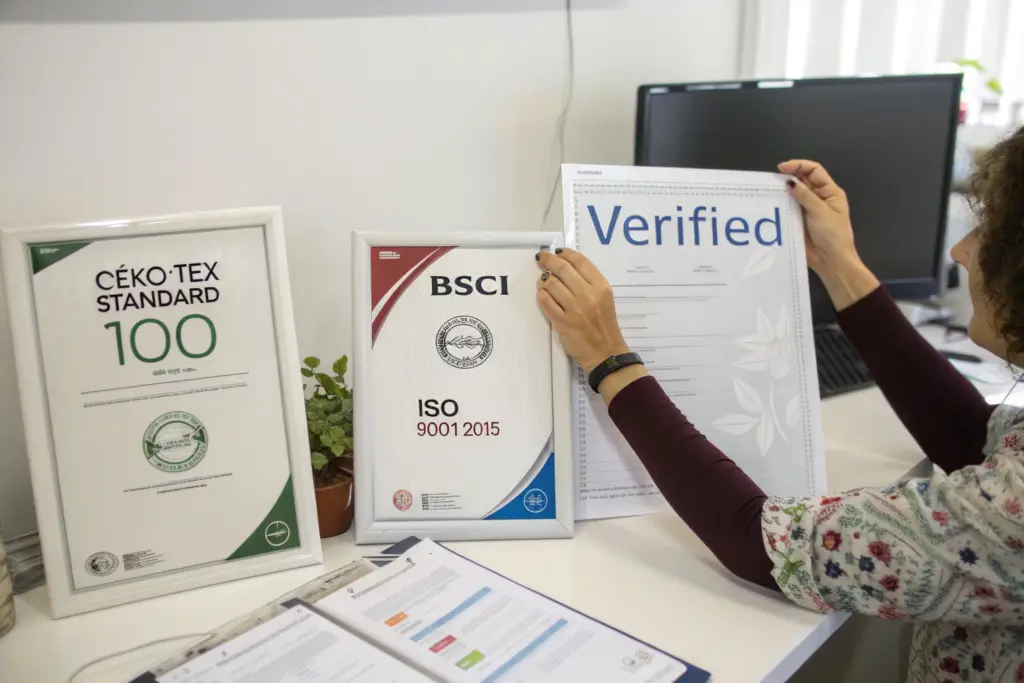
Shanghai Fumao's certification package provides third-party, independently verifiable assurance in all three essential categories. OEKO-TEX Standard 100, Certificate Number SH020 154321, issued by TESTEX, valid through November 2026, covers our linen and cotton floral dress fabrics under Product Class II. This certificate is verifiable on the OEKO-TEX Label Check website. BSCI Social Compliance Audit, conducted in October 2025, achieved a B rating, the second-highest possible. The audit covered all eleven BSCI performance areas. The full report is available to clients under a non-disclosure agreement. ISO 9001:2015 Quality Management System, issued by SGS, valid through March 2027, covers the design, development, and manufacture of woven garments. This certificate is verifiable through the SGS certificate verification portal. These are not marketing claims. They are independently audited facts that you can verify yourself in minutes.
Conclusion
A quality floral dress supplier needs certifications in three essential categories. Product safety certification, specifically OEKO-TEX Standard 100 for Product Class II, verifies that the dresses are free from harmful substances and safe for consumer use. Ethical and social compliance certification, specifically a current BSCI, SMETA, or SA8000 audit report with a satisfactory rating, verifies that the factory treats its workers fairly and operates legally. Quality management certification, specifically ISO 9001:2015, verifies that the factory has documented, audited systems for consistent production quality. Each certification must be current, issued by a recognized body, and verifiable through the issuing body's public database. A supplier who holds all three provides a foundation of verified legitimacy. A supplier who lacks any of them is asking you to take their word for matters that independent auditors should confirm.
At Shanghai Fumao, we hold all three. We provide our certificates to prospective clients at the inquiry stage, not after the deposit is paid. We encourage you to verify each certificate independently. If you are evaluating floral dress suppliers and want to compare our certification package against your other candidates, I am ready to provide our full documentation. Contact me, Elaine, at elaine@fumaoclothing.com. Request our certification portfolio. Verify each certificate. Your brand's reputation is built on the integrity of your supply chain. We are proud to be a verified link in that chain.