A startup brand founder from Portland emailed me three weeks ago, and I could feel the anxiety radiating through the screen. She had spent six months developing her brand identity. She had a logo, a website, a small but engaged Instagram following, and a burning desire to launch her first collection. She wanted custom classic shorts—her own label, her own trim selections, her own fit tweaks. She had contacted seven factories. Six of them quoted her a minimum order quantity of 1,000 pieces per style per color. She had a launch budget for 300 pieces total. The seventh factory never replied. She wrote to me asking, "Is my business just too small to exist?"
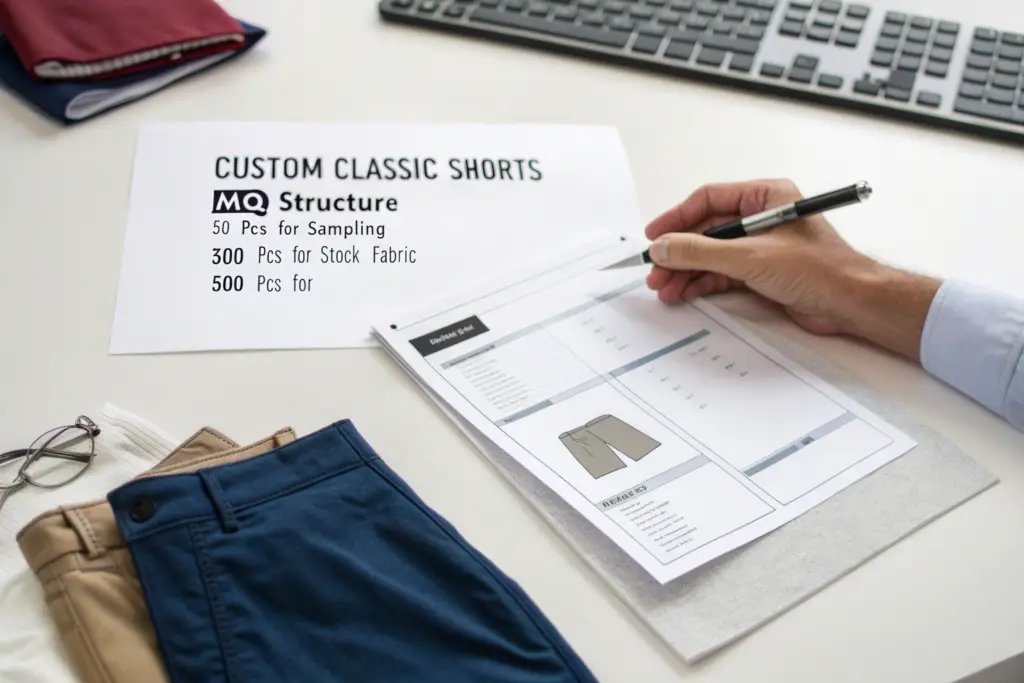
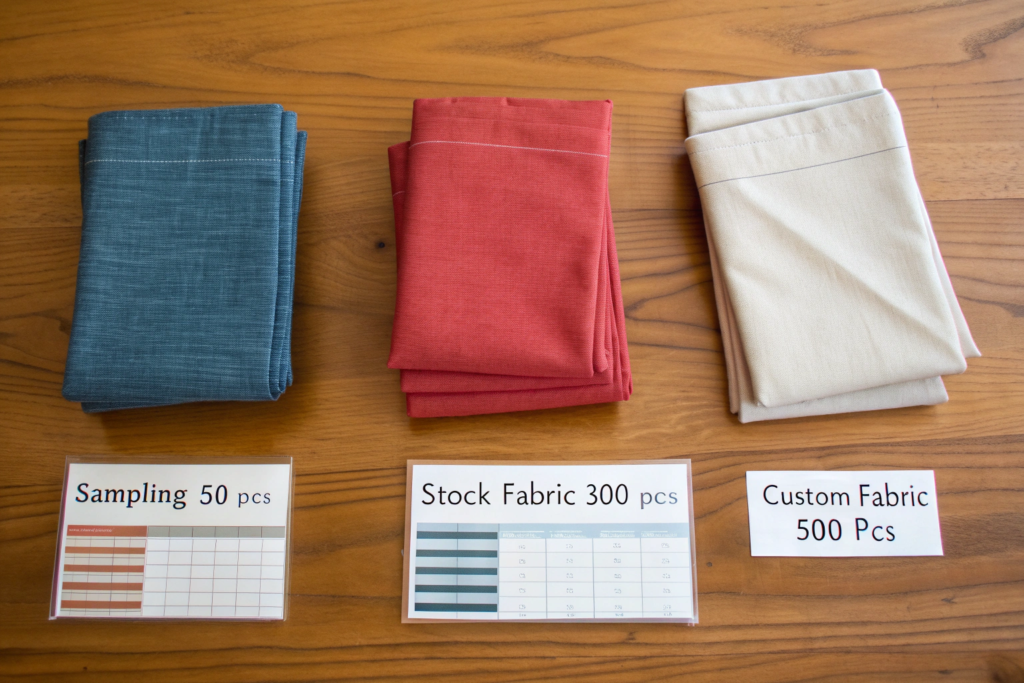
Shanghai Fumao offers a flexible, tiered MOQ structure for custom classic shorts: 50 pieces per style for sampling and small-batch market testing, 300 pieces per style for production using our in-stock fabric inventory, and 500 pieces per style for fully custom fabric development with custom dyeing and finishing.
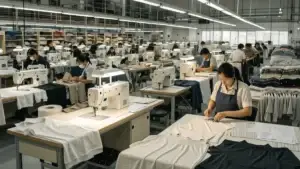
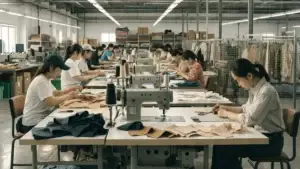
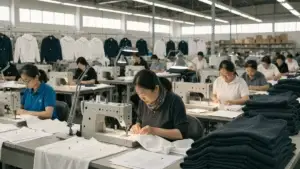
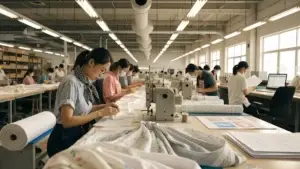
No legitimate factory should tell a brand that their business is too small to exist. Every brand was small once. The factory's job is to provide a path for the brand to grow, starting from where the brand actually is, not from where the factory wishes the brand would be. At Shanghai Fumao, we built our MOQ structure around this belief. Our five production lines are designed for flexibility. We can handle a 50-piece sampling order with the same attention to quality that we apply to a 5,000-piece bulk order. Let me walk you through exactly how our MOQ system works, why it is structured the way it is, and how you can use it to launch, test, and scale your custom classic shorts line.
What Is the Tiered MOQ Structure and Why Does It Exist?
Most factories set a high, rigid MOQ because their business model depends on long, uninterrupted production runs. A line that sews the same black chino short for three weeks is efficient. A line that switches between styles, colors, and sizes every few days is less efficient. The high MOQ is not greed. It is operational math. But it is operational math that excludes small and emerging brands. The tiered MOQ structure is our attempt to solve this problem. We break production into three tiers, each with a different cost structure, lead time, and MOQ, so that brands at different stages of growth can access manufacturing without the factory losing money on the run.
The tiered MOQ exists to match production complexity with order volume: small orders use standardized processes and in-stock materials to minimize setup costs, while larger orders unlock the economies of scale that come with custom fabric development and dedicated line allocation, ensuring that every order is profitable for the factory and affordable for the brand.
I explained this to the Portland founder during a video call. She was initially confused. She thought MOQ was a single number she either met or did not meet. When I showed her that she could order 50 pieces at a slightly higher per-unit cost to test her market, and then scale to 300 pieces at a lower cost once she had validated demand, her entire launch strategy shifted. She realized she did not need to risk her entire savings on a 1,000-piece order. She could start small, prove the concept, and grow. The tiered MOQ is not just a pricing structure. It is a risk management tool for emerging brands.
| MOQ Tier | Minimum Pieces | Fabric Source | Customization Level | Typical Lead Time | Best For |
|---|---|---|---|---|---|
| Sampling & Small Batch | 50 pcs per style | Stock fabric only | Label, hangtag, trim selection from stock options | 20-25 days | Market testing, influencer seeding, pop-up shops |
| Stock Fabric Production | 300 pcs per style | In-stock fabric inventory | Full customization within stock materials | 30-40 days | Initial wholesale orders, DTC launch collection |
| Custom Fabric Production | 500 pcs per style | Custom developed and dyed | Complete customization including proprietary colors | 45-55 days | Established brand replenishment, core line production |
Why Do Sampling and Small-Batch Orders Cost More Per Unit?
The per-unit cost of a 50-piece order is higher than the per-unit cost of a 500-piece order. This is not a penalty. It is the reality of fixed setup costs. Before a single short is sewn, the factory must spread the fabric, lay the marker, set up the cutting machines, and configure the sewing stations. These setup activities take roughly the same amount of time whether the order is for 50 units or 500 units. On a 50-unit order, the setup cost is spread across 50 pieces. On a 500-unit order, it is spread across 500 pieces. The setup cost per unit is ten times higher on the small order. The higher per-unit price reflects this math. The brand that understands this math does not see the higher price as unfair. They see it as the cost of low-risk market entry. They pay more per unit to avoid paying for 450 units they might not sell. The trade-off is rational. For brands that want to understand the economics of small-batch production more deeply, industry resources like Apparel Resources publish case studies on manufacturing cost structures.
How Does Stock Fabric Availability Determine What Is Possible at 300 Pieces?
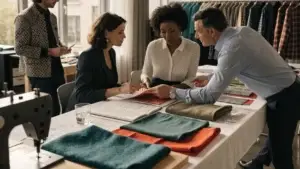
Our stock fabric inventory is a curated library of approximately sixty fabric qualities—cotton twills, linen blends, stretch cottons, brushed fleeces, and performance wovens—in a rotating palette of core neutral and seasonal accent colors. When a brand orders from stock fabric, they are selecting from fabrics that are already sitting on our shelves. There is no fabric development time. There is no dye lot minimum to meet. The fabric is ready to cut the moment the order is confirmed. This is what makes the 300-piece MOQ possible. The factory does not need to absorb the cost of a custom dye run because the fabric is already dyed and finished. The brand benefits from a faster lead time and a lower MOQ. The trade-off is that the brand must choose from the available stock colors. If the brand's signature shade of burnt orange is not in the library, they cannot get it at the 300-piece tier. But for most emerging brands, the stock palette contains more than enough options to build a cohesive, attractive collection. Our stock fabric inventory is updated quarterly, and we provide a digital swatch book to all active and prospective clients.
What Customization Options Are Available at Each MOQ Level?
Customization is what transforms a generic short into a brand's product. The level of customization available is directly tied to the MOQ tier. This is not because we want to withhold options from smaller brands. It is because certain customizations require minimum purchase quantities from our trim suppliers. A custom woven label has a minimum order of 1,000 pieces from the label factory. If a brand orders 50 shorts, they only need 50 labels. They cannot meet the label factory's minimum. The solution is to offer stock customization options at the lower tiers and full customization at the higher tiers.
The Sampling tier allows label and hangtag customization using our in-stock trim options, the Stock Fabric tier unlocks custom woven labels and basic embroidery, and the Custom Fabric tier provides full brand customization including proprietary colors, custom buttons, custom zipper pulls, and unique packaging.
A brand we worked with launched with a 50-piece order at the Sampling tier. They chose a stock woven label in a neutral color, added a simple hangtag with their logo printed on our stock cardstock, and selected a standard YKK zipper. The product looked fully branded. Their customers had no idea the trims were stock options. The brand sold through the 50 pieces in three weeks, validated their concept, and returned for a 300-piece order with full custom labels and packaging. The tiered approach allowed them to launch lean and invest in customization once the revenue was proven.
What Trim and Label Options Are Available for Small-Batch Orders?
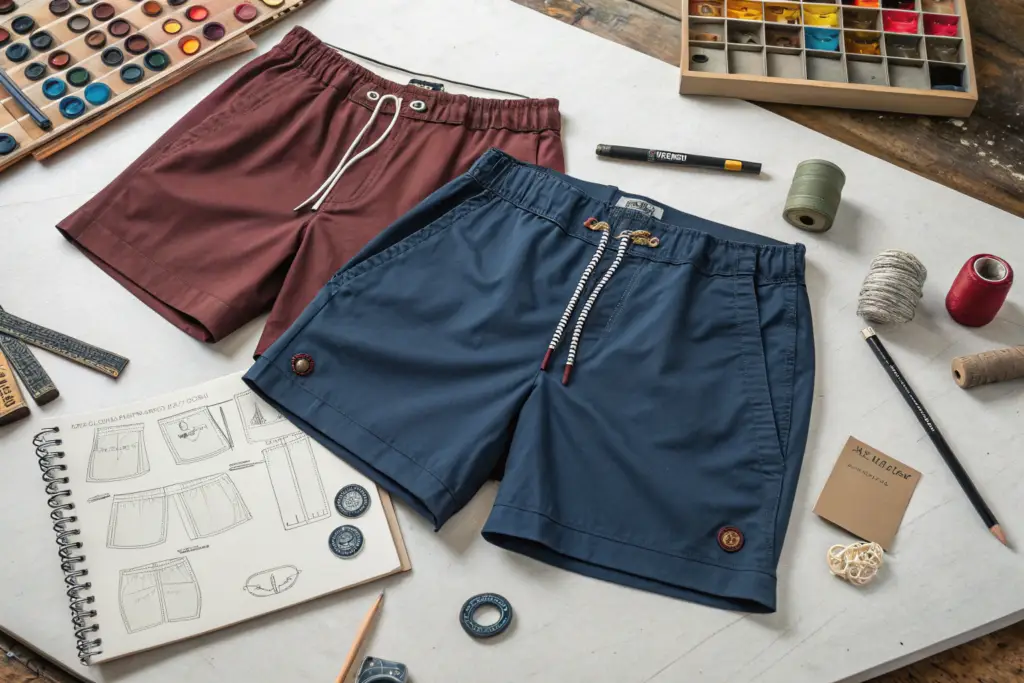
At the 50-piece tier, brands can select from our in-stock trim library. This includes a range of woven label designs in standard sizes, hangtag templates that can be printed with the brand's logo and information, and standard YKK zippers in brass, nickel, and matte black finishes. Buttons are available in horn, corozo, and matte polyester in a palette of neutral colors. Drawcords are available in flat and round profiles in matching or contrasting colors. The brand cannot design a custom label shape or a custom button mold. But they can achieve a fully branded, professional product using the stock options. The limitation is in uniqueness, not in quality. The stock options are the same quality as the custom options. They are simply pre-developed and available without minimums. For many emerging brands, the stock options are more than sufficient for a polished launch.
How Does Full Customization at 500 Pieces Create a Proprietary Brand Product?
At the 500-piece tier, the brand gains full creative control. They can develop a custom fabric color through lab dip matching. They can design a custom woven label in any shape and size. They can create custom buttons with their logo engraved. They can specify a custom zipper pull with their brand icon. They can design custom packaging including branded polybags, tissue paper, and box packaging. The result is a product that is uniquely theirs, down to the last detail. This level of customization is what separates a private-label product from a true brand product. It is appropriate for brands that have established demand, proven sell-through, and a clear brand identity that requires proprietary details to differentiate from competitors. The investment in custom trims and fabric development is amortized across the 500-piece order and subsequent reorders. The per-unit cost of the custom details becomes negligible at scale. The brand owns a product that no competitor can replicate because the trims and colors are proprietary.
How Should a Brand Plan Its First Custom Classic Shorts Order with Fumao?
The brands that have the smoothest experience with their first custom order are the brands that arrive prepared. They do not show up with a vague idea and expect the factory to design the product for them. They arrive with a tech pack, a clear understanding of their target customer, a budget, and a launch date. The factory's job is to execute the production. The brand's job is to provide the specification. When both parties do their job, the process is smooth. When the brand expects the factory to fill in the creative gaps, the process stalls.
Planning a successful first order requires the brand to prepare a detailed tech pack with measurements and construction details, select fabric from our stock library or initiate a custom lab dip process, approve a pre-production sample before bulk cutting begins, and calendar the production lead time backward from the target launch date to ensure on-time delivery.
I walked the Portland founder through this planning process. She had a clear tech pack—she had worked with a freelance technical designer to create measurement specs and construction details. She selected a 7oz cotton twill from our stock fabric library in khaki and navy. She approved the pre-production sample in one round because her tech pack was accurate. Her 50-piece order shipped twenty-two days after confirmation. She had product in hand for her launch date. The preparation she did before contacting us was the reason the process was smooth. The brands that skip the tech pack step and try to communicate fit through verbal descriptions and reference photos spend weeks in sampling revisions. The investment in a proper tech pack before engaging the factory is the single highest-return investment a brand can make.
What Information Must a Tech Pack Include for a Smooth Sampling Process?
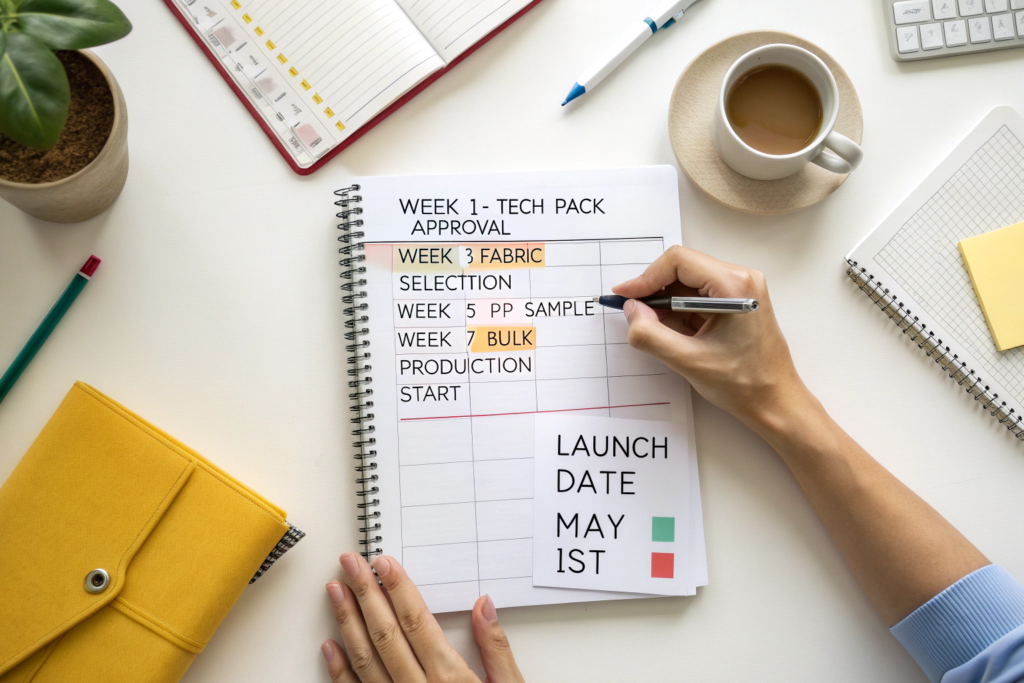
A production-ready tech pack for classic shorts must include front and back flat sketches with callouts for every design detail, a measurement specification sheet with tolerances for every point of measure across all sizes, a fabric and trim bill of materials specifying the exact fabric content, weight, and finish, a construction detail sheet showing seam types, stitch densities, and hem finishes, and a label and trim placement diagram showing where every brand label, care label, and hangtag is attached. If the brand has a reference sample—an existing pair of shorts that fits close to the desired fit—that sample should be shipped to the factory along with the tech pack. The reference sample communicates fit and hand feel in a way that measurements alone cannot. A comprehensive tech pack eliminates ambiguity. Ambiguity is the enemy of a smooth sampling process. Resources on tech pack creation are available from platforms like Techpacker, which provides templates and tutorials for apparel brands.
How Should You Time the Pre-Production Sample Approval for a Seasonal Launch?
Work backward from the launch date. If the launch date is May 1st, the bulk production should be completed by April 1st to allow for shipping and quality inspection. Bulk production takes 20-25 days for a stock fabric order. That means the pre-production sample must be approved and bulk fabric cutting must begin by March 5th. The PP sample takes 7-10 days to make and 3-5 days to ship. The brand should plan to receive the PP sample by mid-February, approve it within a few days, and return comments immediately. This timeline requires the fabric selection and tech pack submission to happen in January. The brand that contacts the factory in January for a May launch has a comfortable timeline. The brand that contacts the factory in March is already late. The backward calendar is the brand's most important planning tool. We provide a production timeline template to all new clients to help them plan their development calendar.
How Can a Brand Scale from Small-Batch Testing to Full Production Runs?
The 50-piece order is not the destination. It is the first step on a path to volume production. The brand that starts with 50 pieces should have a clear plan for how to use that inventory to generate the data and revenue needed to fund the next, larger order. The small batch is a market test. It proves that the product sells at full price, that the sizing works for the target customer, and that the brand's marketing engine can drive demand. Once the test is validated, the brand scales with confidence.
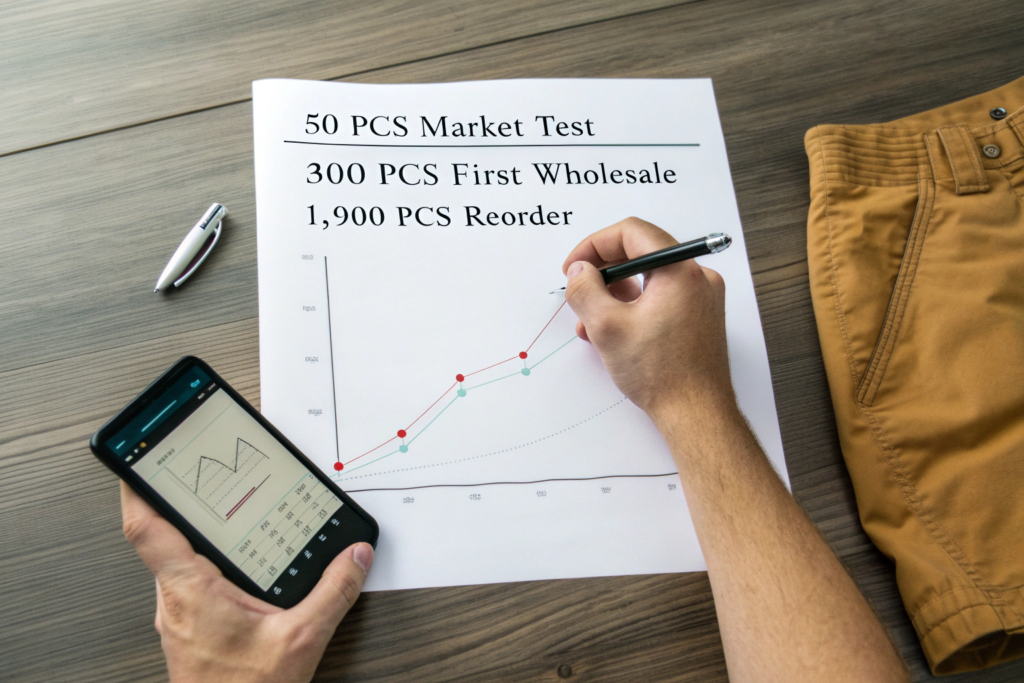
The scaling path from 50 to 500 to 1,000-plus pieces should be driven by sell-through data: use the initial small batch to gather customer feedback and measure full-price sell-through velocity, reinvest the revenue into a 300-piece stock fabric order, and then use the wholesale and DTC sales data from that order to justify a 500-plus piece custom fabric order with full branding.
A brand we manufacture for followed this exact path over eighteen months. They launched with a 50-piece order of classic chino shorts in two stock colors. They sold through in four weeks at full price, generating $4,200 in revenue. They reinvested into a 300-piece order in four colors. They sold through 80% at full price, landed two small wholesale accounts, and generated $22,000 in revenue. They used that data to approach a larger wholesale buyer, who placed a 600-piece order. The brand is now ordering 2,000 pieces per season and is one of our valued ongoing partners. The scaling path was data-driven at every step. They did not guess. They did not over-invest. They let the sell-through numbers dictate the next order size.
How Should You Use the First 50 Pieces to Generate Meaningful Market Data?
The first 50 pieces are not primarily for profit. They are for learning. Sell them through your DTC channel at full price. Track the sell-through rate by size and color. Record every customer service inquiry and every return reason. Survey the customers who bought. Ask them about fit, comfort, and what they would change. The data from 50 customers is qualitative, not statistically significant, but it is directionally powerful. It tells you whether the sizing runs small or large. It tells you which color sold first. It tells you whether the price point was accepted without resistance. This data is worth more than the margin on the 50 units. It is the intelligence that de-risks the 300-piece order. The brand that skips the learning step and jumps straight to 500 pieces is gambling. The brand that uses the 50-piece batch as a paid market research study is investing wisely.
What Signals Indicate Readiness to Move to Custom Fabric and Full Branding?
The signal is not a feeling. It is a number. The brand is ready for custom fabric and full branding when they have placed at least two reorders from stock fabric and achieved a full-price sell-through rate above 70% on those reorders. This metric indicates that the product has product-market fit, the brand has a reliable demand generation engine, and the inventory risk of a larger custom order is manageable. A second signal is wholesale account demand. If a wholesale buyer asks for a color that is not in the stock fabric palette, that is a pull signal for custom dyeing. If a buyer asks for a custom label or packaging for an exclusive in-store program, that is a pull signal for full customization. The custom tier should be pulled by demand, not pushed by the brand's desire for a more unique product. Demand-justified investment is prudent. Ego-justified investment is risky.
Conclusion
The MOQ for custom classic shorts at Shanghai Fumao is not a single number. It is a flexible, tiered system designed to meet brands where they are and grow with them. Fifty pieces gets you in the game with a professional, branded product for market testing. Three hundred pieces unlocks better per-unit pricing and the ability to fulfill initial wholesale orders. Five hundred pieces opens the door to complete brand customization and proprietary fabric development. Each tier is a stepping stone, not a barrier.
The brands that succeed with this system are the brands that plan ahead, arrive prepared with a tech pack, use the small batch to gather data, and scale their orders in response to proven demand. The factory is a partner in this process, not a gatekeeper. Our job is to produce quality shorts at whatever volume the brand's data supports. The brand's job is to generate the data.
If you are ready to start your custom classic shorts journey, whether at 50 pieces or 5,000, we are ready to talk. At Shanghai Fumao, we have the stock fabric library, the flexible production lines, and the MOQ structure to support your brand from launch to scale. Contact our Business Director, Elaine, at elaine@fumaoclothing.com to request our digital fabric swatch book, discuss your project requirements, and receive a tiered quote for your target order volume. Your business is not too small to exist. Let's prove it together.