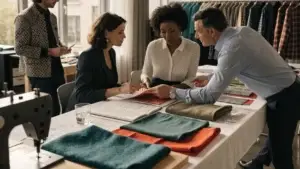
I was sitting in a trade show booth in Las Vegas three years ago when a buyer from a Midwestern boutique chain walked past my client's display for the third time without stopping. On the fourth pass, I stepped out and asked if she was looking for something specific. She sighed and said, "Honestly, I am just tired of being burned. Every season I find a great shorts line, and every season the second delivery shows up late or the sizing shifts and my customers complain. I am not looking for new vendors. I am looking for a vendor I can stop worrying about." She was not shopping for shorts. She was shopping for reliability. I told her to sit down, and I showed her the reorder history from three brands we manufacture for—brands whose wholesale clients had been with them for five, eight, twelve seasons. She placed a $28,000 opening order and became one of the brand's top five accounts within two years.
Building a loyal wholesale client list with a classic shorts line requires shifting the value proposition from the product itself—which is a commodity—to the supply chain reliability, sizing consistency, reorder speed, and proactive communication that transform a transactional vendor relationship into a strategic partnership the buyer cannot afford to lose.
A classic short is a commodity product. Every factory makes one. Every brand sells one. The product will not differentiate you. The relationship will. The buyer who trusts that your shipment will arrive on time, that your size medium will fit like the size medium from last season, and that you will pick up the phone when a problem arises is a buyer who will never put your line out for competitive bid. At Shanghai Fumao, we have watched our brand partners build these loyal wholesale client lists over years. I have seen what works and what fails. Let me give you the playbook.
Why Does Delivery Reliability Matter More Than Price for Wholesale Loyalty?
A wholesale buyer's biggest fear is not a 5% price increase. It is a missed delivery window. If the shorts arrive two weeks late, the buyer has empty shelf space during peak selling season. The sales that were supposed to happen did not happen. The buyer's divisional manager is asking why the floor set is incomplete. The buyer's bonus is tied to category revenue. The late delivery cost the buyer real money and real credibility. The buyer will not reorder from the vendor who caused that pain, no matter how good the price was.
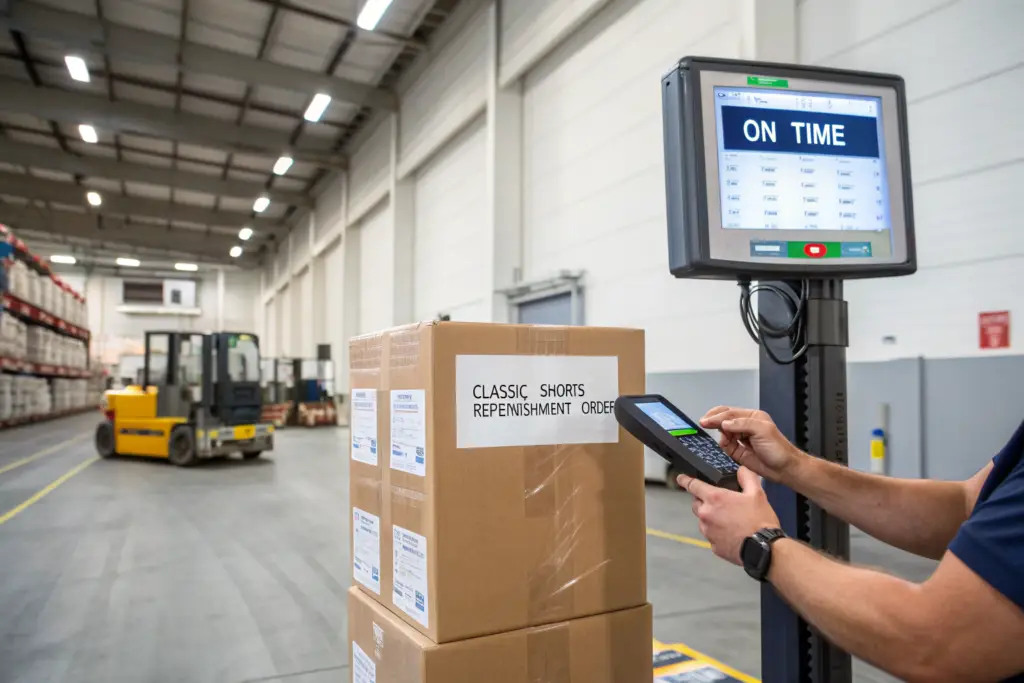
Delivery reliability is the single most powerful loyalty driver in wholesale because a late shipment costs the buyer more in lost sales and internal credibility than a higher unit price ever could, while a flawless on-time record gives the buyer confidence to plan promotions, book floor space, and increase order depth season after season.
A brand we manufacture for has maintained a 98.5% on-time delivery rate across five years and over sixty wholesale shipments. Their wholesale reorder rate is 85%. Their average client tenure is over seven years. They do not compete on price. Their FOB is typically 8-12% higher than the market average for comparable shorts. Their buyers do not care. The buyers have learned that ordering from this brand means the goods will arrive exactly when promised, the quality will match the sample, and the size curve will be correct. The buyers trade price for certainty. The brand trades a slightly lower margin per unit for a much higher lifetime value per client. The math works because the loyalty compounds. The brand spends almost nothing on new client acquisition because their existing clients reorder automatically and refer new accounts.
How Do You Build a Delivery Promise That Buyers Can Bank On?
Do not promise a date you cannot hit. A factory that promises 30 days and delivers in 45 loses a client. A factory that promises 45 days and delivers in 40 gains one. Under-promise and over-deliver. Build a buffer into the production calendar for the unexpected: a fabric dye lot delay, a customs hold, a port congestion spike. Communicate the buffer transparently. When the buyer asks for a delivery date, give them the date you are 95% confident you can hit, not the date you are 50% confident you can hit. Then deliver on or before that date consistently. Consistency is the product. The buyer who can count on your delivery date can plan their floor sets, their promotions, and their reorders around it. The predictability is worth more than a 3% price concession from a less reliable vendor. Resources on supply chain reliability and delivery performance benchmarking are available from logistics platforms like Freightos.
What Is the Cost of a Late Delivery to the Wholesale Buyer's Business?
The buyer's cost of a late delivery is not the $200 demurrage charge at the port. It is the lost sales from empty shelf space during peak demand. If a boutique chain has allocated three floor fixtures to your shorts for the month of June, and the shorts do not arrive until June 25th, the buyer has lost three weeks of full-margin selling on that real estate. The lost gross margin on those three weeks might be $8,000. The buyer's annual performance review will reflect that $8,000 gap. The buyer will remember which vendor caused it. The vendor who caused it will not be in the line plan next season. The economics of retail shelf space are unforgiving, and the true cost of a missed delivery is measured in lost category revenue and damaged professional credibility, not in logistics penalties.
How Does Sizing and Quality Consistency Generate Repeat Wholesale Orders?
A wholesale buyer who orders your shorts for three consecutive seasons is not reordering the product. They are reordering the consistency. The customer who bought your size medium chino last spring expects the size medium chino this spring to fit identically. If the fit has changed—even slightly—the customer notices. They return the short. They complain to the store. The store complains to the buyer. The buyer stops reordering. The sizing shift might have been a factory pattern drift, a fabric substitution, or a new cutting vendor. The buyer does not care about the reason. They care about the result: an unhappy customer and a return processing cost. Consistency is the silent assumption that underpins every reorder.
Sizing and quality consistency across multiple seasons is the invisible loyalty engine because it eliminates the buyer's reorder risk; a buyer who knows the product will fit and feel identical to the previous season can order deeper, plan further ahead, and confidently recommend the line to other buyers without fear of quality complaints.
A multi-brand retailer we supply through a brand partner conducted a vendor scorecard review. The classic shorts line from this brand had the lowest return rate in the entire bottoms category: 5.2%. The category average was 14%. The buyer increased the order by 40% the following season. The sizing had not changed in four years. The fabric had not been substituted. The construction standards had not drifted. The consistency was the competitive advantage. The buyer did not even consider competitive lines because the risk of switching to an unproven vendor was higher than any potential margin gain.
What Systems Prevent Pattern Drift and Fabric Substitution Across Seasons?
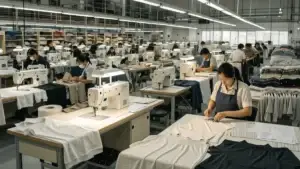
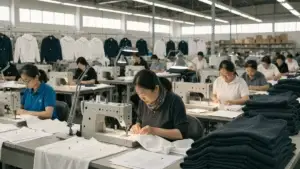
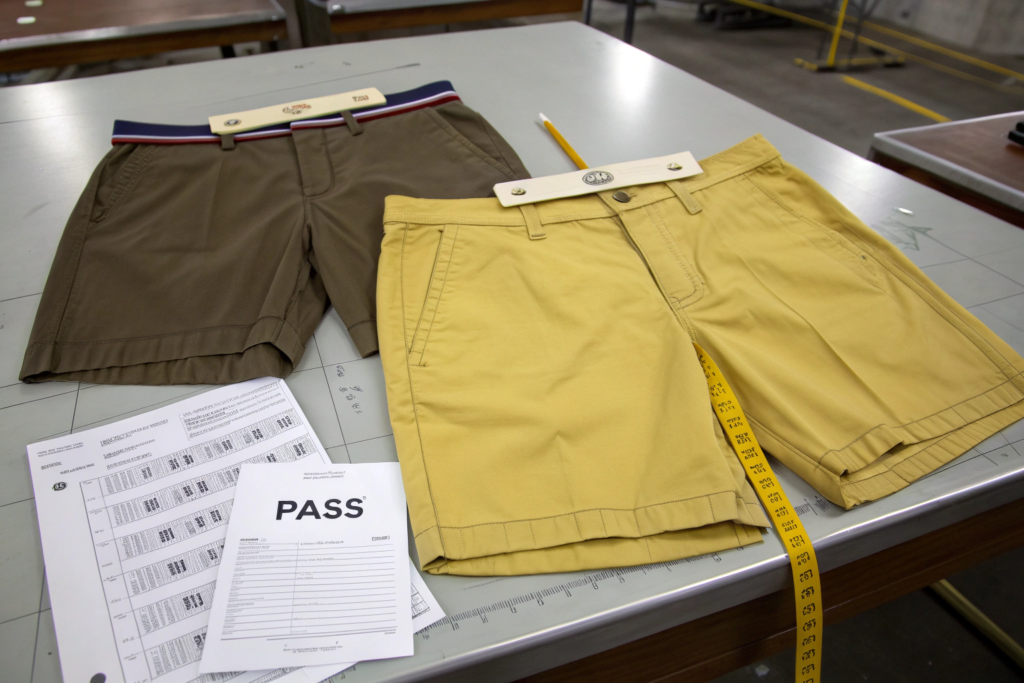
Pattern drift happens slowly. A cutting knife is sharpened, and the blade angle changes by a fraction of a degree. A new sewing operator stitches a seam 1 millimeter inside the previous operator's stitch line. Over multiple production runs, these micro-changes accumulate. The size medium that measured 40 cm at the waist now measures 39.5 cm. The difference is within tolerance, but the customer notices. The solution is a sealed golden sample for every size, retained from the first approved production run, against which every subsequent production run is measured. The sealed sample is the reference standard. It does not change. The production must match it. Fabric substitution is prevented by testing every incoming fabric lot for fiber content, weight, and shrinkage against the original approved fabric spec. If the lot deviates, it is rejected. The fabric mill knows the spec is enforced. The enforcement prevents the temptation to substitute a cheaper fiber. The systems cost money to maintain. The cost is an investment in the reorder business.
How Does a Low Return Rate Become a Sales Argument for the Wholesale Buyer?
A buyer who can tell their manager "this line has a 5% return rate" has a defensible reason to increase the order. A buyer who has to explain a 25% return rate on a trendy line has a problem. The low return rate is a financial metric that translates directly into the buyer's professional security. The vendor who provides that metric is a vendor the buyer protects. When the divisional manager asks why the classic shorts line is getting more floor space, the buyer can point to the return rate data. When a competitive vendor pitches a cheaper price, the buyer can compare the projected net margin after returns and markdowns. The low return rate vendor usually wins on net margin, even at a higher unit price. The vendor who tracks and communicates their return rate to wholesale buyers is speaking the buyer's internal language. The metric sells the product more effectively than any lookbook.
What Communication Practices Turn a One-Time Buyer Into a Multi-Year Partner?
A wholesale buyer receives dozens of vendor emails every week. Most are mass-blasted line sheets and generic "checking in" messages. These are noise. They are deleted. The vendors who build loyalty communicate differently. They communicate with specificity about the buyer's business. They reference the buyer's previous orders. They alert the buyer to potential issues before the buyer has to ask. They share sell-through data that helps the buyer make better decisions. They behave less like a salesperson and more like a category management consultant.
Loyalty-building communication means proactive problem notification before the buyer discovers the issue, sharing sell-through and inventory data that helps the buyer optimize their own business, personalizing outreach with specific references to the buyer's past orders and customer demographics, and maintaining a consistent quarterly check-in cadence that is helpful without being intrusive.
I watched a brand owner handle a fabric delay with a wholesale client last year. The delay was three days. Most vendors would have said nothing, shipped three days late, and hoped the buyer did not notice. This brand owner called the buyer the moment she knew about the delay. She explained the cause. She gave the revised delivery date. She offered a 3% discount on the invoice for the inconvenience. The buyer was not happy about the delay, but she was impressed by the transparency. She told the brand owner, "You are the only vendor who calls me before I have to call you." That buyer has reordered every season for four years. The proactive communication did not fix the delay. It fixed the trust. The trust was what generated the loyalty.

What Is a Proactive Problem Notification and Why Does It Build So Much Trust?
A proactive problem notification is a communication that reaches the buyer before the problem reaches the buyer's store. The fabric is delayed, so the shipment will arrive two days late. The factory notifies the brand. The brand notifies the buyer. The buyer adjusts the floor set date and communicates with the store managers. The two-day delay is absorbed without a customer-facing impact. The buyer feels in control because they were informed early. Now imagine the alternative: the brand says nothing. The shipment arrives late. The buyer discovers the delay when the goods do not show up on the expected date. The buyer scrambles. The store managers are frustrated. The buyer feels betrayed. The same two-day delay creates a completely different emotional outcome depending on the communication. Proactive notification transforms a problem from a betrayal into a collaboration. The buyer and vendor solve the problem together. The shared problem-solving builds a stronger relationship than a flawless delivery ever could.
A quarterly business review is the ideal cadence. Once per quarter, send the buyer a simple one-page report showing the sell-through rates of their orders by style and color, the current inventory levels available for reorder, and any upcoming production slots they can reserve. This report transforms you from a product vendor into a business intelligence partner. The buyer uses your data to plan their own open-to-buy. They see which colors are selling and which are lagging. They can reorder the winners before they stock out. The data-driven partnership deepens the buyer's dependence on you, and dependence drives loyalty. The buyer who relies on your data to make their own planning decisions is not going to switch to a vendor who provides only products. The switching cost is too high. The quarterly report is your loyalty subscription renewal.
How Do You Create a Wholesale Loyalty Program That Goes Beyond Discounts?
Discounts buy transactions. They do not buy loyalty. A buyer who orders from you because you offered a 10% seasonal discount will leave you the moment a competitor offers 12%. Price-based loyalty is not loyalty. It is a reverse auction. The vendor who wins a reverse auction is the vendor with the lowest margin. True loyalty is built on structural advantages that a competitor cannot easily replicate: early access, priority production, co-marketing investment, and joint business planning.
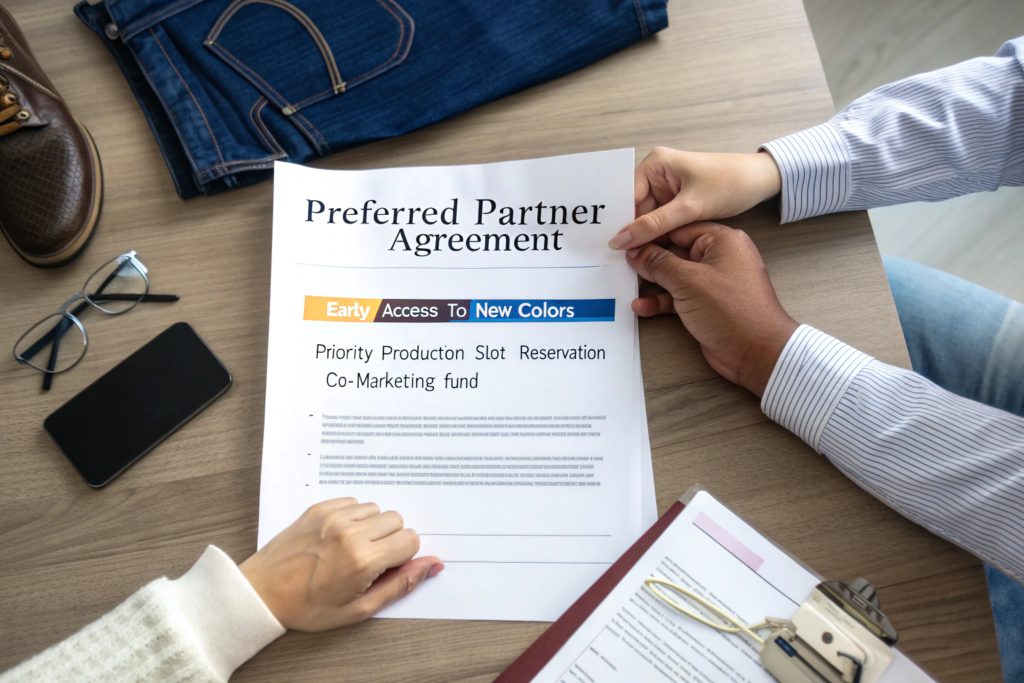
An effective wholesale loyalty program replaces price discounts with structural benefits: first access to new seasonal colors before they are offered to the open market, priority production slot reservation during peak season, co-marketing funds for in-store promotions, and an annual joint business planning session that aligns the brand's production capacity with the buyer's growth targets.
A brand we manufacture for created a "Preferred Partner" tier for wholesale accounts that had ordered for three consecutive seasons. The tier offered five benefits: early access to the seasonal color palette 30 days before the public line sheet release, guaranteed production capacity during the peak August-October window, a co-marketing fund that reimbursed 2% of the wholesale order value for in-store promotions, a dedicated account manager with a direct phone line, and an annual planning meeting with the brand's founder. The tier had no discount. The benefits cost the brand very little in hard dollars. But the buyers valued them enormously. The early access allowed them to plan their assortments before competitors. The guaranteed capacity meant they never had to worry about stock-outs during peak season. The co-marketing fund gave them a budget to promote the line. The Preferred Partner retention rate was 94%. The loyalty program turned transactional buyers into strategic partners.
What Is a Joint Business Plan and How Does It Lock in Multi-Year Commitment?
A joint business plan is an annual meeting between the brand and the wholesale buyer where both parties align on growth targets, assortment plans, production timelines, and marketing support. The brand commits to a specific production capacity reserved for the buyer. The buyer commits to a specific order volume across the season. The plan is documented in a signed document. It is not a purchase order. It is a letter of intent that creates mutual accountability. The brand invests in fabric and production slots based on the buyer's forecast. The buyer plans their category around the brand's confirmed capacity. The mutual investment makes the relationship sticky. The buyer cannot easily walk away because their season is planned around the brand's production. The brand cannot easily drop the buyer because the production capacity was reserved for them. The joint business plan transforms the relationship from a series of transactions into a strategic alliance. The multi-year commitment is the natural outcome.
How Can Co-Marketing Funds Benefit Both the Brand and the Wholesale Buyer?
Co-marketing funds are a shared investment in driving sell-through. The brand allocates a small percentage of the wholesale order value—typically 1-3%—into a fund that the buyer can use for in-store promotions, social media advertising, or window displays featuring the brand's product. The brand's product gets additional visibility. The buyer gets a marketing budget they did not have to pull from their own margin. The sell-through improves for both parties. The co-marketing arrangement aligns incentives. The brand is not just selling into the buyer; they are selling through the buyer's store to the end consumer. The shared goal of end-consumer sell-through creates a partnership dynamic that transactional vendor relationships lack. The buyer sees the brand as a partner in their success, not just a supplier of goods.
Conclusion
Building a loyal wholesale client list with a classic shorts line is not a marketing problem. It is an operations and relationship problem. The product—a well-made classic short—is the entry ticket. It gets you into the buyer's office. It does not keep you there. What keeps you there is the delivery date you hit seventeen times in a row, the size medium that fits identically to the size medium from three seasons ago, the phone call you make when a problem arises before the buyer has to call you, the sell-through report you send every quarter that makes the buyer look smart in their planning meeting, and the early access to next season's colors that gives the buyer a competitive edge.
The brand that builds these systems around their classic shorts line builds a wholesale client list that competitors cannot poach with a 5% price cut. The loyalty is structural, not emotional. It is built on the buyer's rational self-interest: this vendor makes my job easier, my numbers better, and my risk lower. I cannot afford to leave.
If you are building a classic shorts brand and want a manufacturing partner who understands the wholesale loyalty game, we can help. At Shanghai Fumao, we provide the production consistency, on-time delivery, and quality control that underpin the reliability your wholesale clients demand. Contact our Business Director, Elaine, at elaine@fumaoclothing.com to discuss your wholesale production needs and request a sample of our classic shorts. Let's build the supply chain that keeps your buyers coming back.