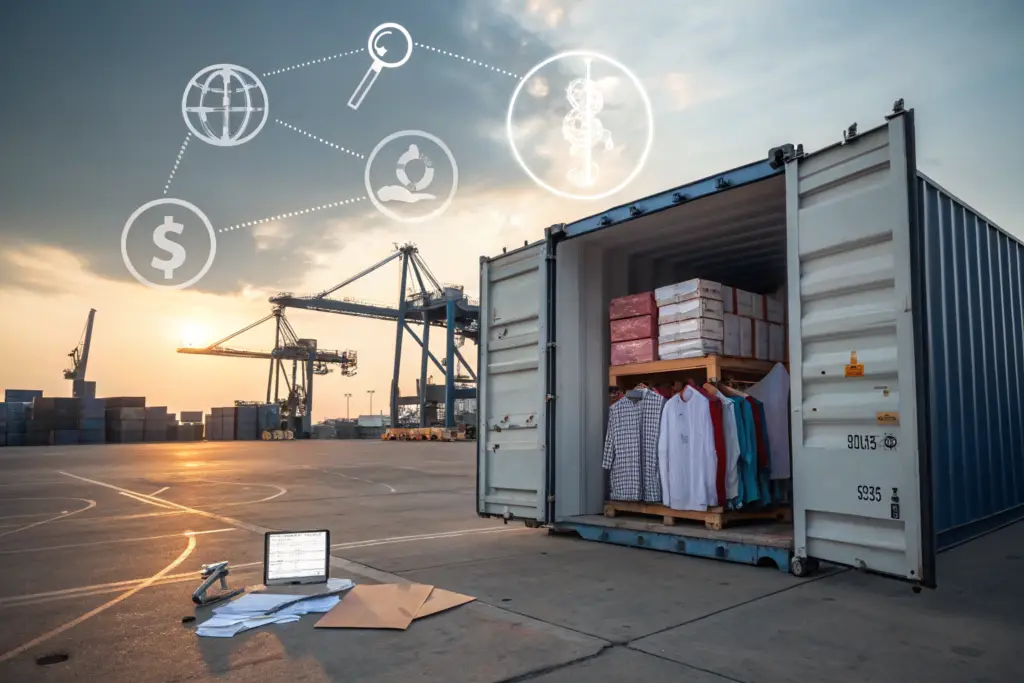
A distributor in Florida shared his profit and loss statement with me last year, completely bewildered. His landed cost on a container of classic chino shorts from Vietnam was supposed to be $8.50 per unit. His spreadsheet said so. But when his accountant ran the final numbers, the real cost was $11.20. He had lost nearly $30,000 on a single container. The culprit was not a bad factory price. The culprit was a swarm of small, silent costs he had never budgeted for: port demurrage, customs examination fees, a last-minute tariff reclassification, and an air freight emergency to cover a stock-out caused by the delay. He told me he would have been better off paying a higher FOB price for a supplier who managed the logistics properly.
The hidden costs of importing classic shorts from Asia include customs bond fees, port storage and demurrage charges, import duties based on complex fiber content classifications, unexpected logistics surcharges, and the cash-flow drain of carrying inventory during extended transit times.
The factory price is just the beginning of the story. The real story is told at the port of entry, in the customs broker's invoice, and on the trucking dispatch. At Shanghai Fumao, we have guided dozens of US brands through this maze. We have seen the same hidden costs bite unprepared buyers season after season. I want to pull back the curtain on these charges so you can budget accurately and protect your margins. This knowledge is the difference between a profitable import program and a financial headache.
What U.S. Customs and Import Duties Apply to Classic Cotton Shorts?
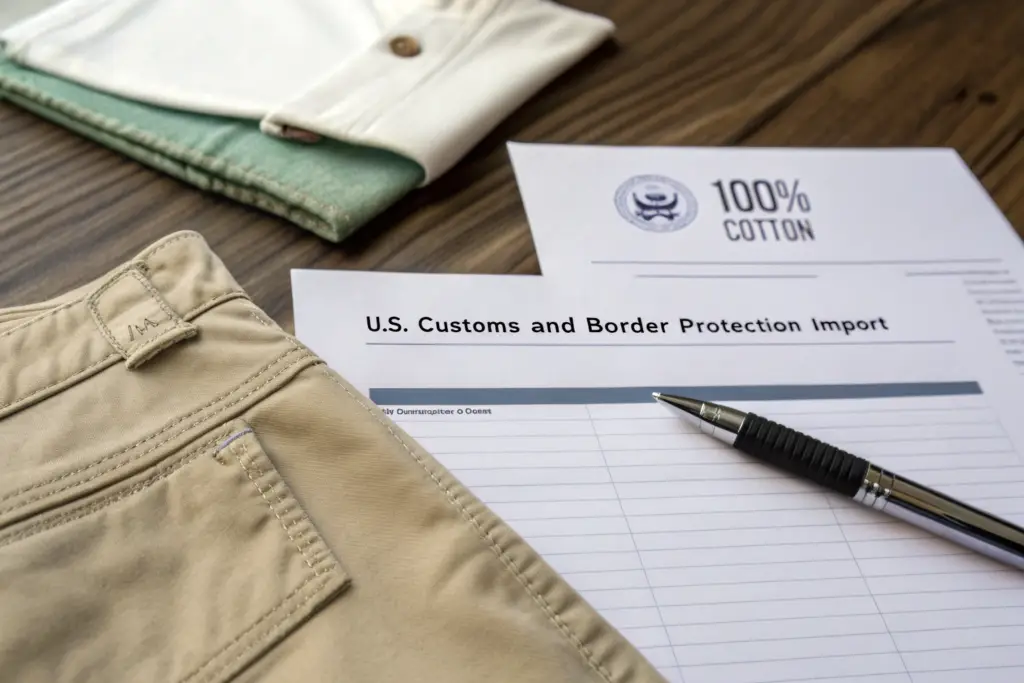
The Harmonized Tariff Schedule is a labyrinth, and the wrong turn costs you money. When you import classic shorts, you must classify them under a specific HTS code. The code determines your duty rate. The difference between one code and another can be 5% or more of the total shipment value. If your shorts are 100% cotton, the duty rate is one number. If they have a hint of polyester in the pocket lining, the duty rate might change. If customs decides your documentation is wrong, they do not just correct it politely. They issue a bill, plus penalties, and your goods sit in a warehouse racking up storage fees while the dispute drags on.
The import duty rate for classic cotton shorts is generally 16.5% under HTS 6203.42, but incorrect fiber content labeling, misclassification of the garment type, or errors in the country of origin documentation can trigger penalties, back duties, and customs holds that add thousands of dollars to a single shipment.
I had a client who imported a shipment of shorts with a cotton shell and a polyester pocket lining. He declared the garment as 100% cotton under HTS 6203.42. Customs pulled the shipment for examination. They tested the fabric. They found the polyester lining. The shorts were reclassified. The duty rate changed. He was billed $4,200 in additional duties and a penalty for misdeclaration. The shorts were held at the port for three extra weeks. The demurrage bill was another $2,800. A $0.10 piece of pocketing fabric cost him $7,000. Accuracy in classification is not optional. It is profit protection.
How Does the HTS Code for Shorts Differ from Trousers?
Shorts and trousers are different products in the eyes of customs. Trousers extend to the ankle. Shorts do not. This seems obvious, but the legal definitions in the HTS are precise and based on measurement. A pair of "clamdigger" or "Bermuda" shorts that falls below the knee might be argued by customs to be trousers if the inseam is long enough. The duty rate for trousers can differ from shorts. Always confirm your exact HTS code with your customs broker before shipping. The official HTS database is maintained by the U.S. International Trade Commission. You can search by material and garment type. But the database is complex. A licensed customs broker is worth every dollar of their fee when it comes to classification. Do not self-classify a commercial shipment without expert review.
What Is a Customs Bond and Why Must You Budget for It?
A customs bond is an insurance policy that guarantees the U.S. government will receive the duties owed. Every commercial import valued over $2,500 requires a bond. There are two types: a single-entry bond, which covers one shipment, and a continuous bond, which covers all shipments for a year. A single-entry bond costs roughly 0.5% to 0.7% of the shipment value. A continuous bond costs $300 to $600 per year, depending on your total import volume. If you are importing three or more containers a year, the continuous bond is cheaper. But many first-time importers forget to budget for this entirely. They learn about the bond requirement when their freight forwarder emails them a bill. Budget it in advance. Resources on bond requirements are available through U.S. Customs and Border Protection.
What Logistics Fees Are Often Missing from Freight Forwarder Quotes?
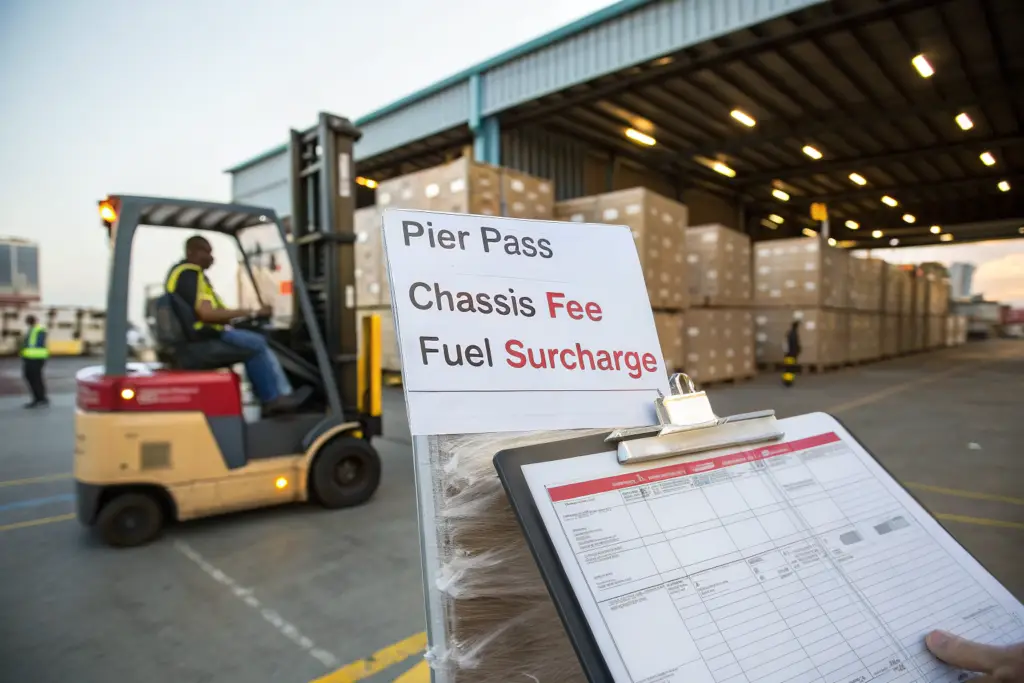
The freight quote you receive from a forwarder is usually a base rate. Ocean freight from Shanghai to Los Angeles: $2,800 per 40-foot container. You budget $2,800. The final invoice arrives at $4,600. You feel cheated. You were not cheated. You were just not quoted the full door-to-door cost. The base rate covers the vessel. It does not cover the terminal handling at the origin port, the documentation fee, the customs clearance at the destination, the pier pass fee to enter the terminal, the chassis fee to rent the trailer, or the fuel surcharge on the truck that delivers your goods to the warehouse.
Freight forwarder quotes often exclude Terminal Handling Charges, Pier Pass fees, chassis rental, fuel surcharges, and customs examination fees, which can collectively add 30-50% to the base ocean freight cost.
I always advise my clients to ask for an "All-In" door-to-door quote before comparing forwarders. An all-in quote includes origin charges, ocean freight, destination charges, customs clearance, and trucking. It is the only number that matters for your landed cost calculation. Any quote that is just a base ocean freight rate is a comparison trap. It looks cheap. It is not.
What Are Demurrage and Detention, and How Do They Erupt Unexpectedly?
Demurrage is the fee you pay when your container sits at the port terminal beyond the free days allowed by the shipping line, usually 3 to 5 days. Detention is the fee you pay when you keep the container at your warehouse beyond the free time for returning the empty box. These fees are brutal. Demurrage can run $150 to $300 per day. Detention is similar. If your customs clearance hits a snag, your goods sit. The meter runs. I saw a small brand rack up $4,500 in demurrage because their broker filed the entry documents one day late and the shipment missed the free-time window. The goods were only 6 days late, but the port had a 3-day free window. Three extra days at $300 per day on two containers. Nobody budgets for this. But it happens constantly. Tools like the Freightos freight rate marketplace can help you compare forwarders, but always confirm free-time policies in writing before booking.
Why Are Customs Examination Fees a Financial Wildcard?
Customs randomly selects a percentage of containers for examination. If your container is flagged, you pay for it. A VACIS X-ray exam might cost $200-$300. A tail-gate exam where officers open the container and physically inspect cartons can cost $1,000 to $2,500, including the cost of moving the container to the exam site, unloading, reloading, and drayage. You did nothing wrong. Your paperwork was perfect. You still pay. This is the "random inspection tax." It is not predictable per shipment, but it is statistically predictable over a year. If you import ten containers a year, budget for one or two exams. If you cannot absorb a $2,000 surprise fee, your margins are too thin for the import business. This is the reality.
How Do Payment Terms and Currency Fluctuations Impact Your True Cost?
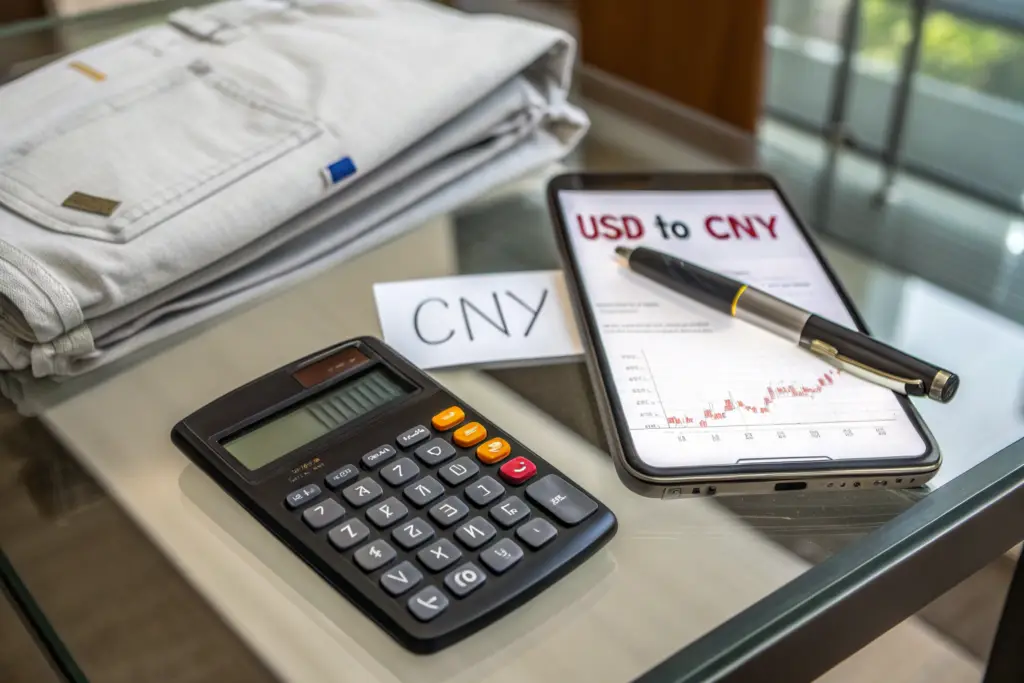
You negotiate a price of $8.00 per unit with your factory in China. The contract is signed in U.S. dollars. You think your cost is fixed. It is not. The factory's costs—labor, fabric, electricity—are all paid in Chinese Renminbi. If the dollar weakens against the Renminbi by 5% between the contract signing and the final payment, the factory loses money on your order. A good factory will absorb small fluctuations. A factory with razor-thin margins will look for ways to recover that loss. The quality of your next order might quietly decline. Or the factory will delay your shipment while they handle a client paying in stronger currency.
Currency exchange rate shifts between the U.S. dollar and the supplier's local currency, combined with supplier payment structures like Letters of Credit, can add 1-3% to the effective cost of goods and introduce supply chain instability.
I advise my long-term partners at Shanghai Fumao to discuss currency openly. If the Renminbi is strengthening, I may request a slight price adjustment to maintain quality. If the dollar is strong, I pass savings back. This transparency is rare, but it is the only way to prevent the silent quality erosion that happens when a factory is underwater on a fixed-dollar contract. You can monitor exchange rate trends on financial platforms like XE. Factor a 2% currency buffer into your annual sourcing budget. It is not a cost you will pay every season, but it is a cost you must be prepared to absorb.
What Is the Real Cost of a Letter of Credit Versus a Wire Transfer?
Many new importers are advised to use a Letter of Credit for security. An LC guarantees that the supplier gets paid only when they present compliant shipping documents to the bank. This sounds safe. But it is expensive. The bank charges an issuance fee, typically 0.5% to 1% of the LC value. There are amendment fees if the documents need changes. There are courier fees. There is the "discrepancy fee" if the supplier's documents have a typo, which they often do. A single LC transaction can cost $500 to $1,500 in bank fees. For a $30,000 order, that is 2-5% of the value. An alternative is a TT wire transfer with a 30% deposit and a 70% payment against a copy of the shipping documents or an inspection report. This is faster, cheaper, and practical once a trust relationship is established. More information on trade finance instruments is available from the International Chamber of Commerce.
How Does Payment Timing Affect Your Cash Flow and Warehousing Costs?
You pay the supplier before you sell the goods. A 30% deposit is due at order placement. The 70% balance is due on shipment. The goods then spend 4-6 weeks on the water. Once they arrive, you might hold them in a 3PL warehouse for another 2-4 months as you sell through. Your cash is tied up for four to six months from deposit to sale. This is a hidden cost because it is the lost opportunity to use that cash elsewhere. If your annual cost of capital is 8%, and $50,000 is tied up for six months, the carrying cost is $2,000. That is real money. Plan your order quantities so you can turn inventory quickly. A great factory price means nothing if your money is trapped in a warehouse full of unsold shorts.
What Quality Control and Compliance Costs Are Incurred After Production?
The factory has finished your order. The shorts are packed in cartons. You think the spending is over. It is not. Before you release the final payment, you need a third-party inspection. This costs $300 to $500 per day, depending on the inspection company and the location. Then, if you care about your brand's legal safety, you send a random sample from the shipment to a U.S. lab for fiber content verification and flammability testing. That is another $300 to $500. These are non-negotiable costs for a professional brand. Skipping them is a gamble where you are betting your company on a stranger's word.
Post-production costs include third-party AQL inspection, U.S. lab testing for fiber content and safety compliance, and potential warehousing and repacking charges if defects are found, all of which can add $0.15-$0.30 per unit to the landed cost.
A client once skipped lab testing to save $400. The shipment of children's shorts arrived. The fabric had excess lead in the snaps. A consumer group tested a pair bought at retail and published the results. The brand was forced to issue a recall. The $400 savings cost them $50,000 in legal fees, recall logistics, and destroyed brand trust. Testing is an insurance policy. You pay a small premium to avoid a catastrophic loss.
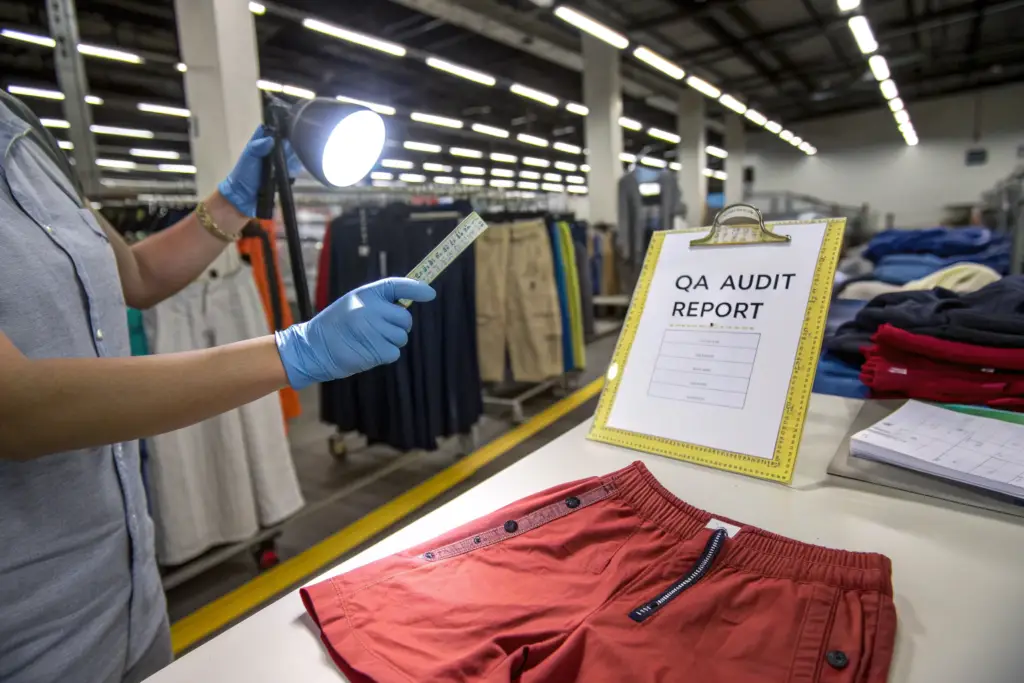
What Is the Cost of Third-Party Inspection and Why Is It Mandatory?
A third-party inspection by a company like SGS, Bureau Veritas, or Intertek costs between $300 and $500 per man-day. For a standard shorts order of 5,000 units, one inspector working one day can perform an AQL 2.5 inspection. This inspection verifies that the shipment matches your Golden Sample in terms of construction, measurements, and visual defects. The inspector randomizes the sample pull. You receive a report with photographs and a pass/fail recommendation. This report is your leverage to demand rework before you pay the balance. I tell all my partners: never pay the final 70% until the inspection report says PASS. The cost of the inspection is a fraction of the cost of a bad shipment.
Why Must You Budget for U.S. Lab Testing on Imported Goods?
Customs clears your goods based on paperwork. But U.S. consumer product safety laws require that your goods meet flammability standards under 16 CFR Part 1610 for wearing apparel. If you are making children's shorts, the CPSIA requires lead and phthalate testing. A customs clearance does not verify these things. Only a CPSC-accepted lab does. Budget $300-$500 per style for these tests. If your fabric or trim suppliers change anything between orders, test again. The liability for non-compliant goods rests entirely on you, the importer of record. The supplier in Asia has no legal exposure in U.S. courts. Testing is your shield. The Consumer Product Safety Commission website outlines the mandatory testing requirements. Read them.
Conclusion
The sticker price on a factory invoice is a mirage. The real cost of importing classic shorts is a stack of invoices from freight forwarders, customs brokers, inspection agencies, and testing labs. The buyer who budgets only the FOB price is the buyer who loses money on a deal they thought was a bargain. The buyer who budgets for HTS duty at 16.5%, a customs bond, all-in door-to-door freight, an AQL inspection, lab testing, a 2% currency buffer, and the carrying cost of inventory is the buyer who stays profitable season after season.
These hidden costs are not secrets. They are known line items in a professional sourcing calendar. The difference is that experienced importers plan for them, and inexperienced importers are ambushed by them. The choice is yours. Build a landed cost model that accounts for every checkpoint between the factory floor in Shanghai and your warehouse in the United States. If the number still works, you have a viable business. If the number breaks, do not pretend the hidden costs will not find you. They will.
At Shanghai Fumao, we work with our US partners to ensure there are no surprises on the logistics side. We provide verified HTS classification guidance, coordinate directly with your forwarder to prevent demurrage, and our quality control system is built around passing third-party inspections the first time. If you want a manufacturing partner who understands the full picture of your landed cost, let's talk. Contact our Business Director, Elaine, at elaine@fumaoclothing.com. Share your target FOB price and we will help you map out the realistic total landed cost for your next classic shorts program.