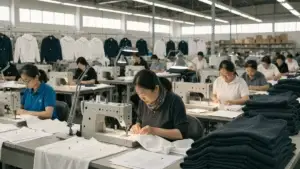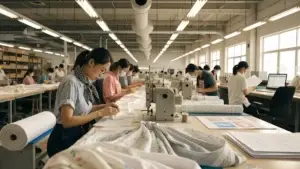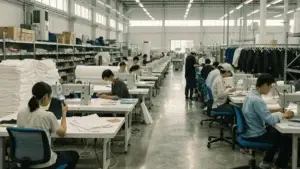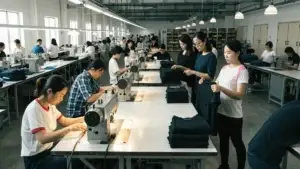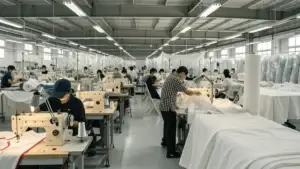
A brand owner from Texas sat across from me at a trade show two years ago, visibly frustrated. He had been sourcing classic cotton shorts from the same factory in another country for three seasons. Every season, the price crept up 3%. Every season, the fabric felt slightly thinner. He was caught in a trap. He could not switch suppliers easily because he had invested months in the relationship. And the supplier knew it. He asked me how to break this cycle. I told him the negotiation for next season's price starts the day this season's shipment lands. He had been negotiating reactively. He needed to negotiate structurally.
Effective price negotiation for bulk classic shorts depends on removing hidden cost drivers—inefficient fabric consumption, unnecessary trim complexity, and poor production scheduling—rather than simply demanding a discount from the factory's margin.
A good factory wants to give you a fair price. A desperate factory will promise you an impossible price and then steal from the fabric quality. The goal is not to find the cheapest quote. The goal is to find the lowest price at which the specified quality can be delivered consistently. At Shanghai Fumao, we prefer partners who understand this distinction. Negotiation is a collaboration on cost engineering. Let me show you exactly how to structure that conversation so you win on price without losing on quality.
What Cost Breakdown Should You Request Before Starting Price Negotiation?
You cannot negotiate what you cannot see. Most buyers negotiate blind. The supplier says "$8.50 per unit." The buyer says "$8.00." They go back and forth until someone gets tired. This is not negotiation. This is emotional bargaining. A real negotiation starts with a detailed BOM, or Bill of Materials, that breaks down the cost of every single component in the short. If your supplier cannot or will not provide this breakdown, you are not negotiating with a manufacturer. You are negotiating with a middleman who is protecting a hidden margin.
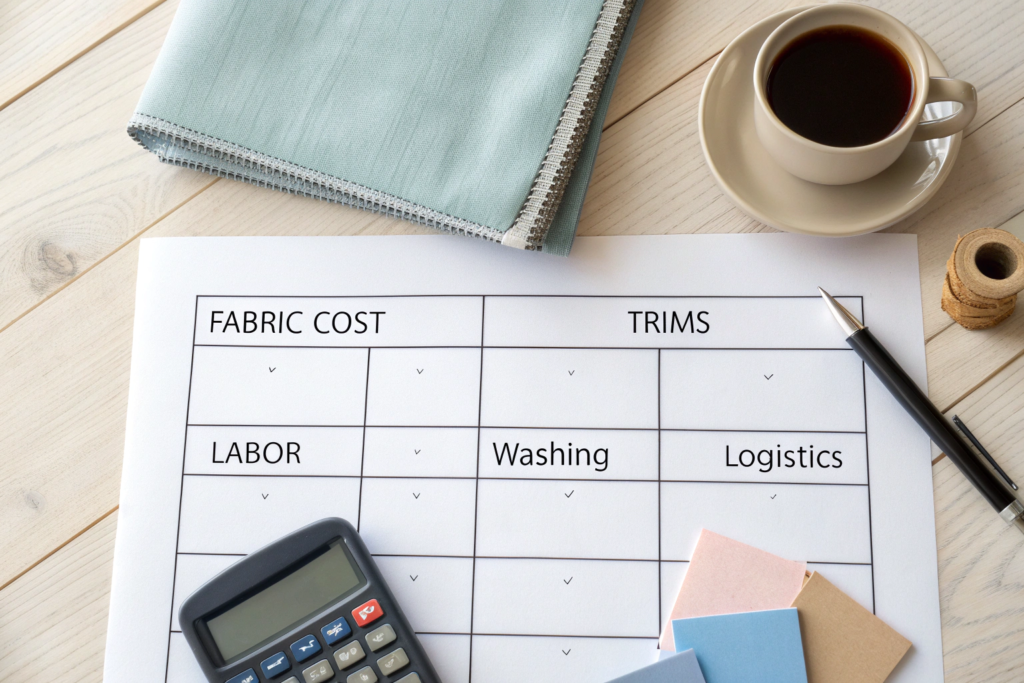
A complete cost breakdown separates the price of fabric, trims, labor, washing, and overhead, allowing you to identify exactly where cost savings can be achieved without cutting corners on quality.
I once helped a client analyze a BOM from a competing factory. The fabric cost was $3.20 per yard. Market price for that quality was $2.80. The supplier was marking up the raw material. We moved the fabric sourcing to a nominated mill and immediately saved $0.40 per yard without changing the fabric at all. The negotiation was not about the factory's profit. It was about removing an unnecessary markup on a commodity input. This is the power of seeing the breakdown.
What Are the Key Line Items on a Standard Apparel BOM?
A proper BOM for a classic short has five core sections. First, Fabric Cost: the price per yard or meter, the consumption per unit, and the total fabric cost per piece. Second, Trim Cost: zippers, buttons, labels, hangtags, drawcords, and interlining. Third, Labor Cost: the cost of cutting, stitching, and finishing one unit. Fourth, Washing or Finishing Cost: garment dye, enzyme wash, or any wet processing. Fifth, Overhead and Profit: the factory's operational costs and margin. Ask to see consumption calculations specifically. If the factory marks the fabric consumption at 1.5 yards per short but the efficient marker shows 1.3 yards, you are paying for 0.2 yards of waste. The industry standards for marker efficiency are well-documented by organizations like The Manufacturer. Request the actual marker plan.
How Do Fabric Consumption Figures Reveal Hidden Costs?
Fabric is the single biggest cost in a pair of shorts, typically 50-60% of the total cost. A small error in consumption multiplies across a bulk order. If the factory estimates consumption at 1.6 yards but a tight marker can cut the short from 1.45 yards, that 0.15-yard difference on a 10,000-unit order at $3.00 per yard is $4,500. That is pure waste. Ask the factory: "Show me the marker efficiency percentage on this style." A well-managed factory aims for 85% efficiency or higher. Anything below 80% means too much fabric is ending up on the cutting room floor as scrap. By insisting on tight marker planning, you reduce the cost without touching the fabric quality at all. For further reading on cutting room efficiency, Apparel Resources provides case studies on how top factories optimize fabric utilization.
How Can You Standardize Trims to Lower Costs Without Losing Brand Identity?
Custom trims are the silent budget killer. A custom-molded button with your logo costs a mold fee of $300 and a per-unit cost of $0.15. A standard horn button from a trim catalog costs $0.04 with no mold fee. Both buttons hold the waistband closed. One costs three times as much and adds three weeks to your lead time. The question you must ask yourself is whether your customer will pay extra for that button. If the answer is no, you just bought an ego detail that eroded your margin.
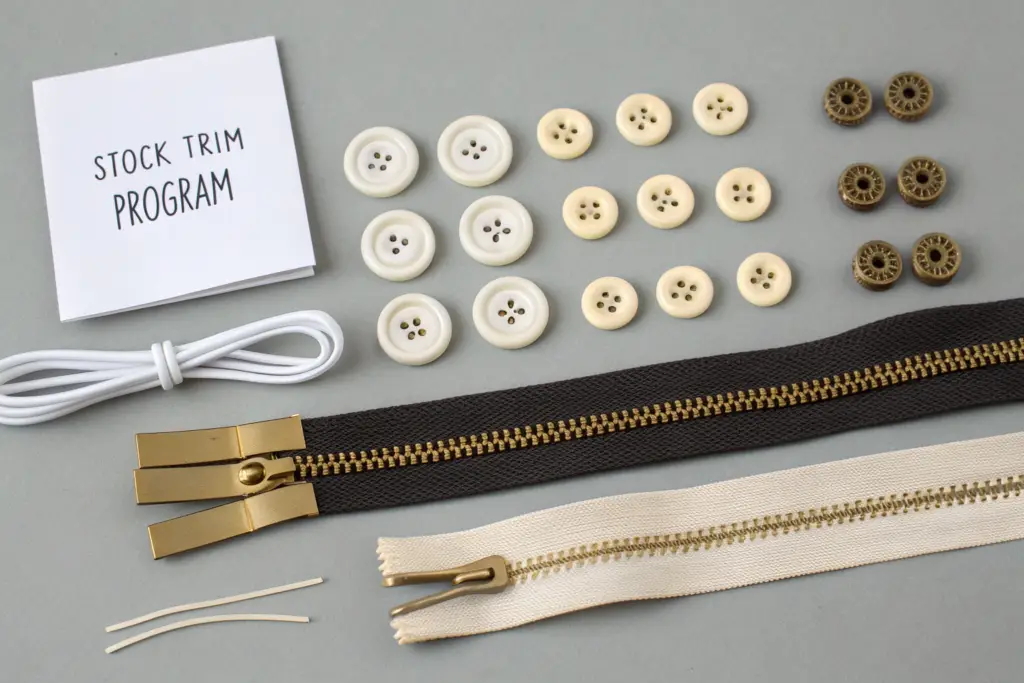
Standardizing on stock trims—YKK zippers, generic horn or corozo buttons, and basic woven labels—can reduce per-unit trim cost by 40-60% compared to full custom hardware without any loss in functional quality.
A client I advised last year was designing a classic chino short. He wanted a custom-branded metal rivet on the coin pocket. The rivet mold alone was $200. The per-rivet cost was $0.12. He was making 5,000 shorts. That single rivet cost him $800. I asked him if the coin pocket rivet would sell one extra pair of shorts. He paused. Then he removed it and used a bar-tack reinforcement instead. The short looked cleaner. The function was identical. He saved the full $800. These are the decisions that separate profitable brands from struggling ones.
Why Should You Specify YKK Zippers as Your Default Specification?
The zipper is the most functional component on the short. If the zipper fails, the short is unwearable. YKK is the global gold standard. Their zippers are tested to tens of thousands of cycles. A generic zipper might save you $0.10 per unit but carries a failure risk. Returns for broken zippers destroy your margin faster than any trim cost saving. By specifying YKK as the default, you eliminate a negotiation variable. The factory cannot swap in a cheaper alternative to pad their margin. The price is transparent. The quality is guaranteed. At Shanghai Fumao, we stock the full YKK color card for standard brass and nylon coil zippers. This allows our partners to match their fabric colors without custom ordering. The global supply reliability of YKK is documented extensively on the YKK Fastening Network.
How Does Switching to a Woven Label Reduce Cost vs. a Printed Label?
This is a small detail with a compounding effect. A high-density woven label has a premium texture and lasts the life of the garment. A screen-printed label is cheaper initially but fades and cracks after repeated washing. A faded label makes the entire short look old and cheap, even if the fabric is still good. The cost difference is perhaps $0.08 per label. Over 10,000 units, that is $800. For that $800, you protect the perceived quality of your brand for the entire life cycle of the garment. This is a cost you should not cut. I tell my partners to invest in woven labels and save on hidden trims like internal pocket bags. A standard poly-cotton pocketing does the job. A fancy striped pocketing that no one sees does not. Put your brand money where the customer's eyes go.
When Should You Schedule Your Bulk Orders to Secure the Lowest Prices?
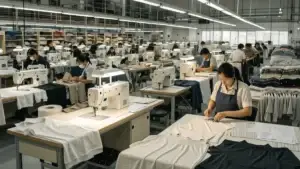
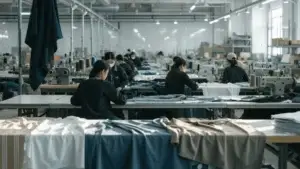
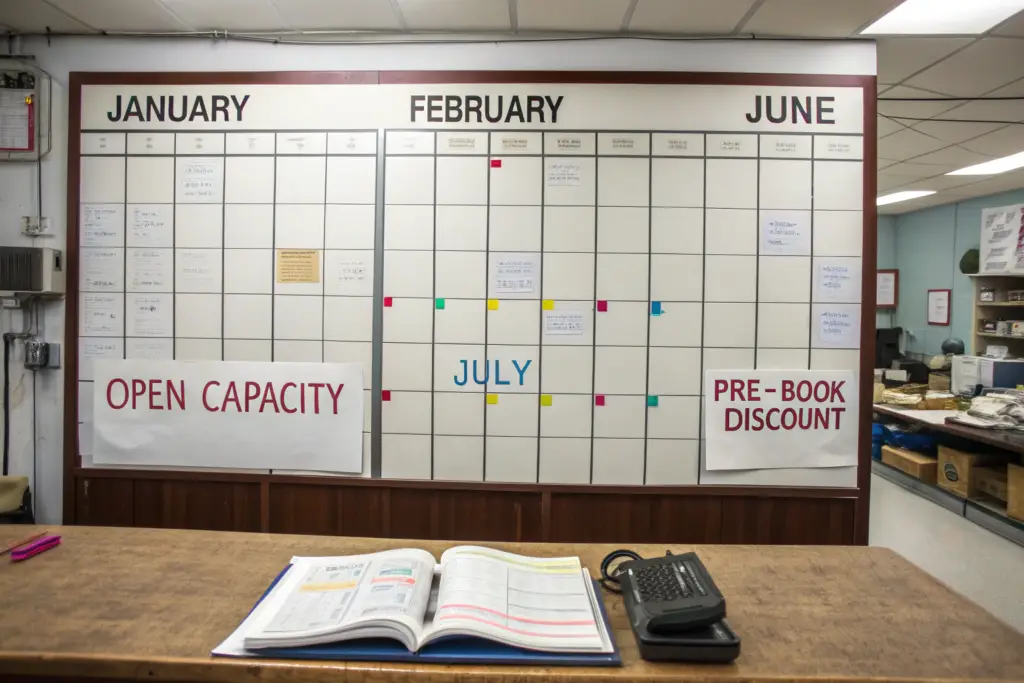
Timing is a pricing lever that costs you nothing but can save you 10-15% on your per-unit cost. Factories have a heartbeat. Peak season is chaos. Off-season is a drought. During the peak months—typically August through October for spring/summer production—a factory's capacity is fully booked. They will only take your order if you pay a premium for overtime and rush scheduling. During the off-peak months—January, February, June, July—the same factory is hungry. The machines are idle. The workers are still being paid. The factory owner will accept a lower margin just to keep the lines running.
Scheduling bulk production during factory off-peak months and committing to a forward-booking calendar can reduce per-unit labor costs by 10-15%, as factories prioritize partners who help them level their production capacity.
I negotiated a $0.55 per unit reduction for a brand partner simply by shifting their production window from September to July. They placed the deposit in May. The fabric was ready in June. The cutting started the first week of July. The factory was quiet. The manager gave us his best line supervisor and his fastest machines because he had no competing orders. The shorts were finished in 25 days instead of 40. The quality was better because the workers were not exhausted from overtime. The brand saved $5,500 on a 10,000-unit order and got better quality. That is the power of strategic scheduling.
What Are the Typical Peak and Off-Peak Seasons for Shorts Manufacturing?
The apparel supply chain runs on a seasonal calendar. For classic shorts targeting the US spring/summer selling season, the production cycle is backward-planned from the retail floor-set date. Most brands want goods in their warehouse by February or March for a April/May floor set. This means production happens the previous August through October. Those three months are the absolute peak. Factories run seven days a week. Prices are at their maximum. If you can plan ahead and cut your shorts in June or July for the following year, you negotiate from a position of strength. The factory needs your order to cover its fixed costs during the summer lull. You become a valuable partner, not just another buyer in a long queue. The seasonal demand patterns in manufacturing are discussed in detail by industry analysts at Fibre2Fashion.
How Does Forward-Booking and Deposit Structure Affect Your Pricing Power?
A factory wants predictability. If you place a single purchase order for 5,000 shorts with a 30-day lead time, you are a transactional buyer. The factory will price your order with a risk premium built in because they do not know if you will ever return. If you present a forward-booking plan for three seasons—say 5,000 units in Spring, 5,000 in Summer, and 3,000 in Fall—you are a strategic partner. You are offering revenue visibility. In return, the factory can offer a locked-in price for the full year, protecting you from raw material price fluctuations. You can also negotiate a deposit structure: 30% upfront to secure the production slot, 50% on shipment, and 20% on delivery. A solid deposit and a multi-order commitment are worth more to a factory than a 5% price premium on a one-off deal. Resources on supply chain finance and contract structures are available through Supply Chain Dive.
How to Lock in Quality Standards While Negotiating a Lower Price?
The riskiest moment in any negotiation is when the price goes down and the spec sheet gets blurry. A factory that agrees to a steep discount may start looking for ways to recover that margin quietly. The fabric gets lighter. The stitch density drops. The waistband interlining gets thinner. You only discover these changes when the shipment arrives and your customer complains. To prevent this, you must lock quality into the contract with the same force that you lock the price.
Locking quality requires a sealed approval sample, a signed fabric GSM specification, and a contractual AQL inspection threshold that is tied to the payment terms, ensuring no price reduction can come from hidden material downgrades.
I learned this lesson early in my career. We negotiated a great price on a large order. Six weeks later, the shipment arrived. The shorts were 20 GSM lighter than the approved sample. The factory had switched to a cheaper, lighter yarn to recover their margin. We had no legal recourse because the GSM was not written into the contract. The brand had to sell the shorts at a discount. Since that day, I have never signed a purchase agreement without a physical sealed sample and a written material specification sheet attached as a contractual addendum.
What Is a Golden Sample and Why Must It Be Sealed and Signed?
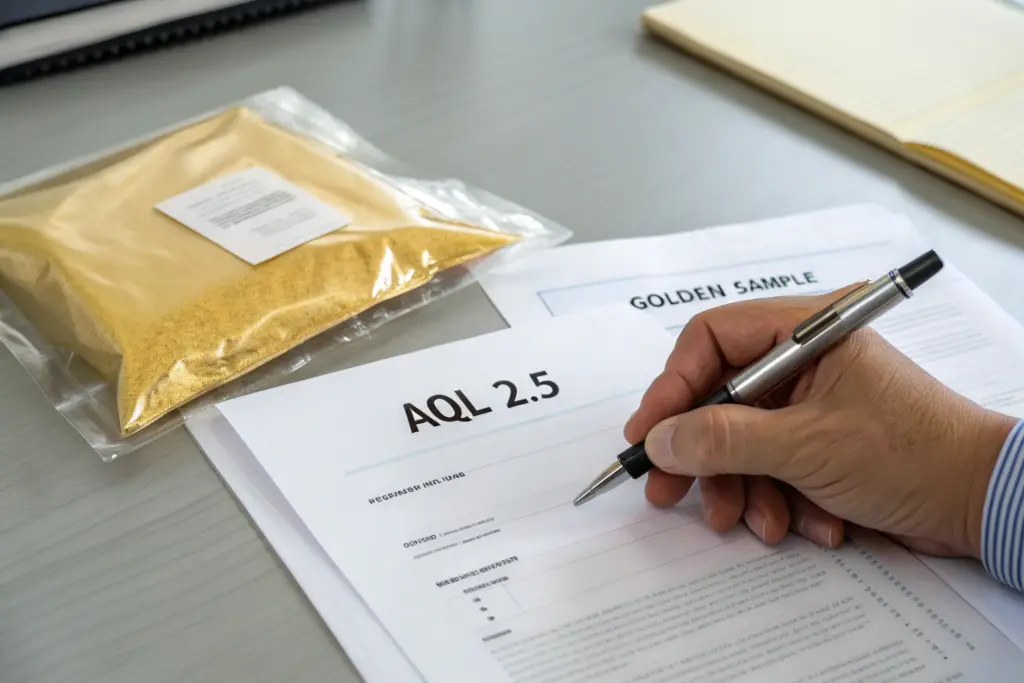
The Golden Sample is the physical reference standard. It is the pair of shorts that you and the factory both sign off on as the exact representation of quality, fit, and construction. During the negotiation, before you sign the contract, the factory produces this sample. You inspect it. You approve it. Then both parties sign a tag attached to the sample, and it is sealed in a tamper-proof bag. This sealed sample is the legal standard. If the bulk shipment deviates from the Golden Sample in material, stitching, or dimensions, the shipment is rejectable. This removes the factory's ability to argue that "this is our normal quality." The Golden Sample defines what normal means for your order. The process of sample sealing is a standard practice aligned with ISO quality documentation, as outlined by ISO.
How Do You Tie the AQL Inspection Result to the Final Payment?
Do not pay the full balance before quality is verified. Structure the contract so that the final 30% balance payment is released only after a third-party inspection passes the agreed AQL standard. The inspection company, such as SGS or Bureau Veritas, pulls a random sample from your bulk shipment. They check it against your Golden Sample and your spec sheet. If the shipment passes AQL 2.5, the payment is released. If it fails, the factory must rework the goods and submit them for re-inspection at their own cost. This gives the factory a powerful financial incentive to maintain quality throughout production, not just on the samples. For guidance on structuring these inspection terms, the International Trade Centre offers templates and best practices for apparel sourcing contracts.
Conclusion
Negotiating a competitive price for classic shorts is not about being the toughest person in the room. It is about being the most informed. You need to see the cost breakdown so you can attack waste, not the factory's legitimate margin. You need to standardize your trims so your brand looks premium without paying custom-mold fees on invisible components. You need to schedule your orders during the off-peak window when factory hunger works in your favor. And above all, you need to lock your quality specifications into a sealed sample and a payment-contingent inspection clause. These four strategies transform you from a transactional buyer into a strategic partner who earns better pricing through smarter sourcing.
The factory relationship is a partnership, not a battle. The best price comes when the factory sees you as a reliable, long-term account that helps them run their business efficiently. Efficient factories make more money. Partners who help them be efficient deserve to share in those savings. That is the foundation of a sustainable pricing negotiation.
If you are ready to discuss a bulk classic shorts program and want to work with a factory that provides full cost transparency, I welcome you to reach out to us at Shanghai Fumao. We share our BOM, our marker efficiency data, and our trim sourcing options openly with our long-term partners. You will know exactly what you are paying for and why. Contact our Business Director, Elaine, at elaine@fumaoclothing.com to request a sample cost breakdown for your target style. Let's build a pricing structure that works for your margin and your quality standards.