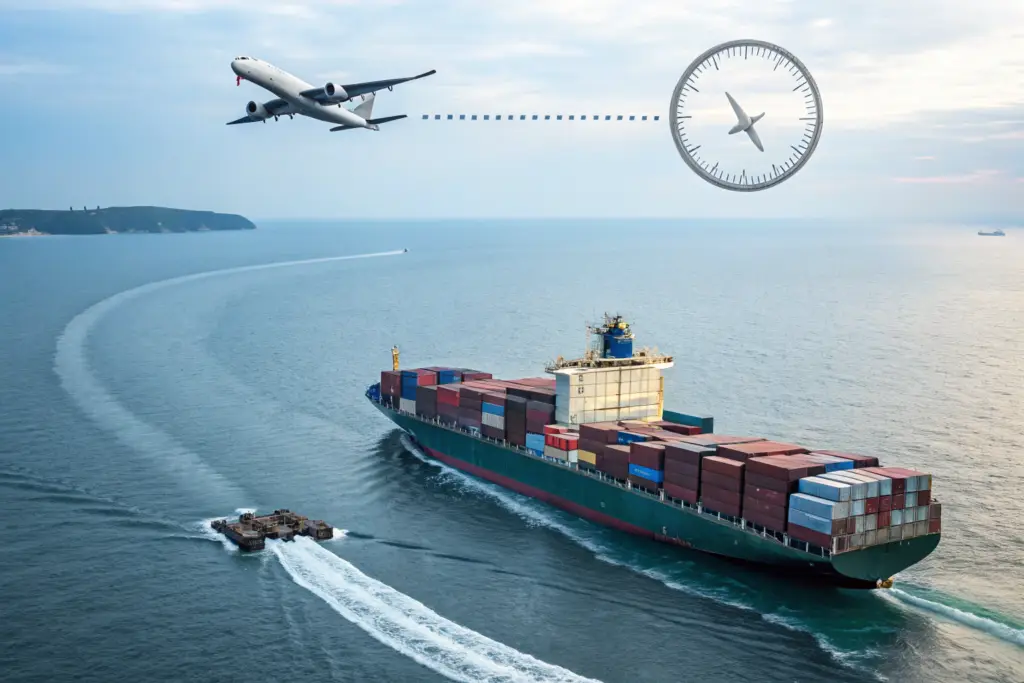
Last November, a mid-size womenswear brand from Portland faced a crisis I have seen too many times. Their production of 2,500 quilted vests finished ten days late because the custom zipper pulls arrived behind schedule. The delivery deadline to their major department store account was December 5th. Pure ocean freight from Shanghai to Los Angeles would take 22 days, arriving well after the deadline and missing the holiday floor set entirely. Pure air freight would cost $9,200, consuming 18% of their gross margin on the order. The brand owner called me, caught between losing the account and losing the profit. I proposed a sea-air hybrid through Incheon. The goods shipped by ocean to Korea in two days, transferred to air freight, and arrived in Los Angeles six days later. Total transit was eight days. Total freight cost was $4,600, roughly half the pure air quote. The goods arrived on December 2nd. The margin survived. The department store relationship survived.
Combining air and sea freight, known as sea-air hybrid logistics, gives mid-size apparel brands a cost structure that splits the difference between the slowness of ocean and the expense of air. The goods travel the long-haul leg by sea at a fraction of the air rate, then transfer to air at a logistics hub for a fast final leg. The total transit time is 40% to 60% shorter than pure ocean, and the total cost is 40% to 60% lower than pure air. For apparel orders in the 500 to 5,000 unit range, where the order volume is too large for economical express air but too urgent for standard ocean, sea-air is the logistics strategy that saves both the season and the margin.
Mid-size apparel brands are trapped in a logistics gap. They are too big to use express parcel services economically, but too small to negotiate the aggressive air freight contracts that large retailers command. Their orders are substantial enough that a missed delivery window is financially painful, but not so large that the air freight premium is easy to absorb. Sea-air is the bridge across that gap. Let me explain exactly how the model works, what it costs, and how to build it into your seasonal planning so it is ready when production runs late.
What Is Sea-Air Freight and How Does the Transshipment Process Work?
Sea-air freight is not a single mode of transport. It is a carefully choreographed handoff between two modes. The goods depart the origin port in a sea container consigned to a freight forwarder's warehouse at a transfer hub. The sea leg takes the cargo from the manufacturing country, China, Vietnam, India, to a logistics hub with a major airport and a free-trade-zone infrastructure that allows cargo to move from port to airport without a full domestic customs clearance. The most established hubs for this operation are Dubai, Incheon in Korea, Singapore, and increasingly, Colombo in Sri Lanka. At the hub, the container is deconsolidated. The cartons are transferred from sea pallets to air pallets. The air leg then flies the cargo to the final destination airport.
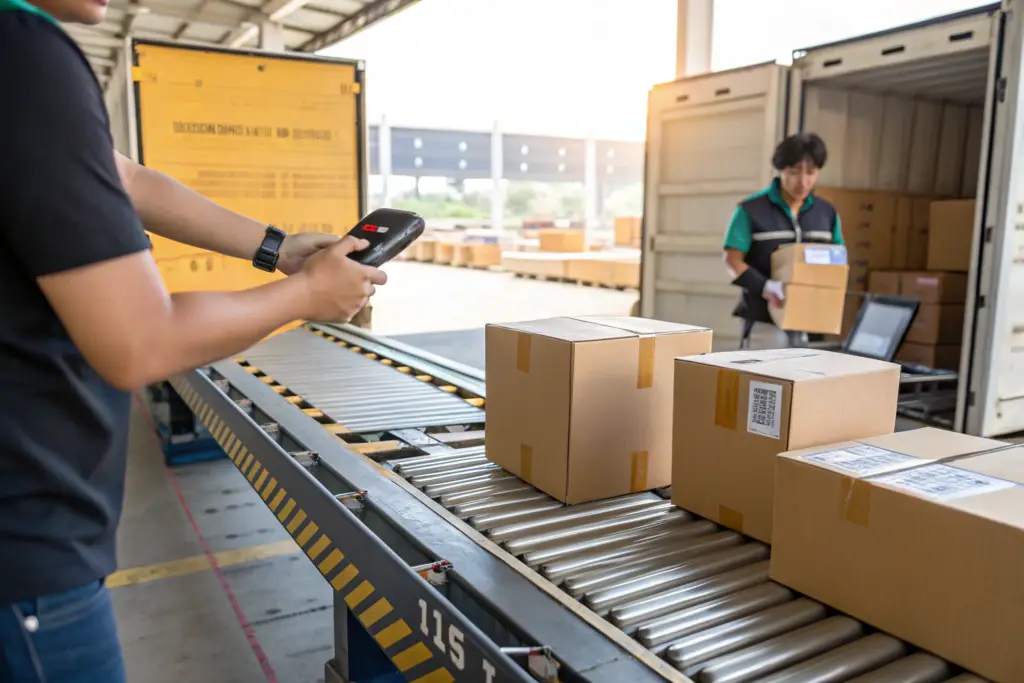
The sea-air transshipment process moves cargo from an origin port to a transfer hub by ocean, deconsolidates the container at the hub, rebuilds the cargo onto air freight pallets, and flies the cargo to the destination airport, all under a single transit document managed by the freight forwarder. The transfer time at the hub is typically 24 to 72 hours. The key to an efficient transfer is pre-filed documentation, carton-level scanning at the handoff, and a forwarder with a dedicated team at the hub who manages the physical transfer rather than outsourcing it to a local agent.
I have used sea-air corridors for orders ranging from 800 units of knitwear to 4,500 units of lightweight woven shirts. The process works best when the forwarder controls both the ocean and air legs, and when the hub operation is managed by the forwarder's own staff rather than subcontracted. A subcontracted hub transfer introduces communication delays and accountability gaps. A forwarder with an owned office at the hub can resolve a missing carton in hours, not days. Here is how the specific hub options compare and what determines whether sea-air is the right choice for your order.
Which Transfer Hubs Offer the Fastest and Most Reliable Sea-Air Connections?
The hub choice determines the total transit time and the transfer reliability. Dubai has the highest volume of sea-air traffic and the most established infrastructure. The Jebel Ali port and the Dubai World Central airport are connected by a dedicated logistics corridor. Transfer times are consistent at 24 to 48 hours. The risk of delay is low because the volume keeps the process running smoothly. Dubai works best for shipments destined for Europe, the Middle East, and Africa.
Incheon in Korea is the fastest hub for shipments destined for the US West Coast. The sea leg from Shanghai or Qingdao to Incheon is only one to two days. The air leg from Incheon to Los Angeles is 10 to 12 hours. Total transit can be as short as five to six days. Incheon also benefits from a high frequency of cargo flights to the US, which reduces waiting time at the hub. Singapore is the hub for shipments destined for Australia and New Zealand. Colombo is emerging as a lower-cost alternative for shipments to Europe, though flight frequencies are lower and transfer times can be more variable. The choice of hub should be driven by the destination, not by the forwarder's convenience. I maintain relationships with forwarders who have strong operations in both Dubai and Incheon, so I can route each shipment through the optimal hub.
How to Determine If Your Order Volume Qualifies for Sea-Air Economics?
Sea-air is not efficient for very small or very large shipments. If your order is under 300 kilograms, express air freight or a consolidated air service will likely be cheaper on a total cost basis because the sea-air transfer fees have a minimum charge that does not scale down. If your order is over 5,000 kilograms, a full air charter or a dedicated air freight contract may achieve a per-kilogram rate that is competitive with sea-air, without the transfer complexity.
The sweet spot for sea-air is between 500 and 3,000 kilograms of chargeable weight. This covers most mid-size apparel orders in the 500 to 5,000 unit range, depending on garment weight. A 2,000-unit order of lightweight blouses at 0.3 kilograms per unit is 600 kilograms, well within the sea-air sweet spot. A 2,000-unit order of heavy denim jackets at 1.2 kilograms per unit is 2,400 kilograms, still within the range. The economics also depend on the air freight rate differential between the hub and the origin. If the air freight rate from the hub to the destination is significantly cheaper than the rate from the origin to the destination, sea-air captures that differential. This is often the case for shipments from China to Europe via Dubai, where the Dubai-to-Europe air rate is lower than the Shanghai-to-Europe air rate because of higher cargo capacity and competition out of Dubai.
How Much Can a Mid-Size Brand Save by Choosing Sea-Air Over Pure Air Freight?
The cost savings of sea-air over pure air are driven by a simple fact: ocean freight costs roughly one-tenth of air freight per kilogram-kilometer. The sea-air model applies the ocean rate to the long-haul leg, typically 70% to 80% of the total distance, and applies the air rate only to the final leg. The savings are substantial, but they come with a time premium over pure air. The brand must weigh the savings against the time cost.
A typical sea-air shipment from China to the US West Coast saves 45% to 55% compared to pure air freight, while adding five to seven days of transit time. A sea-air shipment from China to Europe saves 40% to 50% compared to pure air freight, while adding four to six days. For a mid-size apparel order with a freight cost of $8,000 by pure air, the sea-air option reduces the freight bill by $3,600 to $4,400. This savings flows directly to the gross margin on the order. Over a season with multiple late-production situations, the cumulative savings can be the difference between a profitable year and a break-even year.
The freight savings is not the only financial benefit. The sea-air option also avoids the inventory carrying cost of goods that arrived too late for the season. A shipment that misses the selling window by two weeks is not just a freight issue. It is a liquidation issue. The sea-air shipment that arrives on time preserves the full-price sell-through, which is often a much larger financial impact than the freight savings itself. Here is a real scenario calculation and how to build this model into your production budget.

What Is a Realistic Cost Scenario for a 2,000-Unit Jacket Order?
Let me walk through an actual scenario we priced for a brand in early 2025. A 2,000-unit order of lightweight nylon jackets, total chargeable weight 2,200 kilograms, shipping from Shanghai to Chicago.
Pure ocean freight, port-to-port, 28 days: $1,850. Pure air freight, airport-to-airport, 5 days: $9,400. Sea-air via Incheon, ocean to Incheon 2 days, transfer 1 day, air to Chicago 2 days, total 5 days transit: $4,800. The sea-air option saved $4,600 compared to pure air, a 49% reduction, while adding zero effective days to the transit time because the pure air and sea-air both arrived in five days in this specific routing. The brand also avoided a potential chargeback from their retail partner for late delivery, which would have been 3% of the wholesale invoice value, or approximately $4,000 on this order. The combined freight savings and avoided penalty exceeded $8,000. The sea-air decision was not a cost. It was a profit protection move.
How to Include a Sea-Air Contingency in Your Seasonal Production Budget?
I recommend that every brand partner build a sea-air contingency line into their seasonal production budget. The formula is simple. Estimate the total freight spend for the season assuming all orders ship by ocean. Then add a contingency of 15% of that ocean freight budget, earmarked for sea-air upgrades on any orders that miss their ocean cutoff dates. This contingency is not a cost forecast. It is an insurance premium against late production.
If the season runs smoothly and no orders are late, the contingency is not spent. If production is late, the contingency is drawn down to pay for the sea-air upgrade. The brand does not need to find the extra cash in a panic. The cash is already allocated. This approach transforms a crisis-driven logistics decision into a planned financial strategy. I sit with our brand partners during the pre-production meeting and agree on the cutoff dates for each order. If the finished goods inspection passes after the ocean cutoff date, we automatically quote the sea-air option. The brand approves the quote from a position of preparation, not panic.
What Are the Hidden Risks and How Do You Mitigate Them?
Sea-air is not without risk. The transfer hub is a point of vulnerability. The cargo is handled twice, once when the container is unloaded from the vessel and again when the cartons are rebuilt onto air pallets. Each handling event is an opportunity for loss, damage, or delay. A carton can be misplaced during deconsolidation. A shipment can be held at the hub for a random customs inspection. A flight can be delayed, and the next available flight may be two days later. These risks are manageable, but they require specific mitigation measures that a brand should demand from their forwarder before the first sea-air shipment.
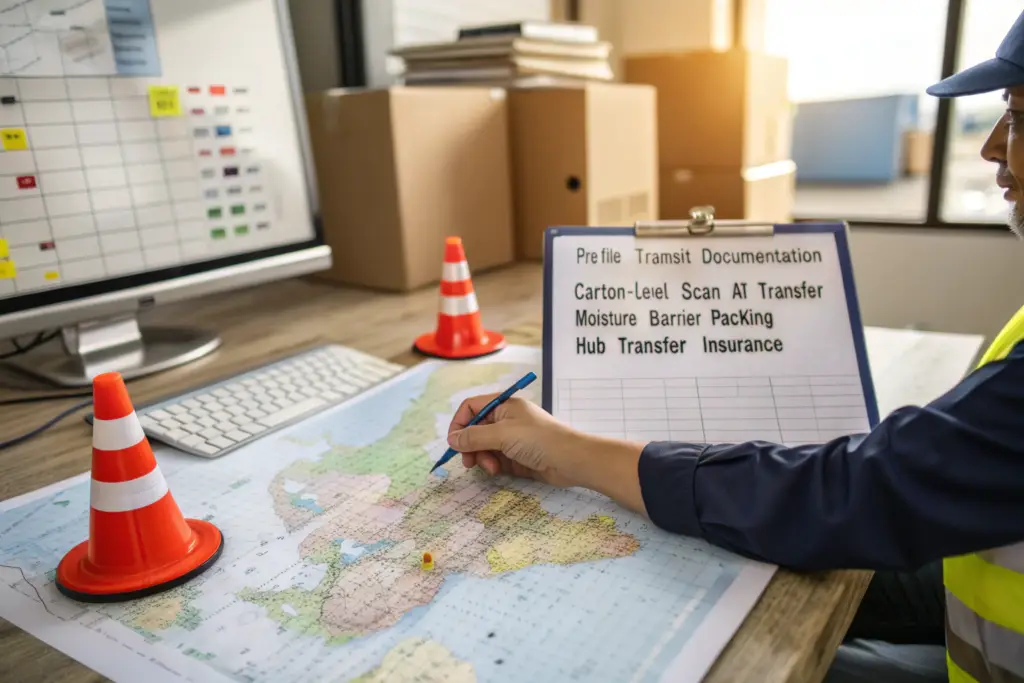
The primary risks of sea-air freight are cargo loss or misrouting during the hub transfer, moisture damage during the ocean leg that is not discovered until the cargo reaches the destination, and flight delays at the hub that extend the transit time beyond the planned window. These risks are mitigated by requiring carton-level scanning at the hub transfer, using moisture-indicator cards inside each carton and moisture-barrier packaging, and booking air freight on the forwarder's "consolidated" air waybill rather than as an individual shipment, which provides more flexibility to switch flights if a connection is missed.
I learned these risks the hard way. An early sea-air shipment I arranged lost a carton during the Dubai transfer. The carton was later found in a corner of the warehouse, missed during the deconsolidation sweep, but the discovery took four days. The destination consignee received 19 cartons out of 20, and the missing carton contained a specific size run that the brand needed for a retail display. Since that experience, I have required specific transfer protocols from every forwarder. Here is how to protect your cargo through the transfer and how to insure sea-air shipments correctly.
How to Protect Cargo Integrity During the Sea-to-Air Transfer?
The ocean leg of a sea-air shipment is short, typically one to seven days, but the cargo still faces the marine environment. Humidity inside a container can rise and condense on cold surfaces, especially when the container moves from a warm port to a cooler climate. If the cartons absorb moisture during the ocean leg and are then loaded onto an aircraft, the moisture is trapped and can cause mold or mildew by the time the goods reach the destination.
The solution is moisture-barrier packaging. Each carton should be lined with a polyethylene bag or contain a desiccant pack. A moisture-indicator card placed inside one carton per pallet provides a visual check at the destination. If the card shows high humidity exposure, the brand knows to inspect the goods immediately rather than putting them into inventory. Additionally, the cartons should be palletized and stretch-wrapped for both the ocean and air legs. Loose cartons are more likely to be lost during deconsolidation. Palletized cargo is handled as a unit, reducing the risk of individual carton misplacement.
What Insurance Coverage Applies to Multi-Modal Shipments?
Standard marine cargo insurance covers point-to-point transit, but the sea-air transfer introduces a complication. The insurance policy must explicitly cover the goods during the transfer period at the hub, including while the cargo is in the forwarder's warehouse awaiting the air leg. A policy that covers "port-to-port" or "airport-to-airport" may have a gap during the ground transfer and warehouse storage at the hub.
I require our forwarders to provide an "all risks" cargo insurance policy that covers the goods from the factory loading dock to the final consignee's warehouse, explicitly including any intermediate warehousing and handling. The premium for this comprehensive coverage is marginally higher than standard coverage, typically an additional 0.1% to 0.2% of the cargo value, but the coverage gap it closes is worth the cost. A single lost carton of finished garments can represent thousands of dollars in production cost and lost retail revenue. The insurance cost is negligible compared to the exposure.
How to Build a Long-Term Sea-Air Strategy with Your Manufacturing Partner?
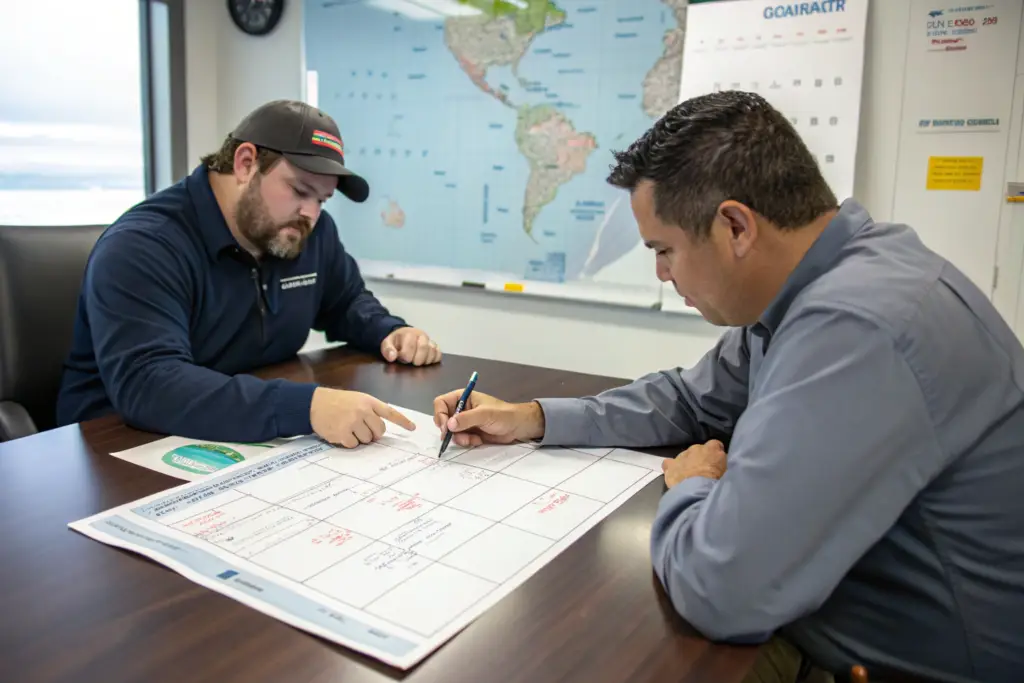
The most effective sea-air strategy is not activated during a crisis. It is built during the calm of pre-production planning, with the factory, the brand, and the freight forwarder aligned on the process before the first order is late. The factory knows the cutoff dates. The brand knows the cost formula. The forwarder knows the routing preferences and has pre-approved the brand's credit. When production slips, as it inevitably will at some point during a multi-season partnership, the sea-air switch is a predetermined workflow, not a frantic negotiation.
A long-term sea-air strategy consists of three elements: a pre-season logistics protocol signed by the brand, the factory, and the forwarder that defines the ocean cutoff dates and the sea-air routing for each destination market, a pre-negotiated rate card for sea-air shipments on the brand's primary trade lanes that is refreshed quarterly, and a post-season review that analyzes which shipments required a sea-air upgrade, why production was late, and how to adjust the production calendar to reduce sea-air reliance in the following season. The strategy treats sea-air as a managed logistics tool, not an emergency escape hatch.
At Shanghai Fumao, I integrate sea-air planning into our standard onboarding process for new brand partners. I do not wait for a crisis to introduce the concept. I present it upfront as part of our logistics capability. Here is how to select a forwarder for a long-term sea-air partnership and how to use post-season data to improve production planning.
How to Vet a Forwarder's Sea-Air Capability Before Signing a Contract?
Not all freight forwarders can execute sea-air effectively. Many forwarders claim sea-air capability but subcontract the hub transfer to a local agent they have never audited. The brand and the factory should vet the forwarder's sea-air capability specifically, not just their general freight forwarding services.
The vetting questions are specific. Does the forwarder have an owned office at the transfer hub, or do they subcontract? Who handles the physical deconsolidation and re-palletization? What is the forwarder's carton-level scanning protocol at the transfer? What is their average transfer time from vessel discharge to air waybill issuance over the past six months? Can they provide a reference from a current apparel client who uses their sea-air service regularly? A forwarder who cannot answer these questions clearly is not a reliable sea-air partner. I maintain relationships with three forwarders who have proven sea-air capabilities, and I introduce our brand partners to all three so they can select the one that best fits their destination markets and communication preferences.
How to Use Post-Season Data to Reduce Reliance on Sea-Air?
Every sea-air shipment is a signal that production planning needs adjustment. The post-season review should analyze each sea-air shipment and identify the root cause of the production delay. Was the fabric delivery late? Was the lab dip approval slow? Was the order placed too late relative to the seasonal delivery window?
The data often reveals patterns. A brand that consistently uses sea-air for orders placed in November may need to move their order placement to October. A brand that consistently uses sea-air because of fabric delays may need to work with the factory to pre-book greige fabric for their core qualities. The sea-air data is a diagnostic tool for the supply chain. The goal is not to eliminate sea-air entirely, production delays are a reality in fashion, but to reduce its frequency to the point where it is a rare exception rather than a regular operating cost. At Shanghai Fumao, I share a sea-air usage report with each brand partner after every season, along with our analysis of the root causes and our recommendations for timeline adjustments. The partnership improves. The freight budget stabilizes.
Conclusion
Sea-air freight is the mid-size apparel brand's most powerful logistics tool that most brands do not use. It sits in the gap between ocean and air, offering a time-cost compromise that protects both the delivery window and the margin. The brands that adopt sea-air as a planned logistics strategy, rather than discovering it during a crisis, are the brands that navigate production delays without losing retail accounts or quarterly profitability.
At Shanghai Fumao, I have integrated sea-air planning into our standard production process. We agree on ocean cutoff dates before production begins. We have pre-negotiated sea-air rates with vetted forwarders on the Shanghai-Dubai-Europe and Shanghai-Incheon-US corridors. When a finished goods inspection passes one day after the ocean cutoff, the brand does not receive a panic phone call. They receive a calm email with a sea-air quote, a confirmed flight schedule, and an estimated delivery date that still hits their retail window. This is not logistics heroics. It is logistics preparation.
If your production calendar is tight, your retail delivery windows are non-negotiable, and your margins cannot absorb pure air freight, let us build a sea-air strategy for your next collection. We can map your seasonal timeline, identify your ocean cutoff dates, and pre-negotiate your sea-air rates before a single garment is cut. Reach out to our Business Director, Elaine, at elaine@fumaoclothing.com. The time to plan for a late shipment is not when it is late. It is right now.