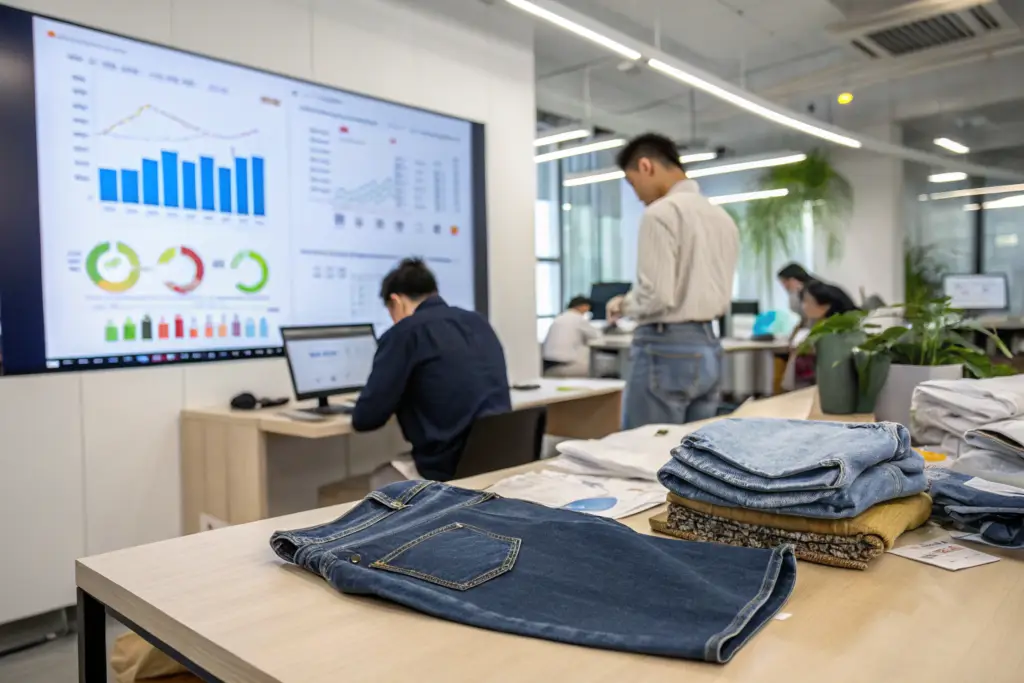
You have watched us become known for denim shorts. The LinkedIn posts. The client testimonials. The technical articles on fabric testing, wash development, and DDP logistics. You might think we are a denim shorts factory. That is accurate, but it is incomplete. Denim shorts are what we are known for today. They are not the limit of what we can do. They are not the end of our story. A factory that stops evolving is a factory that starts dying. I have seen it happen. A factory gets comfortable with one product category. The market shifts. The orders dry up. The factory closes. I did not build Shanghai Fumao over fifteen years to let it become complacent.
Shanghai Fumao is expanding in three strategic directions beyond denim shorts. First, we are scaling our woven garment capacity, shirts, blouses, trousers, shorts, skirts, and outerwear, leveraging the same production lines, quality systems, and DDP logistics that made our denim shorts successful. Second, we are deepening our sustainable manufacturing capabilities, expanding our organic cotton and GOTS-certified production, investing in renewable energy, and working toward closed-loop water recycling. Third, we are launching a collaborative design partnership program where brands can access our R&D team not just for production, but for seasonal collection development, trend research, and fabric innovation.
I run Shanghai Fumao. I am proud of what we have achieved in denim shorts. But I am more excited about what comes next. In this article, I will share our expansion roadmap, the new product categories we are serving, the sustainability investments we are making, and how our existing clients are already benefiting from our broader capabilities. If you know us for denim shorts, you should know what else we can do. If you have never worked with us, you should know that we are building for the long term.
What New Product Categories Are We Expanding Into?
Our core competency is not denim. Our core competency is woven garment manufacturing. Denim is a woven fabric. The skills required to cut and sew denim, pattern making, production line management, quality control, wash development, are transferable to other woven fabrics. The same Gerber CAD system that grades our denim short patterns can grade a chino short pattern. The same sewing operators who attach waistbands on denim shorts can attach waistbands on linen trousers. The same spectrophotometer that measures indigo wash color can measure a garment-dyed cotton twill.
We are actively expanding our production into the woven categories that our existing clients have been requesting. Many of our denim shorts clients also sell shirts, blouses, trousers, and outerwear. They have asked us to produce these categories so they can consolidate their supply chain with one factory. We listened. The expansion is demand-driven, not speculative.
Let me detail the specific categories we are now offering and the capabilities we have built to support them.
Which Woven Garment Categories Can We Now Manufacture at Scale?
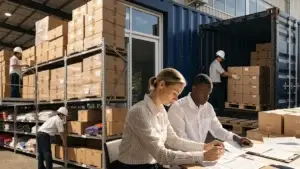
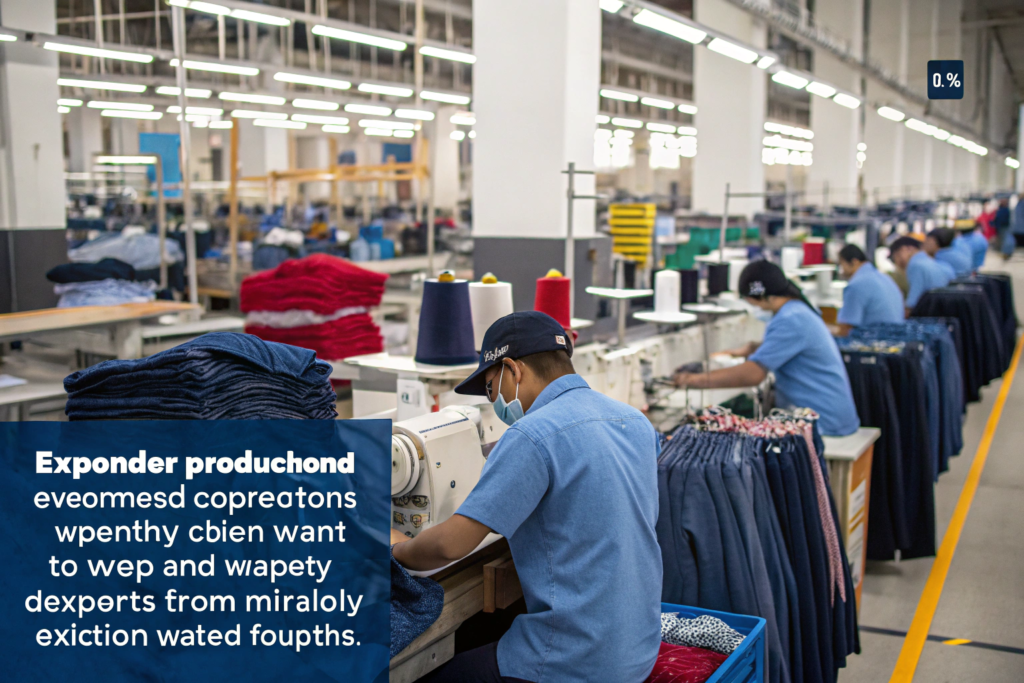
Our five production lines are flexible. They can be configured for denim shorts, which is our highest volume product, or switched to other woven garments as demand requires. We have produced shirts, blouses, trousers, shorts in non-denim fabrics, skirts, and lightweight outerwear for select clients over the past two years. We are now formally offering these categories to all clients.
Shirts and blouses. We can manufacture woven tops in cotton poplin, oxford cloth, linen, chambray, and viscose blends. Our lines are equipped with the specialized machines required for shirt production. Collar turning machines, cuff presses, buttonhole and button attach stations. We can handle complex details like French plackets, contrast inner collar bands, and chest pocket embroidery. Trousers and non-denim shorts. We can manufacture woven bottoms in cotton twill, linen, Tencel, and synthetic blends. The construction techniques are similar to denim shorts, but the fabrics require different handling. Linen frays more easily. Tencel is slipperier under the needle. Our operators have been trained on these fabrics. Skirts. We can manufacture woven skirts in a variety of silhouettes. A-line, pencil, wrap, tiered. Skirt construction requires different seam finishes and hemming techniques than shorts. Our pattern maker has developed blocks for the major skirt silhouettes. Outerwear. We can manufacture lightweight jackets, chore coats, and overshirts in cotton canvas, twill, and denim. Heavier outerwear with insulation or complex lining is not yet within our capability, but lightweight unlined jackets are well within our wheelhouse. The woven garment manufacturing capabilities we have developed mirror the quality systems we built for denim. The same 7-point inspection, the same AQL 1.5 final audit, the same milestone tracking dashboard.
How Do Our Denim Quality Systems Transfer to Other Woven Products?
The quality systems we built for denim shorts are fabric-agnostic. The 4-point fabric inspection system works on cotton twill, linen, and poplin just as it works on denim. The backlit inspection table reveals weaving defects regardless of the fabric type. The tensile strength tester measures the breaking force of any woven fabric. The shrinkage test, AATCC 135, is the same test method for denim and non-denim wovens.
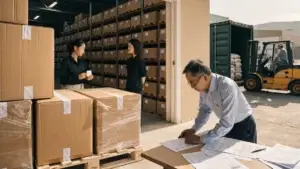
The in-line quality audit system transfers directly. A roving auditor checking stitch density, seam alignment, and measurement tolerances on a linen trouser line follows the same protocol as on a denim shorts line. The final AQL inspection standard does not change. The product is different. The process is the same.
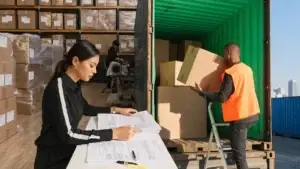
The wash development capability transfers as well. Our ozone machines and enzyme wash recipes can be applied to non-denim wovens to create garment-dyed effects, vintage washes, and soft hand feels. The color matching process with the spectrophotometer works on any dyed fabric. The DDP logistics model is product-agnostic. A container of linen trousers ships under the same terms as a container of denim shorts. The pre-clearance process, the customs brokerage, the inland trucking, all are identical. Our existing clients who have expanded into these categories with us have found the transition seamless. The quality they expect from our denim shorts is the quality they receive on their woven shirts and trousers. The quality management system transferability is a core principle. A good quality system works across product categories.
How Are We Deepening Our Commitment to Sustainable Manufacturing?
Sustainability in our industry is often a marketing veneer. A green logo. A recycled paper hangtag. Meaningless claims that evaporate under scrutiny. I have no interest in that kind of sustainability. Our approach is to make verifiable, measurable improvements to our manufacturing processes and to share the data openly. We are not perfect. We are on a journey. The next phase of that journey involves three specific investments.
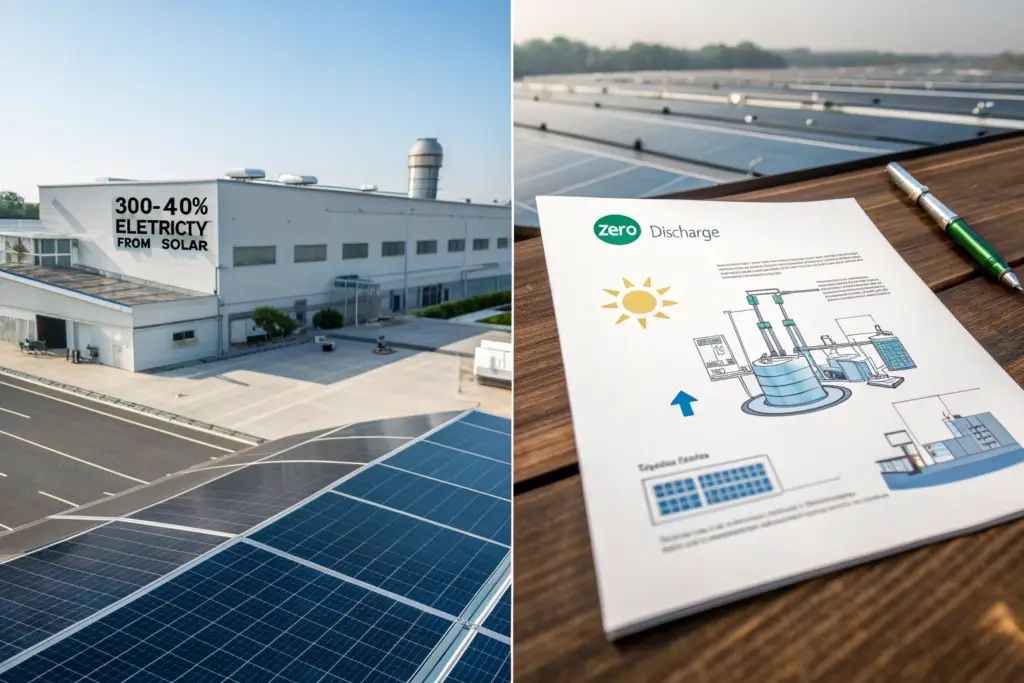
First, we are expanding our GOTS-certified organic cotton production. Currently, organic cotton represents a minority of our total fabric consumption. Our goal is to make organic cotton the default option for all clients, with conventional cotton as the alternative, not the other way around. Second, we are investing in on-site renewable energy. We are evaluating a rooftop solar installation that would supply a significant portion of our electricity needs. Third, we are working toward closed-loop water recycling in our wash house. Currently, our treated wastewater meets ZDHC Foundational Level standards and is discharged. Our goal is to recycle it back into the wash process, eliminating discharge entirely.
Let me explain each of these initiatives and the timeline we are working toward.
What Are Our Goals for Organic Cotton Sourcing and GOTS Certification?
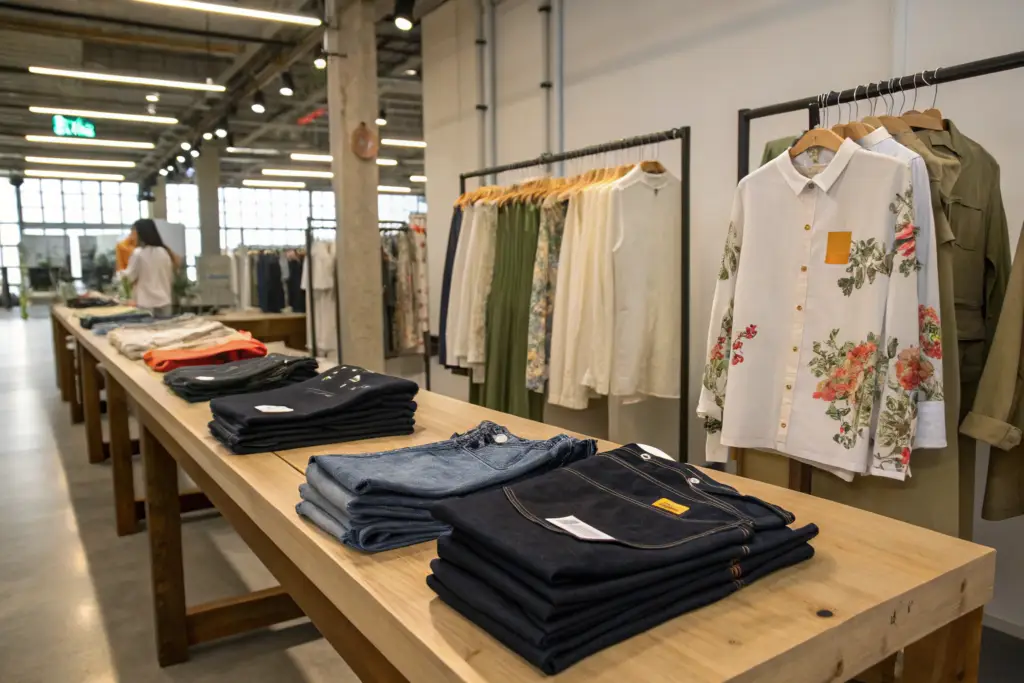
We are already GOTS-certified for our sewing and finishing operations. The bottleneck has been the availability and cost of GOTS-certified organic denim fabric. Organic cotton is a small percentage of global cotton production. The supply chain is thinner. The lead times are longer. The costs are higher. Many of our clients want organic cotton but are constrained by the price premium and the minimum order quantities.
We are addressing this by making a forward commitment to our partner mills. We are guaranteeing a minimum annual purchase volume of GOTS-certified organic denim fabric. This commitment gives the mills the confidence to stock organic yarn and weave organic fabric in advance, reducing the lead time and the minimum order quantity for our clients. Our goal is that by the end of 2027, 50% of our denim fabric consumption will be GOTS-certified organic cotton. This is an ambitious target. It will require our clients to embrace organic cotton at scale. We believe the market is moving in this direction. Consumer demand for verified organic products is growing. Regulations in the EU and, increasingly, in U.S. states like California are tightening. Brands that want to make organic claims will need certified supply chains. We are building that supply chain.
The GOTS organic certification expansion requires investment across the entire chain, from farm to finished garment. Our role as the manufacturer is to provide the certified processing and to connect the organic fabric supply with the brand demand. We are committed to being that bridge.
How Will On-Site Solar and Water Recycling Reduce Our Environmental Footprint?
Our electricity currently comes from the grid, which in China is still predominantly coal-fired. This is the largest single source of carbon emissions associated with our products. We have commissioned a feasibility study for a rooftop solar installation. Our factory has approximately 3,000 square meters of flat roof space suitable for solar panels. The proposed system would generate an estimated 30% to 40% of our annual electricity consumption. The project requires a capital investment of approximately $200,000. We plan to begin installation in 2027, subject to permitting and financing.
Water is the other major environmental impact. Our wash house currently uses enzyme and ozone technologies that have reduced our water consumption by 60% compared to traditional stone washing. The remaining water is treated in our effluent treatment plant, tested to ZDHC Foundational Level standards, and discharged. The next step is closed-loop recycling. The treated water would be further purified through reverse osmosis and recirculated back into the wash process. This would eliminate wastewater discharge from our wash house entirely. The technology exists. It is expensive. The capital cost for a closed-loop system for our wash volume is approximately $100,000 to $150,000. We are targeting implementation by the end of 2028.
These investments are not driven by marketing. They are driven by a calculation about the future. The cost of water is rising. The cost of electricity is rising. Regulations on wastewater discharge are tightening. Carbon border taxes are being discussed. A factory that has already reduced its water and carbon footprint will have a lower cost structure and easier market access in 2030 than a factory that has not. The sustainable textile manufacturing investments we are making are pragmatic, long-term business decisions. They also happen to be the right thing to do.
What Is Our New Collaborative Design Partnership Program?
Manufacturing is our foundation. Design collaboration is our evolution. Many of our clients have asked us to do more than just produce their designs. They want us to contribute design ideas, suggest fabric innovations, propose wash trends, and help them build their seasonal collections. They value our knowledge of what is technically feasible, what is cost-effective, and what is trending in the market.
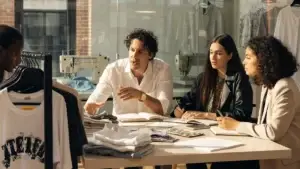
We have responded by formalizing a Collaborative Design Partnership program. This is not a design service where we replace your design team. It is a partnership where our R&D team becomes an extension of your design team. We provide trend research, fabric innovation proposals, wash development ideas, and technical design support. You provide the brand vision, the creative direction, and the final design decisions. Together, we create collections that are both creatively compelling and technically executable.
Let me explain how the program works and what specific value it provides.
How Can Our R&D Team Contribute to Your Seasonal Collection Development?
Our R&D team now includes a trend researcher. This person monitors global denim and woven garment trends, attending trade shows, analyzing retail data, and tracking social media, to identify emerging fits, washes, and details. Every season, we prepare a trend report for our design partners. The report includes fit trend analysis. "The high-rise, wide-leg silhouette is gaining market share. The mid-rise skinny is declining. Here are the key measurements." Wash trend analysis. "Dark, clean rinses are trending for Fall/Winter 2027. Heavy distressing is decreasing. Ozone sky fades are emerging." Fabric trend analysis. "Tencel blends are gaining for their soft hand feel and sustainability story. Rigid 100% cotton is returning for premium heritage brands." Detail trend analysis. "Curved hems. Utility pockets. Contrast stitching. Exposed button flys."
We also provide a seasonal fabric and wash innovation presentation. Our sourcing manager presents new fabric developments from our partner mills. "This is a new 10.5 oz organic cotton-hemp blend with a beautiful slub character. This is a Tencel-linen blend with a soft drape for summer trousers." Our wash technician presents new wash techniques. "We have developed a new laser pattern that replicates a saltwater fade. We can do a mineral dye over-dye that creates a unique, uneven color."
The brand's design team reviews these inputs and decides which directions to pursue. Our team then develops samples based on those directions. The brand gives feedback. We refine. The result is a collection that is informed by our manufacturing expertise and trend research, but directed by the brand's creative vision. The supplier-led design collaboration model is a growing trend in the apparel industry. Brands that leverage their factory's R&D capability can bring products to market faster and with fewer development failures.
What Are the Benefits of a Long-Term R&D Partnership with a Factory?
A transactional relationship is about fulfilling orders. A partnership is about building a shared future. When you have a long-term R&D partnership with a factory, several compounding benefits emerge.
First, the factory's R&D team learns your brand's aesthetic deeply. They internalize your fit preferences, your wash style, your color palette. They stop proposing ideas that are off-brand. They start proposing ideas that feel like natural extensions of your DNA. The development cycle accelerates because less time is spent explaining the basics.
Second, the factory can invest in capabilities specifically for your brand. If your brand is moving toward organic cotton, we can secure organic fabric allocations for you. If your brand is developing a proprietary wash, we can lock that recipe and dedicate wash capacity. The factory's investments align with the brand's direction.
Third, joint innovation becomes possible. The brand has market insights. The factory has technical knowledge. When these two perspectives combine, genuinely new products can emerge. A brand might say "Our customers are asking for shorts that feel like sweatpants but look like denim." Our team can develop a knit-denim hybrid fabric, a denim face with a French terry back, that meets that need. Neither the brand alone nor the factory alone would have created that product. The collaborative supplier partnerships innovation model is well-documented. Deep partnerships generate more innovation than transactional relationships.
Conclusion
Shanghai Fumao is not standing still. The denim shorts market that made us known is our foundation, not our ceiling. We are expanding our woven garment capabilities to serve our clients' broader product needs. The same quality systems, the same DDP logistics, the same transparent communication that you trust for denim shorts are now available for your shirts, blouses, trousers, skirts, and outerwear. We are deepening our sustainability investments, with concrete targets for organic cotton adoption, solar energy, and closed-loop water recycling. These investments are not marketing. They are a long-term bet on a cleaner, more efficient, and more competitive factory. And we are opening our R&D team as a collaborative design partner, sharing trend research, fabric innovation, and wash development to help our clients build better collections.
A factory that stops evolving is a factory that starts dying. I intend for Shanghai Fumao to thrive for another fifteen years and beyond. That requires us to listen to our clients, anticipate where the market is going, and invest ahead of demand. If you are a brand that works with us on denim shorts, ask Elaine about our woven garment capabilities. If you are a brand that needs a manufacturing partner who can also contribute design and trend insights, ask about our Collaborative Design Partnership program. If you are a brand that wants to build a verified sustainable supply chain, ask about our GOTS organic production and our environmental roadmap.
Our Business Director, Elaine, can discuss any of these initiatives with you. She can send you our woven garment lookbook, our sustainability report, or our seasonal trend presentation. Her email is elaine@fumaoclothing.com. At Shanghai Fumao, we make denim shorts. We also make a lot more. And we are just getting started.