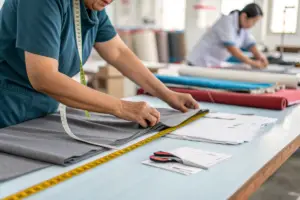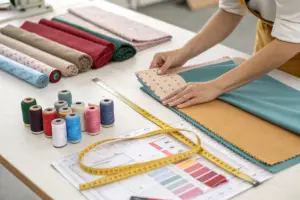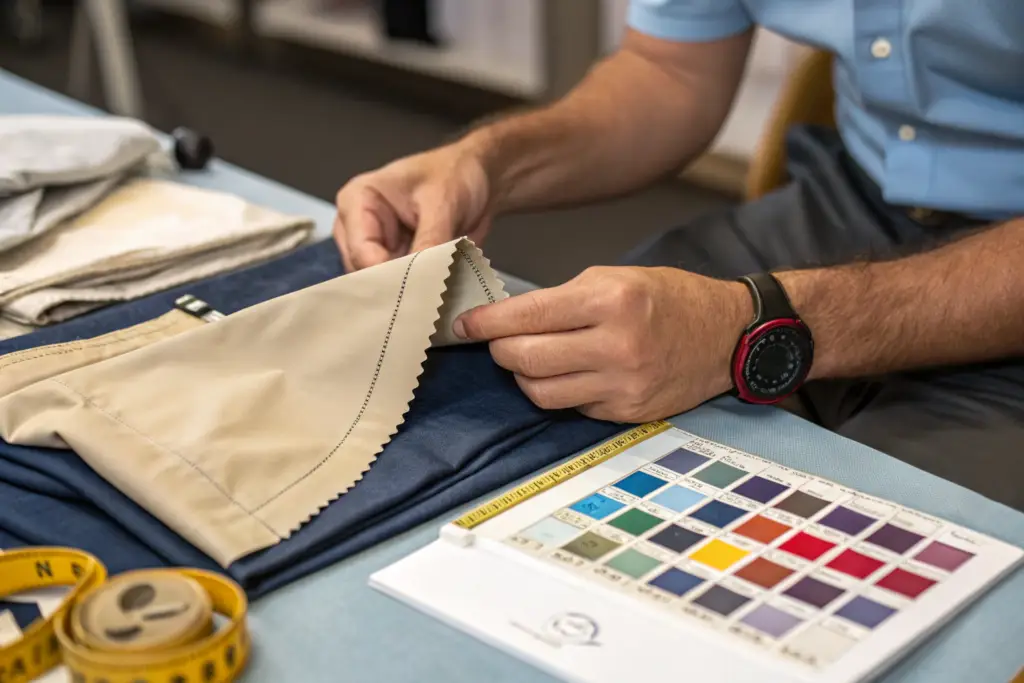
You receive a bulk shipment of 1,500 pairs of men's chino shorts. You open the first carton. You pull out a pair. Your heart sinks. The fabric feels thin. It feels rough. It looks nothing like the pre-production sample you approved. You check the packing list. The factory shipped the correct style code. But the fabric is different. It is a cheaper grade. You now have 1,500 pairs of shorts you cannot sell at full price. You will have to discount them. You will lose your margin. You will lose your reputation with your customers who expect the quality you promised. This scenario plays out every day in the apparel industry. The buyer trusted a photo. The buyer trusted a sample that was made with a different fabric roll than the bulk order. The buyer did not know how to verify fabric quality independently before giving the green light for mass production.
Spotting quality fabric in classic men's shorts before bulk buying requires a systematic evaluation of five objective criteria: fiber composition and origin, fabric weight measured in GSM, weave construction and density, hand feel and drape, and shrinkage performance. You do not need to be a textile engineer. You need a simple checklist, a few basic tools, and the discipline to test the fabric before you release the purchase order. A quality fabric is the difference between a short that sells at full price and earns repeat customers, and a short that ends up on a clearance rack with a one-star review.
At Shanghai Fumao, we manufacture classic shorts for U.S. brands that demand consistent fabric quality. I have seen firsthand how fabric substitution, weight fudging, and skipped finishing processes can destroy a brand's season. I have also seen how a buyer with a simple testing protocol can protect their investment. This article is that protocol. It teaches you how to look at a fabric swatch, a lab dip, or a production sample and know, with reasonable certainty, whether the fabric will perform or fail.
What Questions Should You Ask About Fiber Composition Before Ordering?
The fiber is the smallest unit of the fabric. It is the raw material. The performance of the finished short begins here. A classic men's short is typically made from cotton, linen, or a blend. But "cotton" is not a single thing. There are dozens of species, grades, and staple lengths. The quality of the cotton fiber determines the softness, the strength, the pilling resistance, and the color retention of the short. A buyer who does not ask about fiber origin is buying a mystery.
I recall a brand owner, Mark, who ordered 2,000 pairs of "100% cotton" twill shorts. The sample was soft. The bulk order arrived. The shorts felt scratchy. After five washes, they pilled badly. Tiny balls of fiber formed on the surface. The shorts looked old. Mark was furious. He had not specified the cotton grade. The sample was made with a high-quality, long-staple cotton. The bulk order was cut from a cheaper, short-staple cotton. The supplier saved $0.40 per yard. Mark lost thousands of dollars in returns and brand damage. The lesson is clear. Fiber composition is a specification, not an assumption.
You must ask specific questions about the fiber. Generic answers are red flags. A supplier who says "it's cotton" without providing the grade, origin, or staple length is either uninformed or evasive. Let me give you the exact questions to ask and the answers to look for.
Why Does Staple Length Determine the Softness and Durability of Cotton Shorts?
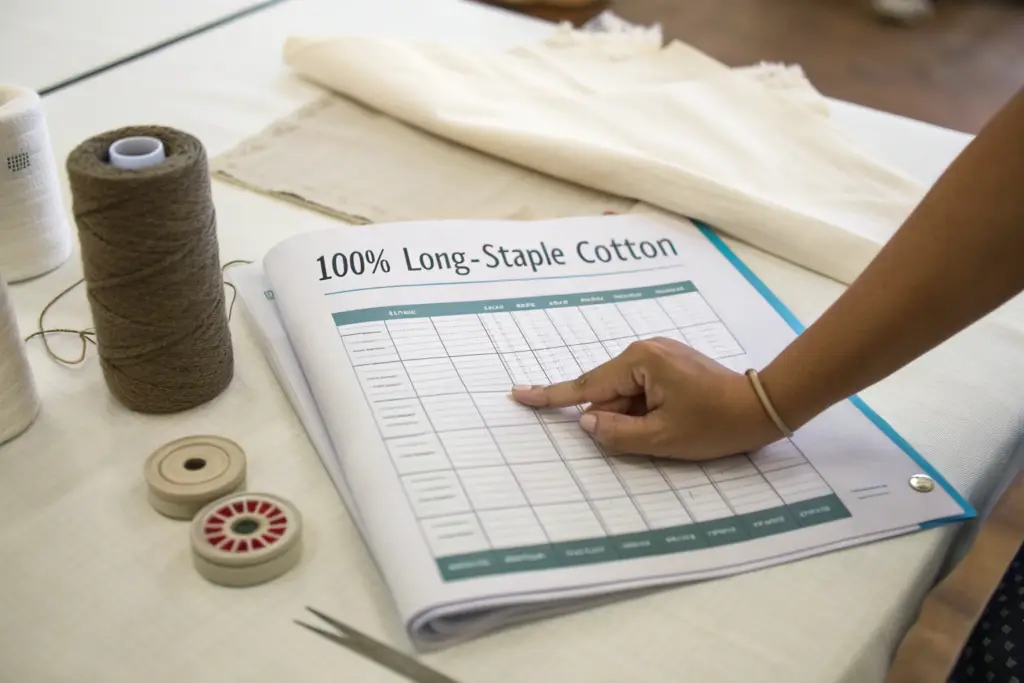
Staple length is the average length of the individual cotton fibers. Long-staple cotton fibers are 1.25 inches or longer. Short-staple cotton fibers are less than 1.1 inches. Long fibers can be spun into finer, stronger yarns. The yarn is smoother because fewer fiber ends protrude from the surface. Fewer protruding ends means less pilling and a softer hand feel.
The gold standard for long-staple cotton is Egyptian cotton or Supima cotton. These varieties produce fibers that are exceptionally long and strong. A classic chino short made from long-staple cotton will feel silky, resist pilling, and hold its color for years. A short made from short-staple cotton will feel rougher, pill quickly, and fade unevenly. At Shanghai Fumao, we source our premium twill from mills that use Xinjiang long-staple cotton or imported Supima. We specify the staple length in our fabric purchase orders. We test the incoming fabric to verify the yarn evenness. You should ask your supplier, "What is the staple length of the cotton in this twill?" and "Can you provide the yarn count and the fiber origin certificate?" A professional supplier will have this information. The cotton staple length and quality guide explains these grades in detail. This knowledge protects you from being sold a generic, low-grade fiber.
How Can You Verify the True Fiber Content of a Cotton-Linen or Cotton-Spandex Blend?
Fiber blends are common. A little spandex adds stretch. A little linen adds texture. But the blend ratio must be accurate. A fabric labeled 55% linen and 45% cotton that is actually 30% linen and 70% cotton will perform differently. It will wrinkle less, which might sound good, but it will also lack the authentic linen texture the customer expects. The perceived value drops.
The only way to verify the fiber content is a burn test or a lab test. A burn test is a simple, at-home method. You cut a small swatch of the fabric. You hold it with tweezers. You light it with a match. Cotton burns with a yellow flame. It smells like burning paper. It leaves a soft, grey ash. Linen burns similarly but more slowly. Polyester melts. It shrinks from the flame. It smells like burning plastic. It leaves a hard, black bead. A blend will show characteristics of both. This test gives you a rough idea. A professional lab test uses chemical dissolution to determine the exact percentage of each fiber. You can request a lab test report from a testing company like SGS or Intertek. The report will state the exact fiber composition. You should ask your supplier for a fiber composition test report from an independent lab. If the supplier refuses or hesitates, that is a significant warning sign. They may be misrepresenting the blend.
How Can You Measure Fabric Weight and Density Accurately?
Fabric weight is the most commonly fudged specification in the apparel industry. A supplier quotes a 280 GSM (grams per square meter) twill. The bulk fabric arrives at 240 GSM. The shorts feel flimsy. They wrinkle easily. They do not drape correctly. The buyer feels cheated. This happens because fabric weight is easy to misrepresent in a quote and harder to verify without the right tools.
I worked with a brand that launched a "heavyweight chino short" as their hero product. The marketing promised a substantial, durable short. The first bulk order arrived. The fabric was light. It had no body. The brand owner called me, panicked. We measured the fabric. It was 220 GSM, not the 280 GSM he had approved on the sample. The factory had swapped the fabric to save money. The brand had to rebrand the product as a "lightweight summer chino" and drop the price. They lost their hero product for the season. They learned to measure fabric weight themselves before approving bulk.
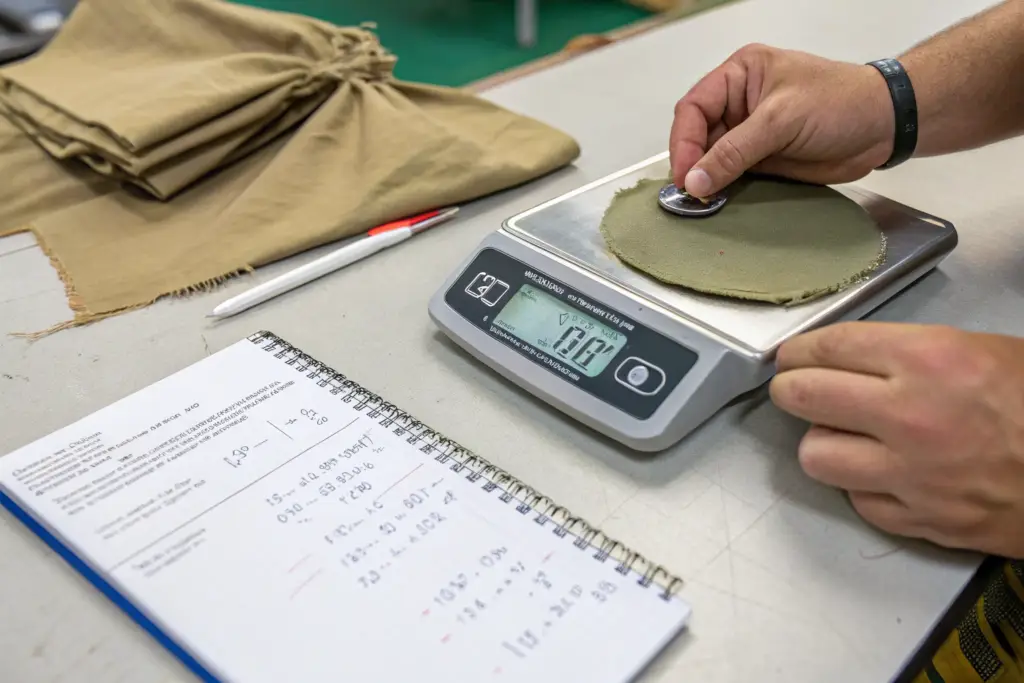
Measuring fabric weight is simple. You need a GSM cutter, which is a circular cutting tool, and a digital scale. These tools cost less than $50 combined. They can save you thousands of dollars in bad inventory. Let me show you how to use them and what the numbers mean.
What Is the Correct GSM Range for a Premium Men's Chino Short?
GSM stands for grams per square meter. It measures the weight and density of the fabric. A premium men's chino short should use a twill fabric in the 260 to 300 GSM range. This weight provides the ideal balance of drape, durability, and breathability.
A 260 GSM twill is the lighter end of the premium range. It is suitable for hot, humid climates. It has a soft drape. It breathes well. A 280 GSM twill is the sweet spot. It has excellent body. It hangs straight. It resists wrinkling. It feels substantial without being heavy. A 300 GSM twill is the heavy end. It is almost a lightweight pant fabric. It is incredibly durable. It holds a crease beautifully. It is suitable for a more structured, tailored short. Anything below 240 GSM will feel flimsy. The pockets will show through. The short will wrinkle like a tissue. Anything above 320 GSM will be too hot for summer wear in most climates. You should ask your supplier for the exact GSM of the fabric and then verify it. Use a GSM cutter to cut a precise circle of fabric. Place it on the digital scale. Multiply the weight by 100. That is your GSM. The fabric weight GSM guide explains this process. A tolerance of plus or minus 5% is acceptable. A 20% deviation is a bait-and-switch.
How Does Weave Density Affect the Opacity and Durability of the Short?
GSM measures weight. Weave density measures tightness. It is the number of yarns per inch in the warp and weft directions. A high-density twill has more yarns packed tightly together. It is more opaque. It is more durable. It holds its shape better. A low-density twill has fewer yarns. It is looser. It can be see-through. It frays more easily.
You can check weave density with a pick glass, a small folding magnifier. You place the pick glass on the fabric. You count the number of warp yarns and weft yarns in a one-inch square. A quality chino twill will have a high count, typically 100 to 120 yarns per inch in total. This density prevents the white pocket bag from showing through the khaki fabric. It prevents the fabric from snagging and tearing. A loose, low-density fabric is a shortcut to a cheap product. It is the difference between a short that lasts two summers and a short that develops holes after ten washes. The fabric density and thread count guide provides reference images. A buyer should specify both the GSM and the thread count in the fabric specification. These two numbers together define the body and strength of the short.
What Does the Hand Feel and Drape Tell You About Fabric Quality?
Hand feel is subjective but critical. It is the customer's first physical interaction with the product. The fabric must feel good. It must feel like quality. This is not a scientific measurement. It is a human judgment. But it is a judgment that determines whether a customer pulls out their wallet or puts the short back on the rack.
I keep a reference swatch of our standard 280 GSM chino twill in my office. It is a piece of fabric I have handled a thousand times. I know its exact hand feel. When a new fabric shipment arrives, I compare the new fabric to my reference swatch. I close my eyes. I rub both pieces between my fingers. I feel for softness, smoothness, and body. If the new fabric feels different, I investigate further. This simple practice has caught fabric substitutions before they reached the cutting table. A buyer should create their own reference library. Keep a swatch of the approved sample fabric. Use it as your tactile standard.
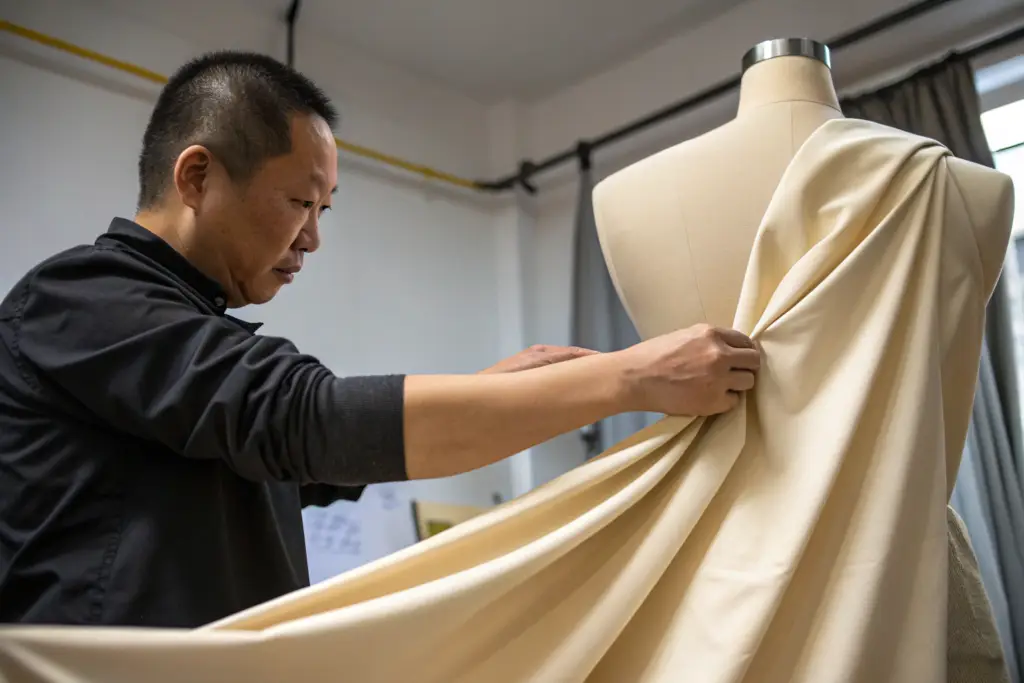
Drape is how the fabric hangs. A quality twill drapes in smooth, clean folds. It has weight. It has movement. It does not stand stiffly away from the body. It does not cling limply. Drape is a function of weight, weave, and finishing. Let's examine what good drape looks like for classic shorts fabrics.
How Can a Simple "Scrunch Test" Reveal Fiber Resilience and Wrinkle Recovery?
The scrunch test is a quick, powerful assessment. Take the fabric in your hand. Squeeze it tightly into a ball for ten seconds. Release it. Observe. A high-quality cotton twill will show creases, but the creases will begin to fall out immediately. The fabric will partially recover within seconds. A low-quality fabric with poor finishing will hold deep, sharp creases. It will look like crumpled paper.
This test simulates the wear experience. A man sits in his shorts for an hour. He stands up. The fabric across his lap is wrinkled. A good fabric releases these wrinkles. Within a few minutes of walking, the shorts look presentable again. A poor fabric holds the wrinkles all day. The man looks disheveled. The scrunch test predicts this real-world performance. You should also test the fabric's recovery from stretching. Pull the fabric gently along the bias. Release it. It should spring back. If it stays stretched out, the fabric lacks resilience. This will lead to baggy knees and a saggy seat. The fabric wrinkle recovery test is a standardized lab version of the scrunch test. But your hand is a powerful instrument. Trust it.
Why Is Surface Texture Consistency a Key Indicator of Quality?
Run your hand across the fabric. The surface should feel consistent. There should be no thick-thin variations, no slubs unless it is a slubby linen, no rough patches. The color should be even. There should be no white specks where the dye did not penetrate.
Inconsistent texture is a sign of low-grade yarn or poor weaving. The fabric will wear unevenly. The thin spots will develop holes first. The color will fade unevenly at the thick spots. This is a fabric that should have been graded as a second quality and sold at a discount. A classic short demands a clean, consistent fabric surface. A linen blend is an exception. Slubs, small irregular lumps, are a natural characteristic of linen. They are desirable. They add texture. But even linen slubs should be evenly distributed, not clustered in one area. The hand feel of a quality fabric is an experience. It communicates luxury and durability. The fabric inspection and grading standards define the point system for fabric defects. A first-quality fabric has few to no visible defects.
How Can You Test Shrinkage and Color Fastness Before Bulk Production?
The two biggest reasons customers return shorts are shrinkage and color fading. The shorts fit in the store. They shrink in the wash. They no longer fit. The customer is angry. The shorts are a beautiful navy. After three washes, they are a dull, patchy blue. The customer feels cheated. These failures are entirely preventable with pre-production fabric testing. A buyer who does not test for shrinkage and color fastness is gambling with their return rate.
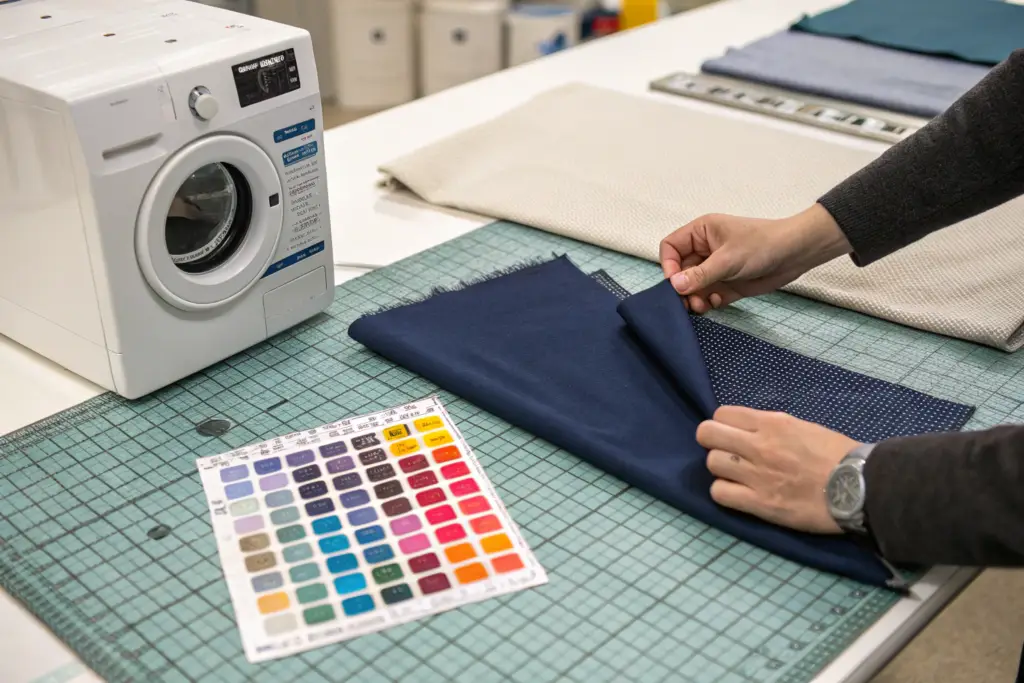
I have a strict rule at Shanghai Fumao. No fabric roll enters the cutting room without a shrinkage test. We cut a square of fabric. We mark a 50-centimeter by 50-centimeter box on it. We wash it according to a standard home laundry cycle. We dry it. We measure the box again. If the shrinkage exceeds 2% in either direction, the fabric is rejected or we adjust the cutting pattern to compensate. This test takes one day. It saves weeks of processing returns and thousands of dollars in lost inventory. A buyer can request this test report. A buyer can also perform a simplified version at home with a sample swatch.
Color fastness is equally critical. The dye must stay in the fabric. It must not bleed onto other garments in the wash. It must not fade excessively under sunlight. These are measurable properties. Let's examine the two most important tests.
What Is the Standard Maximum Shrinkage Allowance for Classic Men's Shorts?
The industry standard for acceptable residual shrinkage in woven cotton shorts is 2% or less. This means a 10-inch inseam should not shrink by more than 0.2 inches. A 34-inch waist should not shrink by more than 0.68 inches. This level of shrinkage is imperceptible to the customer.
A shrinkage rate of 3% to 5% is noticeable. The shorts feel tighter. The hem sits higher. The customer may not measure the difference, but they feel it. They blame the brand for inconsistent sizing. A shrinkage rate above 5% is a disaster. The shorts are unwearable after one wash. The brand is flooded with returns and negative reviews. The way to guarantee low shrinkage is to use pre-shrunk fabric. The fabric is mechanically compressed, or it is washed at the mill before cutting. At Shanghai Fumao, we specify sanforized fabric for all our cotton twill shorts. We then conduct a wash test on a sample from every fabric lot. We record the results. We share the fabric shrinkage test results with our clients. A buyer should always ask, "What is the residual shrinkage rate of this fabric, and can you provide the test report?" No report means no certainty.
How Can You Perform a Simple Color Rub Test at Your Desk?
Color fastness to crocking is the technical term for dye transfer. A short that crocks will stain a white shirt, a car seat, or a sofa cushion. This is a product liability issue. You can perform a simple rub test with a piece of white cotton cloth.
Take the colored fabric. Rub the white cloth firmly against it ten times. Look at the white cloth. If there is significant color transfer, the fabric has poor crock fastness. A small amount of transfer on a dark, indigo-dyed denim is normal. That is the nature of indigo. Significant transfer from a khaki or navy chino twill is a defect. The fabric was not properly dyed or washed. The excess dye was not removed. This short will bleed in the customer's wash. It will stain other clothing. The customer will be furious. The color fastness to crocking test has a standard lab method. The simple rub test is a useful proxy. If the fabric fails the rub test, do not approve it for bulk production. Demand a properly fixed and washed fabric.
Conclusion
Spotting quality fabric is a skill. It is a skill that separates professional buyers from gamblers. The professional buyer asks about staple length. The gambler assumes all cotton is the same. The professional buyer measures GSM with a cutter and a scale. The gambler trusts the supplier's quote. The professional buyer does the scrunch test. The gambler trusts a product photo. The professional buyer demands a shrinkage test report. The gambler hopes for the best. The professional buyer builds a brand with a loyal customer base and low return rates. The gambler builds a clearance rack.
The tools to spot quality fabric are simple. A GSM cutter. A digital scale. A pick glass. A reference swatch. A white cotton cloth for a rub test. A willingness to ask specific, technical questions. A refusal to accept vague answers. These tools and this mindset will protect your inventory investment. They will protect your brand's reputation. They will give you the confidence to approve a bulk order knowing the fabric will perform.
At Shanghai Fumao, we welcome fabric scrutiny. We provide the fiber origin documents. We provide the GSM verification. We provide the shrinkage and color fastness test reports from independent labs. We do this because we want our clients to sleep well at night. We want them to receive their container and open the cartons with excitement, not anxiety. If you are looking for a manufacturing partner who treats fabric quality as the foundation of a classic short, contact our Business Director, Elaine, at elaine@fumaoclothing.com. Tell her you want to discuss fabric specifications for your next order. She will send you our fabric swatch book, complete with GSM, composition, and test report data. Let's build a product that passes every test.