Rental fashion runs on timing—if you don’t have the right size at the right moment, you lose the customer.
To plan inventory for rental fashion, forecast demand by season, balance core versus trend styles, control SKU growth, and aim for optimized inventory turnover ratios.
At Fumao, we’ve supported rental brands in hospitality, events, and workwear across three continents. Smart inventory planning always separates scalable success from costly clutter.
Forecasting Demand for Seasonal Rental Trends
Rental businesses spike and slow down fast. That’s why proactive forecasting matters more than reaction.
To forecast seasonal rental demand, analyze last year’s usage data, align with booking trends, and factor in lead times for manufacturing and replenishment.

Why do most rental companies struggle to predict demand spikes for peak seasons?
They rely too heavily on gut instinct or past orders—without tracking how their end-customer needs have shifted.
One event rental client I worked with missed a major summer wedding season. Their inventory was still stocked with heavy velour when chiffon and linen surged. The result? Lost bookings and liquidated old inventory.
We fixed this by creating a 12-month demand model1 that included:
- Google Trends keyword tracking (e.g., “linen bridesmaid dress”)
- Regional weather impact data
- Past-year weekly checkouts by SKU
- Factory-to-warehouse lead time windows
What forecasting methods work best for rental fashion clients?
| Method | Use Case | Tool or Metric Used |
|---|---|---|
| Year-over-Year Comparisons | Workwear, uniforms | Usage by SKU, week |
| Trend-Based Forecasting2 | Eventwear, seasonal uniforms | Social media + search data |
| Booking-Based Modeling3 | Hospitality, hotel supply | Historical reservation logs |
| Factory Capacity Planning | Apparel restocks | MOQ + production cycle time |
At Fumao, we advise clients to commit base units 3–6 months in advance and layer in fashion-driven SKUs with a shorter 30-day forecast.
How to Balance Core vs. Trend-Driven Stock?
The core keeps the business stable; the trend attracts attention. But leaning too far either way can hurt.
To balance core versus trend stock, anchor 70–80% of inventory in evergreen styles and reserve 20–30% for short-term, seasonal experiments.
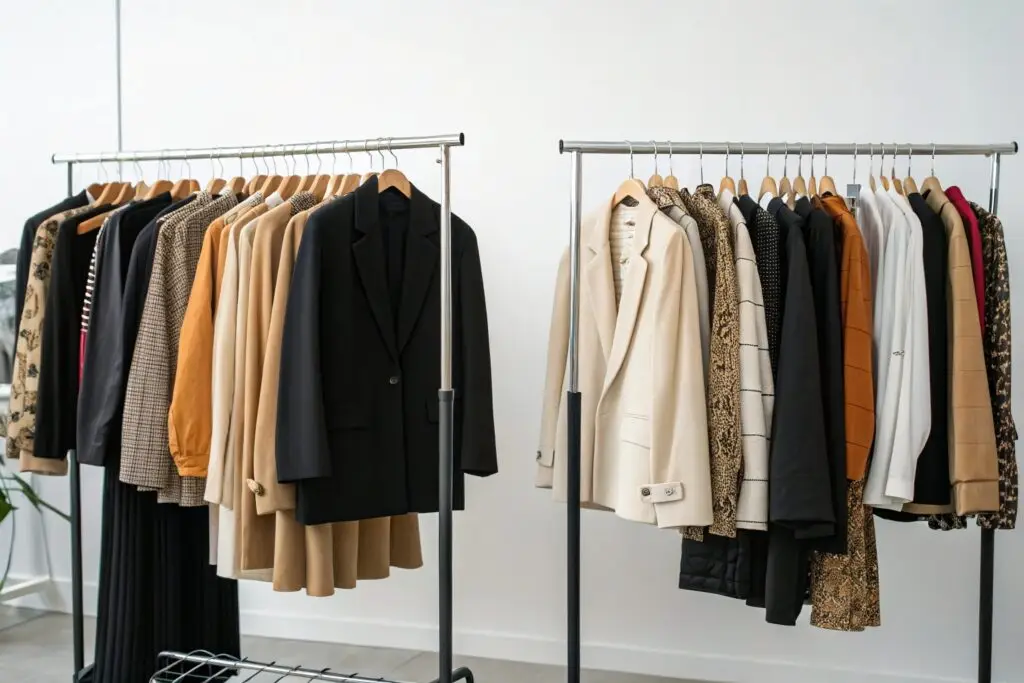
Why do trend-heavy assortments cause overstocking and under-utilization?
Trendy items are high-risk. If they miss the moment, they rot in storage. One rental fashion startup bought 2,000 units of ruffled pastel blouses based on Instagram buzz. By the time their production landed, neutrals had taken over again.
We helped restructure their strategy:
- Core: black trousers, neutral blazers, wrinkle-free shirts
- Trend: color-pop vests, seasonal linens, printed scarves
Core stayed in rotation year-round. Trends moved fast—supported by marketing blasts and discount tiers.
How can rental brands test trend items without heavy overstock risk?
- Use pre-orders or waitlists4 to gauge demand
- Set low minimums with flexible suppliers (we offer 100 MOQ for trend styles)
- Track weekly checkouts by style
- Set “exit triggers5”—e.g., if no checkouts in 3 weeks, mark down or exit
One uniform client in Europe now rotates three trend colors each season—but only commits 300 pcs per drop. Their trend sell-through6 went from 58% to 92%.
Managing SKU Counts Without Overbuying
More SKUs might look like variety—but they often create complexity, waste, and storage costs.
To manage SKU counts effectively, limit variants per style, consolidate sizes where possible, and remove underperformers every quarter.
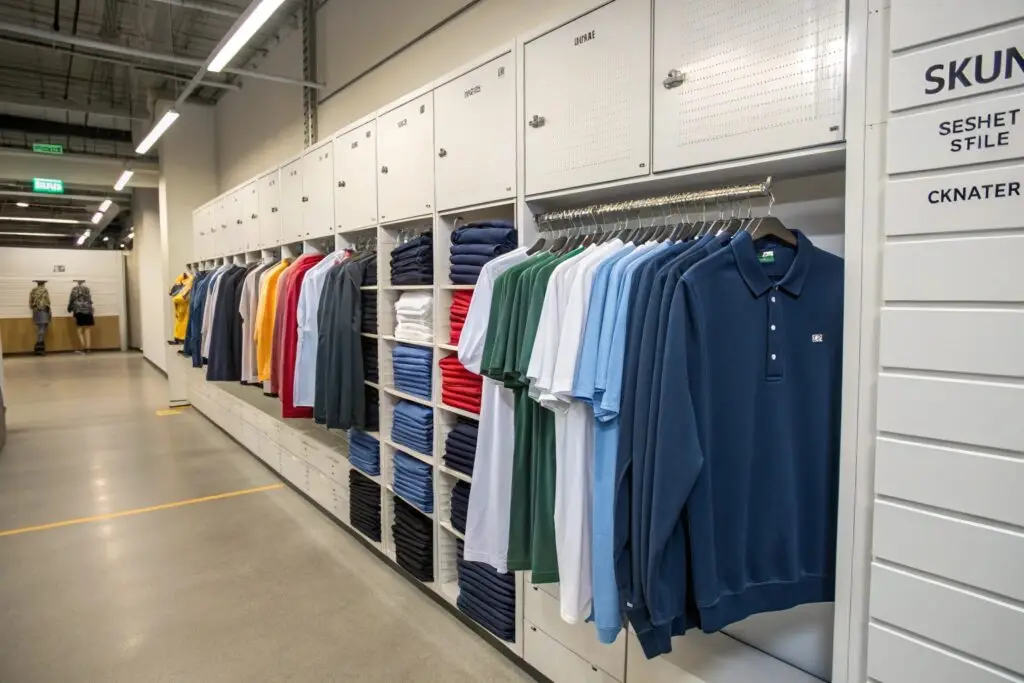
Why does SKU inflation7 reduce efficiency and profit in rental fashion?
Too many SKUs increase:
- Warehousing space
- Staff training time
- Tracking errors
- Returns and replacements
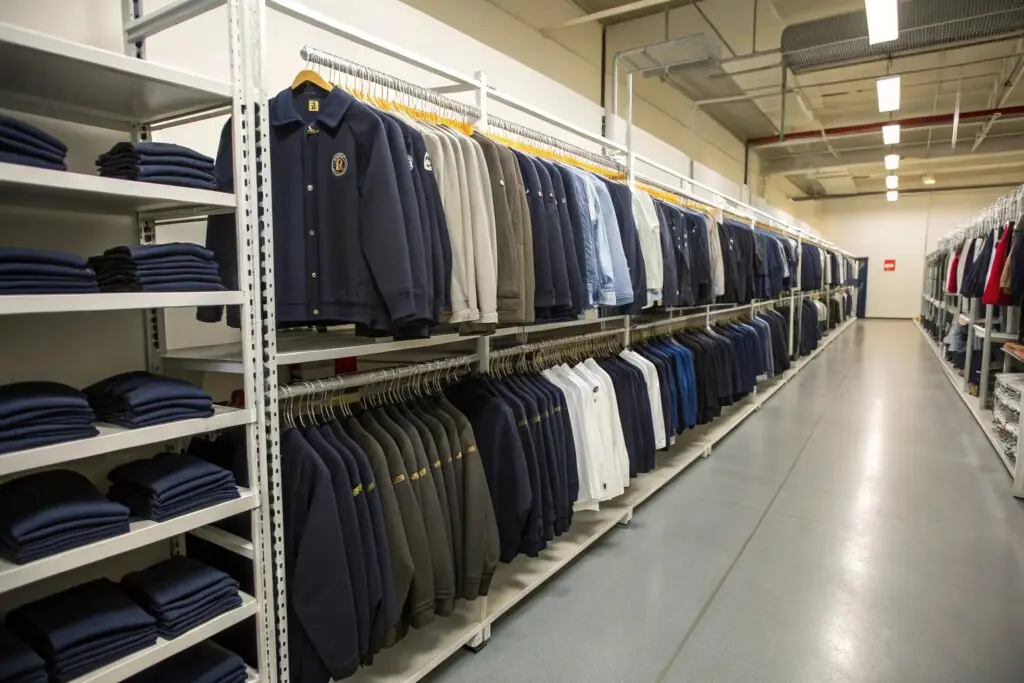
We worked with a workwear rental client who offered 12 pant styles in 9 sizes. 108 SKUs. 30% never moved.
We rebuilt their offer to:
- 3 pant cuts: slim, straight, relaxed
- 6 sizes with overlap zones
- Neutral colors only
SKU count dropped to 36. Utilization went up 40%.
What’s the best formula to decide how many SKUs your business can support?
| Factor | KPI or Limit |
|---|---|
| SKU per Category | Max 5–7 styles per category |
| Size Run | 4–6 sizes unless special category |
| Colorways | Core colors (2–3), trends (1–2) |
| Usage Frequency | Drop SKUs <10% usage over 3 months |
We also suggest using a SKU scoring matrix8:
- A-Grade: 80–100% utilization9
- B-Grade: 50–79%
- C-Grade: <50% → review/remove
Let data—not instinct—guide SKU survival.
Best Inventory Turnover Rates for Rental Success
Inventory sitting idle is inventory dying. The faster it moves, the faster you profit.
The ideal inventory turnover ratio for rental fashion is 4–8 turns per year, depending on item type, usage season, and target lifespan.
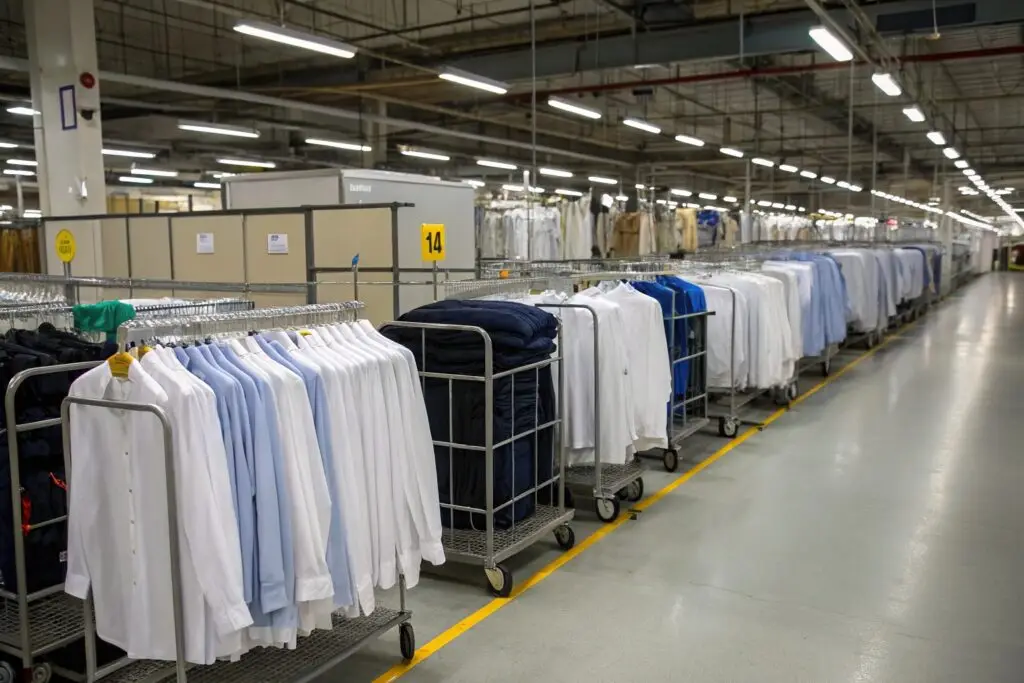
Why does turnover matter more in rental than retail?
Retail sells once. Rental profits from circulation.
If a jacket rents 10 times per year, that’s income 10x. If it rents once and sits? Loss.
We worked with a catering uniform client with a turnover rate10 of 2.6. After reviewing their sizing imbalance and SKU bloat, we:
- Cut slow-moving colors
- Rebalanced size packs by region
- Launched mid-season restock triggers
Their turnover rose to 6.4 within 12 months.
What turnover benchmarks work for different rental segments?
| Segment | Healthy Turnover Rate | Notes |
|---|---|---|
| Eventwear | 3–5 per year | Seasonal demand, trend risk |
| Work Uniforms | 6–9 per year | High frequency, stable demand |
| Hospitality Apparel | 5–7 per year | Moderate usage cycles |
| Medical Scrubs | 7–10 per year | Daily use, low return risk |
Monitor turnover quarterly. High turnover = high ROI. Low turnover = hidden inventory cost11.
Conclusion
Rental fashion is a cycle. Inventory that moves is inventory that pays. At Fumao, we help our partners forecast better, stock smarter, and build inventory systems that move as fast as their market.
-
Understanding demand models can help rental companies optimize inventory and meet customer needs effectively. ↩
-
Exploring Trend-Based Forecasting can provide insights into how to anticipate fashion trends and improve rental offerings. ↩
-
Learning about Booking-Based Modeling can enhance your understanding of customer behavior and improve reservation strategies. ↩
-
Exploring this resource will provide insights on how pre-orders can effectively gauge demand and minimize overstock risks. ↩
-
Understanding exit triggers can help you implement effective strategies to manage inventory and reduce losses from unsold items. ↩
-
This link will help you learn about the key factors that can improve sell-through rates for trendy items, enhancing your inventory strategy. ↩
-
Understanding SKU inflation is crucial for optimizing inventory and improving profitability in rental fashion. Explore this link for deeper insights. ↩
-
A SKU scoring matrix can help businesses make data-driven decisions on inventory, enhancing efficiency and reducing costs. Check this resource for practical applications. ↩
-
Improving utilization is key to maximizing profits in rental fashion. Discover effective strategies to enhance your business's performance by exploring this link. ↩
-
Understanding turnover rates can help optimize inventory and maximize profits in rental businesses. ↩
-
Learning about inventory costs can help identify hidden expenses and improve financial management in rentals. ↩