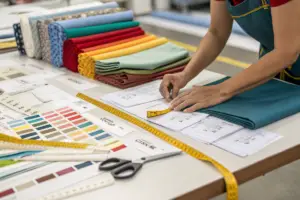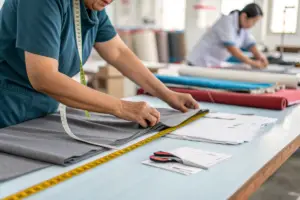
I once watched a brand owner spiral into a three-week email war with her factory over a half-inch discrepancy on a sleeve length. The factory insisted they had followed the tech pack. The brand owner insisted the sleeves were too short. Emails flew back and forth. Photos were taken. Fingers were pointed. The relationship soured. The shipment was delayed by two weeks. The root cause, discovered weeks later, was that the factory was measuring the sleeve from the center back neck, while the brand owner was measuring from the shoulder seam. The measurement point was not clearly defined in the tech pack. A three-week delay, $2,400 in air freight to fix the schedule, and a damaged relationship were all caused by a missing measurement diagram. It was resolved in a 15-minute video call once they finally got on the same page.
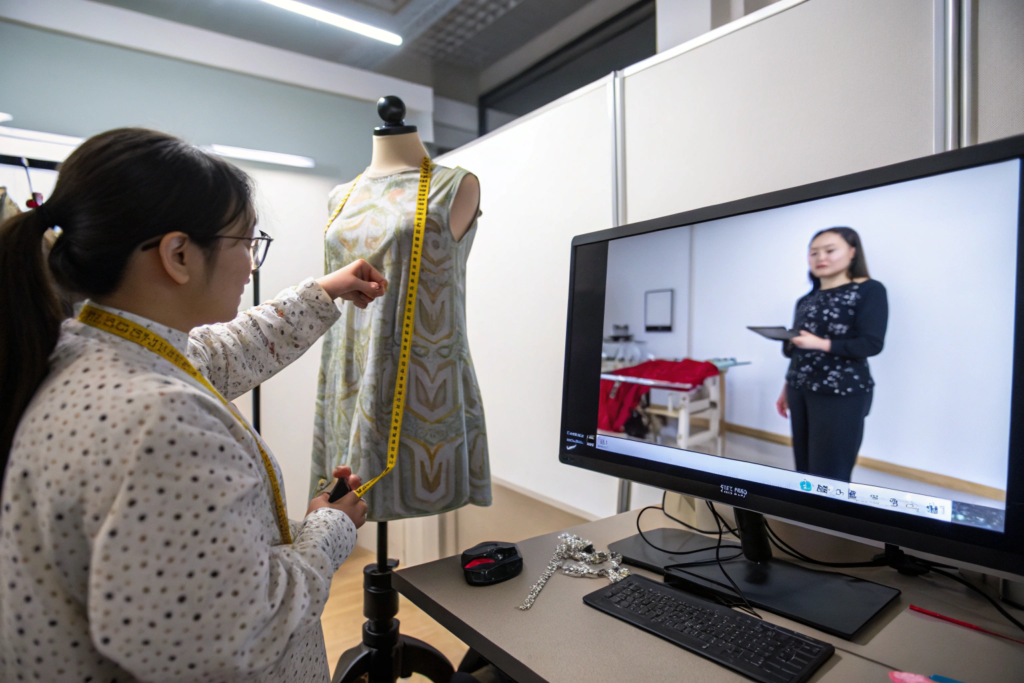
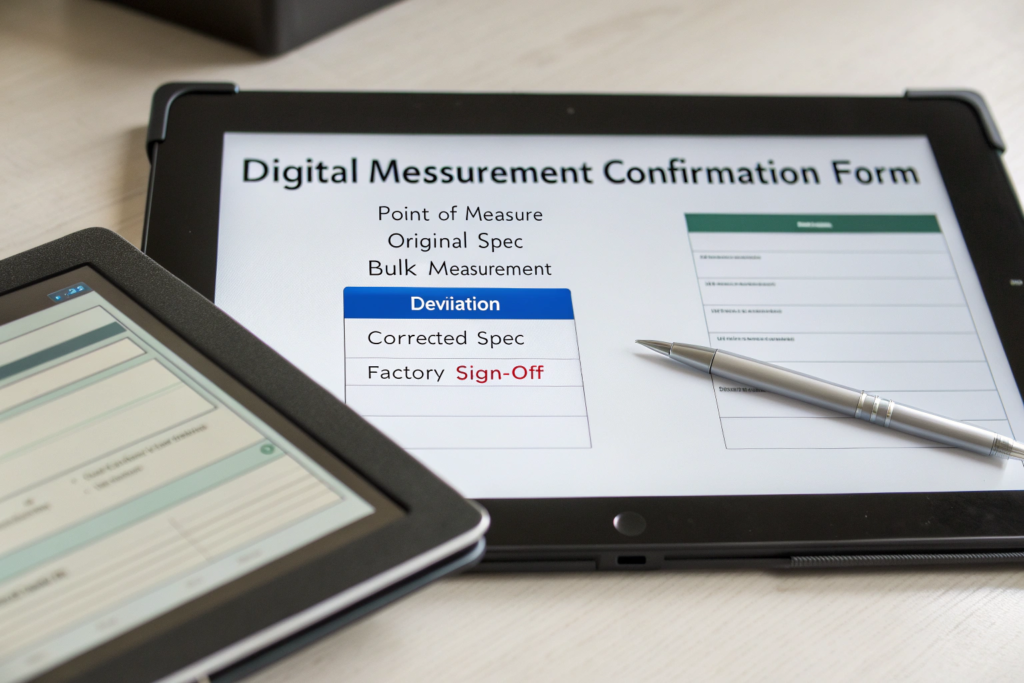
You incredibly quickly resolve sizing discrepancies with your international garment supplier by replacing email arguments with a structured "Live Measurement Alignment Protocol." The process has three steps that can be completed within 24 hours. Step one: you conduct a live video call where both parties measure their respective samples simultaneously, point to point, using the exact same measurement diagram as a shared visual reference. Step two: you compare the measurements against a sealed "Gold Seal" reference sample that was approved before bulk production, which immediately identifies whether the deviation is in the bulk production or in the brand's new expectation. Step three: you use a digital measurement confirmation form that the factory fills out and signs before re-cutting, which locks in the corrected specifications and eliminates ambiguity. The key principle is that sizing disputes are almost never about intent. They are about unclear communication of measurement points. Live visual alignment solves the communication problem instantly.
Sizing discrepancies are the most common and most expensive dispute in international garment manufacturing. They waste time, burn relationships, and delay shipments. But they are almost always solvable with a better process, not a better factory. I want to share the exact resolution framework we use at Shanghai Fumao to resolve these issues in hours, not weeks.
What Is a "Live Measurement Alignment" Video Call and How Does It Replace Weeks of Emails?
I had a brand partner who was convinced her factory had graded the size XL incorrectly. The chest measurement was coming in 1.5 inches too small on every sample. She sent three emails with photos. The factory sent three emails back insisting they had followed the grade rules. Frustration was building. I scheduled a 15-minute video call. I asked the brand owner to put the garment on a flat table and point her camera at it. I asked the factory pattern maker to do the same with the pattern. I asked the brand owner to place her ruler at the underarm seam and measure to the other underarm seam. She did. The factory pattern maker watched on screen and immediately said, "Ah, you are measuring from the seam. Our spec point is from the fabric edge, half an inch inside the seam allowance." The discrepancy was the seam allowance, not the chest circumference. The entire dispute was resolved in four minutes. Fifteen minutes of live video replaced three weeks of confusing emails.
A Live Measurement Alignment video call replaces weeks of email arguments by creating a shared, real-time visual reality. Both parties, the brand owner and the factory pattern maker, join a video call with their respective garments or patterns. They use the tech pack measurement diagram as a shared reference. The brand owner places their ruler on a specific measurement point and reads the number aloud. The factory pattern maker watches and either confirms the number matches their measurement or identifies the discrepancy in real time. The difference between this and email is that email relies on static photographs and written descriptions of measurement points. A photograph cannot communicate where the ruler was placed with enough precision. A written description can be interpreted differently. Live video eliminates the interpretation gap. Both parties see exactly where the ruler is placed. Both parties see the measurement on the ruler. The ambiguity that fuels disputes disappears.
The protocol requires only a smartphone, a measuring tape, the tech pack diagram, and 15 minutes of focused time. It should be the first response to any sizing dispute, not the last resort after weeks of frustration.
The single greatest source of measurement disputes is the starting point. "Sleeve length" can be measured from the center back neck, the shoulder seam, or the armhole. "Chest width" can be measured from the underarm seam, one inch below the underarm, or across the front panel only. If the tech pack diagram is ambiguous, the brand and the factory will measure from different points and get different numbers. Both will be correct based on their interpretation. Both will believe the other party is wrong. The dispute is not about quality. It is about definition. The tech pack diagram must have every measurement point annotated with a red dot and a letter, such as "Measure from Point A to Point B." This diagram is the shared reference during the video call. Both parties confirm they are measuring from Point A to Point B. The measurement point standardization in apparel tech packs is the single most effective tool for preventing and resolving sizing disputes.
How Does a Digital Caliper Provide an Irrefutable Reading That a Flexible Tape Measure Cannot?
A flexible tape measure introduces human variability. The tension on the tape, the angle of the reading, and the alignment of the zero point can all vary between users. A digital caliper provides a hard, mechanical reading. It clicks into place at the exact measurement point. The digital display shows the number to 0.1 millimeter precision. There is no room for interpretation. When a dispute arises over a critical measurement like a collar point spread or a buttonhole placement, a digital caliper reading sent as a photo provides irrefutable evidence of the actual dimension.
How Do You Use a "Gold Seal" Reference Sample to Instantly Prove Where a Deviation Occurred?
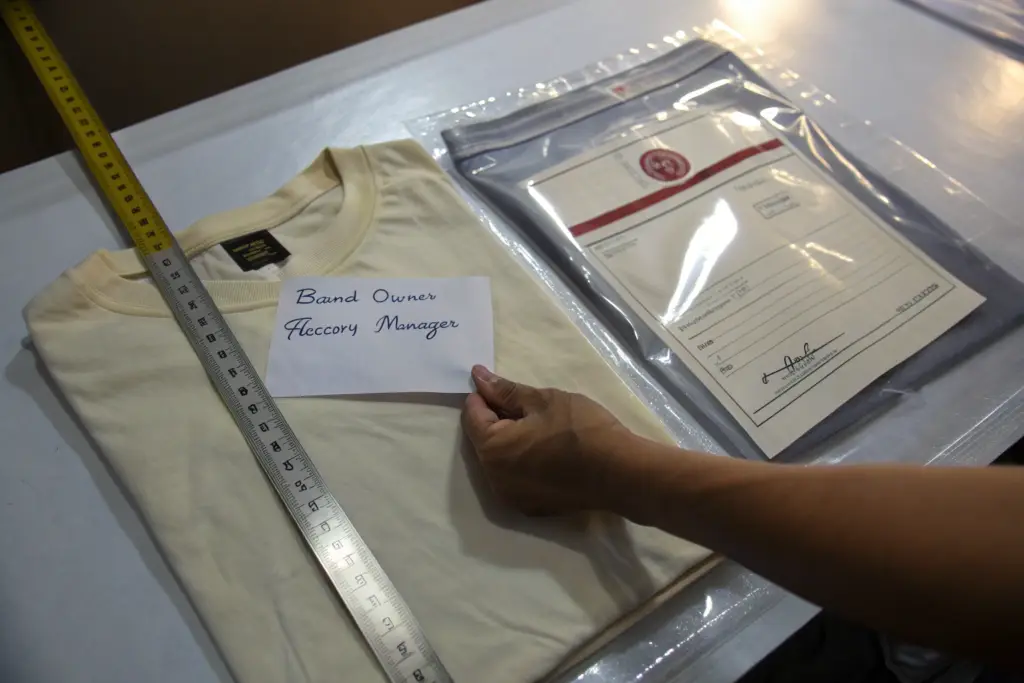
A brand owner once accused us of making her dresses 2 inches shorter than the approved sample. She was adamant. She had a dress from the bulk shipment and it measured 36 inches. Her records showed the approved sample was 38 inches. We retrieved the Gold Seal reference sample from our locked cabinet. We opened the sealed bag on a video call. We laid the Gold Seal sample flat and placed a ruler next to it. The Gold Seal sample measured 36 inches. The brand owner had recorded the wrong number in her notes. The bulk production was perfectly matched to the approved sample. The Gold Seal sample saved us from a costly, unnecessary rework.
A Gold Seal reference sample is a physical garment, approved by the brand, that is sealed in a tamper-proof bag and signed by both the brand owner and the factory manager. It is the legally binding quality standard for the production run. When a sizing dispute arises, the Gold Seal sample is the arbiter. The bulk production is compared against the Gold Seal sample, not against the brand's memory or a different reference garment. If the bulk production matches the Gold Seal sample, the factory has fulfilled its contractual obligation. If there is a deviation, the factory is responsible. The Gold Seal sample eliminates the "I thought it was supposed to be different" argument. It replaces subjective memory with objective evidence. It is the single most effective tool for resolving sizing disputes quickly and fairly.
Every production order should have a Gold Seal sample. The sample is created during the pre-production approval process. The brand approves the fit, the measurements, and the construction. The approved sample is sealed, signed, and stored in a locked cabinet. It is only opened if a dispute arises. This process protects both the brand and the factory.
What Should You Do If the Bulk Production Matches the Gold Seal, but the Fit Is Still "Off"?
This scenario indicates that the error was in the original sample approval, not in the bulk production. The brand approved a sample that had a fit issue. The factory faithfully reproduced the flawed sample. The resolution is not a factory penalty. It is a collaborative pattern correction for the next production run. The Gold Seal sample has done its job by identifying where the error occurred. The brand and factory can now work together to fix the pattern, grade rules, or fit specifications for the next order, without any adversarial blame.
How Do You Handle a Supplier Who Claims They "Lost" the Gold Seal Reference Sample?
A factory that claims to have lost the Gold Seal sample has breached the quality agreement. The Gold Seal sample is a contractual document in physical form. Losing it is equivalent to losing the signed contract. The factory loses the benefit of the doubt in any sizing dispute. The resolution is to create a new Gold Seal sample immediately from the current production run, with both parties re-signing. The factory must also implement a secure sample storage system to prevent future losses. A reputable factory will never lose the Gold Seal sample because they value the protection it provides them as much as the protection it provides the brand.
What Digital Measurement Confirmation Form Locks in the Correction So the Same Mistake Never Repeats?
A brand owner resolved a sizing dispute with her factory. They had a productive video call. They agreed on the corrections. Two months later, the next production run arrived with the exact same sizing error. The factory had not documented the correction. The pattern maker had not updated the master pattern. The correction had been made verbally and forgotten. The brand owner now uses a Digital Measurement Confirmation Form that the factory must sign before the production run closes. The error has never repeated.
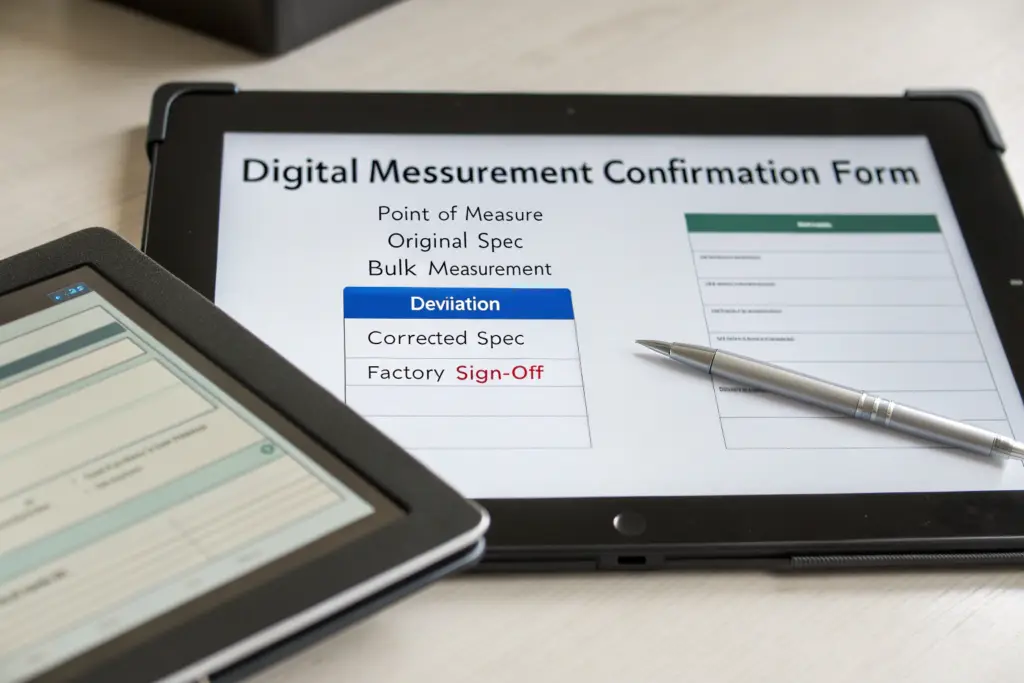
A Digital Measurement Confirmation Form is a single-page document that captures the specific measurement discrepancy, the agreed correction, and the factory's signed commitment to implement the correction. It lists the point of measure, the original specification, the bulk measurement that caused the dispute, the deviation amount, and the corrected specification for the next production run. The factory pattern maker and the brand owner both sign the form electronically. A copy is attached to the tech pack for the next order. This form prevents the "forgotten correction" problem that plagues iterative production. It creates a written, signed, searchable record of every sizing issue and its resolution. Over multiple production runs, the brand builds a history of measurement refinements that continuously improves the fit of their product.
The form takes five minutes to complete at the end of the resolution call. It is not a bureaucratic exercise. It is the institutional memory of the partnership. A factory that values long-term quality improvement will welcome the form. A factory that resists it is signaling that they do not intend to learn from mistakes.
How Should the "Corrected Spec" Column Be Populated to Ensure the Pattern Maker Updates the Master Pattern?
The "Corrected Spec" column must include the exact new measurement, not a relative instruction. "Add 0.5 inches" is a relative instruction that can be misinterpreted or forgotten. "New Spec: 26.5 inches (previously 26.0 inches)" is an absolute specification. It includes the historical context so the pattern maker understands what changed and why. The form must also include a checkbox for "Master Pattern Updated" and "Grade Rules Updated" if the change affects the base size. The pattern maker signs this section specifically, confirming they have physically altered the digital or physical pattern.
Why Should This Form Be Attached to the Next Purchase Order as a Contractual Addendum?
The form documents a quality issue and its resolution. Attaching it to the next purchase order makes the correction a contractual obligation for the next production run. It says to the factory: "This is not a suggestion. This is a binding specification. The goods will be inspected against this updated measurement." This protects the brand from receiving goods made to the old, incorrect specification. It also gives the factory a clear, unambiguous target for the next run.
Conclusion
Sizing discrepancies with an international garment supplier are not a sign of a bad factory. They are a sign of a communication gap. The gap is closed not by changing factories, but by changing the dispute resolution process. The Live Measurement Alignment video call replaces ambiguous email threads with simultaneous, visually verified measurement. The Gold Seal reference sample provides an indisputable physical standard that resolves disputes instantly. The Digital Measurement Confirmation Form locks in the correction and prevents the error from repeating.
The half-inch sleeve length dispute that cost three weeks and $2,400 was ultimately a measurement point definition problem. It was resolved in 15 minutes once the right process was applied. The process costs nothing but focus. The time and money it saves are enormous.
At Shanghai Fumao, we use this exact resolution framework with all our brand partners. We conduct live measurement alignment calls on request. We create, seal, and securely store Gold Seal reference samples for every production order. We use a Digital Measurement Confirmation Form to document and lock in any sizing corrections. We do this because we value our brand partners' time and we know that a sizing dispute is a relationship risk that must be resolved quickly and professionally.
If you are currently experiencing a sizing issue with a supplier, or if you want to build these prevention and resolution tools into your next production order, we can help. At Shanghai Fumao, we will share our measurement diagram template, our Gold Seal sample protocol, and our Digital Measurement Confirmation Form. Contact our Business Director, Elaine, at elaine@fumaoclothing.com. She can schedule a call to walk you through the resolution framework. Do not let a measuring tape become a barrier to a great partnership. Measure together, resolve quickly, and build better products.