I once watched a brand owner pull a men's linen shirt out of a shipping carton and hang it on a rack. The collar was a wrinkled, curled mess. The button placket rippled like a wave. The hem was twisted. The shirt had been perfectly pressed at the factory, but three weeks in a humid shipping container had undone every bit of finishing. The buyer, a men's boutique owner, took one look and canceled his order. He said, "My customers expect a shirt to hold its shape. If it can't survive the trip to my store, it won't survive one wear." That brand owner lost a $12,000 order because the garment lacked the internal structure to resist deformation.
The craft treatments that make men's summer clothes resistant to deformation are a combination of mechanical stabilization and engineered internal support. For woven shirts, the non-negotiable treatment is a high-quality fusible interlining applied with precise temperature and pressure to the collar, cuffs, and button placket. This creates a permanent bond that prevents bubbling and curling through dozens of washes. For knit polos and t-shirts, the critical treatment is resin-free cross-linking, often using a formaldehyde-free glyoxal-based finish, which locks the fibers in place and prevents the "wet noodle" collar effect. For linen and lightweight cotton trousers, a pre-curing compressive shrinkage process, combined with a hot-head press at the seams, ensures the garment does not shrink or twist unpredictably after the first wash. These are not decorative crafts. They are the engineering backbone that keeps a men's garment looking sharp and structured.
Men's clothing, particularly summer weight fabrics, faces a brutal structural challenge. The fabrics are light and breathable, but they lack the natural weight and stiffness that help a garment hold its shape. A heavy wool suit jacket resists deformation because of its mass and internal canvas. A lightweight linen shirt has no such natural defense. Every seam, every edge, every closure point must be reinforced with specific craft treatments. I want to share exactly how we build this shape retention into garments at Shanghai Fumao.
How Do Fusible Interlinings and Fusing Press Parameters Prevent Collar and Cuff Bubbling?
A men's shirting brand we work with once had a devastating return wave. Customers were complaining that after three washes, the collars on their $85 shirts looked like "crinkled potato chips." The problem was delamination. The factory had used a cheap, low-grade fusible interlining and had rushed the fusing process. The heat press was running too fast, and the temperature was inconsistent. The adhesive had not fully melted into the fabric fibers. After a few cycles of washing and body heat, the glue bond broke, and the interlining separated from the face fabric. The collar was structurally dead. We switched to a high-quality German interlining and recalibrated the fusing press parameters. The problem disappeared.
The prevention of collar and cuff bubbling relies on three factors: the quality of the fusible interlining, the precision of the fusing press parameters, and the compatibility of the interlining with the shell fabric. The interlining must be a high-density woven or weft-inserted base cloth coated with a polyamide or polyester adhesive applied in a uniform, micro-dot pattern. The fusing press must maintain a constant temperature within a 3°C tolerance, a specific pressure measured in PSI, and a dwell time calibrated to the fabric thickness. Too much heat burns the glue. Too little heat leaves a weak bond. The correct parameters create a molecular bond where the adhesive penetrates into the fibers of both the interlining and the shell fabric, becoming essentially permanent. This bond must survive at least 20 home laundry cycles without any bubbling, edge lifting, or strike-through of adhesive to the surface.
The interlining is the skeleton of the men's summer shirt. The fabric may be a breezy 100% linen, but the collar and cuffs need internal discipline. A high-quality interlining, properly fused, provides that discipline without making the collar feel stiff or cardboard-like. The hand feel should remain soft, but the shape must be locked.
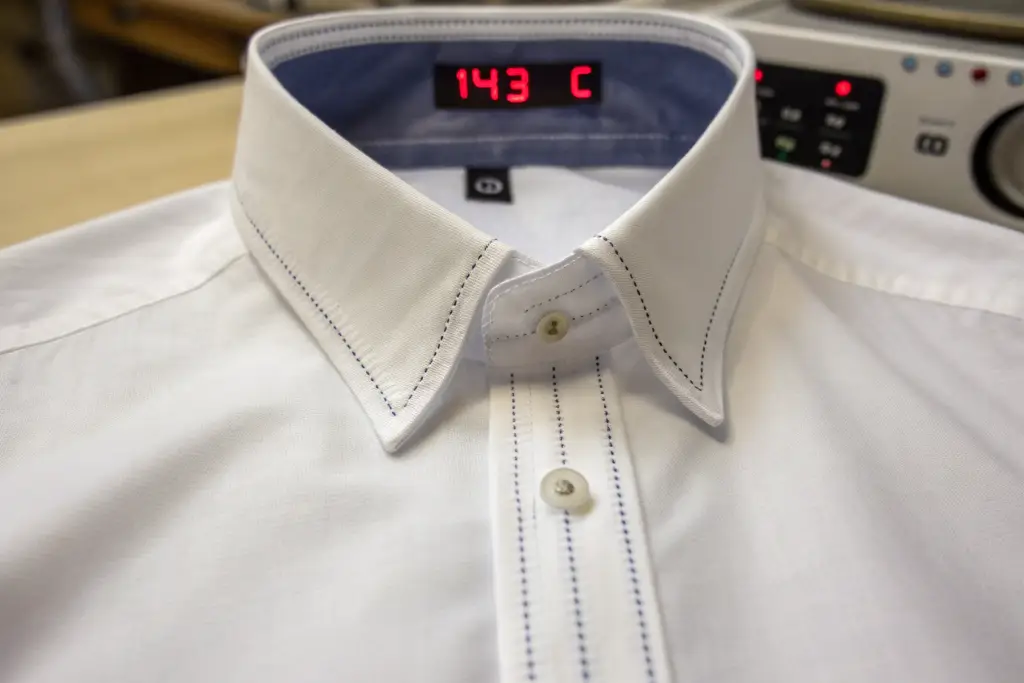
Why Must the Fusing Press Temperature, Pressure, and Dwell Time Be Calibrated Differently for Lightweight Summer Wovens?
Lightweight summer wovens, such as 80 GSM cotton voile or 120 GSM linen, have less fiber mass to absorb the adhesive. If you apply the same heat and pressure used for a heavy Oxford cloth, you risk "strike-through," where the molten glue seeps through the face fabric and becomes visible as a shiny, rough stain. For these delicate fabrics, the temperature is typically reduced by 5°C to 8°C, the pressure is lowered by 10 to 15 PSI, and the dwell time is slightly extended to allow the adhesive to flow gently into the fibers rather than being forced through. The fusing press calibration for lightweight fabrics requires test samples and wash testing for each new fabric lot.
What Is the "Micro-Dot" Adhesive Technology That Prevents the "Cardboard" Look on a Soft Summer Collar?
Cheap interlinings use a random scatter of large glue particles. When fused, this creates a stiff, uneven bond. High-end interlinings use a computer-controlled micro-dot application. Thousands of tiny, uniform dots of adhesive are applied per square inch. This provides a strong bond because the adhesion points are dense, but it leaves plenty of unbonded space between the dots. The fabric between the dots remains soft, flexible, and breathable. This is how you achieve a collar that is crisp and flat but does not look like it was cut from a cereal box.
What Anti-Curling and Resin Finishes Keep Knit Polo Collars and Hems Flat Without Formaldehyde?
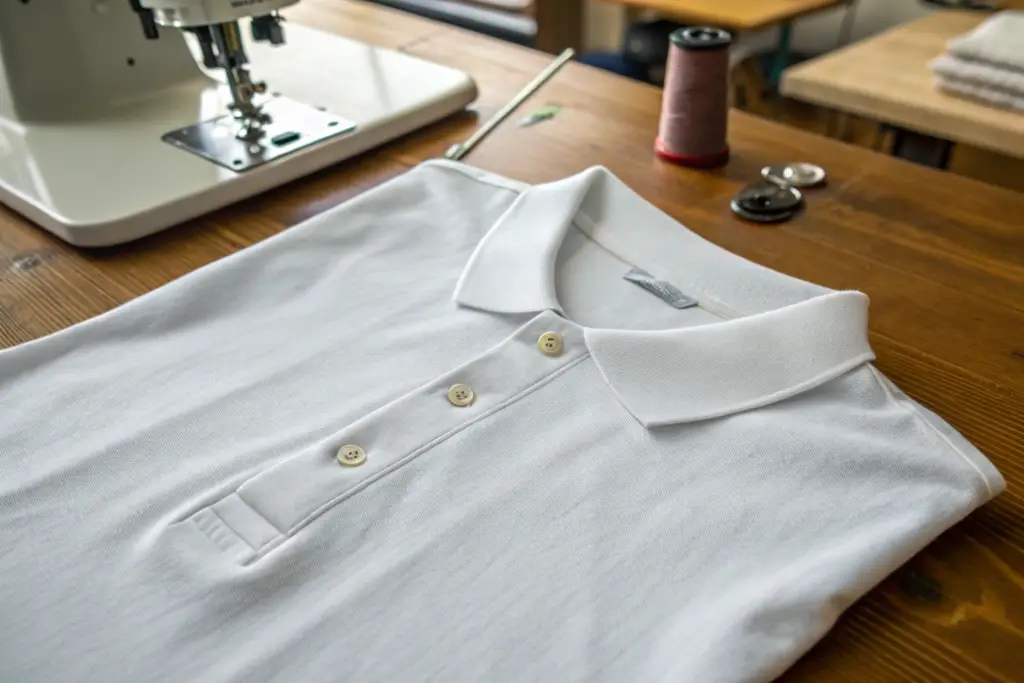
A brand owner in the golf apparel market had a disaster. His premium pique polo shirts were developing "bacon collar" after just one wash. The collar, which was a ribbed knit, stretched out and rippled. The hem curled upward like a dry leaf. The shirts looked ten years old after a week of wear. The problem was that the knit construction has natural elasticity. Without a stabilizing treatment, the heat and agitation of a washing machine permanently distort the yarn alignment. We applied a formaldehyde-free glyoxal cross-linking resin to the collar and hem areas. The treatment locked the yarns in place without releasing toxic fumes.
Anti-curling and resin finishes for knits work by creating microscopic cross-links between the cellulose molecules in the cotton fibers. These cross-links act like tiny spot welds that hold the fiber in its intended shape. When the garment is washed and mechanically stressed, the fibers try to relax back to their natural, chaotic state. The cross-links prevent this relaxation. The critical requirement is that the treatment must be free of formaldehyde, which is a known skin irritant and carcinogen. Modern, safe alternatives use glyoxal-based chemistry or polycarboxylic acids. These finishes are applied in a "wet-on-wet" process during dyeing or as a post-wash spray, then cured in a stenter frame at a precise temperature. The treatment can be localized to high-risk areas, the collar and hem, to preserve the natural drape of the body fabric.
The goal is not to make the knit feel stiff. A polo shirt should still feel soft and stretchy. The goal is to give it "memory." When you pull the collar, it should snap back flat. When you stretch the hem, it should return to a straight line. This is the functional definition of shape retention in knitwear.
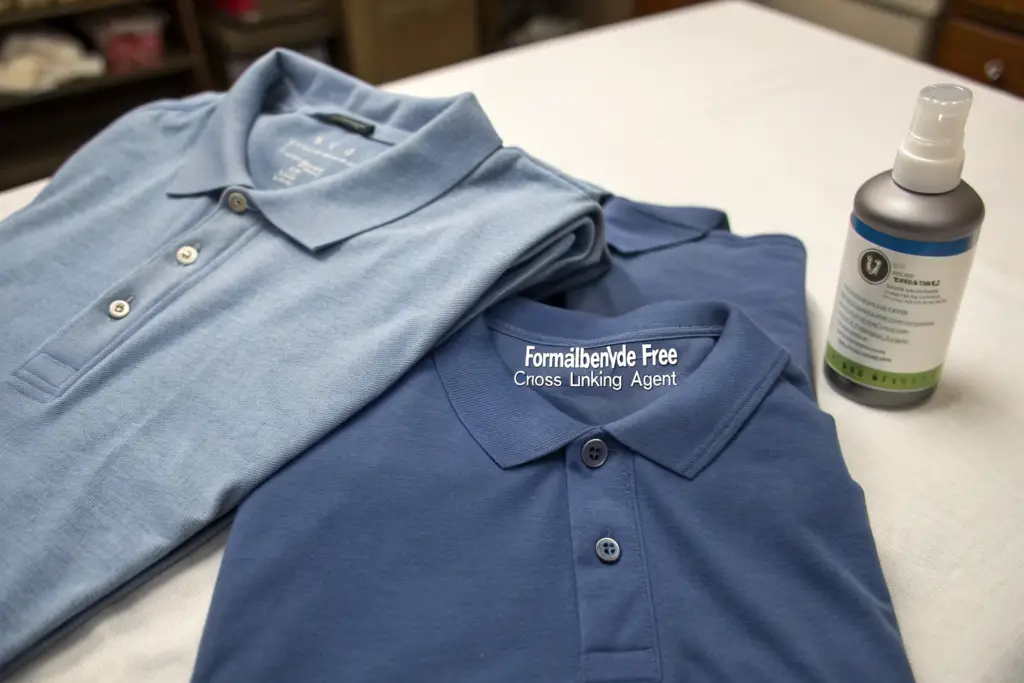
How Does Glyoxal-Based Cross-Linking Differ Mechanically from Traditional Formaldehyde Resins?
Traditional formaldehyde resins create rigid, brittle cross-links. They make the fabric feel stiff and reduce its tear strength. Glyoxal-based cross-links are shorter and more flexible. They lock the fiber structure without making it brittle. This is particularly important for summer knits, which need to retain their softness against the skin. The treatment also has a lower curing temperature, which protects the delicate colors of summer fashion fabrics from heat damage.
What Is "Edge-Fusing" for Knit Hems and Why Is It Critical for Maintaining Retail Presentation?
Edge-fusing is a treatment applied only to the very edge of a knit hem, typically using a thin, clear polyurethane thread that is heat-bonded into the fabric, or a localized application of a polyamide hot-melt adhesive. This creates an invisible, flexible "wire" that runs along the hem edge. It prevents the hem from curling outward, which is the natural tendency of single-knit jersey fabrics. This treatment is completely invisible to the customer but makes the difference between a shirt that looks crisp on the shelf and one that looks sloppy.
How Do Compressive Shrinkage and Seam Pressing Stabilize the Shape of Lightweight Summer Trousers?
A brand owner who specialized in men's summer suits faced a recurring complaint. The trousers were arriving at the customer with twisted side seams. The leg would spiral slightly, so the crease did not hang straight. It looked like a manufacturing defect. The root cause was residual torque in the fabric. Lightweight cotton-linen blends twist as they dry. If the fabric is not relaxed before cutting, the cut pieces are already under tension. When the trousers are sewn and washed, that tension releases, and the seam spirals. We solved this by implementing a compulsory pre-cutting compressive shrinkage process.
The stabilization of lightweight summer trousers depends on two processes: compressive shrinkage before cutting, and precision seam pressing during construction. Compressive shrinkage, often called "Sanforizing" for wovens, uses a thick rubber blanket and a heated drum to mechanically force the fabric to shrink in a controlled manner before it reaches the cutting table. This removes the residual shrinkage that would otherwise occur during the customer's first wash. Seam pressing uses a hot-head press or a vacuum steam iron to set the seams flat. After sewing, the seam allowance is pressed open or to one side under high heat and pressure, then cooled under vacuum. This "sets" the threads and the fabric in the correct alignment. Without these steps, a summer trouser will inevitably twist, shrink, and lose its crease after one wear.
Men's trousers are judged by the hang of the leg. A twisted seam or a wavy crease is immediately visible and perceived as poor quality. The fabric must be relaxed before it is cut, and the seams must be set after they are sewn. These are not optional steps. They are the definition of proper tailoring.
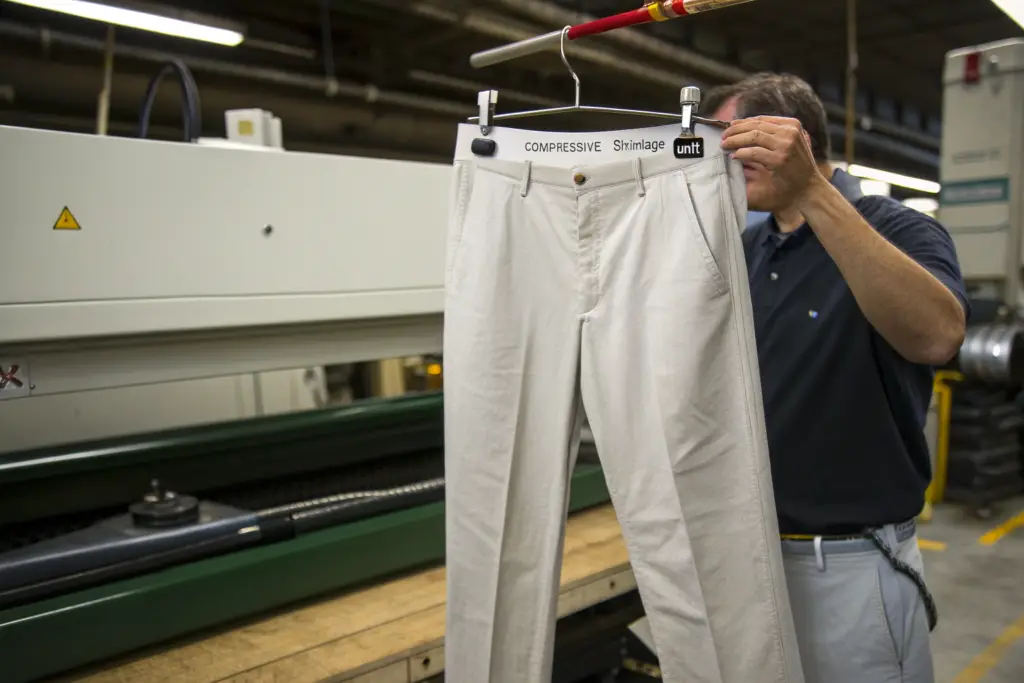
Why Must Fabric Be "Relaxed" Through a Compressive Shrinkage Machine Before Cutting?
Woven fabric is under tension during weaving, dyeing, and finishing. When the fabric is rolled, that tension is locked in. If you cut the fabric in this tense state, the pattern pieces will shrink and distort the moment they are washed or even exposed to humidity. Compressive shrinkage releases this tension. The fabric enters the machine, is forced to contract, and exits in a permanently relaxed state. Cutting relaxed fabric ensures the garment dimensions remain stable for the life of the garment.
How Does the "Hot-Head Press" Differ from a Hand Iron in Setting a Permanent Crease on a Trouser Leg?
A hand iron applies heat and pressure inconsistently. The operator's arm pressure varies. The steam is uneven. A hot-head press applies a perfectly controlled, massive pressure over a large surface area, followed by a vacuum cooling cycle. This rapid cooling "shock-sets" the fibers in the new position. The crease formed by a hot-head press is significantly more durable than one set by a hand iron and will survive multiple wears and washes.
Conclusion
The ability of men's summer clothes to resist deformation is not a matter of luck or expensive fabric. It is a matter of specific, engineered craft treatments applied at the right points. A fused interlining with calibrated heat and pressure prevents the collar from collapsing. A formaldehyde-free cross-linking resin gives knit hems and collars permanent memory. Compressive shrinkage and hot-head pressing ensure that trousers hang straight and creases stay sharp.
The men's market is particularly unforgiving of shape failure. A male customer who buys a shirt and sees the collar curl after two washes will simply never buy that brand again. The loyalty is lost. The structural treatments are the insurance policy against that loss.
At Shanghai Fumao, we treat these craft processes as standard, not as premium add-ons. Our fusing presses are calibrated for each fabric lot. Our finishing department uses certified formaldehyde-free resins. Our cutting room only works with fabric that has passed through compressive shrinkage. We do this because we know that a garment's shape is its reputation.
If you are developing a men's summer line and want to guarantee that your garments hold their shape, we can help you engineer the right treatments. At Shanghai Fumao, we will review your tech pack and recommend specific interlining specifications, fusing parameters, and stabilization processes. Contact our Business Director, Elaine, at elaine@fumaoclothing.com. She can send you our shape retention standards guide and a sample pack of treated collars and seams. Build garments that look as good on the tenth wear as they do on the first.