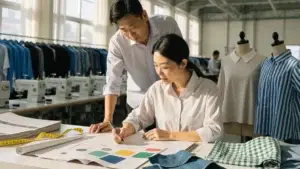
You have the design. Maybe it is a sketch on your iPad, a pinned photo from a runway show, or a fully detailed tech pack your pattern maker prepared. You know the silhouette, the print direction, and the target retail price. You are ready to move from concept to inventory. Then you face the actual process of importing from China. The customs codes. the freight options. The duty rates. The documentation requirements. The quality control checkpoints. It feels like a maze designed to trip up anyone who is not a full-time logistics professional. You are a brand owner, not a customs broker. You want to create beautiful dresses and sell them. You do not want to become an expert in harmonized tariff schedules.
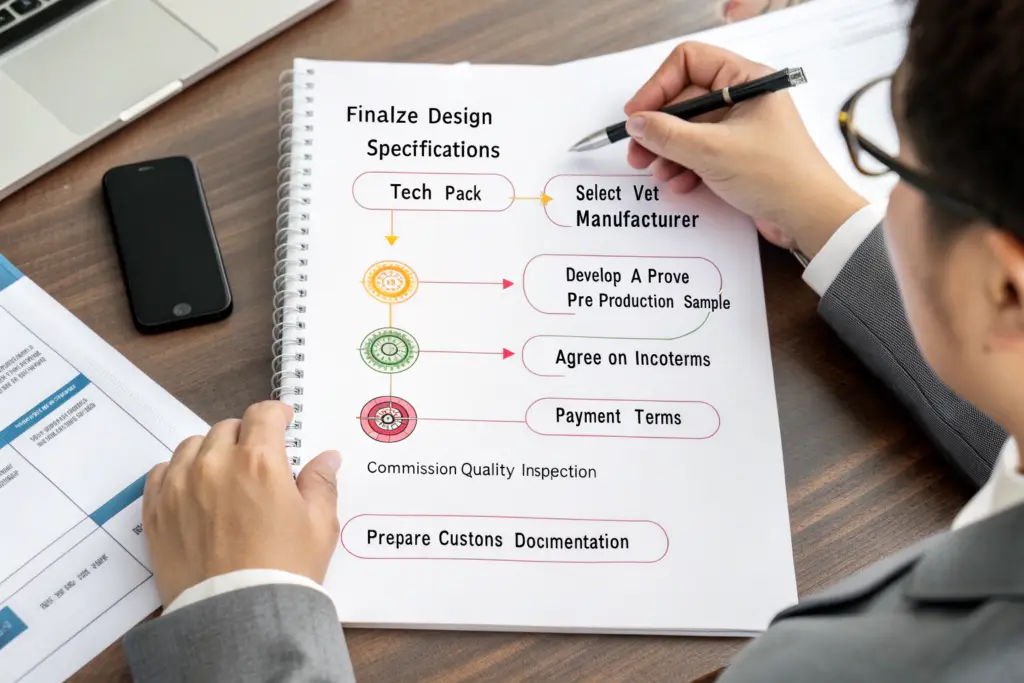
Importing custom A-line floral dresses from China is a structured, six-stage process that you can manage successfully by following a clear sequence. First, finalize your design specifications and tech pack. Second, select and vet a specialized woven dress manufacturer. Third, develop and approve your pre-production sample, which becomes your quality reference standard. Fourth, agree on Incoterms—I strongly recommend DDP for first-time importers—and payment terms tied to production milestones. Fifth, commission a third-party quality inspection before shipment. Sixth, prepare your U.S. customs documentation with correct HTS codes and fiber content declarations. Each stage has specific, avoidable pitfalls. When managed correctly, the entire timeline from design finalization to goods in your warehouse is twelve to sixteen weeks.
My name is Elaine. I am the co-owner of Shanghai Fumao. I have guided hundreds of brand owners, from first-time importers to established distributors, through this exact process. I have seen the mistakes that cause delays, the documentation gaps that trigger customs exams, and the supplier communication breakdowns that turn a simple order into a season-killing crisis. I have also seen how a well-managed import process transforms a brand's margin structure and product quality. In this article, I will walk you through each stage with specific, actionable instructions. By the end, you will have a complete roadmap for your first custom import order, or a checklist to improve your existing process.
What Design Specifications Must You Finalize Before Contacting a Manufacturer?
The number one cause of delays, cost overruns, and sample rejections in custom dress importing is an incomplete design brief. You contact a manufacturer with a mood board and a hope. The manufacturer quotes a price based on assumptions. The sample arrives. It is not what you pictured. The revision cycle begins. Weeks turn into months. The season launch date slips. This scenario is entirely avoidable. The more precise and complete your design specifications before you send the first email to a supplier, the faster and more accurate your sample development will be, and the lower your total development cost.
Before contacting a manufacturer, finalize and document these five elements of your A-line floral dress design. First, the silhouette and fit specifications, including a technical flat sketch with key measurements or a graded size spec. Second, the fabric specification, including fiber content, weight in GSM, and hand feel requirements. Third, the print design direction, including a reference image, a color palette with Pantone references, and the scale of the floral repeat. Fourth, the construction details, including seam finishes, zipper type, neckline and armhole finishing, and hem type. Fifth, the trim specifications, including button materials, label designs, and hangtag concepts. A complete design brief transforms the manufacturer's response from "we need more information" to "here is your development timeline and cost estimate."
What Makes a Tech Pack "Complete Enough" for an Accurate Manufacturer Quote?
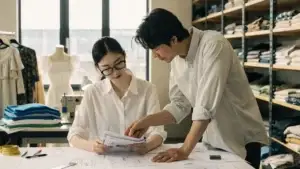
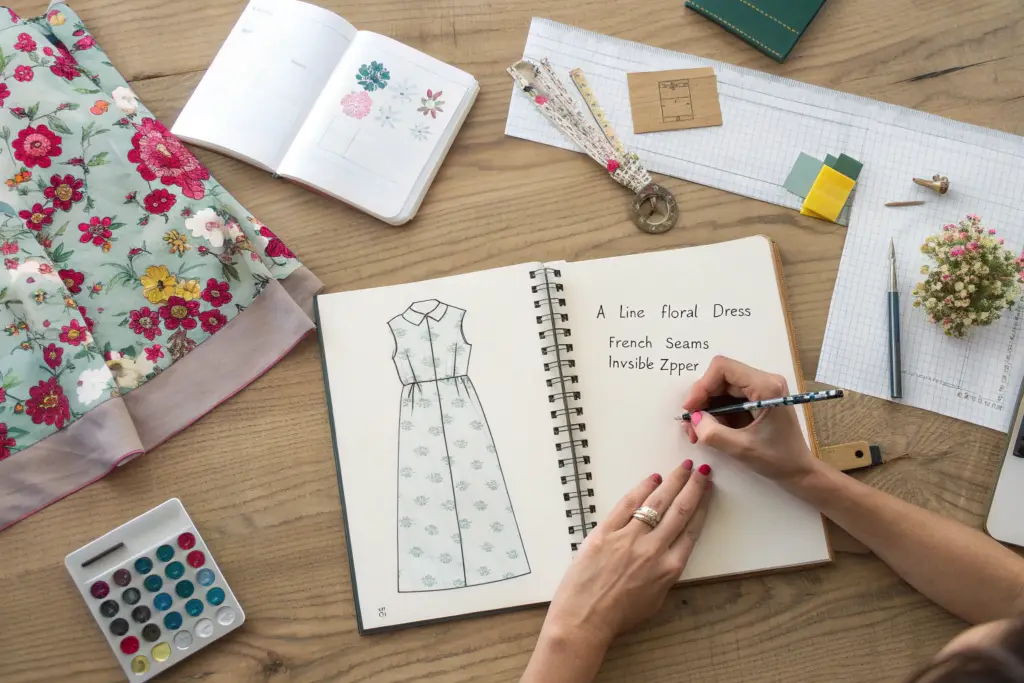
A tech pack is the document that communicates your design to the factory. It translates your vision into a language the pattern maker, the cutter, and the sewing line can understand. A complete tech pack does not need to be a thirty-page professional document. It does need to answer every question the factory will ask when they sit down to cost and plan your order.
At minimum, a tech pack for an A-line floral dress should include: a front and back flat sketch of the dress, showing all seam lines, the zipper placement, the neckline shape, and the sleeve or strap design. A measurement chart for your base size, including at minimum the bust circumference, waist circumference at the natural waist and at the dress waist seam, hip circumference, dress length from shoulder to hem, shoulder width, armhole depth, neckline width and depth, and hem circumference. This is the A-line shape definition, and the hem circumference is particularly critical. Fabric specifications, including the fiber content you require, for example 100% linen, and the target weight, for example 180 to 200 GSM. Print specifications, including the print placement, the repeat size, and any specific alignment requirements such as centered focal flower at the bodice. Construction callouts, specifying the seam type on major seams, the hem finish, the zipper type and color, and the neckline and armhole finishing method. Trim details, including the button type and size if applicable, the label placement and dimensions, and any special packaging requirements. The how to create a tech pack for garment manufacturing guide provides templates and detailed instructions. A factory that receives this level of detail can provide an accurate quote within a few days. A factory that receives a mood board and a prayer will either guess, producing a sample that misses the mark, or delay, requesting the missing information piece by piece.
Why Must You Decide Your Print Direction Before the First Factory Conversation?
The print is not an afterthought to be layered onto a finished dress design. It is a core component that affects fabric choice, pattern layout, and cost. A large-scale, high-color-count floral print requires a different print technology and a different cost structure than a small-scale, two-color ditsy print. A print that must align at the side seams and the waist seam requires the cutting room to allocate extra fabric for pattern matching, which increases the fabric consumption and the per-unit cost.
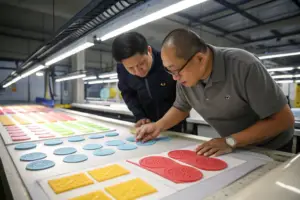
Deciding your print direction before contacting the manufacturer allows them to provide a quote that reflects your actual requirements, not a generic estimate that will change when you reveal the print details. It also allows them to advise you on technical feasibility. A print with eight colors, including a fluorescent pink that cannot be reproduced with standard reactive inks, may require a conversation about alternative color formulations before you commit to the design. A print with a 60-centimeter repeat may require adjustments to the skirt panel dimensions to avoid wasting fabric. These are conversations that are most productive before the sampling process begins, not after you have fallen in love with a print that cannot be produced on your chosen fabric within your target cost. The floral print design for digital textile printing article explains the technical considerations that affect print feasibility and cost. Resolve these before you engage the manufacturer, and the engagement will be faster, smoother, and less expensive.
How Do You Vet a Manufacturer to Ensure They Can Deliver on Custom Floral Dresses?
You have a complete design brief. You are ready to contact manufacturers. The internet presents you with hundreds of options, all claiming to be the best. How do you narrow the field to the two or three factories that are genuinely capable of producing your custom A-line floral dresses at the quality level your brand requires? This is the vetting stage, and it is the most important decision in the entire import process. A bad manufacturer choice cannot be rescued by a good contract or a thorough QC inspection. The factory either has the capability and the quality culture, or it does not.
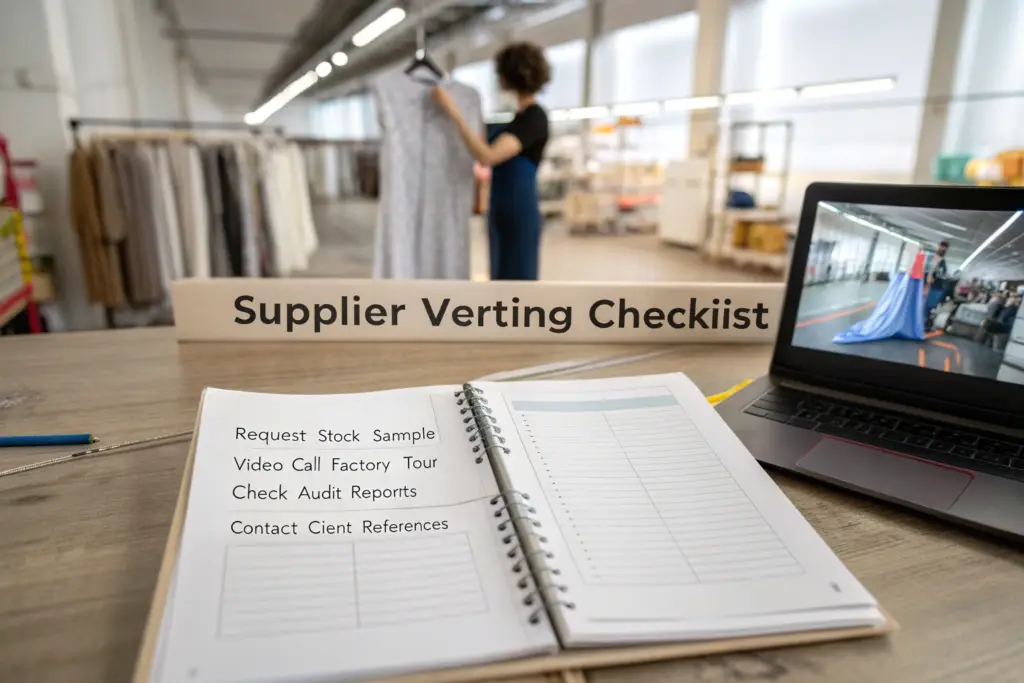
Vet a custom dress manufacturer through a four-step verification process that takes approximately two to three weeks and costs a few hundred dollars. Step one: request a stock sample of their best A-line dress in a fabric and print similar to your intended design. Inspect it using the five-point quality method—fabric and print quality, seam construction, zipper insertion, hem and hang, bodice and armhole fit. Step two: request a live video tour of their factory floor, specifically asking to see the sample room, a woven dress production line, and the QC inspection area. Step three: request their current social compliance audit report (BSCI, SMETA, or equivalent) and any relevant quality certifications (ISO 9001). Step four: request contact information for two current or recent clients in your market segment who have agreed to serve as references. A manufacturer who refuses any of these four steps is not a manufacturer you should trust with your order.
What Should You Look for During a Live Video Factory Tour?
A factory's website can feature stolen photos from a completely different facility. A video call, where you direct the camera and ask real-time questions, cannot be faked. The live video tour is the single most effective remote verification tool available to importers.
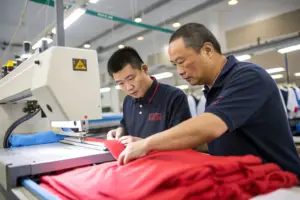
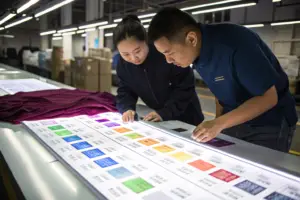
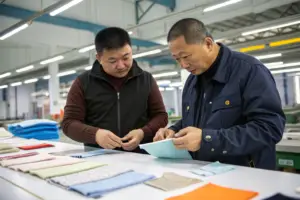
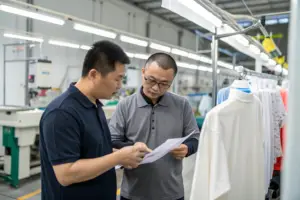
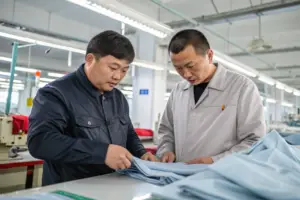
During the call, do not let the factory representative control the narrative. Politely direct the camera. Ask to see the sample room first. Is it a dedicated space with pattern tables, dress forms, and fabric swatch libraries, or is it a sewing machine in a corner of the production floor? Ask to see a production line that is currently sewing woven dresses, specifically A-line styles if possible. Observe the workers. Are they focused and unhurried, or are they rushing at an unsustainable pace? Ask to see the QC inspection area. Look for a lightbox for color evaluation, a measurement table with calibrated measuring tapes, and a hanging inspection rack for drape assessment. Ask the person guiding the tour to introduce you, via the camera, to the pattern engineer or the QC supervisor. A real factory has these people on-site, and they can answer a basic technical question on the spot. A trading company posing as a factory will stumble, make excuses, or suddenly have a poor connection. The virtual factory audit guide for garment importers provides a structured checklist for remote factory evaluations. Use it. The video tour is your eyes in a facility you cannot physically visit.
Why Are Client References in Your Specific Market Segment the Most Valuable Vetting Tool?
Every factory has at least one or two happy clients they can point to. The question is whether those clients are similar to you in brand positioning, order volume, and quality expectations. A factory that produces basic t-shirts for a mass-market retailer may not be capable of producing a premium A-line floral dress for a contemporary boutique brand, even if they have "dress production" listed on their website.
When you request client references, specify that you want to speak with brands in a similar market segment to yours. If you produce premium linen dresses, ask for a reference from another brand that works with natural fibers at a similar price point. Contact the reference. Ask specific questions. "How was the sample development process? How many rounds did it take to get the fit right? How was the communication during production? Did the bulk quality match the sample quality? Did the shipment arrive on time? Would you work with them again?" Listen for hesitation. A reference who pauses before saying "they are fine" is telling you something important. A reference who enthusiastically describes a problem the factory solved proactively is telling you something even more important. The supplier reference check questions for fashion brands guide provides a structured interview framework. A positive reference from a brand similar to yours is the strongest possible signal that the factory can meet your specific requirements.
What Are the Critical Steps Between Sample Approval and Bulk Shipment?
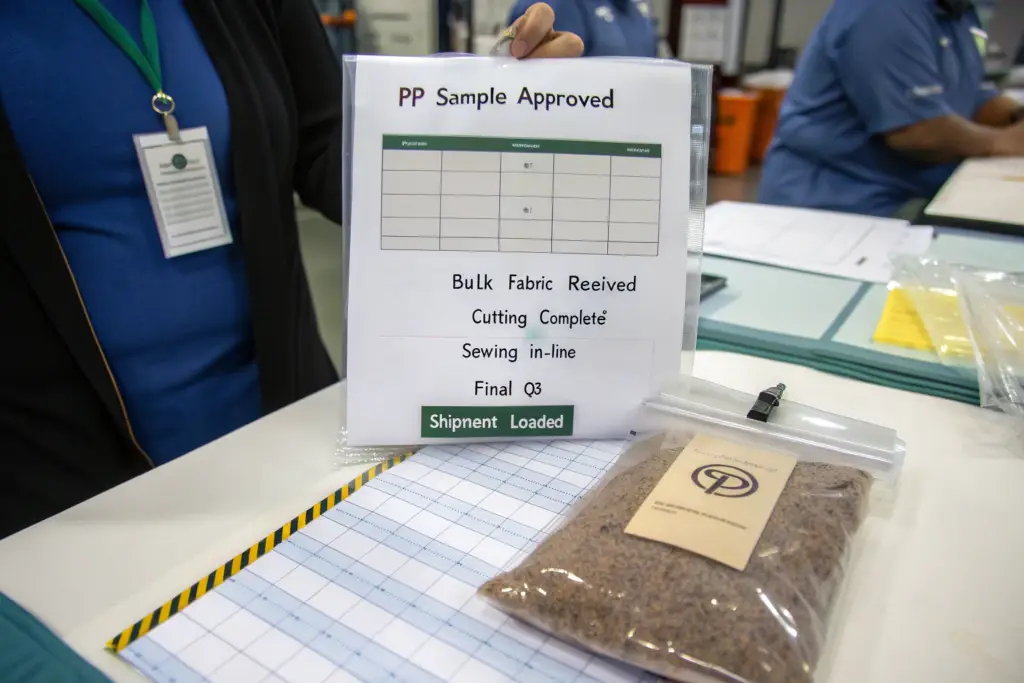
You approved the pre-production sample. It is beautiful. The fit is perfect. The print is exactly what you envisioned. You feel a wave of relief. This is the moment when many first-time importers disengage, assuming the hard work is done. It is not. The period between PP sample approval and bulk shipment is where the majority of quality failures and delivery delays originate. The factory must now replicate your approved sample hundreds or thousands of times, using the bulk fabric, on a production timeline, with production workers, not the sample room sewer. This transition from sample to bulk is a distinct phase with its own verification requirements.
The critical steps between sample approval and bulk shipment are: verify the bulk fabric quality with a lab test report before cutting begins; confirm the production timeline with a signed T&A calendar that includes specific milestone dates for cutting start, sewing start, in-line QC inspection, final QC inspection, and ex-factory; commission an independent third-party in-line inspection when approximately 30% of the order is finished, to catch systemic defects early; commission a final random inspection when the order is 100% packed, using the sealed PP sample as the reference standard; and do not authorize the final balance payment until you have a passing inspection report and a copy of the shipping documents. Each of these steps is a checkpoint that prevents a small, correctable problem from becoming an irreversible shipment disaster.
Why Is an In-Line Inspection More Valuable Than a Final Inspection Alone?
A final inspection occurs when the goods are packed in cartons, ready to ship. If the inspector finds a defect—a systematic stitching error, a print color shift, a measurement drift—the goods must be unpacked, reworked, repacked, and reinspected. The shipment is delayed. The factory is under pressure. The rework may be rushed and introduce new defects. The season deadline is threatened.
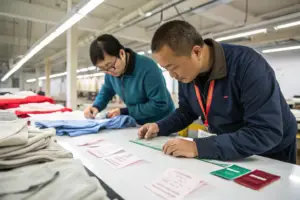
An in-line inspection occurs when approximately 20% to 30% of the order is finished. The inspector examines semi-finished and recently finished garments on the production line. If a defect is found, it has affected a small portion of the order, not the entire batch. The factory can correct the root cause—adjusting a machine setting, retraining an operator, fixing a cutting marker—before the remaining 70% to 80% is produced. This is the difference between catching a problem and managing a crisis. At Shanghai Fumao, we recommend our clients commission an in-line inspection for all first orders and for any order over 500 units. The cost of the inspection is typically $300 to $400. The cost of reworking a fully packed order is many multiples of that. The in-line versus final inspection in garment manufacturing guide explains the strategic value of early inspection. A factory that resists in-line inspection is a factory that does not want you to see their production process.
What Documents Should You Demand Before Authorizing the Final Payment?
The final payment is your last point of leverage. Once the money is transferred, your ability to compel corrective action diminishes dramatically. The documents you demand before releasing payment should provide objective, independent evidence that the goods exist, meet your specifications, and are moving toward your warehouse.
The document package should include: the passing final inspection report from a third-party inspection agency, with the AQL result, the defect list, and photographs of the inspected samples. A copy of the bill of lading or air waybill, proving the goods have been received by the shipping line or airline. The final commercial invoice and packing list, with accurate quantities, values, and descriptions. A copy of the factory's test report for the bulk fabric, showing fiber composition, shrinkage, and colorfastness results that match your specifications. Photos of the sealed container or loaded pallets, with your shipping marks clearly visible. If any of these documents is missing or raises a concern, pause the payment. Resolve the concern. Then release the funds. The pre-shipment document checklist for apparel importers provides a comprehensive list. The documents are your evidence. Do not pay without them.
How Do You Handle U.S. Customs Clearance for Imported Floral Dresses?
Your dresses are on the water. The factory has done their job. Now you face the final gate: U.S. Customs and Border Protection. Many importers treat customs clearance as an afterthought, assuming their freight forwarder or DDP supplier will handle everything. They will, but you remain ultimately responsible as the brand whose name is on the goods. Understanding the basics of customs clearance—the classification, the duty rate, the documentation requirements, and the importer's legal obligations—protects you from costly delays, storage fees, and potential penalties.
To clear U.S. customs smoothly, your imported A-line floral dresses must be correctly classified under the Harmonized Tariff Schedule, accompanied by a complete and accurate commercial invoice and packing list, and supported by a customs bond. The correct HTS code depends on the dress's fiber content and the gender of the intended wearer. Women's woven linen dresses typically fall under Chapter 6204, with a specific subheading determined by the fiber composition. Your customs broker will file the entry, pay the duties on your behalf, and arrange for the release of the goods. The entire process, from vessel arrival to goods released, takes two to five days if the documentation is correct and the shipment is not selected for examination.
What Are the Correct HTS Codes for Women's Woven Linen and Cotton Floral Dresses?
The HTS code determines your duty rate. An incorrect code can result in overpaid duties that eat your margin, or underpaid duties that trigger an audit and penalties years later. The classification is based on the fiber content of the dress, not the print, not the silhouette.
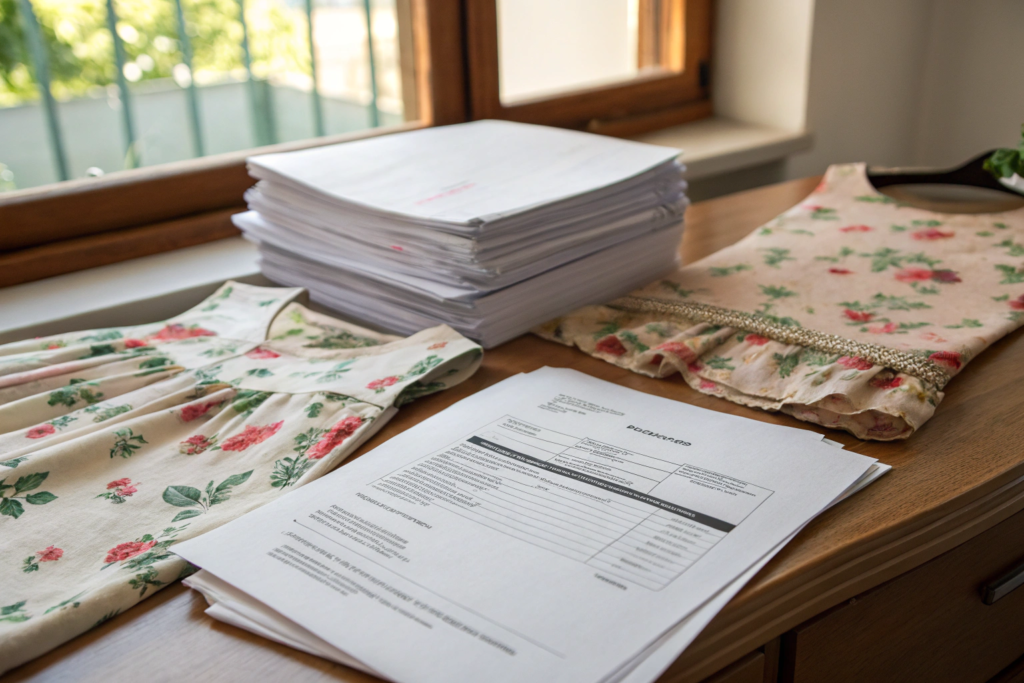
Women's woven dresses of flax, which is linen, are classified under HTS heading 6204. The specific subheading for a 100% linen women's dress is generally 6204.49. This covers dresses of other textile materials, including flax. The duty rate on this classification varies and should be verified with a licensed customs broker at the time of import. Women's woven dresses of cotton are classified under a different subheading, typically 6204.42. The duty rate on cotton dresses is different from the rate on linen dresses. If the dress is a blend—for example, a linen-cotton blend—the classification follows the predominant fiber by weight. A 70% linen, 30% cotton dress is classified as linen. A 55% cotton, 45% linen dress is classified as cotton. This is why the fiber composition test I recommended in the pre-production stage is legally and financially critical. The HTS code, and therefore your duty liability, depends on accurate fiber content information. The U.S. Harmonized Tariff Schedule online lookup tool allows you to search for potential codes. Use it as a reference, but always verify the final classification with your customs broker. A classification error is an importer liability that persists for five years after the entry date.
What Documentation Package Does Your Customs Broker Need to Clear the Goods?
Your customs broker is your representative before CBP. They file the entry, pay the duties, and secure the release of your goods. They can only do this if you provide them with a complete and accurate documentation package. Incomplete documentation is the leading cause of customs delays for first-time importers.
The documentation package your broker needs includes: the commercial invoice, showing the supplier's name and address, your name and address as the importer of record or the ultimate consignee, a detailed description of the goods including fiber content and gender, the quantity of each style, the unit price, the total invoice value, the currency, and the Incoterms under which the goods were sold. The packing list, showing the number of cartons, the carton dimensions and weights, and the contents of each carton by style, color, and size. The bill of lading or air waybill, issued by the carrier, showing the shipment routing and the consignee information. A copy of the fabric composition test report, if the dresses are made from a blend, to support the HTS classification. Your customs bond information. If you have a continuous bond on file, provide the bond number. If you are using a single-entry bond, your broker will arrange it. The CBP importer documentation requirements page provides the official requirements. Provide these documents to your broker as soon as the goods ship. Do not wait until the vessel is approaching the port. Late documentation is the cause of storage fees, exam referrals, and delivery delays that are entirely preventable.
Conclusion
Importing custom A-line floral dresses from China is a multi-stage process that rewards preparation and punishes improvisation. The brands that succeed with this process are not necessarily the largest or the most experienced. They are the most systematic. They finalize their design specifications before engaging a factory, so the quote is accurate and the sample is close to correct on the first round. They vet their manufacturer through stock samples, video tours, audit reports, and client references, not through website impressions. They manage the critical transition from sample to bulk with in-line inspections, bulk fabric tests, and sealed pre-production samples that define the quality standard. They handle customs clearance with accurate HTS classifications, complete documentation, and a licensed broker who specializes in apparel. And they do not release the final payment until they have independent evidence that the goods meet their specifications.
At Shanghai Fumao, we support our clients through each of these stages. We provide the design brief template, the T&A calendar, the bulk fabric test reports, the sealed PP sample, and the DDP shipping that handles customs clearance on your behalf. We do this because we have seen too many brands struggle with the complexity of importing, and we believe a manufacturer's job is not done when the dresses are sewn. It is done when the dresses are on your warehouse shelves, ready to sell. If you are planning a custom A-line floral dress import and want a partner who will guide you through the process with documented, verifiable systems, I am ready to help. Contact me, Elaine, at elaine@fumaoclothing.com. Send me your design brief, and I will return a development timeline, a cost estimate, and a clear, honest assessment of feasibility. Let's build your import process on a foundation of preparation, not hope.