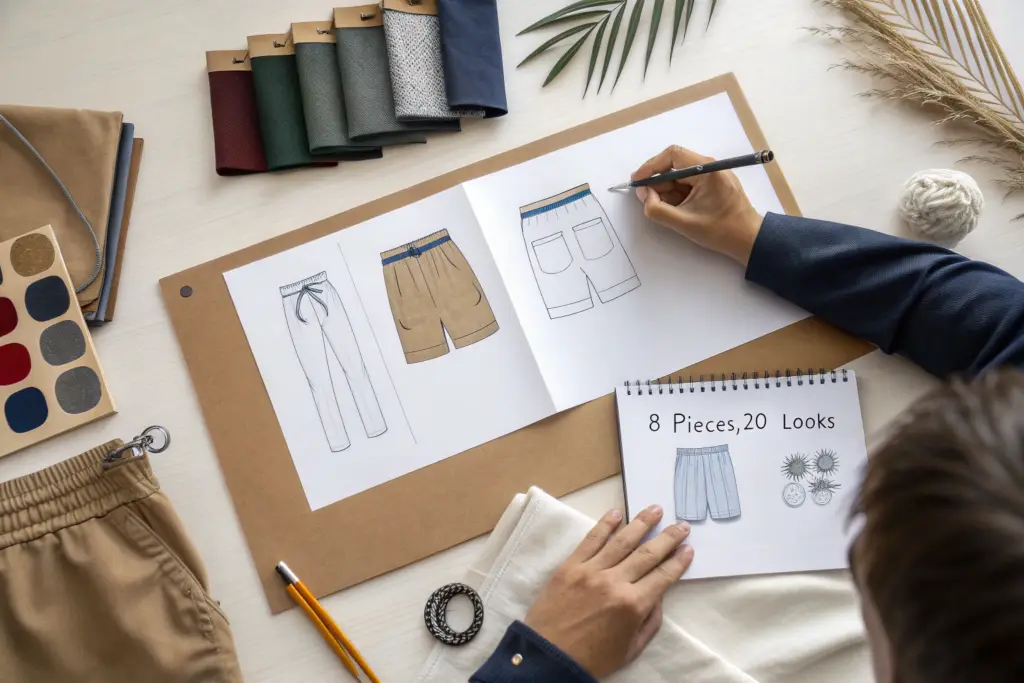
A brand strategist from a direct-to-consumer label in Austin sat across from me at a coffee shop last January. She was burnt out. Her brand had released twenty-seven different short styles the previous summer. Twenty-seven. She had micro-lengths, asymmetrical hems, paperbag waists, cargo pockets, bike shorts, and a linen-blend culotte that was technically a short but looked like a divided skirt. The result was inventory chaos. Some styles sold out in days. Others gathered dust. Her team could not predict which cuts would resonate, so they threw everything at the market and hoped. The financial hangover was brutal. She asked me a simple question: "If I only made five styles of shorts this year, could I still put together a compelling collection?"
A commercially viable capsule collection using only classic shorts can be built around five archetypes—the Chino, the Bermuda, the Pleated Front, the Drawstring Linen, and the Cuffed Twill—in a disciplined color palette, creating 15-20 distinct outfits from 8-10 SKUs.
The answer is not just yes. The answer is that a disciplined classic shorts capsule will likely outperform a sprawling trendy assortment. The logic is simple. Classic silhouettes are proven sellers with predictable inventory turns. They mix and match naturally. They allow a brand to go deep on quality rather than spreading development resources across dozens of risky experiments. At Shanghai Fumao, we have helped several US brands design and produce exactly this kind of focused collection. The results are consistently stronger margins and fewer markdowns. Let me show you how to architect a capsule that sells.
Which Five Classic Short Silhouettes Form a Complete Capsule Wardrobe?
Constraint is a creative discipline. When you limit yourself to five silhouettes, you stop asking "what is new" and start asking "what is essential." The five essential short archetypes have existed for decades, in some cases centuries. They survive because each one fills a distinct functional and aesthetic niche. Together, they cover the entire range of occasions a customer faces during warm months: office, weekend, travel, beach, and smart-casual event. You do not need a sixth. You need these five done well.
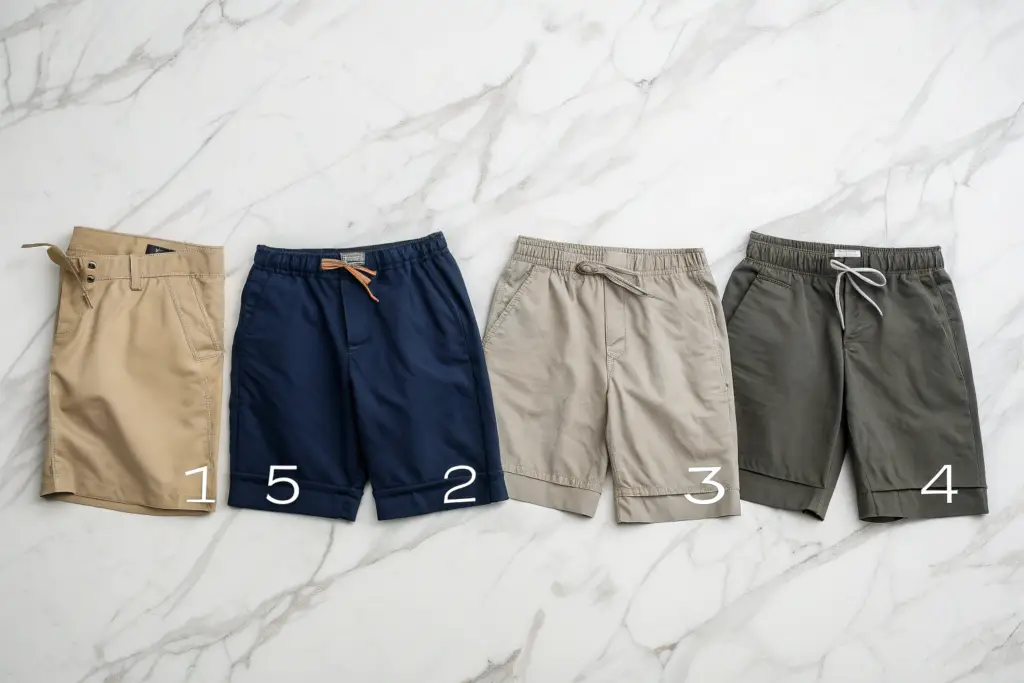
The five classic short archetypes for a complete capsule are the Chino Short for smart-casual, the Bermuda for modest coverage, the Pleated Front for tailored occasions, the Drawstring Linen for leisure, and the Cuffed Twill for a heritage workwear aesthetic.
A client I worked with in 2022 committed fully to this five-style framework. They had previously offered fourteen styles. We consolidated their line into these five archetypes and deepened the color offerings within each. Their sell-through rate improved from 62% to 88%. Their production runs became more efficient because we were cutting five basic blocks instead of fourteen. The factory turnaround time shortened by twelve days. Focus creates operational leverage.
What Makes the Chino Short the Anchor of Any Capsule Collection?
The chino short is the anchor because it is the most versatile. It works with a tucked-in oxford shirt for a business casual look. It works with a plain tee for Saturday errands. It works in khaki, navy, olive, and stone. The chino is defined by a flat front, a zip fly, side slash pockets, and a clean hem. It is unremarkable in the best possible way. It never looks out of place. It never tries too hard. For a capsule collection, the chino short should represent 40-50% of your unit volume because it will be the repeat-purchase core item. The fabric construction of a quality chino, typically a 2x1 twill weave, is explored in technical detail by textile resources like Cotton Incorporated. A well-made chino is the quiet hero of any summer wardrobe.
How Does the Bermuda Short Serve the Modesty-Conscious Customer Segment?
The Bermuda short addresses a customer the chino loses: the woman or man who does not want to show their thighs. The Bermuda has a longer inseam, typically 9 to 11 inches, falling just above or at the knee. It provides coverage when seated. It reads as more formal and conservative. For women, the Bermuda is a powerful inclusion piece because it bridges the gap between a short and a skirt in professional settings. For men, a tailored Bermuda in a lightweight wool blend can pass for a summer suit bottom in creative offices. Skipping the Bermuda means leaving an entire demographic of modest-dressing customers with nowhere to shop in your brand. The market data on modest fashion sizing is tracked by organizations like The NPD Group, which has documented the growing purchasing power of this underserved segment.
How Do You Build a Cohesive Color Palette Across Classic Short Silhouettes?
Color is the glue that turns five separate shorts into a collection. Without color discipline, you have five random products. With color discipline, you have a system where every top matches every bottom. This cross-compatibility is the operational promise of a capsule wardrobe. The customer buys one pair of shorts, then returns to buy another because she knows the olive Bermuda in her closet will pair perfectly with the striped shirt you just released.
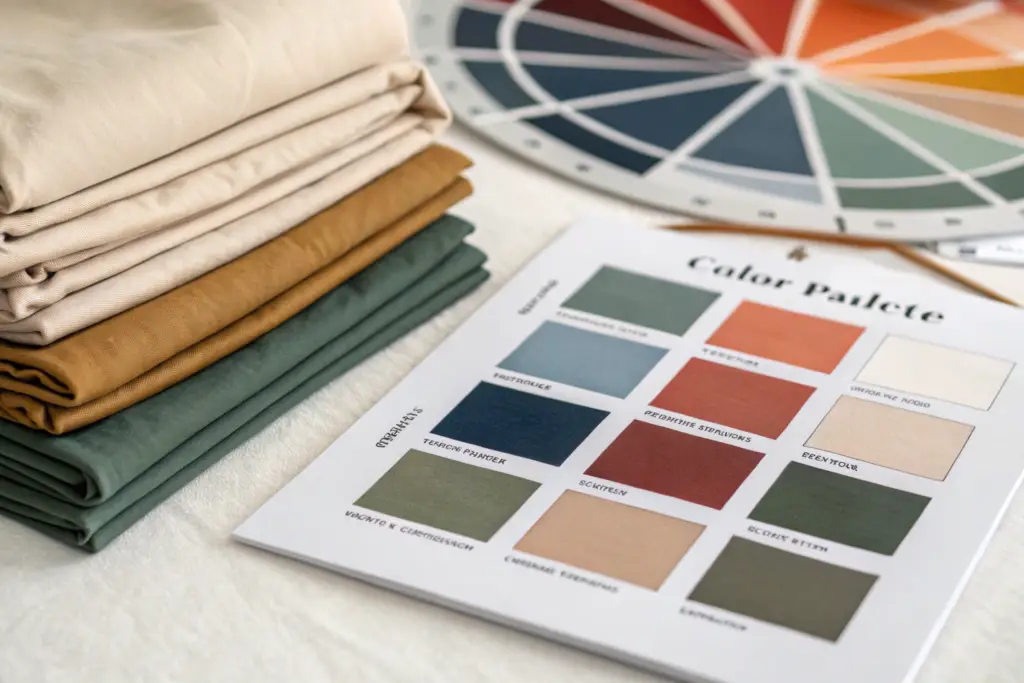
A capsule color palette should follow a 60-30-10 rule: 60% core neutrals that anchor the collection, 30% seasonal accents that add freshness, and 10% statement color for marketing imagery and window displays.
I developed this exact palette structure with a boutique brand in Charleston. Their core 60% was khaki, navy, and ivory. Their 30% seasonal accent was sage green and a sandy beige. Their 10% statement piece was a muted coral drawstring short. The coral short drove all their social media engagement. It got the clicks. But the khaki and navy chinos drove 80% of the revenue. The statement color did its job by pulling customers into the collection. The neutrals did their job by converting attention into sales. Both roles are essential.
Why Should Core Neutrals Drive the Majority of Your Production Volume?
Neutrals are not boring. They are profitable. A khaki short matches six different shirt colors. A neon green short matches one. The khaki short will sell to a broader audience, turn inventory faster, and generate fewer markdowns. From a manufacturing perspective, neutral colors also allow larger dye lots, which reduces the per-unit cost. At Shanghai Fumao, we run our core khaki and navy fabric in bulk dye lots of 500 kilograms or more. A seasonal accent color like sage might run in a 100-kilogram lot. The bulk lot is cheaper per meter. The savings drop directly to your bottom line. The commercial logic of neutral-dominant collections is supported by retail sell-through data regularly published by The National Retail Federation.
How Do Seasonal Accent Colors Extend the Life of a Capsule Collection?
A capsule collection does not have to be static. By introducing one or two new accent colors each season while keeping the core neutrals consistent, you create a sense of newness without redesigning your entire line. Spring might add a soft lavender drawstring short. Summer might introduce a warm terracotta chino. Fall transitions to a deep burgundy. The silhouettes remain identical. The customer who bought the khaki chino in April returns in July to buy the terracotta version because the fit is already proven on her body. This strategy builds lifetime value through color cycling, not through risky redesign. It is the fashion equivalent of a software update instead of a system rebuild.
What Are the Production Advantages of Manufacturing a Uniform Capsule Range?
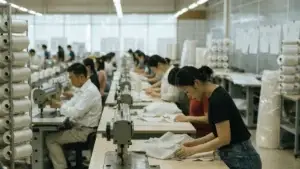
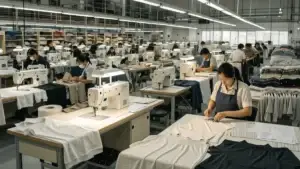
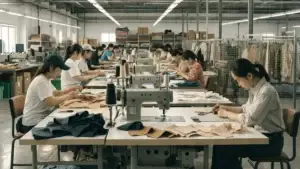
The factory floor loves a capsule collection. It rewards repetition. When you run five styles in five colors, the factory has to make twenty-five different products. That means twenty-five changeovers, twenty-five unique bundles, twenty-five quality checks. When you run five styles in three colors, you make fifteen products. The complexity drops by 40%. The cutting room can stack plies higher. The sewing line can flow faster. The defect rate drops because workers repeat the same operation thousands of times.
Manufacturing a uniform capsule range reduces cutting room setup time by up to 30%, lowers sewing defect rates through repetitive skill-building, and allows for bulk fabric purchasing that drives material costs down by 10-15%.
I showed the production data to a client who was on the fence about consolidating his line. We compared his previous season's production of twelve styles against a proposed capsule of five styles. The capsule required 200 fewer machine changeovers. The estimated labor efficiency improved by 18%. The fabric waste from cutting scraps dropped because fewer styles meant more efficient marker layouts. He saved $2.30 per unit on a 6,000-unit order purely through consolidation. That is $13,800 in hard savings from a design decision.
How Does Repetitive Production Improve Stitching Quality and Consistency?
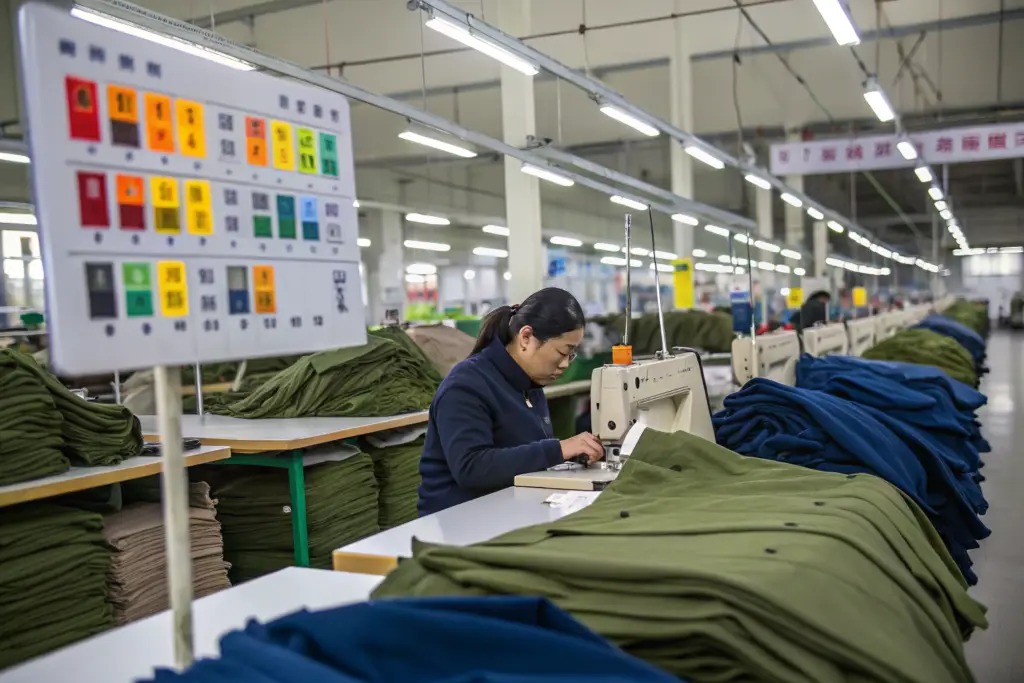
Quality lives in muscle memory. A sewer who makes the same chino short side seam five hundred times a day will produce a straighter, more consistent stitch than a sewer who switches between a chino, a paperbag short, a cargo short, and a pleated short throughout the shift. Each style change requires mental recalibration. Machine settings must be adjusted. The workflow rhythm breaks. In a capsule production run, the rhythm is sustained for days. This is why our defect rate on capsule programs at Shanghai Fumao runs below 1%, while more complex, multi-style programs can push toward 3%. The industrial engineering principle of repetition-driven quality is well-established and discussed in manufacturing journals like The Manufacturer.
What Fabric Procurement Efficiencies Come from a Consolidated Collection?
Fabric mills have minimum order quantities. If you design twelve styles, each requiring a unique fabric—a seersucker, a linen, a performance twill, a heavy canvas—you hit twelve different MOQ walls. You buy small quantities of many fabrics at high per-meter prices. You also accumulate dead stock of niche fabrics when styles underperform. A capsule collection uses two or three base fabrics across all five silhouettes. The chino, Bermuda, and pleated short might all use the same 8oz cotton twill. The drawstring and cuffed short might share a 7oz linen blend. Now you are placing two large fabric orders instead of twelve small ones. The mill gives you a volume discount. The dead stock risk nearly disappears. Resources on textile procurement efficiency are available from Apparel Resources, which regularly publishes case studies on fabric consolidation strategies.
How Do You Market a Classical Shorts Capsule to Maximize Sell-Through?
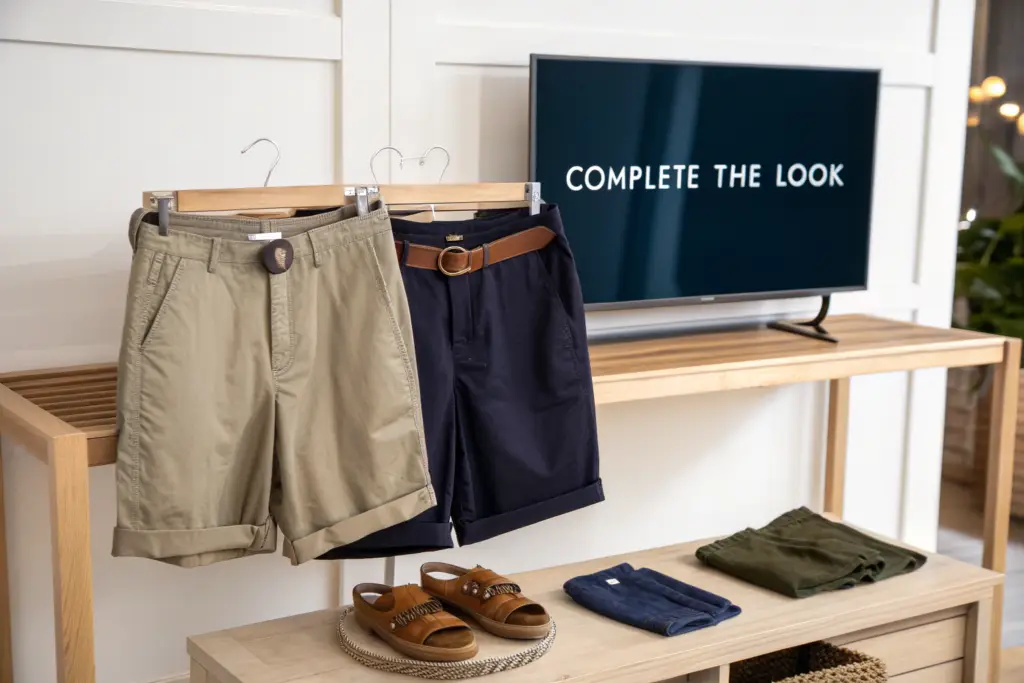
A capsule collection sells on a promise: "Buy fewer, better things that all work together." Your marketing must make that promise explicit. Do not just list five shorts on a category page and hope the customer figures out the connections. Show the connections. Style the chino with the linen button-down from your tops collection. Style the Bermuda with the relaxed tee. Create a lookbook that is also a usage guide. The customer who understands how to wear the olive pleated short to a dinner event is a customer who adds it to her cart.
Effective capsule marketing relies on cross-selling lookbooks, a "Complete the Look" recommendation engine on product pages, and educational content that teaches customers how to build multiple outfits from the same core pieces.
A DTC brand I advised launched their shorts capsule with a simple campaign: "3 Shorts, 9 Outfits." They shot three models in three settings—office, weekend, evening—using the same three shorts styled differently. The campaign was shot in one day. The production cost was low. The email click-through rate was 40% above their average. The average order value increased by 22% because customers were buying the styled shirt alongside the short. The marketing was not selling products. It was selling a system. The customer bought the system.
Why Does a Capsule Collection Narrative Increase Customer Loyalty?
A customer who buys a single pair of shorts is a transaction. A customer who buys into a capsule system is a relationship. She returns to complete the set. She trusts that the new seasonal accent color will fit the same way the core khaki fit. She becomes a brand advocate because the simplification of her own wardrobe brings her genuine satisfaction. This loyalty is measurable. Repeat purchase rates for capsule-focused brands outpace those of trend-chasing brands by significant margins, according to consumer behavior research from The Business of Fashion. The capsule is not just a product strategy. It is a retention engine.
How Do You Educate Retail Buyers on the Sell-Through Advantage of a Capsule?
Wholesale buyers are risk-averse. They have limited floor space and open-to-buy budgets. A twelve-style shorts assortment is a risk headache. A five-style capsule with proven core neutrals is a safe investment. When you present the capsule to a buyer, bring the sell-through data. Show how the khaki chino performed in your DTC channel. Show the margin advantage of bulk fabric purchasing. Show the marketing lookbook that demonstrates easy cross-styling. The buyer's primary question is: "Will this turn on my floor?" A capsule with data behind it answers that question louder than a showroom full of unproven trends. The retail buying cycle is analyzed in depth by The National Retail Federation, which offers insights into how buyers evaluate assortment risk.
Conclusion
Building a capsule collection from only classic shorts is not a creative limitation. It is a commercial liberation. You free your design team from the treadmill of chasing micro-trends. You free your production team from the inefficiency of constant changeovers. You free your marketing team to tell a clear, compelling story about versatility and quality. And most importantly, you free your customer from the anxiety of a wardrobe that does not work together.
The five archetypes—chino, Bermuda, pleated, drawstring, and cuffed—have endured because they solve real problems for real bodies. The disciplined color palette ensures every piece earns its place. The consolidated production runs drive quality up and costs down. The marketing narrative of "fewer, better things" resonates in a market exhausted by disposable fashion.
If you are ready to design a classic shorts capsule for your brand, we can help you build the technical foundation. At Shanghai Fumao, we have developed all five of these archetypes for multiple US brands. We have the pattern blocks refined. We have the fabric sources ready. We can help you go from concept to pre-production samples in weeks, not months. Contact our Business Director, Elaine, at elaine@fumaoclothing.com to schedule a capsule planning consultation. Let's build a collection that sells clean and wears long.