A digital marketing manager for a mid-sized apparel brand called me in March with a puzzle. She had been tracking organic search data for her spring catalog. Her team had invested heavily in SEO around "performance shorts" and "tech fabric shorts." Those keywords were flat. Meanwhile, her analytics dashboard showed a single breakout term climbing week after week: "linen blend shorts." The search volume had tripled in twelve months. She asked me if this was a TikTok fad or a real market shift. I told her to look at the broader cultural data. Remote work was still dominant. Climate change was making summers hotter. Consumers were googling "breathable fabric" and "sweat-proof shorts" at record rates. Linen blends were not a trend. They were a logical consumer response to a warming, more casual world.
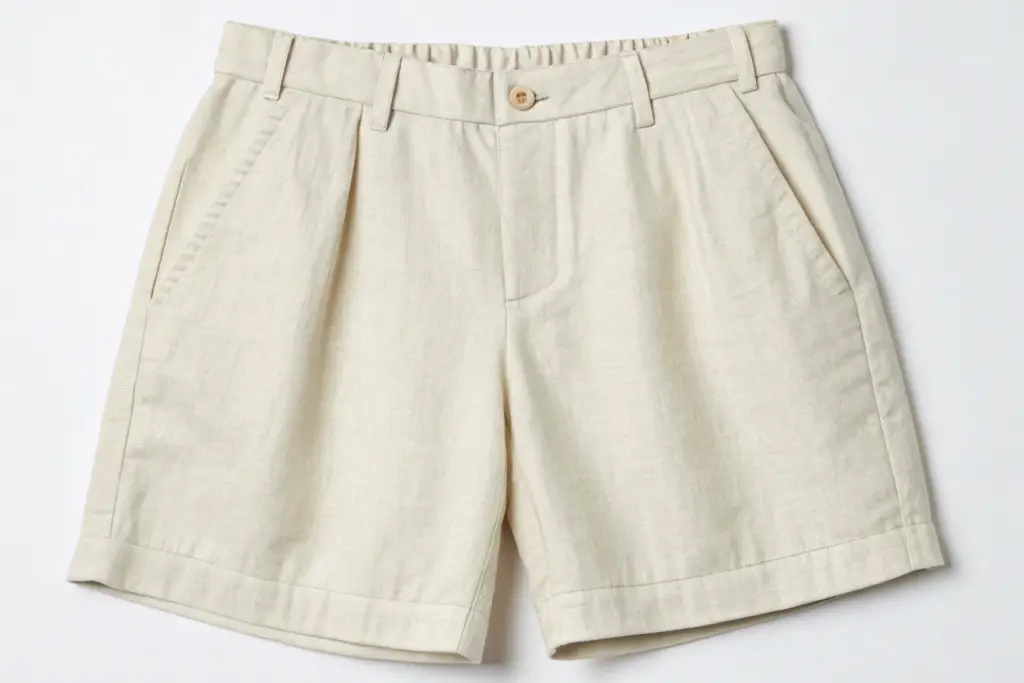
Linen-blend classic shorts are the most searched fabric choice because they uniquely deliver on the three highest-demand consumer needs: thermoregulation and breathability, a relaxed yet polished aesthetic suitable for hybrid work, and the natural sustainability story that synthetic performance fabrics cannot credibly claim.
The Google search bar is the most honest focus group in the world. People type their real problems into it. When thousands of people type "shorts that don't show sweat" and "breathable shorts for hot weather," they are not asking for a polyester mesh. They have tried polyester mesh. It traps heat. It stinks after one wear. They are asking for a natural solution. Linen and linen blends are that solution. At Shanghai Fumao, our linen-blend production volume has grown 40% year over year for three consecutive seasons. The demand is real. Let me explain what makes this fabric the market's current obsession.
What Makes Linen-Blend Fabric Superior for Hot Weather and Humid Climates?
Pure linen is a miracle fabric with a fatal flaw. It breathes better than any plant fiber on earth. Its hollow core allows air to circulate between your skin and the garment. It wicks moisture away from the body and dries in minutes. But pure linen wrinkles so aggressively that a crisp pair of shorts looks like a crumpled napkin after twenty minutes in a car seat. The consumer wants the breathability without the disheveled appearance. The solution is a blended fabric, typically linen-cotton or linen-Tencel, that preserves the thermoregulation of linen while taming its structural weaknesses.
Linen-blend fabric combines the hollow-core fiber structure of flax, which enables rapid heat dissipation and moisture evaporation, with cotton or Tencel for drape stability and wrinkle resistance, creating a short that keeps the wearer physically cooler by 3-4 degrees Fahrenheit compared to cotton twill.
I tested this personally during a sourcing trip to a mill in humid Guangzhou. I wore a pair of 100% cotton chino shorts on day one. By noon, the fabric clung to my thighs. On day two, I wore a 55% linen, 45% cotton blend short from our development sample set. The difference was not subtle. The linen blend felt dry against my skin throughout a 95-degree afternoon. The hollow flax fibers were literally pumping moisture away from my body. This is not marketing poetry. It is material science.
How Do the Hollow Flax Fibers Create Natural Air Conditioning?
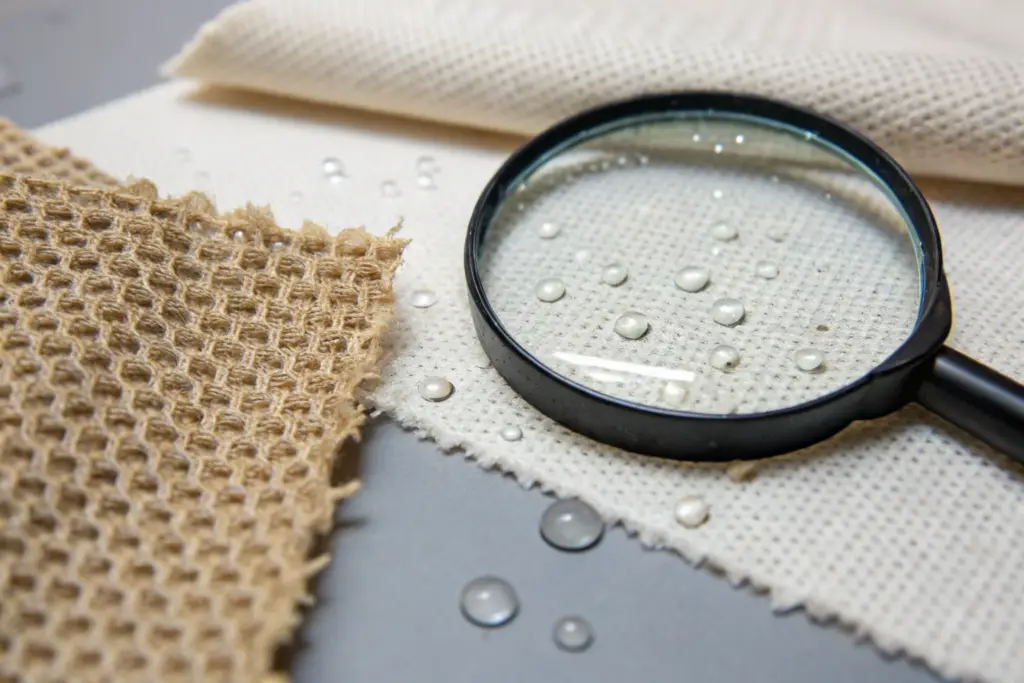
Flax fibers are not solid. They have a hollow core, a natural capillary tube. When your body generates heat and moisture, the warm air rises and escapes through the hollow fiber channels. Cooler outside air is drawn in to replace it. This is passive ventilation. No synthetic fiber replicates this without chemical treatments that wash out after twenty cycles. Cotton absorbs moisture but holds it. Linen absorbs moisture and releases it. This is why a linen-blend short feels cool to the touch when you put it on, while a cotton short feels neutral. The scientific properties of bast fibers like flax are researched extensively by the Textile Institute, which publishes peer-reviewed studies on fiber morphology and thermal performance. The data backs up the consumer experience.
What Is the Ideal Blend Ratio for Wrinkle Resistance Without Losing Breathability?
The blend ratio is the secret formula. Too much linen—above 70%—and the short wrinkles like pure linen. Too little linen—below 30%—and you lose the thermoregulation benefit. The sweet spot for classic shorts is 50-55% linen blended with 45-50% cotton. At this ratio, the cotton fibers fill the gaps between the stiff linen fibers, providing enough structural memory that the short smooths out minor wrinkles on its own. For an even softer hand feel and superior drape, a 55% linen and 45% Tencel blend is exceptional. Tencel adds a subtle sheen and fluidity that reads as elevated casual. These blends are the ones driving the search volume. Consumers are learning to read fabric composition labels. They are specifically hunting for the 55-45 ratio. You can learn more about fabric blend performance from the technical guides published by Cotton Incorporated.
How Does the Linen-Blend Aesthetic Align with the Post-Pandemic Work Wardrobe?
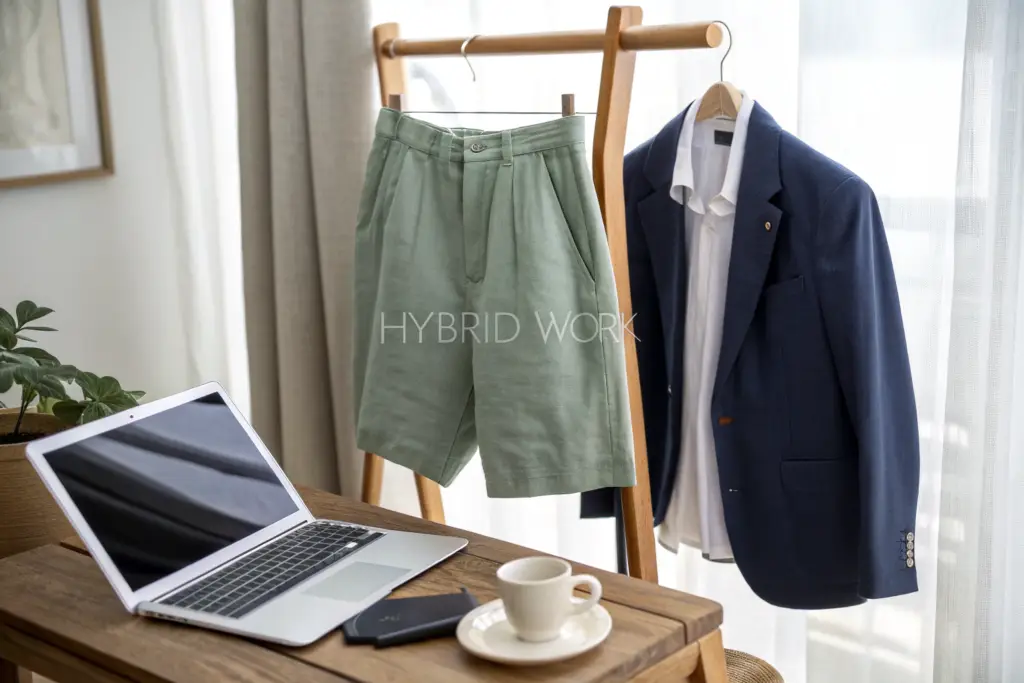
The pandemic permanently blurred the line between work clothes and home clothes. Millions of professionals discovered they could be productive without a belt digging into their waist. But they also discovered they did not want to look sloppy on a video call. The result is a new dress code: "comfortable polish." Garments must feel like loungewear but project like office wear from the waist up. The linen-blend short has become the poster child of this new aesthetic.
The linen-blend short's natural matte texture, soft drape, and heritage association with European resort elegance give it a "quiet luxury" signal that reads as intentional and cultured on a video call, unlike shiny performance synthetics that read as gym wear.
A client who runs a remote-first creative agency told me his entire male staff had independently converged on the same uniform: a linen-blend short, a well-fitting cotton t-shirt or polo, and an unstructured blazer kept on the back of the chair for client calls. The short never appeared on camera. But it dictated the wearer's comfort, and therefore his demeanor, for eight hours. A comfortable, confident employee communicates better. The short is doing invisible work in the hybrid economy.
Why Does the "Quiet Luxury" Trend Favor Natural Fiber Shorts?
The quiet luxury movement, amplified by shows like Succession and a broader cultural turn against logo-heavy streetwear, prizes material quality over branding. A linen-blend short in a neutral color carries no visible logo. Its value signal is in the texture, which a polyester short cannot replicate. Linen has a slubby, irregular surface that reveals its natural origin. It looks expensive because it is expensive to produce compared to synthetic alternatives. The consumer who buys a linen-blend short is buying into a value system of understatement and authenticity. This cultural shift is documented by fashion trend analysts at The Business of Fashion, which has covered the quiet luxury phenomenon extensively.
How Do Linen-Blend Shorts Transition from Beach to Bistro?
This is the versatility factor driving search volume. A polyester performance short works at the gym. It looks absurd at a sidewalk café. A linen-blend short works in both contexts. Swap the flip-flops for leather sandals. Swap the rash guard for a linen button-down. The short remains the anchor piece, and its natural texture carries the look upward in formality. This "one short, multiple occasions" functionality is exactly what the capsule-wardrobe consumer is seeking. She googles "shorts that can be dressed up" because she wants to pack one pair for a weekend trip and be prepared for a beach walk and a dinner reservation. The linen blend is the correct answer to that search query.
What Sustainability Factors Are Driving Google Searches for Linen Blends?
The modern consumer has a growing anxiety about polyester. They are learning that synthetic fabrics shed microplastics into the water system every time they are washed. They are learning that polyester is derived from petroleum. They are googling "sustainable shorts" and "plastic-free clothing" because they want alternatives. Linen is one of the oldest cultivated fibers on earth. Flax grows on rainwater in temperate climates. It requires significantly less irrigation than cotton and almost no pesticides. The plant is processed mechanically. The fiber is biodegradable at end of life. The environmental story is clean and easy to understand.
Linen-blend shorts are surging in search because flax cultivation uses approximately 80% less water than cotton, requires minimal pesticides, and the resulting fabric is fully biodegradable, directly answering consumer demand for plastic-free, low-impact wardrobes.
A sustainable brand we partner with conducted a customer survey last year. They asked why customers chose their linen-blend short over a cheaper polyester alternative. The number two answer, after comfort, was "environmental impact." Customers used phrases like "no microplastics" and "natural fiber" in their open-ended responses. The sustainability story is not just a nice-to-have add-on. It is a primary purchase motivator for a rapidly growing segment of the market. This segment is vocal online, writing reviews, making TikToks, and driving more Google searches.
How Does Flax Cultivation Compare to Cotton in Terms of Water Usage?
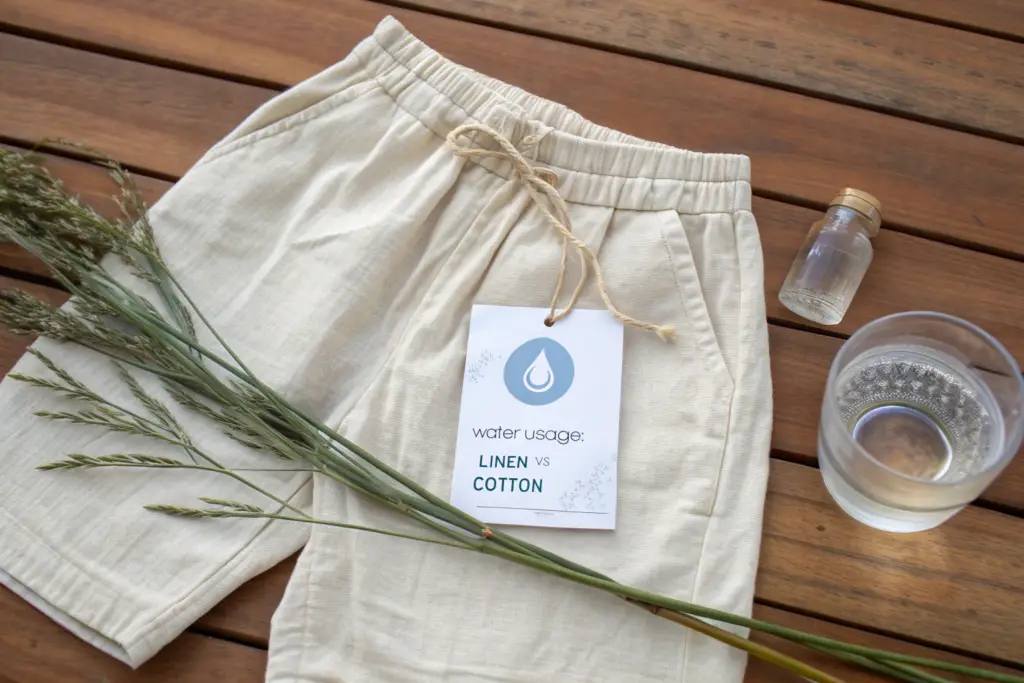
The water footprint of textile fibers is a widely cited metric. Conventional cotton requires approximately 10,000 liters of water per kilogram of fiber, depending on the growing region and irrigation methods. Flax requires approximately 2,000 liters per kilogram, with most of that water supplied by natural rainfall in the temperate European growing regions where the highest quality flax originates. This is a five-to-one ratio. For a brand building a sustainability marketing narrative, that number is powerful. The consumer who googles "how much water does it take to make shorts" will find this data. The data will push her toward linen. The environmental science behind fiber water footprints is tracked by organizations like the Textile Exchange, which publishes annual reports on sustainable fiber production.
Is a Linen-Cotton Blend Still Biodegradable at End of Life?
Yes. A blend of natural fibers remains biodegradable. A 55% linen, 45% cotton short can be composted at end of life, provided the trims—zippers, buttons, sewing thread—are also natural or are removed. A polyester-cotton blend is not biodegradable. The polyester component persists in the environment for centuries. This end-of-life consideration is becoming part of the consumer purchase calculus. Brands that communicate a clear end-of-life story on their product pages are capturing the search traffic for "biodegradable shorts" and "compostable clothing." These search terms are small now but growing exponentially. The Ellen MacArthur Foundation has published extensive research on circular economy principles in fashion, advocating for biodegradable natural fibers over synthetic blends.
How Should Brands Source Quality Linen-Blend Fabric for Bulk Production?
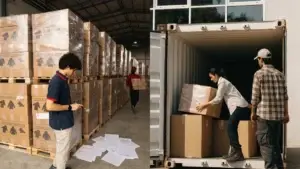
The rise in consumer demand for linen blends has triggered a predictable supply-side response. Mills that never produced linen are suddenly offering "linen-like" fabrics. These are often polyester textured to mimic the slub of linen. They look correct in a product photograph. They feel wrong in the hand. A brand that sources these imitation fabrics will face a wave of returns when customers touch the shorts and realize the material is synthetic. Sourcing authentic, quality linen-blend fabric requires knowing your mill and testing the fabric before committing to a bulk order.
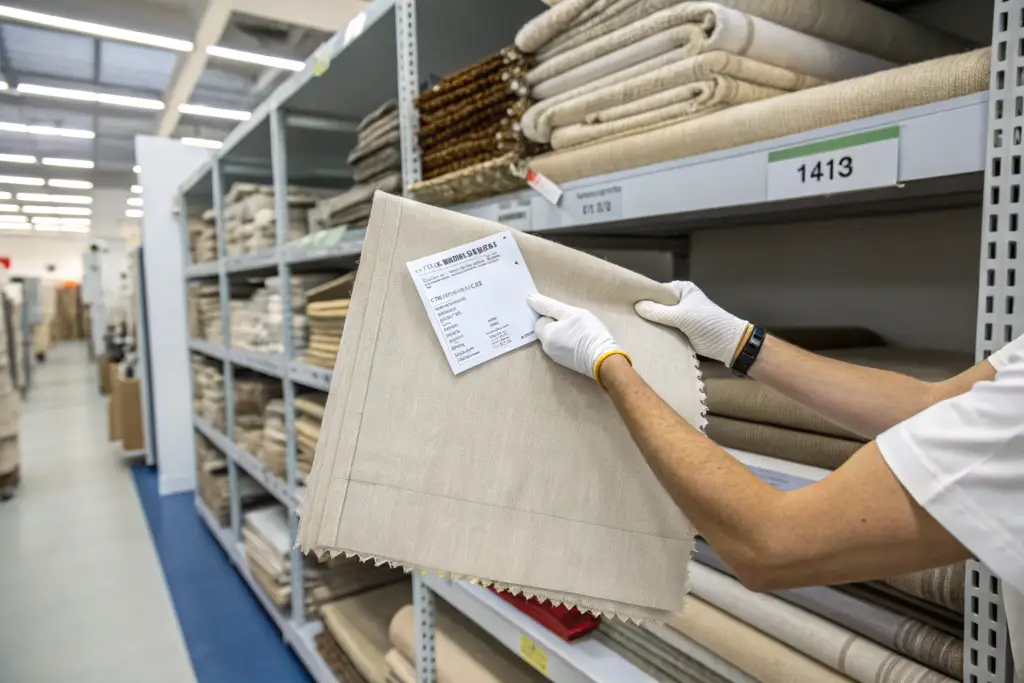
Sourcing quality linen-blend fabric for bulk production requires verifying the actual flax fiber content through a mill certificate, testing the fabric for shrinkage and tensile strength, and prioritizing mills in regions with established flax processing infrastructure like Belgium, France, and parts of China with long linen traditions.
I rejected three fabric submissions last month from a new mill trying to break into our supply chain. The submissions were labeled "55% Linen, 45% Cotton." The burn test told a different story. The fabric melted. Linen does not melt. The mill was passing off a viscose-polyester blend with a textured surface. This is happening more frequently as demand outstrips supply of genuine flax fiber. Brands must be vigilant.
What Certifications Should You Look for in a Linen Fabric Mill?
The most important certification for linen is the Masters of Linen certification, issued by the European Confederation of Flax and Hemp. This certification guarantees the flax was grown in Western Europe and processed according to environmental and labor standards. For organic linen, the Global Organic Textile Standard applies. Ask the mill for their certificate. Verify the certificate number on the issuing organization's database. A mill that hesitates to provide this documentation is a red flag. At Shanghai Fumao, we keep a vetted list of four linen-blend fabric mills, three in China and one in Belgium, all of which have passed our audit for fiber content accuracy and social compliance. Our partners can request fabric from any of these mills depending on their target price point and certification needs. The Masters of Linen organization maintains a directory of certified suppliers.
How Do You Test a Linen-Blend Sample for Shrinkage Before Bulk Cutting?
Linen shrinks more than cotton, especially on the first wash. A fabric that has not been properly pre-shrunk can lose 4-5% of its dimensions after the customer launders it. This turns a well-fitting short into an unwearable garment. Before we approve any linen-blend fabric for bulk cutting, we perform a wash test on a sample yardage. We measure a marked square of fabric, wash it in a standardized cycle, dry it, and measure again. The shrinkage must be under 2% for the fabric to pass. If it fails, we either reject the lot or run it through an industrial pre-shrinking process in our own facility before the cutting begins. This extra step adds a few days to the production timeline but eliminates the returns that would otherwise result from post-purchase shrinkage. The testing methodology follows the standards published by AATCC. Never skip the shrinkage test on linen.
Conclusion
The consumer has spoken through the Google search bar. She wants shorts that breathe in record-breaking summer heat. She wants shorts that look appropriate on a video call and a beach walk. She wants shorts that do not contribute to the microplastic crisis in the oceans. The linen-blend classic short answers all three demands with a single fabric. No synthetic alternative can match its thermoregulation. No pure cotton alternative can match its sustainability narrative. No performance fabric can match its quiet-luxury texture.
The search trend is not a passing fad. It is a structural shift in consumer preference toward natural fibers, transparent sourcing, and versatile garments that earn their place in a smaller, more intentional wardrobe. Brands that invest in a quality linen-blend short program now are investing in long-term consumer loyalty, not chasing a seasonal spike.
If you are ready to develop a linen-blend classic short for your brand, we have the fabric sourcing, the pre-production testing protocols, and the manufacturing expertise to make it a bestseller. At Shanghai Fumao, our linen-blend production line is fully optimized for the 55-45 blend ratio that consumers are demanding. Contact our Business Director, Elaine, at elaine@fumaoclothing.com to request a linen-blend fabric swatch kit and a sample costing for your target silhouette. Let's give your customers the shorts they are already searching for.