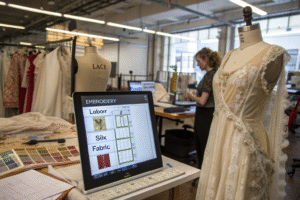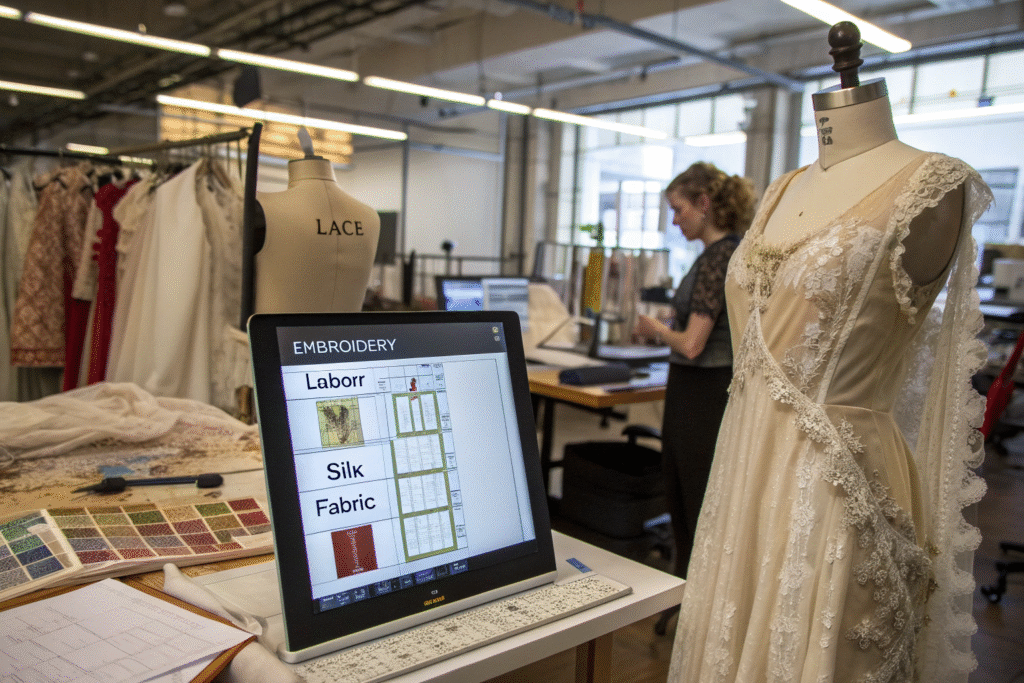
You have a stunning design for a women's collection—intricate draping, delicate lace inserts, custom-developed jacquard fabric. It's everything that makes fashion exciting. Then you start budgeting, and the numbers spiral. A factory quotes based on a simple t-shirt cost model, missing 70% of the real expenses. This disconnect between creative vision and financial reality is where many women's wear brands, especially those working with complex designs, face their biggest challenge. Accurate budgeting isn't about limiting creativity; it's about empowering it with financial clarity.
Budgeting for complex women's wear requires moving beyond simple per-unit garment costing to a comprehensive model that accounts for elevated material costs, specialized labor, multiple sampling rounds, and the higher risk of production errors. It demands a collaborative "costing-by-component" approach with your manufacturer from the earliest design stage. A realistic budget is the blueprint that ensures your beautiful design can be produced profitably and at the quality it deserves.
At Shanghai Fumao, a designer brought us a breathtaking evening gown design with a hand-pleated silk chiffon bodice and a beaded tulle skirt. Her previous manufacturer had given her a rough estimate that missed the mark by 40%. They hadn't accounted for the skill level needed for the pleating, the hand-beading labor, or the fabric waste of the complex pattern. We worked with her to break down every single element: the cost of the silk (with 30% waste allowance due to bias cutting), the subcontracting fee for the specialized pleater, the per-hour rate for the beading artisans. The final budget was higher than her initial hope, but it was accurate. With it, she confidently launched a pre-order campaign, funded production fully, and delivered a profitable, exquisite product. Let's build your budgeting framework.
What Are The Hidden Cost Drivers In Complex Women's Wear?
The first step is to identify what makes a design "complex" from a costing perspective. These factors are often invisible in a simple tech pack but dominate the factory's cost sheet. Recognizing them early allows you to make informed trade-offs without sacrificing the design's soul.
Complexity costs money at every turn—in materials, time, and skill.
How Does Fabric Choice and Utilization Skyrocket Costs?
For complex designs, fabric is rarely a simple, efficient rectangle.
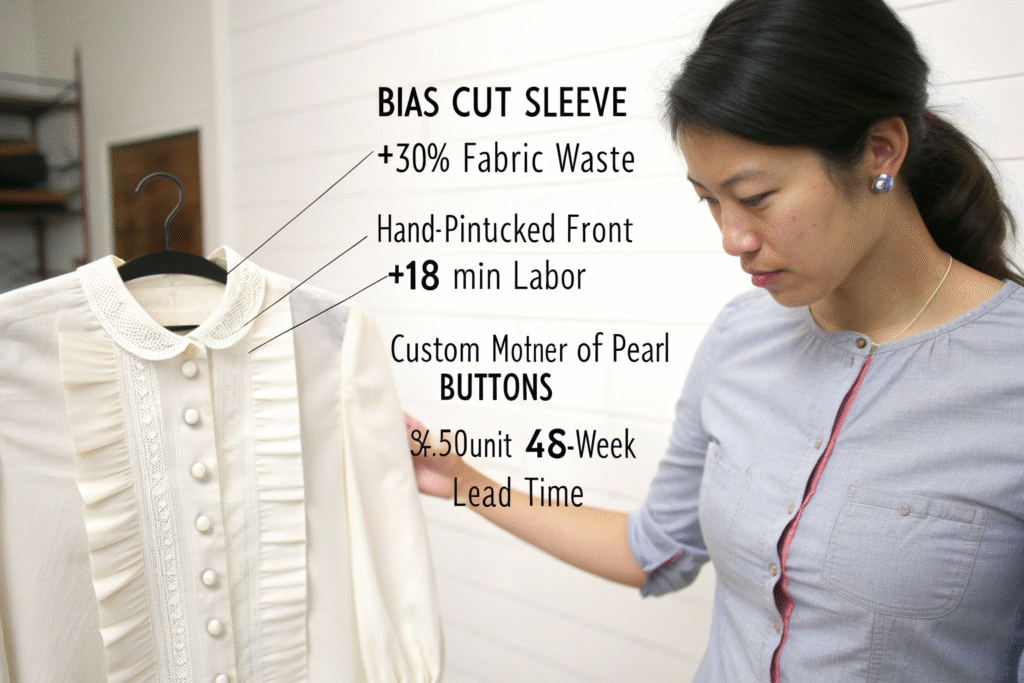
- Bias Cutting & Draping: Designs requiring fabric cut on the bias (at a 45-degree angle) can increase fabric consumption by 25-40% due to the layout and the need for pattern matching. A fluid, draped silk dress consumes far more fabric than a structured blazer of the same size.
- Specialty Fabric Lead Times & MOQs: Custom jacquards, embroidered laces, or sustainable deadstock fabrics have high minimum order quantities (MOQs) and long lead times, locking up capital and increasing unit cost for small runs.
- Fabric Handling Difficulty: Delicate fabrics like chiffon or charmeuse require skilled handlers, slower sewing speeds, and specialized machines, increasing labor time.
Why Does Construction Complexity Inflate Labor Costs?
The Standard Allowed Minute (SAM) value is your key metric here. Compare:
- Basic Tee: SAM ~12-15 minutes.
- Blouse with Pintucks, French Seams, & Cuff Detail: SAM ~25-35 minutes.
- Structured Blazer with Lining, Canvas, & Functional Buttonholes: SAM ~80-110 minutes.
Each operation—a pleat, a ruffle, a set-in sleeve with ease—adds time. Hand-finishing (like hand-rolled hems on silk) is the most expensive labor of all, measured in hours, not minutes.
What Is The True Cost of Embellishments and Trims?
| This is a major budget buster. Every embellishment has multiple cost layers: | Embellishment | Cost Components Often Missed |
|---|---|---|
| Embroidery | Digitization fee, setup charge per color, cost per 1,000 stitches, stabilizer fabric, specialized operator labor. | |
| Beading/Sequins | Cost of beads/sequins (by gram or piece), hand-labor time (hours per garment), specialized needle/thread. | |
| Appliqués & Lace Inserts | Cost of the lace/appliqué material, precise cutting time, meticulous hand-stitching or fusing labor. | |
| Custom Developed Trims | Development sample cost, mold/tooling fee (for custom buttons), high minimum order quantity (MOQ). |
How To Build A Collaborative "Costing-By-Component" Budget?
The most effective budgets are built with your manufacturer, not presented to you after the fact. This proactive, transparent process turns your tech pack into a live financial document. It requires detailed specifications and an open dialogue about value engineering.
This approach transforms budgeting from a guessing game into a strategic planning session.
What Should Your "Enhanced" Tech Pack Include?
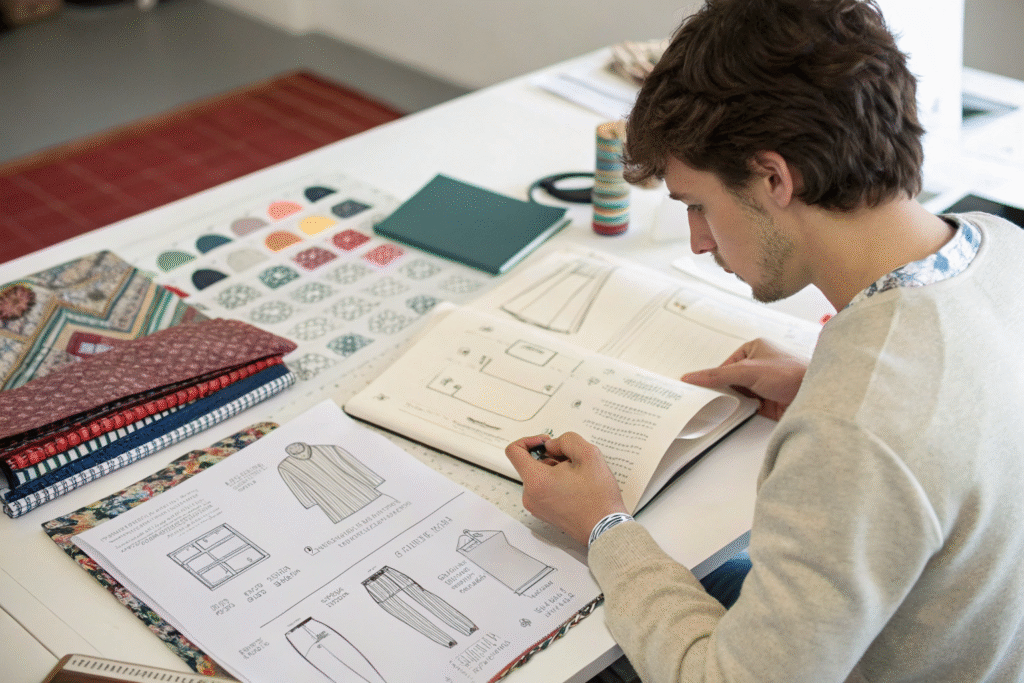
To get an accurate quote, your tech pack must be exceptionally detailed:
- Precise Pattern Files (if available): A .dxf file allows the factory to run a digital marker and calculate exact fabric consumption, especially for bias cuts or large patterns.
- Specified Seam Types: Don't just say "finish seam." Specify: French seam, flat-felled seam, serged and pressed open. Each has a different labor time and skill requirement.
- Embellishment Technical Sheets: For embroidery, provide the exact artwork, desired size, thread colors (Pantone), and stitch type (satin fill, running stitch). For beading, provide a placement diagram and sample of the beads.
- Graded Spec Sheet: Include measurement specs for all sizes in your size run. A complex design may scale non-linearly, affecting fabric use and construction time in larger sizes.
What Questions Must You Ask Your Factory During Costing?
Engage them as experts. Ask:
- "Based on this design, what is the estimated fabric utilization percentage? Can we see a marker simulation?"
- "Which construction steps have the highest SAM? Is there a simpler technique that gives a similar look?"
- "For this lace insertion, do you recommend hand-stitching or machine fusing? What are the cost and quality trade-offs?"
- "What are the MOQs for each custom component (fabric, button, lace)?"
At Shanghai Fumao, we use this collaborative session to suggest value engineering. For a client's ruffled sleeve, we demonstrated that a single-cut ruffle used 15% less fabric than a gathered one with a similar visual impact, saving her thousands on her bulk order.
How To Allocate For Sampling, Testing, and Contingency?
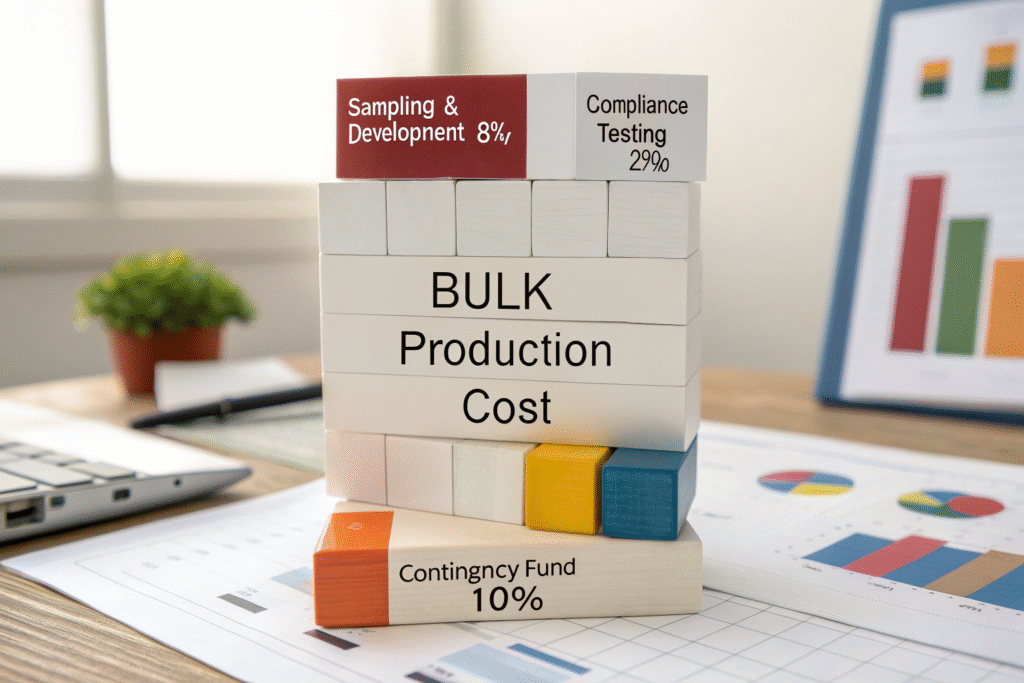
For simple basics, you might budget for one or two samples. For complex women's wear, sampling is a development process with its own significant cost line. Furthermore, the risk of something going wrong is higher, making a contingency fund non-negotiable.
Under-budgeting here is a direct path to unexpected debt or quality compromise.
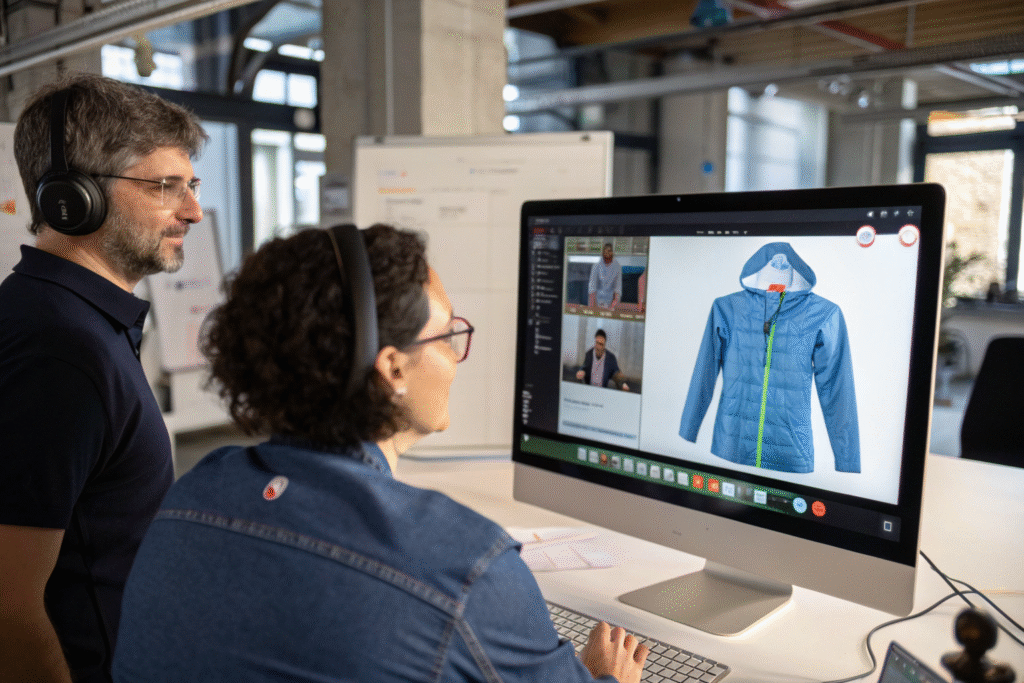
Why Are Multiple Sample Rounds a Necessity, Not a Luxury?
Each round has a purpose and a cost:
- Proto Sample (Design Sample): Tests silhouette, proportion, and basic construction. Made with similar materials. Cost: 1x garment cost + development fee.
- Fit Sample: Made with actual or close main fabric. Focus on grading and fit across sizes. You may need multiple fits. Cost: 3x garment cost (for S, M, L) + pattern grading fee.
- Pre-Production Sample (Salesman Sample): Made with all correct bulk materials. Used for final approval and third-party testing. Cost: 1x garment cost (at bulk material prices).
- Top-of-Production Sample: First pieces off the production line to confirm bulk quality matches the pre-production sample. Cost: Usually covered in production cost.
For a dress with unique draping, we once went through four fit samples to perfect the gravity-dependent fall of the skirt. Budgeting for two samples would have been a catastrophic miscalculation.
What Testing and Compliance Costs Are Unique to Women's Wear?
- Fabric Performance Testing: Delicate fabrics and embellishments require specific tests: colorfastness to rubbing (for beading), durability of prints on stretch fabrics, shrinkage of mixed materials (e.g., lace on knit).
- Embellishment Safety Testing: If you have decorative stones or sequins, they may need small parts testing for any market (like the U.S. CPSIA), especially if your brand also makes kids' wear.
- Extended Sizing Costs: Developing a complex pattern for a full size run (XS-3X) involves more than just scaling. The pattern may need complete re-engineering for larger sizes, adding significant pattern-making cost.
How Much Contingency Should You Budget?
For complex designs, a 10-15% contingency on top of your total production budget is prudent. This covers:
- Material price fluctuations between quote and order.
- Additional sampling rounds.
- Minor production rework.
- Unforeseen logistics costs.
This is not a slush fund; it's a risk management tool. If you don't use it, it becomes profit.
What Are The Pricing Models and How To Choose?
Not all factories quote the same way. Understanding the different pricing models helps you compare quotes accurately and choose the partnership structure that aligns with your level of involvement and risk tolerance.
The model you choose fundamentally affects your budget's flexibility and the manufacturer's incentives.
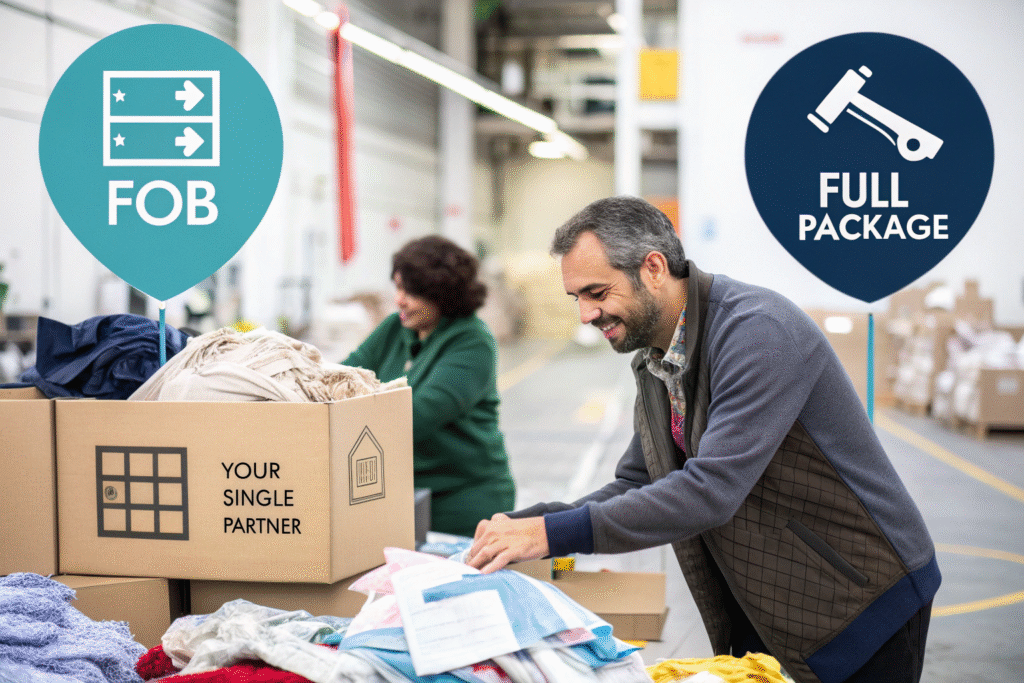
FOB (Free On Board) - You Manage Materials
- How it Works: You source and pay for all fabrics and trims directly, then deliver them to the factory. They quote only the CMT (Cut, Make, Trim) cost—the labor to produce the garment.
- Budget Impact: You carry 100% of the material cost risk and capital outlay. Your budget must include separate, detailed line items for every material purchase, plus international shipping and duties to get them to the factory.
- Best For: Brands with dedicated sourcing teams, those using very rare or proprietary materials they control.
- Risk: High. If you under-order fabric, production stops. If the material is defective, you bear the loss and delay.
Full-Package / CMT (with Factory-Sourced Materials)
- How it Works: The factory quotes a single, all-inclusive price per garment. They use their supply chain to source all materials on your behalf.
- Budget Impact: Simpler. One price covers everything. The factory's economies of scale often get you better material prices. Your budget is more predictable.
- Best For: Most brands, especially those with complex designs. It transfers material sourcing risk and logistics to the expert.
- Risk: Lower. The factory guarantees material availability and quality. At Shanghai Fumao, this is our recommended model for complex women's wear because we can control the quality from the source.
Which Model Offers Better Cost Control for Complexity?
For complexity, Full-Package is almost always superior. Why? The factory has the expertise to calculate precise material needs, manage relationships with specialty trim suppliers, and absorb the variability. Trying to source custom lace or beading yourself as a small brand is a recipe for budget overrun.
How To Use Your Budget As A Strategic Design Tool?
A well-built budget is not a cage for your creativity; it's a lens that brings your most impactful ideas into focus. It allows you to make strategic decisions about where to invest and where to simplify, maximizing the perceived value of your collection.
This is where business acumen and design vision unite to create commercially successful art.
How To Perform "Cost-Benefit Analysis" on Design Elements?
List every complex feature and its estimated cost. Then ask:
- Is this feature a key differentiator? Will the customer notice and value it? A unique custom button on the cuff might be worth $2.00. An expensive internal taping they'll never see might not be.
- Can we achieve a similar effect for less? Instead of hand-beading an entire yoke, could a strategically placed beaded motif or a special embroidered lace achieve a luxe feel at 60% of the cost?
- Does it align with our price point? The total cost of goods sold (COGS) should typically be 20-30% of your retail price. If your embellishment cost alone pushes COGS to 50%, the design is not commercially viable at your target price.
How Does Volume Planning Affect Your Unit Cost?
Complex designs have high fixed costs (sampling, pattern making, trim tooling). Spreading these fixed costs over more units is your most powerful lever.
- Calculate your break-even volume after accounting for all fixed costs.
- Consider a capsule approach: Launch with one hero, complex piece and pair it with simpler, high-margin basics that can carry the collection's profitability.
- Use pre-orders to validate demand and fund production before committing to high volumes of a risky, complex style.
At Shanghai Fumao, we help clients with this analysis. For a recent collection, we showed a designer that by making her signature draped detail in only two statement pieces instead of across all six styles, she could hit her target margin while making the collection more wearable and commercially balanced. The result was her most successful launch to date.
Conclusion
Budgeting for complex women's wear production is a sophisticated discipline that blends creative vision with financial rigor. It requires deep collaboration with your manufacturer, a meticulous "costing-by-component" methodology, and realistic allocations for development and risk. By embracing this process, you transform your budget from a reactive constraint into a proactive strategic tool—one that empowers you to create breathtaking, commercially viable collections.
The goal is not to design by spreadsheet, but to ensure your most ambitious ideas can see the light of day, delight your customers, and build a sustainable business. An accurate budget is the foundation of that creative freedom.
If you are developing a complex women's wear collection and seek a manufacturing partner who provides not just a quote, but true cost partnership and clarity, let's connect. At Shanghai Fumao, we specialize in navigating the intricacies of sophisticated apparel, providing the transparent, detailed budgeting you need to bring your vision to market with confidence. Contact our Business Director Elaine to begin the collaborative costing process: elaine@fumaoclothing.com.