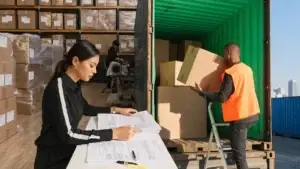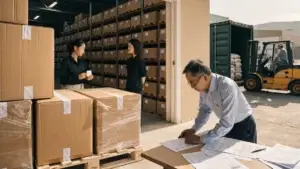
In the autumn of 2019, a brand owner from Vancouver sat in my office at Shanghai Fumao, and he was not here to talk about prices. He had just ended a four-year relationship with a factory that had started well and ended badly. The first two years were smooth. Quality was consistent, deliveries were on time. In year three, the fabric quality began to drift. A shirt that had been 100% cotton started feeling thinner. The factory denied any change. The brand owner sent the fabric to a lab. The fiber content was now 85% cotton, 15% polyester. The factory had substituted the fabric without disclosure, hoping the brand would not notice. The brand noticed. The relationship ended in a dispute over a 12,000-unit order, a refund negotiation that took months, and a production gap that cost the brand an entire season. He told me, "I do not need the cheapest factory. I need the factory that will tell me the truth, even when the truth is uncomfortable."
Building a long-term partnership with a transparent factory requires a shift from transactional buying to collaborative accountability. The brand must signal early, through its behavior in pricing negotiations, its response to production problems, and its communication cadence, that it rewards honesty and penalizes concealment. The factory that knows a disclosed problem will be met with a joint problem-solving conversation will disclose problems early. The factory that knows a disclosed problem will be met with a penalty, a threat, or a lost order will hide problems until they become disasters. Transparency is a two-way behavior. It is built by the brand's response to bad news as much as by the factory's willingness to share it.
At Shanghai Fumao, I have built my entire business model around transparency. My factory floor is open to unannounced visits. My cost breakdowns are shared with brand partners who sign a non-disclosure agreement. My production problems are communicated to the brand within hours of discovery, with a proposed solution attached. I operate this way not because it is easy, it is harder to be transparent than to be opaque, but because I have learned that a brand who trusts my information is a brand who places larger orders, stays for more seasons, and recommends us to other brands. Trust is a commercial asset. Here is how a brand can build that trust from the first negotiation through years of production.
What Questions Should You Ask in the First Negotiation to Test for Transparency?
The first negotiation is not just about price and MOQ. It is the first opportunity to test how the factory handles difficult questions. A transparent factory answers specific questions with specific information. An opaque factory answers specific questions with general reassurances. The difference is visible within the first 30 minutes of conversation, if the buyer knows what questions to ask and pays attention to how they are answered.
The questions that test for transparency in the first negotiation fall into three categories: questions about production capacity that can be verified during a factory walkthrough, questions about subcontracting practices that reveal whether the factory is willing to disclose its full production network, and questions about past production failures that test whether the factory is willing to acknowledge problems. A factory that answers "Yes, we can handle that" to every question without providing specific evidence is a factory that is managing your perception, not disclosing its reality.
I have sat through hundreds of first meetings with potential brand partners. The brands that ask these specific, verifiable questions earn my respect immediately. They are not naive buyers shopping for the lowest quote. They are professional supply chain managers who understand that a factory's willingness to disclose its limitations is more important than its claim to have none. Here are the questions that separate the transparent factories from the opaque ones, and how to verify the answers.
How to Ask About Production Capacity in a Way That Reveals Real Numbers?
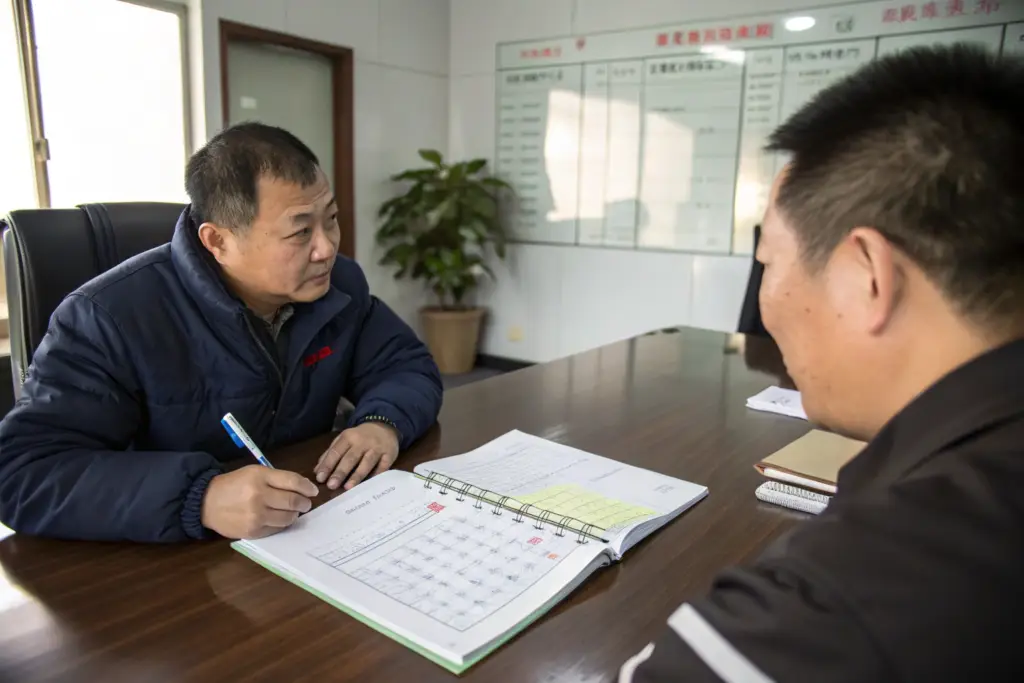
Do not ask, "Can you handle our volume?" Every factory will say yes. Ask instead, "What is your current factory utilization rate, and can I see the production schedule for the next eight weeks?" A transparent factory will show you the schedule. The schedule will have real purchase order numbers, real brand names, real delivery dates. You will see how much capacity is allocated and how much is available. An opaque factory will refuse to show the schedule, claiming confidentiality, or will show a cleaned-up version that does not reflect actual production.
Ask, "What was the last order you declined because you were at capacity?" A factory that has never declined an order has never been at capacity, or is willing to accept orders it cannot produce on time. A factory that can name a specific order it declined, with a specific reason related to capacity constraints, is demonstrating that it manages its capacity responsibly. Ask, "If we place a 5,000-unit order today, on what date will it ship, and which production line will it run on?" A transparent factory will point to a specific line on a specific date and explain how the order fits into the existing schedule. An opaque factory will say "We will make it work" without providing specifics.
What Questions Reveal a Factory's Subcontracting Practices?
Do not ask, "Do you subcontract?" Every factory knows the right answer to this question is no. Ask instead, "Can I see a list of every facility that will touch our goods, from fabric receipt to finished carton, including any off-site cutting, printing, embroidery, washing, or finishing?" A transparent factory that does not subcontract will provide a single facility address. A transparent factory that does subcontract will provide a complete list with facility names, addresses, and the specific process each performs.
Ask, "Can we include a subcontractor disclosure and approval clause in the manufacturing agreement?" Watch the response. A factory that welcomes this clause has nothing to hide. A factory that resists, deflects, or proposes to remove the clause is likely subcontracting without disclosure. Ask, "Have you ever had a brand audit your subcontractors, and how did that process go?" A factory with a clean subcontracting history will describe the audit process comfortably and may offer the brand as a reference. A factory with a problematic subcontracting history will become vague or defensive.
How to Respond When the Factory Discloses a Problem Before You Discover It?
The single most important moment in building a transparent partnership is the first time the factory discloses a problem. A fabric delivery is late. A dye lot is slightly off-shade. A production milestone is going to slip by three days. The factory has a choice. Disclose the problem now, when it is manageable, or hide it and hope it resolves itself. The factory's choice depends heavily on how the brand has behaved in previous interactions and how the brand responds in this moment.
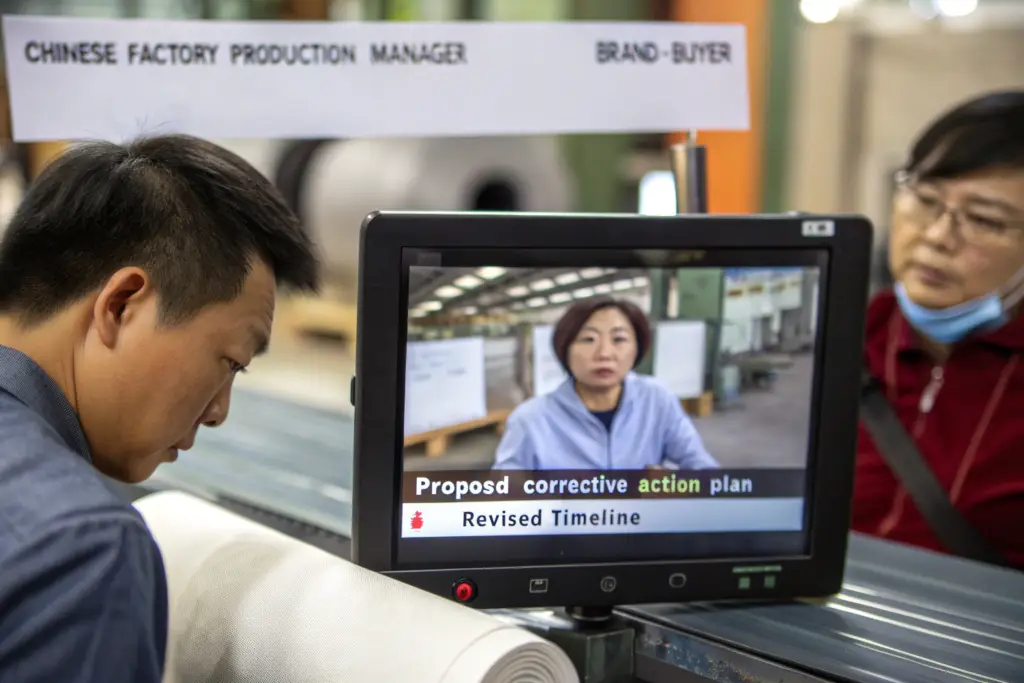
The correct response to a factory-disclosed problem has three elements: acknowledgment without immediate blame, a request for the proposed solution before evaluating the problem, and a collaborative revision of the timeline or specification that absorbs the impact without destroying the partnership. A brand that responds to a disclosure with anger, blame, or immediate financial penalty trains the factory to hide the next problem. A brand that responds with a calm request for the solution and a willingness to adjust the plan trains the factory to disclose the next problem earlier, when it is smaller and easier to fix.
I have disclosed problems to brand partners that ranged from minor, a zipper shipment delayed by two days, to serious, a fabric batch that failed colorfastness testing and required re-dyeing. In every case, the brand's response determined whether I would hesitate to disclose the next problem. The brands that worked with me to solve the problem earned a factory partner who tells them everything. The brands that punished me for the disclosure earned a factory partner who tells them only what they can verify independently. Here is what a constructive disclosure response sounds like and how to distinguish between a systemic problem and an isolated incident.
What Is the Difference Between a Systemic Problem and an Isolated Incident?
An isolated incident is a one-time event with a specific, identifiable cause that is unlikely to recur. A fabric shipment was delayed because a typhoon closed the port for two days. The cause is external, verifiable, and not a result of factory negligence. The appropriate response is to accept the delay, adjust the timeline, and move on.
A systemic problem is a recurring issue that indicates a process failure within the factory. The third fabric shipment in a row is delayed because the factory's procurement team consistently orders fabric too late. The cause is internal, behavioral, and likely to recur unless the process changes. The appropriate response is to request a root cause analysis and a corrective action plan, not just to accept the delay. The brand should ask: "What process change will prevent this from happening a fourth time?" A transparent factory will acknowledge the systemic nature of the problem and propose a specific process change. A factory that insists each delay is an unrelated isolated incident, three separate typhoons, three separate supplier errors, is not being transparent about its own procurement failures.
A problem has a cost. A delayed fabric delivery means a compressed production timeline, which may mean overtime labor, expedited shipping, or a missed delivery window. The cost must be allocated between the brand and the factory. The allocation should reflect the responsibility for the problem and the capacity of each party to absorb the cost.
A constructive negotiation starts with the factory proposing a cost allocation and a rationale. "The fabric delay was caused by our late purchase order issuance, which is our responsibility. We will cover the overtime labor cost and the sea-air freight upgrade to recover the lost week. The total cost to us is $2,800. We will absorb this cost. The revised delivery date is January 15th." This proposal is specific, accountable, and solution-oriented. The brand can accept it, negotiate a different split, or propose an alternative solution. The negotiation is collaborative because the factory initiated the accountability. A brand that responds to this proposal with a demand for additional punitive damages, a 10% discount on the entire order for a one-week delay, is training the factory that disclosure triggers punishment. The factory will not disclose the next problem.
A factory that only communicates when there is a problem is a factory that is managing information reactively. A factory that communicates proactively, sharing production updates, quality data, and timeline confirmations on a regular schedule, is a factory that is building trust through visibility. The brand that receives a weekly production update, even when the update is "Everything is on schedule, no issues to report," experiences a fundamentally different relationship than the brand that only hears from the factory when something is wrong.
Proactive transparency includes a weekly production status report with photographs of the production at each stage, a shared real-time or near-real-time production tracking dashboard, a pre-shipment quality inspection report shared immediately upon completion, a cost breakdown refresh when material or labor costs change significantly, and an annual factory audit report shared without being requested. A factory that provides this information without the brand having to ask for it is a factory that treats the brand as a partner, not as a customer to be managed.
At Shanghai Fumao, every brand partner receives a weekly update every Monday morning, Shanghai time. The update includes a status summary for every open purchase order, photographs of production at the cutting, sewing, and finishing stages, a quality data summary showing first-pass yield and defect rates for the previous week, and a shipping schedule with confirmed vessel or flight details. This update takes my production team 90 minutes to compile each week. The return on that 90-minute investment is measured in the dozens of "just checking in" emails that we do not receive, and the trust that accumulates when the brand sees their production progressing on schedule, week after week. Here is how to structure a weekly production update and why real-time defect data matters.

What Should a Weekly Production Update Include to Be Truly Transparent?
A weekly production update that is truly transparent includes not just good news, but all news. It includes the number of units cut, the number of units sewn, the number of units finished, and the number of units packed, all measured against the planned schedule. If any metric is behind plan, the update explains why and states the recovery plan.
The update includes photographs. Not staged, professional photographs, but real, unpolished photos taken on the factory floor. A photo of the cut fabric bundles with the style number and PO number visible. A photo of the sewing line running the brand's production. A photo of the finished goods cartons stacked and labeled. These photographs are proof of progress. They allow the brand to see their production without flying to Shanghai. The update includes a quality section. The first-pass yield for the week. The defect categories if any defects were found. The corrective actions taken. This quality data is the most sensitive information a factory can share, because it reveals problems. A factory that shares its defect data is a factory that is confident in its quality management.
How Does Real-Time Defect Data Sharing Improve the Partnership?
When a factory shares defect data in real time, the brand can participate in quality decisions during production, not just receive a pass/fail report at the end. If the inline inspection reveals a recurring seam puckering issue on a specific style, the factory shares the data and a photograph of the issue. The brand's production manager, who may have seen this issue on a different fabric with a different factory, can suggest a tension adjustment or a feed dog change. The problem is solved collaboratively, in hours, rather than being discovered at final inspection when the goods are already packed.
Real-time defect sharing also builds the brand's confidence in the factory's quality system. A factory that reports a 4% defect rate on a particular style, with a clear breakdown of the defect types and the corrective actions, is demonstrating that its quality system is functioning. A factory that reports a 0% defect rate every week is either producing perfect garments, which is unlikely, or is not inspecting honestly. The brand learns to trust the factory's quality data because the data is specific, variable, and credible. The partnership deepens because the quality conversation is based on shared data, not on post-delivery surprises.
How to Align on Long-Term Goals That Go Beyond a Single Purchase Order?
A transactional relationship is measured in purchase orders. A partnership is measured in seasons. The brand that only discusses the current order with its factory is a customer. The brand that discusses the next four seasons, the planned category expansion, the sustainability certification roadmap, and the cost reduction targets, is a partner. The factory's commitment to the relationship is proportional to the visibility it has into the brand's future volume.
Aligning on long-term goals requires the brand to share a rolling 12-to-18 month production forecast, a product category development roadmap, and specific partnership improvement targets with the factory. The factory reciprocates with a capacity reservation commitment, a dedicated production line or team, and an investment plan for equipment or certification that supports the brand's growth. The relationship shifts from "How much does this order cost?" to "How do we grow together over the next three years?"
At Shanghai Fumao, I ask every new brand partner a simple question during our first quarterly review: "What do you need from us in 18 months that you are not getting from us today?" The answer might be a new fabric category, a new certification, a faster lead time, a lower cost on a core style. The answer becomes a joint development project. We allocate resources, set milestones, and review progress quarterly. The brand sees that we are investing in their future, not just fulfilling their current orders. Here is how to share forecasts without overcommitting and how a factory can invest in a brand's specific growth.
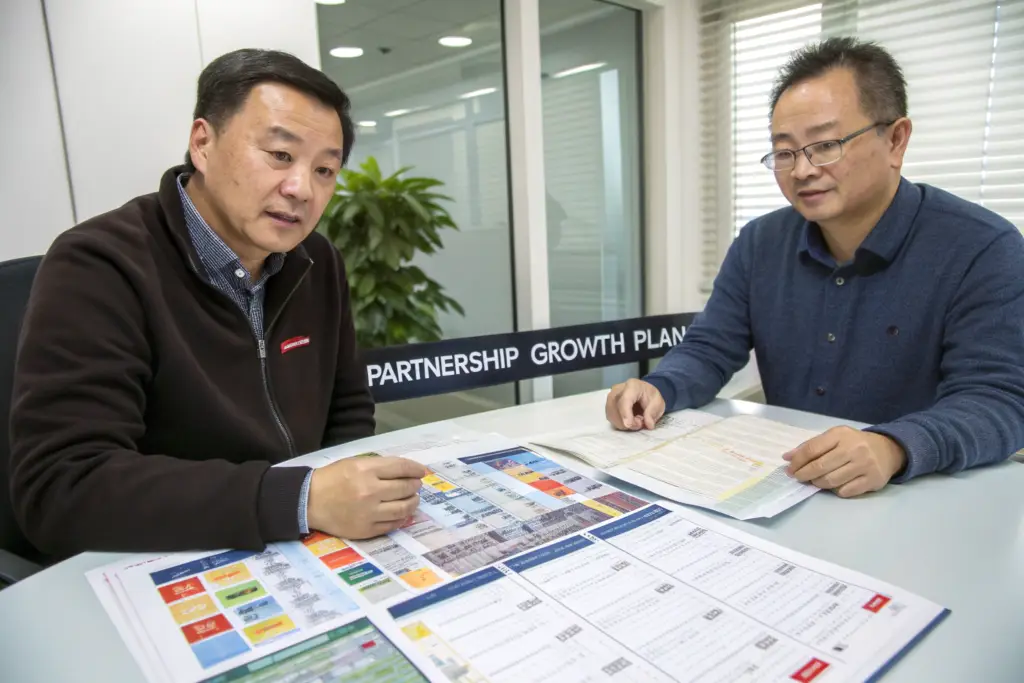
A rolling forecast is not a purchase order. It is a planning document that indicates expected volume over the next 12 to 18 months, updated quarterly. It is not a binding commitment. It is a tool that allows the factory to reserve capacity, pre-book fabric, and plan staffing. A brand that shares a forecast enables the factory to serve them better. A brand that refuses to share any forward visibility, fearing that the forecast will be treated as a commitment, limits the factory's ability to plan.
The forecast should be clearly labeled as "Non-Binding Planning Forecast." It should state the projected style count, unit volume, and delivery months. It should include a disclaimer that actual purchase orders will confirm final volumes. The brand and the factory should review the forecast quarterly and adjust based on actual orders and sell-through data. A factory that treats a non-binding forecast as a binding commitment is a factory that does not understand retail planning. A brand that provides no forecast at all and expects the factory to have capacity available on four weeks' notice is a brand that does not understand manufacturing. The forecast is the compromise between these two extremes.
What Investments Can a Factory Make That Demonstrate Commitment to a Brand?
A factory that invests specifically in a brand's needs is demonstrating commitment that goes beyond words. The investment might be in equipment. A brand plans to expand into bonded outerwear. The factory purchases an ultrasonic welding machine to support the new category. The investment might be in certification. A brand needs GOTS certification to serve a new retail account. The factory pursues and achieves GOTS certification.
The investment might be in a dedicated resource. A brand's volume grows to a level that justifies a dedicated production line or a dedicated account manager. The factory assigns a line that runs exclusively or primarily for that brand, with operators trained on the brand's specific quality standards. This dedicated line reduces changeover time, improves quality consistency, and demonstrates that the brand is a priority, not just another customer in the queue. I have made these investments for brand partners who shared their growth plans with me. The investments were not guaranteed to pay off, the brand could have changed direction, the category expansion could have failed, but they signaled commitment. The brand responded to that commitment with loyalty, larger orders, and longer contract terms. The investment paid off because it was mutual.
Conclusion
A transparent factory partnership is not discovered. It is built. It is built through specific questions in the first negotiation that test for honesty. It is built through the brand's response to bad news, which signals whether disclosure is safe. It is built through weekly communication that shares production data, quality metrics, and timeline updates without being asked. It is built through a shared long-term plan that gives the factory visibility into the brand's future and gives the brand confidence in the factory's commitment.
At Shanghai Fumao, I have built my factory on the belief that transparency is the most durable competitive advantage in manufacturing. A factory can compete on price and be undercut. A factory can compete on quality and be matched. A factory that competes on trust, built through years of consistent, honest, proactive communication, is difficult to displace. The brand that has a factory partner it trusts completely does not leave for a 5% price reduction.
If you have been burned by a factory that hid problems, or if you are looking for a manufacturing partner who will share the bad news as quickly as the good, let us start a conversation. We can walk you through our weekly update format, share a sample of the production data our brand partners receive, and show you what a transparent factory relationship looks like in practice. Reach out to our Business Director, Elaine, at elaine@fumaoclothing.com. The factory that tells you the truth today is the factory that delivers on time tomorrow.