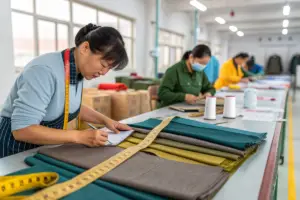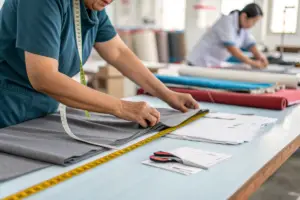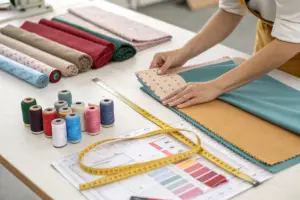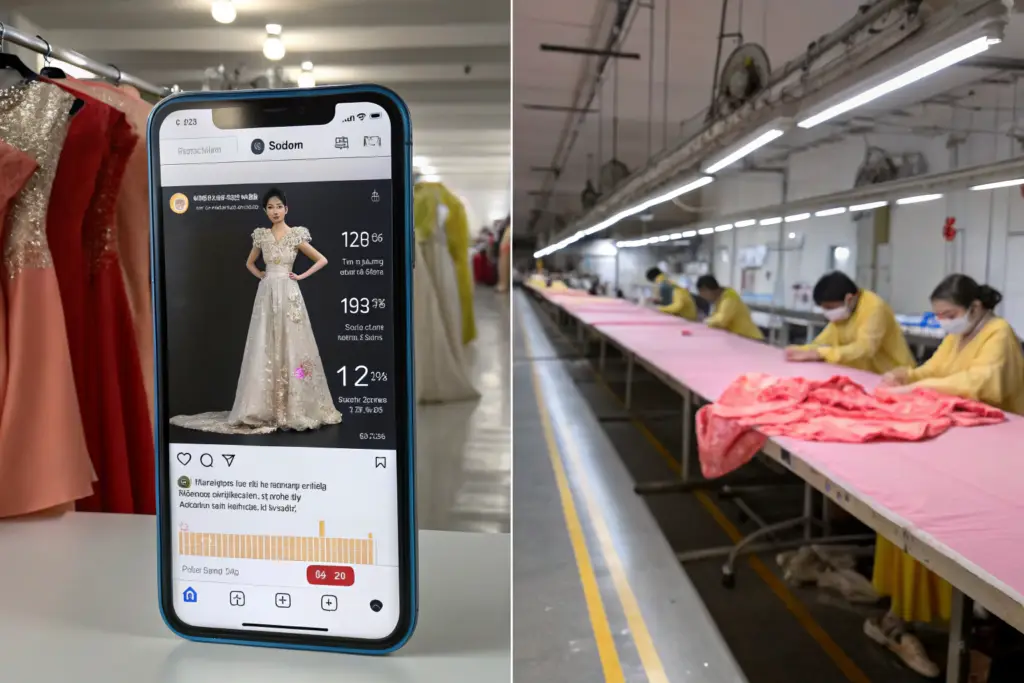
In February of this year, a womenswear brand owner from Los Angeles sent me a TikTok link at 9:00 AM Shanghai time. The video showed an influencer wearing a specific style of midi dress, a square neckline, a smocked back panel, a tiered ruffle hem in a muted terracotta print. The video had been posted 18 hours earlier. It had 2.4 million views. The comments were flooded with women asking where to buy the dress. The brand owner did not have this dress in her line. She needed to know if I could produce it, from sketch to delivery, in five weeks. Five weeks. That is not a production timeline. That is a land-speed record. Six years ago, the standard garment development and production cycle was six to nine months. Today, a brand that cannot capture a micro-trend within four to six weeks leaves the revenue on the table for a faster competitor.
Micro-trends in women's dresses are driving faster turnaround demands because the shelf life of a viral style has collapsed from months to weeks. A dress that trends on TikTok on Monday has peak consumer purchase intent by Friday. By the following Friday, the consumer has moved on to the next aesthetic. The brand that can design, sample, produce, and deliver a trend-responsive dress within four to six weeks captures the full-price sell-through window. The brand that operates on a traditional six-to-nine-month development calendar arrives with inventory just as the trend expires, forcing markdowns and margin destruction. Speed is no longer a competitive advantage. It is the minimum requirement for participating in the women's dress category.
At Shanghai Fumao, I have restructured our entire women's dress production workflow around this new reality. I did not do it because I wanted to. I did it because my brand partners demanded it, and the brands that did not demand it were losing market share to the brands that did. The micro-trend phenomenon is not a temporary social media fad. It is a structural change in how consumers discover, purchase, and discard fashion. The supply chain must adapt, or the supply chain becomes irrelevant. Here is how micro-trends are reshaping production timelines, and how a factory can deliver speed without sacrificing quality.
How Has Social Media Compressed the Lifecycle of a Women's Dress Trend?
The traditional fashion trend cycle moved slowly. A trend emerged on a runway in February. It appeared in editorial magazines in March. It arrived in department stores in August. The consumer discovered it in September and purchased it through November. The selling window was three to four months. The supply chain had time to react. The brand could place a production order in April, receive goods in July, and sell through the season.
Social media has collapsed the trend cycle into a matter of days. A dress style appears in a viral video. The video's engagement data is publicly visible. Millions of consumers see the dress within 24 hours. Their purchase intent spikes immediately. They search for the dress, find it, buy it, or, if it is not available, they move on to the next viral style. The peak purchase intent window is now one to three weeks from the moment of viral exposure. The total trend lifecycle, from emergence to saturation to decline, is six to twelve weeks. The brand that was not already producing the dress when the video went live cannot capture the peak. The brand that rushes to produce after seeing the video can capture the tail, but the tail is a fraction of the peak.
The implication for factory turnaround is absolute. The development and production timeline must fit inside the trend's selling window, or the production run arrives too late to sell at full price. A brand that needs eight weeks to develop and produce a dress cannot participate in a six-week trend. The brand must compress its timeline or exit the category. Here is how purchase intent data has changed and how the selling window timeline has evolved.
What Does the Data Show About the Peak Purchase Intent Window?
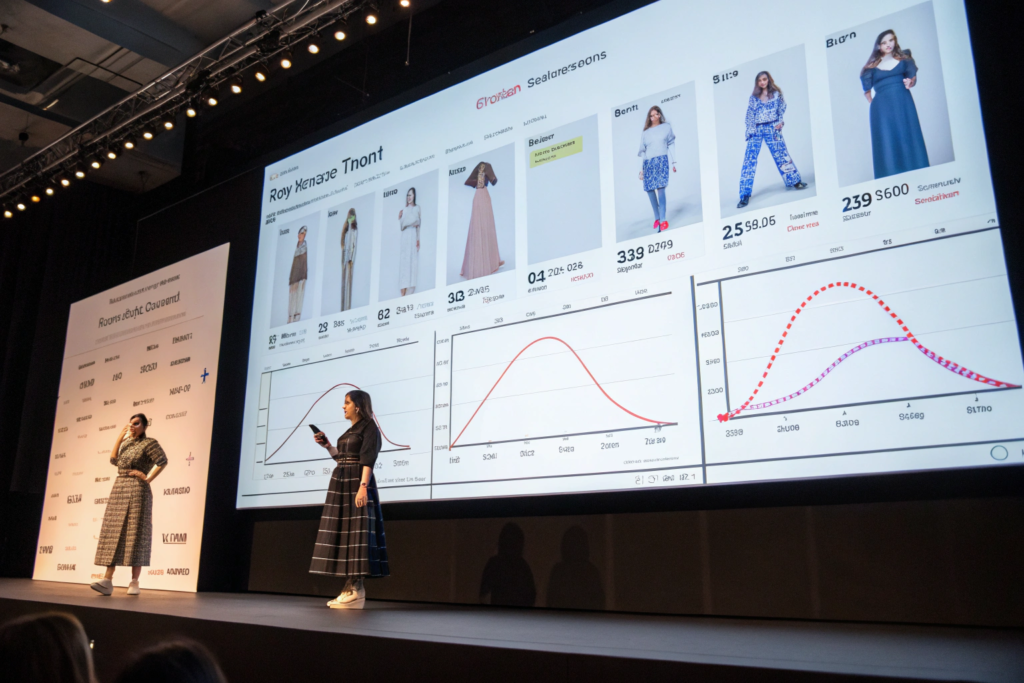
The data from consumer behavior analytics is consistent. A viral fashion moment generates a search query spike within 24 hours of the initial post. The search volume peaks between day three and day seven. Purchase conversion peaks between day five and day fourteen. After day twenty-one, both search volume and purchase conversion have declined by more than 50% from the peak. After day thirty, the trend is in decline. New viral content has captured the consumer's attention.
This data has direct production implications. A brand that can have a trend-responsive dress available for purchase within seven days of the viral moment captures the peak purchase window. A brand that can deliver within fourteen days captures the declining side of the peak but still achieves strong full-price sell-through. A brand that delivers after day twenty-one is selling into a shrinking audience. The inventory that arrives after day thirty is markdown inventory before it leaves the warehouse. The production timeline is not just a cost variable. It is the primary determinant of the gross margin on the order.
How Does the "See Now, Buy Now" Expectation Affect Production Planning?
The consumer who sees a dress on social media expects to be able to purchase it immediately. The "see now, buy now" expectation, originally driven by luxury brands experimenting with immediate runway-to-retail availability, has now permeated every price tier of the women's dress market. The consumer does not understand, and does not care, that traditional garment production takes months. They see a dress. They want to buy it. If they cannot, they buy a different dress from a different brand.
This expectation fundamentally changes the brand's production planning. The brand cannot wait until a trend is confirmed by sales data before placing a production order. By the time the sales data confirms the trend, the trend is already peaking, and the production order will arrive too late. The brand must place production bets before the trend is fully validated, using social media engagement signals as leading indicators. The factory must be prepared to accept these bets, with pre-reserved capacity and pre-positioned fabric, and execute on compressed timelines. The brand-factory relationship must be close enough that these rapid decisions can be made on a shared understanding of risk and reward.
What Production Model Supports a 4-Week Dress Turnaround?
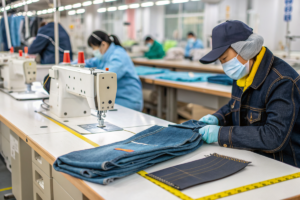
A four-week dress turnaround is not achieved by asking the same production team to work faster. It is achieved by redesigning the production system so that the work is shorter. The traditional production model is sequential. The fabric is ordered after the purchase order is received. The fabric arrives. The fabric is inspected. The pattern is finalized. The fabric is cut. The cut panels are sewn. The garments are finished and packed. Each step waits for the previous step to complete. The total timeline is the sum of all the steps. A four-week timeline requires overlapping steps that would be sequential in a traditional model.
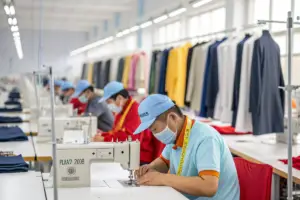
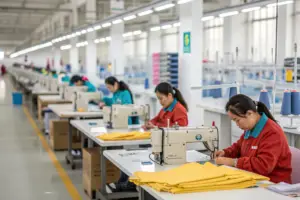
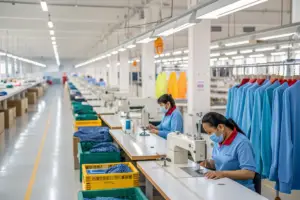
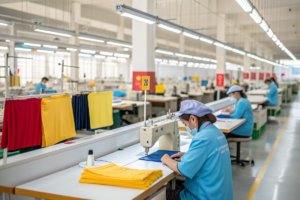
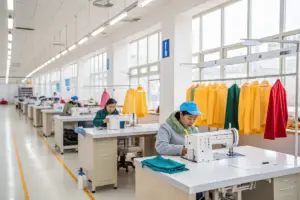
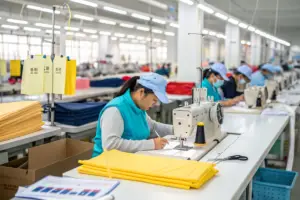
The production model that supports a four-week dress turnaround consists of four elements: pre-positioned greige fabric inventory that is ready to be dyed to the trend color, eliminating the three-to-four-week fabric mill lead time, a digital pattern library of pre-approved fit blocks that are adapted to the trend silhouette rather than developed from scratch, concurrent cutting and sewing operations where the first cut bundles move to sewing while later bundles are still being cut, and a dedicated fast-track production line that is reserved for trend-responsive orders and is not loaded with long-run basic production.
At Shanghai Fumao, I built our fast-track dress line in 2024. It was a significant investment. It required dedicating physical space, sewing machines, and a trained team to a line that might sit idle between trend spikes. I made the investment because I saw that the brands willing to pay a premium for speed were the brands growing their market share. The line operates on a different economic model than our standard production. The cost per unit is 15% to 20% higher due to the smaller batch sizes and the reserved capacity. The brands that use the fast-track line accept this premium because the gross margin on a full-price trend sale is 60% to 70%, while the gross margin on a marked-down late arrival is close to zero. Here is how greige inventory and fit blocks enable the speed.
How Does Pre-Positioned Greige Fabric Enable Rapid Color Response?
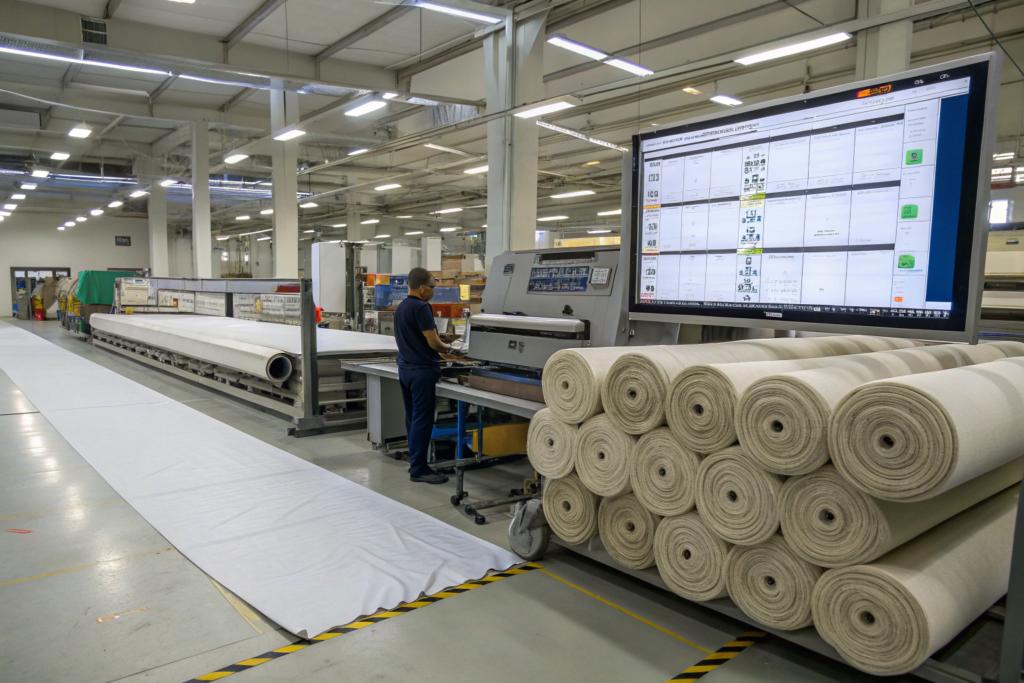
Fabric is the longest lead time item in garment production. A custom-dyed fabric from a mill typically requires three to four weeks from order to delivery, longer if the mill is busy. This lead time alone consumes the entire four-week turnaround window. The solution is to pre-position greige fabric, undyed, unfinished fabric, in the factory's inventory or at a partner dye house.
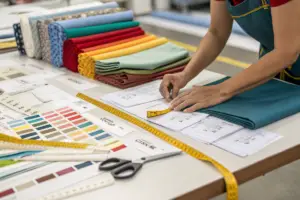
When a trend color is identified, the greige fabric is pulled from inventory and dyed locally. The dyeing process, including lab dip approval and bulk dyeing, takes five to seven days. The dyed fabric is finished, inspected, and released to cutting within ten days. The three-to-four-week mill lead time is eliminated. The risk is that the brand must commit to a greige fabric quality before the trend color is known. This risk is manageable if the brand standardizes its fabric qualities across multiple styles. A brand that uses the same 180 GSM cotton voile for its spring dresses can pre-position that greige fabric and dye it to any trend color. The fabric quality is consistent. Only the color changes.
What Role Do Pre-Approved Fit Blocks Play in Eliminating Sample Iterations?
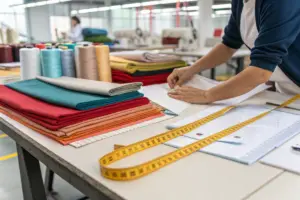
A fit block is a proven pattern foundation, a bodice block, a sleeve block, a skirt block, that has been fitted and approved through previous sampling and production. When a new trend silhouette is developed, the pattern maker adapts the existing fit block rather than drafting a new pattern from scratch. The adaptation, adding a new neckline shape, adjusting the skirt length, adding a ruffle, takes hours rather than days. The fit is already proven, so the number of sample iterations drops from three or four to zero or one.
A brand that has developed a library of fit blocks with its factory can launch a new dress silhouette in a fraction of the time required for a fully bespoke development. The fit block library is a shared asset between the brand and the factory. It is built over multiple seasons of collaboration. The initial investment in perfecting the fit pays off in future seasons when the fit can be reused. I maintain a digital fit block library for each of our long-term brand partners. When a trend-responsive style request arrives, my pattern team pulls the appropriate blocks, adapts them to the new design, and produces a 3D simulation within 48 hours. The brand approves the simulation. The pattern is released to cutting. The sample iteration cycle that would have consumed two to three weeks is compressed into two to three days.
How Can a Factory Balance Fast Turnaround with Quality Control?
Speed without quality is not speed. It is a faster path to a return. A dress that is produced in four weeks but arrives with uneven seams, mismatched prints, or incorrect measurements is not a successful capture of a micro-trend. It is a chargeback, a return, and a damaged brand reputation. The consumer who buys a trend-responsive dress has the same quality expectations as a consumer who buys a planned collection dress. The factory's quality control system must operate at the speed of the fast-track line without becoming the bottleneck.
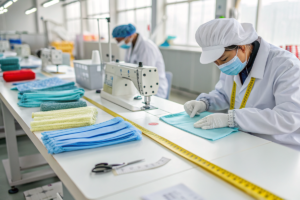
Balancing fast turnaround with quality control requires shifting from end-of-line inspection to inline inspection, where quality checks are integrated into the production process rather than waiting until the garment is finished. It requires a simplified quality checklist that focuses on the critical-to-quality attributes for the specific garment type, rather than a generic comprehensive inspection that takes too long. It requires real-time defect data that allows the production manager to correct process issues within the same shift, rather than discovering a systemic defect at final inspection when 500 units have already been produced.
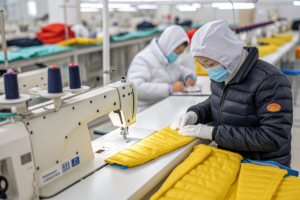
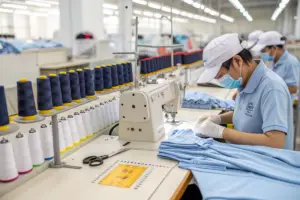
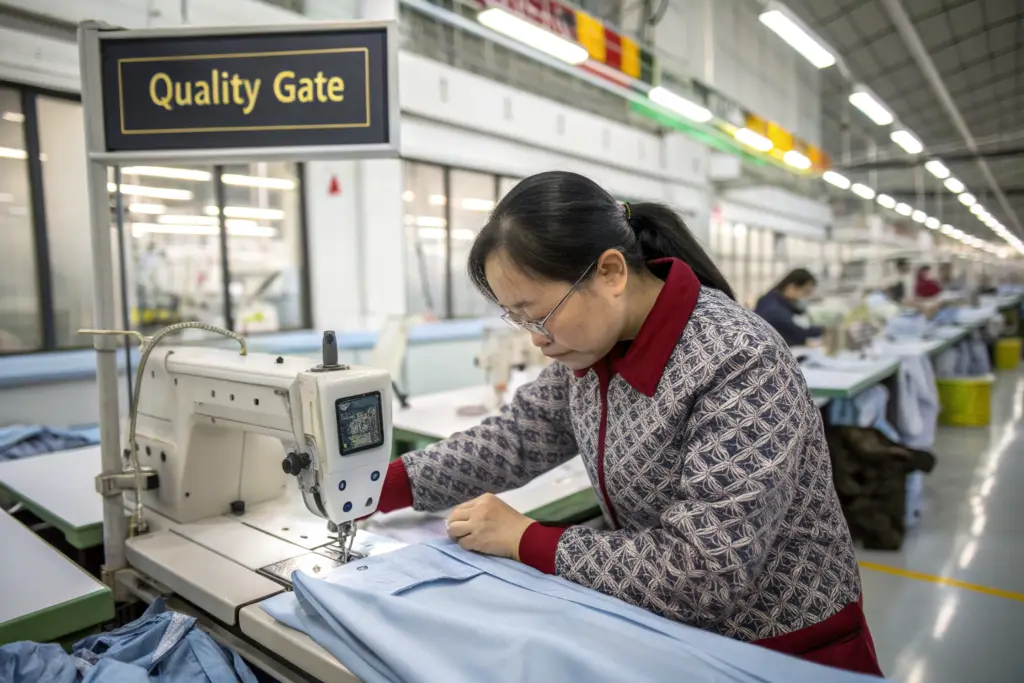
At Shanghai Fumao, our fast-track line has a dedicated inline quality inspector who works within the line, not at the end of it. The inspector checks a sample of units from each operator every hour. If a defect pattern emerges, a skipped stitch, a crooked hem, the inspector alerts the operator and the line supervisor immediately. The defect is corrected on the next unit, not on the next batch. The first-pass quality yield on our fast-track line is actually higher than on our standard lines, because the feedback loop is measured in minutes, not days. Here is how inline inspection works in a compressed timeline and how to define the essential quality checks.
How Does Inline Inspection Differ from Final Random Inspection in a Fast-Track Model?
Final random inspection, the traditional AQL-based inspection conducted on finished, packed goods, is too slow for a fast-track model. By the time the final inspection is conducted and the goods are released, the trend window may have already narrowed. Worse, if the final inspection discovers a systemic defect, the entire production batch must be reworked or rejected, and there is no time remaining to produce a replacement.
Inline inspection integrates quality checks at each major production stage. The cutting quality is checked after the first bundle is cut. The sewing quality is checked at each operation, collar setting, sleeve insertion, hemming, by the inline inspector. The finishing quality, pressing, labeling, folding, is checked as the garments come off the finishing station. Defective units are pulled from the line and reworked immediately. Finished units are packed and ready to ship as soon as the last unit is completed. A final random inspection is still conducted as a confirmation, but it is a formality, not a discovery process. The quality has already been verified throughout production.
What Are the Critical Quality Checks That Cannot Be Skipped?
In a compressed timeline, the quality checklist must be prioritized. Not every check from a 50-point inspection protocol can be performed on a fast-track line. The checks that directly affect sellability and return rate must be preserved. Checks that affect only minor aesthetic details may be relaxed.
The non-negotiable checks are: measurement verification against the spec sheet for the key fit points, chest, waist, length, visual inspection for major defects, holes, stains, seam separation, color verification against the approved lab dip, and label and hangtag verification for legal compliance. These four checks protect the brand from the defects that generate customer returns and retail chargebacks. Checks that can be streamlined include: minor thread trim quality, internal seam finish appearance on unlined garments, and packaging fold consistency. A dress that fits correctly, has no visible defects, matches the approved color, and has compliant labels will sell at full price. The other quality attributes are secondary in a speed-critical production run.
What Should a Brand Look for in a Speed-Optimized Manufacturing Partner?
Not every factory can deliver a four-week dress turnaround. Not every factory should try. The speed-optimized factory has specific structural characteristics that are visible during a factory visit. A brand that needs speed must evaluate potential manufacturing partners against these characteristics, not just against the standard criteria of price, quality, and lead time. A factory that quotes a four-week lead time but does not have the physical infrastructure to support it is quoting an aspiration, not a capability.
A speed-optimized manufacturing partner will have visible evidence of four structural capabilities: pre-positioned greige fabric inventory or a dedicated dye house partnership, a digital pattern and fit block library that can be demonstrated during the visit, a dedicated fast-track production line that is physically separate from the long-run lines, and a real-time production tracking system that shares data with the brand during the production run. A factory that lacks any of these four capabilities cannot reliably deliver compressed turnaround times. It may succeed once, by luck and overtime, but it will fail when multiple trend-responsive orders arrive simultaneously.
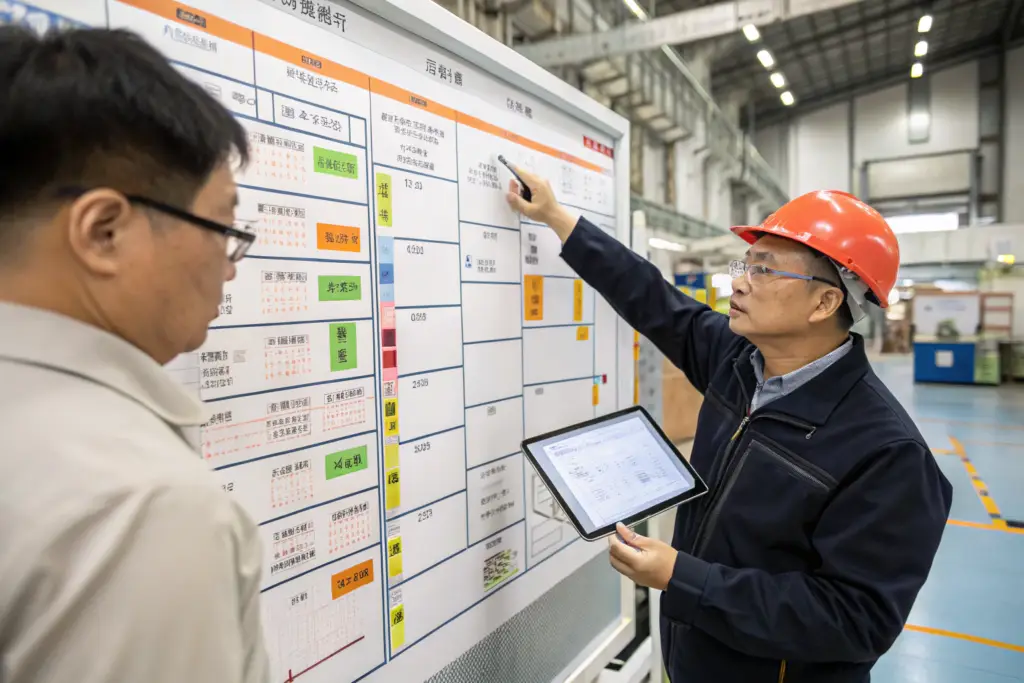
At Shanghai Fumao, I show every potential fast-track brand partner these four capabilities during their factory visit. I walk them through the greige inventory room. I pull up their fit block library on our digital pattern system. I show them the fast-track line, with its cross-trained team and its dedicated quality inspector. I log into our production tracking dashboard and show them a live view of a current fast-track order. The capabilities are visible and verifiable. Here is how to assess dedicated fast-track capacity and what questions to ask about the fast-track team.
How to Verify That a Factory Has Genuine Fast-Track Capacity?
A factory that claims fast-track capability but does not have a dedicated fast-track line is planning to prioritize your order over other orders on its standard lines. That prioritization is not a reliable capability. It is a promise that will break the moment two "priority" orders arrive at the same time.
A genuine fast-track line is physically separate. It has its own cutting table, its own sewing machines, its own finishing station, and its own quality inspector. The line is not borrowed from standard production. It is reserved for fast-track orders. Ask the factory: "How many fast-track orders can you run simultaneously?" A factory with a dedicated fast-track line can answer with a specific number, one, two, three concurrent orders. A factory without dedicated capacity will give a vague answer. Ask to see the fast-track line on the factory floor. If it is running a standard, long-run order when you visit, it is not a dedicated fast-track line. It is a standard line that the factory calls fast-track when it is convenient.
What Questions Reveal a Factory's Speed Culture Beyond Equipment?
Equipment is necessary but not sufficient. A speed culture is revealed in how the factory makes decisions. Ask the factory owner or production manager: "When you discover a quality problem on a fast-track order, who makes the decision to stop the line?" The answer should be specific and immediate. "The inline inspector has the authority to stop the line without management approval." If the answer involves multiple levels of approval, the factory's decision-making speed is too slow for fast-track production.
Ask: "What was the last fast-track order that went wrong, and what did you learn from it?" A factory with a genuine speed culture will describe a specific problem, a fabric dye lot that failed colorfastness, a pattern error that required a recut, and the process change that was implemented to prevent recurrence. A factory that claims to have never had a fast-track problem is either new to fast-track production or is not being transparent. Ask: "How do you communicate production progress to the brand during a compressed timeline?" The answer should include daily updates, not weekly. A four-week production run has 20 working days. A weekly update provides four data points. A daily update provides twenty. The granularity of communication reflects the seriousness of the factory's commitment to speed.
Conclusion
Micro-trends in women's dresses are not a passing disruption. They are the new operating environment for the category. The consumer's discovery-to-purchase journey has been compressed by social media into a window of days, not months. The brand that can place a production order on a Monday and have dresses on a retail rack or in an e-commerce fulfillment center four weeks later is the brand that captures the trend premium. The brand that cannot is the brand that liquidates inventory.
At Shanghai Fumao, I have invested in the greige inventory, the digital fit blocks, the dedicated fast-track line, and the inline quality system that makes four-week dress production a reliable capability, not a one-time miracle. I did this because I want our brand partners to be the ones capturing the trend, not the ones chasing it. The fast-track model costs more per unit, but the full-price sell-through on a trend-responsive dress more than compensates for the production premium.
If you are a womenswear brand watching micro-trends emerge and fade before your production calendar can respond, let us discuss how a fast-track production model could fit into your sourcing strategy. We can show you our greige inventory, our fit block library, and our dedicated fast-track line. Reach out to our Business Director, Elaine, at elaine@fumaoclothing.com. The next viral dress is probably being posted right now. The factory that can make it is ready.