The future of fashion isn’t just about making more—it’s about making better, longer-lasting, and recyclable clothing.
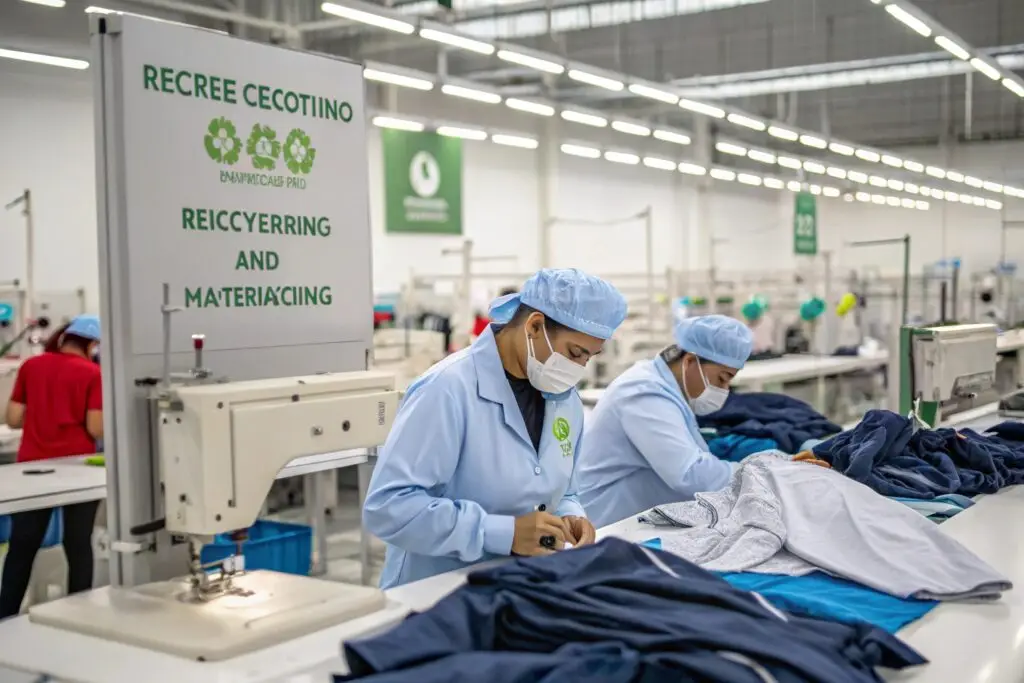
Clothing factories can join the circular fashion movement by adopting closed-loop production, using recycled and biodegradable materials, minimizing waste, and enabling garment reuse and resale.
At Fumao, we help manufacturing partners shift from traditional linear models to circular strategies that align with sustainability, brand demands, and the next generation of fashion buyers.
How can we create a more circular fashion industry?
A circular system doesn’t start with recycling—it starts with design, fabric selection, and production planning.
We can build a circular fashion industry by designing garments for durability, enabling reuse, minimizing resource consumption, and creating supply chains that support garment recovery, recycling, and resale.
What roles do factories play in circular transformation?
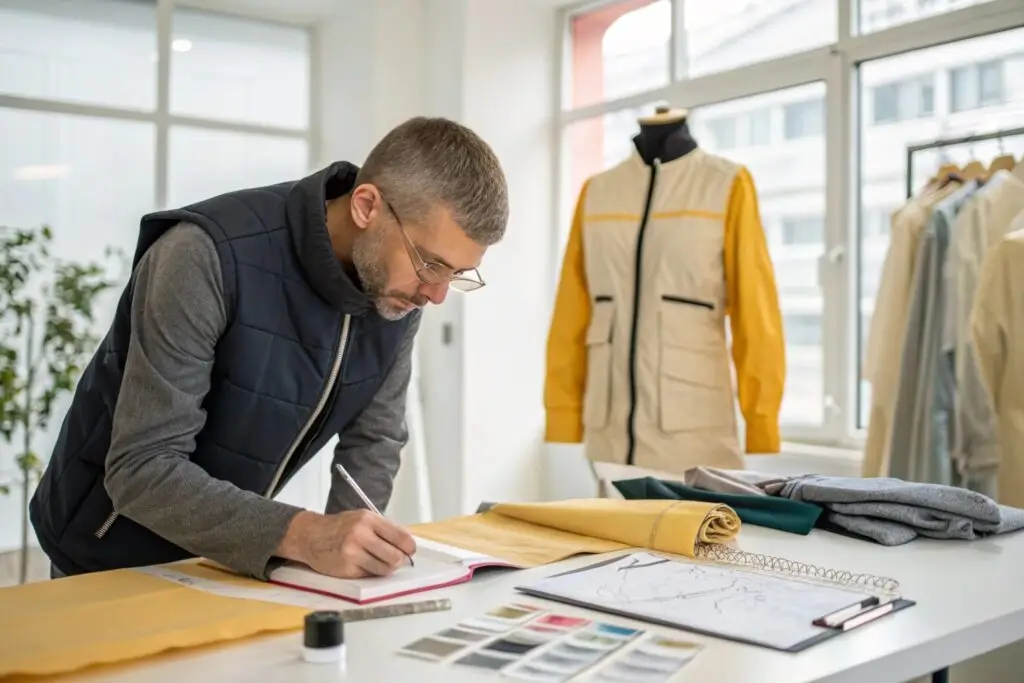
Factories aren’t just making clothes—they’re setting the foundation for what happens next. Here’s how they contribute:
- Material choice: Use recyclable fibers1 (e.g., mono-material polyester or organic cotton2)
- Modular construction: Make garments easier to repair, disassemble, or upgrade
- Durable stitching: Increase lifespan to support multiple wearers
- Clean finishing: Use water-saving dye methods and avoid toxic chemicals
At Fumao, we’ve redesigned several high-rotation garments using mono-fiber fabrics + digital printing3 to improve recyclability while cutting water use by 40%.
What’s needed for a full circular system?
| Phase | Circular Action Required |
|---|---|
| Design | Plan for reusability, repairs, and recyclability |
| Fabric Sourcing | Use organic, recycled, or biodegradable textiles |
| Manufacturing | Reduce offcuts, increase efficiency |
| Distribution | Package with recyclables, optimize logistics |
| End of Life | Enable take-back, resale, or fiber recovery |
Factories that support these pillars are future-proofing their partnerships.
How is H&M using the circular economy?
H&M has become a high-profile example of how mainstream brands can pivot toward circularity—though it’s still a work in progress.
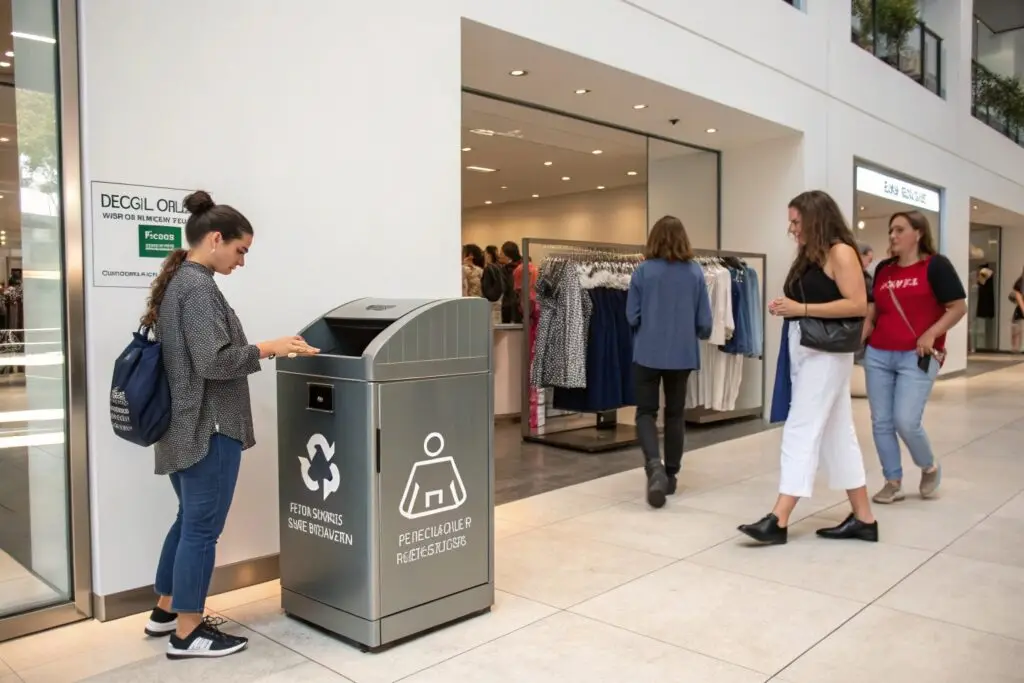
H&M’s circular economy strategy includes garment collection programs, use of recycled materials, resale platforms, and pilot tests in rental and repair.
What initiatives has H&M launched?
- Garment Take-Back Program4: Users drop off old clothes in-store
- “Close the Loop” Campaign: Marketing around textile recycling
- Resale Launches: In markets like Sweden and the UK
- Recycled Content: Goal to use 100% recycled or sustainably sourced materials by 2030
- Circular Design Guidebook: A toolkit for suppliers and partners
They’re also piloting repair services in select stores and rental trials for eventwear in Europe.
What does this mean for factories?
- H&M’s suppliers are expected to follow circular design practices5
- Factories are rewarded for traceability and waste reduction
- Certified mills and recyclable product lines6 get long-term commitments
Factories that proactively adapt can become preferred partners—not just vendors.
What is the circular economy in the clothing industry?
It’s not just about recycling clothes—it’s about keeping textiles in use as long as possible and designing out waste.
The circular economy in clothing means extending garment life, enabling reuse, supporting fiber recovery, and designing supply chains to minimize virgin resource use and maximize value loops.

How does a circular system differ from linear manufacturing?
| Linear Model | Circular Model |
|---|---|
| Make → Use → Discard | Make → Use → Return → Reuse/Recycle |
| Based on fast volume | Based on longevity and loops |
| Resource-intensive | Waste-reducing, repair-friendly |
| High landfill output | Low landfill, high re-circulation |
Factories in circular models7 don’t just make—they design for return.
What changes must factories make?
- Upgrade machinery to support new materials (e.g., Tencel, rPET)
- Train staff in modular or zero-waste construction8
- Work with brands to integrate recycling logistics into product lifecycle
- Label for traceability (e.g., QR codes, RFID, fiber ID)
At Fumao, we now include garment lifecycle tags9 for clients who plan resale or return schemes. These labels track how long a garment lasts—and inform restock planning.
Why is it necessary for the fashion industry to create a circular system?
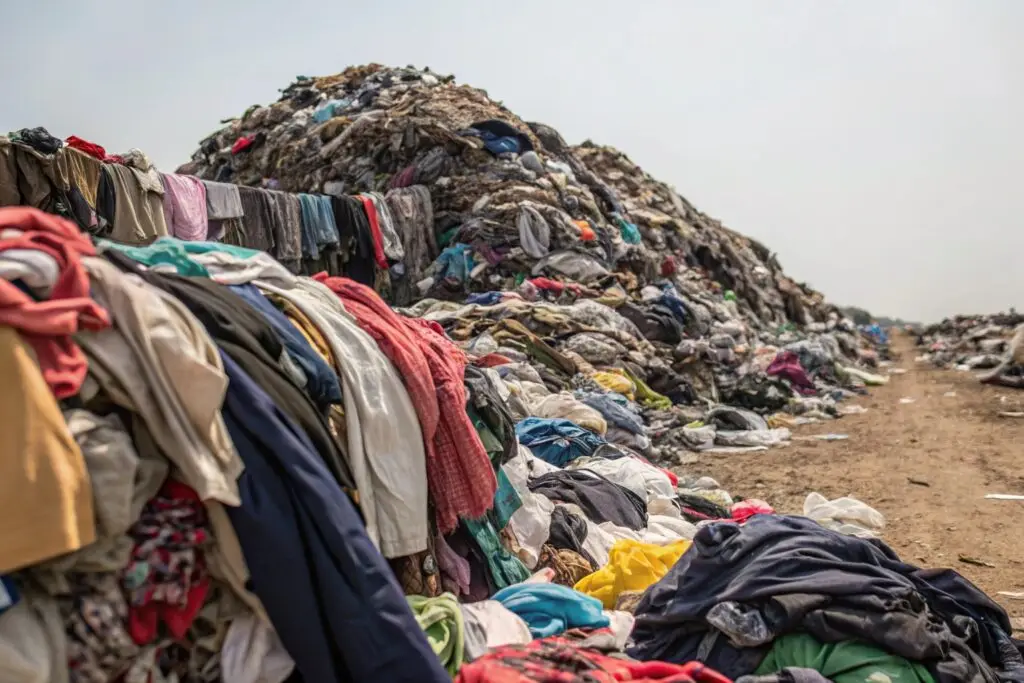
The current system is unsustainable—from landfills to labor to water usage.
The fashion industry needs circularity to reduce waste, conserve resources, meet consumer demand for sustainability, and comply with emerging global regulations.
What problems does circularity aim to solve?
- 92 million tons of textile waste10 generated annually
- Less than 1% of clothing is recycled into new garments
- Toxic dye runoff still common in manufacturing zones
- Overproduction leaves brands with massive deadstock
Circular design reduces these by:
- Extending garment life by 2–3x
- Reducing water and chemical use per garment
- Creating second-life markets (resale, rental, remanufacture)
- Sharing accountability across the supply chain
Why must factories act now?
- Eco-regulations (EU Digital Product Passport, EPR schemes) are coming
- Brand pressure is increasing for traceability and waste reduction
- Consumer demand is shifting toward circular claims
- First-mover advantage secures better long-term contracts
At Fumao, we help factories implement zero-waste cutting templates11, batch dye systems, and repair-friendly seam designs that fit seamlessly into circular product lines.
Conclusion
Circular fashion isn’t just a trend—it’s a requirement. Factories that adapt to closed-loop models will lead the next generation of apparel manufacturing. At Fumao, we design for repair, reuse, and recycling—because quality isn’t enough if a garment ends in the trash.
-
Learn about recyclable fibers and their crucial role in creating a sustainable fashion industry, promoting environmental responsibility. ↩
-
Discover the significance of organic cotton in sustainable textile production and its benefits for the environment and health. ↩
-
Explore how mono-fiber fabrics and digital printing enhance sustainability in fashion, reducing waste and improving recyclability. ↩
-
Explore how H&M's Garment Take-Back Program promotes sustainability and reduces textile waste. ↩
-
Learn about circular design practices and how they can transform the fashion industry towards sustainability. ↩
-
Discover the importance of recyclable product lines and their role in sustainable fashion initiatives. ↩
-
Exploring the benefits of circular models can provide insights into sustainable practices that reduce waste and enhance efficiency. ↩
-
Learning about modular or zero-waste construction can help you discover innovative building practices that minimize waste and maximize resource use. ↩
-
Understanding garment lifecycle tags can reveal how they contribute to sustainability and efficient resource management in the fashion industry. ↩
-
Understanding the environmental impacts of textile waste can help you grasp the urgency of circularity in fashion. ↩
-
Learning about zero-waste cutting templates can inspire innovative solutions for reducing textile waste in manufacturing. ↩