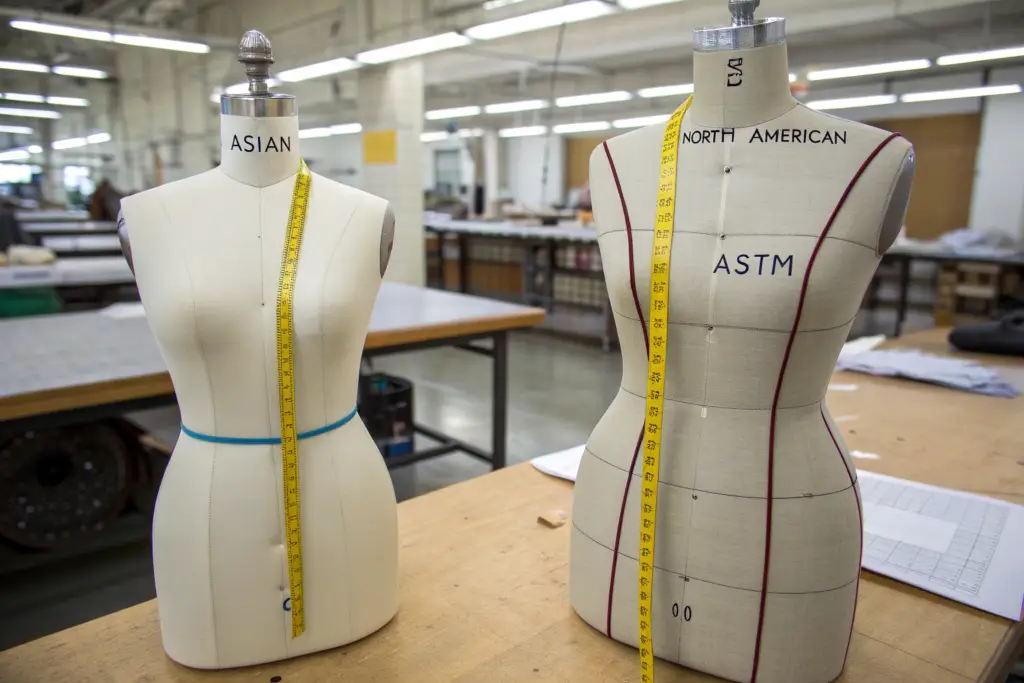
In the summer of 2023, a brand owner from Toronto received a shipment of 1,800 women's woven blouses from a new factory she had found through a sourcing agent. The blouses were beautifully sewn. The fabric was exactly as sampled. The colors were rich and on-trend. She opened the first carton, held up a size Medium, and her stomach dropped. The blouse was cut for a woman with narrow shoulders, a flat bust, and a straight hip. It was a Medium in the factory's domestic market. It was an Extra Small in the North American market. The entire shipment was unsellable at full price. She spent the next six weeks liquidating the inventory through discount channels, recovering less than 40% of her landed cost. The factory had followed the tech pack measurements exactly. The problem was not in the sewing. The problem was that the measurements in the tech pack were not North American measurements. They were a generic size chart that the factory had provided, and the brand had approved without verification against a fit model or an ASTM standard.
A supplier who truly understands North American sizing standards demonstrates that understanding through three observable behaviors: they proactively ask for an ASTM-aligned size chart or a brand-specific fit model before quoting, they identify proportion issues in a brand's tech pack that are inconsistent with North American body shapes, and they maintain a library of North American fit forms or dress forms that match ASTM D5585 or D6960 body measurement data. A supplier who does not raise sizing questions during the development process, who accepts any measurement chart without comment, and who uses only domestic fit forms, is a supplier who does not understand the North American body, and your shipment will be the proof.
At Shanghai Fumao, I learned the hard way that understanding North American sizing is not about converting inches to centimeters. It is about understanding the three-dimensional shape of the North American consumer. The shoulder slope angle. The bust-to-waist ratio. The hip curve. The bicep circumference on a women's size 16 versus a women's size 4. These are not abstract measurements. They are the difference between a garment that fits and sells, and a garment that fits poorly and is returned. Let me explain how to test a supplier's sizing knowledge before you place an order.
What Questions Reveal a Factory's True Knowledge of ASTM Sizing Standards?
The first conversation with a potential supplier is where the sizing knowledge gap becomes visible. A brand buyer does not need to be a technical pattern maker to assess the supplier's sizing competence. They need to ask specific, verifiable questions and pay attention to whether the answers are specific and immediate or vague and deflecting. A supplier who understands North American sizing will answer confidently and will often volunteer additional relevant information. A supplier who does not understand will give generic answers or will try to redirect the conversation to price, quality, or lead time.
The questions that reveal a factory's sizing knowledge are: "What body measurement standard does your size chart reference, ASTM D5585, D6960, or another standard?" A competent supplier will name the standard without hesitation. "Do you have a North American size Medium fit form in your sample room?" A competent supplier will say yes and will show it during the factory tour. "What is the typical shoulder slope angle you use for a women's woven blouse?" A competent supplier will give a specific angle, typically 24 to 26 degrees for a women's size Medium. A supplier who cannot answer these basic technical questions is not equipped to cut for the North American market.
The supplier's answers reveal whether sizing is a core competency or an afterthought. A factory that has invested in North American fit forms, that knows the relevant ASTM standards, and that can discuss shoulder slope angles and bust-to-waist ratios, has made a significant financial and operational commitment to serving the North American market. A factory that has not made these investments cannot fake the knowledge during a technical conversation. Here are the specific questions about grade rules and the difference between Alvanon and generic forms.
How to Ask About Grade Rules Without Being a Technical Expert?
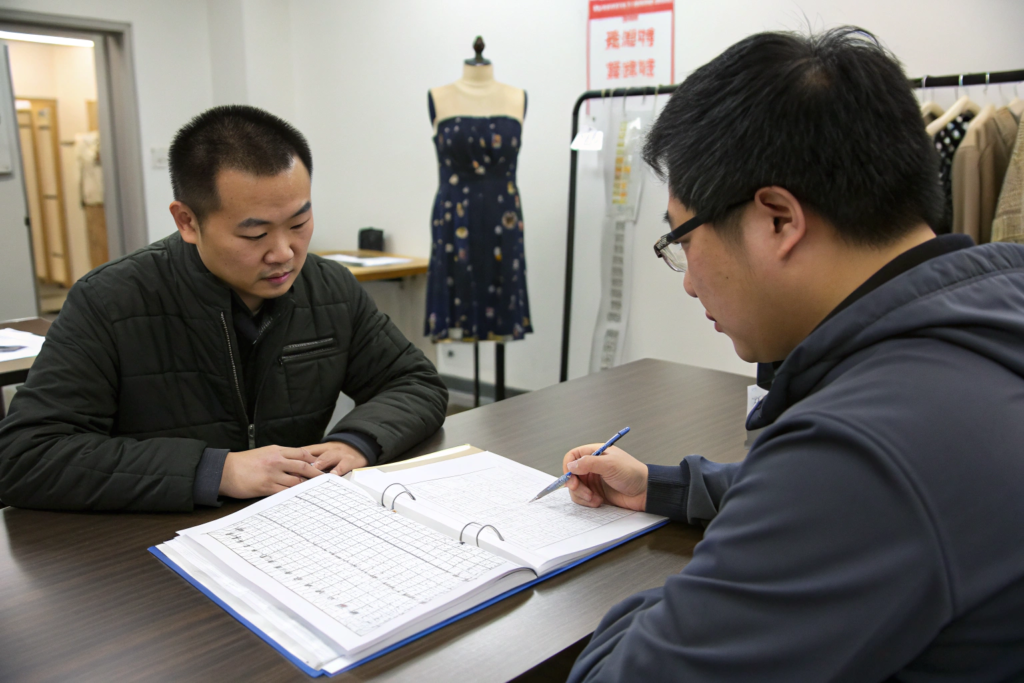
Grade rules are the incremental measurement changes between sizes. A North American grade rule reflects the North American body. The difference in chest circumference between a women's size Medium and a Large is typically 2 inches, or 5 centimeters, in North American sizing. The difference in an Asian domestic size chart may be smaller, 3 to 4 centimeters. A supplier who applies Asian grade rules to a North American size range will produce a size Large that is too small.
The buyer does not need to know the specific grade rules. They need to ask the supplier to explain their grade rules and compare them to a known standard. The question is: "Can you show me the grade rule table you use for North American sizes, and can you walk me through how it compares to the ASTM standard?" A competent supplier will produce a grade rule table. They will point to the chest grade, the waist grade, the hip grade, and they will explain that these are aligned with ASTM D5585 for women's or ASTM D6240 for men's. A supplier who cannot produce a grade rule table, or who produces one that does not reference a known standard, is not grading for the North American body.
What Is the Difference Between a Generic Dress Form and an Alvanon Form?
A generic dress form is an approximate human shape, often with a compressed, unrealistic torso and standardized proportions that do not reflect any actual population. A North American-specific dress form, such as those manufactured by Alvanon, is built from 3D body scan data of actual North American consumers. It reflects the real shoulder slope, the real bust shape, the real posture, and the real distribution of body mass.
When a buyer visits a factory, they should ask to see the dress forms used for sample development. If the forms are soft, padded forms with generic shapes, the factory is developing samples on forms that do not represent the North American body. If the forms are branded Alvanon, or if the factory can explain the body measurement standard their forms are based on, the factory is investing in sizing accuracy. The difference in sample quality is significant. A sample developed on an Alvanon ASTM-aligned form will fit the North American target customer correctly on the first iteration. A sample developed on a generic form will require multiple rounds of fit adjustments to correct the proportion errors that the generic form introduced.
How Can a Sample Order Test the Supplier's Sizing Accuracy Before Scaling?
A sample order is not just a quality test. It is a sizing test. The single most valuable exercise a brand can conduct with a new supplier is a fit sample evaluation on a live North American fit model who represents the brand's target customer. The factory's ability to produce a garment that matches the tech pack measurements is a quality question. The factory's ability to produce a garment that fits the North American body is a sizing question. These are different questions. A factory can pass the measurement test and fail the fit test.
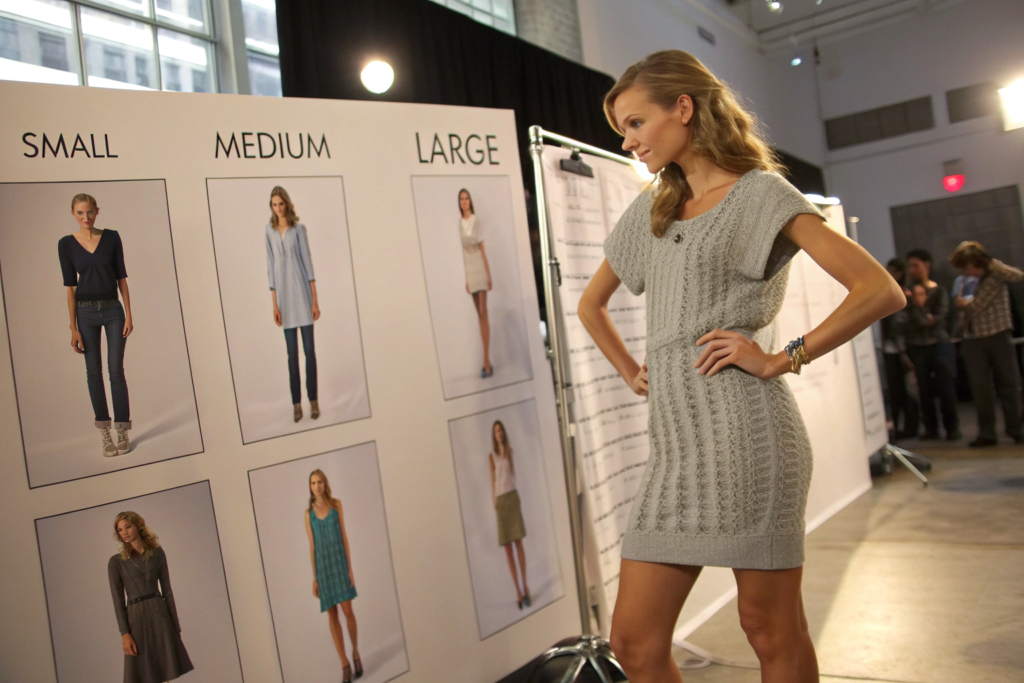
A sizing test sample order should include a minimum of three sizes, typically Small, Medium, and Large, across a minimum of two styles that represent different fit challenges, a fitted woven blouse and a knit dress. The brand evaluates the samples on a North American fit model, not on a dress form, and provides specific fit comments with photographs. The supplier's response to the fit comments, the accuracy of the revised samples, and the number of iterations required to achieve an approved fit, are the data points that predict sizing accuracy at scale. A supplier that corrects a shoulder slope issue in one iteration has sizing competence. A supplier that requires four iterations to fix a shoulder slope, or that fails to fix it entirely, does not.
At Shanghai Fumao, I encourage new brand partners to run a sizing test order before committing to a full production volume. The test order is a small investment that prevents a large sizing failure. Brands that skip the sizing test and go directly to production are betting their season on an unverified assumption. Here is how to use a three-size test and what to measure on a live fit model.
Why Should a Trial Order Include a Three-Size Range Instead of a Single Size?
A single sample size, typically a Medium, tests the factory's ability to hit the base size measurements. It does not test the factory's grade rules. A factory can produce a perfect size Medium by copying a reference garment or meticulously following the base size spec sheet. The real sizing test is whether the factory's grade rules produce a size Small and a size Large that fit correctly relative to the Medium.
A three-size test order, Small, Medium, Large, tests the entire size range. The brand evaluates the Small on a size Small fit model, the Medium on a size Medium model, and the Large on a size Large model. The evaluation checks not just the absolute measurements of each size, but the proportional relationship between sizes. Does the Small maintain the same shoulder slope angle as the Medium? Does the Large maintain the same sleeve length-to-body length ratio? Proportion errors across the size range are the most common sizing failure in factory production, and they can only be detected by testing multiple sizes.
What Fit Points Should Be Evaluated on a Live Model During the Sample Review?
The fit evaluation on a live model should focus on the fit points that are most sensitive to body shape differences between the North American consumer and the factory's domestic market. For women's woven tops, the critical fit points are the shoulder seam placement, it should sit at the edge of the shoulder, not sliding forward or backward, the bust dart point, it should point to the apex of the bust, not above or below, the armhole depth, it should not gap or pull, and the back width, it should allow full range of arm motion without pulling across the shoulder blades. For women's bottoms, the critical fit points are the waist placement, it should sit at the natural waist or the specified rise without gaping at the back, the hip curve, the fabric should not pull or pucker across the fullest part of the hip, and the crotch depth, the garment should not pull down at the front or ride up at the back when the model sits.
Each fit point should be evaluated in a static standing position, a seated position, and with the arms raised forward and overhead. The brand should photograph each fit point from the front, side, and back. The photos, with the brand's fit comments, are sent to the factory. The factory's ability to interpret the fit comments, adjust the pattern, and produce a revised sample that corrects the fit issues, is the definitive test of sizing competence.
What Red Flags in the Tech Pack Review Indicate a Lack of Sizing Expertise?
The tech pack review process is where a sizing-competent factory distinguishes itself from a sizing-ignorant one. When Shanghai Fumao receives a tech pack from a new brand partner, our pattern-making team reviews it for sizing consistency before we quote the order. We are looking for internal contradictions, missing grade rules, and measurement specifications that are inconsistent with North American body proportions. A factory that accepts a tech pack without comment, regardless of its sizing quality, is a factory that is not thinking about the end consumer's body.
The red flags in a tech pack review that indicate a supplier lacks sizing expertise are: the supplier does not question a measurement chart that appears to be a domestic market chart, the supplier does not request a grade rule table if one is not provided, the supplier does not flag contradictions between the measurement chart and the fit description, such as a size chart that indicates a relaxed fit but provides measurements for a slim fit, and the supplier does not ask about the brand's fit model body measurements or the ASTM standard the brand's chart is based on. A supplier who raises these questions is demonstrating sizing awareness. A supplier who remains silent is demonstrating sizing indifference.
I have a standard tech pack review checklist that my team uses for every new brand partner. The checklist includes sizing-specific items that many factories do not check. We review the size chart against ASTM D5585 or D6960 reference data. We review the grade rules for consistency across the size range. We review the fit description against the measurement ease allowances. We review the shoulder slope angle against the armhole depth specification. These checks catch sizing problems before the first sample is cut. Here is how to check the size chart and how to spot a shoulder slope discrepancy.

How to Check If a Supplier Has Questioned Your Size Chart Appropriately?
A sizing-competent supplier will review the brand's size chart and provide feedback. The feedback may be: "Your size chart aligns with ASTM D5585. No issues." This is a positive signal. The supplier recognized the standard. The feedback may be: "Your size Medium bust measurement of 38 inches is consistent with ASTM D5585, but your hip measurement of 38 inches is a straight body shape. ASTM D5585 specifies a hip measurement of 40 inches for a size Medium, which is a curvier shape. Which body shape does your target customer match?" This is an excellent signal. The supplier has identified a potential mismatch between the brand's chart and the standard, and is proactively seeking clarification.
A supplier who accepts the size chart without any questions, particularly if the brand's chart is not based on a known standard, is not thinking critically about sizing. The supplier is treating the chart as a set of abstract numbers to be sewn, not as a representation of a human body. The difference in approach is fundamental.
What Is the Shoulder Slope Discrepancy That Signals a Sizing Knowledge Gap?
Shoulder slope is the angle of the shoulder from the neck to the shoulder point. The North American body, on average, has more slope, the shoulder drops more steeply from the neck, than the body shape in many Asian domestic markets. A pattern drafted for a shallow shoulder slope, common in some Asian markets, will have excess fabric bunching at the front armhole and will pull across the back when worn on a body with a steeper North American shoulder slope.
If a supplier's pattern produces a sample with diagonal drag lines from the shoulder to the bust, and the supplier's response is to adjust the armhole depth rather than the shoulder slope angle, the supplier does not understand shoulder slope. Adjusting the armhole depth is the incorrect fix. It addresses a symptom, not the cause. A sizing-competent supplier will recognize the drag lines as a shoulder slope issue and will rotate the shoulder seam angle on the pattern to match the body. The brand does not need to diagnose the pattern error. The brand needs to observe whether the supplier's fit corrections address the root cause or the symptom.
How to Verify That a Supplier's Fit Library Matches North American Body Shapes?
A factory's fit library, the collection of dress forms, fit models, and body measurement data that it uses for pattern development, is the physical evidence of its sizing capability. A factory that serves the North American market will have invested in North American fit forms. These forms are expensive, typically $1,500 to $3,000 per form, and the investment is visible. A factory that uses only generic forms or forms that match its domestic market body shape has not made the investment required to fit North American garments.
A sizing-competent supplier's fit library will include dress forms that are specifically labeled with the North American size and the ASTM standard they represent. The forms will be available in a range of sizes, not just a single size Medium. The supplier will be able to explain the body measurement standard the forms are based on, and will be able to show how their patterns are developed and fitted on these forms. During a factory visit, the brand should ask to see the fit library, inspect the form labels, and compare a sample garment on the form against the brand's fit expectations.
At Shanghai Fumao, our fit library includes Alvanon forms calibrated to ASTM D5585 for women's and ASTM D6240 for men's, across a full size range. I show these forms to every brand partner who visits. I explain the body measurement standard. I demonstrate how we develop a pattern on the form. The forms are proof. A factory that cannot show you its North American fit forms during a visit does not have them. Here is what to look for during the factory tour and how fit models complement forms.
What Should a Brand Look for During a Factory Floor Walkthrough?
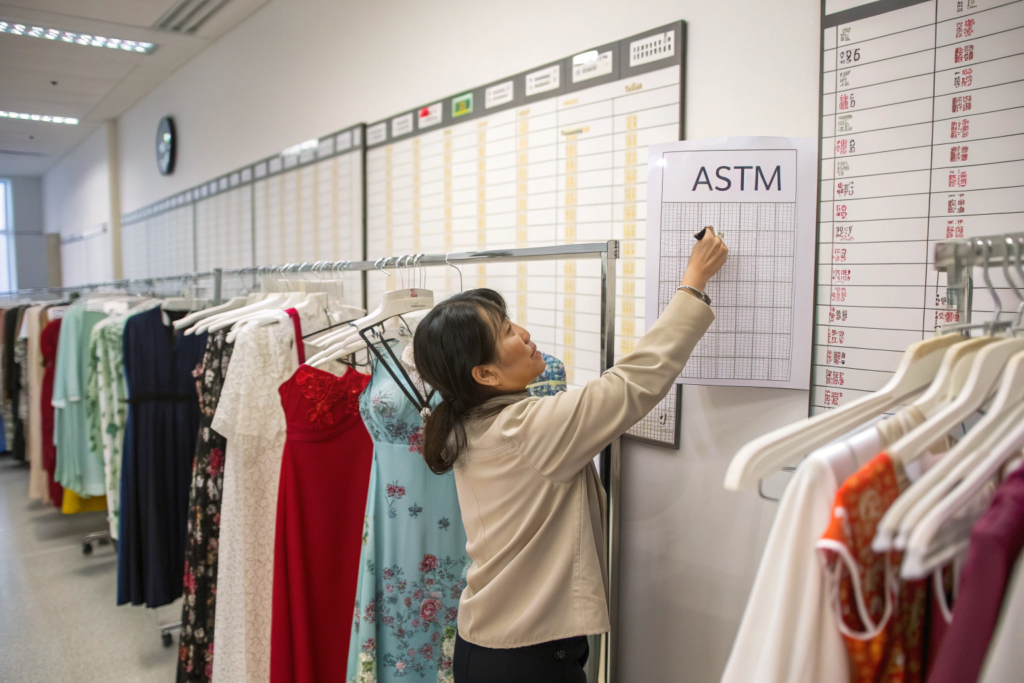
During the factory tour, the brand should visit the sample room, not just the production floor. In the sample room, look at the dress forms. Note the brand names on the forms. Alvanon, Wolf, or other recognized form manufacturers. Note the size labels on the forms. Do they say "US 8" or "ASTM M"? Or do they say something that appears to be a domestic market size? Note the body shapes of the forms. Do they have the broader shoulders, the defined bust, and the curved hip of a North American form, or are they straighter and narrower?
Ask the pattern maker to show how a pattern is fitted on a form. Watch the pattern maker's process. A competent pattern maker will pin the muslin on the form, step back, observe the drape from multiple angles, and make precise adjustments. Ask the pattern maker which form they use for the brand's target customer. The answer should be specific and immediate. If the sample room has only a few forms, and they appear to be generic, the factory is not equipped for North American sizing.
How Do Fit Models Complement Dress Forms in Verifying Sizing?
Dress forms are static. Fit models are dynamic. A dress form shows how the garment hangs on a stationary body. A fit model shows how the garment moves during walking, sitting, reaching, and bending. Both are necessary for a complete sizing verification.
A sizing-competent factory will have access to fit models who match specific body measurement profiles. These may be employees, contractors, or agency models. The factory should be able to arrange a fit session with a model who matches the brand's target size and body shape. During the fit session, the factory's pattern maker should be present, pinning and marking adjustments directly on the garment. The brand, or a representative, observes the fit session remotely via video call or in person. The fit model's live feedback on comfort, tightness, and range of motion is data that a dress form cannot provide. A factory that relies exclusively on dress forms for fit approval is missing the dynamic dimension of sizing verification.
Conclusion
Spotting a supplier who truly understands North American sizing standards is not a matter of trust. It is a matter of verification. The supplier who asks about your ASTM standard, who shows you their Alvanon forms, who questions your size chart's grade rules, and who corrects a shoulder slope issue in one iteration, is the supplier who will deliver garments that fit your customer. The supplier who accepts your tech pack without comment, who develops samples on generic forms, and who requires four iterations to fix a basic proportion error, is the supplier who will cost you a season of returns and markdowns.
At Shanghai Fumao, I have invested in the fit forms, the ASTM standards library, the pattern-making training, and the fit model relationships that North American sizing requires. I did this because I learned, early in my career, that a perfectly sewn garment that fits the wrong body is still a defective garment. The North American consumer has specific body proportions, specific fit expectations, and a low tolerance for garments that do not accommodate her shape. The factory that respects this reality earns her brand's loyalty.
If you are evaluating a new manufacturing partner, or if you have been burned by sizing issues with a previous supplier, let us walk you through our sizing process. We can share our ASTM reference data, show you our Alvanon fit forms, and run a three-size test order that proves our sizing competence before you commit to volume. Reach out to our Business Director, Elaine, at elaine@fumaoclothing.com. Your customer's body is the only standard that matters. Let us make sure your garments fit it.