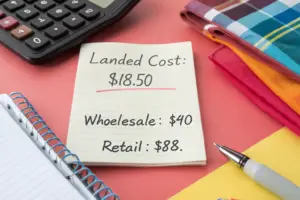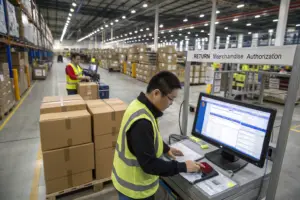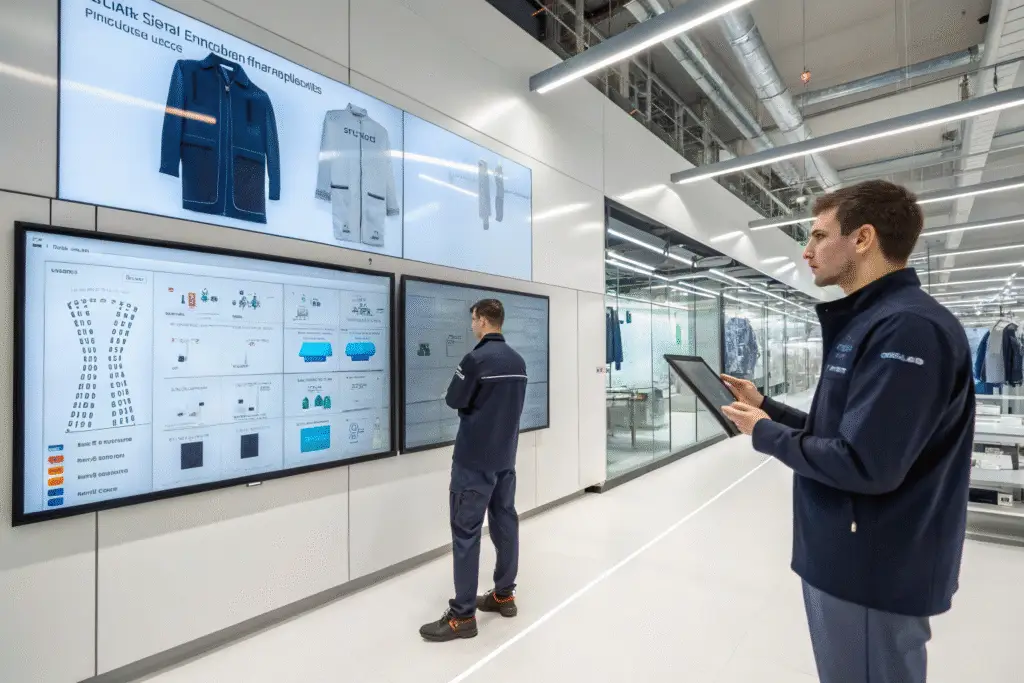
You send your tech pack to five potential factories. Two reply in 48 hours, two take a week, and one never responds. The quotes you finally receive range wildly in price and timeline, with little detail to explain the differences. This frustrating, time-consuming process is the outdated reality of sourcing. But what if you could get a comprehensive, accurate quote within 24 hours? This isn't a fantasy of the future—it's the standard for tech-enabled factories today. The difference lies not in working harder, but in leveraging technology to eliminate guesswork and automate calculations.
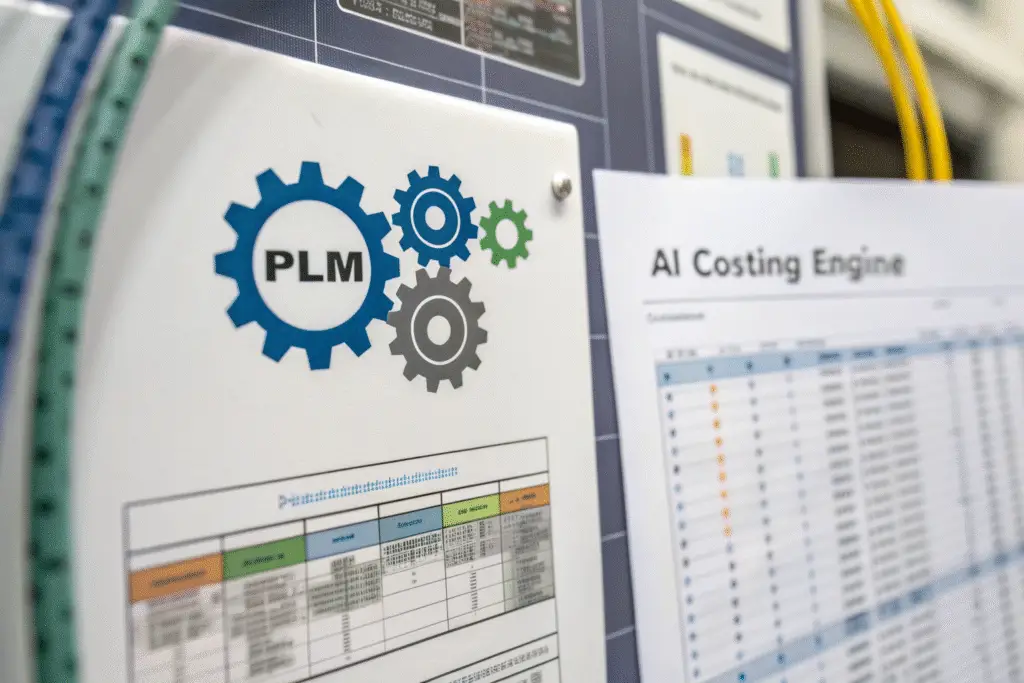
Tech-enabled factories utilize integrated digital systems—from Product Lifecycle Management (PLM) software and AI-powered costing engines to real-time ERP data—to analyze tech packs instantly, calculate precise material consumption and labor costs, and generate detailed, data-driven quotes with unprecedented speed and accuracy. This technological shift transforms quoting from a manual, error-prone art into a precise, repeatable science.
At Shanghai Fumao, before our tech transformation, a complex quote for a technical jacket could take our team 5-7 days of back-and-forth between merchandising, fabric sourcing, and production planning. Now, with our integrated system, we generate a preliminary, highly accurate cost breakdown within 4 hours of receiving a clean tech pack. Last month, a startup brand needed urgent quotes for three styles to secure funding. We provided detailed quotes the same day, and they chose us, citing our "immediate clarity" as the deciding factor over competitors who needed a week. Let's dissect the technology behind this speed and precision.
What Digital Tools Power Instant and Precise Quoting?
The foundation of fast, accurate quoting is a connected digital ecosystem. Each tool in this ecosystem addresses a specific bottleneck in the traditional quoting process, replacing manual lookup, estimation, and communication with automated data retrieval and calculation.
These systems don't replace human expertise; they amplify it, freeing skilled personnel from administrative tasks to focus on value-added analysis and client consultation.
How Does PLM Software Centralize and Analyze Data?
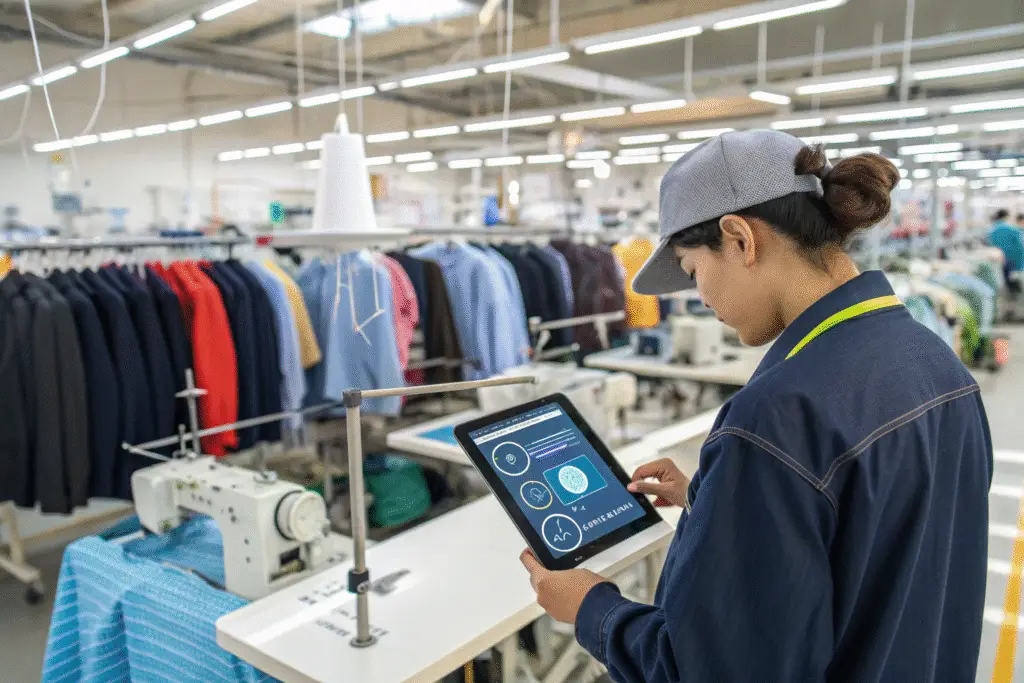
A Product Lifecycle Management (PLM) system is the digital backbone. When you upload your tech pack (ideally in a standardized digital format), the PLM doesn't just store it—it reads it.
- Automated BOM Creation: The software extracts every component listed in the tech pack—main fabric, lining, interlining, each button, zipper, and thread type—and creates a digital Bill of Materials (BOM). This eliminates manual entry errors.
- Historical Data Reference: The system instantly cross-references your design against similar past styles. Have we made a similar polo shirt with a mesh back? It can pre-populate data on fabric consumption and sewing time, providing a baseline in seconds.
- Specification Flagging: It can automatically flag potential issues, like a specified zipper length that doesn't match the garment measurement, prompting a quick clarification before costing proceeds.
What is the Role of AI and Automated Costing Engines?
This is where the true magic happens. Once the BOM is digitized, the costing engine takes over:
- Fabric Consumption Calculation: Using the uploaded pattern files (or even 2D flats with measurements), AI-powered marker making software simulates the most efficient fabric layout. It calculates the exact fabric consumption (in meters or yards) per garment with 98-99% accuracy, far surpassing manual estimation.
- Real-Time Material Pricing: The engine is linked to the factory's ERP (Enterprise Resource Planning) system, which holds real-time or frequently updated costs for thousands of fabric and trim items from approved suppliers. It doesn't use a guess or a month-old price list; it pulls the current cost.
- Standard Minute Value (SMV) Calculation: Advanced systems use libraries of pre-determined motion times (PMTS). By analyzing the garment's construction steps from the tech pack, the software calculates a highly accurate Standard Allowed Minute (SAM) value for labor cost, removing variability between different merchandisers' estimates.
How Does Technology Eliminate Common Quoting Errors?
In a manual process, errors compound. A misread measurement, an outdated fabric price, or an underestimated sewing time can each distort the final quote by 5-15%. These inaccuracies hurt both parties: the buyer gets an unreliable budget, and the factory risks winning an order at a loss. Technology builds consistency and auditability into the very foundation of the quote.
Precision in quoting is the first indicator of precision in production.
Where Do Manual Processes Typically Fail?
- Fabric Estimation Errors: A merchandiser eyeballs a pattern or uses a rule of thumb. For a complex style like a bi-swing jacket, this can lead to a 10-20% underestimation of fabric use, a catastrophic error once bulk cutting begins.
- Outdated Cost Data: A factory may use a static price book for trims. If the price of metal buttons spiked due to raw material costs two weeks ago, a manual quote won't reflect it, creating a hidden loss.
- Inconsistent Labor Assessments: One merchandiser might quote 20 minutes for a operation, another 25 minutes for the same thing, based on their individual experience.
How Do Digital Systems Create a "Single Source of Truth"?
- Centralized, Live Databases: The costing engine pulls fabric costs from the same system the purchasing department uses to buy. When the purchasing manager updates a cost after negotiating with a mill, the next quote automatically reflects it.
- Algorithmic Consistency: The AI marker maker uses the same logic for every style. Its fabric consumption calculation is repeatable and auditable. You can see the digital marker it generated.
- Scenario Modeling with Confidence: The biggest advantage is the ability to run "what-if" scenarios instantly. A client asks, "What if we change from a metal zipper to a plastic one and increase order quantity by 30%?" In a manual system, this requires recalculating everything. In our system at Shanghai Fumao, we input the changes and have a revised quote in under 10 minutes. This builds tremendous trust during negotiation.
This accuracy protects you. You are budgeting based on a near-production-level cost simulation, not an educated guess.
What Does a "Superior" Tech-Enabled Quote Look Like?
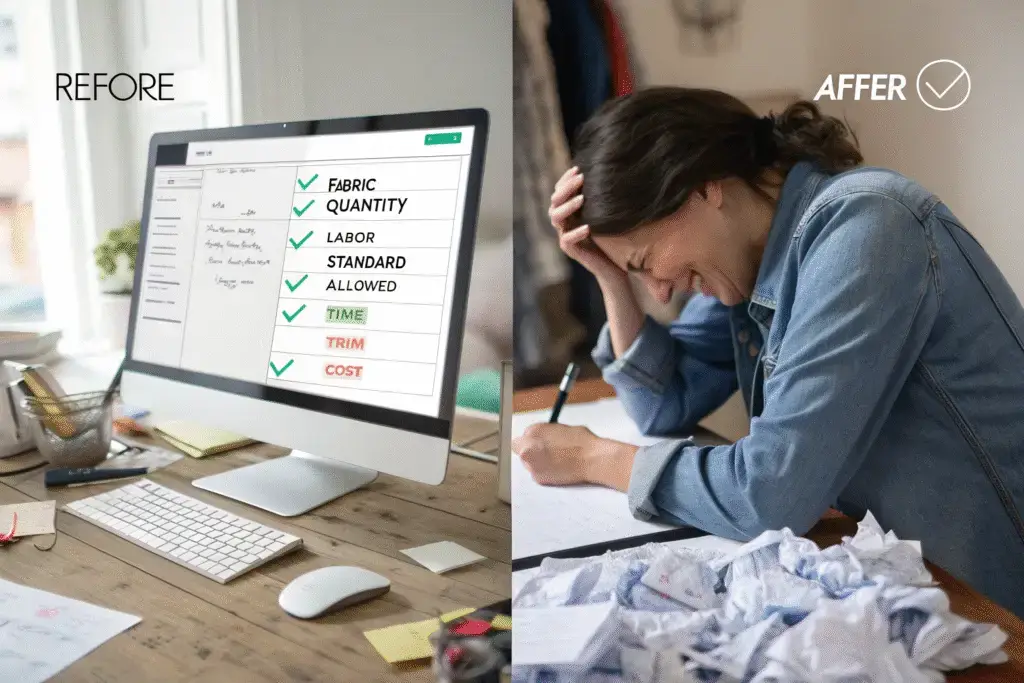
Speed and accuracy are meaningless if the output is just a single number on a PDF. The true value of a tech-enabled quote is in its depth, clarity, and actionability. It should educate you, not just price to you.
A superior quote is a transparent business document that serves as the foundation for your entire production planning.
Beyond Price: What Detailed Information Should You Expect?
A tech-generated quote from a factory like ours includes:
- Itemized Cost Breakdown: Not just "Fabric: $8.50." It breaks down to:
- Main Fabric: 1.2 yards @ $5.10/yd = $6.12
- Lining: 0.5 yards @ $2.80/yd = $1.40
- Interlining: 0.3 yards @ $1.20/yd = $0.36
- Total Fabric Cost: $7.88
- Trim & Accessories List: Every component with unit cost and quantity per garment.
- Labor Cost Analysis: Showing the calculated SAM and the applied labor rate.
- Visual Data: Some systems even attach the automated marker layout image, showing you the fabric utilization efficiency.
- Clear Assumptions & Exclusions: It will explicitly state what's included (e.g., standard polybag, basic fold) and what's not (e.g., hangtags with custom printing, and specific DDP shipping costs to a certain port).
How Does This Enable Smarter Decision-Making?
With this data, you can negotiate intelligently. Instead of saying "Your price is too high," you can say:
- "I see your fabric consumption is 1.2 yards. Our benchmark is 1.15 yards. Can we review the marker to see if there's optimization potential?"
- "The labor SAM is 22 minutes. If we simplified this cuff design, what would the new SAM and cost be?"
This elevates the conversation from haggling to collaborative value engineering. It positions you as a sophisticated partner, which in turn earns you better service and priority.
How Does Fast, Accurate Quoting Benefit Your Overall Sourcing Process?
The impact of a tech-enabled quoting system ripples far beyond the initial price you receive. It fundamentally streamlines your entire sourcing workflow, reduces risk, and accelerates your time to market.
Think of it as the first, critical gear in a well-oiled production machine.
What Are The Cascading Time Savings?
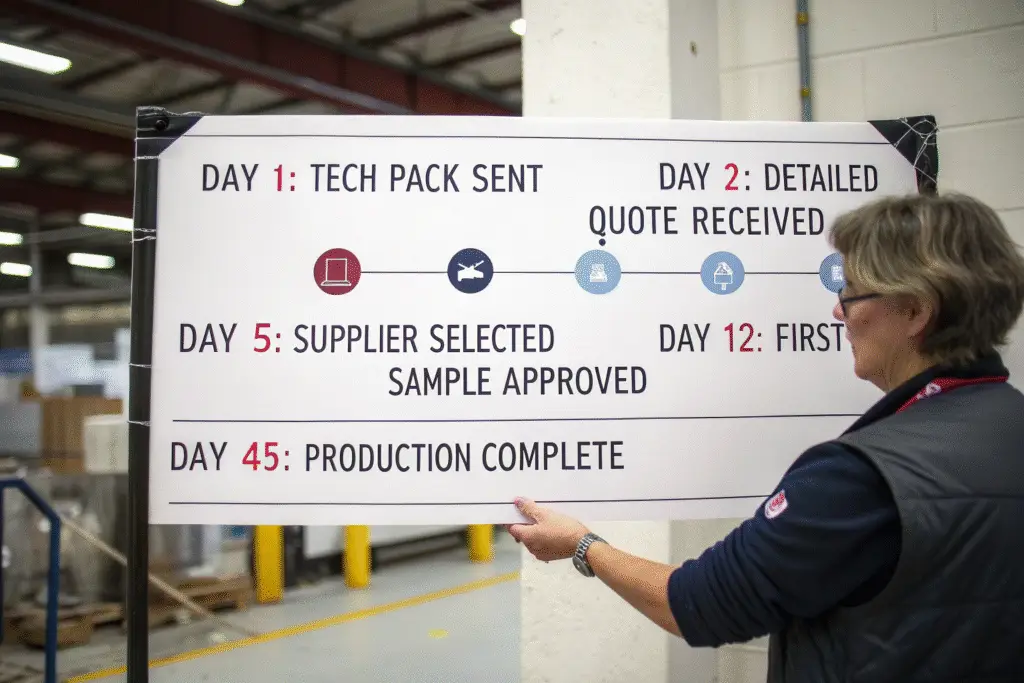
- Accelerated Supplier Selection: Instead of waiting weeks to gather and compare quotes, you have clear, comparable data from qualified factories in days. You can make a confident partner decision faster.
- Reduced Sampling Rounds: Because the quote is based on precise analysis of the tech pack, the factory already understands the construction intimately. This leads to a higher first-sample hit rate. We've seen our first-sample approval rate increase by over 40% since implementing our system.
- Faster Time-to-Production: Clear, accepted quotes mean less post-quote negotiation and confusion. The order moves into the pre-production scheduling queue immediately.
How Does It De-Risk Your Product Development?
A data-driven quote acts as an early validation check. If the system-calculated cost for your design is far above your target, it's a red flag at the concept stage, not after you've invested in samples. You can pivot early—simplify the design, change a material—based on hard data rather than gut feeling.
For a brand launching a kickstarter, this speed and certainty can be the difference between a fully funded campaign and a missed goal. They can present backers with a firm production timeline and budget, built on a solid factory quote.
What Should You Look for in a Tech-Enabled Factory Partner?
"Tech-enabled" can be a buzzword. It's crucial to discern between factories that have slapped a new interface on an old process and those with truly integrated, data-driven operations. Your due diligence ensures you partner with a factory that can deliver on the promise of speed and accuracy.
The right partner will be transparent about their tools and processes.
Key Questions to Ask Potential Suppliers:
- "What software systems do you use for quoting and production management (e.g., specific PLM, ERP, CAD systems)?"
- "How do you calculate fabric consumption for a new style? Can you show me an example of a marker?"
- "Is your material pricing in the quote linked to a live database, or is it from a static price list?"
- "How quickly can you provide a detailed quote after receiving a complete tech pack?" (If they say "a few weeks," they are not tech-enabled).
- "Can you provide a quote that includes a breakdown of fabric consumption and labor minutes?"
Signs of a Truly Tech-Enabled Operation:
- They Ask for Digital Files: They prefer digital tech packs, pattern files (.dxf), and even 3D files over physical samples or blurry photos.
- They Communicate Proactively with Data: They might send you a preliminary quote with notes like, "We suggest a 2cm seam allowance instead of 1.5cm for durability, which adds 0.05 yards of fabric. Click here to approve this change and see updated cost."
- They Have a Client Portal: Many advanced factories offer a portal where you can view quote status, sample progress, and production updates in real-time.
At Shanghai Fumao, our tech stack isn't a secret—it's a point of pride and a service differentiator. We welcome clients to understand how it works because it builds the foundation for a transparent, efficient partnership.
Conclusion
Tech-enabled factories are redefining the first and most critical touchpoint in the manufacturing relationship: the quote. By leveraging PLM, AI costing, and real-time ERP data, they transform a slow, opaque, and error-prone process into one that is fast, transparent, and precise. This technological leap delivers more than just a number—it delivers clarity, enables smarter decision-making, de-risks product development, and ultimately accelerates your entire journey to market.
In a competitive landscape, the ability to move quickly on reliable information is a superpower. Partnering with a manufacturer that has invested in this capability is no longer a luxury; it's a strategic necessity for brands that value efficiency, partnership, and growth.
If you are tired of the quoting black box and ready for a partner that values clarity and speed as much as you do, let's connect. At Shanghai Fumao, our technology is purpose-built to provide you with accurate, actionable quotes in record time, setting the stage for a smooth and successful production partnership. Contact our Business Director Elaine to receive your first data-driven quote: elaine@fumaoclothing.com.