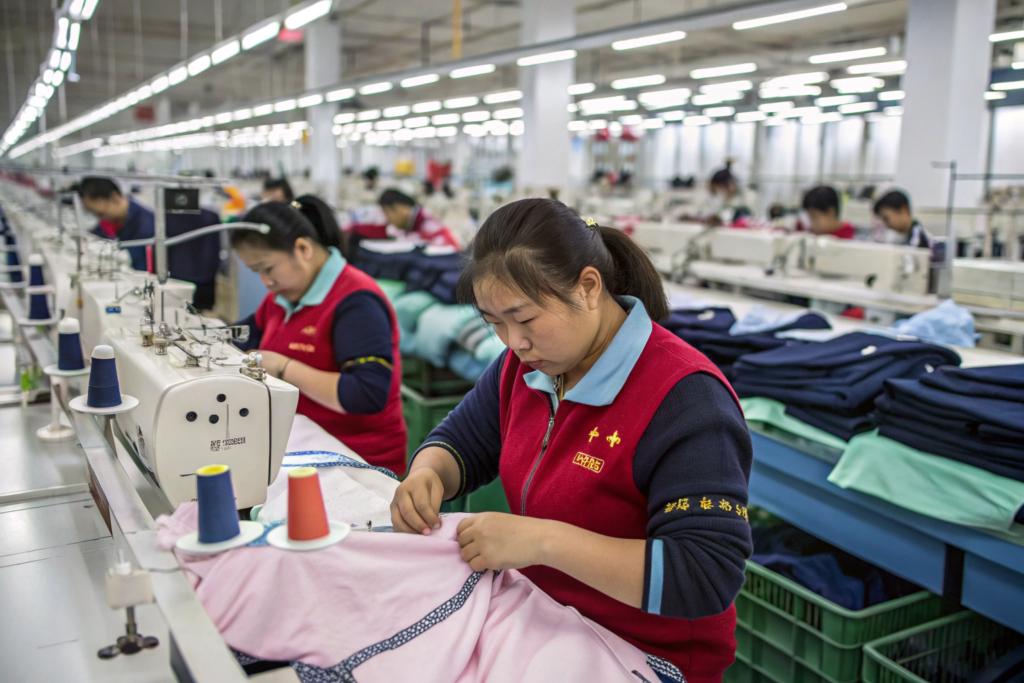
You found the perfect rare design for your children's wear collection. A dress with hand-smocked details and a matching detachable collar. Your current factory in Vietnam quoted a 90-day lead time. By the time the goods arrive, the back-to-school window will have closed. You will be stuck with a beautiful product that missed its market. This is not a hypothetical scenario. I have spoken with multiple U.S. children's wear brand owners who are frustrated by the trade-off between Vietnam's competitive pricing and the agonizingly slow development timeline for styles that require specialized craftsmanship.
Yes, a top Chinese clothing manufacture like Shanghai Fumao can deliver rare kids' wear styles faster than Vietnamese factories, particularly when the garment requires specialized trims, complex embellishments, or non-standard construction techniques. The speed advantage comes from China's clustered supply chain, where every material and trim supplier operates within a tight geographic radius, and from a factory structure optimized for rapid sampling and flexible small-batch production rather than just high-volume basics.
Speed in children's wear is not just about sewing faster. It is about sourcing the tiny custom buttons, the certified-safe embroidery thread, and the whimsical printed lining without waiting three weeks for each component to arrive from a different province or country. At Shanghai Fumao, we have structured our kids' wear production specifically to compress these timelines. Let me explain the structural advantages, the specific timelines, and the safety and quality systems that make speed meaningful rather than reckless.
Why Does Supply Chain Geography Give China a Speed Advantage for Kids' Wear?
Vietnam has built an impressive garment manufacturing industry, but its supply chain remains dependent on imported materials. A Vietnamese factory producing a rare children's dress with custom embroidery might source the base fabric from China, the embroidery thread from Japan, the buttons from Taiwan, and the safety labels from Korea. Each component crosses a border, clears customs, and endures transit delays. The factory waits. The brand waits. The selling season does not wait.
China's supply chain for children's wear is geographically concentrated within a 200-kilometer radius of Shanghai. Specialty button manufacturers, embroidery thread dyers, printed lining mills, and safety testing laboratories all operate within a few hours' truck delivery. This proximity turns a multi-week component sourcing process into a same-day or next-day exercise, collapsing the longest phase of rare style development.
How Does Proximity to Specialized Kids' Wear Trim Suppliers Reduce Lead Times?
Children's wear trims are not just smaller versions of adult trims. They require safety features—lead-free coatings, secure attachment strength, non-toxic dyes—that generic trim suppliers cannot guarantee. A rare style might call for a custom-shaped wooden button carved into an animal shape, painted with child-safe pigments, and tested for pull-strength to prevent choking hazards. In a fragmented supply chain, finding that supplier takes weeks. In our cluster, we have a curated network of children's wear trim specialists.
Last spring, a U.S. children's brand designed a rare Easter collection featuring bunny-shaped coconut shell buttons on hand-smocked dresses. Our button supplier is located 45 minutes from our factory. We sent them the design file on Monday. They produced a sample set by Wednesday, with lead-free certification from a nearby lab attached. We approved the sample Thursday, and bulk buttons were delivered to our cutting room the following Monday. Total trim development and delivery time: eight calendar days. A factory relying on imported buttons would still be waiting for the first sample to clear customs. This local sourcing speed is powered by a specialized children's apparel trim supply chain that has grown around the Yangtze River Delta over decades. It is not replicable in countries where the children's wear trim sector is underdeveloped.
What Role Do Local Safety Testing Labs Play in Faster Certification?
Every children's garment sold in the U.S. must comply with CPSIA (Consumer Product Safety Improvement Act) requirements. This includes lead content limits, phthalate restrictions, flammability testing, and small parts attachment strength for components like buttons and snaps. A garment cannot ship without passing these tests. If the testing lab is overseas from the factory, sample shipping and report turnaround can add two to three weeks to the timeline.
Our factory is located within driving distance of multiple CPSC-accredited third-party testing laboratories. When we complete a pre-production sample for a rare kids' wear style, our quality team hand-delivers the sample to the lab. Routine lead and phthalate testing returns results within three to five business days. For urgent programs, we use a 48-hour expedited service from labs with which we have long-standing relationships. This compressed testing timeline means a rare style can move from sample approval to bulk production without a three-week testing gap. We provide the lab test reports directly to our brand partners, unredacted, as part of the shipment documentation. This CPSIA compliance testing speed is a direct result of geographic proximity to accredited labs. A factory that must ship samples internationally for testing simply cannot match this turnaround.
How Does the Sampling Process Compare Between Shanghai Fumao and Vietnam Factories?
Sampling is where rare kids' wear styles live or die. A standard toddler T-shirt samples quickly because the construction is simple. A rare style—a hand-smocked dress, a jacket with piped edges and a detachable hood, a romper with multiple fabric piecings—requires iterative sampling. The first version rarely captures the designer's vision perfectly. Each iteration adds time. A factory with slow sampling kills the rare style's market window before production even begins.
Shanghai Fumao's sampling process for rare kids' wear styles is structurally faster than the typical Vietnam factory timeline because we operate a dedicated sample room with specialized children's wear artisans, we stock a library of certified-safe children's wear materials for immediate access, and our trim sourcing occurs in hours rather than weeks. A rare style that requires three sampling iterations in Vietnam might span eight weeks. The same process at our facility typically completes in three weeks.
What Is a Dedicated Kids' Wear Sample Room and Why Does It Matter?
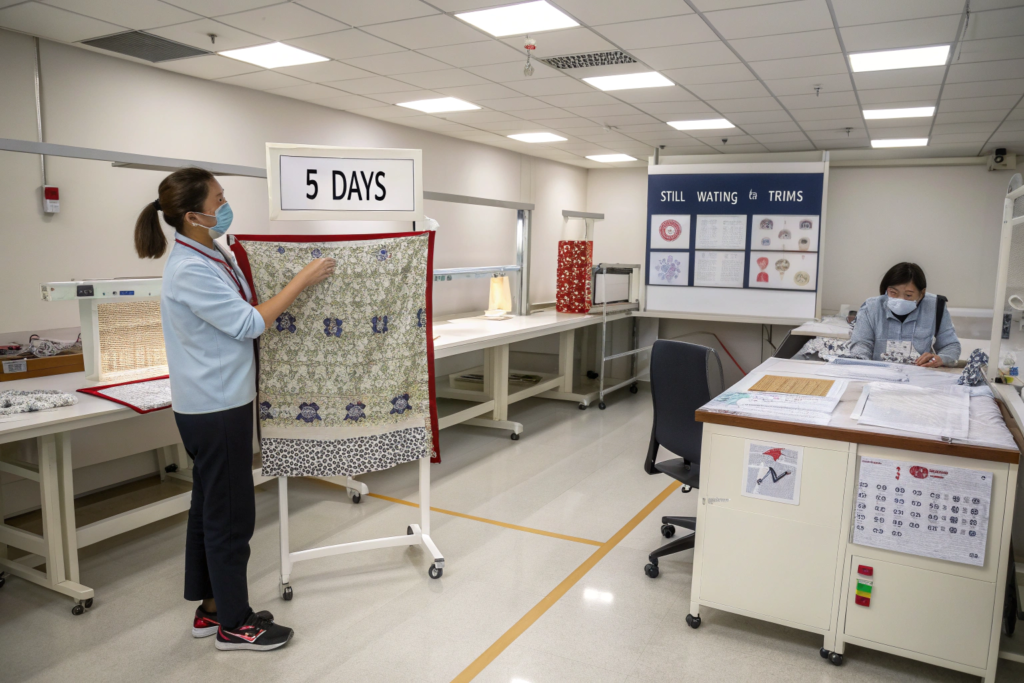
A factory that produces adult apparel and occasional children's wear orders typically uses the same sample room for both. The sample sewers are skilled in adult construction. When a rare children's garment with delicate smocking or tiny French seams arrives, the sample sewer learns on the job. The first sample is slow and may require rework. Our dedicated children's wear sample room is staffed by artisans who specialize exclusively in kids' wear construction. They understand the specific seam types, the safety considerations, the proportion adjustments, and the embellishment techniques that children's wear demands.
The room is equipped with smaller-scale mannequins in sizes 2T through 14, specialized small-part attachment tools, and a library of children's wear-specific trims. When a rare smocked dress design arrives from a brand, the sample is assigned to a sewer who has produced fifty similar garments. She does not need to figure out the smocking technique; she needs to execute the brand's specific variation. This specialization compresses the sampling timeline and improves first-sample accuracy. A children's wear sample development function that is separate from adult sampling is an investment most factories do not make. We made it because children's wear is a core category for us, not an occasional add-on.
How Does In-House Embellishment Capability Speed Up Rare Style Development?
Rare kids' wear styles often feature embellishments: embroidery, appliqué, smocking, fabric painting, or specialized pleating. If a factory outsources these processes to a third-party workshop, the sample leaves the factory, spends days or weeks in an external queue, and returns for assembly. Each outsourcing step adds time and a layer of quality risk.
We perform these embellishment processes in-house. Our embroidery department operates multi-head programmable machines capable of digitizing custom designs and producing samples within hours. Our handwork section employs skilled artisans for techniques that machines cannot replicate: French knot embroidery, shadow work, and delicate bead attachment on flower girl dresses. When a rare style requires a combination of machine embroidery for the main motif and hand finishing for the delicate edges, both processes happen under our roof on the same day. There is no external queue, no transit time, and no communication gap between the designer's intent and the embroiderer's execution. Our investment in in-house garment embellishment capability was a strategic decision to serve brands that compete on unique design rather than basic commodity products. The result is a sampling process that turns a rare concept into a physical, approvable sample faster than any factory that outsources its embellishment.
What Production Line Flexibility Enables Faster Kids' Wear Turnaround?
Rare kids' wear styles are rarely ordered in volumes that fill a dedicated production line for weeks. A brand might order 500 units of a special occasion dress and 300 units of a coordinated jacket. A factory optimized for 10,000-unit runs of basic T-shirts cannot handle these quantities efficiently. The small order either gets rejected, priced prohibitively, or squeezed into a line designed for large volumes, causing delays and quality issues.
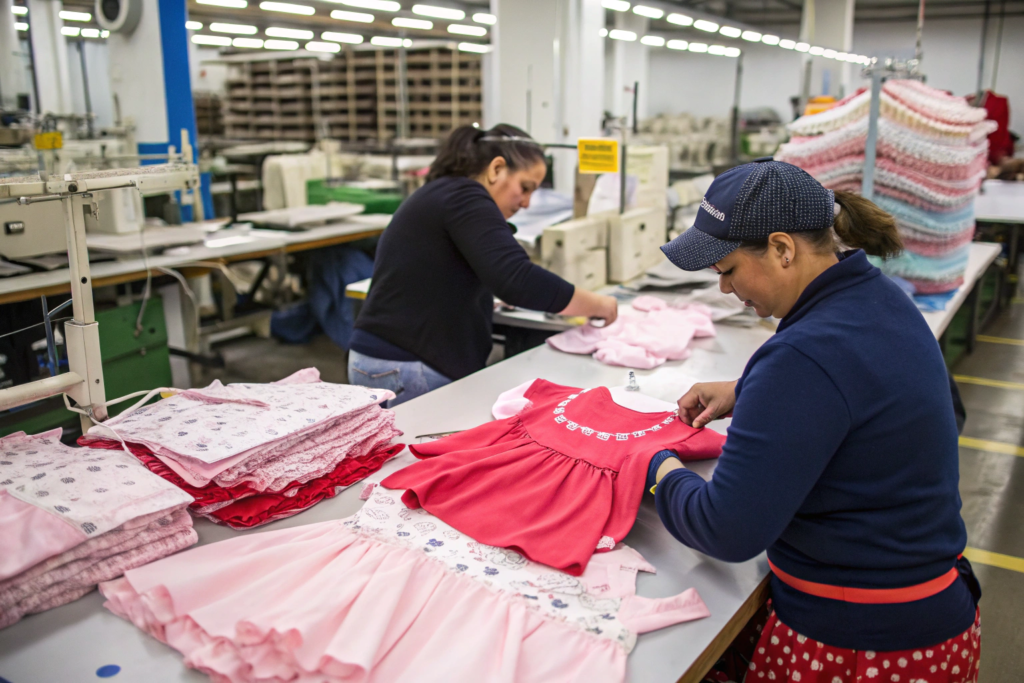
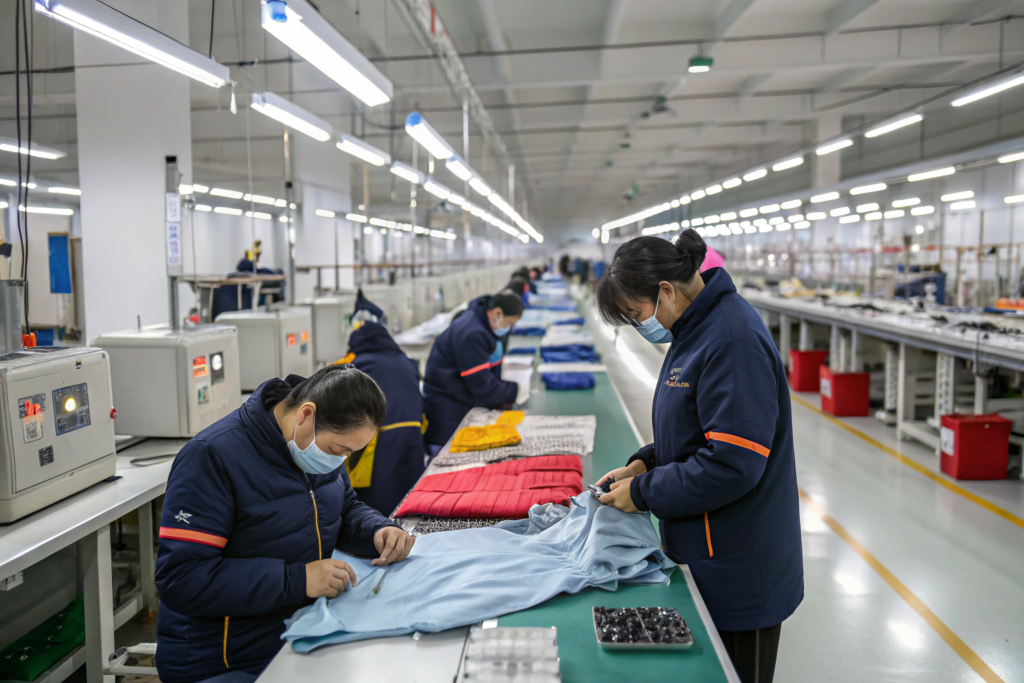
Our 5 production lines are configured for flexible small-batch manufacturing, with modular workstations that can be reconfigured for different garment types within a single shift. This means a rare kids' wear style with 300 units does not wait for a line to become available. It is scheduled into a flexible line alongside complementary small-batch orders, with changeover time measured in hours rather than days.
How Do Modular Lines Handle Multiple Small-Batch Kids' Wear Orders Simultaneously?
A traditional fixed production line is set up for one style. Every sewing station is optimized for that specific garment's operations: one station for sleeve setting, another for collar attachment, another for hemming. Changing to a different style requires rebalancing the entire line, which can take a full day. This setup time makes small-batch runs economically unviable. The factory demands large minimums to justify the changeover cost.
Our modular lines use cluster-based workstations. Instead of a long linear line, the production floor is organized into clusters of three to five machines that can operate as an independent mini-line. One cluster might produce 300 units of a rare smocked dress while an adjacent cluster produces 500 units of a coordinated jacket. The clusters share centralized cutting and finishing services but operate independently for sewing operations. Changeover in a cluster takes two hours, not a day. This allows us to run multiple small-batch rare styles simultaneously without sacrificing efficiency. A flexible garment manufacturing system like this is essential for serving brands that compete on unique design rather than volume basics. We invested in modular line configuration specifically because we saw the market shifting toward more styles, smaller batches, and faster turns.
What Scheduling Practices Prioritize Seasonal Kids' Wear Deadlines?
Children's wear is ruthlessly seasonal. Back-to-school deliveries have a hard deadline. Holiday collection deliveries have a hard deadline. Easter and summer camp collections have hard deadlines. A factory that treats all orders as first-in-first-out misses these seasonal windows. We schedule production backward from the brand's in-store date, not forward from the order receipt date.
When a children's wear brand places an order for a rare holiday collection style, we ask for the hard delivery date first. We calculate the ocean or air transit time, the production time, the material sourcing time, and the sampling time. We identify the latest date each phase must complete. We then reserve the production cluster capacity for that specific window. If the brand's timeline requires overlapping with another order, we make a transparent decision about which order has the greater seasonal urgency and adjust accordingly. This production scheduling for seasonal apparel discipline is built into our project management workflow. It is not an ad-hoc response to a panicked buyer email. It is how we plan every order from the first conversation.
How Do We Maintain CPSIA Compliance Without Slowing Production?
Speed without safety is dangerous. A children's garment that ships with a decorative button that detaches and becomes a choking hazard can trigger a recall, a lawsuit, and a destroyed brand reputation. The regulatory framework protecting children from unsafe products is necessary and non-negotiable. The challenge for a fast manufacturer is integrating compliance testing into the production timeline without creating bottlenecks that erase the speed advantage.
Shanghai Fumao maintains CPSIA compliance without slowing production by integrating safety testing into the production workflow rather than treating it as a separate post-production gate. Small parts pull-testing occurs on the production line immediately after attachment. Lead and phthalate testing is initiated during the pre-production phase, not after bulk completion. Compliance verification is parallel to production, not sequential after it.
What In-Line Safety Checks Occur During Kids' Wear Production?
Before a single button is attached to a children's garment in bulk, the button lot has already been tested for lead content and small parts attachment strength. The test results are linked to the button lot number in our production system. During production, a QC inspector stationed at the attachment point performs a random pull-test on attached buttons every hour using a calibrated force gauge that measures the pounds of force required to detach the component. This test is performed on finished garments, not just component samples.
For drawstrings and cords, which are heavily regulated in children's clothing, our cutting and sewing specifications include automatic compliance checks. Our pattern system flags any drawstring length that approaches the CPSIA limit for the specific size and garment category. The cutting table receives a warning in the cut file. The sewing line supervisor receives a checkpoint in the digital work order. These integrated children's wear safety testing protocols mean that compliance is verified at every stage of production, not discovered at final inspection when rework would delay shipment.
How Does Pre-Production Testing Compress the Final Inspection Timeline?
The traditional compliance model treats testing as a final checkpoint: produce the bulk order, pull samples, send to the lab, wait for results, and ship only after the report arrives. If the report identifies a failure, the entire bulk order is already produced and must be reworked or scrapped. This model is slow and risky.
Our pre-production compliance model initiates testing before bulk cutting begins. As soon as the pre-production sample is approved, we cut a small testing lot of ten garments using the exact bulk materials and trims. These garments go to the CPSC-accredited lab for full CPSIA testing. While the lab processes the tests, we proceed with bulk material preparation but do not cut. When the test report arrives with passing results, bulk cutting begins immediately. If the report identifies an issue, we resolve it on ten sample garments, not on three thousand bulk units. This pre-production compliance testing workflow compresses the final inspection timeline because the critical safety tests are already complete and documented before the bulk order reaches the finishing department. Final inspection focuses on quality and construction, which are faster to verify than chemical safety.
Conclusion
The question of whether a top Chinese clothing manufacture can deliver rare kids' wear styles faster than Vietnamese factories has a clear answer rooted in supply chain geography, specialized production infrastructure, and integrated compliance systems. Vietnam excels at high-volume, basic children's wear where long lead times are acceptable and the supply chain dependency on imported materials is less critical. For rare styles that require specialized trims, complex embellishments, iterative sampling, and rapid CPSIA compliance testing, the clustered supply chain and flexible production model of a top Chinese factory delivers a measurable speed advantage.
At Shanghai Fumao, this speed advantage is not theoretical. It is built into the physical layout of our factory, the geographic concentration of our trim supplier network, the specialization of our children's wear sample room, and the integration of our safety testing protocols. We have delivered rare smocked holiday dresses in six weeks from design approval to U.S. warehouse delivery. We have turned intricate embroidered Easter collections on timelines that Vietnamese factories declined to quote because their minimum lead time exceeded the selling window.
If you are a children's wear brand owner tired of missing seasonal windows due to long development timelines, or if you have a rare style concept that your current factory cannot sample quickly enough, let us demonstrate our speed with a concrete project. Send us your design brief for a rare kids' wear style. We will return a sampling timeline, a production timeline, and a binding DDP delivery date. Contact our Business Director, Elaine, at elaine@fumaoclothing.com. Let us show you that rare does not have to mean slow.