I once asked a factory owner in Shaoxing, a man who had been in the garment business for thirty-five years, why he had kept a particular American client for over two decades while cycling through dozens of others. He thought for a moment and said, "That client never once asked me to lose money. Not once. Every other client, at some point, asked me to absorb a cost that should have been theirs. The one who never did, I would do anything for." His answer has stayed with me because it captures the essence of a long-term factory partnership. The partnership is not built on contracts. It is built on a mutual understanding that both sides must be profitable for the relationship to survive. The brands that cycle through factories every two seasons, chasing a lower unit price or punishing the factory for a delay that was caused by the brand's own late fabric approval, never experience the full value a factory can provide. The brands that treat the factory as a strategic partner receive better pricing, better quality, better delivery, and access to capabilities that their competitors cannot access.
You build a long-term partnership with a Chinese garment factory by aligning your business practices with the factory's operational and financial realities. The partnership is built on five foundations. First, payment reliability. Pay every invoice on time, every time, without negotiation or delay. The factory's cash flow depends on your payment. Second, production discipline. Provide complete, locked tech packs before the purchase order. Do not make design changes after the cut ticket is issued. Third, volume consistency. Provide a rolling forecast and place orders on a predictable cadence. The factory plans its capacity around your orders. Fourth, fair problem resolution. When a quality issue or a delay occurs, approach it as a shared problem to be solved, not as an opportunity to extract a penalty. Fifth, mutual growth commitment. Share your growth plans with the factory and ask about the factory's growth plans. Invest in each other's capabilities. At Shanghai Fumao, our longest-tenured clients, some of whom have been with us for over a decade, practice all five of these disciplines. They are not our largest clients. They are our most reliable clients. And they receive the best of everything we have.
The Chinese garment factory is not a commodity supplier. It is a complex, family-owned or manager-operated business with its own financial pressures, workforce challenges, and capacity constraints. The brand that understands the factory's perspective and designs its behavior to be the client the factory wants to keep is the brand that builds a supply chain advantage that competitors cannot easily replicate. Let me walk through each foundation of the partnership.
Why Is Payment Reliability The Foundation Of A Strong Factory Relationship?
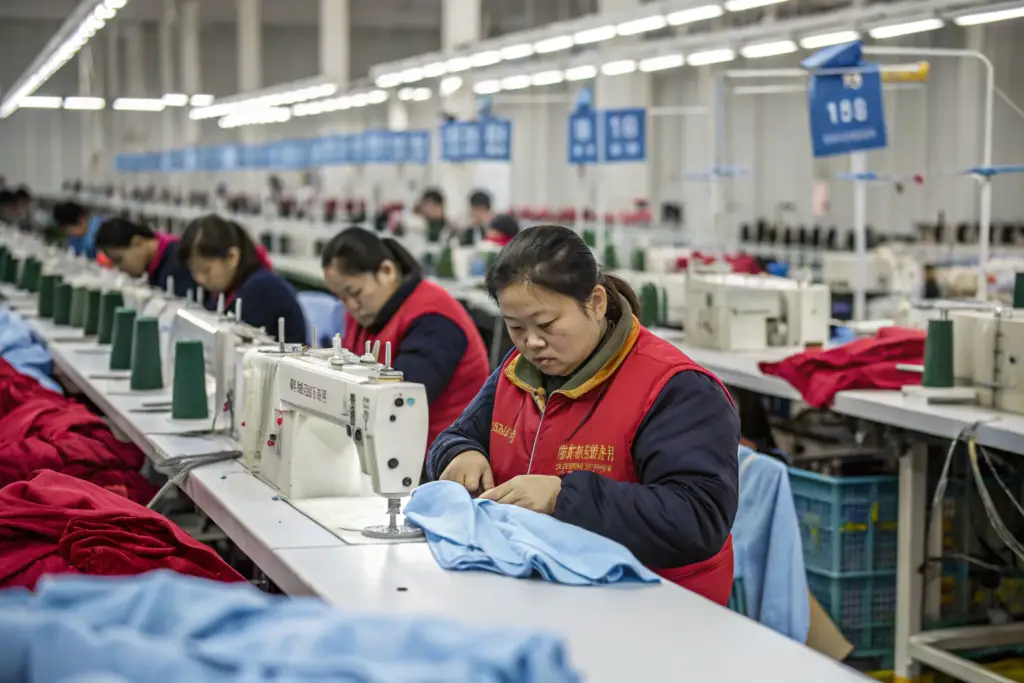
The garment factory operates on a negative cash flow cycle. The factory pays for the fabric, the trims, the worker wages, the utilities, and the factory overhead weeks before the client pays the balance for the order. The factory is essentially extending an unsecured loan to the brand for the duration of the production cycle. A brand that pays late, disputes invoices without cause, or demands discounts after the order is shipped is not just an inconvenience. It is a direct threat to the factory's ability to pay its own suppliers and its own workers. A factory that cannot pay its workers on time loses its workforce. A factory that loses its workforce cannot produce any orders, for any client.
Payment reliability is the foundation of a strong factory relationship because the factory's entire business model depends on predictable cash inflows. A brand that pays the deposit on the date specified in the proforma invoice, and pays the balance within the agreed payment terms, is a brand the factory can plan around. The factory can order the fabric with confidence, knowing the deposit will cover the material cost. The factory can schedule the production line, knowing the balance payment will arrive when the goods are ready to ship. At Shanghai Fumao, our most valued clients are those with perfect payment histories. We prioritize their production slots. We offer them first access to our express restock line. We negotiate pricing with the assumption that the payment will be on time and the transaction cost will be low. A brand with a late payment history receives a different pricing assumption, and a different level of service.
Payment reliability is not about the amount. It is about the certainty. A factory would rather work with a $50,000 client who pays on time, every time, than a $200,000 client who pays late and requires constant follow-up. The certainty reduces the factory's financial stress and allows the factory to focus on production quality rather than collections.
How Do Late Payments Damage Your Production Priority And Pricing?
Late payments damage the brand's standing with the factory in ways that are not immediately visible but are cumulatively devastating. The damage manifests in three areas: production priority, pricing, and goodwill.
Production priority is allocated by the production manager, not by the sales representative. The production manager's primary metric is on-time delivery. A brand that pays late creates a note in the factory's internal system. The production manager sees the note. When the schedule is tight and two orders are competing for the same production slot, the manager allocates the slot to the brand with the clean payment record. The late-paying brand is pushed to the next available window, which may be weeks later. The late payment has cost the brand its delivery date. Pricing is affected because the factory's finance department tracks the cost of collections for each client. A client who pays late incurs internal collection costs, the time spent by the merchandiser and the finance team sending reminders, making calls, and negotiating. Those costs are loaded into the next season's pricing. The late-paying client receives a higher FOB quote than a reliable client for the same product. Goodwill is the intangible reserve of trust and willingness to go the extra mile. A brand that pays late depletes its goodwill. When the brand needs an urgent restock, an expedited sample, or a favor on a minimum order quantity, the factory remembers the late payments and declines the request. The supplier payment performance and its impact on buyer-supplier relationships is a well-documented dynamic. The brand that pays on time earns a premium service level without paying a premium price.
What Payment Terms Do Chinese Factories Prefer For Long-Term Partners?
The payment terms that a factory offers to a new client are different from the terms it offers to a trusted, long-term partner. The new client is asked to pay a 50% deposit with the order and the 50% balance before shipment, or a 30% deposit with the balance against the bill of lading. These terms protect the factory against the risk of a new, unproven client. The long-term partner, after multiple seasons of perfect payment history, is offered more favorable terms.
The payment terms that Chinese factories prefer for long-term partners are typically a 30% deposit with the order and the 70% balance at sight, meaning upon presentation of the shipping documents, or net 30 days from the bill of lading date. Some factories offer net 60 days for their most trusted, highest-volume partners. The factory's willingness to extend payment terms is a direct expression of trust. The factory is essentially financing the brand's inventory for 30 to 60 days. The factory can offer this financing because the brand has proven, over multiple seasons, that the payment will arrive on time and in full. The brand that receives extended payment terms from its factory has earned a significant financial advantage. The brand can sell the coats and collect the revenue from its wholesale accounts before the factory's invoice is due. The payment terms in international garment sourcing are a competitive differentiator. The brand that earns favorable terms through reliable payment behavior reduces its working capital requirement and improves its cash flow.
How Do Clear Specifications And Timely Approvals Build Mutual Trust?
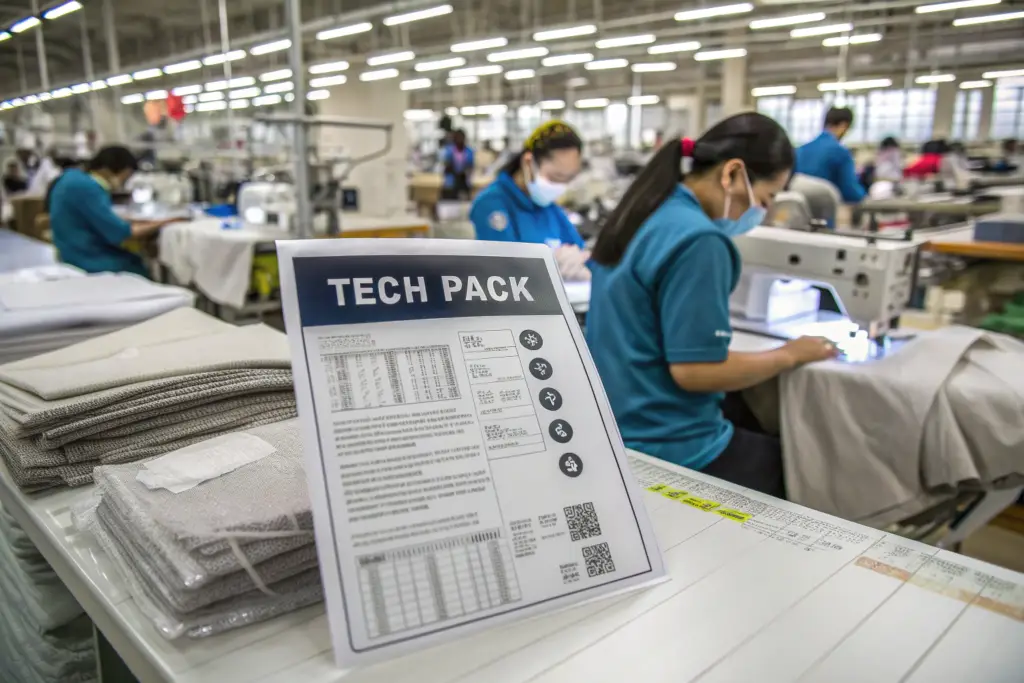
The factory's production efficiency depends on the clarity and stability of the brand's specifications. A tech pack that is complete, accurate, and locked before the purchase order is issued allows the factory to plan the production, order the materials, and set up the line without interruption. A tech pack that is incomplete, ambiguous, or subject to last-minute changes creates waste, delay, and frustration. The factory's trust in the brand is directly proportional to the brand's discipline in providing clear, stable specifications.
Clear specifications and timely approvals build mutual trust because they demonstrate that the brand respects the factory's time, resources, and production planning process. A brand that submits a complete tech pack, responds to sample approvals within 48 hours, and does not request design changes after the cut ticket is issued, is a brand the factory can plan around. The factory can schedule the production with confidence, knowing that the run will proceed smoothly and the delivery date will be met. At Shanghai Fumao, we track our clients' specification completeness and approval timeliness as internal metrics. The clients with the highest scores on these metrics receive the most accurate delivery date estimates and the fewest production delays. The clients with low scores receive longer lead time estimates because we must build in buffer time for the expected delays.
The brand that treats the specification and approval process as a collaborative discipline rather than an administrative burden builds a reputation with the factory's production team. The production team talks about the brand in the weekly scheduling meeting. The brand that is discussed positively gets the best production slots.
Why Do Last-Minute Design Changes Erode The Factory's Willingness To Flex?
Last-minute design changes are the single most disruptive event in a garment factory's production schedule. The change comes after the fabric has been cut, the trims have been ordered, the machines have been set up, and the operators have been trained on the construction sequence. The change requires the factory to stop the line, re-source materials, re-set machines, re-train operators, and absorb the cost of the wasted cut pieces and the lost production time. The cost of the change is a multiple of the cost of the change itself. It is the cost of the disruption to every other order on the schedule.
A brand that requests last-minute design changes is a brand that the factory remembers. The production manager notes the disruption in the client file. The next time the brand places an order, the production manager assigns it to a less experienced line, or schedules it later in the production window, or builds a larger cost buffer into the FOB quote to cover the expected disruption. The brand has lost the factory's willingness to flex. When the brand needs a favor, an urgent restock, a tight delivery window, the factory is less willing to accommodate. The brand has used up its flexibility credits on unnecessary design changes. The impact of design changes on manufacturing lead times is a core concept in lean production. The brand that locks its design before the purchase order and resists the temptation to tweak during production earns the factory's respect and the factory's flexibility.
How Does A Complete Tech Pack Reduce The Factory's Production Risk?
A complete tech pack is a document that answers every question the production team might ask before they ask it. The production team's questions are the pauses in the production flow. Every unanswered question is a pause. The operator stops. The line supervisor is called. The supervisor calls the merchandiser. The merchandiser emails the brand. The brand takes two days to respond. The line is idle, or worse, the line continues producing with an incorrect assumption, and the output is defective. A complete tech pack eliminates the pauses by providing the answers in advance.
A complete tech pack for a summer coat includes the technical sketch with all design details dimensioned, the bill of materials with exact supplier codes and lead times, the measurement chart with tolerances for every measurement point, the seam construction guide with stitch types and SPI, the label and trim placement guide with exact coordinates, the packing instructions with carton configuration and markings, and the quality inspection criteria. When the factory receives a tech pack of this quality, the production manager can allocate the order to the appropriate line, order the materials with confidence, and begin production without a single clarifying email. The tech pack requirements for garment production are the brand's primary contribution to production efficiency. The brand that provides a complete tech pack reduces the factory's production risk, and the factory reciprocates with better pricing, faster delivery, and higher quality.
What Role Does Volume Consistency Play In Securing Better Factory Support?
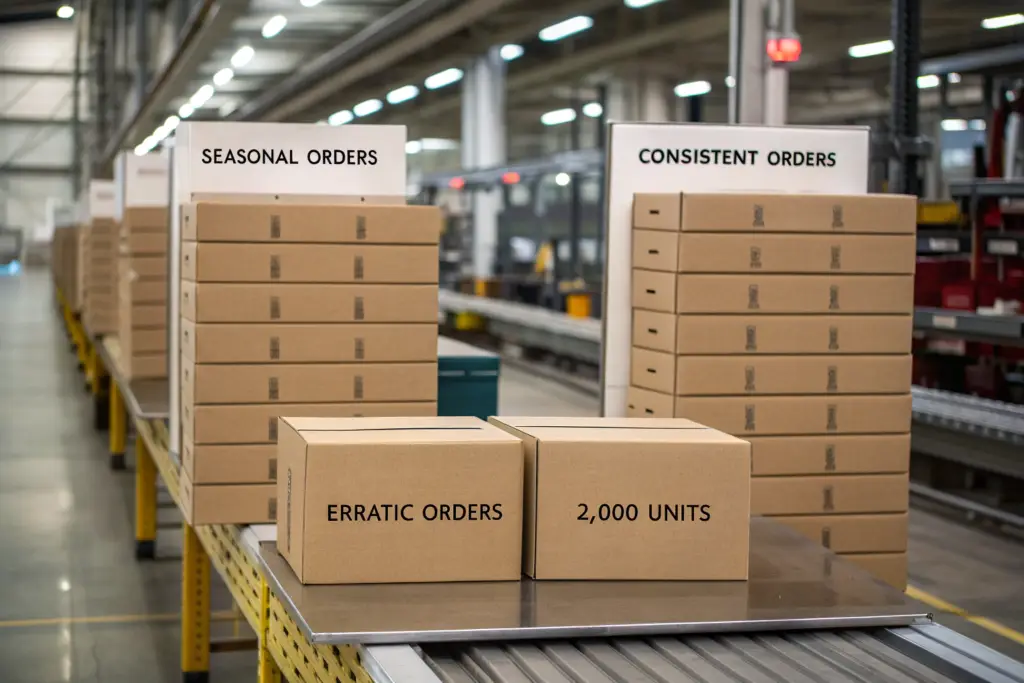
The factory's production line is a fixed asset. It costs the same to maintain whether it is running at full capacity or half capacity. The factory's profitability depends on capacity utilization. A brand that provides consistent, predictable order volume allows the factory to plan its capacity, schedule its workforce, and purchase its materials efficiently. A brand that provides erratic volume, a large order one season and no order the next, creates capacity planning problems. The factory must maintain the capacity for the brand in case the brand returns, but it cannot count on the brand's revenue.
Volume consistency plays a critical role in securing better factory support because a consistent brand is a brand the factory can build its business around. The factory can hire and train operators with the brand's volume in mind. The factory can pre-book fabric and trim inventory for the brand's forecasted orders. The factory can reserve production line capacity specifically for the brand's seasonal production windows. The brand becomes a part of the factory's operational baseline, not a variable to be accommodated. At Shanghai Fumao, our clients who have placed orders with us every season for three or more years receive a level of support that is qualitatively different from newer, less consistent clients. We know their product standards. We anticipate their production windows. We pre-position resources for their orders before they even send the purchase order.
Volume consistency is more important than volume size. A brand that orders 2,000 units every season, without fail, is more valuable to the factory than a brand that orders 10,000 units one season and then disappears for two years. The consistent brand provides revenue predictability. The erratic brand provides revenue spikes.
Why Is A Rolling Forecast More Valuable Than A Single Large Order?
A rolling forecast is a document that shows the brand's projected order volume for the next six to twelve months, updated monthly or quarterly. The forecast is not a purchase order. It is not a binding commitment. It is a statement of intent. The brand is telling the factory, "Based on our current sales trajectory and our upcoming product launches, we expect to order approximately this many units over this period." The forecast allows the factory to plan ahead.
A single large order is a transaction. The factory receives the order, produces it, ships it, and the relationship goes dormant. The factory cannot plan around a dormant relationship. A rolling forecast is a relationship. The factory sees the projected volume for the next three seasons. The factory can reserve the production capacity, pre-book the fabric, and allocate the skilled workforce. The forecast also allows the factory to negotiate better pricing with its own suppliers. If the factory knows it will need 10,000 meters of a specific linen blend over the next six months, it can contract with the mill for the full quantity at a volume discount. The discount is shared with the brand. The demand forecasting in supply chain collaboration is a practice that reduces costs for both parties. The brand that shares a rolling forecast with its factory receives better pricing and better capacity allocation than the brand that places one-off orders.
How Can A Brand Structure Its Ordering Cadence To Match The Factory's Calendar?
The factory's calendar is driven by the Chinese public holidays, the seasonal production cycles, and the workforce availability patterns. A brand that structures its ordering cadence to align with the factory's natural rhythm receives better pricing, faster production, and higher quality. A brand that ignores the factory's calendar and places orders at the worst possible times pays a premium in price, lead time, and stress.
The factory's calendar for summer coat production is as follows. September to October is the ideal development period. The factory's fall production is winding down, the sample room has capacity, and the mills have not yet begun their pre-Chinese New Year rush. November to December is the pre-Chinese New Year production window. The factory is running at full capacity to ship orders before the holiday shutdown. An order placed during this window will compete with every other brand's urgent pre-holiday production. January to February is the Chinese New Year shutdown and the slow ramp-up. Production capacity is severely limited. March to May is the peak summer production window. The factory is running at full capacity. Orders placed in April for May delivery will face premium pricing and extended lead times. June to August is the summer lull. The factory has capacity available. This is the ideal window for early development of the next summer season's collection or for replenishment orders. The seasonal production calendar for garment sourcing is a known cycle. The brand that plans its ordering cadence around this cycle receives the best pricing in the September to October development window and the June to August replenishment window.
How Should You Handle Quality Issues To Strengthen Rather Than Weaken The Partnership?
Quality issues are inevitable. A shade variation in a dye lot, a slight measurement drift on a production line, a loose button that escapes inspection. No factory produces zero defects. The difference between a strong partnership and a weak one is not the presence or absence of quality issues. It is how the issues are handled when they arise. The brand that treats a quality issue as a shared problem to be solved strengthens the partnership. The brand that treats a quality issue as an opportunity to extract a penalty weakens it.
You handle quality issues to strengthen the partnership by following a collaborative problem-solving process. Step one: document the issue with clear evidence, photos, measurements, and test results. Do not make vague claims. Show the factory exactly what is wrong. Step two: communicate the issue to your dedicated merchandiser promptly and professionally. Do not escalate to the owner for a first-time, resolvable issue. Step three: ask the factory for a root cause analysis. Why did the issue occur? What process failure allowed it to happen? Step four: work with the factory to agree on a corrective action. How will the defective units be repaired or replaced? How will the process be changed to prevent recurrence? Step five: agree on a fair cost allocation. If the factory is at fault, the factory should bear the cost of the remedy. If the brand contributed to the issue, for example, by specifying an untested fabric, the cost should be shared. At Shanghai Fumao, we have resolved hundreds of quality issues with our long-term partners using this collaborative process. The issues that are handled this way strengthen the relationship because both parties learn from the problem and improve their processes.
The brand that approaches quality issues with a "gotcha" mentality, demanding punitive discounts and threatening to cancel future orders, may win a short-term financial concession. It loses the factory's trust and willingness to go the extra mile. The long-term cost of the lost goodwill far exceeds the short-term gain of the penalty.
What Is A Fair Way To Allocate Responsibility For A Production Defect?
Allocating responsibility for a production defect is a negotiation that tests the maturity of the brand-factory relationship. The fair allocation is based on the root cause of the defect. If the root cause is entirely within the factory's control, a machine setting error, an operator mistake, a missed inspection, the factory should bear the full cost of the remedy. If the root cause is entirely within the brand's control, an ambiguous specification, a late-approved fabric substitution, a design change after cutting began, the brand should bear the full cost. Most defects have a shared root cause, and the cost should be shared accordingly.
A fair cost allocation for a shared-root-cause defect might work as follows. The brand specified a new, untested fabric and the factory agreed to use it without conducting its own shrinkage test. The fabric shrank 5% in the first wash, exceeding the 2% tolerance. The root cause is shared: the brand introduced the untested fabric, and the factory failed to test it before production. The remedy is to replace the defective coats. The cost of the replacement fabric, the labor, and the logistics is split 50/50 between the brand and the factory. Both parties contributed to the failure, and both parties share the cost. The responsibility allocation in garment quality disputes should be documented in the purchase agreement or the quality manual. The agreement should specify the process for root cause analysis and the formula for cost allocation. A clear, pre-agreed framework reduces the emotional temperature of the negotiation and allows both parties to focus on solving the problem.
How Can A Root Cause Analysis Process Prevent Recurring Issues?
A root cause analysis is a structured investigation into the underlying cause of a quality defect. The goal is not to assign blame. The goal is to identify the process failure that allowed the defect to occur and to correct the process so the defect cannot recur. A brand and a factory that conduct root cause analyses together on significant defects build a shared understanding of each other's processes and a shared commitment to continuous improvement.
A simple root cause analysis process for a garment quality defect follows the "Five Whys" method. The defect is a loose button on a summer coat. Why was the button loose? The button attachment stitching was insufficient. Why was the stitching insufficient? The button-sewing machine was set to the wrong stitch count for the button type. Why was the stitch count wrong? The machine setting was not verified at the start of the production run. Why was it not verified? The pre-production checklist did not include a button-sewing machine verification step. Why was the step missing from the checklist? The checklist was designed for a previous button type and was not updated when the brand changed the button specification. The root cause is an outdated pre-production checklist. The corrective action is to update the checklist to include a button-sewing machine verification for every new button type, and to require the line supervisor to sign off on the verification before production begins. The root cause analysis for quality management in manufacturing is a standard practice. The brand and the factory that conduct these analyses together prevent the same defect from recurring, which reduces the total cost of quality for both parties over time.
Conclusion
A long-term partnership with a Chinese garment factory is not a transaction. It is a relationship built on mutual understanding, mutual respect, and mutual benefit. The brand that treats the factory as a strategic partner, not a commodity supplier, receives a level of service, quality, and flexibility that the transactional brand never experiences. The factory that is treated as a partner invests in the brand's success because the brand's success is the factory's success.
The five foundations of the partnership are simple to state and difficult to practice consistently. Pay every invoice on time. Provide complete, locked specifications before the order. Place orders on a predictable cadence and share a rolling forecast. Handle quality issues collaboratively, with a focus on solving the problem rather than extracting a penalty. And invest in the relationship over time, sharing your growth plans and asking about the factory's growth plans. The brands that practice these five disciplines season after season build supply chains that are sources of competitive advantage, not sources of constant stress.
At Shanghai Fumao, we have built our business around long-term partnerships. Our most valued clients are not necessarily our largest clients. They are the clients who have demonstrated, over years of working together, that they are reliable, fair, and committed to mutual growth. We invest in these clients. We prioritize their production. We offer them our best pricing, our best capacity, and our best ideas. We do this not because we are generous. We do this because these partnerships are the most profitable, the most sustainable, and the most satisfying for everyone involved.
If you are looking for a factory partner who values long-term relationships, or if you want to strengthen the partnership with your existing factory, contact our Business Director, Elaine, at elaine@fumaoclothing.com. Tell her about your brand, your production volumes, and your goals for the partnership. She will discuss how we build partnerships that last. Because a factory that knows you, trusts you, and is invested in your success is worth more than a lower unit price from a factory that treats you as just another order number.