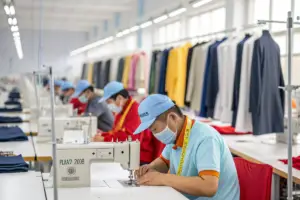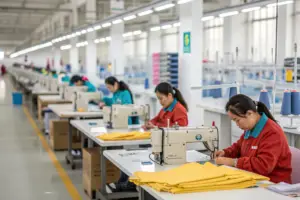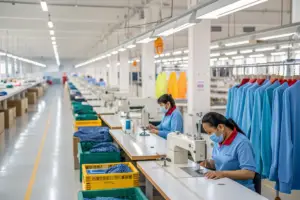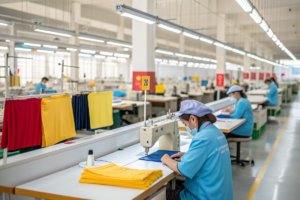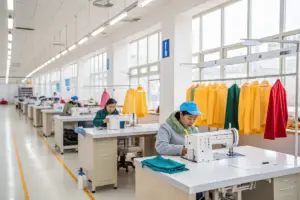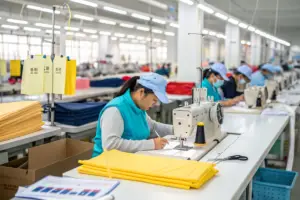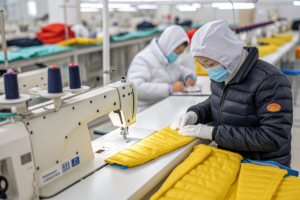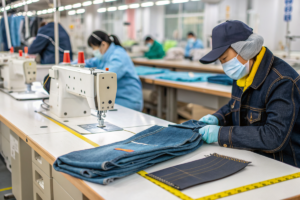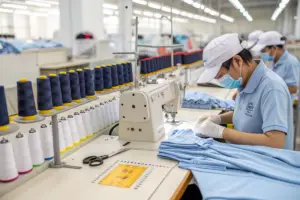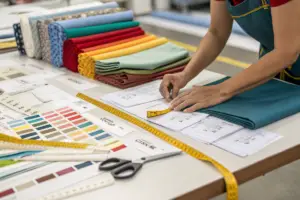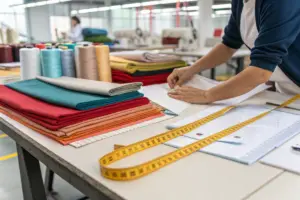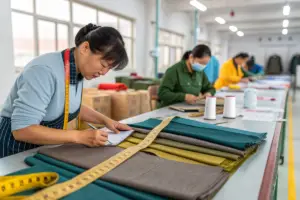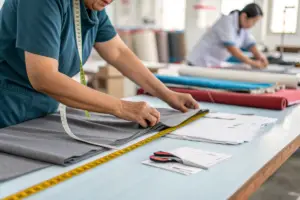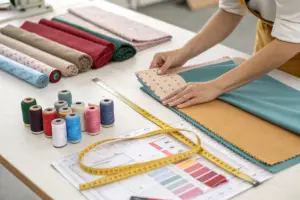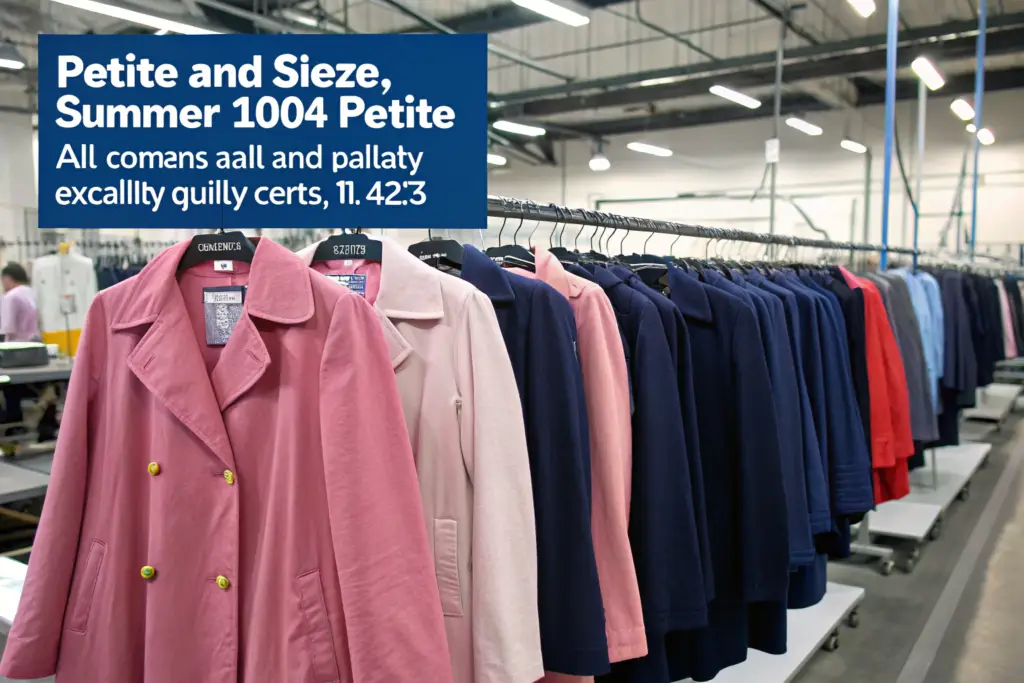
A brand owner from Seattle called me last March with a sourcing problem that had defeated her for two seasons. Her brand specialized in inclusive sizing, and her customer base was fiercely loyal. She sold petite summer blazers in sizes 00P to 8P and plus-size summer dusters in sizes 1X to 3X. Her sell-through on the extended sizes was 92%, significantly higher than her standard size range. Her problem was not demand. Her problem was supply. Every factory she approached either refused to produce the petite and plus-size runs, quoted absurdly high minimum order quantities that made the extended sizes unprofitable, or delivered garments with fit problems that generated high return rates. She had spent two years building a brand around size inclusivity, and her supply chain could not support her brand promise. When she found Shanghai Fumao, she was ready to give up on extended sizing entirely. We solved her problem in one season.
You source petite and plus-size summer coats in bulk by partnering with a factory that has specific capabilities in extended size grading, that offers flexible minimum order quantities for size-specific runs, and that understands the fit engineering differences between standard, petite, and plus-size body proportions. A standard size run cannot simply be scaled up or down to create a petite or plus-size fit. The pattern must be re-engineered for the specific body type. The petite coat requires adjusted armhole depths, sleeve lengths, and body lengths. The plus-size coat requires adjusted bust darts, shoulder slopes, and ease allowances. At Shanghai Fumao, we have developed in-house grading expertise for extended size ranges. We produce petite coats from 00P to 12P and plus-size coats from 1X to 4X with the same fabric, the same construction quality, and the same minimum order flexibility as our standard size production. We do not treat extended sizes as a special request. We treat them as a core production capability.
The market for extended sizing is not a niche. It is the majority of the American women's apparel market. The average American woman wears a size 16 to 18, which corresponds to a 1X or 2X in most outerwear sizing. The petite market, women 5'4" and under, represents approximately 30% of the female population. A brand that does not offer these sizes is ignoring a substantial portion of its addressable market. The barrier has always been the supply side. The factories that can produce extended sizes profitably at moderate volumes are rare. Let me walk through exactly how we do it and what you need to know to source successfully.
What Are The Specific Fit Challenges For Petite Summer Coats?
Petite sizing is not simply a shorter version of standard sizing. The petite woman has different body proportions, not just a shorter stature. Her shoulder width is narrower. Her armhole depth is shallower. Her sleeve length is shorter from the shoulder point to the wrist. Her torso length from the shoulder to the waist is shorter. Her overall height is shorter, which affects the placement of design details like pockets, buttons, and waist seams. A standard size coat that is simply shortened at the hem does not fit a petite woman correctly. The sleeves are still too long. The shoulders are still too wide. The waist falls at the wrong point on the torso. The coat looks like it was borrowed from a taller friend.
The specific fit challenges for petite summer coats require pattern adjustments that go beyond length reduction. The shoulder width must be narrowed by approximately half an inch to three-quarters of an inch relative to the standard size. The armhole depth must be raised by approximately half an inch to prevent gaping and to allow full arm movement without the coat lifting. The sleeve length must be shortened by one to two inches, with the adjustment distributed between the upper sleeve and the lower sleeve to maintain the correct elbow point. The body length must be shortened by one to three inches, with the adjustment distributed proportionally so that the waist placement and the pocket placement remain balanced. The button placement and the pocket placement must be adjusted proportionally to the shortened body length. At Shanghai Fumao, our pattern-making team applies these specific adjustments to every petite size in the grade. We do not simply shorten the hem. We re-proportion the entire coat for the petite frame.
The petite fit challenge is an engineering problem, not an aesthetic one. The factory that understands the engineering can produce petite coats that fit as well as the standard sizes. The factory that treats petite as a shortened standard produces petite coats that generate returns.
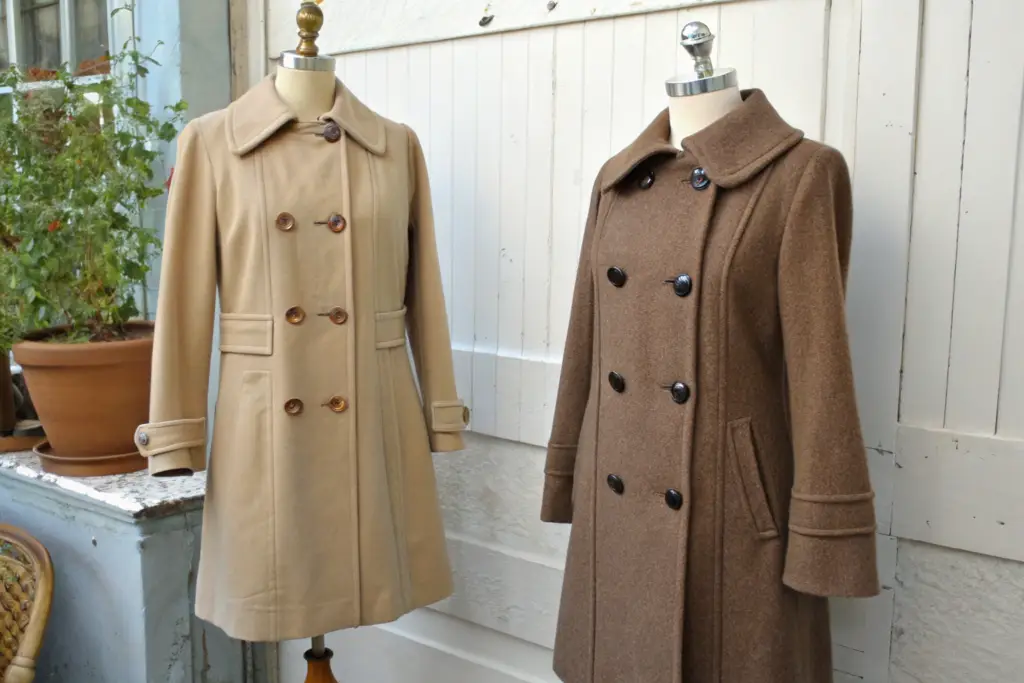
How Should The Pattern Grading Differ For Petite Versus Standard Sizes?
Grading is the process of scaling a base size pattern up or down to create the full size range. Standard grading rules increase or decrease the measurements by a fixed increment at each size. A standard grade might add one inch to the chest circumference and three-quarters of an inch to the sleeve length for each size increase. These standard rules assume that the body's proportions change uniformly across the size range. This assumption is incorrect for petite sizes.
Petite grading requires a different set of grade rules that reflect the different body proportions of the petite customer. The length measurements, the sleeve length, the body length, the shoulder to waist length, increase at a smaller increment than the standard grade. The width measurements, the chest, the waist, the hip, increase at the standard increment because petite women still need width accommodation as sizes increase. The armhole depth increases at a smaller increment because the petite shoulder and armhole remain proportionally smaller even as the body width increases. The pocket placement and the button placement are graded at the petite length increment, not the standard increment, to maintain the correct visual proportion on the shorter body. The petite size grading rules for apparel manufacturing are a specialized subset of pattern-making knowledge. A factory that does not have specific experience with petite grading will apply the standard rules, and the resulting coats will not fit correctly. The brand must verify that the factory has demonstrated petite grading capability before placing a bulk order.
Why Do Sleeve Length And Torso Proportion Matter More Than Overall Length?
The overall length of the coat, the measurement from the back neck to the hem, is the most visible length adjustment. It is also the easiest to fix. A tailor can shorten a coat that is too long. The customer cannot fix sleeves that are too long, shoulders that are too wide, or a waist seam that falls at the wrong point. These proportional failures are what make a petite coat unwearable, and they are the failures that generate returns.
The sleeve length is the most critical measurement for petite fit because the customer cannot easily alter it. A standard size coat on a petite woman has sleeves that extend past her knuckles. Rolling the cuffs is a temporary fix that looks casual and unintentional. Professional alteration of the sleeve length on a coat is expensive, typically $30 to $50, because the tailor must remove the sleeve from the armhole, shorten it from the top, and reattach it. Most customers will return the coat rather than pay for the alteration. The torso proportion, the relationship between the shoulder-to-waist length and the overall length, determines whether the coat's design details sit at the correct points on the body. A waist seam that falls an inch below the natural waist makes the coat look oversized in an unflattering way. A pocket that sits too low makes the coat look droopy. These proportional failures cannot be fixed by shortening the hem. The sleeve length and torso proportion in petite outerwear design are the measurements that separate a properly engineered petite coat from a shortened standard coat.
How Do Plus-Size Summer Coats Require Different Construction Techniques?
Plus-size outerwear is not simply a larger version of standard-size outerwear. The plus-size body has different proportions, different support requirements, and different points of wear and stress. A coat that is simply scaled up from a size 8 to a size 18 will fit poorly, wear out quickly at the stress points, and generate high return rates. The construction of a plus-size coat must be engineered for the specific demands of the plus-size body. The fabric must be selected for its ability to drape without clinging. The seams must be reinforced at the points of highest tension. The fit must provide ease without adding bulk.
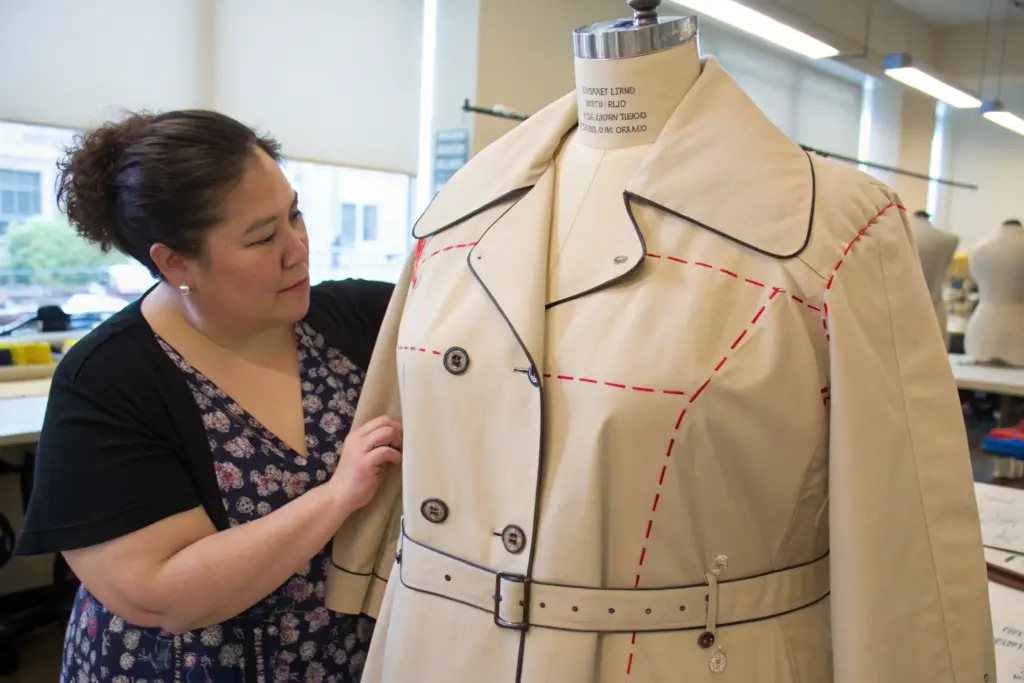
Plus-size summer coats require different construction techniques in three critical areas. First, the shoulder and armhole construction must be reinforced to handle the additional weight and tension at the seam junctions. The armhole seam is the highest-stress point on a coat, and on a plus-size coat, that stress is amplified. We use a stay tape or a reinforced seam construction at the armhole to prevent seam failure. Second, the bust dart must be shaped and positioned to provide adequate shaping without pulling or gaping. A standard dart graded up to plus sizes often creates a conical shape that does not match the natural bust contour. We adjust the dart angle and the dart intake for the plus-size figure. Third, the front closure must be engineered to lie flat without gaping between the buttons. The button placement and the facing reinforcement must account for the curvature of the plus-size bust and abdomen. At Shanghai Fumao, our sample room has developed specific construction protocols for plus-size summer coats that address these engineering requirements.
The construction differences are invisible to the customer, but the customer feels the result. A plus-size coat that is properly engineered feels comfortable, secure, and flattering. A plus-size coat that is simply scaled up feels tight in the wrong places, loose in the wrong places, and fragile.
What Fabric Choices Work Best For Plus-Size Summer Outerwear?
Fabric selection for plus-size summer outerwear is a balance between structure, drape, breathability, and comfort. The fabric must have enough body to hold the shape of the coat without adding stiffness or weight. It must drape smoothly over curves without clinging or pulling. It must breathe to prevent overheating, a common concern for plus-size customers in warm weather. It must feel soft and comfortable against the skin, because plus-size coats are often worn over bare arms or lightweight tops.
The best fabric choices for plus-size summer coats are, in order of performance and customer preference, Tencel and Tencel-blend twills at 160 to 200 GSM. These fabrics have a fluid, silky drape that skims the body without adding bulk. They breathe well and feel cool to the touch. Linen and linen-rich blends at 150 to 180 GSM offer breathability and natural texture, but they must be blended with viscose or Tencel to reduce wrinkling and improve drape. Cotton-linen blends at 140 to 170 GSM offer a crisp, casual hand feel with good breathability and easy care. Lightweight ponte and double-knit fabrics at 200 to 250 GSM offer excellent drape, wrinkle resistance, and comfort, making them ideal for unstructured plus-size blazers. Fabrics to avoid for plus-size summer coats include stiff, bulky fabrics that add visual volume, thin, clingy fabrics that highlight every contour, and heavy fabrics that trap heat. The fabric selection for plus-size apparel design should prioritize drape, breathability, and a smooth, non-clingy hand feel. The factory should provide fabric swatches that the brand can evaluate on plus-size fit models before committing to bulk.
How Do You Reinforce Stress Points On Extended Size Coats?
Stress points on a coat are the locations where the fabric and the seams experience the highest tension during wear. On a standard size coat, the stress points are manageable with standard construction. On a plus-size coat, the same stress points experience higher forces because the garment must accommodate a larger body with more curvature and more movement. Reinforcing these points prevents the most common plus-size coat failures: ripped armholes, popped buttons, and torn pocket openings.
The stress points on a plus-size summer coat that require reinforcement are, first, the armhole seam, particularly at the underarm junction. This is the point of highest tension when the wearer moves her arms forward or reaches for something. We reinforce this point with a bar tack or a second row of stitching at the seam junction. Second, the button attachment points on the front closure. The buttons on a plus-size coat experience lateral tension when the wearer sits, bends, or moves. We sew buttons with a reinforced shank and a backing button on the inside of the facing for sizes 2X and above. Third, the pocket openings, particularly on side-seam pockets. The pocket opening experiences tension when the wearer puts her hands in the pockets or when the coat is pulled across the hips. We reinforce the pocket opening with a bar tack at both ends and a stay tape along the opening edge. Fourth, the center back seam at the shoulder blade area. This seam experiences tension when the wearer reaches forward. We reinforce it with a chain stitch or a safety stitch that provides stretch without breaking. The stress point reinforcement in plus-size garment construction is a technical detail that the customer never sees but experiences as durability and security. A plus-size coat that never pops a button, never rips a seam, and never tears a pocket earns the customer's trust and her repeat business.
What Are The Minimum Order Quantity Realities For Extended Sizes?
The minimum order quantity, the MOQ, is the single largest barrier to extended size production. The standard factory model requires a minimum order per style per color that makes economic sense for the production line setup. A brand that wants to produce a summer blazer in three colors, in sizes 1X, 2X, and 3X, across three styles, is potentially ordering 27 different SKU combinations. If the factory imposes an MOQ of 200 units per SKU, the total order is 5,400 units just for the extended sizes. Most brands cannot meet that MOQ, so they either skip the extended sizes or accept a per-unit cost penalty for small runs.
The MOQ realities for extended sizes require a factory that offers flexible production models. At Shanghai Fumao, we address the extended size MOQ challenge through three approaches. First, we allow combined cutting across standard and extended sizes within the same style. The standard sizes and the extended sizes are cut from the same fabric lot, on the same cutting table, using nested markers that maximize fabric utilization. This reduces the MOQ per size because the total order volume is aggregated. Second, we offer a reduced MOQ for extended sizes when they are ordered as part of a larger standard size order. If the brand orders 1,200 units of standard sizes, we can produce a supplementary 300 units of extended sizes with a minimal MOQ surcharge rather than a prohibitive one. Third, we offer a made-to-order model for extended sizes, where we produce the extended sizes against confirmed wholesale or pre-orders rather than for speculative inventory. This eliminates the brand's inventory risk on the extended sizes.
The MOQ barrier is real, but it is surmountable with a factory partner that is committed to extended size production and that has developed the operational methods to make small runs economically viable.
How Can Combined Cutting Reduce The Cost Per Unit For Extended Sizes?
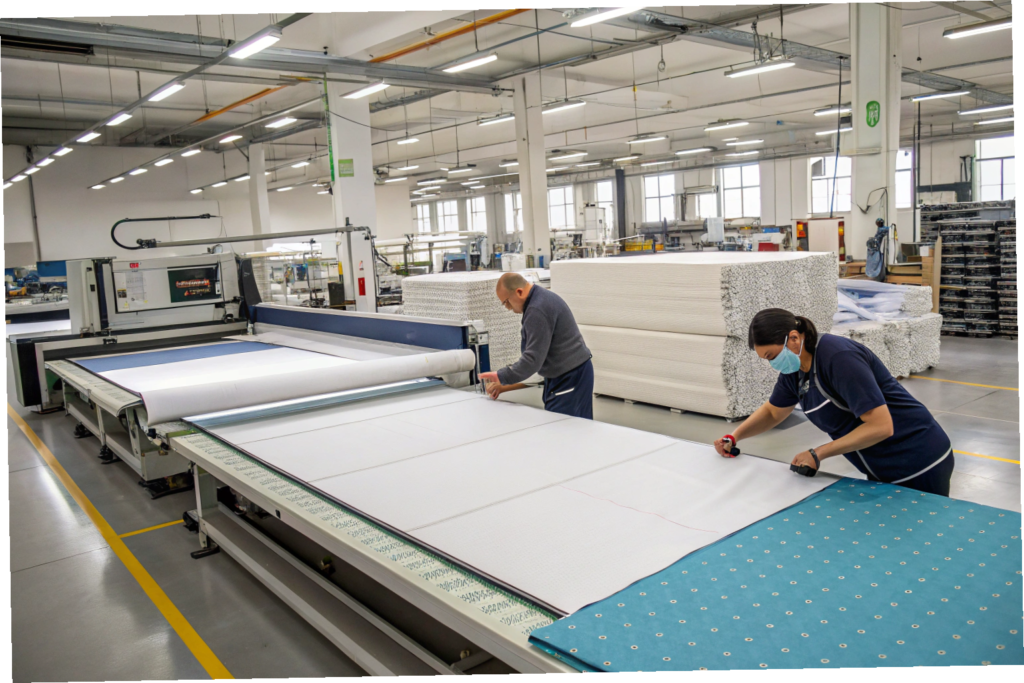
Combined cutting is a production technique where the standard size patterns and the extended size patterns are arranged together on the same cutting marker. The marker is the layout of pattern pieces on the fabric that minimizes waste. A marker that includes only extended sizes has lower fabric utilization because the larger pattern pieces do not nest together as efficiently as a mix of small, medium, and large pieces. The fabric waste increases, and the cost per unit increases with it. A combined marker that intermingles standard sizes and extended sizes achieves higher fabric utilization. The small pieces fill the gaps between the large pieces. The overall fabric waste is reduced.
The combined cutting approach requires that the standard sizes and the extended sizes use the same fabric and are produced in the same production run. The cutting room lays up the fabric in a single tall lay, places the combined marker on top, and cuts all the sizes simultaneously. The cut pieces are sorted by size and distributed to the sewing lines. The sewing lines may be separate, with one line dedicated to extended sizes for specialized handling, but the cutting is unified. The fabric savings from combined cutting can reduce the fabric cost per unit for the extended sizes by 5% to 10% compared to a separate cutting run. The fabric utilization optimization through combined marker making is a standard industrial engineering technique. The factory that applies it to extended size production reduces the cost penalty that small runs typically incur.
Why Do Some Factories Refuse Extended Size Orders Entirely?
Some factories refuse extended size orders entirely. The brand that encounters this refusal often interprets it as discrimination or as a lack of interest in the plus-size market. The real reasons are more pragmatic and reveal important information about the factory's capabilities. A factory that refuses extended size orders is telling you, indirectly, that it lacks the technical capability to produce them correctly.
The reasons factories refuse extended size orders include the following. First, they lack the pattern grading expertise for plus-size bodies. Their pattern maker knows how to grade from size 0 to 12, but not from 1X to 3X. Rather than risk producing a poorly fitting garment, they decline the order. Second, their production line is set up for a specific size range and cannot efficiently handle the larger pattern pieces. The sewing machine tables, the pressing equipment, and the handling procedures are optimized for standard sizes. Extended sizes require adjustments that slow down the line and reduce the factory's overall output. Third, their fabric sourcing is optimized for standard size markers, and they cannot achieve acceptable fabric utilization on extended size markers. They would lose money on the fabric, so they decline the order. A factory that has invested in the grading expertise, the production line flexibility, and the marker-making capability for extended sizes will accept the order. The factory capabilities required for extended size apparel production are specific and require intentional investment. The brand should ask potential factory partners about their specific extended size experience before assuming they can produce the order.
How Should You Size Your Initial Bulk Order Across Petite, Standard, And Plus Ranges?
The initial bulk order sizing decision is a portfolio allocation problem. The brand has a limited budget and must allocate units across the standard, petite, and plus-size ranges. The allocation should be driven by the brand's customer data, not by a generic industry average. A brand that has not yet sold extended sizes does not have its own customer data. It must rely on industry benchmarks, market testing, and a conservative inventory strategy that minimizes the financial risk of an unproven size range.
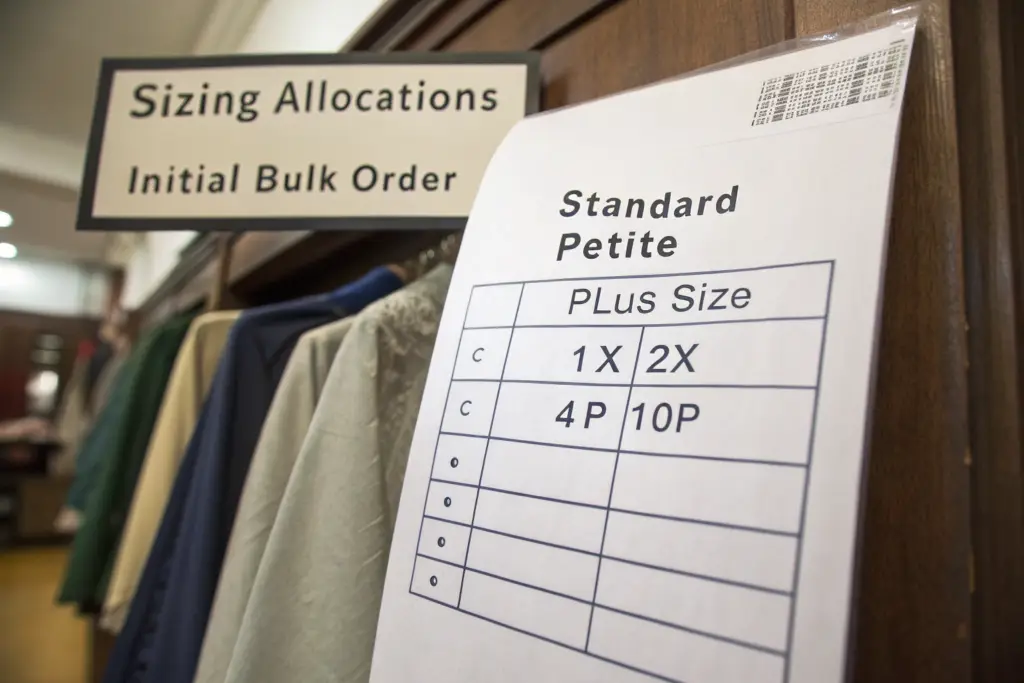
You should size your initial bulk order across petite, standard, and plus ranges by allocating the majority of the order, 60% to 70%, to the standard size range, which has the broadest customer base and the most predictable sell-through. Allocate 15% to 25% to the plus-size range, focusing on sizes 1X and 2X, which represent the largest portion of the plus-size market. Allocate 10% to 20% to the petite range, focusing on sizes 4P to 10P, which represent the core of the petite market. Within each range, weight the quantities toward the middle sizes and taper toward the extremes. The initial order is a test. The sell-through data from the first season will provide the allocation percentages for the second season. At Shanghai Fumao, we support our clients' initial extended size orders with flexible quantities and rapid restock capability. If the plus-size sell-through exceeds expectations, we can produce additional units within two to four weeks from the greige reserve.
The initial allocation is a hypothesis. The second season's allocation is data-driven. The brand that treats the first season as a learning opportunity and the second season as an optimization exercise builds an extended size business profitably.
What Is The Standard Size Distribution For An Inclusive Summer Coat Launch?
An inclusive summer coat launch typically includes the standard size range, sizes XS to XL or 0 to 14, the petite size range, sizes 0P to 12P or XSP to LP, and the plus-size range, sizes 1X to 3X or 14W to 24W. The size distribution within each range should reflect the demographic profile of the brand's target customer and the general US women's apparel market.
The general US market data provides a starting point. Approximately 30% of US women fall into the standard size range of 0 to 8. Approximately 35% fall into the extended standard range of 10 to 14. Approximately 30% fall into the plus-size range of 16 to 24. Approximately 30% of all women are petite, regardless of their width size. These percentages are not a prescription for order allocation. They are context for understanding the market opportunity. A brand that is launching inclusive sizing for the first time and does not have its own customer data can use a conservative allocation model. Standard sizes: 65% of the total order. Plus sizes: 25% of the total order, with 60% of the plus units in sizes 1X and 2X, and 40% in size 3X. Petite sizes: 10% of the total order, distributed across the standard petite sizes. The total order quantity might be 2,000 units, with 1,300 standard, 500 plus, and 200 petite. The inclusive sizing market data for fashion brands is widely available. The data supports a significant allocation to extended sizes, but the brand should start conservatively and adjust based on its own sell-through results.
How Can You Use Pre-Order Data To De-Risk Extended Size Production?
Pre-orders are orders placed by wholesale accounts or by direct-to-consumer customers before the inventory is produced. The pre-order model converts the extended size production from a speculative inventory bet into a demand-driven production run. The brand presents the extended size collection to its wholesale accounts at a pre-season market appointment or to its DTC customers via an online pre-order campaign. The accounts and customers place orders. The brand aggregates the orders and produces exactly the quantity and the size mix that the market has confirmed.
The pre-order model de-risks extended size production in two ways. First, it eliminates the guesswork on the size distribution. The brand does not need to forecast how many 2X versus 3X coats will sell. The pre-orders provide the exact quantity. Second, it generates the cash flow to fund the production. The wholesale accounts pay a deposit or the DTC customers pay in full at the time of pre-order. The brand uses this cash to pay the factory's deposit, reducing the brand's working capital requirement. The pre-order model does have a longer lead time. The brand must present the collection, collect the orders, and then produce the goods. The total timeline from pre-order launch to customer delivery is typically 12 to 16 weeks. The brand must plan its selling calendar accordingly. The pre-order and made-to-order production models for fashion are increasingly common as brands seek to reduce inventory risk. The extended size range, with its higher perceived risk, is an ideal candidate for the pre-order approach.
Conclusion
Sourcing petite and plus-size summer coats in bulk is a supply chain challenge that has kept many brands from serving the full size spectrum of their customer base. The challenge is real: the pattern engineering is different, the construction techniques are different, the minimum order quantities are higher, and the inventory risk is greater. But the challenge is solvable with a factory partner that has invested in the specific capabilities required for extended size production.
The factory must have the grading expertise to adjust the patterns for petite and plus-size bodies, not just scale the standard pattern up or down. The factory must have the construction knowledge to reinforce the stress points and select the appropriate fabrics for plus-size coats. The factory must have the production flexibility to offer reduced minimum order quantities for extended size runs, using techniques like combined cutting and made-to-order scheduling. The brand, for its part, must approach the initial extended size order as a market test, using conservative allocations and pre-order data to manage the inventory risk.
At Shanghai Fumao, we have built our extended size production capability because we believe that size inclusivity is not a trend. It is the permanent reality of the American apparel market. The brands that serve all sizes well are the brands that earn customer loyalty in a competitive market. The brands that ignore extended sizes are leaving revenue on the table and customers underserved.
If you are ready to add petite or plus-size summer coats to your collection, or if you have struggled to find a factory that can produce extended sizes profitably at your order volumes, contact our Business Director, Elaine, at elaine@fumaoclothing.com. Tell her about your size range, your target price point, and your volume expectations. She will discuss how our extended size production capabilities and our flexible MOQ options can support your inclusive sizing strategy. Because every woman deserves a summer coat that fits her beautifully, and every brand deserves a factory partner that can deliver it.