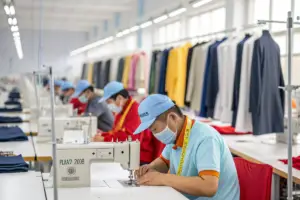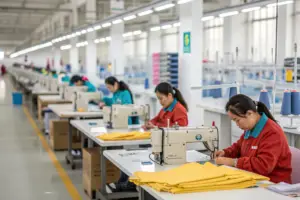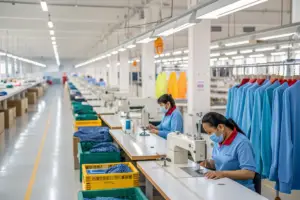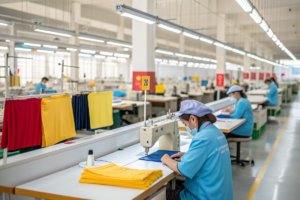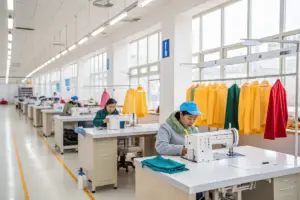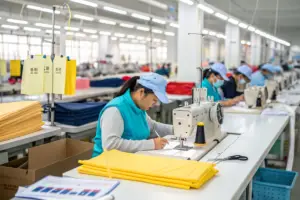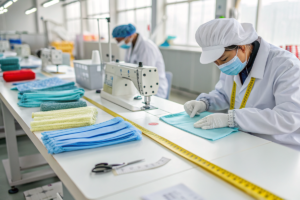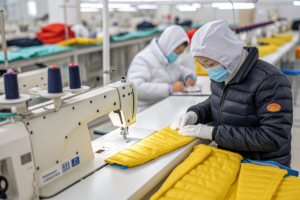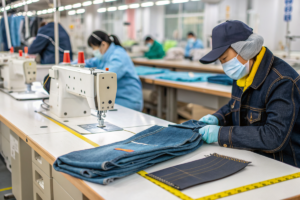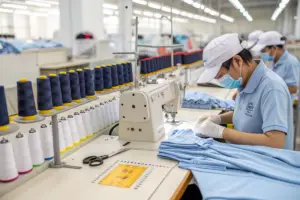
A US distributor I work with closely once told me something that has stayed with me for years. He said, "I do not sell coats. I sell certainty." His retail accounts, the boutiques and department stores he supplies, do not tolerate surprises. They do not tolerate late deliveries. They do not tolerate inconsistent sizing. They do not tolerate logos that look different from the approved sample. His entire business is built on the promise that the product in the carton will match the product in the lookbook, every single time, across every single unit. He had cycled through six factories in four years before he found Shanghai Fumao. He told me the difference was not the price. The price was competitive with the other factories. The difference was the customization process. At his previous factories, customization was a negotiation. He would request a specific embroidery density, a specific hang tag finish, or a specific fold-and-pack method, and the factory would nod and then do whatever was easiest for their production line. The result was a product that was close to what he ordered, but not exactly what he ordered. For a distributor, close is not good enough. The distributor's brand customers hold the distributor accountable for every detail. A distributor that delivers close instead of exact loses accounts.
US distributors prefer Fumao's customization services because we treat customization not as an accommodation but as our core production model. Every order we produce is customized to the client's specifications. We do not have a house line. We do not push our own designs. We execute the client's design, the client's label, the client's packaging, and the client's quality standards with the same attention to detail that a luxury in-house atelier would provide, but at the scale and efficiency of a specialized Chinese production facility. The five dimensions that distinguish our customization services for distributors are: the depth of customization options available, the responsiveness and accuracy of our client communication, the quality of our sampling and strike-off process, the reliability of our production consistency across large order volumes, and the seamlessness of our DDP logistics that deliver the customized product directly to the distributor's US warehouse without the distributor touching a customs form.
The distributor's business model is built on aggregation. The distributor aggregates the orders of multiple small and mid-sized brands to achieve production volumes that justify factory relationships. The distributor's value proposition to the brand is simple: I can get you better quality and better pricing than you can get on your own because I order in larger quantities. But that value proposition collapses if the factory cannot handle the complexity of multiple brands with different specifications running through the same production facility. The factory that serves distributors well is a factory that is organized for customization at scale. Let me walk through exactly how we do it.
What Customization Options Does Fumao Offer Beyond The Standard Logo And Label?
Most factories define customization as the logo and the label. You send them your artwork, they sew it into the coat, and the coat is customized. For a distributor, that is the starting point, not the full scope. The distributor's brand clients differentiate themselves through product details that go far beyond the brand mark. The fabric composition, the trim selection, the fit block, the packaging format, and the compliance documentation are all points of customization that determine whether a brand's coat sells at full price or ends up on the clearance rack.
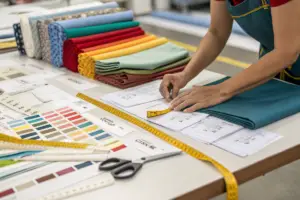
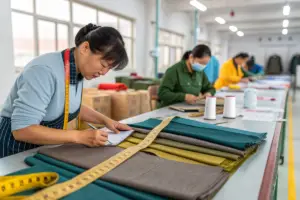
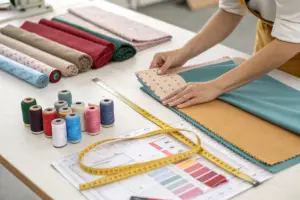
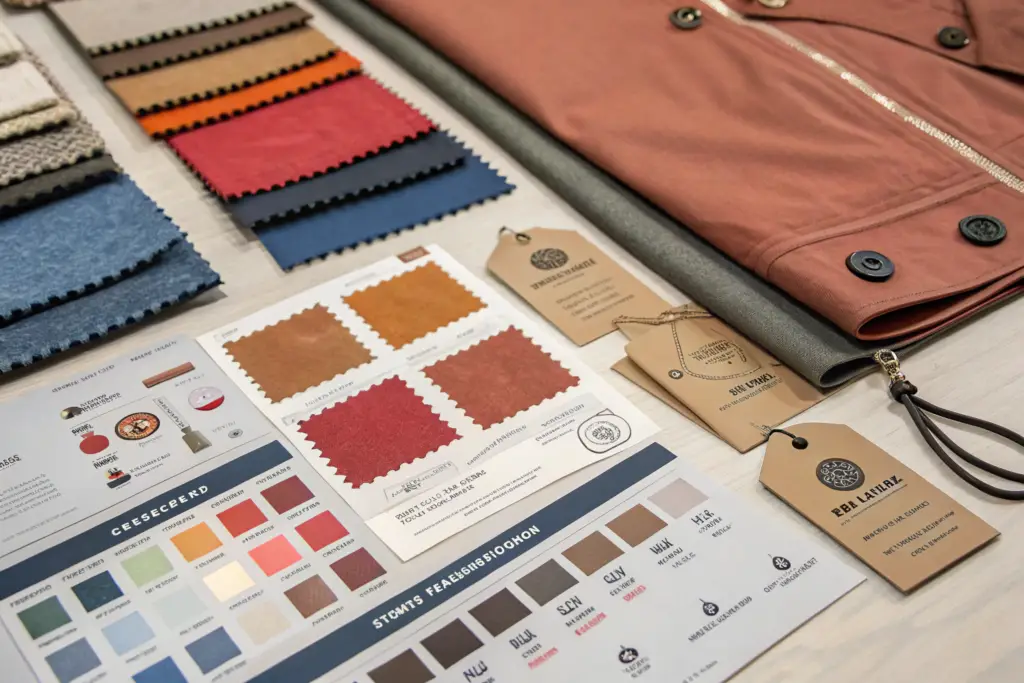
Fumao offers a comprehensive range of customization options that extends across the entire product, from the raw material to the retail-ready packaging. Fabric customization includes custom dye colors matched to Pantone references, custom fabric blends developed with our partner mills, and custom finishes such as peach-skin sueding, crinkle texture, water-repellent coating, and UPF treatment. Trim customization includes custom button designs produced from resin, metal, or horn, custom zipper pulls with branded logos, custom drawcords with branded tips, and custom hang tags and price tickets. Fit customization includes adjustments to our standard size blocks, grade rule modifications to accommodate specific customer demographics, and full custom pattern development from a reference sample or a sketch. Packaging customization includes custom polybag printing, custom carton markings, custom fold-and-pack configurations, and retail-ready packaging with hangers and polybag presentation. At Shanghai Fumao, we manage the entire customization supply chain. We do not ask the distributor to source the custom button from one supplier, the custom zipper from another, and the custom hang tag from a third. We source and coordinate all custom components, and we take responsibility for their quality and their on-time arrival at our production line.
The breadth of customization is what allows the distributor to offer their brand clients a true private label service, not just a logo-on-a-generic-coat service. The brand that can customize the fabric hand feel, the button shape, and the packaging format is offering a product that cannot be easily compared to a competitor's product. The customization creates differentiation, and differentiation supports margin.
How Does Fabric Customization Allow Distributors To Create Exclusive Summer Coat Lines?
Fabric is the largest differentiator in a summer coat. The silhouette can be copied. The color can be approximated. But a custom-developed fabric, with a specific blend, weight, and finish, is extremely difficult for a competitor to replicate quickly. The distributor who offers exclusive fabrics to their brand clients is offering a competitive moat. The brand's coat cannot be knocked off by a fast-fashion competitor next season because the fabric is not available on the open market.
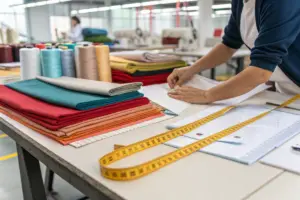
Our fabric customization process for distributors works as follows. The distributor identifies a market gap, a specific hand feel, drape, or performance characteristic that is not well-served by the standard fabric options in the market. The distributor communicates the target fabric specification to our sourcing team, including the desired fiber composition, the weight in GSM, the surface texture, and any functional requirements like wrinkle resistance or UV protection. Our sourcing team works with our partner mills to develop a small batch of lab dips and hand feel samples. The distributor reviews the samples, provides feedback, and we iterate until the fabric meets the specification. Once the fabric is approved, we produce the bulk yardage exclusively for that distributor. We do not show the fabric to other clients, and we do not use it in any other production without the distributor's permission. The exclusive fabric becomes a signature of the distributor's summer coat program. The custom fabric development for fashion brands is a service that most factories do not offer because it requires deep relationships with mills and a willingness to invest time in small-batch development. We offer it because we know it is the foundation of a distributor's product differentiation.
What Trim Customization Options Have The Biggest Impact On Perceived Value?
Trim is the jewelry of the coat. The buttons, the zipper, the drawcord tips, and the hang tag are the tactile touchpoints that the customer interacts with directly. The customer touches the buttons every time she puts the coat on. She sees the zipper every time she looks in the mirror. She reads the hang tag before she makes the purchase decision. The trim communicates quality more immediately than the fabric because the trim is the detail. A coat with generic plastic buttons feels like a commodity. The same coat with custom-engraved horn buttons feels like a specialty item.
The trim customization options that have the biggest impact on perceived value for a summer trench coat are, in order of customer impact, the buttons, the zipper, and the hang tag. Custom buttons can be produced in resin, metal, genuine horn, or corozo nut. A resin button can be molded in a custom shape and color-matched to the coat fabric. A metal button can be engraved with the brand's logo or a custom pattern. Horn and corozo buttons have a natural variation that communicates luxury and authenticity. The cost difference between a generic polyester button at $0.05 per button and a custom resin button at $0.15 per button is $0.50 on a five-button coat. The perceived value increase is far greater than $0.50. The zipper is the most functional trim. A generic zipper that sticks or jams creates a negative experience every time the customer uses it. A YKK or Riri zipper with a custom-branded puller operates smoothly and displays the brand mark with every use. The cost difference is $0.80 to $1.50 per zipper. The hang tag is the silent salesperson. A thick, textured cardstock hang tag with a well-written brand story and a premium finish, matte lamination, spot UV, or foil stamping, communicates that the brand cares about every detail. The cost difference is $0.10 to $0.30 per tag. The garment trim customization for private label brands is the highest-return investment a brand can make in perceived value. The customer cannot see the difference between a $3 seam and a $4 seam, but she can see and feel the difference between a $0.05 button and a $0.50 button.
How Does Fumao's Communication Process Differ From Other Factories?
The most frequent complaint I hear from distributors about their previous factory relationships is not about the product. It is about the communication. Emails that go unanswered for three days. Questions that receive partial answers. Specifications that are acknowledged but not followed. The distributor sends a detailed tech pack with fifteen customization points, and the factory's response addresses ten of them. The other five were either missed or ignored. The distributor then spends three more emails chasing the missing information. The communication overhead consumes the distributor's time and erodes their confidence that the factory will execute the order correctly.
Fumao's communication process is structured around a single-point-of-contact model with standardized response protocols and a digital production file that tracks every customization specification. Each distributor is assigned a dedicated merchandiser who is responsible for that account's communication. The merchandiser is not a sales representative who hands off the order to a different department. The merchandiser manages the order from initial inquiry through delivery, communicating directly with the production floor and the logistics team. The merchandiser responds to all client communications within one business day. If a question requires input from a specialist, the merchandiser acknowledges the question immediately and provides a timeline for the complete answer. At Shanghai Fumao, we document every customization specification in a shared digital production file that the distributor can access to verify that their instructions have been correctly recorded. The file includes the approved fabric swatches, the trim specifications, the label artwork, the measurement charts, the packing instructions, and the delivery schedule. Nothing is communicated verbally and forgotten. Everything is documented and verified.
The communication process is the infrastructure of trust. A distributor who trusts the factory's communication is willing to place larger orders, to commit to longer lead times, and to recommend the factory to their brand clients. The communication process is not a cost center. It is a competitive advantage.

Why Is A Dedicated Merchandiser Critical For Complex Distributor Orders?
A distributor's order is fundamentally different from a single brand's order. A single brand order might include three styles in four sizes and six colors. A distributor's order might include twelve styles across three different brands, each with its own label, its own fit block, its own trim package, and its own packaging requirements. The complexity is not additive. It is multiplicative. Managing this complexity requires a dedicated person who owns the entire order and knows every detail.
A dedicated merchandiser provides continuity. The distributor does not explain their requirements to a new person every time they call the factory. The merchandiser knows the distributor's preferences. The merchandiser knows that Brand A always uses a specific woven label supplier, that Brand B requires a specific fold method for their retail packaging, and that Brand C has a strict tolerance on the chest measurement. This institutional knowledge accumulates over multiple orders and reduces the communication overhead for both parties. The dedicated merchandiser also provides accountability. When a specification is missed, the distributor knows exactly who is responsible and who will fix it. There is no diffusion of responsibility across a faceless production department. The dedicated account management in garment manufacturing is the organizational structure that makes complex customization manageable. It is the difference between a factory that can handle one brand's order well and a factory that can handle ten brands' orders simultaneously without errors.
How Does Fumao Handle The Strike-Off And Approval Process For Multiple Brands Simultaneously?
A distributor managing five brands, each with three styles, each with a logo, a label, and a custom trim, is managing potentially forty-five separate strike-off approvals. The logistics of tracking which brand has approved which strike-off, and which revisions are pending, can overwhelm even a well-organized distributor. The factory's strike-off management system is the distributor's external quality control department.
Our strike-off management process for multi-brand distributor orders is a systematized workflow. When the distributor submits the customization specifications for all brands, our merchandiser creates a strike-off tracker, a shared spreadsheet or a cloud-based document that lists every required strike-off, organized by brand, by style, and by component. Each strike-off has a status: requested, in production, shipped to client, approved, or revision requested. The merchandiser updates the tracker in real time as strike-offs are produced and shipped. The distributor can see the status of every strike-off at a glance. When a strike-off is shipped, we include a cover sheet that identifies the brand, the style, the component, and the specification reference number. The distributor receives the strike-off, evaluates it, and responds with approval or revision instructions. The revision instructions are documented in the tracker and communicated to the production team. No verbal approvals are accepted. Every approval must be in writing, either by email or by a signed approval form. This system ensures that no strike-off falls through the cracks and that every component in the bulk production has a documented, approved reference standard. The sample approval workflow for multi-brand apparel production is a critical control point. A single unapproved strike-off can result in a production batch with the wrong logo or the wrong trim, which is a costly error for both the distributor and the factory.
How Does Fumao Ensure Consistency Across Large Production Runs For Distributors?
The distributor's order is large. A distributor placing an order for 8,000 coats across five brands is placing an order that will run on multiple production lines, over multiple weeks, with multiple batches of fabric and trims. The risk of inconsistency across the production run is high. The 1,000th coat produced must be identical to the 1st coat produced, even if they were sewn by different operators on different days using fabric from different dye lots. The distributor's brand clients will compare the coats they receive, and they will notice any variation. A variation in the shade of the fabric, the placement of the logo, or the fit of the sleeve is a quality complaint that the distributor must resolve.
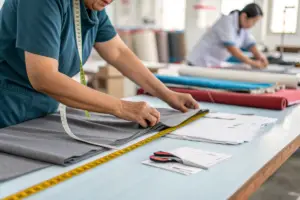
Fumao ensures consistency across large production runs by implementing a four-part consistency control system. First, we pre-qualify all raw materials by testing the bulk fabric and trims against the approved reference standards before they are released to the cutting room. A bulk dye lot that does not match the approved lab dip within a Delta E of 1.0 is rejected. Second, we use fixed production jigs and templates for all logo placements, label attachments, and critical sewing operations. The operator does not measure the placement each time. The jig ensures the placement is identical every time. Third, we conduct hourly inline inspections that compare the production output against the approved reference sample and the sealed strike-off. The inspector checks the first five units off each line and then a random sample every hour. Fourth, we perform a final audit on a statistically valid random sample of the finished goods, using the AQL 2.5 standard, with additional scrutiny on the customization points that are brand-specific. At Shanghai Fumao, our consistency system is the reason distributors trust us with their largest orders.
Consistency is not achieved by telling the operators to be careful. It is achieved by engineering the production process so that the correct outcome is the easiest outcome for the operator to produce. The jigs, the templates, the reference standards, and the inspection checkpoints are the engineering controls that produce consistency.

What Is A "Golden Sample" And How Does It Serve As The Production Standard?
The golden sample is the single physical garment that the distributor has approved as the perfect representation of the product. It is the reference standard for every quality dimension: the fabric, the color, the fit, the construction, the trim, the logo, and the packaging. Every coat in the bulk production run should be a faithful reproduction of the golden sample. The golden sample is not the same as the fit sample or the pre-production sample. The fit sample checks the pattern and the silhouette. The pre-production sample checks the bulk production readiness. The golden sample is the final, fully approved sample that incorporates all the feedback from all the previous sample stages. It is the definitive version of the product.
The golden sample is sealed in a clear polybag and signed by both the distributor's representative and the factory's production manager. The signed seal indicates that both parties agree that this specific garment is the standard to which the bulk production will be held. The golden sample is stored in the factory's quality control department, not on the production floor. The QC inspectors use the golden sample as their reference during inline and final inspections. If a bulk unit deviates from the golden sample in any material respect, the unit is rejected. The golden sample also serves as the legal reference in the event of a quality dispute. If the distributor claims the bulk production is not as specified, the golden sample is the evidence that determines whether the claim is valid. The golden sample protocol in garment manufacturing is the foundation of objective quality control. Every distributor should insist on a golden sample for every style, and every factory should maintain the golden sample in a secure, controlled environment.
How Does The Inline QC Process Catch Customization Errors Before The Run Is Complete?
The inline QC process is the real-time quality check that occurs while production is running. Unlike the final inspection, which occurs after all the units are produced and packed, the inline inspection catches errors while there is still time to correct them without reworking the entire production batch. A customization error caught at unit 50 can be fixed by adjusting the machine setting and reworking 50 units. A customization error caught at unit 3,000 requires reworking 3,000 units, which is a logistical and financial disaster.
Our inline QC process for customized orders includes specific checkpoints for the customization elements. At the start of each production run, the line supervisor and the QC inspector review the customization specifications in the digital production file. They verify that the correct labels, the correct threads, the correct buttons, and the correct hang tags are loaded at the workstation. The first five units off the line are fully inspected against the golden sample. If any customization element is incorrect, the line is stopped, the error is corrected, and the first five units are re-inspected. Once the first five units are approved, the line runs at full speed. The QC inspector then checks a random sample of 10 units every hour. The inspector checks the logo placement, the label attachment, the trim quality, and the packaging. If a defect is found, the inspector increases the sampling frequency to determine whether the defect is an isolated occurrence or a systematic problem. If the defect is systematic, the line is stopped and the root cause is identified and corrected. The inline quality control procedures in apparel manufacturing are the most effective method for preventing large-scale quality failures. The cost of stopping a line for one hour is a fraction of the cost of reworking 3,000 defective units.
Why Is The DDP Model Essential For Distributors Managing Multiple Brand Clients?
The distributor's logistical complexity is a multiple of their brand complexity. Each brand has its own delivery destination, its own delivery window, and its own compliance requirements. The distributor who manages the logistics for five brands on FOB terms is managing five separate freight forwarders, five separate customs brokers, five separate sets of customs documentation, and five separate delivery schedules. The administrative overhead consumes the distributor's time and creates multiple points of potential failure.
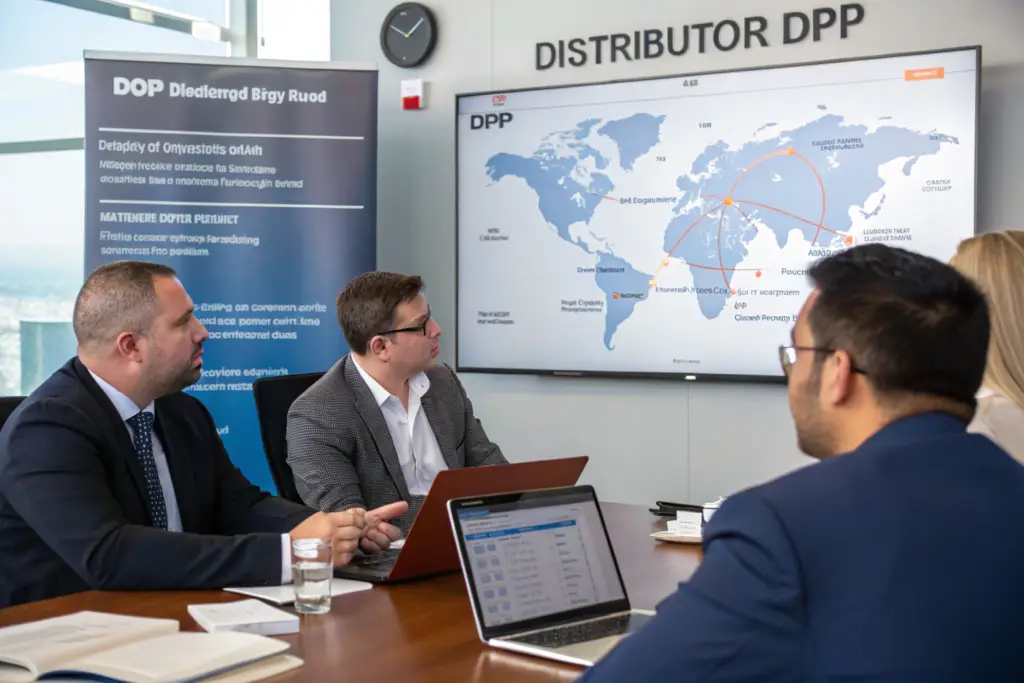
The DDP model is essential for distributors managing multiple brand clients because it consolidates the entire logistics chain for all brands under a single accountable entity. Fumao handles the freight, the customs clearance, the duty payment, and the delivery to each brand's specified warehouse. The distributor provides us with the delivery addresses and the delivery windows for each brand's portion of the order. We handle the rest. The distributor receives a single DDP invoice that covers the entire multi-brand order, with a breakdown by brand for their internal accounting. The distributor does not coordinate with forwarders. The distributor does not file ISFs. The distributor does not manage customs exams. The distributor does not arrange trucking. At Shanghai Fumao, our DDP service for distributors is the operational backbone that allows them to scale their brand portfolio without scaling their logistics department.
The DDP model for distributors is not just a convenience. It is a risk management tool. A customs exam on one brand's portion of the shipment does not delay the other brands' deliveries because we deconsolidate and deliver separately. A freight rate spike affects our margin, not the distributor's. A duty classification error is our liability, not the distributor's. The distributor's brand clients receive their coats on time and in full, and the distributor's reputation for reliability is strengthened.
How Does Fumao Handle Split Deliveries To Different US Warehouses For One Distributor Order?
A distributor order often includes multiple brands with different warehouse locations. Brand A's inventory goes to a 3PL in Dallas. Brand B's inventory goes to the brand's own warehouse in Chicago. Brand C's inventory goes to a fulfillment center in New Jersey. The distributor places a single production order with us, but the delivery is split across three destinations. Managing this split delivery on FOB terms requires the distributor to coordinate three separate trucking arrangements from the port of entry, or to receive the entire container at one location and then cross-ship the individual brand allocations, incurring double handling and additional freight costs.
Under our DDP model, we handle the split delivery at origin. When the production order is packed, we allocate the units by brand and by destination. The cartons for each brand are marked with the brand's delivery address and are consolidated into the master container or the master air waybill. The container ships to the US port of entry. Our customs broker clears the entire shipment as a single entry, with the individual brand deliveries documented on the entry. After clearance, the container is deconsolidated at a bonded warehouse or a container freight station. The individual brand shipments are then delivered to their respective destinations by our contracted trucking partners. The distributor receives a delivery confirmation for each brand's portion, and we invoice the distributor for the single DDP amount. The complexity of the split delivery is invisible to the distributor and to the distributor's brand clients. The split shipment logistics for multi-brand apparel orders is a value-added service that most factories do not offer. We offer it because we understand the distributor's operational reality.
How Does DDP Customs Clearance Protect The Distributor's Relationship With Their Brand Clients?
The distributor's most valuable asset is their relationship with their brand clients. The brand client trusts the distributor to deliver product that is compliant, properly labeled, and ready to sell. A customs problem, a seizure, a penalty, or a labeling rejection, damages the distributor's relationship with the brand, even if the distributor was not personally at fault. The brand client chose the distributor to manage the sourcing complexity, and the brand expects the distributor to deliver without drama.
DDP customs clearance protects the distributor's brand relationships by transferring the customs liability to the factory. Under DDP, Fumao is the Importer of Record for the US customs entry. If there is a classification error, a valuation dispute, or a labeling compliance issue, CBP addresses the issue to Fumao, not to the distributor and not to the brand client. The distributor's name and the brand's name do not appear on the entry as the responsible parties. This liability shield is particularly valuable for distributors who are building their business and cannot afford a customs penalty or a shipment seizure on their compliance record. A clean compliance record is essential for the distributor's ability to obtain customs bonds, to qualify for trusted trader programs, and to attract larger brand clients who conduct vendor compliance audits. The customs liability transfer under DDP Incoterms is a structural advantage of the DDP model that is often overlooked in the price comparison between FOB and DDP. The liability protection is worth far more than the DDP premium.
Conclusion
US distributors prefer Fumao's customization services because we have built our factory operations around the specific needs of the distributor business model. We understand that a distributor is not a single brand with a single set of specifications. A distributor is a portfolio of brands, each with its own identity, its own quality standards, its own fit preferences, and its own customer expectations. The factory that serves a distributor must be organized to manage this complexity without errors, without delays, and without the distributor having to micromanage every detail.
The five capabilities that distinguish our customization services are the depth of the customization options, from fabric development to packaging design. The communication process, with a dedicated merchandiser and a documented digital production file. The sampling and strike-off management system, with a multi-brand tracker that ensures every component is approved before production. The production consistency control, with golden samples, inline inspections, and final audits that ensure every coat matches the approved standard. And the DDP logistics service, with split delivery capability and customs liability transfer that protect the distributor's operations and the distributor's brand relationships.
At Shanghai Fumao, we have invested in these capabilities because we want to be the factory that distributors trust with their most complex, highest-volume orders. We want to be the factory that the distributor recommends to their most demanding brand clients. We want to be the factory that grows with the distributor as their business scales. A distributor who switches factories every season to save $0.50 per unit is a distributor who is not building a reliable supply chain. A distributor who partners with a factory that understands their business is a distributor who is building an asset that appreciates over time.
If you are a US distributor managing multiple apparel brands and you are looking for a factory partner that can handle the customization complexity of your portfolio, contact our Business Director, Elaine, at elaine@fumaoclothing.com. Tell her about your brand portfolio, your typical order volumes, and the customization requirements that your current factory struggles to execute. She will discuss how our multi-brand production model and our DDP logistics can simplify your operations and strengthen your brand relationships. Because a distributor's business is built on the trust of their brand clients, and our factory is built to help you earn and keep that trust.