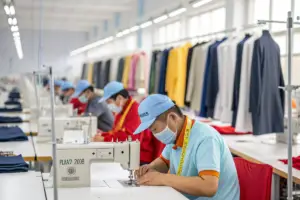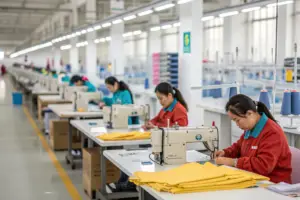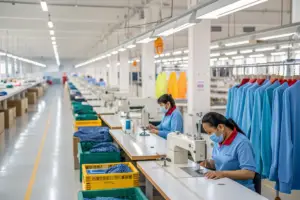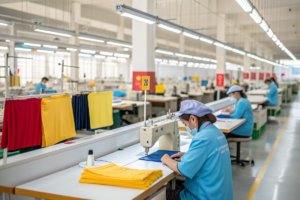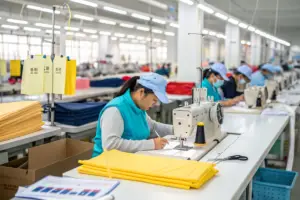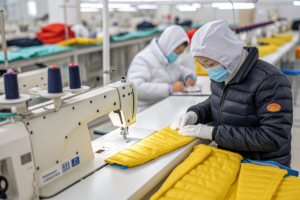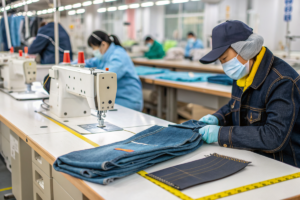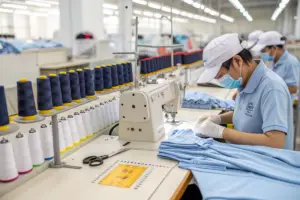
A client of mine started her brand with $28,000 in savings and a single style: a lightweight, unlined linen-blend duster coat. She had no fashion background. She had no retail connections. What she had was a clear market gap. Department stores were selling similar coats for $148 to $198, but the fabric quality was mediocre and the fit was generic. She worked with us at Shanghai Fumao to develop a private label coat with a better fabric, a more flattering fit, and a distinctive brand identity. Her landed cost per unit was $16.80 on DDP terms. Her wholesale price was $49. Her retail price on her own website was $98. She sold 1,200 units in her first season. Her gross profit was $38,640. By her third season, she was selling 4,500 units per season across four styles, and she had left her corporate job. The private label summer coat is not a get-rich-quick scheme. It is a legitimate, high-margin business model for brand owners who understand the unit economics, the market positioning, and the operational execution required.
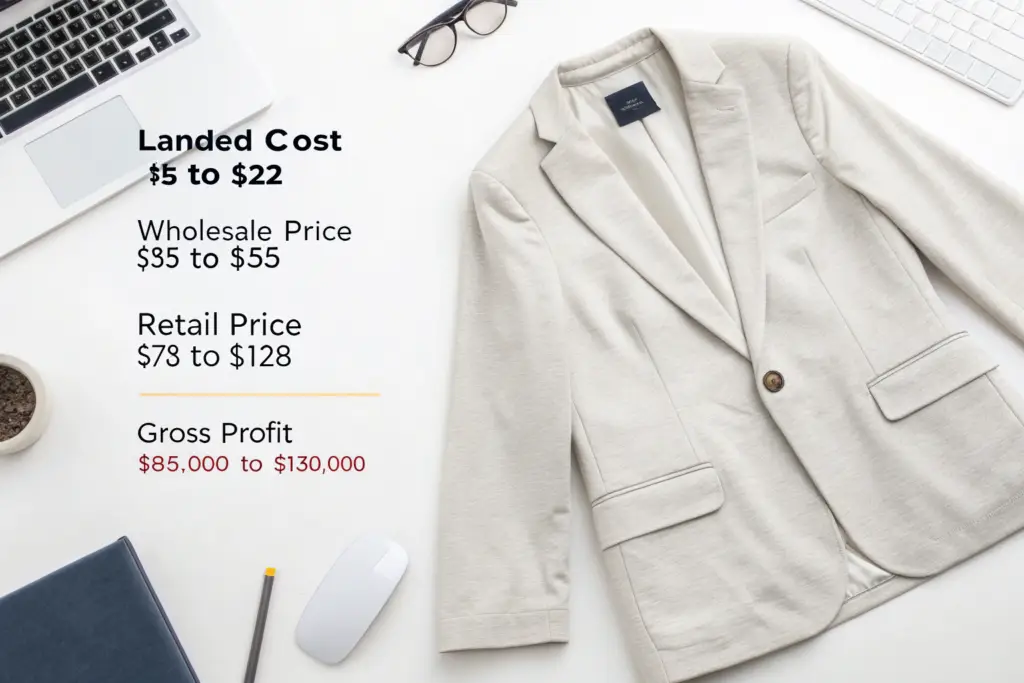
The profit potential of private label summer coats is driven by the substantial gap between the landed cost of a well-made coat from a specialized factory and the retail price that a branded coat commands in the US market. A lightweight summer blazer with a landed cost of $15 to $22 can wholesale at $35 to $55 and retail at $78 to $128. At 3,000 units per season across three styles, a brand generating a 55% to 65% gross margin on wholesale revenue can produce a gross profit of $85,000 to $130,000 per season. The margin structure is sustainable because the private label brand controls the pricing, the distribution, and the customer relationship. The brand is not competing on price with generic unbranded coats. It is competing on brand value, design differentiation, and quality perception. At Shanghai Fumao, we support our private label clients by providing the production quality, the labeling compliance, and the DDP logistics that enable them to position their coats at the premium end of their market segment.
The private label model is not about slapping a logo on a generic factory sample and selling it at a slight markup. That is a commodity strategy with commodity margins. The profitable private label model is about creating a brand that customers seek out, that wholesale accounts want on their floor, and that commands a price premium over the unbranded alternatives. Let me walk through the unit economics, the pricing strategies, the volume thresholds, and the scaling path that turns a private label summer coat from a side project into a full-time business.
What Are The Unit Economics Of A Private Label Summer Coat?
The unit economics are the foundation of the business. If the numbers do not work at the unit level, they will not work at any volume. The unit economics for a private label summer coat are calculated by starting with the landed cost, which includes the FOB production cost plus all logistics and duty costs to deliver the coat to the brand's warehouse under DDP terms. From the landed cost, the brand builds the wholesale price and the retail price, accounting for the wholesale discount, the direct-to-consumer selling costs, and the desired profit margin.
The unit economics of a private label summer coat typically follow this structure. The FOB production cost for a mid-complexity summer blazer in a quality fabric, linen, cotton-linen blend, or Tencel twill, from a specialized factory like Shanghai Fumao, is $12 to $18 per unit for orders of 500 to 3,000 units per style. The DDP logistics cost, including ocean freight, insurance, US duty, customs clearance, and delivery to the brand's US warehouse, adds $2.50 to $4.50 per unit, depending on the order volume and the destination. The total landed cost is $14.50 to $22.50. The wholesale price is typically 2.5 to 3 times the landed cost, yielding a wholesale price of $36 to $67. The direct-to-consumer retail price is typically 2 to 2.5 times the wholesale price, or 5 to 6 times the landed cost, yielding a retail price of $72 to $135. The gross margin on wholesale revenue is 55% to 65%. The gross margin on DTC revenue is 75% to 82%. The brand's net profit, after marketing, operating expenses, and founder salary, is 15% to 30% of revenue, depending on the sales channel mix and the efficiency of the marketing spend.
These unit economics are attractive because the summer coat category has a high perceived value relative to its production cost. A coat, even a lightweight one, is a substantial garment that the customer expects to pay more for than a t-shirt or a blouse. The brand captures this value premium.
How Should You Calculate Your Landed Cost Per Unit Before Setting Wholesale Prices?
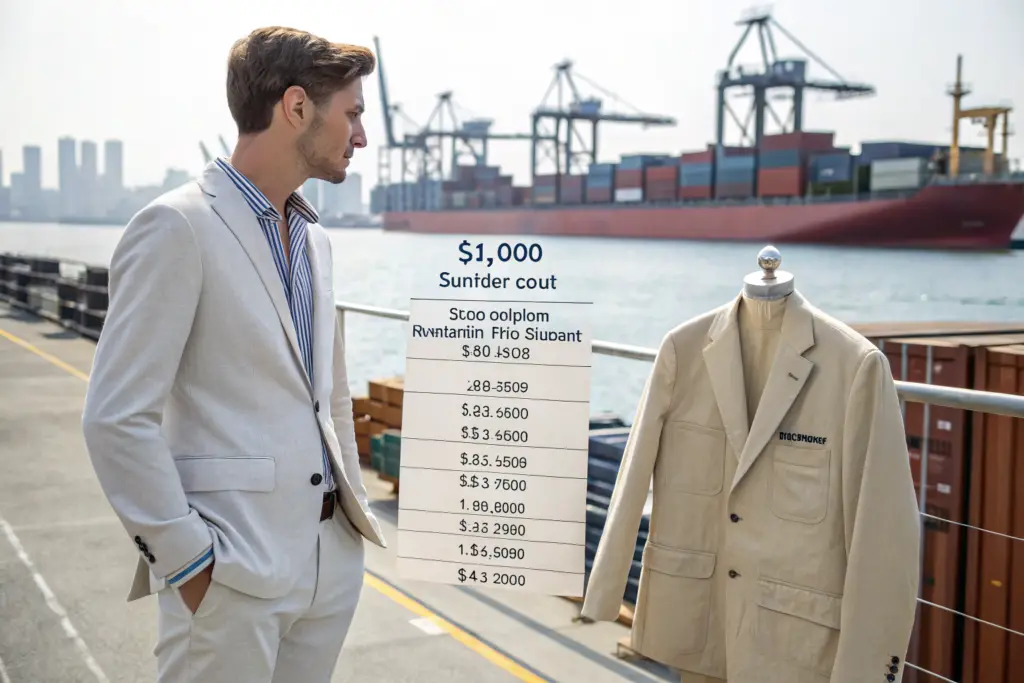
The landed cost is the starting number. If the landed cost is wrong, every subsequent number is wrong. The brand cannot set a wholesale price that delivers a profit if it does not know the true cost of getting the coat into the warehouse. The landed cost calculation was covered in detail in the article on calculating landed cost, but the key principle for private label pricing is that the landed cost must be fully loaded with every cost the brand will incur before the coat is ready to sell.
The fully loaded landed cost includes the FOB price, the ocean or air freight, the marine insurance, the US customs duty, the customs bond, the broker fee, the ISF filing, the port handling, the drayage to the warehouse, the warehousing receiving fee, and the cost of any third-party labeling or repackaging that occurs after delivery. It also includes an allocation for quality control, either the cost of a third-party inspection or the internal cost of the brand's own inspection process. A common mistake is to calculate the landed cost as FOB plus freight plus duty, and forget the $800 in destination charges and the $500 in inspection costs. These forgotten costs add $0.30 to $0.50 per unit on a 3,000-unit order. The brand that ignores them prices its coats $0.50 too low and loses $1,500 of profit on the order. The landed cost calculation for private label apparel should be performed for every style, every season, because the freight rates and the duty rates change. The price list should be updated accordingly.
What Is The Difference Between Wholesale Margin And Direct-To-Consumer Margin?
The wholesale channel and the direct-to-consumer channel have fundamentally different margin structures. The wholesale channel sells the coat to a retailer for the wholesale price. The retailer then sells the coat to the end customer for the retail price. The brand's revenue is the wholesale price. The brand's margin is the wholesale price minus the landed cost, expressed as a percentage of the wholesale price. The brand does not incur the marketing cost, the e-commerce platform fee, the customer service cost, or the returns processing cost for the wholesale units. Those costs are borne by the retailer.
The DTC channel sells the coat directly to the end customer. The brand's revenue is the retail price. The brand's margin is the retail price minus the landed cost, minus the selling costs. The selling costs for DTC include the e-commerce platform transaction fee, 2.9% plus $0.30 per transaction for Shopify, the payment processing fee, the cost of the shipping to the customer, the cost of the packaging materials, the cost of the returns processing, and the marketing cost to acquire the customer. The marketing cost is the largest variable. A brand spending 20% of revenue on digital advertising to acquire a customer has a very different DTC margin than a brand with strong organic traffic. The DTC margin appears higher on a gross basis, 75% to 82% versus 55% to 65% for wholesale, but the net margin after selling costs can be similar or even lower if the marketing spend is inefficient. The wholesale vs DTC margin analysis for fashion brands is a strategic decision that determines the brand's entire business model. The most profitable private label brands typically operate a hybrid model, using wholesale for volume and brand presence, and DTC for margin and customer data.
What Volume Thresholds Unlock Better Pricing From Your Factory?
The factory's pricing is volume-sensitive. The cost per unit drops as the order quantity increases. The drop is not linear. There are specific volume thresholds where the factory can achieve meaningful production efficiencies, and those efficiencies are passed on to the brand in the form of lower FOB prices. Understanding these thresholds allows the brand to plan its order quantities strategically and to negotiate pricing from an informed position.
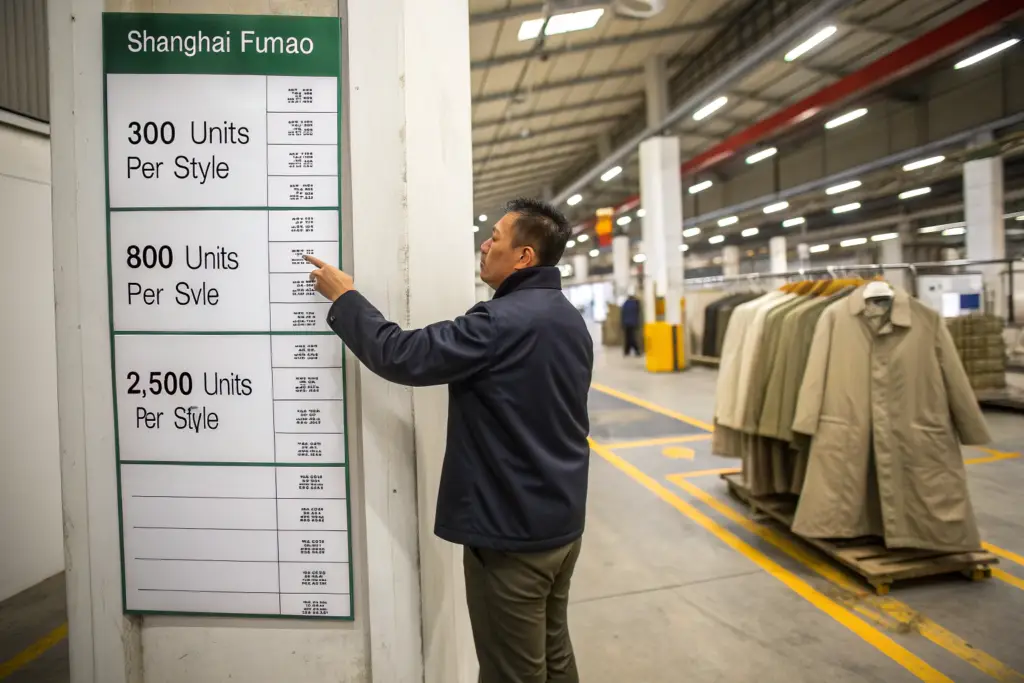
The key volume thresholds for private label summer coat pricing from a 5-line factory like Shanghai Fumao are 300 units per style, 800 units per style, and 2,500 units per style. At 300 units per style, the factory is running a small batch. The fabric is cut in a short lay, the sewing line is set up for a short run, and the set-up time is amortized over a small number of units. The FOB price is at its highest. At 800 units per style, the factory can run a full day's production or more on a single style. The cutting lay is longer, the line set-up is amortized over more units, and the operator efficiency improves as the team learns the style. The FOB price drops by 10% to 15% compared to the 300-unit price. At 2,500 units per style, the factory can run a multi-day continuous production. The fabric can be purchased at a bulk discount. The line achieves peak efficiency. The FOB price drops by another 5% to 10%. Beyond 5,000 units per style, the price reductions are minimal because the factory's production efficiency has reached its maximum. The additional savings come from fabric bulk purchasing, not from production labor.
The brand that understands these thresholds can plan its inventory strategy accordingly. A new style with uncertain demand may start at 300 to 500 units, accepting the higher unit cost as the price of testing the market. A proven core style with consistent sell-through can be ordered at 2,000 to 3,000 units to capture the volume discount.
How Do Fabric Minimum Order Quantities Affect Your Profit Per Unit?
Fabric is the largest component of the FOB cost, typically 50% to 60% of the total. The fabric mill has its own minimum order quantities, which are based on the dyeing vat size, the finishing run length, and the weaving efficiency. A standard MOQ for a custom-dyed woven fabric from a mid-sized Chinese mill is 500 to 1,000 meters per color. At 1.5 meters per coat, 500 meters produces approximately 330 coats. If the brand wants a specific color that requires a custom dye run, the MOQ is driven by the dyeing vat minimum, not by the coat production minimum.
The fabric MOQ creates a cost penalty for small orders. If the brand orders 200 coats in a custom color, the mill still must produce 500 meters of fabric. The brand pays for 500 meters but only uses 300 meters. The excess 200 meters of fabric is waste, unless the factory can use it for another client or the brand commits to using it in a future order. The cost of the excess fabric is loaded onto the 200 coats, increasing the FOB price per unit by 30% to 50%. The brand that works within the mill's MOQ, by ordering at least 330 coats per color, captures the efficient fabric cost. The brand that works below the mill's MOQ pays a steep penalty. The fabric minimum order quantity management is a critical skill for private label brands. The smart brands design their collections around a limited color palette, using the same fabric across multiple styles, to aggregate volume and hit the mill's MOQ without overproducing any single style.
Why Do Multi-Style Orders Improve The Factory's Efficiency And Your Margin?
A multi-style order is an order that includes several different coat styles that share common components. Three styles that use the same fabric, the same lining, and the same buttons are more efficient to produce than three styles with completely different materials. The factory can purchase the fabric in a single larger quantity, capturing the bulk discount. The cutting room can nest the patterns for all three styles together, maximizing the fabric utilization and reducing waste. The sewing lines can run the styles sequentially, with minimal changeover time because the machine settings, the thread colors, and the trim attachments remain the same.
The efficiency improvement from a multi-style order can reduce the FOB price by 8% to 12% compared to producing the same total quantity as three separate orders. The brand captures this saving, improving the gross margin on every unit. The multi-style order also simplifies the brand's inventory management. The common fabric across styles means the brand can reallocate fabric between styles if one style sells better than expected, assuming the factory holds a greige reserve. The production efficiency through style consolidation is a lean manufacturing principle. The brands that design their collections with production efficiency in mind, rather than treating each style as an independent project, earn better pricing and faster production times.
What Marketing Channels Are Most Profitable For Private Label Summer Coats?
The marketing channel strategy determines how efficiently the brand converts its inventory into revenue. A coat with a 75% DTC gross margin that costs $30 in advertising to sell has a 45% net margin after ad spend. A coat with the same gross margin that costs $8 in advertising to sell has a 67% net margin. The marketing channel is the difference between a profitable brand and a struggling one. The most profitable channels for private label summer coats are the channels where the customer acquisition cost is low relative to the average order value.
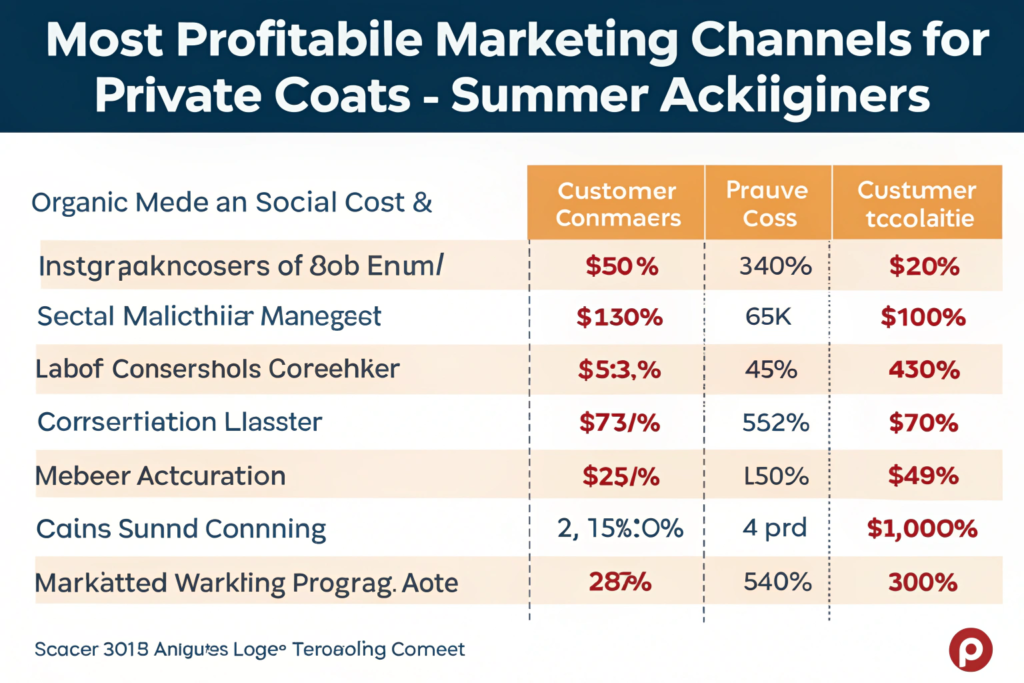
The most profitable marketing channels for private label summer coats, ranked by typical customer acquisition cost efficiency, are organic social media, particularly Instagram and TikTok, where the brand builds an audience through consistent content rather than paid ads. Email marketing to an owned list, where the cost per send is near zero and the conversion rate is the highest of any channel. Wholesale partnerships with boutique retailers, where the retailer absorbs the marketing cost in exchange for the wholesale margin. Influencer collaborations with micro-influencers who have engaged audiences in the brand's target demographic. Paid social media advertising on Meta and TikTok, where the cost per acquisition can be efficient if the creative is strong and the targeting is precise. Marketplace platforms like Amazon and Etsy, where the platform provides the traffic but takes a 15% to 20% commission. The channel mix should evolve as the brand grows. A start-up brand relies on organic social and wholesale. A scaling brand adds paid social and email. A mature brand optimizes across all channels.
The marketing budget should be treated as a cost of goods sold for the DTC channel, not as a discretionary expense. A brand that does not allocate a specific marketing cost per unit sold is not calculating its true DTC margin.
How Does A Wholesale Strategy Reduce Your Customer Acquisition Cost?
The wholesale strategy outsources the customer acquisition cost to the retailer. The brand sells the coat to a boutique for $49. The boutique sells it to the end customer for $98. The boutique pays for the rent, the sales staff, the visual merchandising, the local marketing, and the customer service. The brand's cost to acquire that wholesale customer is the cost of the sales process: the line sheet development, the trade show attendance, the sales rep commission, and the sample production. These costs, amortized over the wholesale order volume, are typically 5% to 10% of the wholesale price, far lower than the 20% to 40% of revenue that a DTC brand spends on digital marketing.
The wholesale channel also provides brand validation and physical presence. A customer who discovers the brand in a well-curated boutique assigns a higher perceived value to the coat than a customer who discovers it through a Facebook ad. The boutique's endorsement is a form of earned credibility. The wholesale channel also provides bulk orders with predictable payment terms, which improves the brand's cash flow and inventory planning. The wholesale distribution strategy for emerging fashion brands is the traditional path to scale in the apparel industry. The brands that combine a wholesale base with a growing DTC channel capture the margin advantage of DTC and the volume and credibility advantage of wholesale.
What Role Does Content Marketing Play In Selling Seasonal Outerwear?
A summer coat is a visual product. The customer needs to see the coat in context, on a body, in a setting that reflects their own lifestyle, to feel the desire to purchase. Content marketing, the creation and distribution of images, videos, and stories that showcase the coat in desirable contexts, is the engine that drives that desire. A well-executed content marketing strategy reduces the reliance on paid advertising by generating organic traffic, social shares, and word-of-mouth referrals.
The content marketing strategy for a summer coat brand should be built around the seasonal use cases of the product. The lightweight duster for the beach vacation. The linen blazer for the summer office. The UV-protective anorak for the hiking trip. The content should show the coat in these settings, styled with complementary pieces, on models who represent the brand's target customer. The content should be distributed across the brand's owned channels, the website, the email list, the Instagram and TikTok accounts, and the brand's wholesale partners, who will use the content in their own marketing. The content should also be optimized for search, with descriptive product page copy that captures the long-tail search terms the customer uses when looking for a summer coat. The content marketing for fashion e-commerce brands is a long-term investment. The content created for one season builds the brand's search authority and social following, which compounds over multiple seasons. The brand that invests in content consistently over two to three years will have a significantly lower customer acquisition cost than a brand that relies entirely on paid advertising.
How Can You Scale A Private Label Coat Brand From A Side Hustle To A Full-Time Business?
The transition from a side hustle to a full-time business is the most difficult phase of the private label journey. The side hustle phase is characterized by one or two styles, small production runs, manual fulfillment from the founder's garage, and a founder who is also the designer, the marketer, the customer service representative, and the bookkeeper. The full-time business phase requires a team, systems, and a reliable supply chain that can deliver consistent quality at scale without the founder's constant intervention.
You scale a private label coat brand from a side hustle to a full-time business by systematizing the three core functions that the founder currently performs manually. First, the supply chain. Transition from small batch orders placed ad hoc to a rolling production calendar with a dedicated factory partner. Implement the greige reserve and split shipment strategies to manage inventory risk without tying up all the brand's cash in finished goods. Second, the fulfillment. Transition from self-fulfillment to a 3PL warehouse that receives the factory's shipments, stores the inventory, and picks, packs, and ships the wholesale and DTC orders. Third, the marketing. Transition from the founder posting on social media to a documented content calendar, a paid advertising budget managed by a specialist or an agency, and an email marketing automation platform that nurtures leads and drives repeat purchases. The founder's role shifts from doing the work to managing the systems and the people who do the work. At Shanghai Fumao, we support our scaling clients by providing the production consistency, the DDP logistics, and the inventory flexibility that allows them to step away from the supply chain and focus on the brand.
The scaling phase requires capital. The brand needs to fund larger production runs, build inventory, hire staff, and invest in marketing. The capital can come from the brand's retained profits, from a small business loan, or from an external investor. The most common path is to reinvest the profits from the first three to five seasons into the business, growing organically. This path is slower but preserves the founder's ownership and control.

When Should You Transition From A Side Hustle To Dedicated 3PL Fulfillment?
The trigger for transitioning to a 3PL is when the fulfillment process consumes so much of the founder's time that it prevents the founder from performing the revenue-generating activities of marketing and sales. A founder who spends 15 hours a week picking, packing, and shipping orders is a founder who is not creating content, not pitching wholesale accounts, and not developing the next season's designs. The business plateaus because the founder is trapped in operations.
The financial threshold for 3PL transition varies by the brand's average order value and the 3PL's fee structure. A typical 3PL charges a receiving fee, a storage fee per cubic foot per month, and a pick and pack fee per order. For a brand shipping 200 to 300 DTC orders per month, the 3PL cost is $3 to $6 per order, plus the storage fee. The brand should compare this cost to the value of the founder's time that would be freed. If the founder values their time at $75 per hour and the 3PL frees 15 hours per week, the weekly value of the freed time is $1,125. The monthly value is $4,500. If the 3PL costs $1,500 per month, the transition generates a $3,000 monthly return in freed founder capacity. The 3PL transition timing for e-commerce brands is not a volume decision. It is a founder bandwidth decision. The transition should occur when the fulfillment work is the bottleneck to growth, not when the volume reaches an arbitrary threshold.
How Does A Reliable Factory Partner Enable Your Brand To Scale Confidently?
Scaling a brand is an act of confidence. The brand owner must place larger production orders, commit to marketing campaigns, and pitch to larger wholesale accounts, all of which require the confidence that the product will arrive on time, in spec, and within budget. A factory that is unreliable, that ships late, that has inconsistent quality, or that surprises the brand with hidden costs, destroys this confidence. The brand owner cannot scale because they cannot trust the supply chain to support the growth.
A reliable factory partner enables confident scaling by providing consistency across three dimensions. Consistent quality means the 3,000th coat produced is the same quality as the 300th coat. The brand can promise a specific quality level to wholesale accounts and know the factory will deliver. Consistent timing means the goods arrive within the agreed delivery window, season after season. The brand can book a launch campaign, schedule a wholesale floor-set, and plan the cash flow around a predictable delivery date. Consistent cost means the DDP price is accurate and does not change after the order is placed. The brand can set wholesale and retail prices that deliver the planned margin without fear of a surprise invoice. This consistency allows the brand owner to focus on growth, not on supply chain firefighting. The supply chain reliability as a growth enabler is well documented. The brands that scale fastest are the brands that have the most reliable supply chains.
Conclusion
The profit potential of private label summer coats is real, substantial, and accessible to brand owners who approach the business with discipline and a clear understanding of the unit economics. A well-made summer coat from a specialized factory can land in the US at $15 to $22 per unit and sell at wholesale for $36 to $67 or at retail for $72 to $135. The margins are attractive. The category has a high perceived value. The seasonal nature of the product creates urgency for the customer and a clear calendar for the brand.
But the profit potential is only realized when the operational execution matches the product quality. The brand must calculate the landed cost accurately, set the wholesale and retail prices to deliver the target margin, manage the inventory to maximize full-price sell-through, and market the coat through a channel mix that balances cost and reach. The brand must work with a factory that provides consistent quality, reliable delivery, and the production flexibility to adjust to demand signals. The brand must build the systems and the team that allow the founder to step out of the daily operations and into the strategic leadership of the business.
At Shanghai Fumao, we are the factory partner that enables private label brands to capture this profit potential. We provide the production quality that supports premium pricing. We provide the DDP logistics that deliver a predictable landed cost. We provide the labeling compliance that clears customs and passes wholesale audits. We provide the greige reserve and split shipment capabilities that allow brands to manage inventory risk and chase the winners. We are not just a vendor. We are the supply chain infrastructure that turns a private label idea into a profitable, scalable business.
If you are exploring the private label summer coat opportunity, or if you have an existing brand and you are looking for a production partner who can support your growth, contact our Business Director, Elaine, at elaine@fumaoclothing.com. Tell her about your brand concept, your target price point, and your volume projections. She will provide a DDP costing for your styles and discuss how our production model can support your profit goals. Because a private label coat is a product, but a private label brand is an asset, and building that asset starts with a factory that treats your business like its own.