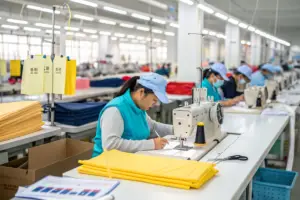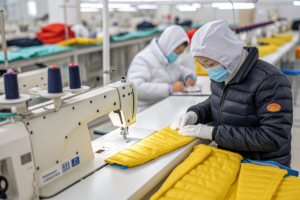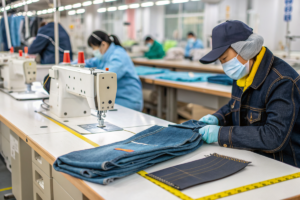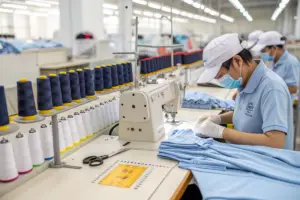
A brand owner from Chicago once shipped 2,500 units of a beautiful lightweight trench coat to a major department store. The coats arrived on time. The quality was flawless. The buyer was thrilled. Then the compliance auditor opened a carton. The care label was missing the RN number. The fiber content label listed "linen" but the actual blend was 70% linen and 30% viscose, which is a different FTC classification. The country of origin marking was printed on a hang tag, not sewn into the neck seam. The entire shipment was rejected. The coats had to be shipped back to the warehouse, relabeled by a third-party service at a cost of $3.80 per unit, and redelivered four weeks later. The brand lost the floor-set window, the buyer canceled half the order, and the relabeling cost plus the markdowns wiped out the season's profit. The problem was not the coat. The problem was the label. In the US market, a label is not a branding element. It is a legal document. Getting it wrong is not a marketing mistake. It is a regulatory violation.
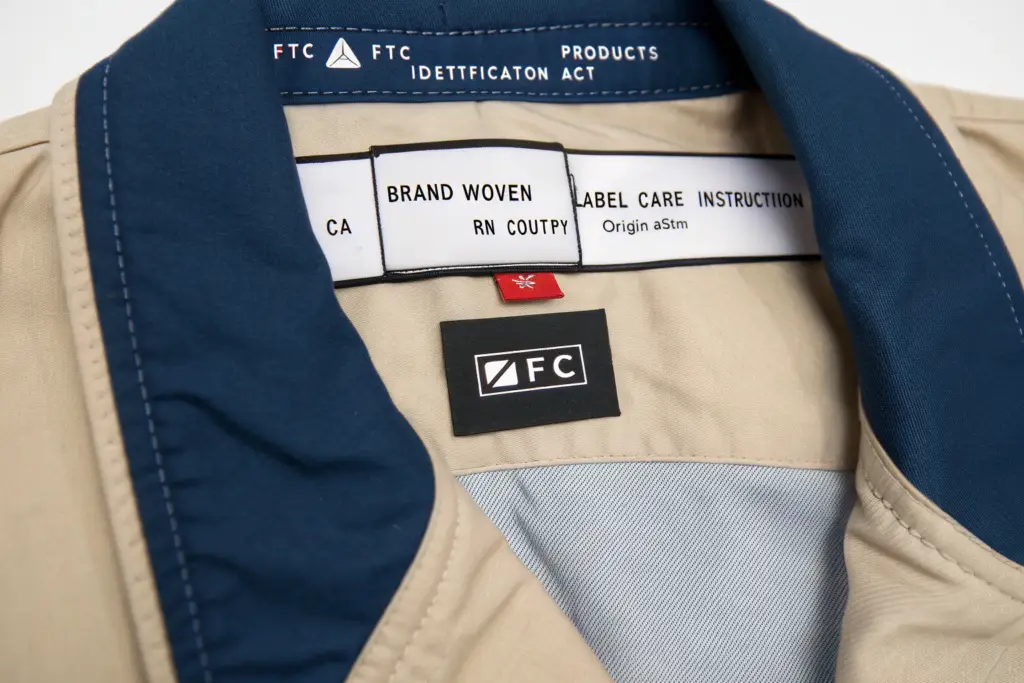
Branding and labeling wholesale summer coats for the US market requires strict compliance with three federal regulations: the FTC Textile Fiber Products Identification Act, the FTC Care Labeling Rule, and the CBP country of origin marking requirements. Beyond compliance, the label is the brand's physical presence on the garment and the primary tool for communicating brand identity, size, care instructions, and fabric quality to the end consumer. A professional label package includes a woven brand label at the back neck or side seam, a fiber content label, a care instruction label with standardized ASTM care symbols, a country of origin label, an RN or CA number, and a hang tag that tells the brand's story. At Shanghai Fumao, we produce and attach all required labels for our DDP clients according to their exact specifications. We maintain a label compliance checklist for every order and verify that each label meets US regulatory standards before the goods leave our factory.
The label is the most regulated component of a garment. The fabric can be almost anything within reason. The design can be anything that sells. But the label must say exactly what the law requires, in exactly the format the law specifies. The brands that treat labeling as an afterthought learn this lesson through chargebacks, rejected shipments, and lost wholesale accounts. The brands that treat labeling as a core production step ship with confidence. Let me walk through every label requirement, the common mistakes that trigger rejections, and the branding strategies that turn a compliance obligation into a customer loyalty tool.
What Are The Mandatory FTC Labeling Requirements For Summer Coats?
The Federal Trade Commission, the FTC, enforces two labeling laws that apply to every textile garment sold in the United States. The Textile Fiber Products Identification Act requires that every garment carry a label disclosing the generic fiber names and the percentage by weight of each fiber in the fabric. The Care Labeling Rule requires that every garment carry a label with clear instructions for how to care for the product, including washing, bleaching, drying, and ironing. These laws apply to manufacturers, importers, and retailers. If your brand's name is on the label, your brand is responsible for the compliance, even if a factory in China made the error.
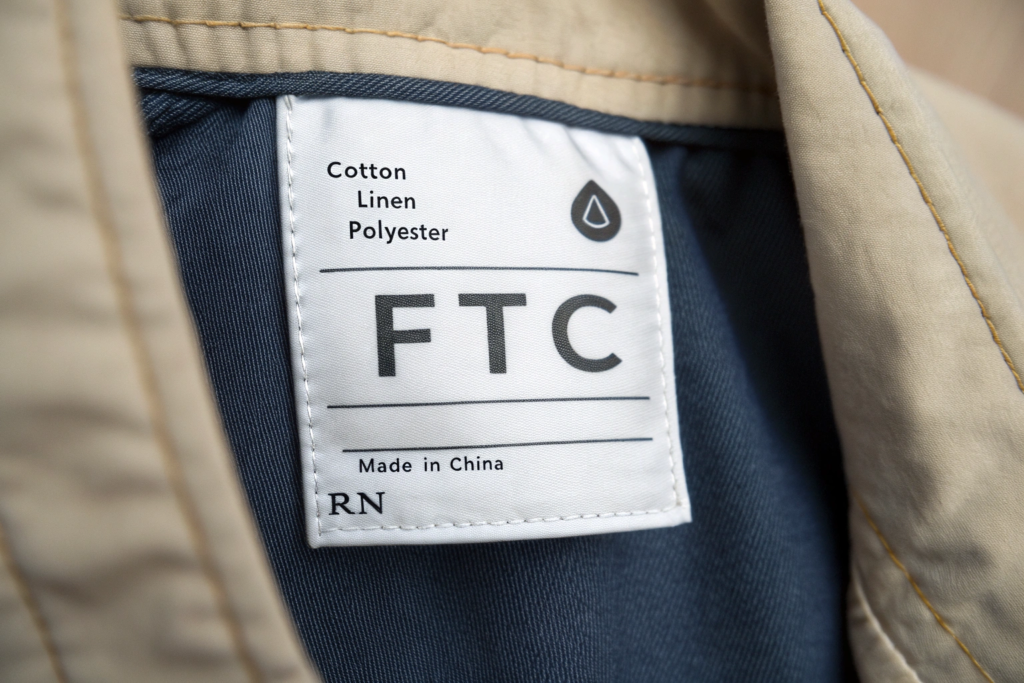
The mandatory FTC labeling requirements for a summer coat are as follows. First, a fiber content label that lists each fiber by its generic name, such as cotton, linen, viscose, polyester, in descending order of percentage by weight. Fibers that account for less than 5% can be listed as "other fiber" unless they have a functional significance, like spandex for stretch. Second, a care instruction label that provides washing, bleaching, drying, and ironing instructions in a clear, readable format. The care label must be permanently attached and remain legible for the life of the garment. Third, the country of origin label must state where the garment was made, such as "Made in China," in a conspicuous location, typically sewn into the neck seam. Fourth, the RN number, the Registered Identification Number issued by the FTC, or the CA number, the Canadian equivalent, must appear on the label if the brand does not want to disclose its full corporate name and address on every garment. At Shanghai Fumao, we print these labels according to the client's specifications and attach them to the garment during production. We verify that every label is present, correctly printed, and securely attached before the goods are packed.
The FTC requirements are not optional. A violation is a deceptive act under Section 5 of the FTC Act. The penalties include fines, product seizures, and mandatory recalls. The requirements apply to every garment, regardless of the price point or the distribution channel.
How Should The Fiber Content Label Be Formatted For A Linen-Viscose Summer Coat?
The fiber content label must be accurate, specific, and formatted according to the FTC's rules. A common mistake is to list the fiber content based on the fabric specification rather than on the tested content of the actual bulk fabric. The mill's spec sheet says 70% linen and 30% viscose, but the actual bulk fabric, tested by an independent lab, is 72% linen, 26% viscose, and 2% polyester. The label must reflect the tested content, not the specification.
The correct format for a 70% linen, 30% viscose summer coat label is "70% Linen, 30% Viscose" with the fibers listed in descending order of percentage. The generic fiber names must be used. "Linen" is correct for flax fiber. "Viscose" is correct for regenerated cellulose fiber. Trade names like "Tencel" can be used in parentheses after the generic name, such as "Lyocell (Tencel)." The fiber percentages must add up to 100%, excluding decorative trim, elastic, and ornamentation that account for less than 15% of the garment's surface area. The label must be clearly legible and permanently attached. A hang tag is not sufficient for the fiber content disclosure. The FTC Textile Fiber Products Identification Act guidelines provide the exact formatting requirements. The fiber content label is the most frequently audited label by both FTC investigators and wholesale compliance teams. A mislabeled fiber content, even if unintentional, is one of the most common reasons for a shipment rejection.
What Care Symbols Are Required And What Do They Mean For Lightweight Fabrics?
The FTC Care Labeling Rule requires that the care label provide complete instructions for at least one safe care method. The label must include instructions for washing, bleaching, drying, and ironing. If the garment cannot be washed, the label must say "Do not wash" or "Dry clean only." The instructions must be accurate. A garment labeled "Machine wash warm" must not shrink, fade, or deteriorate when washed in warm water.
The industry standard for care labels is the ASTM D5489 guide to care symbols, which uses a system of five basic symbols: a washtub for washing, a triangle for bleaching, a square for drying, an iron for ironing, and a circle for dry cleaning. Each symbol is modified with dots for temperature, lines for cycle gentleness, and crosses for "do not." For a lightweight linen-viscose summer coat, a typical care label would show a washtub with one dot, which is 30 degrees Celsius or cold water, and a line underneath, which is the permanent press cycle. The bleaching symbol would be a triangle with a cross through it, indicating "Do not bleach," because chlorine bleach damages viscose. The drying symbol would be a square with a circle inside, which is tumble dry, with one dot, which is low heat. The ironing symbol would be an iron with one dot, which is low temperature, because high heat scorches linen and melts viscose. The dry cleaning symbol would be a circle with a P inside, which indicates dry cleaning in perchloroethylene or petroleum solvent. The care symbols are internationally standardized and understood across languages. The ASTM care labeling symbols guide provides the complete symbol set and the performance requirements that underpin each symbol.
Why Is The Country Of Origin Marking A Customs Compliance Issue?
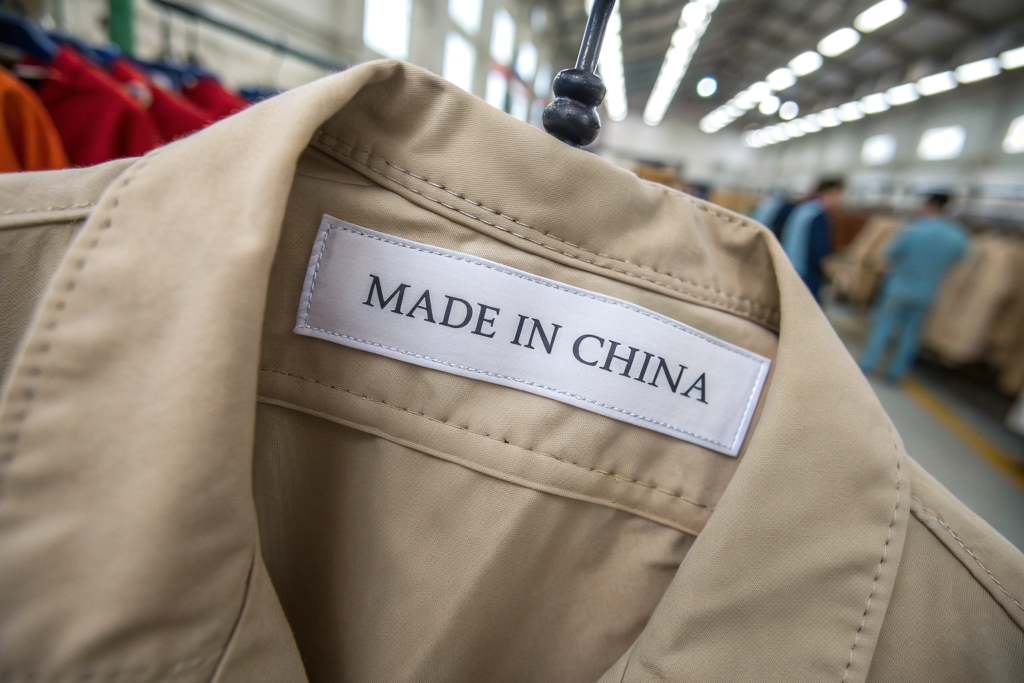
The country of origin marking is not a branding choice. It is a US Customs and Border Protection requirement under 19 USC 1304. Every article of foreign origin imported into the United States must be marked with its country of origin in a conspicuous, legible, and permanent manner. The marking must be visible to the ultimate purchaser, meaning the retail customer. A marking that is hidden on an inside pocket or printed on a removable hang tag is not compliant. The requirement is enforced at the port of entry. A shipment that arrives without proper country of origin markings can be detained, seized, or required to be re-exported at the importer's expense.
The country of origin marking for a summer coat must state the country where the garment was manufactured, such as "Made in China." The marking must be permanently affixed, meaning sewn into a seam or printed on a fabric label that is sewn into the garment. A hang tag is not acceptable as the sole country of origin marking. The marking must be in English and must be conspicuous, meaning the consumer can find it and read it without difficulty. The standard placement for an outerwear garment is a woven label sewn into the back neck seam or the side seam. The marking must survive the normal use and care of the garment. At Shanghai Fumao, we sew the country of origin label into every garment as part of the production process. We verify that the marking is present, correct, and securely attached during our inline and final inspections.
The country of origin marking is often the first thing a CBP officer checks during a physical examination. A missing or inadequate marking is grounds for a customs hold. The hold delays the shipment, incurs demurrage and exam fees, and can cause the brand to miss the selling window. The cost of a proper sewn-in label is less than five cents per unit. The cost of a customs hold is thousands of dollars.
What Is The Difference Between "Made In China" And "Assembled In The USA" For Labeling?
The distinction between "Made in China" and "Assembled in the USA" is determined by the FTC's Made in USA standard and the CBP's substantial transformation test. A garment that is fully manufactured in China, from fabric weaving to cutting to sewing to finishing, must be labeled "Made in China." A garment that is cut and sewn in the United States from fabric woven in China is a more complex determination.
For a summer coat to be labeled "Made in the USA," the garment must be "all or virtually all" made in the United States, meaning all significant parts and processing are of US origin and the final assembly or processing takes place in the US. A coat sewn in the US from imported fabric cannot be labeled "Made in the USA" because the fabric is a significant part and it is not of US origin. The correct label would be "Made in China of US fabric" or "Assembled in the USA of imported fabric," depending on the specific circumstances. The FTC requires that qualified claims like "Assembled in the USA" clearly disclose the foreign origin of the components. The FTC Made in USA labeling rule is enforced against deceptive claims. A brand that labels a garment "Made in the USA" when the coat was actually sewn in China with US-designed labels is committing a clear violation. The penalties are severe and the reputational damage is worse.
How Should The Country Of Origin Be Displayed On The Packaging Versus The Garment?
The CBP requirement is that the country of origin marking be on the garment itself, not just on the packaging. The logic is that the packaging is removed and discarded, and the ultimate purchaser must still be able to identify the country of origin. There are exceptions for certain products that cannot be marked, but apparel is not one of them.
The packaging can carry the country of origin as a supplementary marking, but it cannot replace the garment marking. A polybag printed with "Made in China" is a nice addition, but it does not satisfy the legal requirement if the garment inside is unmarked. The carton marking is also a CBP requirement for the entry process, but it is not a substitute for the individual garment marking. The carton must be marked with the country of origin, the quantity, and the gross weight, but this marking is for CBP's use at the port, not for the ultimate purchaser. The brand should ensure that every garment has its own sewn-in country of origin label. The CBP country of origin marking requirements are detailed and strictly enforced. The compliance approach is simple: sew a permanent label into every garment. Do not rely on hang tags, stickers, or package printing. The sewn-in label is the gold standard that survives any CBP examination.
How Can Your Brand Label And Hang Tag Build Customer Loyalty?
The compliance labels are mandatory. The brand label and the hang tag are optional from a regulatory perspective, but they are essential from a business perspective. The brand label is the physical signature on the garment. It tells the customer who made the coat and communicates the brand's identity. The hang tag is the brand's salesperson on the retail rack. It tells the customer why the coat is special, what makes it worth the price, and why they should choose this brand over the one next to it. A professional label and hang tag package can increase the perceived value of a summer coat by 20% to 30% compared to a generic presentation.
Your brand label and hang tag build customer loyalty by creating a consistent, memorable brand experience at the point of purchase and every time the customer wears the coat. The brand label should be a woven label with the brand's logo or wordmark, attached at the back neck or side seam. A high-density woven label with fine detail signals quality. A printed satin label signals economy. The hang tag should be a thick, textured cardstock with a well-written brand story, a clear description of the coat's unique features, and a QR code that links to the brand's website or social media. The hang tag should also include the retail price, the size, and the care instructions in a condensed format for the customer's reference. At Shanghai Fumao, we source and attach brand labels and hang tags according to our clients' specifications. We can replicate an existing label design or work with the client's graphic designer to produce a new label package.
The label and hang tag are not an afterthought. They are part of the product. A beautiful coat with a cheap, crooked, or missing brand label feels incomplete. A coat with a luxurious, well-designed label feels intentional and valuable.
What Information Should Your Hang Tag Include To Drive Repeat Purchases?
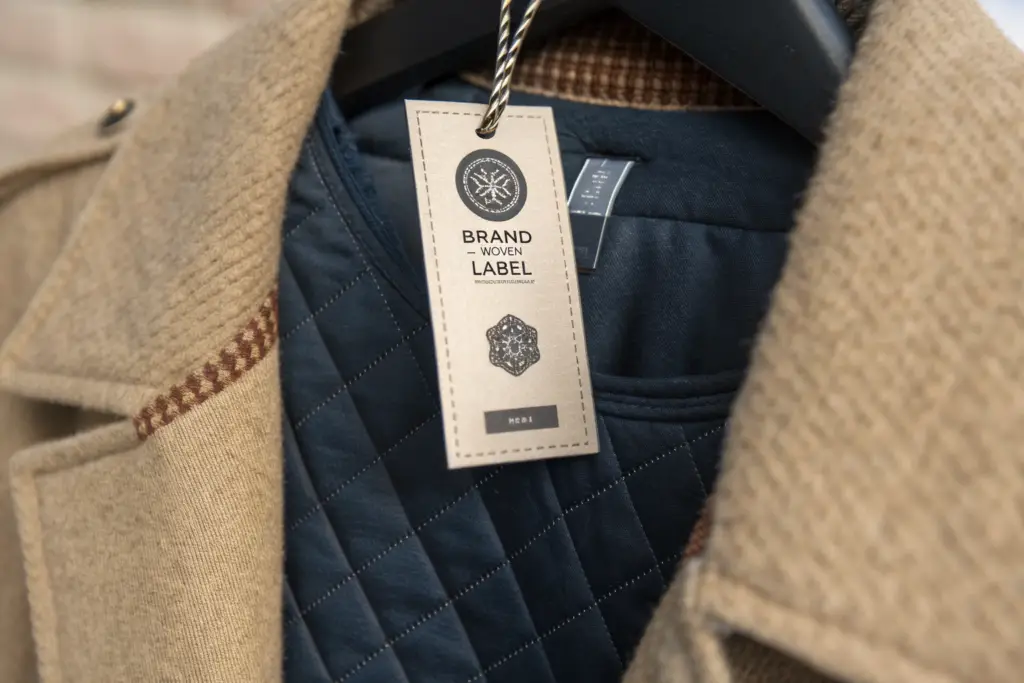
The hang tag is prime real estate. It is the one piece of marketing material that every customer sees and touches. The information on the hang tag should be designed to answer three questions in the customer's mind. Why should I buy this coat? Why should I buy it from this brand? How do I buy more from this brand?
A hang tag that drives repeat purchases includes these elements. The brand name and logo, prominently displayed at the top. A one-line brand tagline that captures the brand's positioning, such as "Conscious Luxury for Warm Weather" or "Engineered for the Urban Summer." A bullet-point list of the coat's key features that justify the price and differentiate the product from alternatives. Features like "UPF 50+ sun protection," "Packable into its own pocket," or "Made from 100% traceable European linen" give the customer reasons to believe. A QR code that links to the brand's website, specifically to a landing page where the customer can see the full collection, sign up for the email list, or receive a first-purchase discount on their next order. The size, the color name, and the retail price. A brief care instruction summary that tells the customer how to maintain the coat without having to find the internal care label. The hang tag should be printed on high-quality cardstock with a texture or finish that matches the brand's aesthetic. A matte lamination with a soft-touch coating feels premium. A glossy finish feels mass-market. The hang tag design for fashion brands is a specialized design discipline. The tag should be beautiful, informative, and functional. It should make the customer feel good about the purchase and give them a clear path to buy again.
How Do You Choose Between A Woven Label, A Printed Label, And A Heat Transfer Label?
The brand label type affects the garment's perceived quality, durability, and cost. A woven label is made by weaving threads together to create the design. It is the most durable and the most premium option. The detail level is high. The colors are vibrant. The label has a tactile, three-dimensional quality that feels substantial. A woven label is the standard for premium and luxury outerwear.
A printed label is made by printing the design onto a fabric substrate, typically satin or cotton. The detail level can be very high, including photographic images and gradients that are not possible with weaving. The label is flat and smooth, without the texture of a woven label. It is less durable than a woven label and can fade or crack with repeated washing. A printed label is the standard for mid-market and contemporary brands. A heat transfer label is a design that is heat-pressed directly onto the fabric of the garment, eliminating the need for a separate label piece. It is the least expensive option and the least intrusive, creating a smooth, tagless finish. It is common in activewear and basics. For a summer coat, a heat transfer label can work for the care and content information on an interior side seam, but it is not suitable for the exterior brand label because it lacks the premium tactile quality. The choice depends on the brand's positioning and the coat's price point. A $198 summer blazer should have a woven brand label. A $48 beach cover-up can use a printed label. The garment label types and applications should be specified in the tech pack. The factory needs to know the label type, the dimensions, the attachment location, and the artwork file before production begins.
What Are The Most Common Labeling Mistakes That Trigger US Customs Rejection?
US Customs and Border Protection examines imported garments for labeling compliance. The examination is not a cursory glance. A CBP import specialist will open the carton, remove a garment, inspect every label, and compare the information on the labels to the information on the commercial invoice and the entry summary. A discrepancy is a violation. A violation triggers a hold, a penalty, or a seizure.
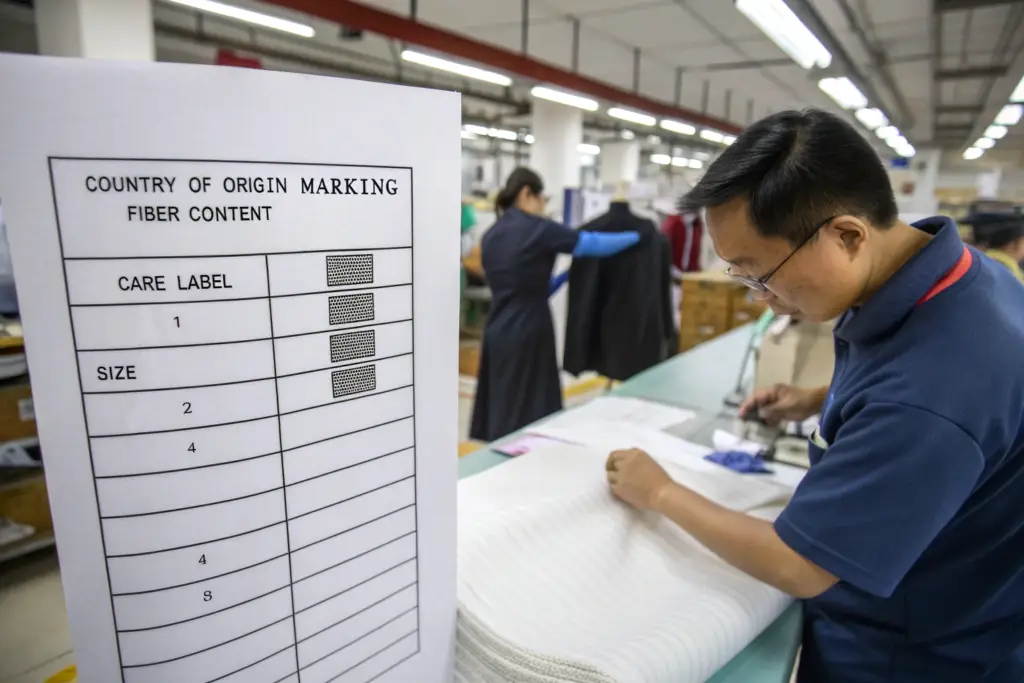
The most common labeling mistakes that trigger US Customs rejection are a missing country of origin marking, a country of origin marking that is on a hang tag instead of sewn into the garment, a fiber content label that does not match the fiber content declared on the commercial invoice, a care label that is missing or illegible, and a size label that is not in US standard sizing or does not match the size declared on the packing list. Each of these mistakes is preventable with a systematic label compliance check during the production and packing process. At Shanghai Fumao, we conduct a label compliance audit on every order before shipment. Our QC team checks every label type on every garment against a compliance checklist that mirrors the CBP import specialist's examination protocol.
The labeling mistakes that trigger a rejection are not complex legal interpretations. They are simple errors of omission or mismatch. A factory that does not understand US labeling requirements is the source of these errors. A factory that specializes in US-bound production and has a documented label compliance process is the solution.
Why Does A Mismatched Fiber Content Label And Commercial Invoice Cause A Hold?
The commercial invoice and the customs entry summary declare the fiber content of the imported garments to CBP. The declaration is used to classify the goods under the correct HTS code and to determine the applicable duty rate. A cotton coat and a polyester coat have different HTS codes and different duty rates. If the commercial invoice says the coat is 100% cotton, but the label sewn into the coat says 70% cotton and 30% polyester, there is a discrepancy. The discrepancy can be interpreted by CBP as an attempt to misclassify the goods to obtain a lower duty rate, which is customs fraud.
Even if the discrepancy is an innocent error, CBP will hold the shipment until the error is resolved. The resolution process requires the importer, which is the factory under a DDP shipment, to provide documentation explaining the discrepancy, such as a revised commercial invoice, a corrected entry summary, and possibly a laboratory test report confirming the actual fiber content. The process takes time, generates storage costs, and delays the delivery. The discrepancy also damages the importer's compliance record, increasing the likelihood of future examinations. The prevention is simple. The fiber content label on the garment must match the fiber content declaration on the commercial invoice exactly. The factory must verify this match before the invoice is issued. The CBP invoice requirements for textile imports specify the level of detail required. The brand and the factory must treat the invoice and the label as two expressions of the same fact. They must be consistent.
How Can A Missing RN Number Cause Problems For Wholesale Accounts?
The RN number, the Registered Identification Number, is issued by the FTC to identify the manufacturer, importer, or distributor of a textile product. A brand can apply for an RN number on the FTC's website, and the process is free and straightforward. The RN number allows the brand to identify itself on the label without disclosing its full corporate name and street address. Many wholesale accounts, particularly department stores and major online platforms, require that every garment carry an RN number as part of their vendor compliance requirements.
A missing RN number is not a CBP violation. CBP does not require an RN number. But it is a wholesale compliance violation. The wholesale account's compliance auditor will check for the RN number during the receiving process. If the RN number is missing, the auditor may reject the shipment, issue a chargeback for the cost of relabeling, or require the brand to provide an affidavit of compliance. The problem is entirely preventable. The brand should apply for an RN number at the beginning of the brand development process and include the RN number in the label artwork that is provided to the factory. The FTC RN number application and requirements are publicly available. Every brand that sells wholesale to US retailers should have an RN number and should use it on every garment.
Conclusion
Branding and labeling a summer coat for the US market is a dual discipline. It is a legal compliance exercise governed by the FTC and CBP regulations that are specific, detailed, and enforced. It is also a brand-building exercise that communicates the brand's identity, justifies the product's price, and creates a path for the customer to buy again. The brands that master both dimensions ship product that clears customs without delay, passes wholesale compliance audits without chargebacks, and presents a professional, premium image on the retail floor.
The label package is not a production afterthought. It is a product component that must be specified in the tech pack, sourced before production begins, and inspected during the quality control process. The fiber content label must be accurate and formatted to FTC standards. The care label must include complete, correct care instructions in the standardized ASTM symbol format. The country of origin label must be permanently sewn into the garment, not attached as a hang tag. The brand label must reflect the brand's positioning and quality level. The hang tag must tell the brand's story and give the customer a reason to return. Every label must match the information on the commercial invoice and the packing list.
At Shanghai Fumao, we manage the labeling process for our DDP clients from artwork to attachment. We print or source every required label. We sew every label into the correct position on the garment. We verify that every label is present, correct, and compliant before the goods are packed. We treat labeling compliance as seriously as stitching quality because we know that a missing care label can ruin a season just as thoroughly as a split seam.
If you are developing a summer coat collection for the US market and you want a production partner who understands US labeling regulations as well as garment construction, contact our Business Director, Elaine, at elaine@fumaoclothing.com. Send her your label artwork and your compliance requirements. She will review the package against our US labeling checklist and confirm that your coats will clear customs and pass wholesale compliance audits without issue. Because a label is a small piece of fabric, but it carries the full weight of your brand's reputation.