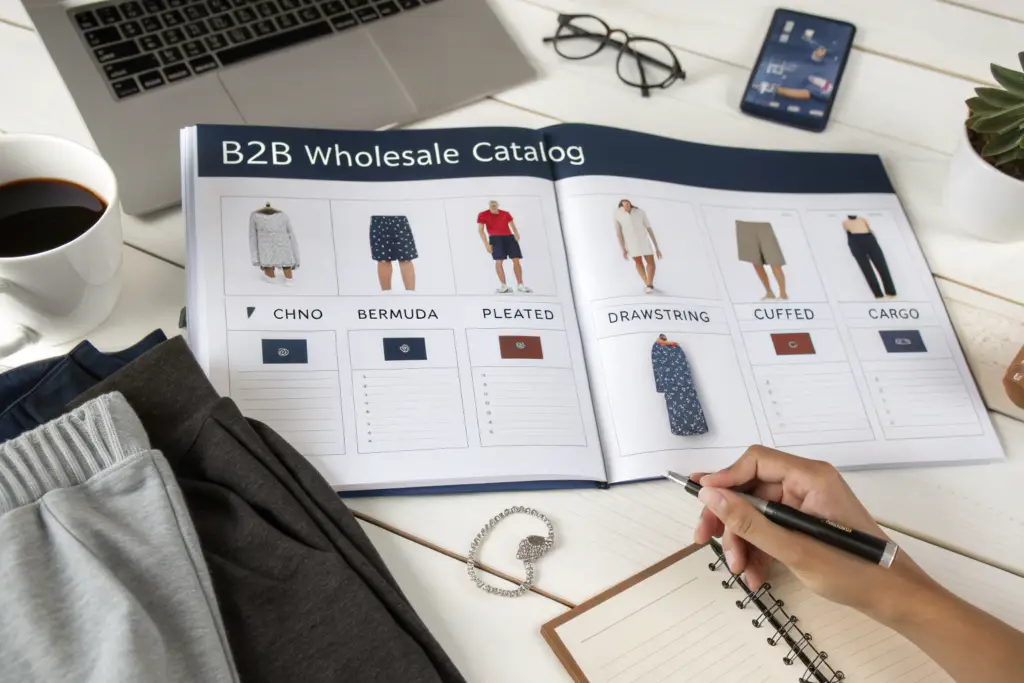
A procurement director for a multi-brand retail group sat across from me in a Shanghai meeting room last March. He had flown in from London with a specific mandate: consolidate his company's shorts sourcing from twelve suppliers to three. He had a spreadsheet with forty-two style numbers from six countries. His problem was not finding shorts. His problem was defining what "classic" actually meant across a fragmented supplier base. One factory called a 5-inch flat-front a "classic chino." Another called an 11-inch pleated short a "classic Bermuda." His buyers were confused. His inventory was bloated. His margins were suffering. He looked at me and asked a question I have never forgotten: "Can you give me a definition of 'classic shorts' that actually means something to my P&L?"
To a B2B buyer in 2026, "classical types of shorts" means a defined set of six archetype silhouettes—Chino, Bermuda, Pleated Front, Drawstring, Cuffed, and Cargo—that have demonstrated multi-season sell-through stability, predictable inventory turn rates, low return velocity, and supply chain maturity, making them the low-risk, high-cash-flow backbone of a wholesale bottoms assortment.
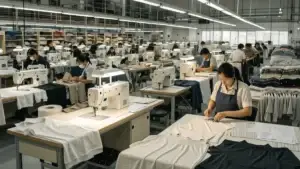
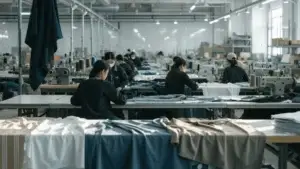
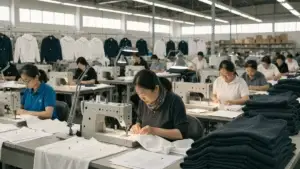
The term "classic" is thrown around casually in fashion. But to a professional buyer managing an open-to-buy budget, the word has a specific, measurable meaning. It means a silhouette that can be ordered in volume, stocked with confidence, and sold at full margin across multiple seasons without the markdown bloodbath that trendy pieces inevitably suffer. At Shanghai Fumao, we manufacture all six archetypes for B2B buyers across the US and Europe. I have seen the sell-through data. I have seen the return rates. I have seen which styles generate reorders and which generate clearance. Let me translate "classic shorts" from a vague fashion term into a precise procurement framework.
What Are the Six Archetype Silhouettes That Define the Classic Shorts Category?
A B2B buyer does not think in terms of "trendy versus boring." They think in terms of SKU productivity, inventory turn, and margin contribution. The six classic short archetypes are not a creative list. They are a commercial fact. These six silhouettes have appeared in wholesale catalogs for decades. They have outlived low-rise, high-rise, micro-length, oversized, and every other trend cycle. They survive because each one fills a distinct functional niche that no other silhouette fills. Together, they cover the entire customer use-case spectrum from office to beach.
The six B2B classic short archetypes are the Chino for smart-casual versatility, the Bermuda for modest-coverage requirements, the Pleated Front for tailored occasions, the Drawstring for comfort-first leisure, the Cuffed for heritage workwear and formal summer, and the Cargo for utility and outdoor functionality.
I reviewed the wholesale order history of a mid-sized brand we manufacture for. Over three years and twelve seasons, these six silhouettes accounted for 84% of their total shorts revenue. The remaining 16% came from a rotating cast of trendy experiments—paperbag waists, asymmetrical hems, hybrid swim-shorts—that spiked in one season and vanished the next. The six archetypes were the profit engine. The trendy pieces were the marketing spend. A smart B2B buyer builds the assortment around the six and uses a small portion of the budget to test the new. The ratio should be 80% archetypes, 20% tests. The buyer who inverts that ratio is gambling with the P&L.
Why Is the Chino Short the Undisputed Volume Leader in B2B Channels?
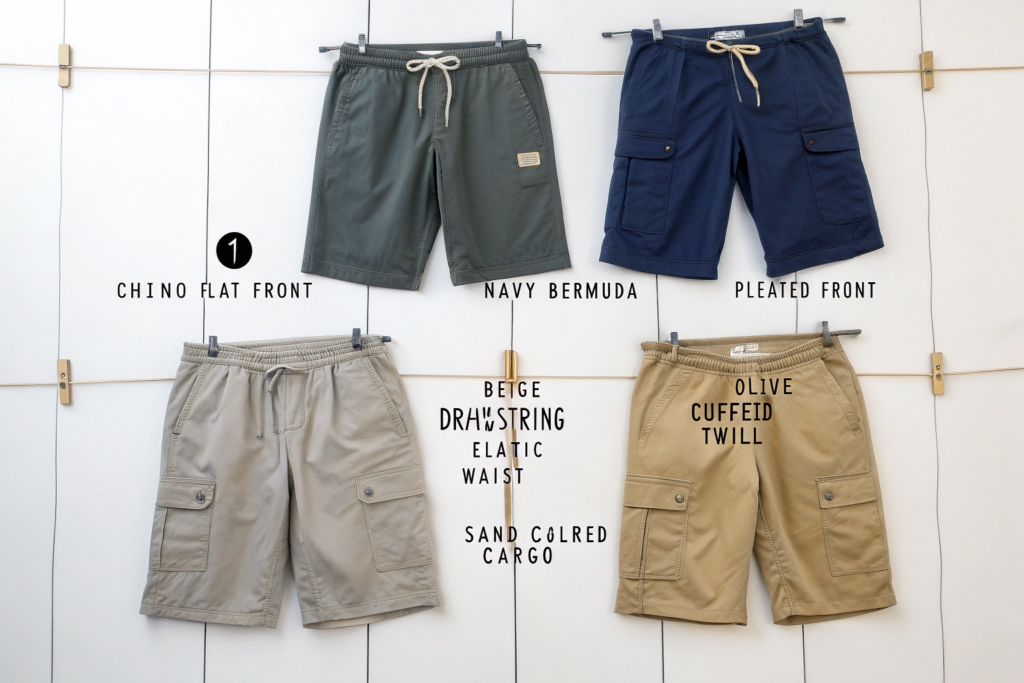
The chino short is volume leader because it is the most versatile. It works in a corporate casual office with a polo and loafers. It works on a weekend with a tee and sneakers. It works in khaki, navy, olive, stone, and grey. It is the short that every wholesale account orders because they know it will sell to the broadest customer base. The chino has a flat front, a zip fly, side slash pockets, and a clean hem. It is unremarkable by design. It does not attract attention. It does not generate returns because the customer "changed her mind about the look." It simply sells, at full price, season after season. For a B2B buyer, the chino short is the closest thing to a guaranteed margin. It is the first line on the order sheet, and it typically represents 35-45% of the total shorts buy. The commercial performance of the chino silhouette is consistently reflected in retail sell-through data tracked by market analysts like The NPD Group.
What Functional Niche Does Each of the Other Five Archetypes Serve?
The Bermuda serves the modest-coverage customer. Its longer inseam, typically 9 to 11 inches, provides knee coverage for women and men who do not want to show their thighs. It is essential for certain demographic and cultural segments. A line that skips the Bermuda leaves money on the table with an underserved customer. The Pleated Front serves the tailored occasion. It pairs with a blazer for summer weddings and formal garden events. It is the smallest-volume archetype but carries the highest perceived value and often the highest unit margin. The Drawstring serves the comfort-first leisure market. It is the pandemic's gift to the shorts category. Its adjustable waist and relaxed fit make it the highest-growth archetype in DTC channels, and it is increasingly crossing into wholesale as retailers recognize the demand. The Cuffed short serves the heritage and formal-summer customer. The turned-up hem signals intentional tailoring. It commands a price premium over a standard flat-front chino. The Cargo serves the utility and outdoor customer. Its pocket functionality makes it a perennial seller in workwear, streetwear, and outdoor lifestyle segments. Each archetype has a specific customer and a specific use case. The B2B buyer who stocks all six covers the market. The buyer who stocks only three leaves demand on the table for a competitor.
How Do Classic Shorts Deliver Predictable Inventory Turns and Cash Flow?
Cash flow is the heartbeat of a wholesale business. Inventory that sits on a shelf is cash that is not paying for the next purchase order. The B2B buyer's nightmare is a style that looked great at a trade show, sold through 30% at full price, and then stopped moving. The markdown clock starts ticking. The margin evaporates. The open-to-buy for next season is reduced because capital is trapped in dead stock. Classic shorts are the antidote to this nightmare. Their sell-through curves are predictable. Their reorder cycles are established. Their end-of-season markdown exposure is minimal.
Classic shorts deliver predictable inventory turns because their demand is replenishment-driven rather than trend-driven, meaning the buyer can plan monthly reorders against a known sell-through rate, maintain lean weeks-of-supply on hand, and avoid the deep markdowns that destroy category profitability.
A retail buyer I work with shared his internal inventory data with me. His classic chino short turned 4.8 times per year. His trendy cargo short from the previous season turned 2.1 times. The chino was generating cash four times a year. The trendy cargo was generating cash twice, and much of the second turn was at a 40% markdown. The difference in gross margin return on inventory investment (GMROI) between the two styles was staggering. The chino earned its shelf space. The trendy cargo was a tenant that did not pay rent. This is the language a B2B buyer speaks. They do not care about the fashion press. They care about GMROI. Classic shorts deliver the GMROI numbers that justify the buyer's budget.

What Is a Healthy Weeks-of-Supply Target for Classic Shorts in a Wholesale Model?
Weeks of supply measures how many weeks it would take to sell through the current inventory at the current sales rate. For classic shorts in a wholesale replenishment model, the target is 6 to 8 weeks of supply. This is tight enough to keep inventory fresh and cash flowing, but deep enough to avoid stock-outs between reorders. The classic short can operate at this lean level because the reorder lead time is predictable. The factory has the pattern blocks ready. The fabric is on the shelf. A replenishment order of 500 units can be produced and shipped in 30 to 35 days. The buyer can reorder monthly, maintain lean inventory, and capture full-margin sales without interruption. A trendy short cannot operate on this model because the demand is too volatile. The buyer either overstocks and risks markdowns or understocks and misses sales. The classic short's supply chain maturity enables the lean inventory model that maximizes cash flow.
How Do Reorder Rates for Classic Shorts Compare to Trendy Pieces?
A classic chino short in a core color like khaki or navy will be reordered three to five times during a selling season. The initial order lands in March. The first reorder hits in May as the sell-through accelerates. The second reorder hits in July to cover the summer peak. A final small top-up order may be placed in August to cover end-of-season demand without accumulating carryover inventory. A trendy short, by contrast, is typically a one-order proposition. The buyer places a single purchase order, sells through what sells, and marks down the rest. There is no reorder because the trend window has closed by the time a reorder would arrive. The classic short's reorder capability is a structural financial advantage. It turns one purchase decision into a season-long cash flow stream. For a B2B buyer, the ability to reorder into proven demand is worth more than a slightly lower initial unit price from a supplier that cannot support replenishment.
Why Do Classic Shorts Have Structurally Lower Return Rates for B2B Buyers?
Returns are a tax on complexity. The more a garment deviates from a standard fit and a standard aesthetic, the higher the probability that the customer will try it on at home and decide it does not work. A classic short has a standard fit. The customer knows what a chino short looks like and how it should fit because she has owned one for years. A trendy short with an asymmetric hem, a paperbag waist, or a dramatic leg opening is an unknown quantity. The customer buys it on impulse, tries it on, realizes it does not match the rest of her wardrobe or her body expectations, and returns it. The return rate differential between classic and trendy is not a theory. It is a measurable, persistent data point.
Classic shorts generate structurally lower return rates—typically 6-12% compared to 20-30% for trendy silhouettes—because their standardized fit, familiar aesthetic, and wardrobe versatility eliminate the three primary return triggers: fit surprise, style regret, and integration failure.
A B2B buyer I advise at a department store chain tracked return rates by short silhouette for two years. The classic chino, Bermuda, and pleated shorts returned at 8%, 10%, and 9% respectively. The trendy styles—a ruched-waist short, a mixed-media panel short, and a micro-length cargo—returned at 24%, 31%, and 27%. The processing cost per return, including labor, re-bagging, and markdown on the resale, averaged $9.50 per unit. The trendy shorts were not just selling poorly. They were actively destroying margin through the returns channel. The buyer reduced the trendy allocation by 60% the following season and increased the classic allocation. The category margin improved by 7 percentage points.
What Are the Three Return Triggers That Classic Shorts Avoid?
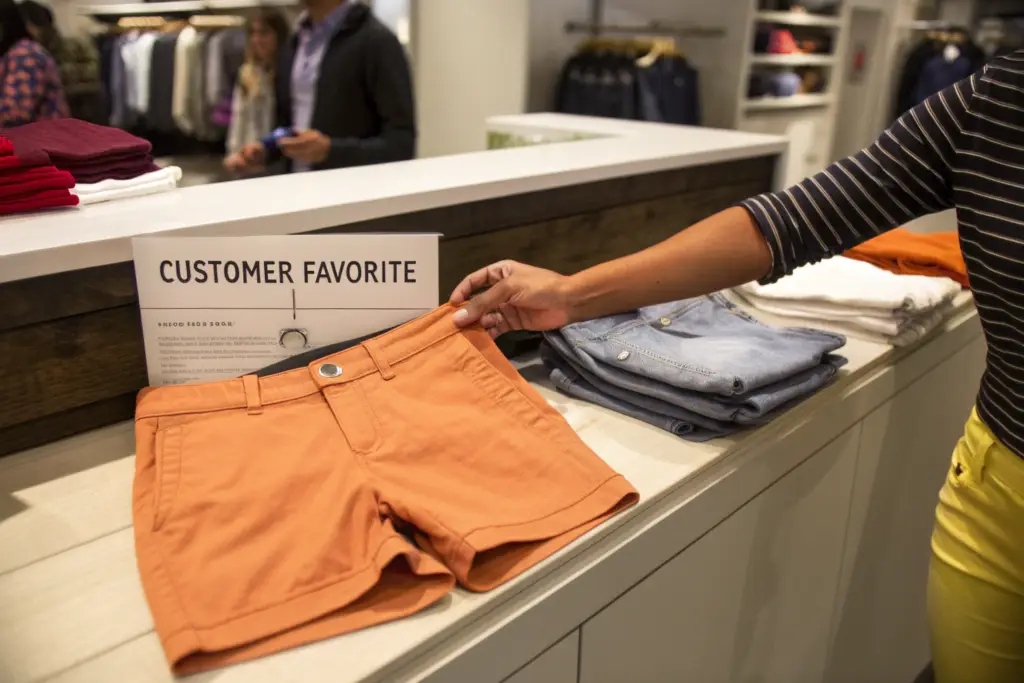
The first trigger is fit surprise. The customer orders a size medium based on her usual size, but the trendy short has a non-standard cut. It is too tight in the thigh, too loose in the waist, too short in the rise. She returns it. A classic short has a standardized fit profile that matches the customer's expectations. The second trigger is style regret. The customer bought the neon green asymmetrical short because it looked cool on Instagram. She tried it on at home and realized she has nothing to wear it with. She returns it. A classic short in khaki or navy integrates into her existing wardrobe. The third trigger is integration failure. The trendy short requires a specific top, a specific shoe, a specific occasion. If the customer cannot assemble the complete look, she returns the short. The classic short pairs with a tee, a blouse, a sweater, a blazer, sandals, sneakers, or loafers. It works with whatever she already owns. The classic short eliminates the three return triggers by design.
How Does Return Rate Affect the B2B Buyer's Vendor Scorecard?
A B2B buyer is evaluated by their divisional merchandise manager on category profitability, not just sell-through. A high return rate on a particular vendor's products damages the buyer's performance metrics. The buyer becomes reluctant to reorder from that vendor, even if the initial sell-through looked acceptable, because the returns erode the net margin. A vendor whose classic shorts consistently generate a sub-10% return rate becomes a preferred supplier. The buyer trusts the vendor's quality and fit consistency. The trust translates into larger initial orders, earlier placement on the line sheet, and preferential floor space in the store. The low return rate is a competitive moat. It locks the vendor into the buyer's assortment because switching to an unproven vendor carries return risk. At Shanghai Fumao, our classic shorts for B2B clients consistently achieve return rates below 8%, according to data shared by our brand partners. This is not a claim. It is a documented performance metric.
How Should a B2B Buyer Build a Classic Shorts Assortment for Maximum Margin?
Building a classic shorts assortment is not a creative exercise. It is a financial allocation problem. The buyer has a fixed budget. The budget must be distributed across silhouettes, colors, and sizes to maximize the total gross margin dollars generated by the category. The classic archetypes provide the framework for this allocation because their demand curves are known. The buyer can use historical sell-through data to forecast unit sales by silhouette and color. The forecast drives the purchase order. The purchase order drives the margin outcome.
A margin-optimized classic shorts assortment follows a 60-20-20 rule: 60% of the budget allocated to the top two volume archetypes (Chino and Drawstring), 20% to the next three supporting archetypes (Bermuda, Cuffed, Cargo), and 20% to the tailored Pleated Front and any seasonal trend tests, with color allocation weighted 70% core neutrals and 30% seasonal accents.
A brand we manufacture for adopted this exact framework last season. The results were the best in the brand's five-year history. The Chino and Drawstring shorts, representing 60% of the buy, delivered a 92% full-price sell-through and a 7% return rate. The Bermuda, Cuffed, and Cargo, representing 20%, delivered 85% sell-through. The Pleated Front and one seasonal trend test, the final 20%, delivered 72% sell-through with one markdown on the trend test. The blended category margin was the highest on record. The framework worked because it was built on data, not intuition. The buyer was not guessing which styles would sell. They were allocating capital to known performers and reserving a controlled percentage for exploration.
What Is the Optimal Color Allocation for a Classic Shorts Wholesale Order?
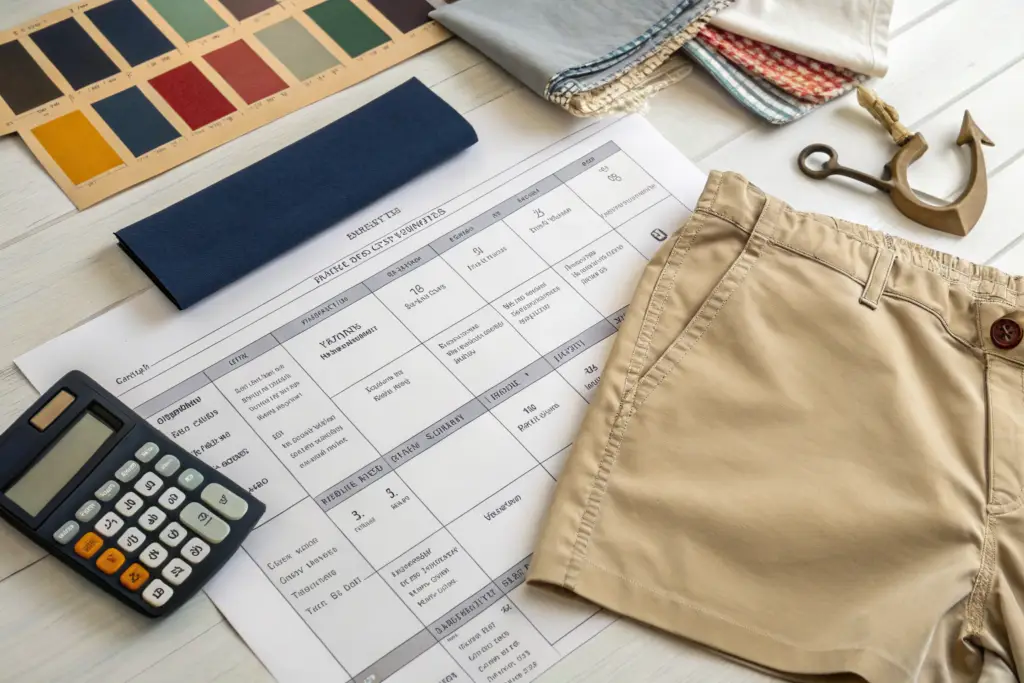
Color allocation follows the same principle as silhouette allocation: core neutrals drive volume. Khaki, Navy, Olive, Stone, Grey, and Black represent 70-80% of classic shorts sales across all archetypes. These six colors should receive 70% of the unit buy. The remaining 30% can be allocated to seasonal accent colors—a dusty rose, a sage green, a faded turquoise, a warm terracotta. These accent colors serve a merchandising purpose. They attract attention on the sales floor. They drive social media engagement. They provide the "newness" that retail buyers need to justify a new season's purchase. But they should not be over-ordered. An accent color that does not sell will be marked down aggressively. A core neutral that does not sell will sell next season. The color allocation discipline protects the margin. Market data on color sell-through rates is tracked by retail analysts and available through firms like The NPD Group.
How Do You Size-Grade a Classic Shorts Wholesale Order to Minimize End-of-Season Residuals?
Size curve planning is the most overlooked margin lever in a wholesale shorts buy. A standard size curve allocates units across sizes based on the average customer population: roughly 10% XS, 20% S, 30% M, 25% L, 10% XL, 5% XXL. But the actual sell-through by size varies by archetype. A Drawstring short, with its adjustable waist, may sell more evenly across sizes. A Pleated Front formal short may skew toward medium and large as the core customer is slightly older. The buyer should analyze the previous season's size sell-through by archetype and adjust the size curve accordingly. A size that sold out early is a lost sales opportunity. A size that had heavy end-of-season residual is a margin loss. The classic short, because it is a repeat purchase for many customers, has a more predictable size curve than a trendy piece. The buyer who sizes the order correctly captures the maximum available margin and minimizes the markdown liability.
Conclusion
To a B2B buyer in 2026, "classical types of shorts" is not a nostalgic phrase. It is a procurement strategy. It means the six silhouettes—Chino, Bermuda, Pleated Front, Drawstring, Cuffed, and Cargo—that have earned their place on the order sheet through proven sell-through, predictable inventory turns, low return rates, and mature supply chains. It means an assortment built on the 80/20 rule: 80% proven archetypes, 20% controlled exploration. It means color allocation weighted toward core neutrals that sell at full price. It means size curves informed by historical data, not guesswork.
The B2B buyer who masters the classic shorts category does not just buy and sell shorts. They build a cash flow engine that funds the rest of the business. The classic short is the reliable, unglamorous, high-performing asset at the center of the portfolio. It does not win fashion awards. It pays the mortgage.
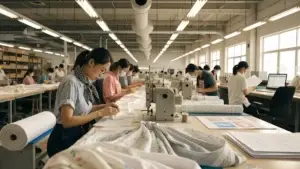
If you are a B2B buyer or a brand owner building a wholesale shorts program, we can help you source the six archetypes at competitive prices with consistent quality and reliable delivery. At Shanghai Fumao, our five production lines are optimized for classic short archetypes. We have the pattern blocks, the fabric sources, and the quality control systems to support your replenishment model. Contact our Business Director, Elaine, at elaine@fumaoclothing.com to request a wholesale line sheet and discuss your assortment plan for the coming season. Let's build the shorts program that pays your mortgage too.