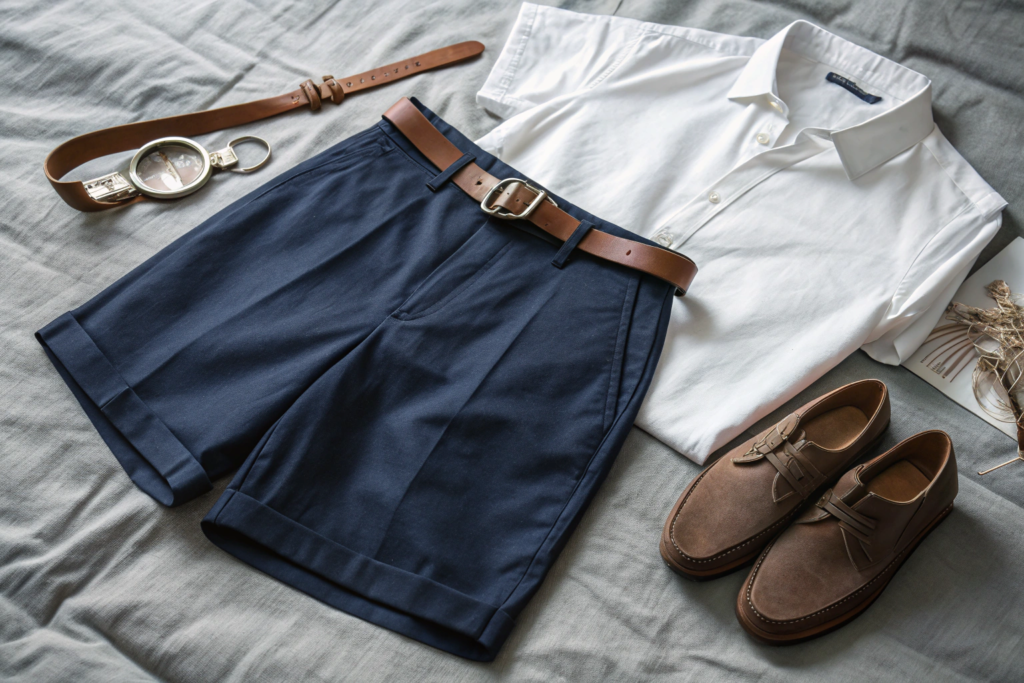
A menswear brand owner from San Francisco called me last May with a styling dilemma. He was designing his first "Summer Formal" capsule—a collection intended for garden weddings, rooftop cocktail parties, and upscale resort dinners. He had the unstructured blazers. He had the linen button-downs. He had the suede loafers. But he was stuck on the shorts. Should the hem be a raw cut, a blind stitch, or a turned-up cuff? His design team was split. Half argued that a clean, invisible hem was more formal. Half argued that a visible cuff was more intentional. He asked me to settle the debate. I told him to look at the history of menswear tailoring. Every formal trouser, from a Savile Row suit to a Neapolitan summer slack, has a finished hem break. The cuff is the trouser hem's statement. The turned-up cuff on a short is not a casual affectation. It is the direct descendant of the tailored trouser cuff. In the language of menswear, a cuff says "this garment was finished with care."
Classic shorts with turned-up hems are superior for men's summer formal wear because the structured cuff creates visual weight at the leg opening, mimics the tailored trouser break, provides a pressed crease anchor point that elongates the leg line, and signals sartorial intentionality in a way that a raw or blind-stitched hem cannot.
The men's summer formal category has exploded in the last three years. High-end resorts, destination weddings, and the permanent casualization of evening social events have created demand for shorts that can hold their own against an unstructured blazer and a pair of polished loafers. The turned-up hem short is the garment that meets this demand. At Shanghai Fumao, we have developed and produced this exact silhouette for several US menswear brands positioning themselves in the elevated casual space. Let me walk you through why the turned-up hem is not just a style choice but a structural advantage in the formal shorts category.
What Makes a Turned-Up Hem More Formal Than a Standard Hem?
Formality in menswear is a language of structure. A garment reads as formal to the degree that it demonstrates intentional construction. A raw edge reads as unfinished. A blind-stitched hem reads as neutral—neither formal nor casual. A turned-up cuff reads as deliberate. The extra fold of fabric, the visible topstitching, the sharp pressed edge—these are signals that a tailor spent additional time finishing the garment. The eye registers these signals subconsciously. The brain translates them into a judgment of formality. The turned-up hem is a shortcut to "this is not a casual short."
The turned-up hem elevates formality through three mechanisms: the doubled fabric weight creates a structured drape that mimics the trouser break, the pressed crease extends the vertical line of the leg, and the visible hem fold acts as a visual anchor that separates the short from sportswear and leisurewear categories.
I remember a conversation with a retail buyer for a high-end resort chain. He was evaluating two shorts from the same brand. The shorts were identical in fabric, color, and inseam. One had a blind hem. One had a 1.5-inch turned-up cuff. He held both up and said, "This one—the cuffed one—I can sell for $95. The other one is a $68 short. The cuff makes it look like a tailored trouser that was intentionally shortened for summer." He was articulating the consumer's subconscious calculation. The cuff adds perceived value because it adds visible construction complexity. The consumer may not know why the cuffed short looks more expensive. She just knows that it does.
How Does the Weight of the Cuff Change the Silhouette and Drape?
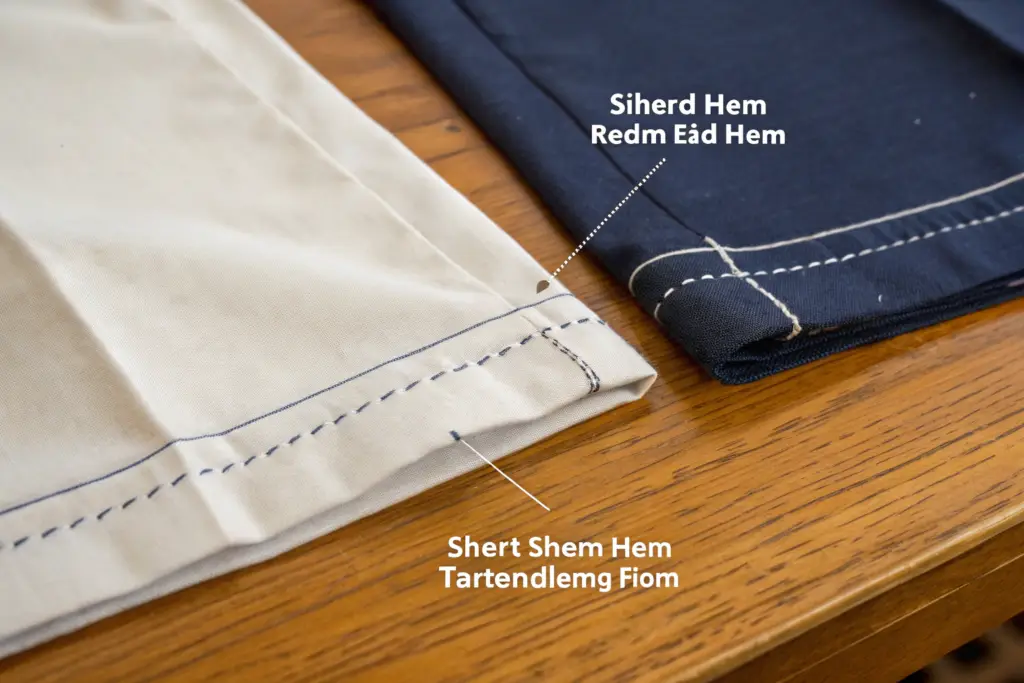
Fabric has physics. A single layer of lightweight cotton-linen has very little mass. It flutters. It catches the breeze. It can ride up when the wearer sits down and stands up. A turned-up cuff doubles the fabric at the hem. This added weight pulls the leg of the short downward. It creates a clean, straight drape from hip to hem. The silhouette reads as more tailored because it behaves like a heavier, more structured garment, even though the fabric itself is lightweight and breathable. This is the same principle that causes a weighted hem on a dress to hang properly. The cuff is a gravity anchor. For a summer formal context, where the wearer wants to look polished while moving through a garden party or a rooftop event, the stable drape of a cuffed hem is a functional advantage. The short stays in place. It looks intentional from every angle. The physics of fabric drape is a well-studied area in textile engineering, and resources from The Textile Institute provide the technical foundation.
Why Does the Pressed Crease on a Cuffed Hem Elongate the Leg?
A vertical line draws the eye upward and downward. It elongates the object it traverses. A sharp, heat-pressed center crease on a pair of shorts creates a vertical line from the hip to the hem. On a standard hem, the crease simply ends. It stops abruptly. On a turned-up cuff, the crease continues through the fold of the cuff. The crease line is longer. The eye follows it further down the leg. The visual result is a longer leg line, which makes the wearer appear taller and leaner. This is a classic tailoring trick that has been used on men's trousers for over a century. The turned-up hem extends the trick to the summer short. For a formal look, the elongated leg line is essential because it counteracts the shortening effect that shorts inherently have. The crease on the cuff is not decorative. It is optical engineering.
What Fabric and Inseam Combinations Work Best with Cuffed Formal Shorts?
A turned-up cuff is not a universal upgrade that works on every fabric and at every length. On the wrong fabric—a flimsy poly-blend with no body—the cuff looks limp and pointless. At the wrong length—a 5-inch inseam—the cuff eats up too much real estate and makes the short look blocky. The formal summer short is a precise equation of fabric weight, inseam length, and cuff depth. Change one variable, and the formality collapses.
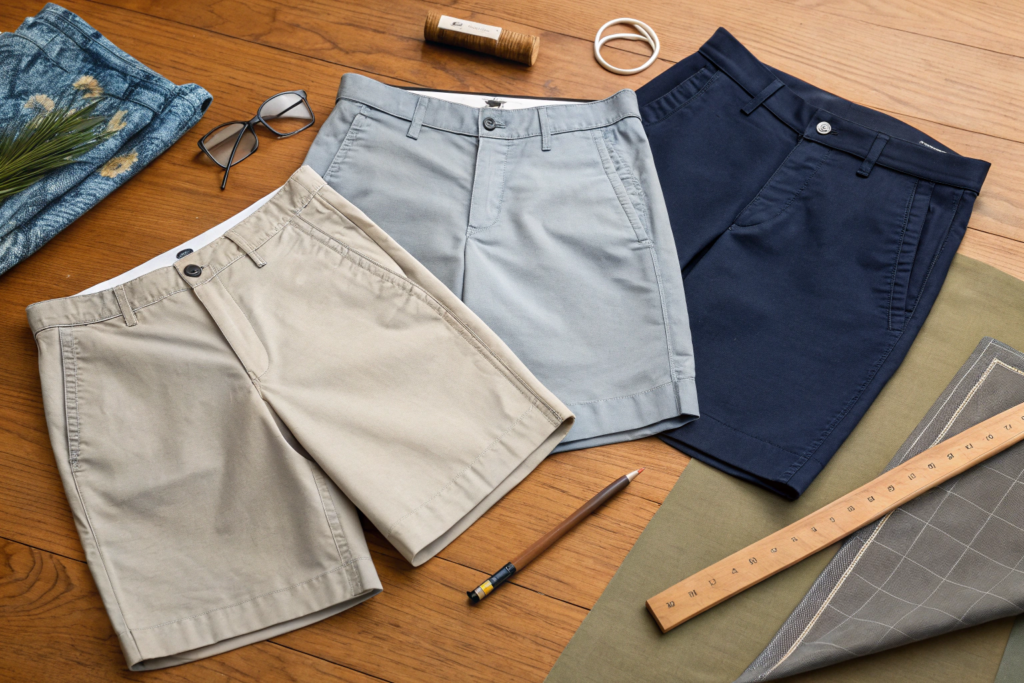
The optimal combination for men's formal cuffed shorts is a mid-weight fabric between 7 and 9 ounces per yard, a 7 to 9-inch inseam that places the hem just above the knee, and a 1.5-inch cuff depth that mirrors the traditional trouser cuff proportion.
I worked with a brand that wanted to make a formal short in a 4oz featherweight linen. The turned-up cuff on that fabric was a disaster. It had no substance. It crinkled unevenly. It looked like a mistake. We switched to a 7oz linen-cotton blend with enough body to hold the cuff's shape. The transformation was immediate. The cuff sat flat. The crease stayed sharp. The short looked like a tailored garment, not a beach cover-up. The fabric weight was the hidden variable that made the design work.
What Is the Golden Ratio Between Inseam Length and Cuff Depth?
The proportion must be visually balanced. A cuff that is too deep on a short inseam looks like a folded-up trouser. A cuff that is too shallow on a long inseam looks like an afterthought. The menswear tradition provides a guideline: the cuff depth should be approximately 15-20% of the total outseam length. For a 7-inch inseam short, a 1.25 to 1.5-inch cuff is proportional. For a 9-inch inseam, a 1.5 to 1.75-inch cuff works. The 1.5-inch cuff is the sweet spot for the 8-inch inseam, which is the most commonly accepted formal short length. This proportion mirrors the traditional trouser cuff, which is typically 1.5 to 1.75 inches deep on a full-length trouser. The human eye has been trained by a century of menswear to find this proportion pleasing. The design should honor that training. Menswear proportion theory is a rich topic covered by tailoring resources and fashion history publications, with The Business of Fashion occasionally publishing analyses of menswear design principles.
Why Are Tropical Wool and Heavy Twill Better Than Linen for a Formal Cuff?
Linen is the classic summer fabric. It breathes beautifully. It carries the right seasonal associations. But pure linen is a poor choice for a formal turned-up cuff. It wrinkles too aggressively. The cuff, which is a doubled layer of fabric, becomes a crumpled mess after twenty minutes of wear. The formal look depends on crispness. A wrinkled cuff reads as sloppy. A tropical wool—a lightweight, open-weave worsted wool designed for warm weather—holds a crease naturally. It drapes like a trouser fabric. It resists wrinkles far better than linen. A heavyweight cotton twill in the 8-9oz range provides similar structural integrity with a more casual texture. These fabrics allow the cuff to do its job: sit flat, hold the crease, and maintain the tailored silhouette throughout an evening event. The fabric choice is not about comfort. It is about maintaining the formal visual signal for hours. A lightweight wool trouser is often the preferred choice for tailored summer events, and the same logic applies to the formal short. Fabric performance data for tropical wool and cotton twills is available from textile research sources like Cotton Incorporated.
How Should a Cuffed Formal Short Be Styled to Complete the Summer Look?
The cuffed short is the foundation piece. It does not work in isolation. The garments styled above it determine whether the overall look reads as "summer wedding" or "backyard barbecue." The key is to pair the tailored short with equally tailored pieces from the waist up. The shirt should have structure. The blazer should be unstructured but present. The shoes should be polished. The belt should match the shoes. The formal summer look is a system. The cuffed short is the bottom-half anchor of that system.
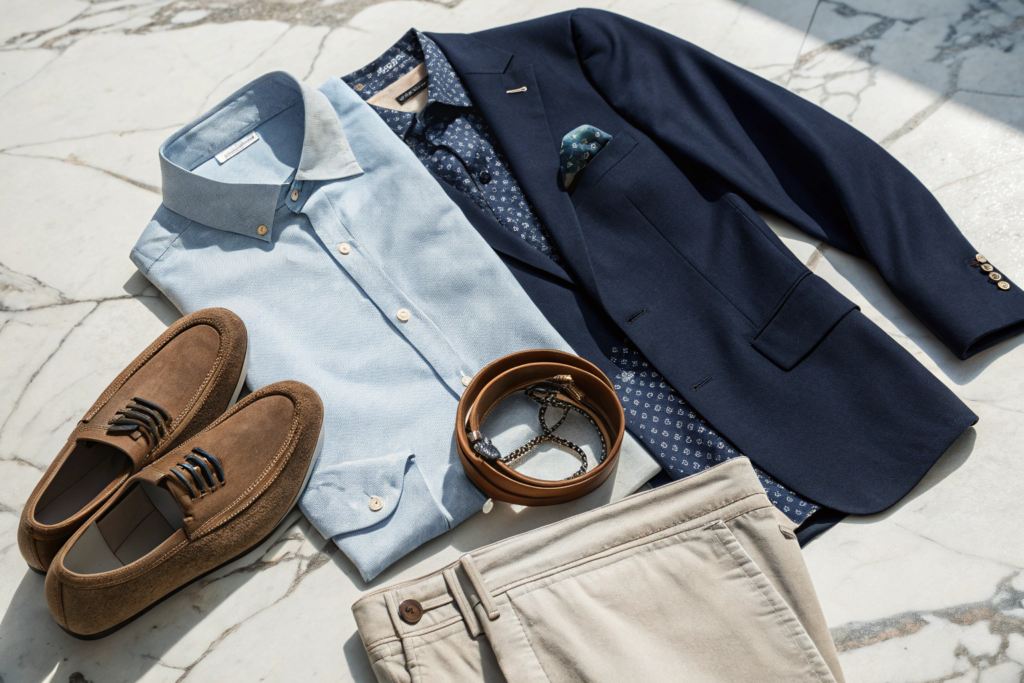
Successful summer formal styling with cuffed shorts requires a tucked-in collared shirt, an unstructured blazer or tailored waistcoat in a complementary fabric, a leather belt that matches the shoe leather, and loafers or derbies in suede or polished calfskin, creating a cohesive look where the short's tailored cuff echoes the formality of the upper-half garments.
A brand we manufacture for built an entire summer marketing campaign around one pair of cuffed shorts in a heathered grey tropical wool. They styled it three ways: with a white spread-collar shirt and a navy blazer for a wedding, with a knit polo and a linen overshirt for a dinner event, and with a camp collar shirt and a Panama hat for resort evening. The campaign was shot on location at a coastal venue. The cuffed short was the consistent element across every image. The message to the customer was clear: this is not a casual short you can dress up. This is a formal short designed to anchor an elevated summer wardrobe. The styling was not an afterthought. It was the entire value proposition.
Why Is a Tucked-In Shirt Non-Negotiable for Formal Shorts?
An untucked shirt covers the waistband. It hides the belt. It interrupts the vertical line from the trouser to the torso. The result is a casual, relaxed silhouette. A tucked-in shirt exposes the waistband. It shows the belt. It creates a clean horizontal division between the lower half and the upper half of the body. The vertical line of the shirt tuck continues down through the crease of the short. This is the silhouette of a suit, translated into summer fabrics. The tucked-in shirt is the single most powerful styling decision for elevating a pair of shorts from casual to formal. The belt becomes a focal point of the outfit. The waistband of the short, which on a formal cuffed short should be a clean flat front with a tab closure, becomes a visible design element. The tucked-in shirt transforms the short from a standalone casual piece into a component of a tailored ensemble.
What Footwear Choices Complement a Cuffed Formal Short?
The shoe is the foundation of the formality pyramid. A sneaker, even a clean white leather sneaker, pulls the cuffed short down into casual territory. A sandal destroys the formal signal entirely. The correct footwear for a cuffed formal short is a loafer—penny, tassel, or horsebit in suede or polished leather—or a Derby shoe in a lightweight construction. The loafer is the ideal bridge shoe. It is less formal than an Oxford but more formal than a sneaker. It carries the summer ease while maintaining the tailored language. Suede is the preferred material for summer because it absorbs light and softens the look without sacrificing polish. A brown suede loafer with a grey cuffed short is a combination that works for garden parties, rooftop bars, and summer evening events. The footwear choice completes the formal silhouette from hem to floor. Menswear styling guidance is frequently published by fashion platforms like The Business of Fashion.
What Production Details Ensure the Turned-Up Hem Stays Sharp Over Time?
A cuffed hem that loses its crease after three washes is a product failure. The customer bought a formal short with a turned-up cuff because the cuff signaled quality. When the cuff wrinkles, sags, or unfolds, the quality signal evaporates. The customer feels deceived. The return rate spikes. The brand's reputation for quality takes a hit. The production of a durable turned-up hem is not a simple fold-and-stitch operation. It requires specific construction techniques that lock the cuff in place permanently.
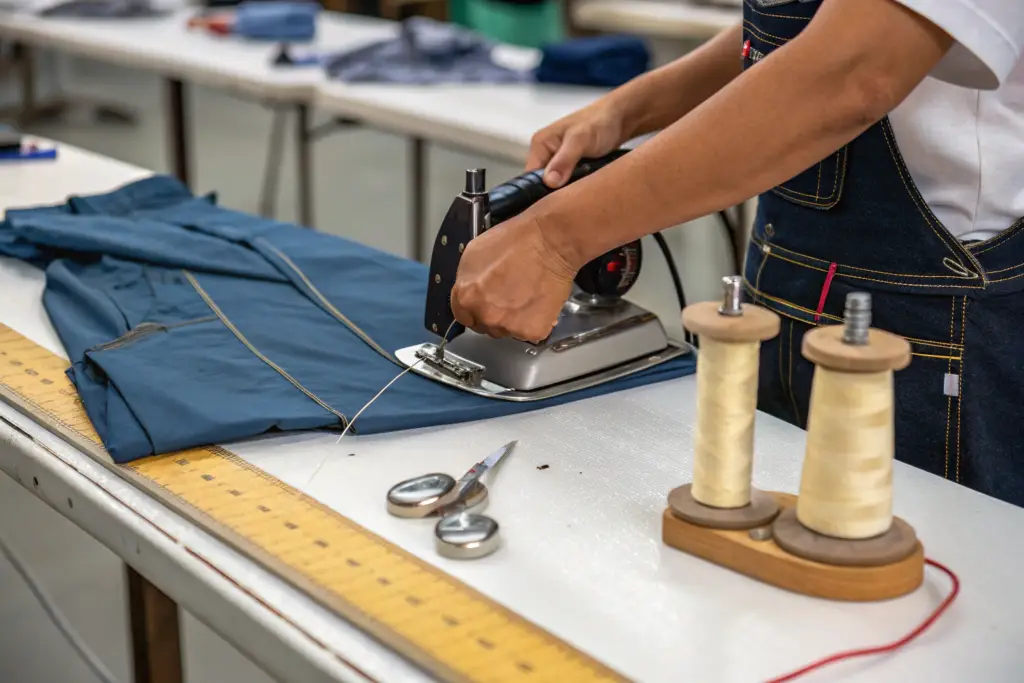
A durable turned-up hem requires a double-needle topstitch securing the cuff fold, a heat-pressed crease set with a professional steam press at the fabric's specific fiber temperature, a hidden bar-tack at the side seams to prevent the fold from pulling open, and pre-washing of the fabric to eliminate post-purchase shrinkage that would distort the cuff.
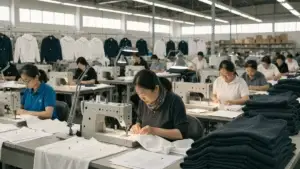
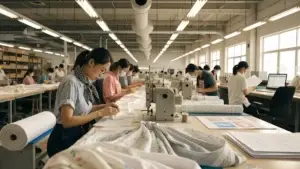
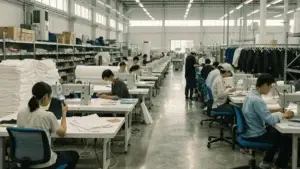
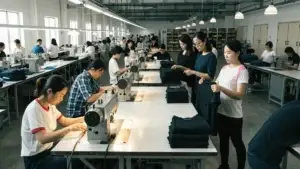
I audited a factory that was producing cuffed shorts for a client, and I found a systematic failure in their cuff construction. They were attaching the cuff with a single-needle lockstitch that had insufficient thread tension. The cuff was sagging open after a single wash cycle. We retrained the sewing line on the correct double-needle technique. We added a bar-tack reinforcement at the side seam, where the stress of sitting and walking concentrates. We adjusted the steam press temperature to match the cotton-linen blend's heat tolerance. The next production run had zero cuff failures in the quality inspection. The investment in construction technique was invisible to the customer, but the durability result was tangible. The returns stopped.
Why Is a Bar-Tack at the Side Seam Essential for Cuff Longevity?
The side seam is the stress point. When the wearer sits, the fabric at the side seam stretches. When he walks, the leg of the short pulls against the side seam. The turned-up cuff fold wants to open at this exact point because the fabric layers are under tension. A bar-tack—a dense, tight zigzag stitch block placed at the side seam, hidden on the inside of the cuff—reinforces the fold. It distributes the tension across a wider area. It prevents the fold from opening even under heavy stress. Without the bar-tack, the cuff will eventually begin to gap at the side seam. The gap widens over time. The cuff loses its crispness. The bar-tack is a five-second operation on the sewing machine. It costs almost nothing. It determines whether the cuff survives the season. This is the kind of production detail that separates a quality factory from a commodity factory. Manufacturing technique resources for garment construction are available from organizations like The Association of Sewing and Design Professionals.
How Does Pre-Shrinking the Fabric Protect the Cuff's Geometry?
Fabric shrinks when it is washed. Cotton shrinks more than polyester. Linen shrinks more than cotton. If the fabric is not pre-shrunk before the cutting table, the finished short will be dimensionally stable when it leaves the factory. Then the customer washes it. The fabric shrinks. The cuff, which is a folded and stitched construction, cannot shrink evenly because it is mechanically constrained by the stitching. The result is puckering, twisting, and distortion of the cuff. The formal look is destroyed by the first laundry cycle. Pre-shrinking the fabric—either through a garment wash after assembly or a fabric relaxation process before cutting—removes the shrinkage potential before the cuff is constructed. The cuff is built on stable, pre-shrunk material. It retains its geometry through repeated washing. At Shanghai Fumao, all fabric for cuffed formal shorts undergoes a tumble relaxation process with shrinkage testing to verify dimensional stability before the marker is laid. This is a non-negotiable quality gate.
Conclusion
The turned-up hem on a men's summer formal short is not a decorative flourish. It is a structural element that anchors the garment's formality. It provides the weight that makes the drape read as tailored. It provides the pressed crease that elongates the leg. It provides the visual signal of intentional construction that separates formal from casual in the language of menswear. The fabric weight, the inseam length, the cuff depth, and the production techniques are not independent variables. They are a system. When the system is engineered correctly, the cuffed short becomes a legitimate formal garment—the bottom-half anchor of a summer wedding outfit, a rooftop cocktail ensemble, or a resort dinner look.
The market demand for this product is growing. Men who discovered during the pandemic that they could be comfortable and still look put-together are not going back to full suits in July. The formal short is the compromise they have been waiting for. The turned-up hem is the detail that gives them permission to wear it to a formal event.
If your brand is developing a men's summer formal collection, the cuffed short deserves to be the anchor bottom. At Shanghai Fumao, we have the pattern blocks, the fabric sourcing, and the production expertise to build a turned-up hem that stays sharp through seasons of wear. Contact our Business Director, Elaine, at elaine@fumaoclothing.com to discuss your fabric preferences, inseam lengths, and target price point. Let's build the short that your customer will wear to the wedding, not just the beach.