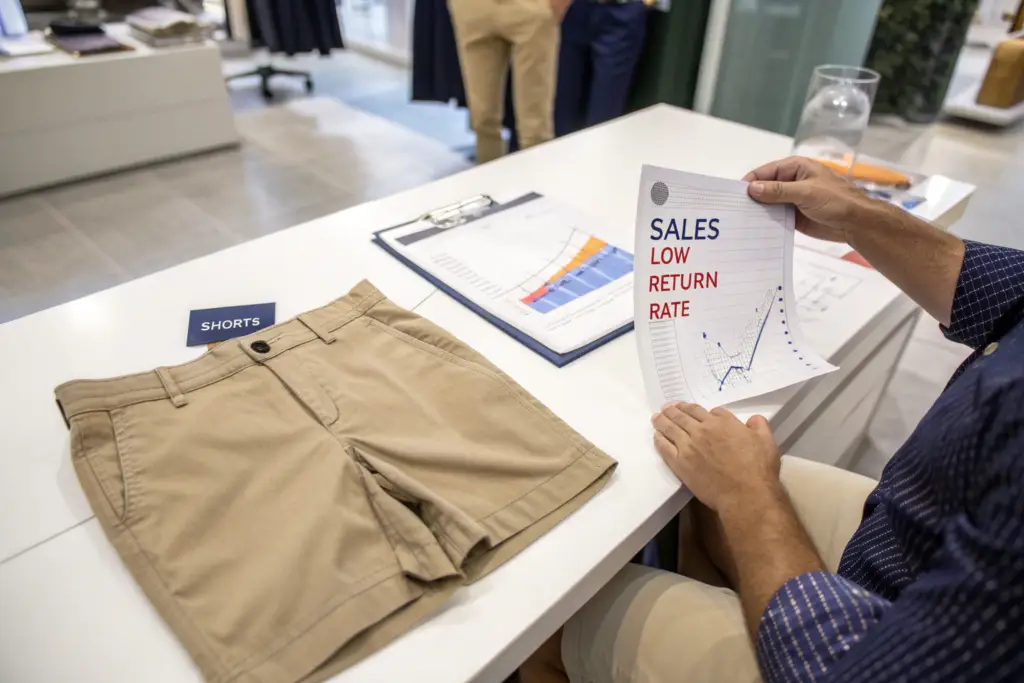
I sat in a buyer's office in a Dallas showroom three years ago, and I was bombing. I had flown in to pitch our classic chino short program to a mid-sized department store chain. The buyer, a sharp woman in her early forties, leafed through my line sheet with visible boredom. She stopped at a page of neon-colored, asymmetric, technical-fabric shorts from another brand. Her eyes lit up. "This is what's trending," she said. "Your stuff looks like what my dad wears to a barbecue." I closed my lookbook. I pulled out a different document—a spreadsheet of her own store's sales data I had requested permission to analyze before the meeting. I pointed to a number. Her house-brand classic chino short had a 78% full-price sell-through. The trendy asymmetric short she had bought heavily into the previous season had a 41% sell-through and a 22% return rate. I asked her one question: "Which one paid your mortgage last year?" She bought the chinos.
Pitching classic shorts to a trend-focused retail buyer requires reframing the conversation from fashion risk to financial safety, using the buyer's own sell-through data, return rate benchmarks, and margin-per-square-foot calculations to prove that classics are not boring—they are the profit engine that funds the trendy bets.
Trendy pieces get the attention. Classic pieces get the sales. A smart retail buyer knows this intellectually, but the emotional pull of the new, the novel, and the Instagram-worthy is powerful. Your job as a brand pitching classic shorts is not to argue that trends are bad. It is to argue that classics are the financial backbone that allows the buyer to take risks on trends without bankrupting the department. At Shanghai Fumao, we have coached many of our brand partners on exactly this pitch. Let me share the arguments, the data frameworks, and the closing techniques that turn a skeptical buyer into a committed classic shorts partner.
How Do You Reframe "Boring" as "Reliable" Using the Buyer's Own Sales Data?
A buyer's job is to allocate a fixed open-to-buy budget across categories to maximize total gross margin dollars for the store. The buyer who fills the floor with trendy pieces that go on markdown is failing at that job, even if the pieces looked great on the mannequin. The buyer who fills the floor with classic pieces that sell at full price is winning, even if the assortment is not exciting. Your first task in the pitch is to help the buyer see classic shorts through the lens of their own performance metrics, not through the lens of fashion editorial.
Reframing classic shorts as the high-velocity, low-markdown "inventory shock absorber" of the bottoms category requires presenting the buyer with their own category sell-through data, showing the delta between full-price realization of classic versus trendy SKUs, and calculating the gross margin contribution per linear foot of floor space.
I worked with a brand that was trying to break into a regional chain whose buyer was obsessed with a micro-trend cargo short with a harness detail. The buyer had allocated 60% of his shorts open-to-buy to this trend piece. The brand's rep asked for the chain's internal sell-through report from the previous season. The buyer shared it. The classic flat-front short had generated $42,000 in gross margin from two floor fixtures. The trendy cargo short from the previous season had generated $18,000 from four fixtures. The classic short produced 4.6 times more margin per square foot. The rep laid those numbers on the table. The buyer reduced the trendy cargo allocation from 60% to 35% and gave the classic short the difference. The numbers did the arguing.
What Specific Data Points Should You Request from the Buyer Before the Meeting?
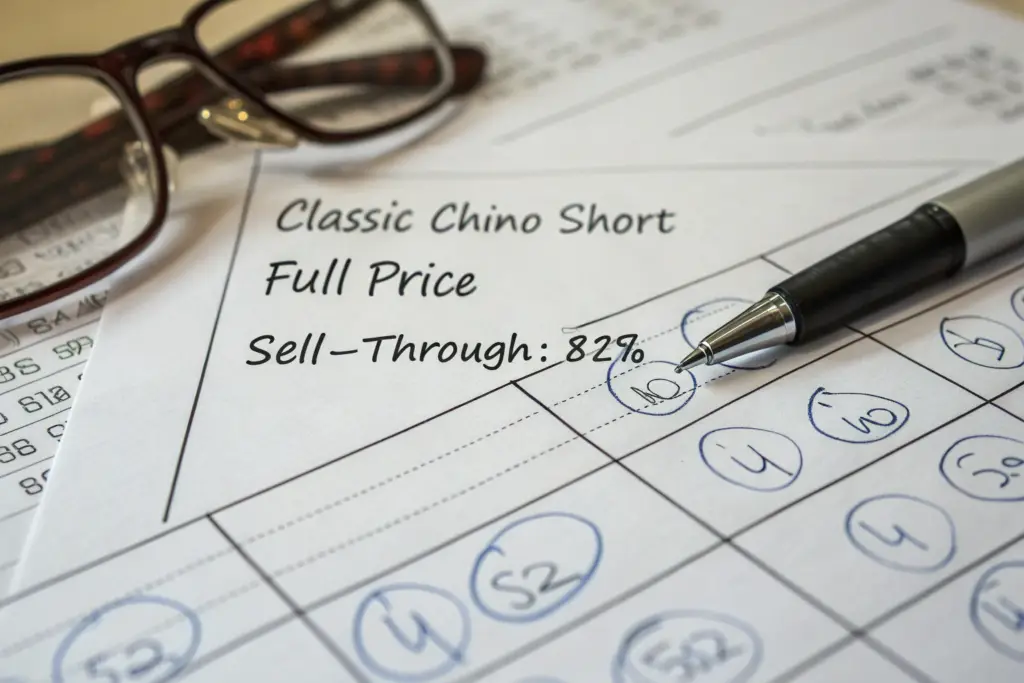
Before you walk into the meeting, ask the buyer to share their category sales report for the previous comparable season. If the meeting is in September for next spring/summer, ask for last spring/summer's shorts data. You want sell-through percentage by style, average days on floor before first markdown, markdown depth percentage, return rate, and gross margin per unit. Not every buyer will share this. The ones who do are serious about data-driven buying. The ones who refuse are buying on gut instinct, which is harder to counter but also indicates a buyer whose department may underperform. If the buyer will not share internal data, bring industry benchmarks. Data on category sell-through rates is available through market research firms like The NPD Group. An external benchmark is less persuasive than the buyer's own numbers, but it is better than an opinion.
How Do You Calculate and Present Margin-Per-Square-Foot for Classic vs. Trendy?
This is the killer metric. Take the retail price of the classic short, multiply by the sell-through percentage, subtract the landed cost, and divide by the floor space the fixture occupies. Do the same for the trendy short. Present the two numbers side by side on a single page. For example: "Your Classic Chino generated $1,200 in gross margin per square foot last season. Your Trend Cargo generated $340. The chino is 3.5 times more productive. I am asking for floor space that is currently being allocated to a product that is one-third as productive." This is the language a retail executive understands. It is not about fashion. It is about real estate productivity. The buyer can defend a classic short buy to their divisional merchandise manager using this exact math. You are not selling shorts. You are selling a higher return on floor space investment. Retail math training for brand sales teams is a specialized skill, and resources are available from organizations like The National Retail Federation.
Why Is the Return Rate Argument the Single Most Powerful Closing Tool?
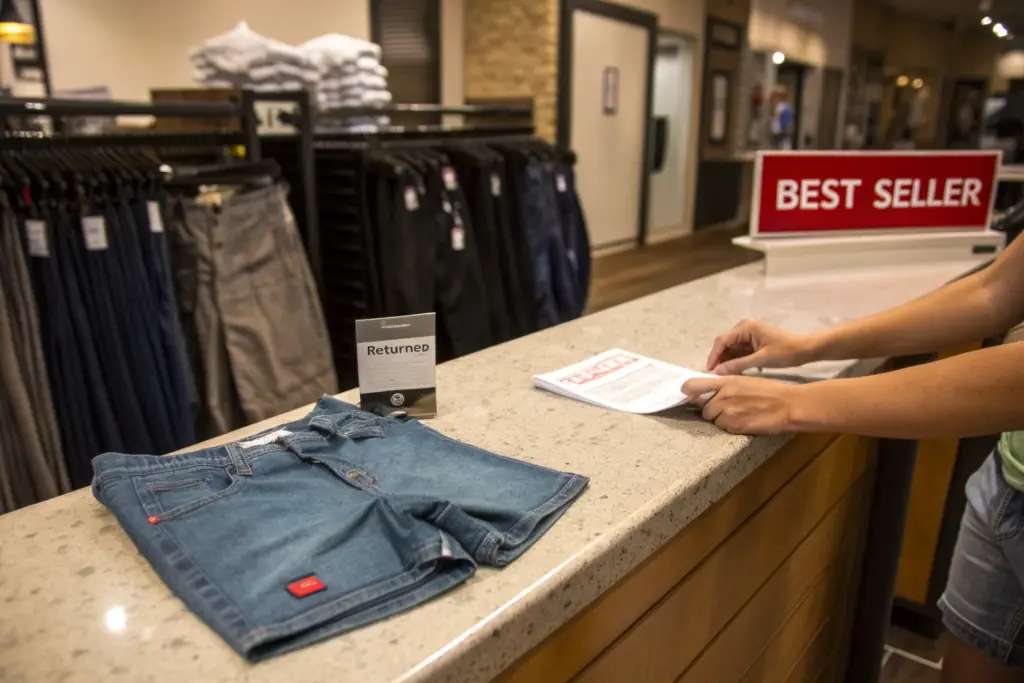
Returns are the silent killer of retail profitability. A short that sells at full price but gets returned costs the store the original freight, the processing labor, the re-bagging, the floor space while it waits to be re-shelved, and often a markdown because the season has moved on. The net margin on a returned short is often negative. Trendy pieces have structurally higher return rates because the customer buys on impulse from a social media post, tries the piece on at home, realizes it does not match the rest of her wardrobe, and sends it back. Classic shorts have structurally lower return rates because the customer buys with intention and the piece integrates into an existing wardrobe.
The return rate differential between classic shorts and trendy pieces—often 8-12% for classics versus 20-30% for trendy—is the most persuasive argument for a data-driven buyer because return processing costs can erase the entire gross margin of a sale, making a "sold" trendy short a net loss for the store.
I once sat with a buyer who was unmoved by sell-through data. She believed her customer wanted newness. I shifted to the return argument. Her store's return rate for the previous season's trendy short was 28%. The classic short from a competing brand was 9%. I calculated the processing cost per return at $8 based on industry averages. On 1,000 units sold, the trendy short generated $8,000 in return processing costs. The classic short generated $720. The $7,280 difference was pure lost profit. The buyer paused. She had never been shown the cost of returns in dollar terms. She had only ever looked at the sell-through number. She revised her buy.
What Is the True Fully-Loaded Cost of a Returned Garment?
A returned short does not just lose the sale. The store paid to ship it from the distribution center to the store or the customer's home. A sales associate spent time on the sales floor. A cashier processed the transaction. Then the customer brought it back. A service desk associate processed the return. The short was inspected, re-bagged, and re-ticketed. It may have been tried on multiple times, so it may need steaming or pressing. If the season has shifted, it moves to a markdown rack where it sells at 40% off. The gross margin on that final sale, minus all the handling costs, is often zero or negative. The industry estimates the total cost of a return at 20-30% of the item's retail price, according to logistics research from firms like Supply Chain Dive. A $68 classic short returned nets a small loss. A $68 trendy short returned at a 28% rate means 280 out of every 1,000 units are likely money-losers. The buyer who understands this stops buying the trendy short at deep volume.
How Can You Guarantee a Low Return Rate on Your Classic Shorts?
Do not just claim a low return rate. Contractualize it. Offer the buyer a return rate guarantee: if the return rate on your classic shorts exceeds a specified threshold, say 12%, within the first sixty days on the floor, you will issue a credit or accept a reduced-price reorder on the next season. This shifts the risk from the buyer to you, the brand. It is a powerful confidence signal. It says your quality and sizing consistency are so reliable that you are willing to bet your margin on them. At Shanghai Fumao, our classic shorts for a major US brand have consistently maintained a return rate below 6%. We know our numbers. We encourage our brand partners to offer this guarantee because we are confident in the production quality behind it. The buyer hears a guarantee and her risk perception drops. The guarantee is the closer.
How Do You Use the Capsule Wardrobe Argument to Defend Floor Space for Classics?
A trendy short matches one aesthetic. It pairs with one specific top, one specific shoe, one specific vibe. The customer who buys it often buys the complete look or nothing. If she cannot find the matching top in her size, she abandons the short. The classic short matches ten aesthetics. It pairs with a polo, a tee, a linen button-down, a hoodie, a denim jacket. The customer who buys it can immediately integrate it into her existing wardrobe. This versatility translates directly into a higher conversion rate on the sales floor. The retail sales associate can cross-sell multiple tops against the single pair of shorts. The average transaction value increases. The shorts become the anchor of a larger purchase.
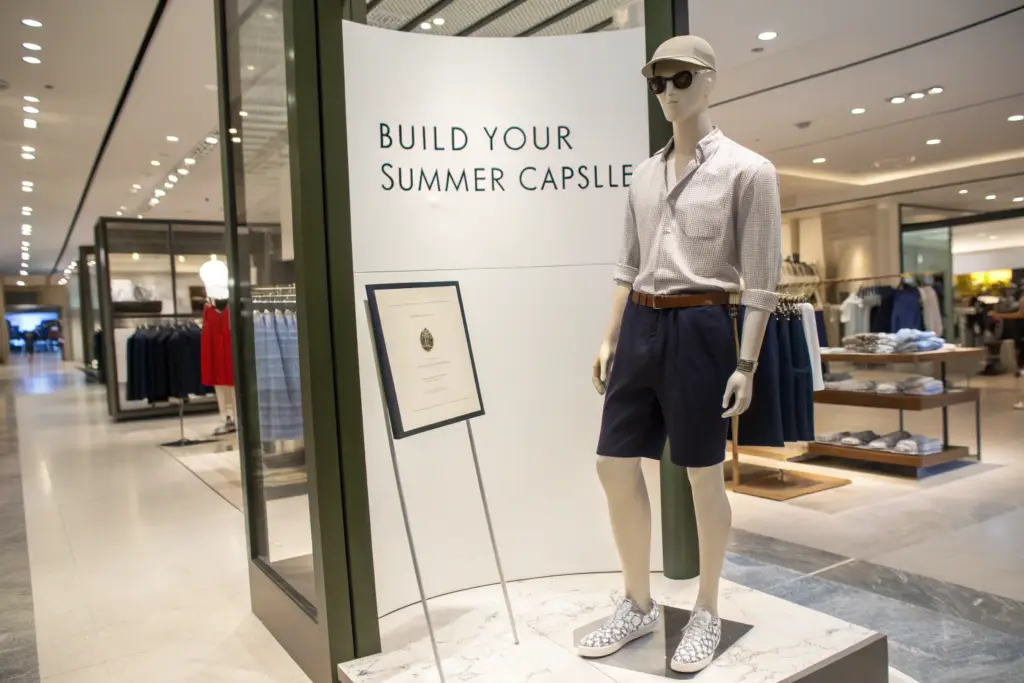
Classic shorts earn floor space by functioning as the "wardrobe anchor" in visual merchandising—a piece that can be styled with at least five different tops from across the store's categories, turning a single shorts fixture into a cross-selling engine for shirts, belts, and footwear.
A brand I partner with created a simple visual merchandising guide for their classic short. It showed the same khaki short styled five different ways: office casual, weekend, date night, travel, and beach. The guide was a single laminated sheet. Retail sales associates used it as a styling cheat sheet. Stores that used the guide saw a 15% increase in units per transaction in the bottoms category. The short was not just selling itself. It was pulling other product categories along with it. The buyer who sees this data stops thinking of the classic short as a commodity item and starts thinking of it as a transaction multiplier.
How Does the "Cost Per Wear" Concept Convince a Buyer of the Customer's Lifetime Value?
A trendy short is worn three times before it feels dated or falls apart. A $48 trendy short costs $16 per wear. A $68 classic short is worn thirty times over two years. It costs $2.27 per wear. The customer feels the value difference. She returns to the brand that sold her the classic short because the product experience was positive. She becomes a repeat buyer. The trendy short generates one transaction and possibly a return. The classic short generates a relationship. The buyer who thinks in terms of customer lifetime value rather than single-transaction margin will allocate more budget to the classic short. This consumer psychology is well-documented in fashion business literature from sources like The Business of Fashion. The customer who feels smart about her purchase is the customer who comes back.
What Visual Merchandising Strategies Turn Classic Shorts into a Store Destination?
Do not hang the classic short on a rounder with twenty other nondescript bottoms. Give it a dedicated presentation. A neat stack on a focal table, organized by color, with a sign that reads "The Perfect Summer Short." Dress a mannequin in the short with an aspirational but achievable outfit. Place the mannequin at the store entrance during the spring floor set. The classic short, merchandised with intention, signals quality and curation rather than boredom. The customer who walks in looking for "new summer shorts" is drawn to the presentation. She picks up the short. She feels the fabric. She tries it on. The product sells itself. The visual presentation simply gives the classic short the prominence it deserves rather than hiding it behind the loud trendy pieces.
How Do You Position Classic Shorts as the Margin Engine That Funds Trendy Bets?
A buyer does not want a floor full of basics. The store would look like a uniform supply depot. The buyer wants excitement, newness, and Instagram moments. You are not asking the buyer to replace trendy pieces with classics. You are asking for a rebalancing of the assortment portfolio. The classic shorts are the core equity holding. The trendy pieces are the speculative bets. A well-run portfolio has both, but the core holding must dominate the allocation because it generates the predictable return that covers the losses when the speculative bets fail.
Position classic shorts as the "balance sheet stabilizer" of the buyer's open-to-buy: the high-margin, low-risk foundation that generates the cash flow to fund experimental trendy purchases, so that when a trend fails—and most do—the overall category still hits its profit target.
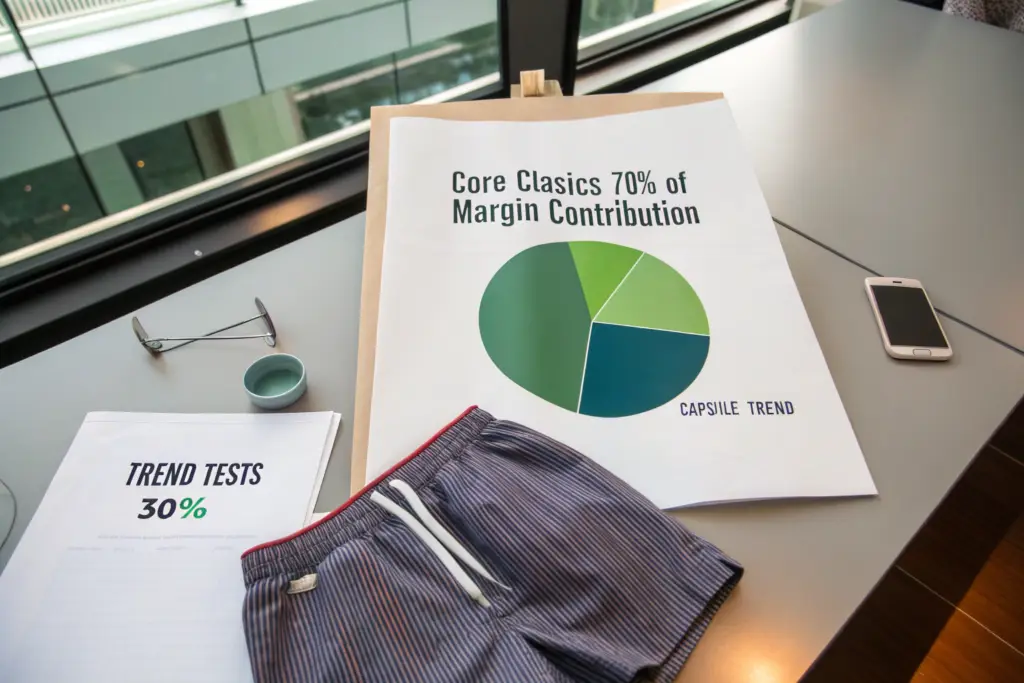
A buyer I pitched to at a major chain was defensive about her trendy allocation. She felt I was attacking her judgment. I changed my language. I said: "I am not here to tell you the cargo harness short is a bad buy. I am here to tell you my classic chino will pay for it. Buy 70% of your depth in my classic. Use the guaranteed margin from that base to fund the 30% you want to put into the trend test. If the trend works, you win big. If it fails, my classic ensures you still hit bonus." She relaxed. The pitch was no longer an either-or argument. It was a both-and partnership. She gave me a 500-unit initial order.
What Is the "Core-Satellite" Assortment Model and How Does It Persuade Buyers?
The Core-Satellite model is a portfolio framework. The core is 60-70% of the assortment: proven silhouettes, neutral colors, reliable sell-through. The satellite is 30-40%: new silhouettes, fashion colors, trend tests. The core generates the margin. The satellite generates the excitement. The model is widely used in retail merchandising and is taught in buying and planning courses. When you present the classic short as the "core" and the trendy pieces as the "satellite," you are not competing with the trends. You are offering to be the financial engine that makes the trends possible. This reframes the conversation entirely. The buyer is no longer choosing between classic and trendy. She is building a balanced portfolio. Resources on assortment planning and the Core-Satellite framework are available from retail industry organizations like The National Retail Federation.
How Can You Offer Financial Terms That Reduce the Buyer's Perceived Risk on Classics?
If the buyer is still hesitant, reduce the barrier with financial terms. Offer a markdown allowance: if the classic shorts do not achieve a specified sell-through within a set period, you will provide a credit against future orders. Offer a guaranteed margin: if the buyer's maintained margin on the classic shorts falls below an agreed percentage due to markdowns, you will rebate the difference. Offer consignment terms on the first order: the buyer pays only for what sells. These terms shift risk from the buyer to you. They are expensive if the product fails. But the product is a classic short. It will not fail. You are offering insurance on a near-certainty. The buyer accepts the terms, buys the product, sees the sell-through, and reorders the next season on standard terms. The concession on the first order is an investment in a long-term replenishment relationship.
Conclusion
A retail buyer who only wants trendy pieces is not irrational. She is responding to the incentives her job creates. She attends fashion weeks. She reads trend reports. Her divisional manager asks her what is new. She is judged partly on the excitement of her assortment. Your job is not to make her less excited about trends. Your job is to show her that classic shorts are the financial mechanism that makes her trend bets possible.
Do it with her own data. Show her the sell-through percentages and the margin-per-square-foot comparisons. Show her the return rate differential in dollar terms. Offer her the visual merchandising guide that positions the classic short as a transaction multiplier. Propose the Core-Satellite allocation model that gives her both the excitement she craves and the profit protection her P&L needs. And if she is still unsure, offer a financial guarantee that removes her last objection.
The buyer who starts with a small classic short order and watches it sell through at full margin will come back for a bigger order next season. The classic short is not a one-season pitch. It is a multi-season partnership. The first order is the hardest. The reorders are automatic.
If your brand is developing a classic short program and needs a factory partner who can deliver the quality, sizing consistency, and competitive pricing that make the retail sell-through numbers work, I invite you to talk with us. At Shanghai Fumao, we manufacture classic shorts for brands that sell to the most demanding retail buyers in the US market. Contact our Business Director, Elaine, at elaine@fumaoclothing.com to discuss your wholesale strategy and request a sample costing that leaves room for both your margin and the retailer's. Let's build a classic short that pays the buyer's mortgage.