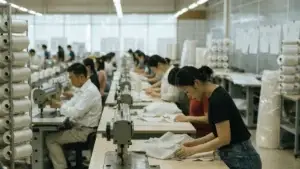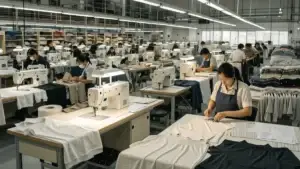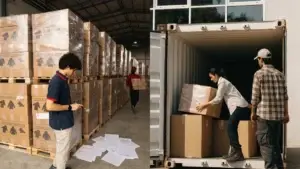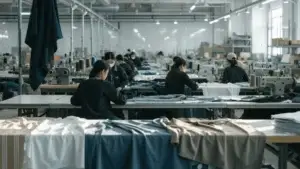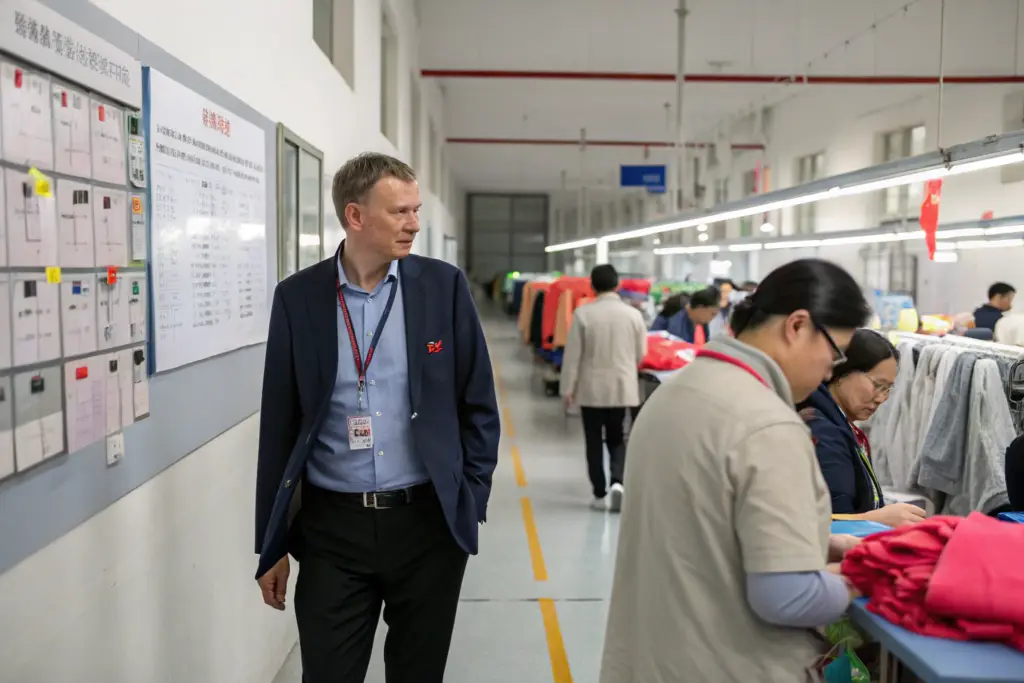
Two years ago, a prospective buyer from a Scandinavian brand visited our factory unannounced. He did not want the scheduled tour. He did not want the prepared presentation. He wanted to walk the floor alone and talk to anyone he chose. I handed him a visitor badge and told him the only off-limits areas were the cutting room for safety reasons and the server room for data security. He spent three hours on the production floor. He spoke to a line supervisor through a translator app. He checked the fire exits. He photographed the payroll records posted on the bulletin board. When he sat down in my office afterward, he said something I will not forget: "This is the first factory I have visited where the workers looked me in the eye instead of looking at the floor." He placed a $200,000 order the following week.
Shanghai Fumao ensures ethical production through a combination of third-party social compliance audits, transparent wage and hour records verified by independent auditors, safe and dignified working conditions that exceed legal minimums, and a zero-tolerance policy toward forced or underage labor enforced through rigorous hiring documentation checks.
Ethical production is not a marketing slogan on our website. It is a daily operational discipline that is verifiable, auditable, and non-negotiable. In an industry where too many factories hide behind fake certificates and staged tours, we have chosen transparency as our competitive advantage. I want to show you exactly how we ensure every pair of classic shorts is made under conditions you can feel proud to associate with your brand.
What Third-Party Audits and Certifications Validate Our Factory Standards?
A factory's own promises about ethics are worthless without independent verification. Every factory in the world claims to treat workers well. The difference between a claim and a fact is a third-party auditor who shows up without warning, checks the records, interviews the workers privately, and publishes findings that cannot be edited by the factory owner. This is the standard we submit to. Not because buyers demand it—though they do—but because we want our own standards externally validated.
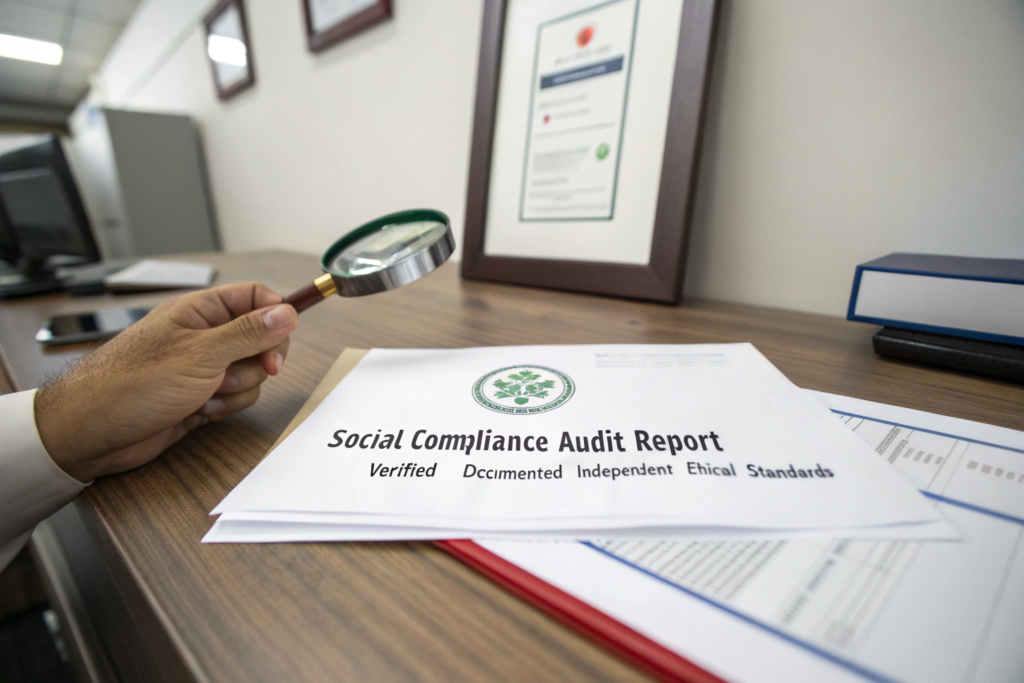
Shanghai Fumao undergoes annual SMETA 4-Pillar audits conducted by accredited third-party firms, covering Labor Standards, Health and Safety, Environmental Performance, and Business Ethics, with audit reports made available to all current and prospective clients.
I remember a tense moment during our most recent SMETA audit. The auditor requested the personnel files of ten randomly selected employees. She cross-referenced their government ID numbers against the factory's social insurance payment records. She checked their birth dates against our hiring policy. She interviewed five workers in a private room with no management present. The audit took two full days. The result was a clean report with zero critical findings. This was not luck. It was the outcome of systems built over years to ensure there is never a gap between our stated policy and our daily practice. The SMETA audit methodology is widely recognized as the gold standard for ethical trade, and its framework is detailed by Sedex, the organization that manages the SMETA standard.
Why Is an Unannounced Audit More Valuable Than a Scheduled One?
A scheduled audit is a performance. The factory knows the date weeks in advance. It can temporarily fix the lighting in the stairwell. It can tell the underage worker to stay home that day. It can coach employees on the "correct" answers to auditor questions. An unannounced audit captures the factory as it actually operates on a random Tuesday. At Shanghai Fumao, we have been audited both ways. Some clients send their own compliance teams on scheduled visits. Some instruct their audit partners to show up at our gate without prior notice. We pass both because the factory operates the same way whether guests are expected or not. The fire exits are never locked. The payroll records are never doctored. The workers have never been coached. Consistency is the proof of authenticity. The value of unannounced audits in supply chain compliance is well-documented by organizations like the Ethical Trading Initiative.
What Does a BSCI or WRAP Certification Actually Verify?
BSCI (Business Social Compliance Initiative) and WRAP (Worldwide Responsible Accredited Production) are two of the most common social compliance certifications in the apparel industry. BSCI focuses on the amfori framework, which audits against thirteen performance areas including no forced labor, freedom of association, fair remuneration, and occupational health and safety. WRAP has twelve principles covering similar ground with a specific emphasis on compliance with local laws and customs regulations. Both certifications require on-site audits by accredited firms. Both are valid for one year, after which a re-audit is required. A valid BSCI or WRAP certificate hanging on a factory wall is a signal that the factory has been independently examined and found to meet baseline international labor standards. At Shanghai Fumao, we maintain both certifications because different buyers have different requirements, and we want to remove every possible barrier to verification. Certification standards and certified supplier directories are publicly available through the WRAP website.
How Do We Guarantee Fair Wages and Safe Working Hours?
The most common ethical violation in apparel manufacturing is not dramatic. It is not forced labor in a locked room. It is wage theft through manipulated working hours. A worker is paid the legal minimum wage on paper. But the time card shows forty hours when she actually worked sixty. The factory pays the overtime in cash under the table at a rate below the legal requirement. The payroll record is a fiction. The worker's real life is exhaustion and underpayment. This is the hidden epidemic of the industry.
Shanghai Fumao guarantees fair wages through a digital time-tracking system that records every worker's hours with biometric verification, payroll calculated automatically at legally mandated overtime rates, and full social insurance contributions paid for every employee, with records open to auditor inspection at any time.
I had a young brand owner tour our factory last year. He asked a bold question directly to a stitching operator through an interpreter: "How many hours did you work last week?" The operator answered forty-five hours, including five hours of overtime on Saturday. She was paid time-and-a-half for the Saturday hours. The brand owner pulled up his phone calculator and did the math based on our posted minimum wage. The numbers matched. He had never been in a factory where the payroll was transparent enough for a worker to answer that question freely and have the math check out. That moment built more trust than any certificate.
How Does a Digital Biometric Attendance System Prevent Record Falsification?
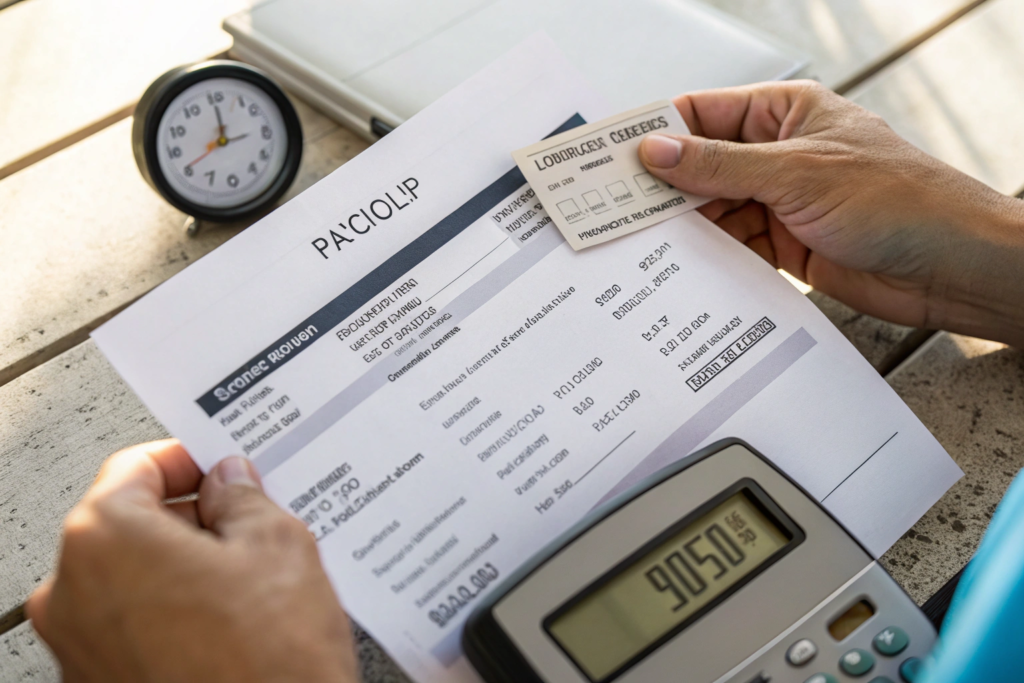
Paper time cards can be faked. A supervisor can fill them in with a pen. A worker can punch in for an absent colleague. A digital biometric system—fingerprint or facial recognition—ties the attendance record to a unique, unforgeable physical identifier. The worker's actual arrival and departure times are recorded to the minute. The payroll software pulls directly from the biometric data. There is no manual override without a documented reason. At Shanghai Fumao, every employee scans in and out on a fingerprint reader. The data feeds into our ERP system. Overtime is calculated automatically. The payroll clerk cannot alter the hours without leaving a digital audit trail. This system removes the incentive for supervisors to under-report hours because they cannot. The technology itself enforces compliance.
What Is the Actual Wage Structure and How Is It Posted for Worker Verification?
Transparency means the workers know what they should be paid before they receive their pay slip. Our wage structure is posted on the factory bulletin board in simplified Chinese. It shows the base hourly rate, the overtime multiplier for weekday overtime, the double-time multiplier for weekend overtime, the deduction for social insurance, and the net take-home calculation for a standard work week. Workers are encouraged to check their own pay slips against the posted formula. If a discrepancy exists, a worker relations representative—an employee elected by the workers, not appointed by management—is available to investigate. This system of posted rates and independent verification gives workers the power to hold management accountable. The Chinese labor law requirements for wage transparency are available through government sources and are regularly summarized by compliance organizations like the International Labour Organization.
What Workplace Safety and Worker Dignity Measures Are in Place?
Safety is not the absence of accidents. It is the presence of systems that prevent them. A factory without a recent accident might be safe or might just be lucky. The difference is visible in the physical environment: the width of the exit corridors, the state of the electrical wiring, the availability of drinking water, the temperature on the production floor, the presence of functioning toilet facilities. Workers notice these conditions every minute of their shift. An unsafe, uncomfortable, or undignified environment sends a message that management does not value the people making the clothes. That message affects morale, productivity, and quality.
Shanghai Fumao maintains worker safety through quarterly fire drills, clearly marked and permanently unobstructed emergency exits, monthly electrical safety inspections, climate-controlled production floors, and clean, well-stocked restroom and break facilities that meet international workplace standards.
I recall a visit from a European compliance officer who had inspected factories in twelve countries. She walked our production floor and stopped at the first aid station. She opened the cabinet. It was fully stocked. The inspection log was current. She asked a nearby worker where the nearest fire extinguisher was. The worker pointed to it immediately and described the PASS method for using it. The officer closed her notebook and said, "The workers know the safety procedures. That is rarer than you think." The drill training was not a formality. It was real.
How Often Are Fire Drills Conducted and Documented?
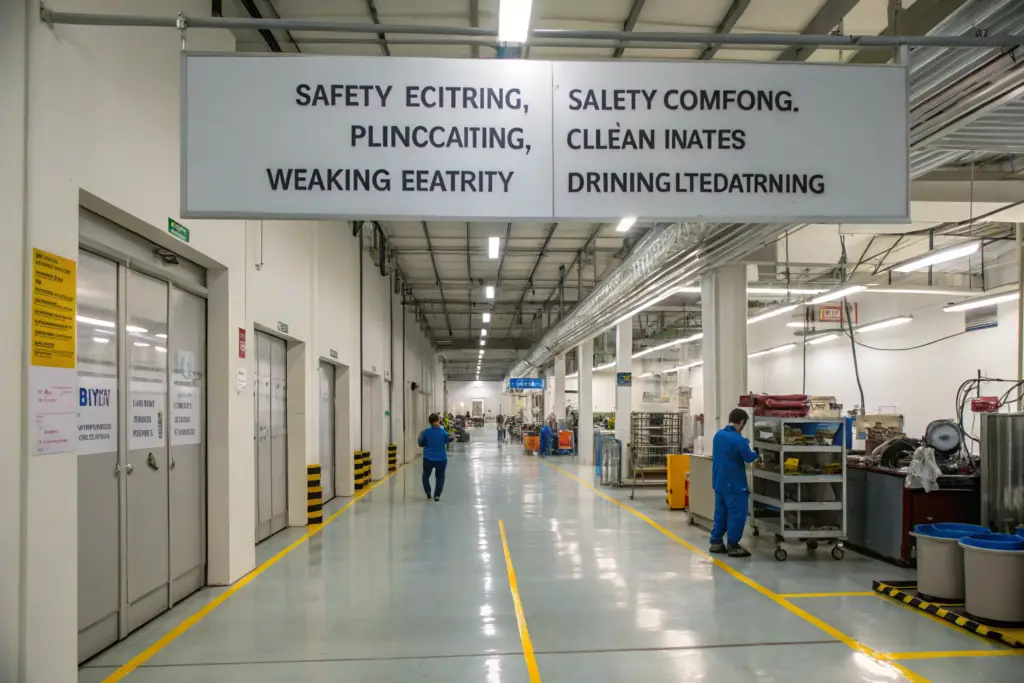
Fire is the single greatest physical risk in a textile factory. Fabric, thread, and lint are combustible materials. An electrical short in a poorly maintained machine can ignite a fire that spreads in seconds. Our fire drills are conducted quarterly, not annually. Every worker participates. The drill is timed. The evacuation time is recorded and compared to the previous quarter. If the time increases, the safety officer investigates why. Drill records are kept in a logbook available for auditor review. The fire alarm is tested monthly. The sprinkler system is inspected annually by an external fire safety company. These are not optional tasks. They are calendared compliance activities with assigned responsible persons. The fire safety standards we follow are aligned with international best practices and can be referenced through organizations like the National Fire Protection Association.
What Facilities Are Provided for Rest, Hydration, and Hygiene?
Dignity is in the details. Our production floor has a chilled and filtered water dispenser located no more than thirty meters from any workstation. Workers can hydrate at will. The restroom facilities are gender-separated, cleaned twice daily, and stocked with soap and hand towels. The break room has comfortable seating, a microwave, and a hot water boiler for tea. There is a dedicated quiet room with cots for workers who feel unwell during a shift. These facilities cost money to build and maintain. They generate no direct revenue. They are an expression of a simple belief: the people who make our shorts deserve to work in conditions that do not degrade their health or their humanity. The correlation between worker welfare and product quality is not just intuitive; it is documented by research on ethical manufacturing from the Ethical Trading Initiative.
How Do We Trace Our Supply Chain to Prevent Forced or Underage Labor?
The most insidious ethical violation in apparel manufacturing is hidden labor abuse in the subcontracted supply chain. A brand audits the final assembly factory. The factory passes. But the fabric was woven in a mill that uses forced labor. The buttons were made in a workshop that employs children. The washing was done in a facility that dumps toxic water into a river. The final product is ethically tainted, but the audit at the final factory did not detect it because the abuse happened upstream.
Shanghai Fumao traces its full supply chain through documented, audited subcontractors, maintains a strict age verification protocol for all direct and indirect employees, and requires every fabric mill, trim supplier, and washing facility to provide their own social compliance certification as a condition of partnership.
A client once challenged me on this point. He asked how he could be sure the fabric for his order was not produced with forced labor in the Xinjiang region, a topic of significant international concern. I provided the complete paper trail for his fabric lot: the mill's social compliance certificate, the mill's employee register with redacted names but visible hire dates and ID check marks, and the lot-level fabric delivery note that traced the greige fabric back to a specific production batch at a specific mill. The traceability was not a summary. It was specific to his order. This level of supply chain mapping is difficult, expensive, and absolutely necessary.
What Is the Age Verification Process for Every New Hire?
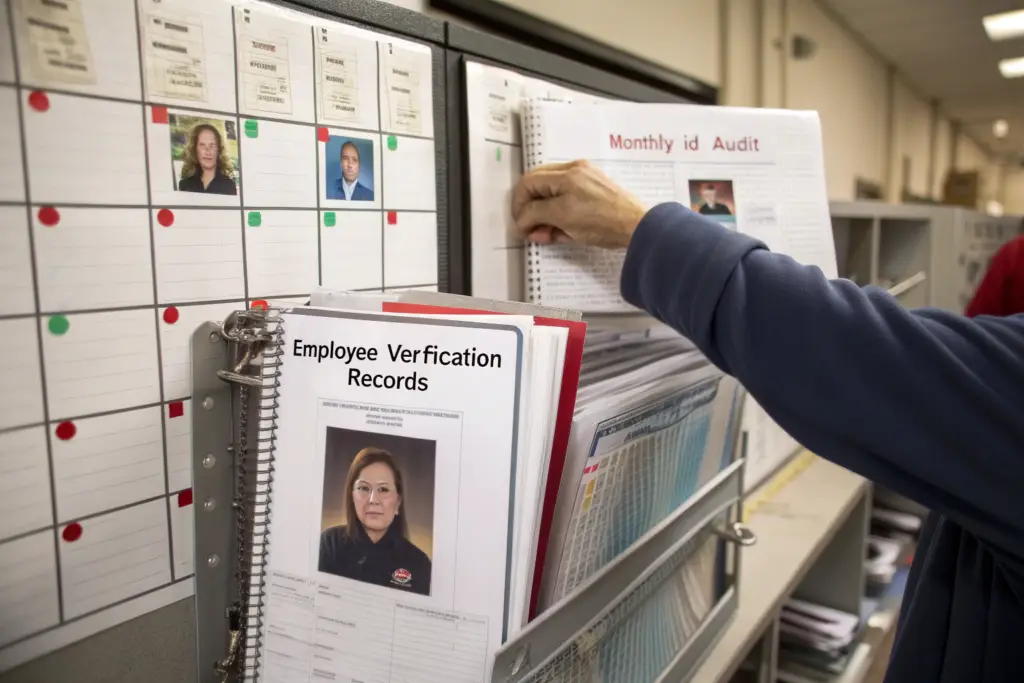
Our hiring policy requires every applicant to present their original government-issued ID card. The HR officer photocopies the card and verifies the birth date against the company's minimum age requirement, which is eighteen. The applicant's ID number is cross-referenced against the national social insurance database to confirm the document is genuine and the age is accurate. No one under the age of eighteen is hired in any capacity, including cleaning, maintenance, or administrative roles. The age verification is documented on a checklist that is signed by the HR officer and countersigned by the department supervisor. This record is filed in the employee's personnel folder and is subject to audit. There are no exceptions for relatives, seasonal workers, or apprentices. The policy is absolute and auditable.
How Are Subcontractors Vetted and Monitored for Compliance?
A subcontractor is a risk extension of our factory. If we outsource a cutting job or a specialty wash to a facility that exploits workers, we are responsible for that exploitation. We do not outsource production without prior approval from our client. If a client approves the use of a subcontractor, that subcontractor must pass our internal social compliance audit before any work is placed. The audit uses the same checklist as the SMETA audit and is conducted by our internal compliance team, which reports directly to the General Manager, not to the Production Manager. This independence ensures the compliance team has no incentive to approve a subcontractor that fails the audit. Approved subcontractors are re-audited annually. Unannounced spot checks are conducted during production. A single critical violation results in immediate termination of the subcontracting relationship. This is a zero-tolerance policy with no second chances.
Conclusion
Ethical production is not a destination you arrive at and photograph for the website. It is a discipline you maintain every day, through documented systems, independent audits, and a genuine belief that the people who sew your seams deserve to be treated with dignity. At Shanghai Fumao, we have chosen to build our factory around transparency rather than secrecy. We invite audits, announced and unannounced. We post wage structures publicly. We trace our supply chain down to the fabric lot. We invest in safety equipment, comfortable break rooms, and clean bathrooms that generate no revenue but communicate profound respect.
The result is not just a clear conscience. It is a business advantage. Brands that partner with us can confidently tell their customers where and how their products were made. They can answer the increasingly informed questions that consumers are asking about supply chain ethics. They can build their brand on a foundation of verified truth rather than marketing spin.
If ethical manufacturing matters to your brand, I invite you to verify our standards for yourself. At Shanghai Fumao, our audit reports are available to serious buyers under NDA. Our factory floor is open for tours. Our workers are free to speak to visitors. Contact our Business Director, Elaine, at elaine@fumaoclothing.com to schedule a visit or request our latest SMETA audit summary. Let us show you what ethical production actually looks like.