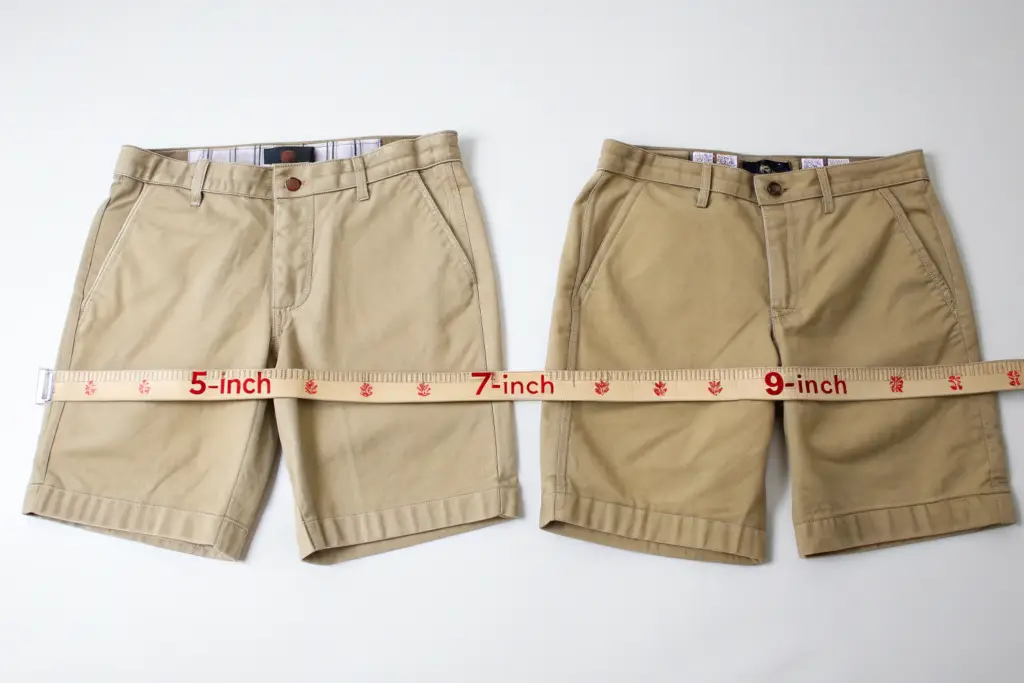
I was on a call with a retail buyer from a major Southeastern department store chain last October. He told me something that made my ears perk up. His open-to-buy budget for spring shorts was flat year-over-year. But his allocation had shifted dramatically. He was cutting orders for 5-inch inseams by 30%. He was cutting 9-inch and 11-inch inseams by 15%. And he was doubling his buy on the 7-inch inseam across three brands. I asked him why. He said the return data from the previous season had spoken. The 7-inch was the only inseam length with a return rate under 10% and a full-price sell-through above 80%. He was not guessing. He was following the math.
Your competitors are stockpiling classic 7-inch inseam shorts because this specific length has emerged as the "golden mean" of men's shorts—long enough for age-appropriate modesty and office acceptability, short enough for modern proportions and visual leg elongation, and statistically proven to generate the lowest return rate across inseam options.
The 7-inch inseam is not a random trend. It is the result of a decade-long cultural negotiation about how much thigh a man should show. The 5-inch was the young guy's statement. The 9-inch and 11-inch were the safe, conservative defaults. The market has voted, and the winner is the compromise length. At Shanghai Fumao, we have seen the order pattern shift in real time. Our production runs of 7-inch classic shorts have grown from 25% of our men's output to over 55% in three years. The data is undeniable. Let me explain why this specific inseam is winning and why waiting to stock it means leaving money on the table.
What Makes the 7-Inch Inseam the Universal "Golden Ratio" for Men's Shorts?
The inseam of a short is not just a measurement. It is a proportion that divides the leg in a specific place. The 5-inch inseam cuts the leg mid-thigh. It maximizes exposure. It reads as athletic, youthful, and deliberately bold. The 9-inch inseam cuts the leg just above the knee. It covers the thigh almost entirely. It reads as conservative, traditional, and safe. The 7-inch inseam hits the sweet spot between these two extremes. It shows enough thigh to look modern and intentional. It covers enough thigh to remain appropriate for a man over thirty who does not want to look like he is trying to dress like his college-age son.
The 7-inch inseam hits the visual center of the thigh on the average American male, creating a 50-50 proportion between exposed leg and short that photographers and stylists recognize as the most aesthetically balanced silhouette.
I worked with a menswear brand that was paralyzed by inseam indecision. They were offering 5-inch, 7-inch, and 9-inch versions of the same chino short. Their inventory was bloated. We ran an analysis of their sales data. The 7-inch accounted for 62% of units sold. The 5-inch was 18%. The 9-inch was 20%. The 7-inch was cannibalizing both extremes. Customers who bought the 5-inch were young guys under 25. Customers who bought the 9-inch were men over 55. The 7-inch captured the entire 25-to-55 demographic. The brand consolidated to the 7-inch as their core length and offered one 5-inch as a fashion option. Their inventory turns improved. Their markdowns dropped. The data forced a disciplined decision.
How Does the 7-Inch Inseam Flatter Different Body Types?
A short inseam that hits at the wrong point can make a man look shorter and wider. The 5-inch inseam on a man with thicker thighs can create a blocky, truncated silhouette. The 9-inch inseam on a man with shorter legs can make him look like his shorts are swallowing his lower body. The 7-inch is a democratic length. On a tall man, it shows enough leg to look proportional. On a shorter man, it provides enough length to avoid looking like a child's garment while still leaving visible leg above the knee, which creates an elongating vertical line. This universality means a brand can offer one core inseam and satisfy a wide range of body types without a complex tall, regular, and short sizing matrix. The fit consistency of the 7-inch inseam is frequently cited in consumer preference studies tracked by The NPD Group.
Why Is the 7-Inch Inseam Perceived as the Most Age-Appropriate Length?
Age-appropriate dressing is a real anxiety for male consumers. A 45-year-old man does not want to look like he is having a midlife crisis. He also does not want to look like he has given up. The 5-inch inseam signals youth. The 9-inch inseam signals maturity, but also a certain sartorial surrender. The 7-inch inseam signals awareness. It says: I know modern proportions. I am confident but not desperate for attention. This psychological positioning is powerful. It allows the 7-inch short to be sold to a 28-year-old creative director and a 52-year-old attorney with the same marketing imagery and the same product page copy. No other inseam length bridges the age gap this effectively. Consumer psychology around age and clothing choices is an area of study discussed by fashion scholars in publications like The Fashion Studies Journal.
How Is the Shift Toward Relaxed Tailoring Driving the 7-Inch Short Boom?
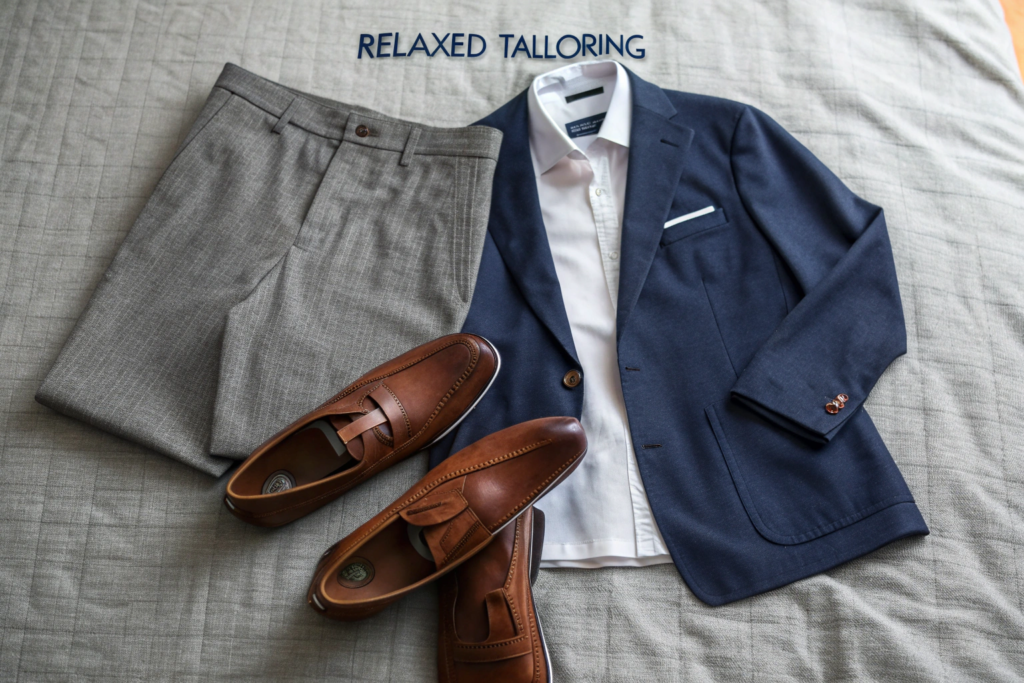
The suit is not dead. But it is no longer the daily uniform for millions of professional men. The office dress code has relaxed permanently. The new uniform is a hybrid: tailored enough to convey seriousness, relaxed enough to feel human. The 7-inch short is the bottom-half anchor of this new uniform. It pairs with an unstructured blazer and loafers without looking like a beach garment. It pairs with a polo and clean sneakers without looking like a boardroom cosplay. It sits at the exact formality level of the modern creative-professional workplace.
The relaxed tailoring movement, which replaces structured suiting with soft-shouldered blazers and tailored casual trousers, has naturally pulled the 7-inch short into the professional orbit because its mid-thigh length mirrors the proportion of a cropped trouser.
A brand we manufacture for in the "elevated casual" space built an entire spring lookbook around one pair of 7-inch chino shorts styled three ways: with a knit blazer and a tee, with an Oxford and loafers, and with a camp collar shirt and suede sneakers. The lookbook drove their wholesale bookings. Retail buyers saw the styling and immediately understood the product's range. The short was not being sold as a casual weekend piece. It was being sold as a legitimate professional garment for the modern workplace. This positioning expanded the customer base to include men who had previously only worn trousers in warm weather.
Why Does the 7-Inch Short Work Under an Unstructured Blazer?
The blazer-shorts combination is tricky. If the shorts are too long, the silhouette looks bottom-heavy. The blazer ends at the hip. The shorts continue to the knee. The proportions sag. If the shorts are too short, the look becomes comedic. The 7-inch inseam ends a few inches above the knee. This creates a clean band of visible leg between the blazer hem and the short hem. The leg becomes a proportional spacer that lightens the entire outfit. This is the same principle that governs why cropped trousers work with a blazer. The 7-inch short is essentially a cropped trouser in warm-weather fabric. The styling logic is identical. Further exploration of this menswear proportion theory can be found in fashion commentary from The Business of Fashion.
How Has the "Work From Anywhere" Culture Expanded the Market for Smart Shorts?
The remote work revolution has untethered millions of men from office air conditioning. A man working from home in July wants to be comfortable. He does not want to wear trousers. But he has video calls. He needs to look presentable from the waist up. The 7-inch short solves this perfectly. It never appears on camera. But its comfort determines his mood and his willingness to sit at a desk for eight hours. The short has become a silent productivity tool. Even as some offices mandate returns, the hybrid schedule means men are still dressing for comfort two or three days a week. The demand for smart shorts that bridge the home-office gap is not going away. Workplace culture shifts and their impact on apparel demand are tracked by organizations like The National Retail Federation.
What Inventory and Supply Chain Advantages Do Early Stockers Gain?
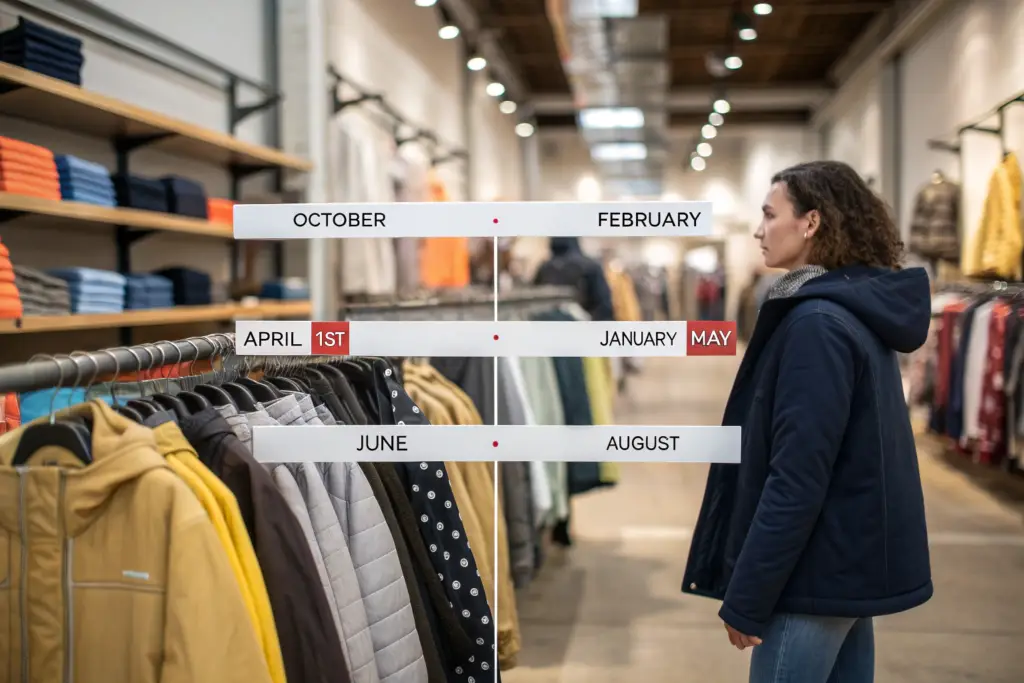
Timing is a competitive weapon in the apparel business. The brand that places its 7-inch short order in October receives the goods in February. The goods are on the warehouse shelf in March. The product pages are live with full size runs by April 1st, the exact moment search volume for "men's shorts" begins its steep spring climb. The brand that waits until January to place the order receives goods in May. The peak selling window is June through August. The late brand has lost two months of full-margin selling. The early brand has already banked the profit and can reorder into the season.
Brands that stock 7-inch shorts early capture the first wave of consumer search demand in April and May, secure better factory pricing during off-peak production months, and avoid the container shipping price spikes that hit during the summer peak season.
A brand owner I advise placed his 7-inch short production order in November last year. The factory was in its off-peak period. He negotiated a 10% discount on labor. The container shipping cost was $3,200. His competitor, sourcing the same type of short from a similar factory, placed his order in February. The factory was entering peak season. The labor discount was gone. The container cost had jumped to $5,800 due to pre-Chinese New Year demand. The early brand had a $2.60 per unit cost advantage before the first short was sold. That advantage compounds across thousands of units. The supply chain timing dynamics are reported regularly by freight analytics platforms like Freightos.
How Does Off-Peak Production Improve Quality and Consistency?
A factory rushing to fulfill peak-season orders makes more mistakes. The cutting room is overloaded. The sewing lines run overtime. Quality inspectors are pressured to pass borderline garments to meet shipment deadlines. An order placed during the off-peak period gets the factory's full attention. The best line supervisors are available. The machines are not running twenty-four hours a day, so maintenance is current. The quality control team has time to do thorough inspections. The same short, made by the same factory, will have fewer defects when produced in November than when produced in March. This is not a theory. It is a production reality I have observed across every season at Shanghai Fumao. The principles of production scheduling and quality management are standard industrial engineering knowledge, discussed in manufacturing publications like The Manufacturer.
Why Is In-Season Reorder Capability a Critical Competitive Moat?
A short that sells well in May will need replenishment in June. A brand that placed its initial order early has already received and distributed its inventory. The factory has the pattern, the fabric, and the production history. A replenishment order of 1,000 units can be turned around in 30 days because the materials are on hand and the learning curve has been climbed. The brand that placed its first order late is still waiting for the initial shipment. It cannot reorder what it has not yet received. The early brand gets two bites at the selling season. The late brand gets one, and if anything goes wrong, it gets zero. The reorder advantage is a direct result of forward planning. It creates a competitive moat that late-moving brands cannot cross until the following year.
How to Integrate the 7-Inch Short into a Spring/Summer Line Plan Before It Is Too Late?
The time to act on the 7-inch short is now, not in January when the trade shows begin. By January, the factory capacity is already allocated. The best fabric lots are already reserved by brands that planned ahead. The late mover gets what is left: the backup fabric, the overflow production slot, the B-team line supervisor. The window for strategic advantage is the planning window, not the buying window. This is the difference between a proactive brand and a reactive brand.
Integrating the 7-inch short into a line plan requires designating it as the anchor bottom for spring/summer, offering it in four to five core colors, ordering the initial bulk run before November for an April floor-set, and building the marketing imagery around its versatile styling range.
A brand we work with made the 7-inch short the literal center of their spring line sheet. Every top in the collection was styled back to the 7-inch short. The polo, the linen button-down, the knit tee, the camp collar shirt. The short became the unifying product. Retail buyers noticed. They wrote larger orders for the short because they could see exactly how it would be merchandised on the floor. The brand's wholesale bookings for shorts increased 35% year-over-year. The focus on a single proven length simplified the line and amplified the marketing message.
What Core Colors Should Anchor a 7-Inch Short Assortment?
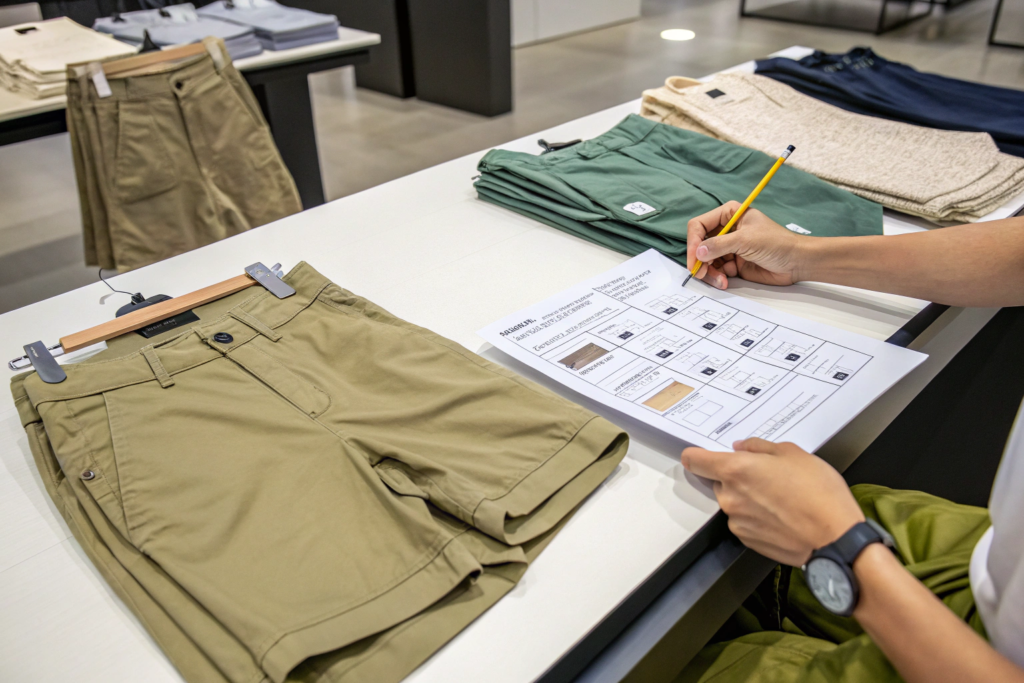
The color strategy for a 7-inch short assortment should prioritize sell-through over novelty. The five colors that should anchor any men's 7-inch short line are Khaki, Navy, Olive, Stone, and Grey. These five colors represent the vast majority of men's shorts sales in the US market. They match every shirt color in a typical men's wardrobe. They never go on deep discount. Once these core colors are selling, a seasonal accent color—such as a dusty rose, a faded turquoise, or a warm ochre—can be added for visual interest in marketing and window displays. But the accent color should represent no more than 10% of the buy. The core five drive the volume and the profit. Retail color sell-through data is analyzed regularly by market research firms like The NPD Group.
How Should You Time Your Production Calendar for the Optimal Floor-Set?
Work backward from the ideal customer purchase moment. For spring shorts, the search volume peaks in May. The product should be on the retail floor or live on the e-commerce site by April 1st to capture early demand and build sales momentum. Goods must arrive in the US warehouse by mid-March to allow for distribution. Ocean transit from Shanghai to a US West Coast port takes approximately 18-22 days. East Coast adds another week. Factory production takes 35-45 days from fabric cutting to packed cartons. Fabric sourcing and pre-production sampling take another 30 days. Counting backward, the purchase order must be placed by late October or early November to hit an April floor-set comfortably. This timeline is tight but achievable. A detailed production calendar template is a useful tool, and examples are available from sourcing education platforms like Apparel Resources.
Conclusion
Your competitors are not stockpiling 7-inch shorts because of a hunch. They are following the data. The 7-inch inseam has the highest sell-through rate and the lowest return rate of any men's short length. It solves the age-appropriateness problem. It solves the body-type versatility problem. It solves the relaxed-tailoring styling problem. It is the single most commercially safe bet in the men's warm-weather category right now.
The brands that committed early are already sitting on inventory. They will capture the April search traffic while their competitors are still waiting for containers to clear customs. They will have full size runs available when the customer is ready to buy. They will have the margin advantage of off-peak production pricing. The window to join them is closing, but it is not yet shut. The planning cycle for next spring is happening right now.
If you want to secure your 7-inch short production slot before the peak-season rush, I encourage you to start the conversation today. At Shanghai Fumao, we have the 7-inch pattern blocks refined and the core fabric colors ready to cut. We can turn a confirmed order into a shipping container in 45 days. Contact our Business Director, Elaine, at elaine@fumaoclothing.com to lock in your production timeline and receive a sample of our 7-inch classic chino short. Let's get your inventory on the water before your competitors finish their line sheets.