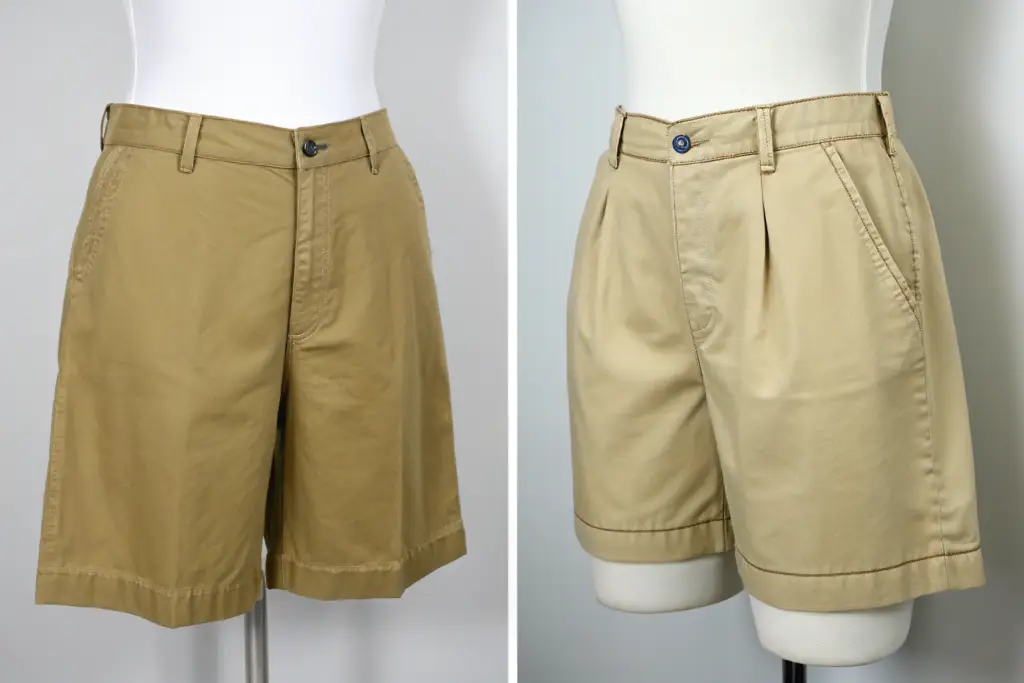
You sit with your line sheet open. You need to add classic shorts to your wholesale offering. You look at the options. Flat-front. Pleated. Your sales rep tells you that buyers are asking for both. Your designer says flat-front is cleaner. Your older accounts say their customers still want pleats. You have limited open-to-buy. You cannot stock every variation. You need to make a choice. A bet on which style will generate the most reorders, the fewest returns, and the strongest margin. The wrong bet means inventory that sits. The right bet means a program that grows season after season. You need to know which style is truly more classic, more commercially reliable, for the wholesale market you serve.
Flat-front shorts are generally more classic and commercially dominant than pleated shorts for the majority of wholesale clients. The flat-front silhouette has been the default standard for men's casual shorts since the 1960s. It represents the largest unit volume, the broadest demographic appeal, and the lowest return rate in the category. Pleated shorts, while also a genuine classic with a long tailoring history, serve a smaller, more specific customer segment. The pleated short is having a fashion moment in 2026, driving renewed interest, but its long-term demand curve is more volatile than the steady, reliable demand for flat-front shorts. For a wholesale buyer building a core program, the flat-front short is the foundation. The pleated short is a strategic addition.
At Shanghai Fumao, our production data tells a clear story. Flat-front shorts account for roughly 80% of our men's classic shorts volume. Pleated shorts account for about 20%. The flat-front number has been stable for years. The pleated number has grown recently, driven by the current trend cycle, but it has spiked and dipped before. The flat-front line is steady. The pleated line is cyclical. This data informs my recommendation to wholesale clients. Build your core on flat-front. Add pleated as a test. This article breaks down the historical, commercial, and fit considerations behind that recommendation.
What Is the Historical Origin of Flat-Front and Pleated Shorts?
Both styles have legitimate historical roots. Neither was invented last week. Understanding their origins helps a wholesale buyer assess their cultural weight. A garment with deeper historical roots tends to be more stable in demand. It is less subject to the whims of fashion. The flat-front short traces its modern lineage primarily to the post-World War II American casual boom. The pleated short traces its lineage further back, to British military uniforms and early 20th-century tailoring.
I have studied the history of these garments because it influences how brands market them. A brand selling pleated shorts can reference the 1930s British officer on the Nile. A brand selling flat-front shorts can reference the 1950s American Ivy League student. Both stories are authentic. Both resonate with different customers. The historical origin is a marketing asset. The wholesale buyer who understands these stories can help their retail accounts sell the product.
The history of a garment shape is not just trivia. It explains the garment's proportions, its original function, and its cultural associations. These associations persist in the minds of consumers, consciously or unconsciously. Let's trace the two lineages.
How Did Military and Ivy League Traditions Shape These Two Styles?
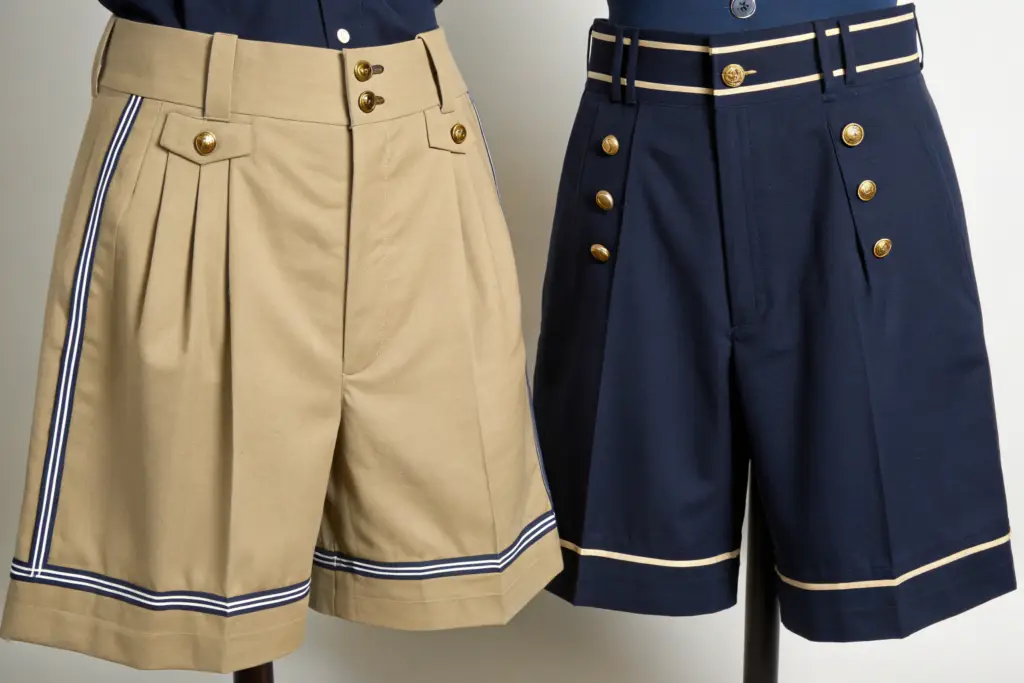
The pleated short descends directly from military uniform. British officers in tropical colonies wore pleated khaki shorts. The forward pleats provided room for movement in the heat. The high waist provided support. The garment was functional. It was also a symbol of authority and order. After the wars, pleated trousers and shorts transitioned into civilian tailoring, becoming the standard for business dress and formal summer wear through the 1950s.
The flat-front short gained prominence in the post-war American casual revolution. The G.I. Bill sent veterans to college. They wore their military chinos, but they wanted something simpler, more relaxed. The flat-front chino short, popularized by Ivy League students and later by the preppy movement of the 1980s, became the uniform of American leisure. It was less structured, more democratic. It was the short of the weekend, not the officer's mess. The history of men's shorts from military to casual traces this evolution. The flat-front short represents the democratization of casual clothing. The pleated short represents a tailoring tradition.
When Did the Flat-Front Short Become the Dominant Casual Silhouette?
The flat-front short overtook the pleated short as the casual default in the 1960s and 1970s. The cultural shift toward informality, the influence of jeans and workwear, and the rise of sportswear all contributed. By the 1980s, the pleated short was associated with older men and formal settings. The flat-front short was worn by everyone else. The 1990s and 2000s saw a brief pleated revival driven by the oversized fashion trends, but the flat-front quickly reasserted dominance in the 2010s with the slim-fit movement.
Today, the flat-front short is the baseline. It is what most men picture when they think of a classic short. The evolution of men's casual shorts article documents this shift. A wholesale buyer building a program for the broadest possible audience starts with the flat-front because it is the mental default for the modern consumer. The pleated short is a conscious departure from that default.
What Does the Wholesale Sales Data Say About Flat-Front Versus Pleated?
History is interesting. Data is actionable. The wholesale sales data from multiple sources, our factory production records, our brand partners' sell-through reports, and industry retail data, consistently shows the flat-front short as the dominant unit volume driver. It is not close. The flat-front short outsells the pleated short by a significant margin in unit terms. The margin varies by brand and demographic, but the direction is consistent.
I reviewed the production data from our five lines over the past three years. Flat-front shorts represented between 78% and 85% of our classic men's shorts volume each year. Pleated shorts represented between 15% and 22%. The flat-front share was stable. The pleated share fluctuated. The men's shorts market share data by style from retail point-of-sale systems shows a similar split. Flat-front is the dominant silhouette. A wholesale buyer who ignores this data is betting against the market.
The data is clear at the aggregate level. But the aggregate hides important segment differences. The right choice depends on the wholesale buyer's specific customer. Let's break down the data by demographic.
Which Demographic Segments Prefer Each Silhouette?
The flat-front short appeals to the broadest demographic. Men from 18 to 65 wear flat-front shorts. It is the default for the contemporary menswear customer, the streetwear customer, the preppy customer, and the mass-market customer. The pleated short appeals to two distinct segments. Men over 50 who have worn pleats for decades and prefer the comfort and the traditional look. And fashion-forward men aged 25 to 40 who are embracing the pleated revival as a style statement.
The older pleated customer is a stable, loyal segment. He reorders the same pleated short year after year. The younger pleated customer is a trend-driven segment. His demand may be strong now but is less predictable long-term. The men's apparel demographic preferences data supports this segmentation. A wholesale buyer who serves a traditional, older clientele should absolutely stock pleated shorts. A wholesale buyer who serves a young, trend-driven clientele should stock both, with a larger investment in flat-front. A buyer who serves the broad middle should lead with flat-front.
How Do Return Rates and Sell-Through Compare Between the Two?
Our brand partners report that flat-front shorts have a slightly lower return rate than pleated shorts. The flat-front fit is simpler. There is less to go wrong. A pleated short that is poorly constructed, with pleats that gape open or do not lie flat, will be returned. The pleated short requires more precise pattern-making and construction. A cheap pleated short has a high return rate. A well-made pleated short has a return rate comparable to flat-front.
Sell-through rates on flat-front shorts are consistently high, typically 85% to 95% at full price for a quality product. Pleated short sell-through rates are more variable. In a strong trend year like 2026, they can match or even exceed flat-front sell-through for fashion-forward brands. In a weak year, they lag. The apparel sell-through rate benchmarks show the stability of core basics. Flat-front shorts are a core basic. Pleated shorts are an elevated basic with a fashion component.
How Do Fit and Body Type Influence the Choice Between Flat-Front and Pleated?
The wholesale buyer is not just buying a style. They are buying a fit. The fit determines who can wear the short comfortably. A flat-front short fits a narrower range of body types well. It works best on men with a relatively straight hip-to-waist ratio. A pleated short fits a wider range of body types. The pleats provide hidden room. They accommodate a larger seat, thicker thighs, or a wider waist relative to the hip. The pleated short is inherently more forgiving.
I recall fitting a pleated short on a brand owner who had always worn flat-front. He had a muscular build from years of cycling. His flat-front shorts always pulled tight across the lap when he sat. The pleated shorts did not. He was amazed. He had thought pleats were just a style detail. He did not realize they were a functional accommodation for his body type. This experience is common. The pleat is a comfort feature as much as a style feature. The shorts fit guide for different body types explains this functional difference. A wholesale buyer who serves a diverse customer base with varied body types should consider offering a pleated option for fit inclusivity.
The fit difference is rooted in the extra fabric and the engineering of the pleat. The flat-front short is a cylinder. The pleated short is a shaped garment. Let's examine the specific fit advantages of each.
Why Do Pleated Shorts Accommodate Athletic and Larger Builds Better?
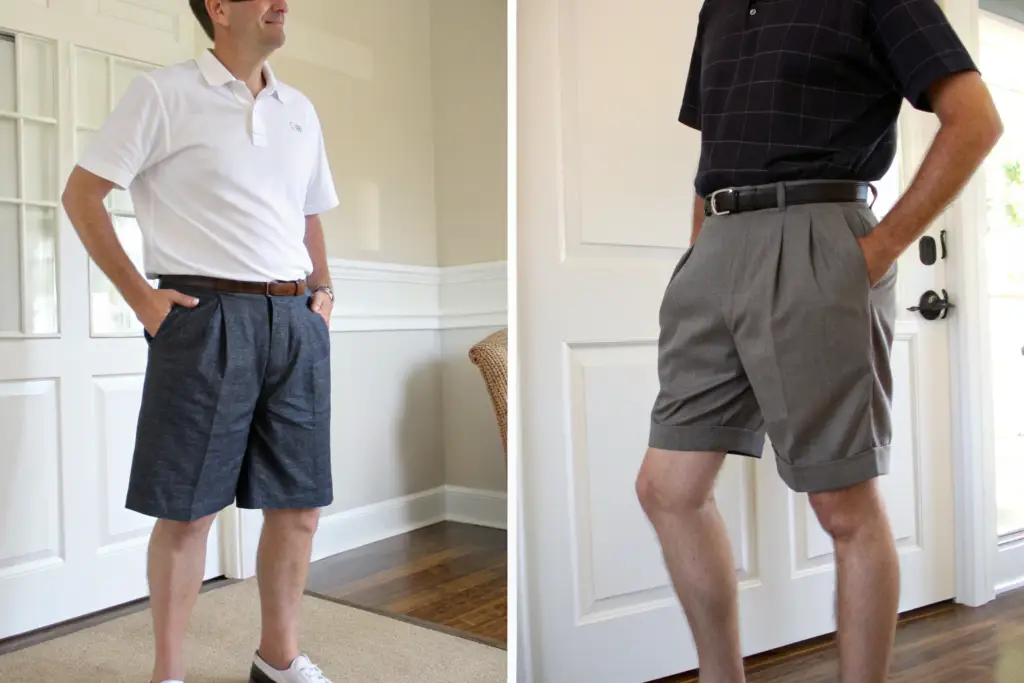
The pleat is a fabric reservoir. When a man with larger thighs or a fuller seat sits down, the pleats open. The fabric releases. The short does not pull tight. When he stands, the pleats close. The short returns to a tailored appearance. A flat-front short has no reservoir. If the thigh or seat needs more room, the fabric must stretch or the seams must strain.
This is a mechanical advantage. It is not about style. It is about fit. For the athletic-built man, the man with a powerlifter's thighs, the man with a fuller midsection, the pleated short is often the difference between a short that is wearable and a short that is not. The clothing fit for athletic body types guide recommends pleated or relaxed-fit shorts for this reason. A wholesale buyer who ignores the pleated option is excluding a significant segment of the male population from their product.
Does the Flat-Front Short Offer a Cleaner Look for Slimmer Body Types?
On a slimmer body, with a straight hip-to-waist ratio, the flat-front short looks exceptionally clean. There is no extra fabric. No pleats to add visual bulk. The smooth front creates a long, unbroken line from the waist to the hem. This elongates the torso and the legs. It creates a sleek, modern silhouette.
The flat-front short is the ideal canvas for a slim or average build. It shows the body's natural line without distortion. The men's style guide for slim builds emphasizes clean, unfussy silhouettes. The flat-front short is the quintessential unfussy silhouette. For this customer, a pleated short may have too much fabric and look bulky. The flat-front is the better choice.
How Should a Wholesale Buyer Build a Balanced Shorts Assortment?
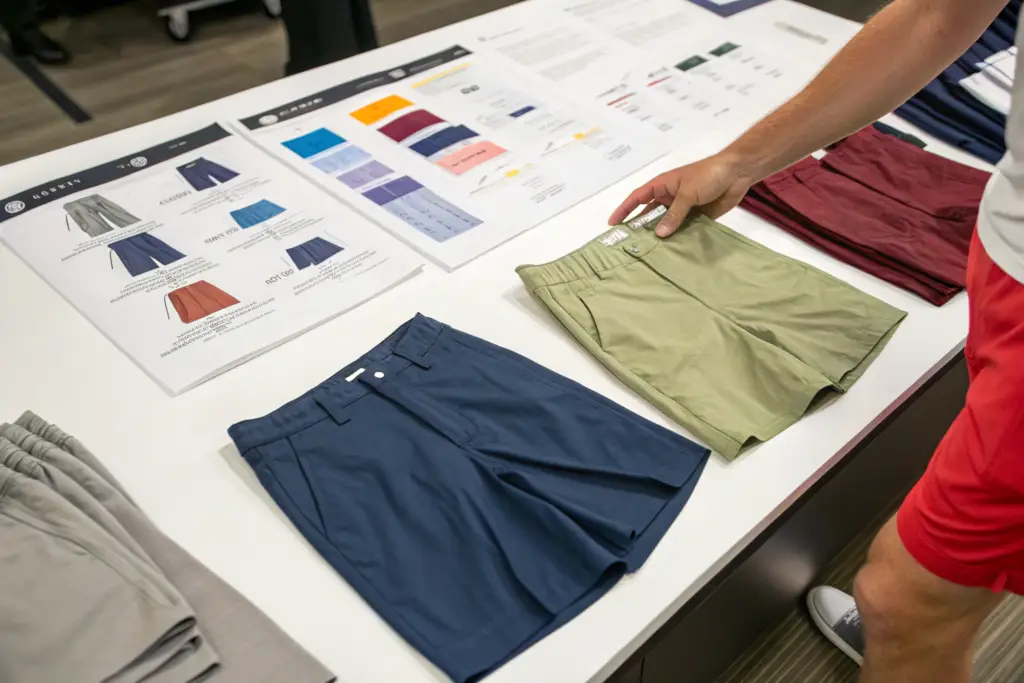
The question is not "flat-front or pleated?" The question is "what is the right ratio for my customer?" A smart wholesale buyer stocks both. The flat-front short is the volume driver. The pleated short is the differentiation piece and the fit inclusivity piece. The ratio depends on the target demographic. A young, contemporary brand might allocate 80% of the shorts buy to flat-front and 20% to pleated. A brand serving an older, traditional customer might allocate 60% to flat-front and 40% to pleated. A mass-market brand might allocate 90% to flat-front and 10% to pleated.
I advise our wholesale clients to think of flat-front and pleated not as competitors but as complements. They serve different needs for the same customer, or different customers within the same retail environment. A man might buy a flat-front chino short for everyday wear and a pleated linen short for vacation. A retailer might stock flat-front shorts for the younger staff and pleated shorts for the owner. The assortment should reflect the diversity of the end consumer. The wholesale assortment planning guide provides a framework for category management.
The core-plus-test model is a disciplined approach to inventory investment. It protects the majority of the budget in proven, low-risk styles. It allocates a small portion to higher-risk, higher-reward styles. Let's examine how to apply this model to the flat-front versus pleated decision.
What Is the Smart Ratio of Flat-Front to Pleated in a Core Wholesale Program?
For a generalist wholesale program targeting independent retailers across the U.S., a ratio of 80% flat-front to 20% pleated is a prudent starting point. The flat-front investment covers the essential colors, khaki, navy, olive, stone, and grey, across the core inseam lengths. The pleated investment covers one or two styles, perhaps a single-pleat chino in khaki and navy, and a double-pleat linen in natural.
This ratio provides the pleated option for the retailers who want it without over-committing inventory dollars to a more volatile style. The sell-through data from the first season will inform the ratio for the next season. If the pleated shorts sell out and reorders are strong, increase the allocation. If they sell slowly, maintain or reduce it. The inventory allocation strategy for wholesale guide explains this iterative approach. The market tells you what it wants. Listen to the data.
When Should a Wholesale Client Lead with Pleated Over Flat-Front?
A wholesale client should lead with pleated shorts when their brand identity and target customer explicitly align with the pleated aesthetic. A brand focused on vintage-inspired menswear, classic tailoring, or the "quiet luxury" trend might feature pleated shorts as a hero product. A brand targeting the 55-plus demographic with a focus on comfort and traditional style might sell more pleated than flat-front shorts.
In these specific cases, the pleated short is the brand signature, not an addition. The wholesale buyer is not chasing a trend. They are serving a defined customer with a known preference. The brand positioning for classic menswear article explores niche brand strategies. A niche brand can build its identity around the pleated short and be very successful. The question is always, who is your customer, and what do they want? The answer to that question determines the ratio.
Conclusion
Flat-front shorts are more classic than pleated shorts for the majority of wholesale clients. The historical trajectory, the sales data, and the breadth of demographic appeal all point to the flat-front as the commercial foundation of the classic shorts category. It is the default. It is the volume driver. It is the safe inventory investment that generates consistent sell-through and low return rates.
Pleated shorts are a genuine classic in their own right. They have a rich tailoring history. They offer functional fit advantages for athletic and larger body types. They are currently enjoying a fashion revival that has brought them to a younger audience. For the right brand and the right customer, they are a valuable addition to the assortment. They are not, however, a replacement for the flat-front short in a core wholesale program.
The smart wholesale strategy is to build the core on flat-front and test into pleated. Let the data from your specific customer base guide the ratio. Do not abandon the steady, proven volume of flat-front shorts for the excitement of a trend. But do not ignore the pleated short either. It serves a real customer need, both for fit and for style. A balanced assortment that includes both, in the right proportion for your market, is the most commercially resilient approach.
At Shanghai Fumao, we manufacture both flat-front and pleated classic shorts at scale. Our flat-front patterns are refined and consistent, the result of years of production. Our pleated patterns are newly updated for the modern proportions favored in 2026. We can advise you on the right ratio for your target market based on our production data and our brand partners' sell-through results. If you are planning your wholesale shorts buy, contact our Business Director, Elaine, at elaine@fumaoclothing.com. She will send you our flat-front and pleated sample pack with wholesale pricing. Let us help you build a balanced, profitable shorts assortment.