You open your laptop on a Monday morning. You need to restock your store's summer collection. You click through dozens of supplier catalogs. Every pair of shorts starts to look the same. The fabric swatches feel identical in your memory. You worry about ordering styles that were hot two years ago but are dead stock now. Late nights are spent wondering if your customers will even notice the difference between a $15 pair and a $45 pair. This confusion costs you money and sleep.
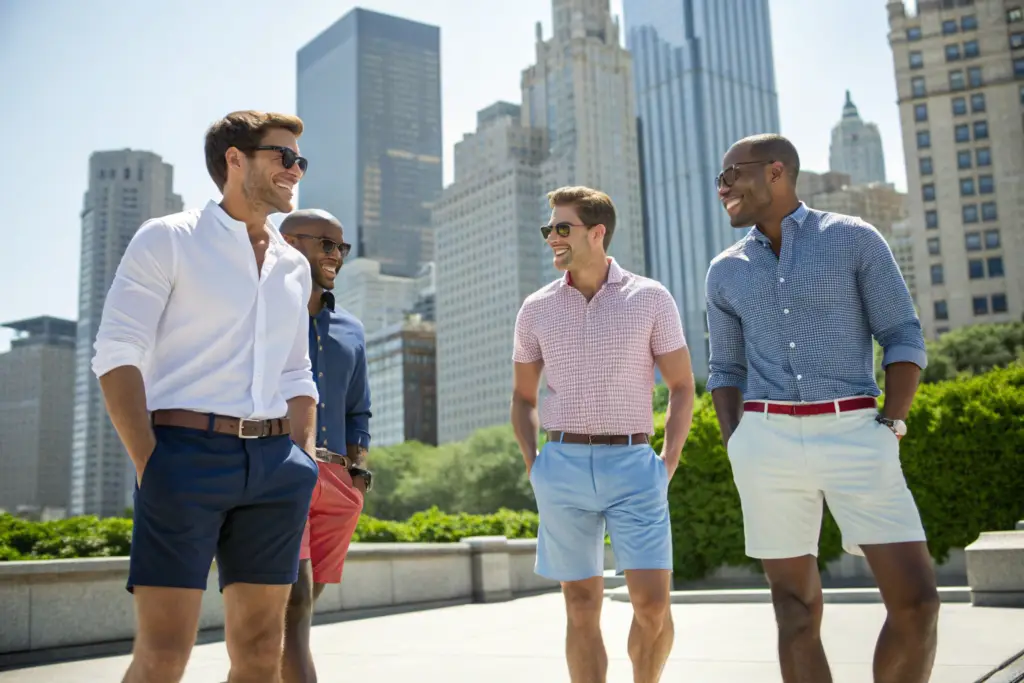
In 2026, the most classical types of shorts for men are not just fleeting trends. They are specific, proven categories: chino shorts, denim shorts, drawstring linen shorts, athletic shorts, and cargo shorts. These five types form the backbone of a profitable men's bottom wear business. They solve the problem of choice overload by focusing on versatile, evergreen silhouettes that American men buy year after year.
But knowing the names is not enough. A smart buyer like you needs to understand the fabric weight, the stitching detail, and the fit. You need to know why a 7-inch inseam sells better in California while a 9-inch inseam moves faster in the Midwest. We, at Shanghai Fumao, have manufactured millions of these shorts. We see the repeat orders. We see the return rates. This experience tells a clear story. Let’s break down each classical type. We will look at the materials, the construction, and the exact specifications that make a style a perennial best-seller. This knowledge will help you make decisions with confidence.
What Are the Most Popular Fabric Choices for Classic Men's Shorts in 2026?
I remember a call with a brand owner from Texas last July. He was frustrated. His customers complained that his shorts faded after three washes. He had sourced a cheap cotton-poly blend. He saved $0.80 per unit but lost thousands in returns. We replaced his fabric with a piece-dyed cotton twill from our mill. His return rate on shorts dropped to under 2%. The fabric is the product. You can have the perfect design. If the textile fails, the garment fails. And in the U.S. market, the end-consumer is ruthless. They will leave a one-star review over pilling or shrinkage.
We must look at the raw materials that build a brand's reputation. In 2026, the supply chain is more transparent than ever. Your customers ask about fiber origin and finishing processes. You need to speak their language. Let’s break down the specific textiles that define classical men’s shorts right now.
Why Is Cotton Twill Still the King for Chino Shorts?
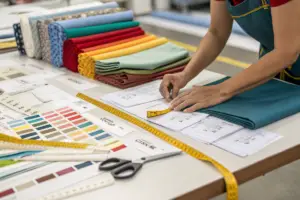
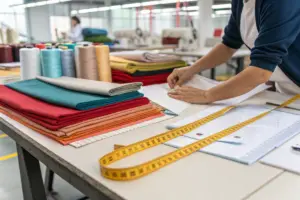
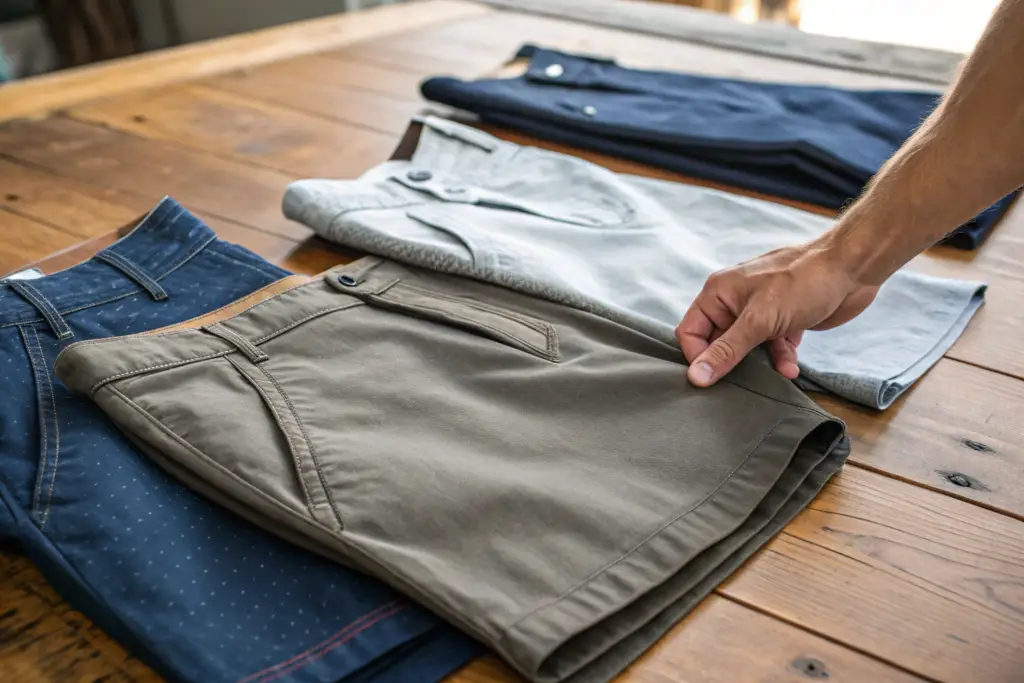
Cotton twill has held the throne for decades. There is a reason for this. The diagonal weave creates a dense, durable face. It resists snags. It drapes cleanly without clinging. For a classical chino short, a weight between 260 and 300 GSM is the sweet spot. Anything lighter looks flimsy. Anything heavier becomes uncomfortable in summer.
We source long-staple cotton for our twill products. This directly reduces pilling. Long fibers do not easily escape the yarn twist. Last year, we worked with a Florida-based distributor. He needed a technical fabric that looked casual. We used a 280 GSM cotton twill with 2% spandex. This gave a little stretch. Men above 40 years old loved it because it was forgiving at the waist. The fabric had a garment dye finish, which gave it a soft, lived-in feel from day one. You need to ask your supplier for a tear strength test report. A good twill should withstand at least 2.5 kg of force in the warp direction. If your supplier cannot show you this data, you should reconsider your partnership.
How Are Performance Blends Changing Athletic Shorts?
The athletic short market is no longer just for the gym. Men wear these shorts to run errands, to walk the dog, to coach their kid’s soccer team. The classical 100% polyester mesh has evolved. Today, the top-selling athletic short relies on a blend. A common high-quality construction uses 88% recycled polyester and 12% elastane. This gives a four-way stretch.
In our production lines at Shanghai Fumao, we often deal with microfiber blends. A typical inquiry we get is about the "swish" sound. Cheap woven polyester shorts make noise when the wearer walks. Our clients hate this. We use a circular knit technique with a brushed French terry backing. This makes the short silent and soft. It still looks sharp. Another critical point is odor control. Polyester holds on to smell. We apply a silver-ion antimicrobial finish at the fabric level. This is not a spray-on. It is integrated into the yarn extrusion. One of our brand clients in New York saw a 35% increase in their repeat orders after switching to this anti-odor fabric. You must check if the functional finish lasts for 50 washes. Ask for the AATCC 61 test results. This keeps your brand safe from false advertising claims.
Which Short Lengths Are Trending for American Men in 2026?
The inseam length debate is not trivial. It decides whether a pair of shorts sits in a warehouse or in a customer’s closet. I spoke with a buyer for a Midwest department store chain. He strictly buys 9-inch and 10-inch inseams. He told me, "My guy doesn't want to show that much thigh." But that is not the whole picture. The U.S. market is fragmented by geography, age, and lifestyle. There is no universal length. However, there is a safe zone. A 7-inch inseam has become the democratic length. It hits about 2-3 inches above the knee for most men of average height. It looks modern without being extreme.
To manage inventory risk, you need to understand how the classical silhouettes interact with the length. A loose cargo short hits differently than a slim chino short. The width of the leg opening matters as much as the length. Let’s look at the two most relevant comparisons for 2026.
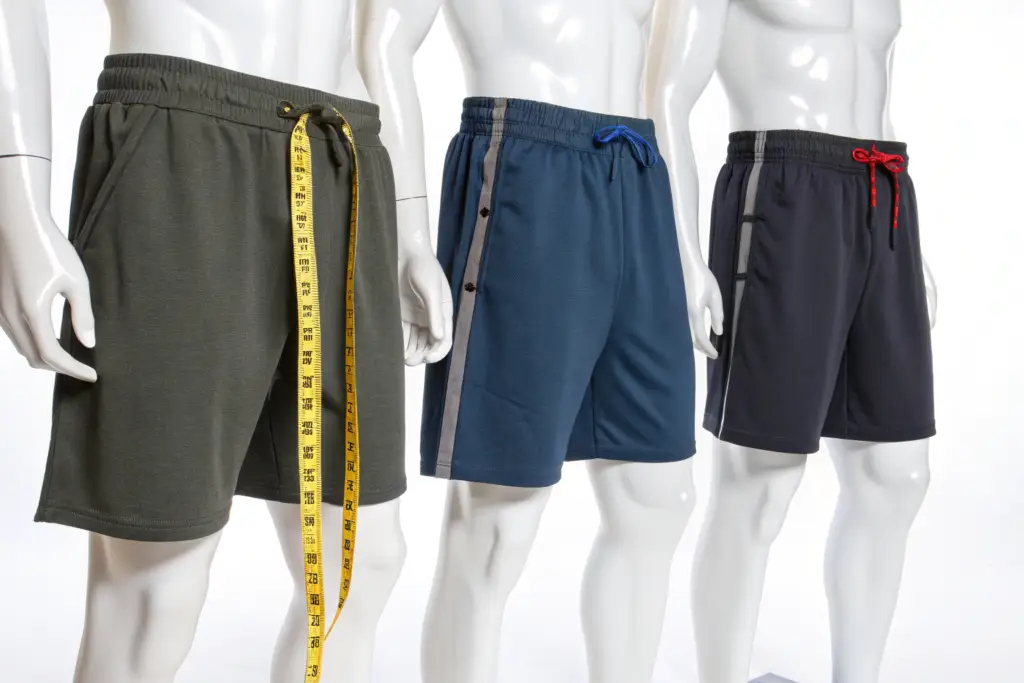
What Makes 5-Inch Inseam Shorts a Risky but Rewarding Niche?
5-inch inseam shorts are booming on social media. They are not for everyone. They target the fitness-conscious, Gen Z, and Millennial male who hits leg day. These shorts show off the quadriceps. But they can easily cross the line into looking like booty shorts.
We produce a significant volume of 5-inch shorts for a California lifestyle brand. Their secret is the leg opening. We keep it large enough so the fabric does not squeeze the thigh. A flat-front closure without an extended crotch line is also critical. You need to be careful with the grading. If you grade a 5-inch short from a Medium to an XXL, the proportions often fail. The rise becomes too long. We solve this by using a separate grading rule base for the larger sizes. We shorten the front rise slightly to keep the silhouette intact. If you are buying 5-inch shorts, look for a model with a split hem. A small vent on the outer seam gives horizontal mobility. Without this, the short pulls across the front hip. In our experience, return rates for 5-inch shorts are 15% higher than 7-inch shorts, primarily due to sizing complaints. You must put a clear "check the size chart" nudge on your product page.
Why Do 7-Inch Inseam Shorts Offer the Best Risk-to-Reward Ratio?
The 7-inch inseam is the safest bet for a reason. It falls just above the kneecap. It works for a 25-year-old in Brooklyn and a 55-year-old in Atlanta, provided the fit is right. This length creates the illusion of longer legs. It pairs well with a polo shirt or an Oxford cloth button-down.
In our sampling room, we develop a specific block for 7-inch shorts. We call it the "universal block." The key measurement is the front rise. For a size 32 waist, a front rise of 11 inches keeps it comfortable. The back rise must be 2 inches longer to cover the seat when sitting. We make the hem width about 22 inches for a straight leg. A common mistake is making the hem too narrow. A narrow hem makes the thigh look puffy. The shorts length should be balanced by the shoe height. Low-profile sneakers work best. Bulky dad shoes shorten the visual leg line. We often consult with our brand partners on their e-commerce photography. We advise them to style 7-inch shorts with no-show socks. This completes the endless summer look. The inventory turnover for this length is the fastest across our B2B platform.
How to Identify High-Quality Construction in Wholesale Men’s Shorts?
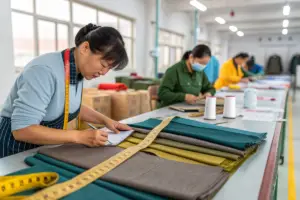
A pair of shorts can look perfect on a website. The flat lay shot is clean. The color is accurate. Then the customer opens the box. A button falls off. The zipper sticks. The pocket bag has a hole. You just lost a customer for life. Last year, a brand owner from Chicago visited our factory. He used to buy from a low-cost trader. He showed me a pair of shorts where the side seam twisted like a spiral. The fabric had been cut off-grain to save fabric. It was a disaster. He was losing his reputation over a $3 cost-cutting measure. We spent an afternoon showing him the difference between a $4 cut-make-trim (CMT) price and a $2 CMT price. The difference is invisible in a JPEG. It is impossible to ignore in real life.
You cannot inspect every piece yourself when you are sourcing from Shanghai Fumao or any overseas factory. You need a checklist. You need to know what a stress test looks like. Let’s look at the two danger zones that predict failure.
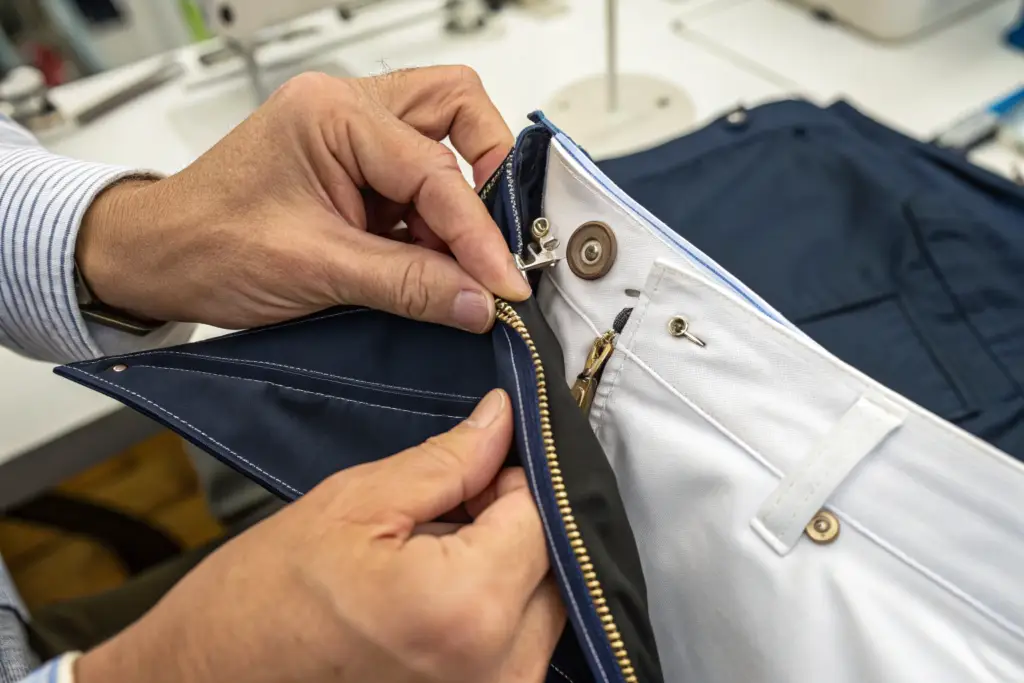
Can You Spot Weak Stitching Before It Leads to Returns?
Stitching is the skeleton of a pair of shorts. The most common failure point is the crotch seam. When a man sits, the crotch point takes massive force. A single-needle stitch with a 301 lockstitch is strong, but it has no stretch. If the fabric stretches, the thread snaps.
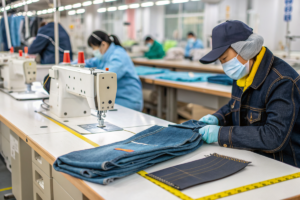
We use a Safety Stitch (516 combination stitch) on the back rise. This combines a chainstitch and an overlock simultaneously. It is a double layer of security. The stitch density must be at least 10 to 12 stitches per inch. I tell my quality control team to pull the seam by hand. If they see daylight through the threads, the tension is wrong. A real example: a denim short we make for a Nashville brand uses 100% cotton thread. But cotton thread rots if the laundry enzyme wash is not neutralized. We had a batch where the thread weakened. We caught it by doing a seam strength test after the wash, not before. We use a tensile strength tester. The seam must hold 4 kg of force before breaking. You should ask your supplier for a seam slippage test report. If they look confused, you are talking to the wrong person.
What Hardware Choices Define a Premium Pair of Shorts?
The feel of a zipper and the weight of a button create the first physical impression. For the U.S. market, YKK zippers are not a luxury. They are a baseline requirement. A generic zipper will save you $0.15. It will also jam and rust. The self-repairing zipper is a myth. A zipper fails, it fails.
We stock YKK #5 metal zippers for denim and heavy twill shorts. For lightweight linen shorts, we use YKK #3 nylon coil zippers. They are invisible and quiet. Buttons are another story. A sharp edge on a metal button will cut through the buttonhole thread in 20 washes. We buff the back edge of every metal shank button. For a coastal brand client, we switched to corozo buttons. They are carved from a nut. They are sustainable and have a natural grain. They cost more, but they do not crack under an industrial laundry press. We also double-bar tack the back pocket corners. A single bar tack is insufficient for a man who puts a heavy wallet in his back pocket. The belt loop construction must be turned under and topstitched. A raw-cut belt loop unravels. These tiny details do not show up on a line sheet. They show up as a 5-star review or a returned package.
What Are the Best Sourcing Strategies for Classical Men's Shorts in 2026?
Sourcing is a game of chess, not checkers. You are not just buying a product. You are buying time, logistics, and trust. I spoke with an AI sourcing platform executive recently. They scrape Alibaba and claim to find the "best" price. They miss the human element. They miss the factory that charges $0.50 more but delivers on time, every time. I remember a brand owner from Seattle. He chased the lowest price to a trading company. The shipment was 4 weeks late. He missed the Memorial Day sales window. The air freight bill ate his entire margin. He came to Shanghai Fumao for his reorder. We fixed his delivery schedule. We used a DDP (Delivered Duty Paid) shipping model. He received the goods at his warehouse door. No customs headaches.
Your sourcing strategy must align with your brand's risk tolerance. Do you want to hold inventory in a U.S. 3PL (third-party logistics) or ship directly from Asia? Let’s examine the two most effective models we see working right now for U.S. brand owners.
How Does the DDP Model Lower Your Inventory Risk?
DDP shipping is a game-changer for small to mid-sized brands. You pay a single price per unit. It covers the product cost, the freight, the U.S. customs duty, and the last-mile delivery to your warehouse. You do not need a customs broker license. You do not need to file an Importer Security Filing (ISF). We handle it.
At Shanghai Fumao, we bundle DDP pricing for our classical shorts. For a standard 7-inch chino short, we can quote you an all-in DDP price. You compare this directly to your target retail margin. A client in Denver runs his entire business from his phone. He texts me the order. We send him a DDP invoice. He pays 30% deposit. We go into production. 45 days later, the goods arrive at his third-party warehouse in Los Angeles. He never touches a shipping container. His landed cost is predictable. This predictability allows him to offer a 20% discount on pre-orders. He never worries about a customs hold costing him extra. We assume the logistics risk. We have a long-standing relationship with a freight forwarder that specializes in DDP shipping for textiles. If a container is held for exam, we pay the storage fees, not our client. This model is slightly more expensive per unit than FOB. But it eliminates the hidden risk of a $3,000 customs exam bill that destroys a small batch's profitability.
Why Should You Use a Single Factory for Multiple Short Fabrics?
There is a temptation to split orders. Give the denim shorts to Factory A. Give the performance shorts to Factory B. It makes sense on a spreadsheet. Each factory has a specialization. But the management cost multiplies. You have two points of contact. Two quality control standards. Two shipping schedules.
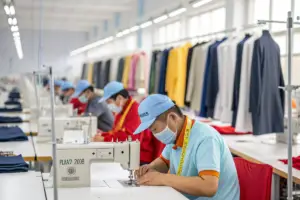
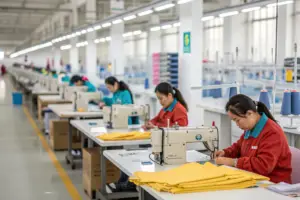
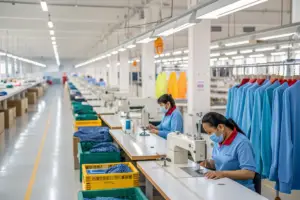
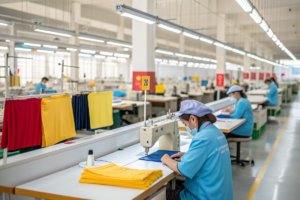
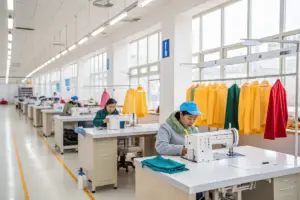
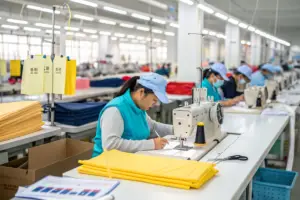
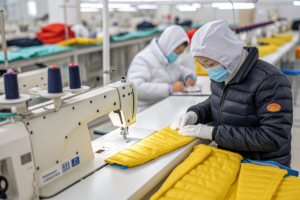
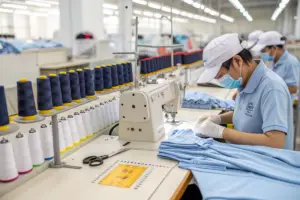
Consolidation brings power. Our factory runs five production lines. Line 1 and 2 might run knits like French terry for athletic shorts. Line 3 and 4 run woven chinos. Line 5 handles heavy-weight denim and cargo pants. Because this is all under one roof, our fabric sourcing team buys huge quantities of yarn-dyed cotton and twill. We share the greige fabric inventory across categories. This saves costs. For a large distribution client, we produce chino shorts, performance shorts, and matching zip-up hoodies in one purchase order. We load a single 40-foot high-cube container. The container utilization is high. The freight cost per unit drops. More importantly, if one style starts selling out mid-season, we can pivot the production capacity on the floor. We move sewing operators from a slow style to the hot seller. A factory that only makes denim cannot help you with an emergency cargo short reorder. We can. This agility is the new competitive advantage in classical menswear sourcing.
Conclusion
Classical men’s shorts are the backbone of a stable apparel brand. The chino short, built on a robust 280 GSM cotton twill, solves the quality problem. The athletic short, enhanced with a silent circular knit, solves the comfort problem. The 7-inch inseam solves the fit problem for the widest audience. Solid construction, proven by seam strength tests and certified zippers, solves the returns problem. Smart sourcing, using DDP shipping and factory consolidation, solves the cash flow problem. These are not just product categories. They are solutions to the specific pains you face as a buyer in the American market.
The market rewards specificity. It punishes vagueness. When you specify a 10 stitches-per-inch safety stitch on the back rise, you get a short that does not split. When you do not specify this, you get a customer service disaster. I have seen too many good brands fail because they treated a commodity product like a simple transaction. Clothing is a tactile, engineered product. The cotton has a micronaire value. The zipper has a breaking strength. The factory has an on-time delivery rate.
If you are sourcing your next collection of classical shorts, let’s talk about the details that matter. We can send you a free development sample. We can show you the exact fabric weight, the exact stitch type, and the exact DDP price to your door. Reach out to our Business Director, Elaine, at elaine@fumaoclothing.com. Let us solve these problems together before they reach your customer’s closet.