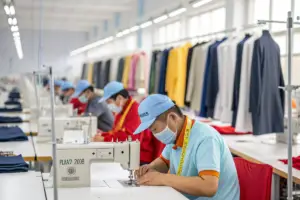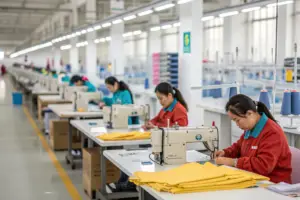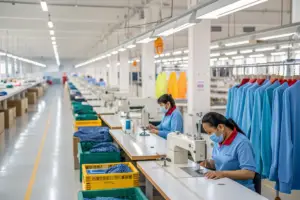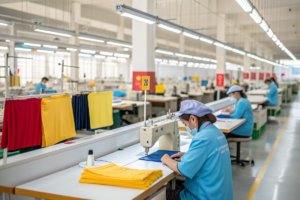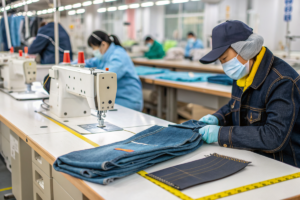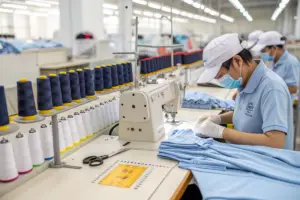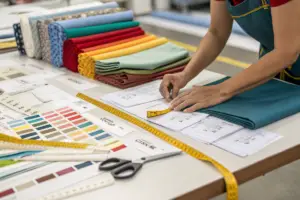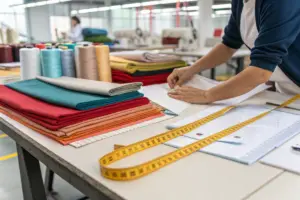
A brand owner from Portland, Oregon, sat across from me last spring with a spreadsheet and a worried look. For twelve years, he had built a successful men's casual wear brand selling exclusively to independent boutiques and a few regional department stores. His business was solid. His wholesale margins were predictable. But he could feel the ground shifting. His boutique accounts were ordering more cautiously. Their reorder quantities were shrinking. They were demanding deeper discounts. Meanwhile, he watched smaller, newer brands selling directly to consumers online, charging full retail price, capturing the entire margin, and building direct relationships with their customers. He felt like he was standing on a shrinking island. He asked me, "I want to sell directly to my customers online. I know my product. But I don't know how to completely restructure my supply chain to do this. Can my factory even support this shift?"
A brand owner can transition from wholesale to direct-to-consumer using a Chinese factory by restructuring three elements of the supply chain: production batch sizes, fulfillment logistics, and quality control for single-unit consumer expectations. The factory that efficiently produces 500-unit wholesale orders must adapt to smaller, more frequent production runs. The logistics model must shift from bulk container shipping to individual parcel fulfillment, either managed by the factory, a third-party logistics provider, or the brand's own warehouse. The quality standard must elevate from "acceptable defect rate for wholesale" to "near-zero defect rate for a consumer who can return a single unit with a single click." The transition is operationally complex but strategically transformative.
The shift from wholesale to DTC is the single most powerful profit-margin opportunity available to an established apparel brand today. A brand selling a jacket at a $60 wholesale price might sell the same jacket directly to the consumer for $180. The manufacturing cost is the same. The margin capture is tripled. But the operational demands of DTC are entirely different from wholesale. The factory partnership must evolve. At Shanghai Fumao, we have guided several of our wholesale clients through this transition. Let me walk you through exactly how to restructure your supply chain for DTC success.
How Do You Shift from Bulk Wholesale Production to Smaller, Frequent DTC Runs?
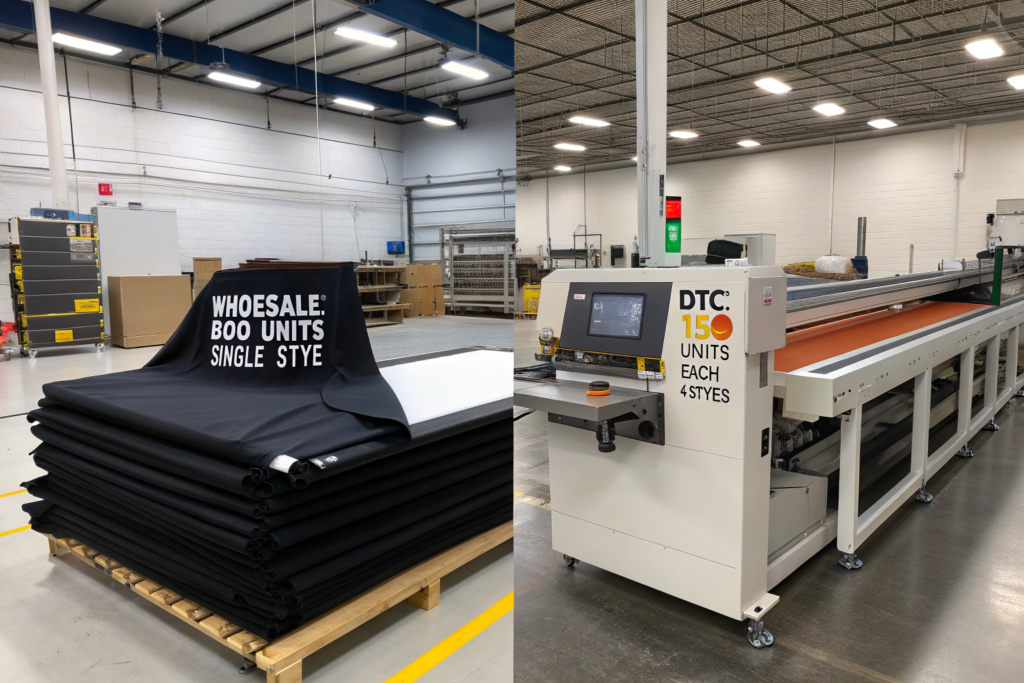
The wholesale production model is built on large, infrequent orders. A brand presents a seasonal collection. Boutiques place orders. The brand aggregates the orders into a single large purchase order to the factory. The factory produces 800 units of a style in one run, ships them in a container, and the cycle repeats next season. The model is efficient for the factory and predictable for the brand. But it is completely incompatible with DTC.
Shifting to smaller, frequent DTC runs requires the brand to adopt a "test and replenish" production model. The initial production run for a new style is a small test batch, perhaps 100 to 200 units, enough to photograph, launch on the website, and gauge initial consumer demand. If the style sells well, a replenishment order is placed immediately. The factory must be capable of turning replenishment orders in two to four weeks, not the eight to twelve weeks of a traditional seasonal order. This requires the factory to hold greige fabric inventory, to operate flexible production lines that can absorb small-batch orders, and to have a logistics system that can ship small parcel quantities directly to the brand's fulfillment center or, in some models, directly to the consumer.
The brand owner cannot simply take the wholesale order pattern, cut the order size in half, and call it DTC. The production economics, the fabric procurement, the line scheduling, all must change. The factory must be a willing partner in this change. Many factories will refuse. They are optimized for large, stable orders. The brand must find a factory that embraces the DTC model.
What Is a "Replenishment Model" and How Does It Keep Your Inventory Lean?
A replenishment model is an inventory management strategy where the brand holds a small amount of stock for each SKU, monitors the rate of sale daily, and places frequent, small reorders to replenish the stock as it sells. The brand never holds deep inventory. The inventory depth is determined by the reorder lead time. If the factory can produce and deliver a reorder in three weeks, the brand only needs to hold three to four weeks of inventory for each SKU.
The replenishment model is the opposite of the wholesale inventory model, where the brand buys the entire season's projected demand upfront and holds inventory for months. The replenishment model is enabled by the factory's ability to produce small quantities quickly. Without a factory that can do this, the replenishment model collapses into stockouts and lost sales.
The replenishment model requires the brand to share sell-through data with the factory. The factory needs to know which styles and sizes are selling so they can anticipate reorder demand and pre-position the necessary materials. The relationship becomes a data partnership, not just a manufacturing transaction.
A brand owner who transitioned to DTC with our help operates a replenishment model for his men's performance polo shirts. He launched the polo in four colors with an initial order of 150 units per color, 600 units total. Within two weeks of launch, the navy and charcoal colors were selling at twice the rate of the olive and burgundy. He placed a replenishment order for 200 navy and 200 charcoal. We had the greige fabric in stock. We dyed, cut, sewed, and shipped the replenishment order within three weeks. He never stockpiled deep inventory. His cash was not tied up in slow-selling colors. The replenishment model allowed him to chase the winners and starve the losers.
How Can a Factory Help You Switch to "Batch Production" Without Increasing Per-Unit Cost?
Batch production is the production of a specific quantity of a specific style, distinct from continuous mass production. A batch might be 150 units. When the batch is complete, the line switches to a different batch. The concern for a DTC brand owner is that smaller batches will carry a higher per-unit cost because the factory's setup time is amortized over fewer units.
The factory can mitigate this cost increase through several strategies. First, by grouping multiple small DTC orders from different brands onto a shared production line, achieving collective volume that keeps the line running efficiently. Second, by standardizing fabric bases across multiple styles and brands, allowing the factory to cut different style batches from the same fabric spread. Third, by streamlining the line changeover process, training operators to switch between similar styles quickly, reducing the setup time per batch.
The per-unit cost for a 150-unit DTC batch will likely be slightly higher than for an 800-unit wholesale batch. The difference is typically 5% to 15%, depending on the garment complexity and the factory's batch production capability. The brand owner must weigh this incremental cost against the massive margin gain from selling DTC at retail price instead of wholesale. A $2 per-unit cost increase on a garment that sells for a $100 higher retail margin is an easy trade.
We work with our DTC brand clients to minimize the batch cost premium. We group compatible orders, we standardize base fabrics, and we have honed our line changeover efficiency. A DTC brand producing 150-unit batches of men's casual shirts with us pays a per-unit cost that is only 8% higher than his previous 600-unit wholesale batches. His retail margin on the DTC shirt is 300% higher than his wholesale margin. The batch cost premium is a rounding error in his new profit model.
What Fulfillment Models Work Best for Brands Without Their Own Warehouses?
The brand that sells wholesale ships full cartons to a few dozen boutique addresses. The brand that sells DTC ships individual parcels to hundreds or thousands of consumer addresses. The logistics are entirely different. The brand owner who has never managed consumer fulfillment faces a steep learning curve. The good news is that multiple fulfillment models exist, and the brand does not need to build its own warehouse to succeed.
The three primary fulfillment models for DTC brands without their own warehouses are factory-direct fulfillment, third-party logistics provider fulfillment, and hybrid fulfillment. Factory-direct fulfillment means the factory picks, packs, and ships individual consumer orders directly from the factory. This is the lowest-overhead model but requires the factory to have parcel fulfillment capability. Third-party logistics, 3PL, fulfillment means the factory ships bulk cartons to a 3PL warehouse, and the 3PL handles the individual consumer parcel fulfillment. This is the most common and scalable model. Hybrid fulfillment uses the factory for initial launch fulfillment and a 3PL for ongoing replenishment.
The choice of fulfillment model depends on the brand's volume, the factory's capabilities, the target delivery time to the consumer, and the brand's desire for branded packaging and unboxing experience. The model can evolve as the brand grows.
What Are the Pros and Cons of Factory-Direct Parcel Shipping to US Consumers?
Factory-direct parcel shipping is the simplest model. The consumer places an order on the brand's website. The order is transmitted to the factory. The factory picks the garment from finished goods inventory, packs it in a poly mailer or a branded box, applies a shipping label, and hands it to a courier like DHL, FedEx, or a postal consolidator. The parcel travels from the factory directly to the consumer's doorstep.
The primary advantage is simplicity and inventory efficiency. There is only one inventory pool, at the factory. The brand does not need to manage inventory in a separate warehouse. The brand does not need to forecast demand to pre-position stock. Every unit produced is available for sale immediately.
The primary disadvantage is delivery time and cost. A parcel shipped from China to a US consumer via standard postal consolidation can take 10 to 20 days. Via express courier, it can take 3 to 7 days but at a significantly higher cost. The delivery time is longer than a domestic US shipment from a 3PL. The consumer experience may suffer if the delivery expectation is set for Amazon Prime speeds.
The second disadvantage is the returns process. A consumer returning a garment to China faces international shipping costs and customs complexity. The brand must decide whether to accept returns to the factory, to a US returns processing address, or to simply refund without requiring a physical return. The returns policy must be designed around the logistics reality.
A brand owner who launched his DTC men's shirt brand using factory-direct fulfillment chose this model for its simplicity. He clearly communicated a 14 to 21 day delivery time on his website. His customers, attracted by the unique product and the brand story, accepted the delivery window. As his volume grew, he transitioned to a US-based 3PL for faster delivery. The factory-direct model was his low-cost launchpad.
How Do You Integrate a 3PL with a Factory's Packing and Labeling System?
The 3PL model separates manufacturing from fulfillment. The factory produces the garments in batches, packs them in bulk cartons with specific labeling, and ships them to the 3PL's warehouse. The 3PL receives the cartons, checks the inventory into their system, and stores the goods. When a consumer order is placed, the 3PL picks the item, packs it in the brand's packaging, applies the shipping label, and dispatches it to the consumer.
The integration point is the carton labeling and the electronic data interchange between the factory and the 3PL. The 3PL requires each carton to have a unique carton ID barcode and each unit within the carton to have a unique SKU barcode. The factory must apply these barcodes during the packing process. The factory must also transmit an Advanced Shipment Notification, an ASN, electronically to the 3PL before the cartons arrive. The ASN tells the 3PL exactly what is in each carton so the receiving process is a simple scan-and-verify.
The factory must understand the 3PL's specific labeling and ASN requirements. A mislabeled carton or a missing ASN will cause the 3PL to reject the shipment or charge penalty fees. The brand owner must coordinate the technical integration between the factory and the 3PL.
We work with several major US 3PLs on behalf of our DTC clients. We understand their carton labeling specifications, their barcode symbology, and their ASN formats. We apply the correct labels at our packing station. We transmit the ASN electronically. The cartons arrive at the 3PL, are scanned in, and are available for consumer order fulfillment within 24 hours. The integration is seamless because we have invested in making it seamless.
How Must Quality Control Standards Change When Selling Directly to Consumers?
The quality control standard that is acceptable in a wholesale transaction is unacceptable in a DTC transaction. In wholesale, the brand ships a carton of 24 shirts to a boutique. The boutique owner receives the carton, checks the contents, and may find one shirt with a loose thread. The boutique owner snips the thread, hangs the shirt, and sells it. The consumer never sees the defect. The defect rate is absorbed by the retail channel.
In DTC, the consumer receives a single shirt in a poly mailer. If that single shirt has a loose thread, a misaligned button, or a slight color variation from the website photo, the consumer sees the defect immediately. They have no retail associate to fix it. They have no other shirts to compare it to. They have a return button. The DTC quality standard must be near-zero defect for every individual unit shipped. The AQL 2.5 statistical sampling that is standard in wholesale is insufficient for DTC. A 100% individual garment inspection is required.
The cost of a DTC return is far higher than the cost of a wholesale defect. A wholesale defect costs the factory a chargeback or a discount on the next order. A DTC defect costs the brand the outbound shipping, the return shipping, the garment cost, the lost margin, and potentially a negative review that reduces future sales. The economics demand a higher QC standard.
Why Is a 100% Individual Garment Inspection Necessary for DTC?
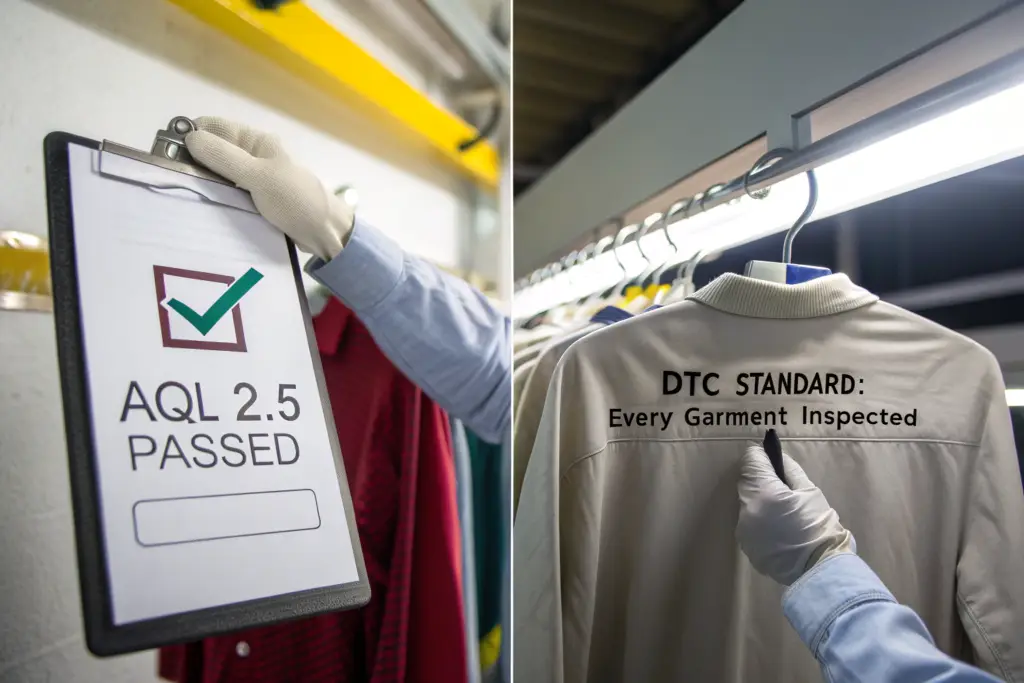
In a wholesale order, the standard quality control protocol is AQL 2.5, Acceptable Quality Limit. A sample of garments is randomly selected from the production lot and inspected. If the number of defects found in the sample is below a threshold, the entire lot is accepted. This means that a certain percentage of defective units, approximately 2.5% for major defects, is statistically accepted and shipped to the retailer.
In DTC, a 2.5% defect rate is a disaster. If a brand ships 1,000 DTC orders and 25 of them contain a visible defect, those 25 customers are likely to return the item and leave a negative review. In the wholesale model, those 25 defective units would be spread across multiple boutiques, some caught by boutique staff, some not, but the brand's online rating is not affected. The DTC model concentrates the reputational damage.
A 100% individual garment inspection means that every single unit is checked by a QC inspector before it is packed for consumer shipment. The inspection checks for stitching defects, fabric flaws, trim attachment, measurement accuracy, and overall appearance. The cost of this inspection is additional labor, but it is far less than the cost of DTC returns and negative reviews.
We implemented a 100% inspection protocol for our DTC brand clients. Every garment destined for individual consumer shipment is inspected on a table under bright light. The inspector checks the front, back, inside, seams, buttons, zipper, and hem. Any defect, even a minor loose thread, is corrected before the garment is passed. The inspection adds approximately $0.30 to $0.50 per unit. The reduction in DTC returns for our clients has been dramatic, from an average of 8% to under 2%.
How Should You Handle Consumer Returns Efficiently with a Factory Partner?
Consumer returns are an inevitable part of DTC. The brand must have a clear, cost-effective returns process. The process options depend on the brand's fulfillment model and the factory's willingness to participate.
If the brand uses a US-based 3PL, the returns are processed by the 3PL. Returned garments are inspected, graded as resellable or damaged, and either returned to inventory or disposed of. The factory is not involved in the physical returns process.
If the brand uses factory-direct fulfillment, the returns process is more complex. The consumer would need to ship the item back to China, which is expensive and slow. An alternative model is for the brand to provide a US returns address, perhaps the brand owner's home or a small office, accumulate returns, and periodically ship them in bulk back to the factory for inspection and refurbishment. The factory can assess whether a returned garment can be repaired and resold, or whether it should be donated or recycled.
The factory partner can support the brand by providing detailed garment measurement charts and fit guidance for the website, reducing the rate of fit-related returns. The factory can also provide spare buttons, extra thread, and simple repair instructions with each garment, empowering the consumer to fix minor issues themselves rather than returning the item.
A DTC brand client includes a small "garment care and repair kit" in every package. It contains a spare button, a short length of matching thread, and a card with simple repair instructions. The kit costs about $0.15 per unit. The brand's return rate for "minor defect" reasons, a loose button, a pulled thread, dropped by 30% after introducing the kit. The consumer fixed the minor issue themselves and kept the garment. The factory's role in supporting DTC returns extends beyond logistics into customer experience design.
How Can Packaging and Branding Evolve from Bulk Cartons to Consumer Unboxing?
In wholesale, packaging has one function: protect the garments during bulk transport and allow the boutique to identify the contents. A brown corrugated carton with a packing slip is perfectly adequate. The consumer never sees it. In DTC, packaging has multiple functions. It protects the garment during individual parcel shipping. It communicates the brand identity. It creates an unboxing experience that the consumer may photograph and share on social media. It may influence the consumer's decision to keep or return the item. Packaging is no longer a logistics cost. It is a marketing investment.
The evolution from wholesale to DTC packaging involves three shifts: from bulk cartons to individual parcels, from generic to branded materials, and from purely functional to experiential design. The individual parcel must be lightweight to minimize shipping costs, sturdy enough to protect the garment, and visually aligned with the brand's aesthetic. The unboxing experience, the tissue paper, the sticker, the thank-you card, the care instructions, is the first physical touchpoint between the brand and the consumer. It sets the tone for the entire customer relationship.
The factory can support this evolution by offering in-house packaging services. Instead of shipping bulk garments to a 3PL for individual packing, the factory can pick, pack, and label individual consumer parcels directly on the production line. The brand provides the packaging materials, the poly mailers, the boxes, the tissue paper, the stickers, and the factory follows a detailed packing specification.
What Are the Most Cost-Effective Ways to Add "Unboxing Value" Without Adding Weight?
Weight is the enemy of DTC shipping economics. Every gram added to the package increases the shipping cost. The brand must add unboxing value without adding significant weight. The most effective lightweight value-adds are paper-based and compact.
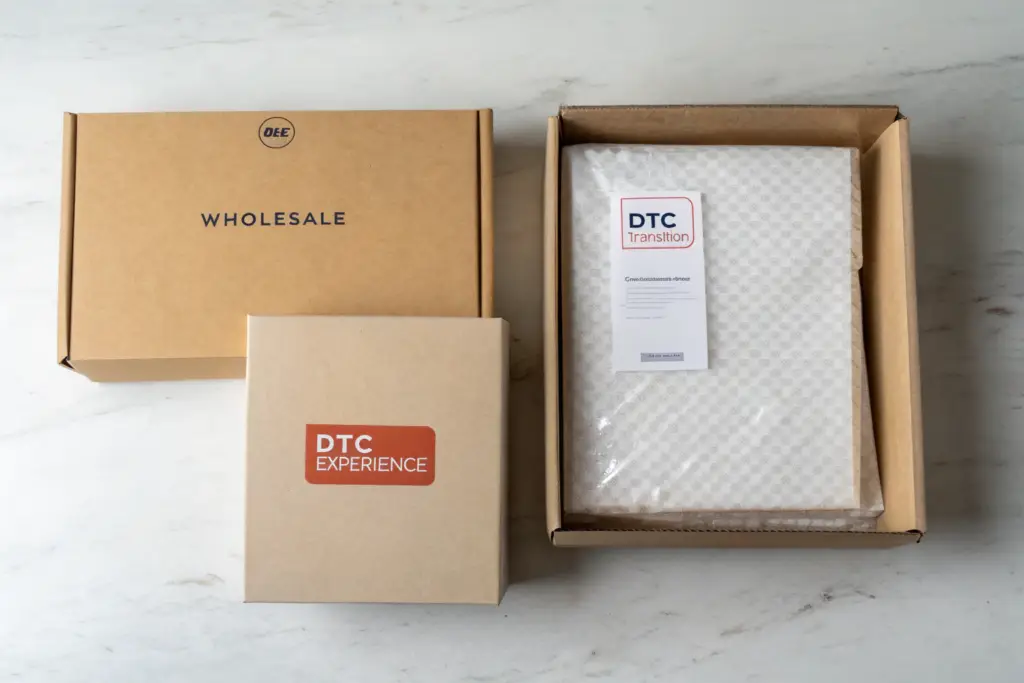
A custom-printed tissue paper with the brand's logo adds negligible weight but significant visual impact. The consumer opens the poly mailer and sees the branded tissue before seeing the garment. The experience is elevated at a cost of a few cents per unit.
A small, high-quality cardstock thank-you card, perhaps with a handwritten-style message or a QR code linking to a styling guide, adds personality and brand connection. The card weighs grams. It costs pennies.
A simple branded sticker, placed on the outside of the tissue paper or on the poly mailer itself, is a tiny detail that signals intentionality. Stickers are extremely lightweight and extremely cheap. They can be applied by the factory packing team in seconds.
A reusable garment bag, a simple drawstring pouch made from fabric offcuts or lightweight cotton, is a higher-cost but higher-impact option. It protects the garment during shipping and serves as a useful item for the consumer, extending the brand's presence into the consumer's daily life.
A DTC brand client uses a simple packaging kit: a recycled poly mailer, a sheet of custom tissue paper, a small thank-you card with care instructions, and a branded sticker. The total added cost per unit is approximately $0.35. His customer reviews frequently mention the "beautiful packaging" and the "thoughtful details." The unboxing experience has become a differentiated part of his brand identity, without adding burdensome weight or cost to his shipping.
How Can Your Factory Pre-Pack Garments Ready for Individual Consumer Shipping?
The factory can perform the individual consumer packing as part of the finishing process. After final QC inspection, the garment is not packed into a bulk carton. It is folded to the retail specification, wrapped in the branded tissue paper, placed in the poly mailer or box with the thank-you card and sticker, sealed, and labeled with the consumer's shipping address.
The factory needs a dedicated packing station for this process. The station is organized with the packaging materials, the shipping labels, and a computer terminal connected to the brand's order management system or the 3PL's system. The packer follows a specific packing protocol, a standard operating procedure that defines exactly how the garment is folded, where the sticker is placed, and how the poly mailer is sealed.
The pre-packed parcels are then either handed to the courier for factory-direct fulfillment, or packed into a master carton for bulk shipment to the 3PL, where they are simply scanned and dropped into the outbound mail stream without any additional handling.
We offer this pre-pack service to our DTC brand clients. The brand ships us the packaging materials. We store them in our packing supply area. Our packing team is trained on the brand's specific unboxing protocol. The garment goes from the sewing line, to QC, to the packing station, to the shipping label, to the courier, without ever entering a bulk carton. The process is efficient, consistent, and cost-effective.
Conclusion
The transition from wholesale to direct-to-consumer is the most significant strategic move a brand owner can make to capture margin, build customer relationships, and control their own destiny. It is also the most operationally complex. The entire supply chain, built over years to serve the wholesale model, must be reconfigured for the DTC model.
We have walked through the four critical restructurings. Production must shift from large, seasonal batches to small, frequent replenishment runs enabled by a factory with greige inventory and flexible lines. Fulfillment must shift from bulk carton shipping to individual parcel shipping, using a factory-direct, 3PL, or hybrid model. Quality control must elevate from statistical sampling to 100% individual garment inspection, because a single defect in a DTC shipment is a return and a negative review. Packaging must evolve from functional industrial cartons to a branded consumer unboxing experience that builds loyalty.
The factory partner is the linchpin of this transition. A factory that understands the DTC model, that is willing to run small batches, that can do individual parcel fulfillment, that maintains a 100% QC protocol, and that offers pre-pack services, is a strategic asset. A factory that insists on large minimums, bulk packing, and standard wholesale QC is a barrier.
At Shanghai Fumao, we have invested in the capabilities required to support our brand clients' DTC transitions. Our production lines can handle small-batch replenishment. Our QC team performs 100% inspection for DTC orders. Our packing station can execute consumer-ready pre-packs. Our shipping department can handle parcel consolidation and 3PL integration. We are not just a factory for wholesale brands. We are a supply chain partner for DTC brands.
If you are a brand owner considering the transition from wholesale to direct-to-consumer, or if you are already on that journey and need a factory partner who can support your new operational model, I invite you to contact our Business Director, Elaine. She can walk you through our DTC production and fulfillment capabilities, share case studies of brands we have helped transition, and provide a cost comparison showing the margin impact of the DTC model versus your current wholesale model. Reach Elaine at elaine@fumaoclothing.com. The direct-to-consumer opportunity is waiting. Let's build the supply chain to capture it.